The Book of Thoth: A Guide to Egyptian Magic
The Book of Thoth is a book that talks about the god...



In ancient Egyptian mythology, Nun is the personification of the primordial waters, the endless, chaotic, and dark ocean that existed before the universe was formed. Unlike creator gods like Ra or Atum who actively shaped the world, Nun was the foundational substance from which all life, land, and deities eventually emerged. Because he predates time, space, and matter, he is known as the “Father of the Gods” and represents the ultimate beginning, limitless potential, and the eternal cycle of death and rebirth.
The Original Cosmic Force: Nun wasn’t worshipped in typical temples as a personal god. He was revered as the quiet, formless abyss of chaos that existed before creation.
The Source of Creation: According to myth, the first piece of land (the Benben mound) emerged from Nun’s waters. A lotus flower grew from this mound, giving birth to the sun god who then brought order to the universe.
Member of the Ogdoad: Nun was part of a group of eight primeval deities in Hermopolis. He and his female counterpart, Naunet, represented the primeval waters of chaos.
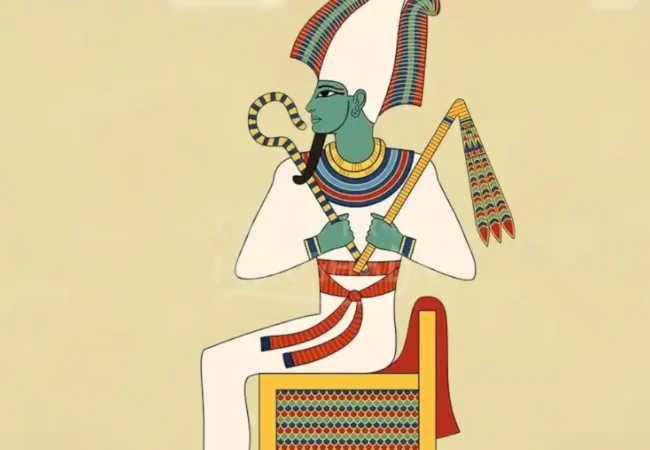
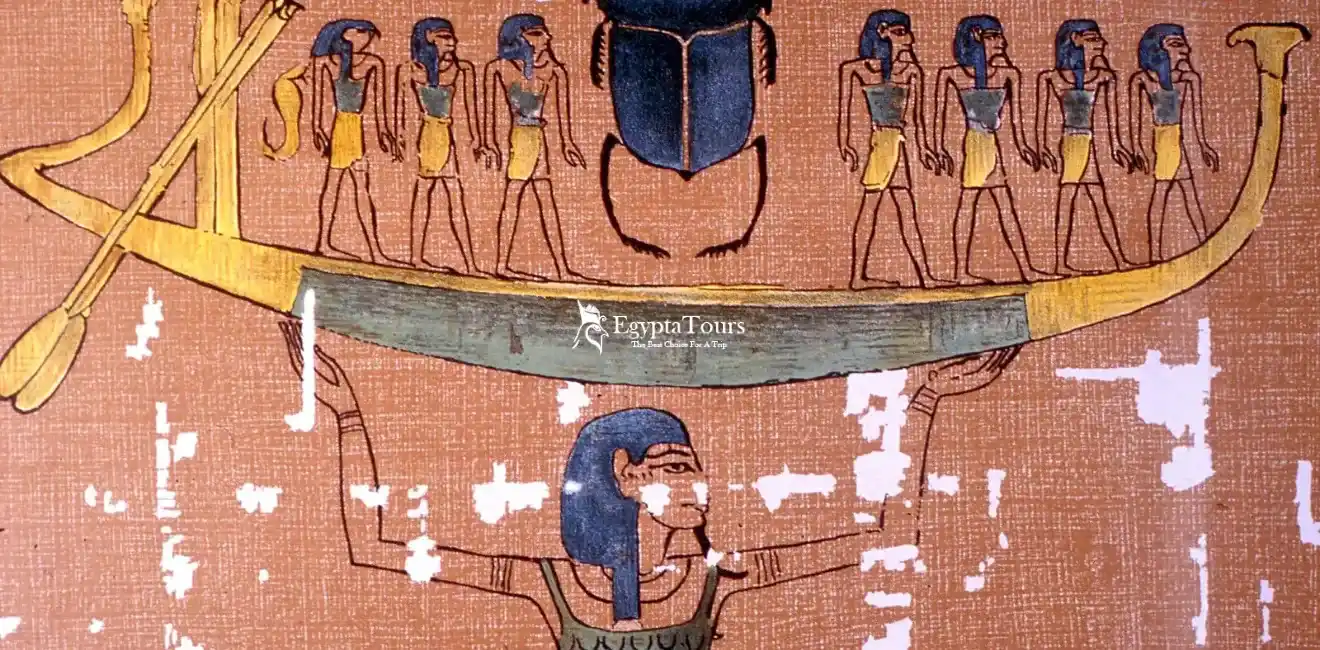
Iconic Depictions: In the rare instances he appears in ancient art, Nun is shown as a bearded man with green or blue skin (symbolizing water and fertility). His most famous depiction shows him rising from the depths to lift the solar boat into the sky.
Role in the Afterlife: Egyptians believed the souls of the dead returned to the waters of Nun to be purified and restored, mirroring the universe’s original act of creation.
Before gods like Ra, Osiris, and Isis shaped the world, there was only darkness. Everything was empty, shapeless, and completely still.
This was the domain of Nun (also spelled Nu), the ancient Egyptian god of the primordial waters.
In ancient Egyptian creation stories, Nun was more than just a deity, he was the foundational base of everything that existed. He represented the limitless, chaotic ocean that predated time, space, and matter.
Unlike other deities, Nun did not actively sculpt the world. Instead, he was the original cosmic substance from which the first piece of land, and subsequently the creator gods, emerged.
In Egyptian belief, Nun symbolizes unlimited possibility, eternity, and the raw beginning of life. He was not worshipped in sprawling temples like Amun or Horus. Instead, he was revered as a powerful, ever-present cosmic force.
The Egyptians believed that before the first sunrise, there were only the quiet, deep waters of Nun. From these waters, the creator god Atum appeared to spark the dawn of the universe.
Nun also represented the concept of returning to the beginning. In beliefs surrounding death and the afterlife, returning to the waters of Nun meant being purified. It was a way to return to a state of pure potential, ready for rebirth.
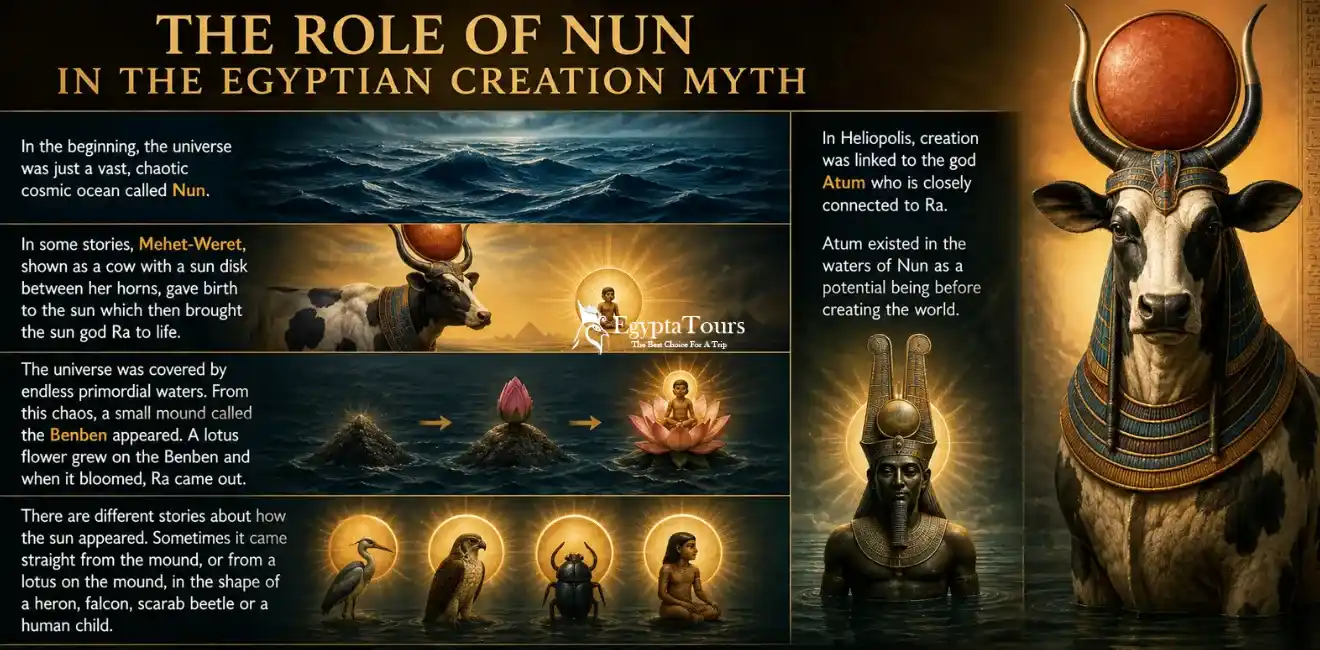
The-Role-of-Nun-in-the-Egyptian-Creation- Myth-EgyptaTours
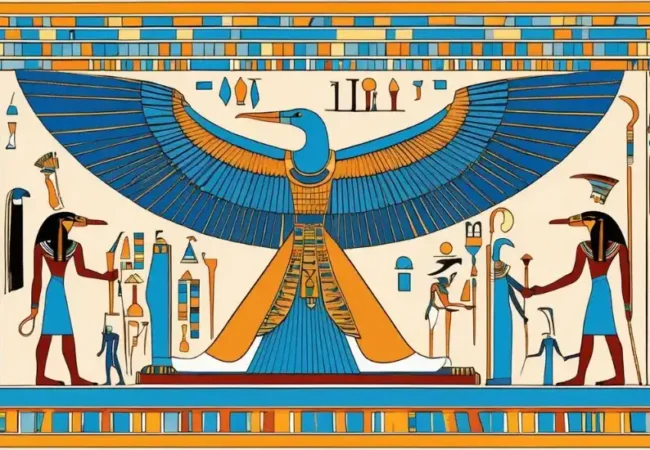
Nun’s most crucial role is found within the various Egyptian creation myths. He is central to the story of the Ogdoad of Hermopolis, a group of eight primeval deities who existed before the world was formed.
This group consisted of four male-female pairs representing the elements of chaos.
Nun and Naunet: Represented the primordial waters.
Amun and Amaunet: Represented hidden power.
Heh and Hauhet: Represented infinity.
Kek and Kauket: Represented darkness.
According to myth, the universe was covered by endless waters. From this chaos, a small, pyramidal mound of earth called the Benben rose from Nun.
A sacred lotus flower grew upon this mound. When it finally bloomed, the sun god Ra emerged, bringing light and order to the universe. In Heliopolis, this act of creation was linked to the god Atum, who existed within the waters of Nun as a potential being before willing himself into existence.
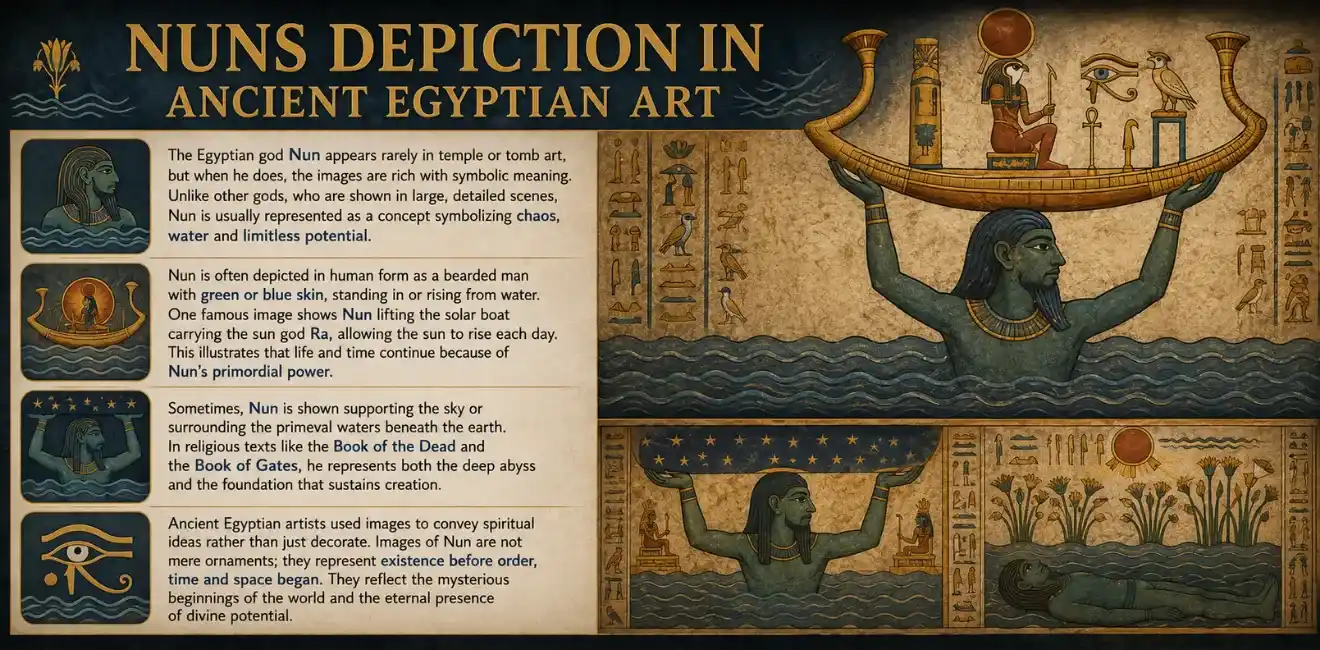
Nun-Depiction-in-Ancient- Egyptian-Art-EgyptaTours
Because ancient Egyptian artists aimed to convey spiritual concepts rather than literal portraits, the god Nun appears rarely in standard temple art. When he does, the images are rich with symbolic meaning.
He is usually represented in the following ways:
Human Form: A bearded man with green or blue skin, symbolizing deep water and fertility.
Holding a Palm Leaf: He is often shown holding a palm branch, a traditional Egyptian symbol for long life and eternity.
Lifting the Sun: His most famous depiction shows him rising waist-deep from the water, lifting the solar boat that carries the sun god Ra into the sky.
Symbolism-of-the-Nun-Egyptian-God-EgyptaTours
Nun-in-Religion-Magic-and-Daily -Life-EgyptaTours
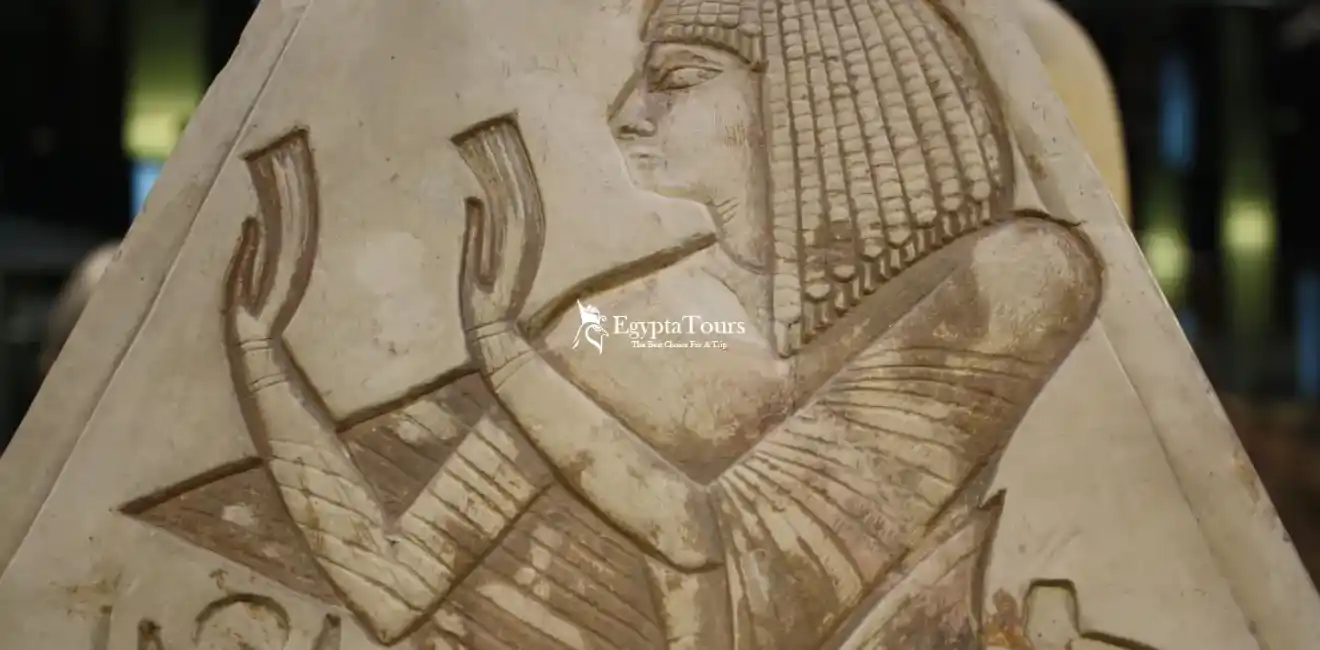
As one of the first primordial gods, Nun had a strong influence on ancient Egyptian religion, magic and daily life. He represented the endless, calm waters from which creation began. This was not just a story, but a powerful idea connected to life, protection and the natural cycle of birth and rebirth.
Nun was mentioned in funeral texts such as the Coffin Texts and the Book of the Dead. People prayed to him or called upon him in spells to help the souls of the dead travel safely to the afterlife. These texts explain that the soul returns to the waters of Nun to be reborn, just as the world first came from him. Because of this, Nun became a symbol of renewal and restoration.
Nun’s symbolism is closely linked to her connection with the deep waters. As a goddess of chaos, she was often shown with symbols of disorder, like snakes and crocodiles. At the same time, she also stood for rebirth and renewal, because her waters were seen as life-giving. This shows her two sides: she represents both creation and destruction.
The Egyptian god Nun represents the time before creation began. His name is often translated as still waters, the deep, or the endless dark ocean of chaos from which everything was created.
Today, the ancient god of the first waters remains a fascinating figure for historians and those who follow modern spiritual movements like Kemetism.
For modern followers, Nun represents the quiet emptiness required before a fresh start. He is a symbol of inner silence, endless possibility, and spiritual renewal. Flowing waves, blue lotus flowers, and abstract water designs are heavily utilized by modern artists and jewelers to honor his enduring legacy.
Nun is the ancient Egyptian god of the primordial waters, the endless, dark cosmic ocean that existed before the universe was created. He represents chaos, stillness, and the state of existence before time began.
He symbolizes the absolute beginning of everything, unlimited potential, eternity, and the mysterious forces that predated the ordered universe.
No, Nun did not actively create the world like Atum or Ra. Rather, he was the original cosmic substance. He provided the foundation from which the first land emerged and the creator gods were born.
He earned this title because he is the oldest conceptual deity. He existed before all other gods and served as the absolute source from which the rest of the Egyptian pantheon was eventually created.


Confidently choose your perfect Egyptian adventure from our selection of trusted, expert-curated tours.



Unlock the true wonders of Egypt with confidence. We combine expert local knowledge, seamless logistics, and round-the-clock support to deliver flawless, responsible, and unforgettable travel experiences.