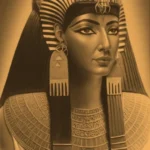

Nephthys
The myths and gods were diverse in ancient Egypt, and each god...



Thoth is the god of wisdom among the Pharaohs. As one of the lords of the Hermopolitan Ogdoad, the Thoth god is considered one of the most important ancient Egyptian deities and is classically depicted with the head of an ibis. His feminine counterpart is the goddess Maat, and his principal shrine was at Ashmunein, where he served as the chief deity.
He was the patron of magic, writing, literature, and science, and he took an active part in the judgment of the dead. He possessed extraordinary magical powers; the Egyptians even believed in the “Book of Thoth,” a mythical text capable of turning its reader into the greatest sorcerer in the world.

The-Statue-of-Thoth-EgyptaTours
This statue dates to the 26th Dynasty 664–525 BC, a period that saw the revival of artistic and religious traditions of ancient Egyptian civilization. The era was marked by a strong focus on restoring sacred symbols and producing religious‑style artworks.
This statue is one of the rare pieces that depict Thoth in his traditional form, as an ibis bird. The statue is distinguished by its unique design, crafted with extreme precision using multiple materials that reflect the skill of Egyptian artisans in the late period of Pharaonic civilization.
– The body is made of wood covered with a layer of fine plaster.
– The head, crown, neck, tail, and legs are fashioned from silver.
Eye details:
– The eyes are meticulously rendered with plaster and black glass, giving them a vivid, lifelike appearance.
– Thoth’s head is crowned with the Atef crown, a royal symbol used in religious rites and representing divine wisdom.
Although this statue was made in Egypt thousands of years ago, it is now displayed at the Kunsthistorisches Museum in Vienna, one of the most important European museums housing a collection of Egyptian antiquities.
The arrival of such artifacts outside Egypt stems from various factors, including 19th‑century archaeological expeditions and exchanges/purchases between museums and research institutions.
Thoth is not merely a god in Egyptian mythology; he is a symbol of wisdom and knowledge, with a history spanning millennia. The presence of a Thoth statue in Austria reflects the far‑reaching influence of Egyptian civilization, yet it also raises questions about the restitution of these pieces to their homeland.
While the statue stands as a testament to the genius of the ancient Egyptians, the hope of its return to Egypt remains alive among lovers of Egyptian heritage and antiquities.
Thoth holds great religious and cultural importance in ancient Egypt; he is the god of wisdom, writing, knowledge, astronomy, and medicine. He played a pivotal role in maintaining order and justice in the universe and contributed to determining the fate of souls in the afterlife through the weighing of the heart, in addition to teaching humanity the arts of writing and science.
Guardian of order and justice: He acted as mediator between the warring gods such as Horus and Seth, and restored Horus’ lost eye.
Judge of the dead: He served in the court of Osiris, recording the weight of the deceased’s heart against the feather of Maat (truth and justice) to decide his destiny in the afterlife.
Embodiment of knowledge: He was believed to have taught the Egyptians the secrets of the universe and to have created himself; he is considered the lord of wisdom, balance, and the moon.
Source of myths: He protected the goddess Isis during her pregnancy and appears in medical myths.
Inventor of writing: Thoth is regarded as the giver of writing and language to the Egyptians and the patron of scribes, while his counterpart Seshat transmitted his words to people.
Repository of sciences and knowledge: He was seen as the possessor of all sciences and arts, including astronomy, numbers, mathematics, medicine, philosophy, magic, and agriculture.
Symbol of artistic inspiration: He is often depicted as an ibis, due to its association with the crescent moon, or as a baboon holding a crescent.
Influence on other cultures: His influence extended to both Egyptian and Greek cultures.
Origin of civilizations: The Greeks believed he invented astronomy, mathematics, and other fields, indicating the major role he played in the development of culture and human thought.
Court of the Dead: Thoth was present as the scribe in the court of Osiris, where the soul of the deceased is judged.
Weighing of the Heart: Thoth recorded the result of the heart‑weighing ceremony, the pivotal event that determines whether the soul is worthy of eternal life.
Recording and Writing: He was responsible for inscribing the scale’s result on a papyrus scroll.
Protection of the Soul: He protected the deceased and assisted him on his journey through the afterlife, shielding him from harm.
Uttering the Will of Ra: Uttering the Will of Ra: In various myths, Thoth acts as the divine messenger who voices the absolute will of the sun god Ra
Wisdom and Justice: His role in the afterlife reflected his attributes as the god of wisdom and justice, ensuring that justice is upheld in the court of the dead.
Connection to Maat: His link with the goddess Maat (truth and justice) was fundamental in his after‑life function, as he recorded her judgment in the court.
Writing and Knowledge: As the scribe of the gods, his part in the court of the dead was tied to his scribal and scholarly abilities, writing the records of accounts and decisions.

The-Role-of-Thoth-in-Myths-EgyptaTours
He acted as a mediator in the conflicts between forces of good and evil, such as the struggle between Ra and Apophis, Osiris and Set, and Horus and Set. In each conflict he healed the injured side to ensure that neither party gained total control.
Scribe of the Gods
Known as the god of writing, Thoth is believed to have taught humans the art of writing. He served as the scribe of the gods, recording the events of the universe, the movements of the stars, and the affairs of the earth.
Recorder of the Scales
In the afterlife he noted the result of weighing the deceased’s heart against the feather of Maat in the Hall of Judgment.
Healer of Myths
In the Isis‑Osiris myth, Thoth gave Isis magical words that enabled her to resurrect Osiris and later bear their son Horus. He also helped Horus recover his lost left eye (the Uraeus) by providing the necessary wisdom to heal it.
Moon God
Thoth is linked to the moon because of its monthly cycles; he is the god of the moon, wisdom, and time.
Creator of the Calendar
He is credited with establishing the Egyptian 365‑day calendar. In legend he won five extra days from the moon, allowing Nut to give birth to the five epagomenal days.
Manifestations in Myth
– Animal forms: usually depicted as an ibis or a baboon.
– Other symbols: described as the heart and tongue of Ra, conveying his will to humanity.

The-Role-of-Thoth-in-Court-of-the-Dead-EgyptaTours
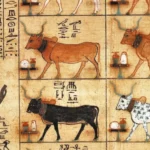
In the upper row the dead appear before a court composed of 42 judges to confess what he had done in his life, led by Re-Horakhty. To the right below them we see Osiris seated on the throne, behind him stand his sisters Isis and Nephthys, and before him the four sons of Horus standing on a lotus flower, having kept the body of the dead in the tomb.
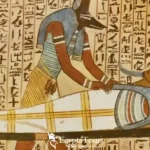
Horus brings the dead wearing a beautiful garment to appear before Osiris and then he enters the paradise. To the left we see Anubis accompanying the dead to conduct the weighing of his heart.
The center of the scene showcases the weighing of the deceased’s heart. Anubis places the heart on a scale and compares it against the feather of truth (the feather of Maat). The monstrous demon Ammit waits nearby to devour the heart if the deceased is a sinner. Meanwhile, Thoth stands diligently by, recording the exact result of the balance into his divine register.
This statue is one of the rare pieces that depict Thoth in his traditional form, as an ibis bird. The statue is distinguished by its unique design, crafted with extreme precision using multiple materials that reflect the skill of Egyptian artisans in the late period of Pharaonic civilization.
Materials used:
– The body is made of wood covered with a layer of fine plaster.
– The head, crown, neck, tail, and legs are fashioned from silver.
Eye details:
– The eyes are meticulously rendered with plaster and black glass, giving them a vivid, lifelike appearance.
Crown:
– Thoth’s head is crowned with the Atef crown, a royal symbol used in religious rites and representing divine wisdom.
Thoth was the Egyptian god of writing, wisdom, time, and knowledge. He was also linked with the moon. Priests and scribes saw him as the divine patron of learning and record keeping. In myth, he often advised other gods and helped keep the universe in balance.
Artists gave Thoth the head of an ibis because people linked this bird with wisdom and writing. The ibis had a long, curved beak that may have reminded Egyptians of a reed pen. The bird also lived in wetlands, places tied to creation and renewal in Egyptian thought.
Thoth often holds a scribal palette and a reed pen, symbols of writing and record keeping. He can also appear with a crescent moon and full moon disk above his head, linking him to lunar cycles. The baboon was another animal connected to him, so statues of baboons sometimes stood in his temples.
Thoth had several key roles. He acted as the scribe of the gods, recording events and divine decisions. He kept track of time and calendars. He helped judge the dead in the afterlife by recording the outcome of the weighing of the heart. He also acted as a mediator in disputes among the gods and helped restore order when chaos broke out.
Thoth supported Ma’at, the principle of truth, justice, and order. He recorded the decisions that kept the universe steady and fair. When the gods weighed a person’s heart against the feather of Ma’at in the afterlife, Thoth wrote down the result. His work helped keep the moral and cosmic order in place.
In some traditions, Thoth helped create the world through speech and thought. Texts describe him as bringing things into being by naming them. While he was not the main creator god in every city, some stories credit him with shaping the world, creating the calendar, and even helping organize the sky and stars.
In the Hall of Judgment, the heart of the deceased was weighed against the feather of Ma’at. Anubis handled the scales, and Thoth stood nearby, recording the result. If the heart balanced with the feather, Thoth noted the person as justified. This record allowed the soul to move into the afterlife. If the heart failed the test, Thoth also recorded that outcome.
Yes, Thoth was often paired with the goddess Seshat, who was linked with writing, libraries, and record keeping. In some traditions, Seshat was seen as his wife or his daughter. They formed a divine team of knowledge, with Thoth as the master of wisdom and Seshat as the keeper of written records.
Thoth’s main cult center was Hermopolis (Egyptian: Khmun) in Middle Egypt. There, he was honored as a great creator and wise god. Temples and chapels to Thoth also appeared in other cities, especially where scribes and scholars were active, since they saw him as their patron.
Thoth was closely tied to the moon, which the Egyptians used to track months. His link to lunar cycles made him the god of time, calendars, and measurement. Priests credited Thoth with setting the length of the year and correcting irregularities in time, which helped keep rituals and festivals on schedule.
Egyptians believed Thoth invented writing and hieroglyphs. Scribes often prayed to him before working so they could write clearly and truthfully. He was thought to record not only human actions, but also the words and deeds of the gods. Because of this, he symbolized both language and the power of written records.
When Greeks came to Egypt, they saw similarities between Thoth and Hermes, their god of communication and knowledge. They identified Thoth with Hermes and used the name Hermes Trismegistus, meaning Hermes Thrice-Great, for a wisdom figure linked to both. This merged figure later influenced Hellenistic, Roman, and early esoteric traditions.
Ancient Egyptians spoke of sacred texts that Thoth either wrote or inspired. These mythical “Books of Thoth” were said to contain powerful knowledge about magic, the gods, and the afterlife. In later times, Greek and Roman writers used the idea of Thoth’s books as a symbol for hidden wisdom, although we don’t have a single, fixed text with that title.
Besides his ibis-headed human form, Thoth could appear as a full ibis or as a baboon. In some funerary scenes, a baboon version of Thoth sits on a pillar near the scales of judgment. Each form highlighted a different side of the god, such as wisdom, the moon, or judgment.
Scribes relied on Thoth as a spiritual model and protector. He represented clear thinking, honest record keeping, and respect for knowledge. Students learning to write sometimes copied hymns to Thoth as practice. By honoring him, they hoped to gain skill, memory, and insight in their work.


Explore our top-rated Egypt travel packages and embark on an unforgettable journey. From the Pyramids of Cairo to the magical temples of Luxor, Aswan, and Abu Simbel, discover expertly curated tours designed for your perfect Egyptian adventure