Ushabti in ancient Egypt
The ancient Egyptian civilization has always fascinated us with its numerous and...



Set is one of the most complex and misunderstood deities in ancient Egyptian mythology. As the god of chaos, storms, the desert, and foreigners, he represented the harsh and unpredictable forces of the world. While he is most famous for his villainous role in murdering his brother Osiris and battling Horus for the throne, Set was not originally viewed as purely evil.
He played a vital, heroic role in defending the sun god Ra from the chaos serpent Apep. Over thousands of years, as Egypt faced foreign invasions, Set’s image shifted from a necessary force of cosmic balance to a demonized figure associated with absolute evil.
Dual Nature: Set represented the chaotic, arid “Red Land” (the desert), which provided a necessary cosmic balance to the fertile “Black Land” represented by Horus.
The Mysterious “Set Animal”: Unlike gods depicted with recognizable animal heads, Set was shown as an unidentified, mythical creature with a curved snout, square ears, and a stiff, forked tail.
The Great Conflict: Set is central to the Osiris myth, where he murders his brother and subsequently wages a violent, long-lasting war against his nephew, Horus, for control of Egypt.
Protector of Ra: Despite his chaotic reputation, Set was a heroic defender of the cosmos, standing on Ra’s solar boat every night to defeat the giant serpent Apep.
Historical Demonization: Set was originally worshipped and respected, especially in border towns and oases. His image only grew dark and villainous during the Third Intermediate and Late Periods when he became associated with foreign conquerors.
Set (pronounced /sɛt/, also written as Sutekh in Egyptian texts) is an ancient Egyptian god linked with deserts, storms, chaos, violence and foreigners. In Greek writings, his name appears as Seth (Σήθ), and in Coptic he is called Ⲥⲏⲧ.
Even though Set is often seen as a god of disorder, he also had an important protective role. He was believed to travel with the sun god Ra on his solar boat, helping him fight the serpent of chaos known as Apep (Apophis). In this way, Set was not only destructive but also a defender against evil forces.
Set was connected to the Red Land which refers to the desert, while Horus represented the Black Land meaning the fertile land of Egypt. This showed a balance between opposites in Egyptian belief.
In the Osiris myth, Set is described as the one who betrayed his brother Osiris by killing and dismembering him. Osiris’s wife, Isis, managed to gather his body parts and bring him back to life long enough to conceive their son, Horus. As a result, Horus later fought Set to avenge his father and many Egyptian stories focus on their ongoing struggle.
Set-Egyptian-God-animal-EgyptaTours
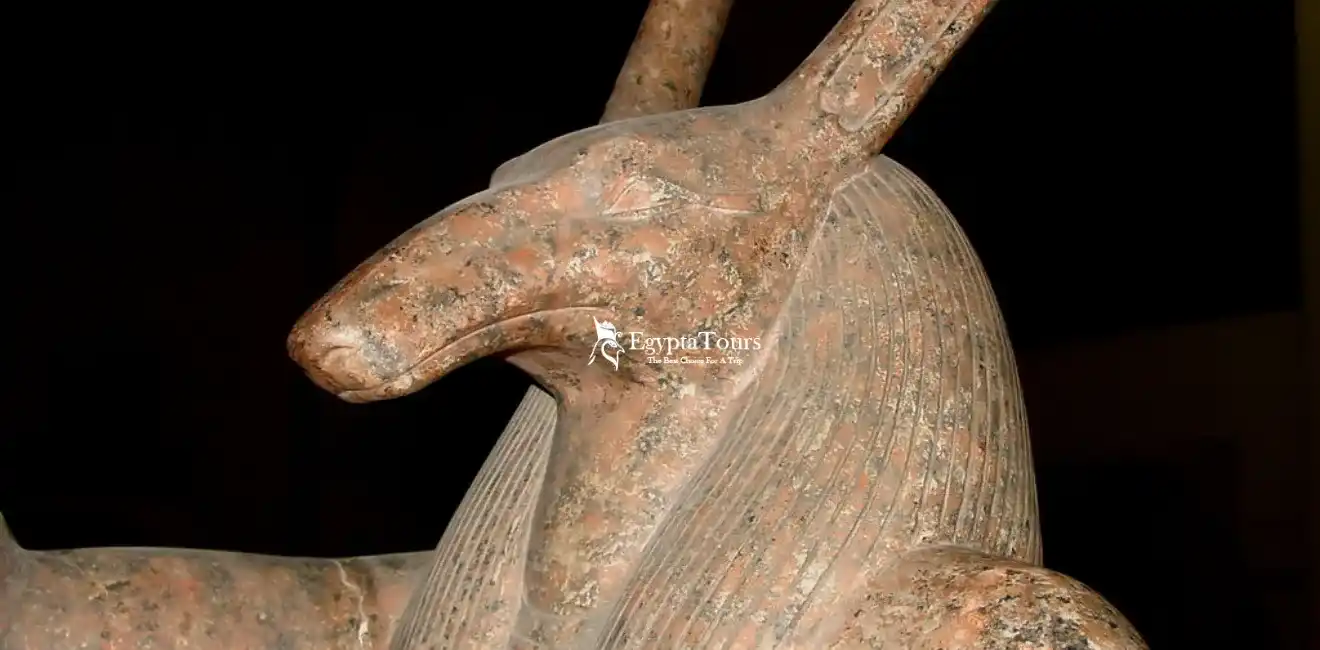
In ancient Egyptian art, gods are usually depicted with the heads of recognizable animals like falcons, jackals, or crocodiles. Set is the major exception.
He is depicted as a strange, unidentifiable creature known simply as the “Set animal.”
This creature has a slim, canine-like body, a long, curved snout, tall square-tipped ears, and a stiff, forked tail.
For decades, researchers have tried to match the Set animal to a real-world creature. Guesses have included the saluki dog, aardvark, wild dog, hyena, jackal, and even the fennec fox. Early scholars even suggested it was a stylized giraffe, but Egyptians clearly drew giraffes differently.
Today, most Egyptologists agree that the Set animal is either a completely mythical composite creature or an animal that went extinct in prehistoric times.
Set-Egyptian-God-Family-EgyptaTours
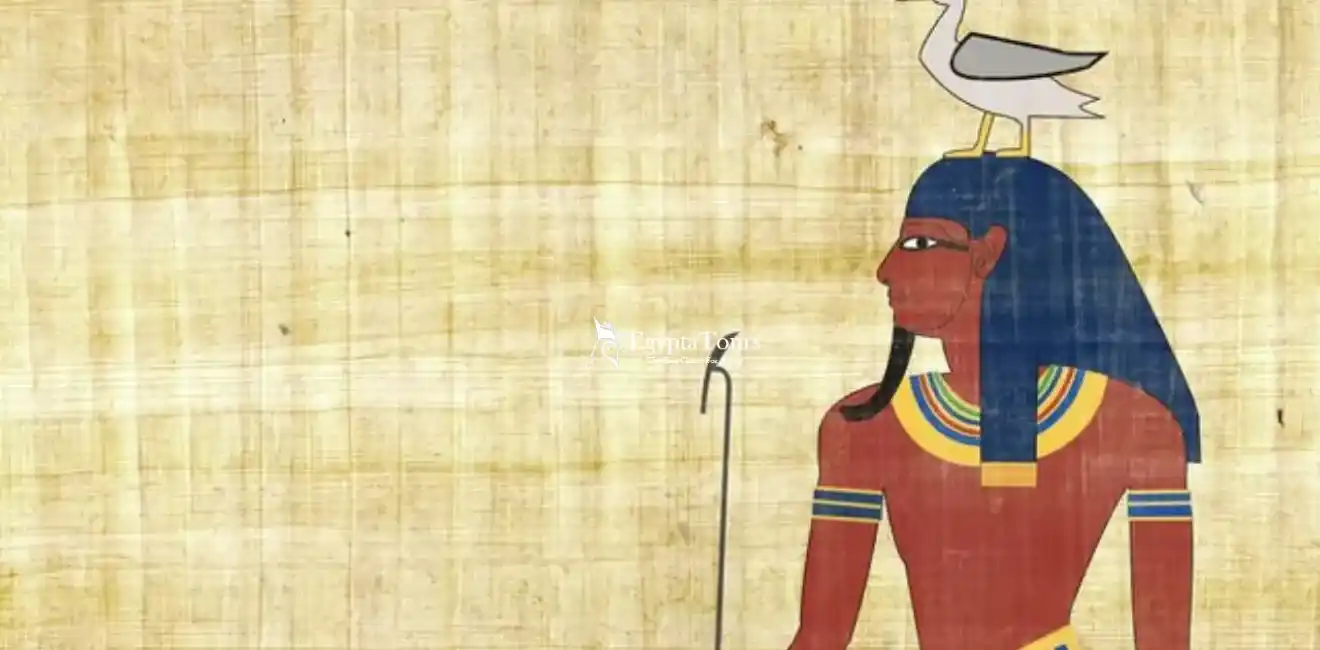
Set belongs to the Ennead, the primary family of gods from Heliopolis.
Parents: He is the son of Geb (god of the Earth) and Nut (goddess of the sky).
Siblings: His brothers and sisters are Osiris, Isis, and Nephthys.
Spouse: He eventually married his sister, Nephthys.
In some traditions, Set and Nephthys are considered the parents of Anubis, the god of embalming. However, older Egyptian beliefs usually name Osiris as Anubis’s true father.
Because Set was the god of foreigners, he was also linked to foreign goddesses like Anat and Astarte. According to myth, these unions produced a fearsome, crocodile-like god named Maga.
The exact meaning of the name Set is still not known. However, scholars believe it may have been pronounced something like *sūtiẖ in ancient times, based on how it was written in Egyptian hieroglyphs, such as stẖ and swtẖ.
Over time, the way the name was written and pronounced changed. In the Late Egyptian period, it appeared as stš, showing a shift in sound and later forms like swtj suggest that the final sound was eventually lost.
In the Coptic language, the name became ⲥⲏⲧ (Sēt) which is the form that later influenced how the name “Set” is pronounced in English today.
In ancient Egyptian art, Set is often shown as a strange, unknown animal that researchers call the “Set animal.” This creature cannot be matched with any real animal today. Many ideas have been suggested about what it might be, including animals like the saluki dog, aardvark, wild dog, donkey, hyena, jackal, pig, antelope, giraffe and fennec fox.
The Set animal usually has a long, curved snout, tall square-tipped ears, a thin forked tail with a tuft of hair and a slim body like a canine. Sometimes Set is shown as a man with this animal’s head instead.
Early scholars once thought it might be a stylized giraffe because of its horn-like features but Egyptians clearly showed giraffes differently from the Set animal in their art.
In later periods, Set was often shown as a donkey or a man with a donkey’s head. The donkey was closely linked to him and in some late stories, Set was even connected with the name Typhon. In one text, the Book of the Faiyum, he is shown with the head of a flamingo.
Some of the earliest possible images of the Set animal come from very early prehistoric tombs in Egypt, though this is not certain. More clearly, the Set animal appears on a ceremonial object from the time of King Scorpion II where its head and forked tail can be seen.
Conflict-of-Horus-and-Set-EgyptaTours
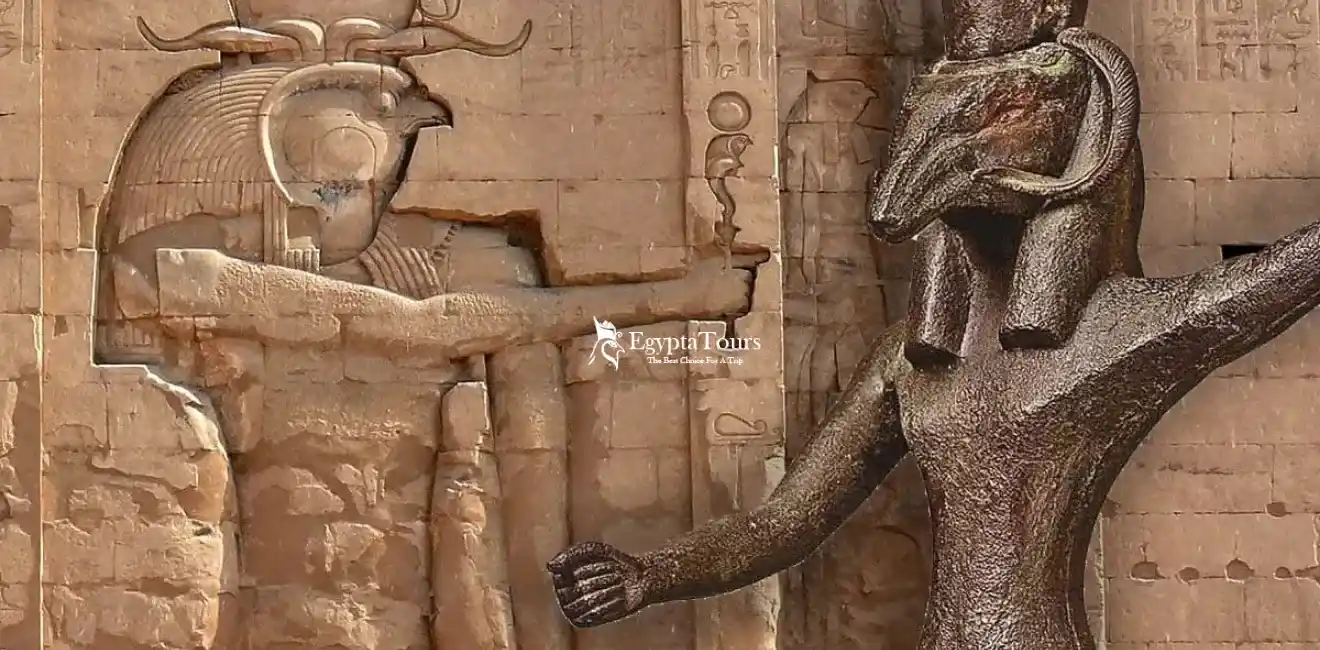
A major part of Set’s mythology is his struggle with Horus who is sometimes described as his nephew or his brother, over the throne of Egypt. Their conflict is often violent but in many stories it is also shown as a formal case judged by a group of gods called the Ennead. These gods decide who should rule Egypt.
Different gods may act as the judge. Sometimes Geb, the father of Set and Osiris, is seen as the one deciding since he once held the throne himself. In other versions, the creator gods Ra or Atum take this role. Other deities also play important parts. Thoth often helps as a mediator or advisor while Isis uses her magic and intelligence to support her son Horus.
The story of Horus and Set changes depending on the source. In the oldest texts, Horus is the son of Osiris and Set is his uncle and the conflict begins because Set killed Osiris. In other versions, Horus and Set are brothers. These two ideas often mix within the same stories.
Their struggle includes many different events. In one version called the “Contendings,” the gods argue in front of others and compete in challenges like boat racing or fighting in the form of hippos. Horus usually wins these contests, and most gods support him. However, the fight lasts for a very long time because the main judge often favors Set.
The conflict also affects other gods. In one episode, Isis tries to attack Set while he is fighting Horus but she accidentally injures her own son. In anger, Horus cuts off her head and Thoth replaces it with a cow’s head. This story explains why Isis is often shown with cow horns in Egyptian art.
Another famous part of the myth involves sexual violence and trickery. Set tries to humiliate Horus through sexual acts but Horus resists and outsmarts him in different versions of the story. In one account, their conflict involves semen being used as a sign of power and this leads to Set becoming marked in a strange way, sometimes shown as a golden disk on his head.
The two gods also injure each other physically. Horus harms Set’s genitals, while Set damages or steals one or both of Horus’s eyes. Horus’s eyes are very important symbols in Egyptian belief. His right eye represents the sun and his left eye the moon. When his eye is lost or damaged, it is linked to the phases or disappearance of the moon.
Many gods help restore Horus’s eye including Isis, Thoth, and Hathor. Getting the eye back means healing, balance and the return of order, as well as Horus’s rightful place as king. In some versions, Set is also healed or made whole again, showing that the conflict between them is finally brought back into balance.
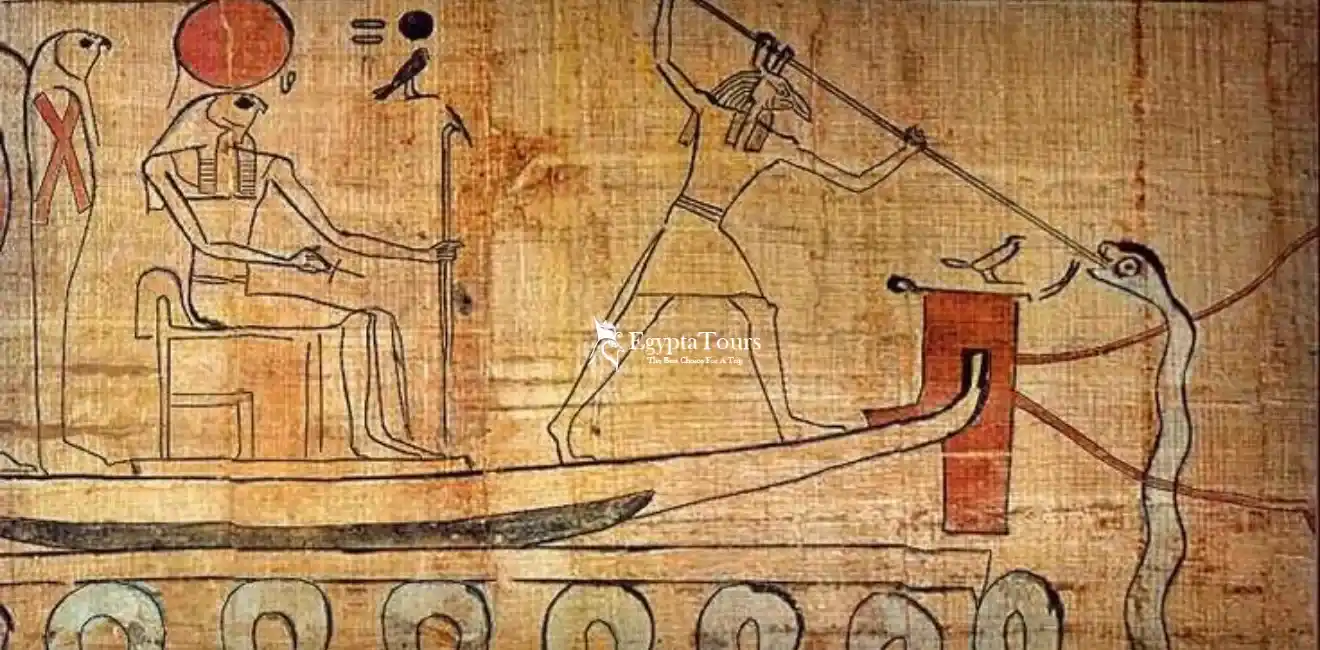
Set-Egyptian-God-Protector-of-Ra-EgyptaTours
Set is sometimes shown standing at the front of the sun god Ra’s boat, where he helps fight and defeat the giant serpent of chaos called Apep. Even though Set is often linked with disorder, in this role he acts as a protector who helps keep the sun’s journey safe.
In some later Egyptian images such as those from the Temple of Hibis in the Persian period, Set is even shown with a falcon head, taking on features usually linked to Horus. This shows how Egyptian gods could sometimes blend or share roles in different traditions.
In the funerary text known as the Amduat, Set is also described as playing an important part in the battle against Apep, helping to overcome the forces of darkness during the sun god’s nightly journey.
According to scholar Herman te Velde, Set began to be seen in a more negative way after Egypt was conquered by foreign powers during the Third Intermediate and Late Periods. Because Set was already linked with outsiders, he slowly became connected with foreign rulers as well, including the Kushite and Persian empires.
During this time, stories about Set became more focused on his bad actions. He was strongly described as the one who killed Osiris by cutting his body into pieces and hiding them so Osiris could not come back to life. This made his image more negative than before.
Later, the Greeks compared Set with their own figure Typhon, a violent and destructive force of nature. Some also linked him with other feared beings. These figures were often shown in similar animal-like forms which led people to group their followers together in a negative way.
Set and Typhon also share a similar myth pattern where both are sons of earth-related gods and both fight against major divine rulers—Set against Osiris or Horus and Typhon against Zeus.
Even so, Set was not seen the same way everywhere. In some distant regions of Egypt, he was still worshipped as an important and even heroic god.
Modern Egyptologists such as Kara Cooney, explain that Set’s image changed over time as religions shifted. In her documentary The Birth of the Devil, she describes how Set gradually became linked with the idea of absolute evil, especially during periods when different cultures moved toward belief systems that focused more on one supreme god representing complete good.
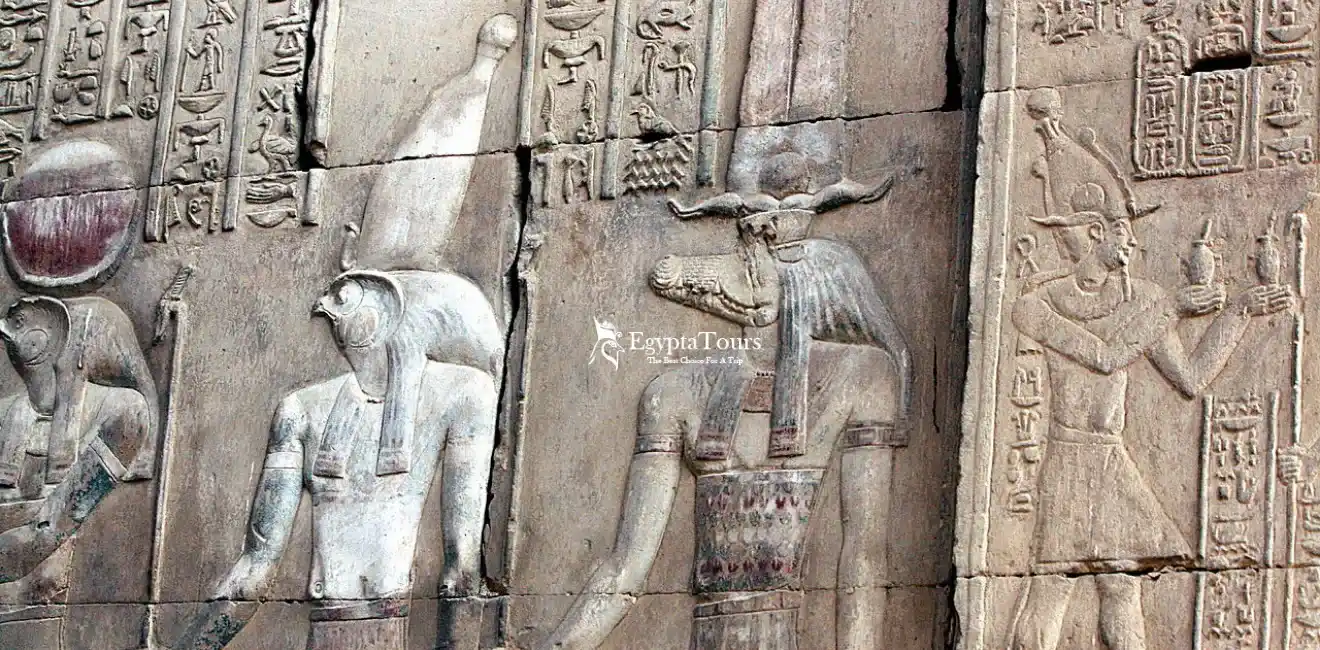
Set -Egyptian-God-temples-EgyptaTours
Set was worshipped in several places across ancient Egypt, including Kom Ombo, Oxyrhynchus in Middle Egypt, and parts of the Faiyum region. He was especially important in the town of Sepermeru during the Ramesside period.
In Sepermeru, Set had a major temple known as the House of Set, Lord of Sepermeru.” The town itself was sometimes called a gateway to the desert which matched Set’s role as a god connected to deserts and border regions.
His temple complex there also included a smaller shrine called “The House of Seth, Powerful-Is-His-Mighty-Arm.” Nearby, Ramesses II built or changed another temple dedicated to Nephthys, called “The House of Nephthys of Ramesses-Meriamun.”
The temples of Set and Nephthys in Sepermeru were managed separately, each with its own staff and priests. Another temple of Set existed in the nearby town of Pi-Wayna. In the Faiyum area, it is also believed that similar paired temples of Set and Nephthys existed in other towns.
A papyrus from Bologna shows a complaint written by a priest named Pra’em-hab who served in a temple of Set in a lost town called Punodjem. He complains about heavy taxes and the burden of managing not only Set’s temple but also responsibilities connected to Nephthys’s temple and other local religious duties.
We do not fully know how Set and Nephthys were worshipped together in these places, especially since Nephthys was also strongly linked to Osiris in Egyptian religion. Later, during the Twentieth Dynasty, Set’s image became more negative in some areas and his worship was pushed away from central regions. In contrast, Nephthys continued to be widely honored across Egypt as part of the Osiris family of gods and even became an important local goddess in some regions.
Even in later periods, Set was still worshipped in remote but important oasis areas like Kharga, Dakhla, Deir el-Hagar, Mut, and Kellis. In these places, he was known as “Lord of the Oasis” or “Lord of the Town “while Nephthys was honored as “Mistress of the Oasis” beside him.
In these regions, people continued to worship Set, Nephthys, and the Osiris family side by side without seeing a strong conflict between them, showing how Egyptian religion could include different and sometimes opposite ideas at the same time.
Today, Set lives on through modern religious and spiritual movements.
In Kemetism (the revival of ancient Egyptian religion), followers view Set as a complex deity. They acknowledge his ties to chaos but honor him as the powerful protector of Ra.
In 1975, a group called the Temple of Set was founded. This esoteric order views Set not as a literal god, but as a symbol of independence, self-discovery, and personal empowerment.
Set is an ancient Egyptian god linked with deserts, storms, chaos, and foreigners. He is also known for his role in many myths, especially his conflict with Horus and Osiris.
Set is the son of Geb (Earth) and Nut (Sky). His siblings are Osiris, Isis, and Nephthys. In later myths, he is also said to be the husband of Nephthys.
The Set animal is a mysterious, unidentified creature in Egyptian art. It features a curved snout, tall square ears, a canine body, and a stiff forked tail. It does not match any known living animal.
Yes, Set had temples in several cities, including Sepermeru, where he was worshipped alongside his wife Nephthys.
Set and Horus fight for the throne of Egypt. Their conflict includes battles, contests, and trials judged by other gods, and it represents the struggle between order and chaos.
Yes, Set was worshipped in many places, especially in desert and border regions like Sepermeru and oasis towns.
Yes, in the Osiris myth, Set kills Osiris and hides his body parts. Later, Isis restores Osiris long enough for him to have a son, Horus.



Confidently choose your perfect Egyptian adventure from our selection of trusted, expert-curated tours.



Unlock the true wonders of Egypt with confidence. We combine expert local knowledge, seamless logistics, and round-the-clock support to deliver flawless, responsible, and unforgettable travel experiences.