


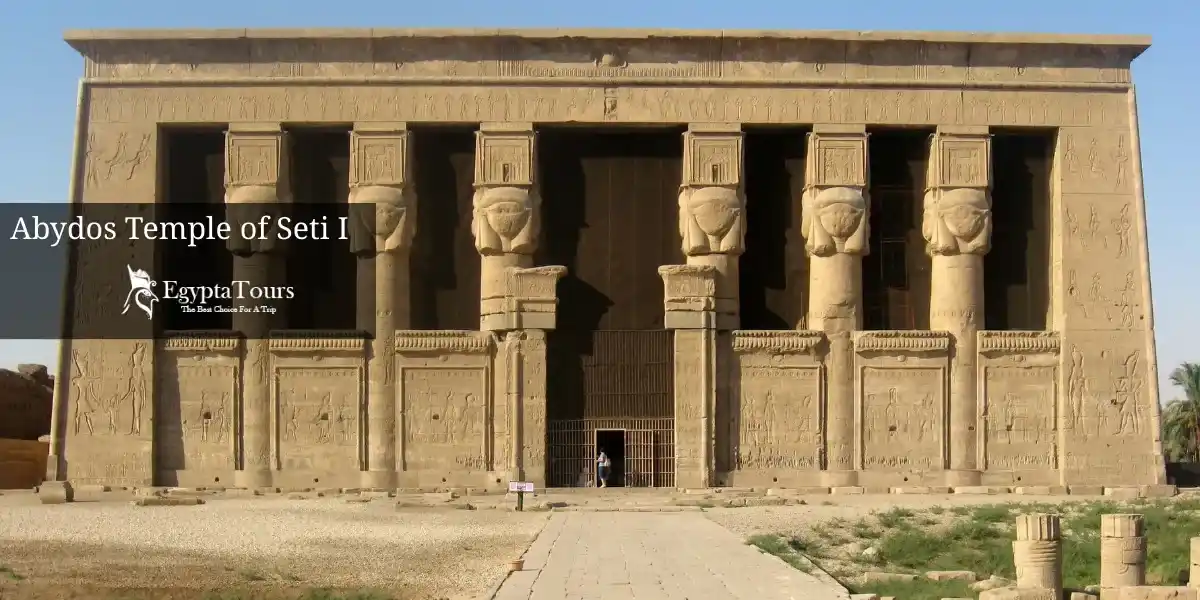
Abydos Temple of Seti I: Sacred Site of Ancient Egypt
For thousands of years, The Great Abydos Temple in Luxor, Egypt has captured the attention and imagination of travelers, historians and archaeologists alike. In this article we explore what secrets the temple holds, its history and why it’s still so fascinating today. So if you’re looking for a captivating journey into ancient Egyptian culture and architecture, join us on our exploration of the Great Abydos Temple!
Introduction to The Great Abydos Temple
Introduction-To-The-Great-Abydos-Temple-Of-Seti-I-EgyptaTours
The Great Abydos Temple is one of the most important ancient temples in Egypt. It is located in the city of Luxor, on the west bank of the Nile River. The temple was built by the pharaohs of the New Kingdom, between the 16th and 11th centuries BC.
The temple was dedicated to the god Amun-Ra, the king of the gods. It was also used as a burial place for pharaohs and their queens. The temple complex includes several smaller temples, such as the Temple of Seti I and the Temple of Ramses II.
The Great Abydos Temple is one of the best preserved ancient temples in Egypt. It is a must-see for anyone visiting Luxor.
Location of the Temple of Abydos
The Temple of Abydos is in Middle Egypt. Even though it is famous around the world, it does not have too many tourists. The temple is in the town of El Araba El Madfuna, but it is part of the Al-Balyana area in the Sohag Governorate. The nearest city is Sohag, about 50 km north of Abydos. Luxor is farther south, about 190 km away.
The town is in the desert, at the edge of the Nile River’s fertile western plain. The town depends a lot on tourism from the Temple of Abydos and other sites. People also grow crops, mainly sugar cane, to support the town.
History and Significance of the Temple
History-And-Significance-Of-Abydos-Temple-Of-Seti-I-EgyptaTours
The Abydos Temple is one of the most important temples in Egypt. It was built to honor the god Osiris, who was the king of the underworld. The temple was also used as a burial place for Pharaohs.
The Abydos Temple is located in the city of Abydos, which is about 100 kilometers (62 miles) from Luxor. The temple was built around 3100 BC, during the Early Dynastic Period. It was expanded and rebuilt several times over the centuries.
The Abydos Temple is made up of three main parts: the Court, the Sanctuary, and the Osireion. The Court is where festivals and rituals were held. The Sanctuary was where the statue of Osiris was kept. The Osireion was a tomb for Pharaohs and other important people.
The Abydos Temple has many features that make it unique. One of these is the “Abydos King List”, which is a list of all the Pharaohs who ruled Egypt. This list starts with Menes, who was the first Pharaoh, and ends with Ramses II, who ruled in 1279 BC.
Another unique feature of the Abydos Temple is the “Osiris Shaft”. This is a long, narrow shaft that goes down into the ground. It was used to lower people into the tomb of Osiris so they could be buried with him.
The Abydos Temple is an important part of Egypt’s history and culture. It is a place of great significance to the ancient Egyptians, and it still holds a special place in the hearts of many modern Egyptians.
The temple is also a popular destination for tourists. Every year, thousands of people visit the Abydos Temple to learn about its history and marvel at its beauty.
Architecture and Artwork of the Temple
The Abydos Temple is one of the most renowned temples in all of Egypt. Its architecture and artwork are some of the best-preserved examples of Ancient Egyptian culture.
The temple was built in several phases over a period of more than 1,000 years. The first phase was constructed during the reign of Pharaoh Djoser (26th century BCE). This original temple was made of mud bricks and consisted of a simple rectangular structure with an inner sanctuary.
Over the centuries, the temple was expanded and embellished by successive pharaohs. The most notable additions were made by Seti I (13th century BCE) and Ramses II (19th century BCE). The former added a colonnaded courtyard and magnificent reliefs to the temple walls, while the latter built an enormous pylon entranceway decorated with statues of himself.
Inside the temple, there are many beautiful reliefs and paintings that depict scenes from Egyptian mythology and history. These include depictions of the gods Osiris and Isis, the judgment of the dead in the afterlife, and battles between Egyptian armies and their enemies. There is also a famous carving of Ramses II making offerings to various gods.
The Abydos Temple is one of the most impressive examples of Ancient Egyptian architecture and art. It is well worth a visit for anyone interested in learning more about this fascinating culture.
Exploring the Inside of the Temple
Exploring-Inside-Abydos-Temple-Of-Seti-I-EgyptaTours
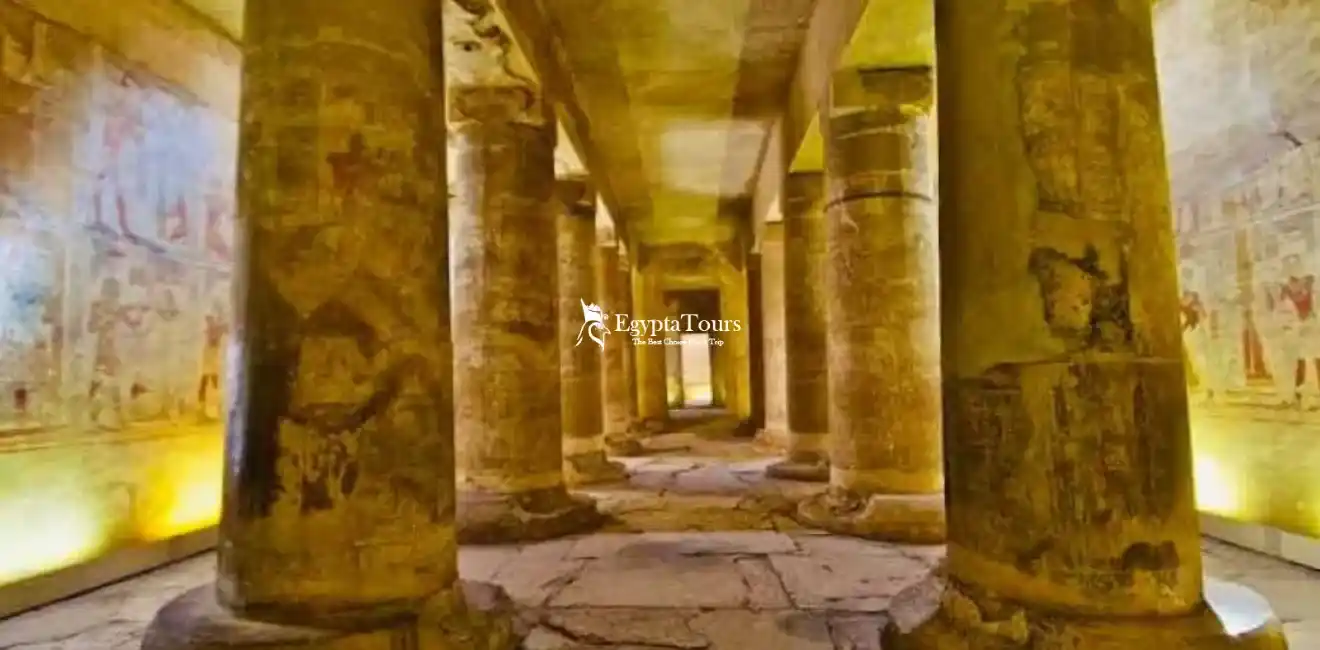
The first thing that strikes you when you enter the temple is its size. The Great Abydos Temple was one of the largest temples in Egypt, and its size is still impressive today. The temple was built in two stages, the first stage was built by Seti I and the second stage was added by Ramesses II.
The temple is made up of a series of courtyards, halls, and rooms, each with its own purpose. The first courtyard is where the priests performed their rituals. The second courtyard is where the king would meet with the gods. The third courtyard is where the king would be crowned. And finally, the fourth courtyard is where the king’s tomb was located.
The most interesting part of the temple is the Hypostyle Hall, which is decorated with over 200 columns. This hall was used for ceremonies and also served as a burial place for some of Egypt’s most important people.
The temple also has a number of secret rooms and chambers that have yet to be fully explored. It is believed that these rooms were used for storage or as places where the priests could perform their rituals in private.
Overall, the Great Abydos Temple is an incredible place to visit. Its size and scale are impressive, and its history is fascinating. If you’re interested in learning more about ancient Egyptian history, this temple is definitely worth a visit!
Myths and Legends around the Temple
The Great Abydos Temple is one of the most popular tourist destinations in Luxor, Egypt. Every year, thousands of people visit the temple to see its ancient architecture and learn about its fascinating history.
However, there are many myths and legends surrounding the temple that have been passed down over the years. Some say that the temple is cursed, while others believe that it is haunted by the ghosts of ancient priests.
Despite these stories, the temple remains a popular tourist destination. Many visitors come to see the beautiful hieroglyphics and learn about the rich history of this amazing place.
Other Places of Interest around the Temple of Abydos
Even though the Temple of Abydos is the main attraction for visitors, there are other interesting places nearby, especially for people who love Ancient Egypt and archaeology. One example is the royal burial site mentioned earlier. Although only a few remains can be clearly seen, its age makes it very special.
Another place is Shunet El Zebib, about 500 meters north of the Temple of Abydos. It is very important archaeologically: two walls made of mud bricks from around 2700 BC, during the time of Pharaoh Khasekhemwy (Dynasty II). It was built more than 4,700 years ago and is still standing.
Shunet El Zebib is seen as a forerunner of the stepped pyramids because of how it was built. People once thought it was a military building and called it the Middle Fort. Today, experts think it was a religious and funerary building, probably a Chamber of the Ka, where a statue of the deceased was kept and his life force (ka) lived.
The Abydos Festival
The Abydos Festival was a yearly religious play that showed the story of Osiris being killed and coming back to life. The play celebrated Osiris’s victory over death and represented the cycle of life, death and rebirth. People from all over Egypt came to the festival because they believed taking part in the rituals would help them be reborn in the afterlife.
People would come together to see this festival, which had processions, prayers and shows near what was believed to be Osiris’s tomb in Abydos. The festival was like a pilgrimage for ancient Egyptians and its ideas of renewal and life after death were very important for their spiritual life.
The Abydos King List
The Abydos King List is a list of 76 ancient Egyptian kings, written on the walls of the Temple of Seti I. The list starts with Menes (Narmer), the first king of the First Dynasty, and ends with Seti I, the current pharaoh at that time. Seti I used the list to show that his rule was connected to the old kings of Egypt.
The list has three rows of 38 cartouches, with each cartouche showing a king’s name. The top two rows show the names of many kings and the third row repeats Seti I’s throne name and personal name.
This list is very important because it gives the only known names of many kings from the Seventh and Eighth Dynasties and shows the order of rulers from the Old Kingdom.
The list does not include some earlier pharaohs from different periods. These missing rulers, like those from the Ninth, Tenth, early Eleventh, Thirteenth Dynasties, and the Hyksos of the Fifteenth Dynasty, may have had little power or were seen as illegitimate.
The rulers from the chaotic Amarna Period (Akhenaten, Smenkhkare, Neferneferuaten, Tutankhamun, and Ay) were left out for political reasons, possibly to erase their memory.
Female pharaohs like Sobekneferu and Hatshepsut are also not included, likely because they were women. Mentuhotep IV may have been left out for political reasons or because there was little information about his short reign.
Abydos Helicopter Hieroglyphs
Abydos-Helicopter-Hieroglyphs-Mystery-Carvings-EgyptaTours
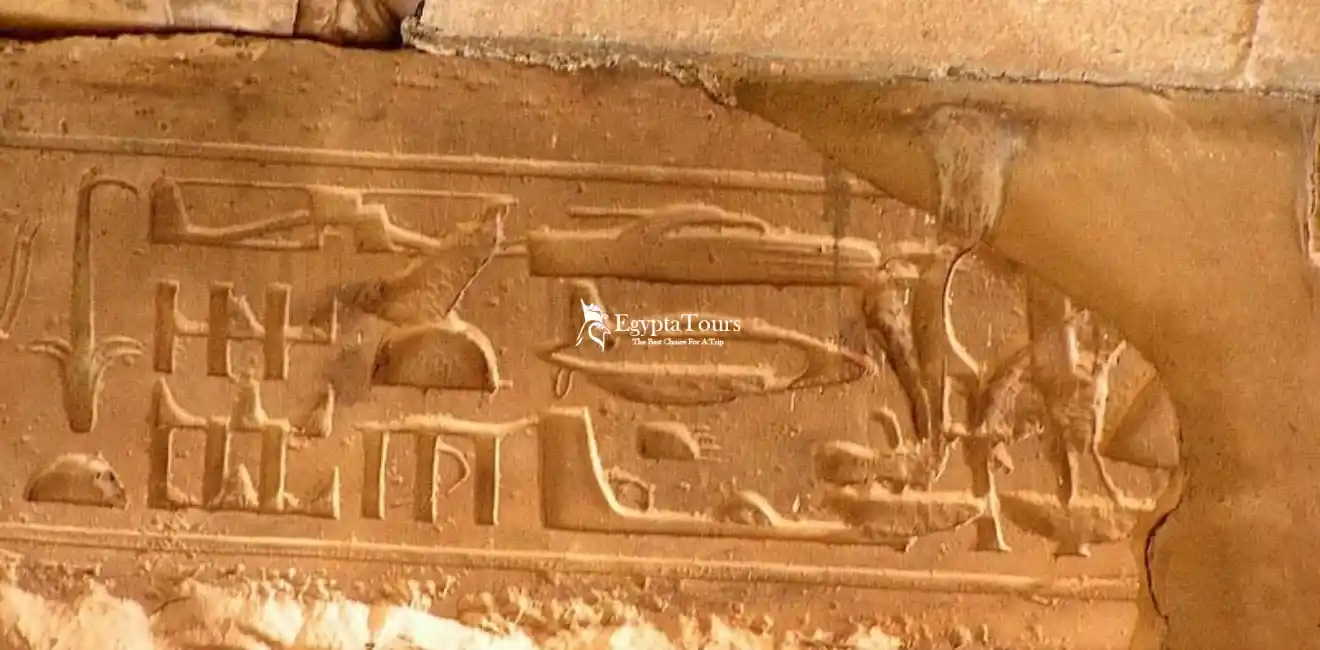
The so-called “Abydos Helicopter Hieroglyphs” are in the Temple of Seti I and are often mentioned by people who believe in ancient aliens. The carvings look like modern machines such as helicopters, submarines or airplanes. Actually, the helicopter shape is an illusion. It was created by overlapping a bow hieroglyph from Seti I and two arm hieroglyphs from Ramesses II.
The original carving from Seti I’s time (1294–1279 BC) says: Powerful with a sword who defeats the nine bows (enemies of Egypt), Menmaatra. Later, Ramesses II (1279–1213 BC) changed the words to say: Protector of Egypt who defends against foreign lands, UsermaatraSetepenre.
Over time, the plaster used to change the hieroglyphs wore away. This left parts of both inscriptions visible which made them look like they were overlapping.
The Osireion: Tomb of the God
The-Osireion-Tomb-Of-The-God-Osiris-Abydos-EgyptaTours
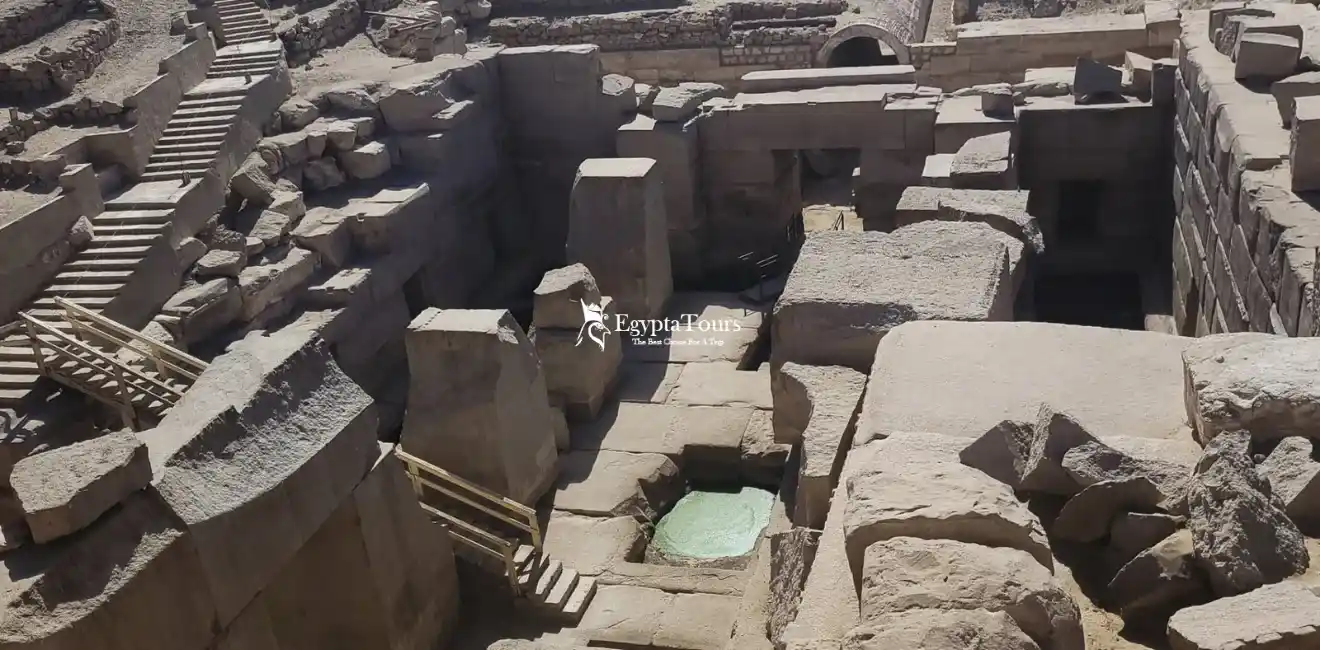
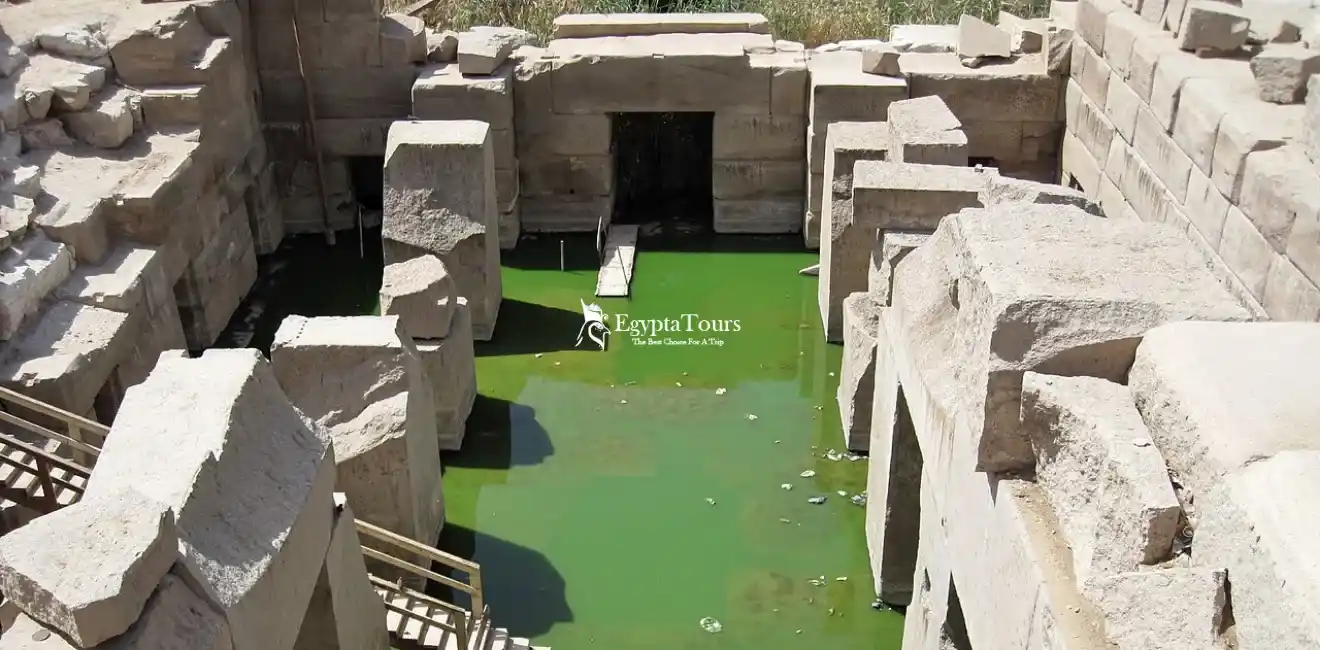
Behind the main temple is the mysterious Osireion, an underground building thought to be the tomb of Osiris. It was built with very large granite blocks, like the style of the Old Kingdom, and is below ground to represent the underworld.
In the middle, a stone platform is surrounded by a water trench, making a symbolic island of creation, like the first land that appeared at the beginning of the world in Egyptian stories.
People are not sure exactly why it was built; some think it was a symbolic tomb or cenotaph but it clearly had great religious importance. Ancient visitors believed it was where Osiris’s body rested and they left offerings and prayers for rebirth and renewal.
The Osireion is still impressive today, with its huge columns and the sound of ancient chants, inspiring wonder in all who visit.
Abydos Carvings
Abydos-Carvings-Ancient-Egyptian-Reliefs-EgyptaTours
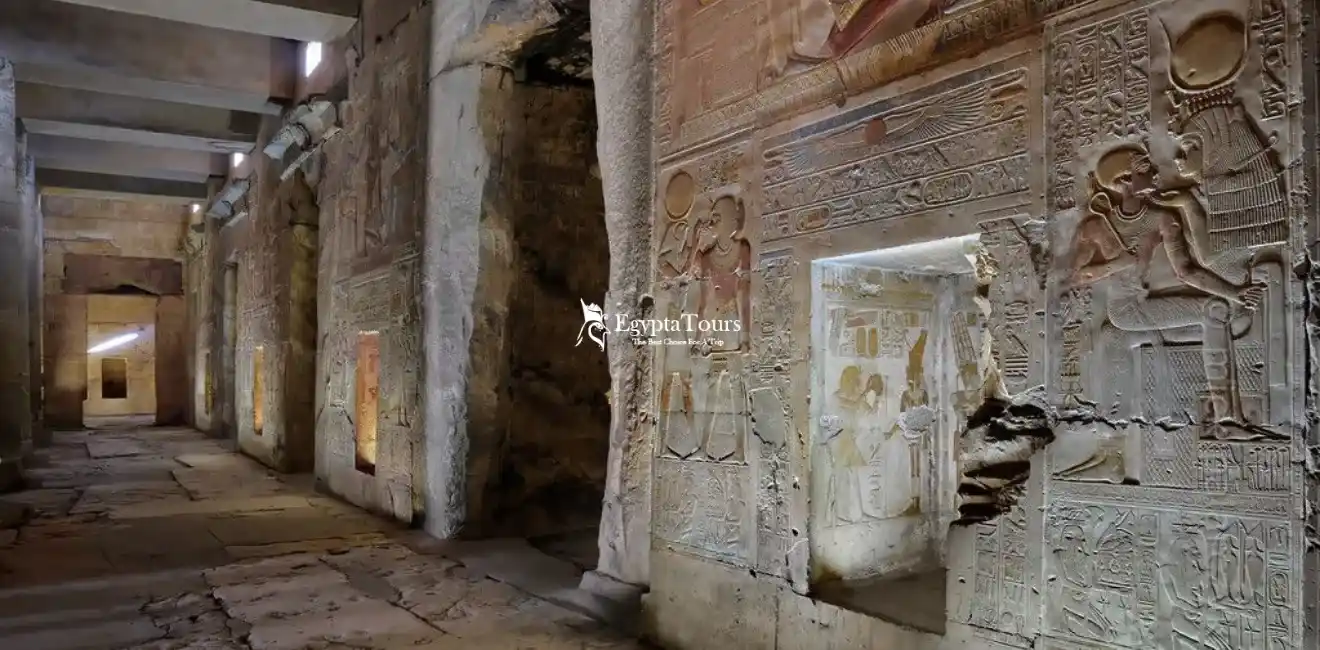
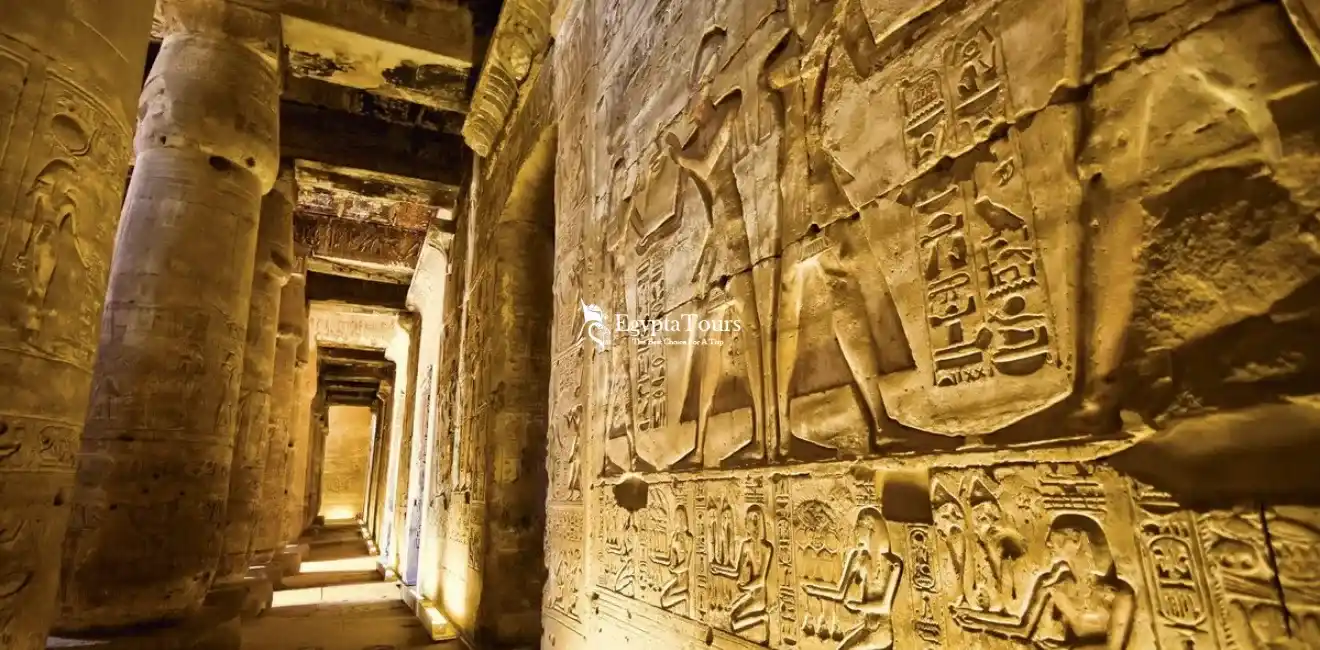
The carvings in Seti I’s temple are some of the best in Egypt. Pictures of gods and pharaohs are shown with beauty and skill, their faces calm and their bodies balanced. Some of the original colors red, blue and gold are still on the stone, showing how bright the temple used to be.
The scenes show daily life and big stories from myths: Seti I offering incense to Osiris, Isis holding the god after he came back to life and Horus giving the signs of life and power.
Every part of the temple has a special meaning. The outer walls stand for the human world and the inner holy rooms represent the world of the gods. Walking through the temple was like a spiritual journey from life to eternity.
The deep carvings, the balanced design and the calm feeling were all made to lift the soul and connect the visitor directly to the god Osiris.
The Abydos Boats in Ancient Egypt
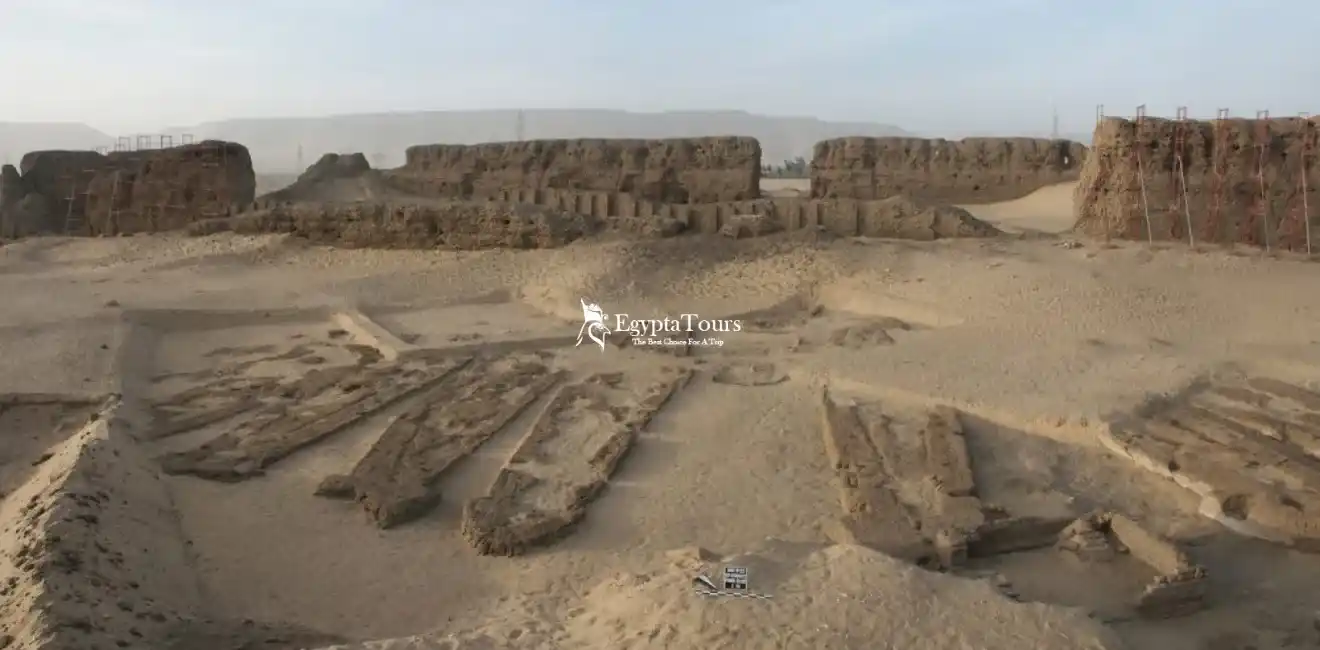
The-Abydos-Boats-In-Ancient-Egypt-Discovery-EgyptaTours
The Abydos boats were found in 1991 in Abydos, Egypt. They are very old ceremonial boats from the time of the early pharaohs, around 3000 BCE and are probably linked to kings like Hor-Aha or Djer from the First Dynasty. The discovery shows that boats had an important symbolic meaning in ancient Egyptian beliefs about the afterlife.
Excavations at the site started in 2000 near a Second Dynasty building called Shunet El Zebib. Archaeologists found fourteen boats buried in the ground, each surrounded by brick walls shaped like the outline of a ship.
These boats were about 75 feet long and were built from local Tamarix wood. The builders used a special mortise and tenon joining method which was different from the shipbuilding techniques used later in the Mediterranean Sea.
The boats are thought to have been used for religious purposes and were meant to help the pharaoh travel in the afterlife. They are considered early examples of solar boats, such as Khufu’s famous boat. Similar boat burials, though not studied as well, have also been discovered in places like Helwan and Saqqara.
The Importance of Abydos in the Development of Writing
Abydos was very important in the early development of Egyptian writing. Some of the oldest hieroglyphs were found in ancient tombs there. Many inscribed bone labels, about 5,300 years old, were discovered in the tomb of King Scorpion I at Abydos.
These labels were tied to bags of oil and linen and are considered the earliest known examples of writing in the world. They recorded information such as names, amounts, and suppliers of goods.
The carvings and texts in the Temple of Seti I are famous for being clear and beautifully made. The Abydos King List, carved on the temple walls, is also an important source of ancient Egyptian history.
The Abydos Royal Tombs
Abydos contains the royal tombs of Egypt’s earliest dynasties, especially the First Dynasty. The Umm el-Qa’ab cemetery which means “Mother of Pots,” includes the burial sites of early kings such as King Narmer and King Djer. At first, Egyptian graves were simple pits lined with bricks. The tomb of King Menes, for example, was about 15 feet wide and 25 feet long.
Over time, tombs became bigger and more detailed. Many of them included rooms for offerings and rows of graves for servants. Some tombs show signs of human and animal sacrifice, such as in the tomb of Queen Merneith where 118 servants and donkeys were buried.
During the Second Dynasty, tombs developed into long corridors with special rooms for offerings. Even though many later tombs were looted, archaeologists still found valuable objects like jewelry, stone vessels and written records of kings’ reigns. A burial ground for ordinary people also started in the First Dynasty and continued to be used until the Roman period.
Recommended Tours To Visit The Great Abydos Temple
| Tour Name | Duration |
|---|---|
| 4 Days Luxor Tour – Luxor Short breaks | 4 Days – 3 Nights |
| 3 Days Luxor Tour – Luxor short Breaks | 3 Days – 2 Nights |
| 2 Days Luxor Tour – Luxor Short Breaks | 2 Days – 1 Nights |
| Day Trip to Deandra and Abydos from Luxor | 1 Day – 10 Hours |
The Abydos Temple is one of the most popular tourist attractions in Luxor, Egypt. Located in the heart of the city, the temple is a must-see for anyone interested in ancient Egyptian history and culture. The temple was built by Pharaoh Ramses II in the 13th century BC, and was dedicated to the god Amun-Ra.
It is one of the most well-preserved temples from this period, and contains many interesting features such as reliefs of Ramses II’s military campaigns, and a huge statue of the pharaoh himself. Visitors to the temple can also see the tomb of Pharaoh Seti I, which is located nearby.
Conclusion
Exploring the Great Abydos Temple is truly an unforgettable experience. From uncovering its intriguing secrets to learning about its long, captivating history and admiring its incredible architecture, there’s something for everyone in Luxor. Whether you’re a visitor or a local, exploring this amazing temple should be on your bucket list of places to visit when you travel to Egypt. So if you ever have the chance to go, make sure not to miss out on experiencing one of Luxor’s most majestic monuments!
Exploring the Great Abydos Temple: FAQ
What is the significance of the Great Abydos Temple?
The Great Abydos Temple, primarily known for the Temple of Seti I, plays a pivotal role in ancient Egyptian history as a necropolis for early kings and a pilgrimage site for Osiris worship.
Who built the Great Abydos Temple?
Pharaoh Seti I commissioned the construction of this remarkable temple around 1300 BC, but it was finished by his son, Ramses II.
What are the main features of the Great Abydos Temple?
The temple is noted for its unique layout with three levels, intricate reliefs depicting pharaohs, and the famous Abydos King List, a chronological list of past pharaohs.
Why is the Abydos King List important?
The Abydos King List is significant because it offers a comprehensive record of Egypt’s rulers, providing invaluable insights into the nation’s history and governance.
Can you visit the Great Abydos Temple today?
Yes, it remains open to visitors who are eager to explore its historical significance and architectural wonder. Tours often include insights into ancient Egyptian civilization and beliefs.
How can I reach the Great Abydos Temple?
Located about 2.5 hours by car north of Luxor, visitors often prefer guided tours or private transportation to reach this historic site.
What should I wear when visiting the temple?
Dress modestly to respect cultural norms. Light, breathable clothing is recommended due to the warm climate, and comfortable shoes are essential for exploring the site.
Are there other attractions near the Great Abydos Temple?
Alongside the Temple of Seti I, visitors can explore the surrounding archaeological sites and enjoy the rich cultural heritage of the area.
About EgyptaTours

EgyptaTours is a name synonymous with trust, excellence, and unforgettable travel experiences, proudly standing as one of the leading travel agencies in Egypt. Renowned for its deep expertise, personalized service, and carefully crafted itineraries, EgyptaTours serves as the ultimate gateway to discovering Egypt in its most authentic and inspiring form.