Easter Traditions in Egypt and Coptic Celebrations
Egypt is a country rich in civilization, culture, and history. Sharing the...



The ancient Egyptian goddess of fertility is one of the most important symbols of life, growth, and continuity, according to the beliefs of the ancient Egyptians. It was believed that they had a great role in fertility, whether in agriculture or human reproduction from birth and motherhood. One of the most famous fertility deities is the goddess Hathor, who refers to the symbol of the mother and fertility in ancient Egypt.
The ancient Egyptian goddesses of fertility were numerous and were sanctified as goddesses of motherhood and fertility in their beliefs. They are as follows:
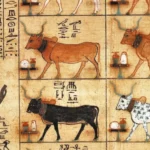
The goddess Hathor was depicted in several forms. First, in the form of a cow as a symbol of giving and motherhood, while another time she was depicted in the form of a female lion, to tear apart the enemies of her father Ra. She was also depicted in the form of a female holding on her head two horns and the sun disk as a symbol of her husband Horus, as her name expresses the “womb of Horus.”
The goddess Hathor was considered a symbol of giving and motherhood as she was associated with the idea of the mother goddess, as her roots go back to the worship of the wild cow. She was also known as a goddess of the sky for her control over the movement of the planets.
She is one of the ancient Egyptian myths and was depicted in the form of a female hippopotamus with the features of a lion and a crocodile, expressing a unique composite form. She was depicted standing on her hind legs and in the form of a swollen belly as a symbol of pregnancy, and the meaning of her name is “the great one.”
She is known as the goddess of birth and fertility and was worshipped to protect women during pregnancy and childbirth. Many amulets were hung in the homes of the ancient Egyptians, believing in the protection of the family.
The goddess Nebt-Het was depicted in the form of a delicate and graceful female wearing a long, tight dress to indicate femininity and respect at the same time. She carries on her head the hieroglyphic sign which means “lady of the house.”
The goddess Nebt-Het was associated with Egyptian agriculture, as the ancient Egyptians considered her the lady of the fields and plants. She was presented during the harvest and flood season, for the sake of good and abundant harvest and to grant abundance and growth.
The goddess Heqet is one of the ancient Egyptian goddesses of fertility, as she was considered the goddess of birth by the ancient Egyptians and she was the wife of the god Khnum. The goddess Heqet was depicted in the form of a female with the head of a frog, holding in both her hands the ankh symbol as a symbol of life. This indicates that she gives life to the newborn child.
She was hung in many amulets and was sanctified in the temples to help women in childbirth. Her presentation dates back to the Middle Kingdom era, through which the birth of the first three kings of the Fifth Dynasty was known. Since then, her name has been used as a reference to the process of childbirth in ancient Egypt.
The goddess Bastet was depicted in the form of a crouching cat, sitting on its hind legs, with its ears pointing upwards. She was also depicted with the body of a woman and the head of a cat. Women wore many amulets that were hung around their necks in order to place them under the care of the goddess and to grant them fertility.
Bastet was considered the goddess of fertility and new life, due to her role in protecting pregnant women and providing them with care during the period of childbirth, as well as protecting newborn infants from any evil.
The goddess Ipet was depicted in the form of a crocodile and a hippopotamus, in addition to the hair of a woman. She wore a short cylindrical head, and was considered the goddess of motherhood and the patroness of childbirth. It is believed that she helps women in the postpartum period, in order to drive away evil spirits and prevent any harm or pain to the child.
The Nile River is a symbol of fertility and the silt of life in ancient Egypt, according to the beliefs of the Egyptians. We notice this through the sanctification and worship of many of the animals present in the Nile River, as they saw them as a source of life and an embodiment of the power of nature.
This is clearly evident in the worship of the hippopotamus, as there are many statues of hippopotami that are considered the ancient Egyptian goddess of fertility for the lands. It was associated with the Nile, fertility, protection, and birth. It is depicted as the protective goddess of pregnant women and young children. It is also a symbol of the power of nature, especially at the time of the flood when the land is irrigated with the Nile’s silt to begin the season of agriculture and growth.

The Symbols And Myths Associated With Fertility In Ancient Egyptian Religion
The concept of fertility was linked to Egyptian religious life, as many ancient Egyptian goddesses of fertility appeared. Many symbols and myths associated with the cycles of life, death, renewal, and the forces of nature also manifested.
The ancient Egyptians expressed fertility through many symbols, such as the lotus flower, which was an example of growth and creation. They sanctified the Nile River and called the Nile flood the god Hapi, as a symbol of renewed fertility. The goddess Hathor was considered the protector of mothers and pregnant women, to whom sacrifices were offered for the sake of childbirth and abundant offspring.
The myths were also embodied in the myth of Isis and Osiris, who was killed by his brother. Isis brought him back to life, which symbolizes the cycle of life and death. Isis was associated with fertility and motherhood, as well as being a god of agriculture.
Ancient Egyptian art showed the ancient Egyptian goddess of fertility in an artistic style that embodies the magnificence of the construction and the beauty of the details. Among the most prominent statues are:
Some agricultural plants were also considered symbols of the renewal and abundance of life, such as the lotus and the ears of grain. The inscriptions on the walls show this, and many rituals were held as a symbol of thanks to the goddess.
Many ancient Egyptian goddesses of fertility were depicted as a symbol of motherhood and childbirth, such as the goddess Taweret, who is in the form of a female hippopotamus with a full belly to express the protection of women during pregnancy and childbirth. She was presented in order to bring life and safety to the mother and her children. There were many amulets for her to protect women from evil or any other diseases during pregnancy and childbirth.
The ancient Egyptian goddesses of fertility were numerous, including the goddess Hathor, the goddess Isis, the goddess Bastet, and the goddess Ipet, who are considered the most important Egyptian goddesses of fertility and the protection of women and children from any evil.
The ancient Egyptian goddesses of fertility were numerous, and they played their role in protecting women and children. The goddess Isis is the most famous of the female fertility goddesses, as she symbolized human fertility.
According to the beliefs of the ancient Egyptians, the goddess Hathor is the first of the ancient Egyptian goddesses of fertility, as her worship appeared since the predynastic eras and she symbolizes motherhood and fertility.
Yes, Isis is one of the Egyptian goddesses of fertility, due to her association with the cycle of life and death. We notice this in the myth of Isis and Osiris.
The goddess Hathor is one of the most important Egyptian deities who combined love, fertility, femininity, music, and joy.




Explore our top-rated Egypt travel packages and embark on an unforgettable journey. From the Pyramids of Cairo to the magical temples of Luxor, Aswan, and Abu Simbel, discover expertly curated tours designed for your perfect Egyptian adventure