Tanis
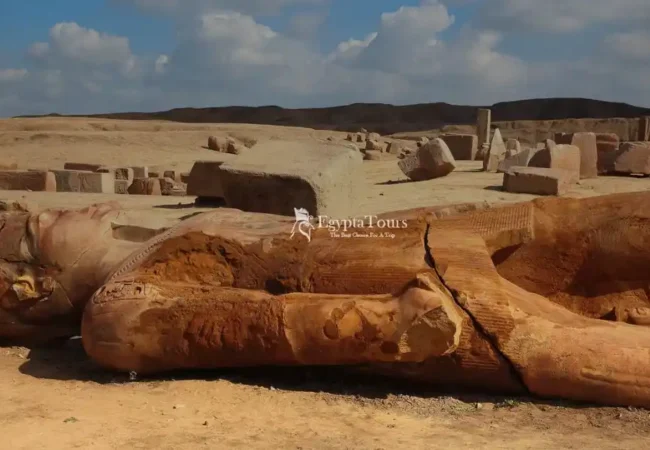
Tanis, currently known as “San El-Hagar” in the Sharqia Governorate, was a...



The ancient Egyptian practice of mummification was a highly sophisticated, 70-day scientific and religious process designed to preserve the physical body, ensuring the soul could navigate the underworld and achieve eternal life. Evolving from natural desert sand preservation into a complex embalming art by the 4th Dynasty, mummification involved meticulous organ extraction, desiccation using natron salt, and elaborate linen wrapping. This sacred ritual was not limited to pharaohs but was available across different social classes and even applied to sacred animals, leaving behind a lasting legacy that modern archaeologists now study using advanced, non-invasive technologies.
Key Takeaways
Spiritual Necessity: The preservation of the physical body was considered essential for eternal life, allowing the soul to recognize its vessel and safely journey through the afterlife using spells from the Book of the Dead.
The 70-Day Process: Professional embalmers extracted the brain through the nasal cavity, removed vital organs, desiccated the body in natron salt for 40 days, and meticulously wrapped it in resin-soaked linen containing protective amulets.
Canopic Jars: The extracted liver, lungs, stomach, and intestines were preserved in four dedicated jars guarded by deities known as the Four Sons of Horus, while the heart was deliberately left inside the body for the final judgment.
Socioeconomic Access: While pharaohs and high-ranking officials received the most elaborate and expensive embalming treatments, commoners could purchase simpler, budget-friendly mummification packages.
Animal Mummification: The practice extended far beyond humans, with millions of animals—including sacred cats, ibises, crocodiles, and beloved pets—mummified as religious offerings or companions for the afterlife.
Modern Archaeological Study: Today, researchers utilize non-invasive methods like CT scans, X-rays, and DNA analysis to study mummies, unlocking ancient secrets about health, lineage, and cause of death without damaging the delicate remains.
The belief of the ancient Egyptian that mummification of the Pharaohs is the gateway to the other world in eternal life, and the science of anatomy, that science in which the ancient Egyptian advanced, was the true gateway to the progress of the art of mummification of the Pharaohs, and through it their souls were enabled, and according to that belief eternal life, the ability to return the soul to their bodies in The journey of resurrection and immortality.
Mummification is one of the most fascinating and long-lasting practices of ancient Egyptian civilization. But what does mummification actually mean in ancient Egypt? It refers to the process that a dead body goes through to prepare it for life in another world. The ancient Egyptians believed that for the soul to exist in the afterlife, it needed the body to be preserved. Mummification made sure that the body would stay complete and intact forever, allowing the deceased to live in the next world.
Mummification is the process of preserving a body using special methods. For a deceased person, this preservation was considered absolutely necessary so that the individual could safely reach the other world which was seen as part of their eternal life according to ancient beliefs. Without mummification, the soul would lose its way and could not reunite with the body and without the body, eternal life would be impossible to achieve.
The word “mummy” comes from the Persian word “mumia” which means bitumen, a black resin used in mummification. Over time, the term came to be used for the preserved bodies of ancient Egypt.

Close-Up-Linen-Wrapping-Mummified-Pharaoh-Hands-Detail-EgyptaTours
Mummification had a very important religious meaning for the ancient Egyptians. They believed that after death, the soul traveled through the underworld, facing many obstacles and tests. Only a body that was carefully preserved could allow the soul to complete this journey and reach the afterlife safely. A set of spells and instructions in the “Book of the Dead” guided the deceased through these challenges.
During mummification, the internal organs were removed and placed in canopic jars. Each jar was linked to one of the four sons of Horus, who were believed to protect the organs:
Canopic jars were very important in burial rituals. They were beautifully decorated and were often included inside the tomb with the mummy.
In the past, and before the science of embalming developed, that is, the pre-dynastic era, the ancient Egyptian relied on mummification of the Pharaohs by natural methods, and he used to bury the bodies in shallow pits in the sand, as the intense heat was sufficient to preserve the bodies from damage and absorption of fluids, and with the beginning of the dynastic era, Belief in the idea of life after death increased, and the importance of the body for the soul to recognize it.
The prevailing belief became that the matter does not stop at embalming the body and preserving it from putrefaction, but rather it must reach to preserve the shape and features of the dead, so that the soul can know the body that pertains to it, so the scholars investigated In that science, until they reached its highest levels, and perhaps this appears clearly in the steadfastness of mummies dating back to four thousand years BC, without decomposition or putrefaction.
Preserving bodies from putrefaction and decomposition was considered one of the most important secrets of the ancient Egyptians, which they preserved desperately.
That idea that took root in the minds of the ancient Egyptian, as soon as he learned that he was a stranger, he said angrily, “A stranger in the embalming room…very beautiful.”
Many names were given to this flag, including the word “wati”, which is a Pharaonic word meaning shrouding, and it was also called the word “mummy”, which is a Persian word meaning black, as the color of the corpse usually changes after the preservation process to that color.
It is the most famous name for that flag, and it is an Arabic word derived from the word “hanout,” which refers to materials used by the embalmer to preserve the body.
The practice of mummification was very common from the earliest periods of ancient Egyptian history. The origin of mummies goes back to prehistoric times, when the dry air and hot desert sand, along with the absence of rain, helped preserve bodies that were buried in shallow graves.
During the Fourth and Fifth Dynasties, around 2600 BC, the ancient Egyptians began to deliberately mummify bodies based on their religious beliefs. The techniques of mummification reached full development during the Third Intermediate Period (1070–712 BC). Over the following two thousand years, mummification continued to be practiced and gradually evolved until the Roman Period (30 BC–364 BC).
In every historical period, the quality of mummification depended on how much money was paid for the process. Some of the most carefully prepared and well-preserved mummies come from the Eighteenth and Twentieth Dynasties of the New Kingdom (1550–1070 BC). In the Late Period, around 450 BC, the famous historian Herodotus recorded the complete mummification process in detail.
The practice of mummification began to disappear in the fourth century when Egypt was ruled by Rome as a Christian state that rejected the mummification tradition. Many scholars and historians consider mummification to be a lost art, yet several aspects of this practice can still be seen today in the ways people honor and remember their loved ones.
Ancient Egyptian mummification began by chance when bodies were naturally preserved in the dry desert sand. Later, intentional mummification started around 2600 BCE during the Fourth and Fifth Dynasties. Over more than two thousand years, the practice continued to develop and the quality of mummification depended on how much was paid for the process.
Some of the best-preserved mummies come from the New Kingdom, especially from the Eighteenth to the Twentieth Dynasties (around 1570–1075 BCE), including famous pharaohs such as Tutankhamun. Early historians, including Herodotus, studied this ritual and recorded its details during his visit to Egypt around 450 BCE.
Mummification in ancient Egypt was very widespread and was not limited only to the wealthy or elite classes. Rich individuals received a complex and costly mummification process performed by professional embalmers while ordinary Egyptians had simpler and more affordable options. Even the poorest people could choose a basic burial, where the body was wrapped in linen and provided with the necessary spells for the journey to the afterlife, a practice reflected in coffins found throughout Upper and Lower Egypt.
During the mummification process, internal organs such as the lungs, liver, stomach and intestines were carefully removed to prevent decay. These organs were thoroughly cleaned, dried and placed in special jars which were buried with the body. The heart was left inside the body because it was believed to contain a person’s feelings and character and played an essential role in the judgment of the afterlife.
The brain, whose purpose was not fully understood by the ancient Egyptians, was removed and discarded. Embalmers extracted it through the nose using a hook, after which the skull was cleaned. The body was then placed in natron for more than seventy days to dry completely. After that, it was carefully wrapped in linen strips coated with resin, a process that could take around forty days and use up to four thousand square feet of linen for the most elaborate mummies.
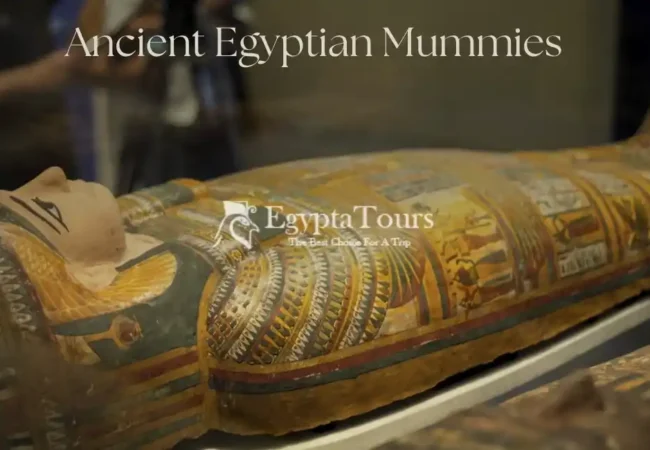
Pharaohs were sometimes wrapped in linen taken from statues of gods while common people used linen from everyday household materials. The sarcophagi were made from materials such as wood, stone or gold and were decorated with detailed artwork, spells from the Book of the Dead and texts describing the life and achievements of the deceased.
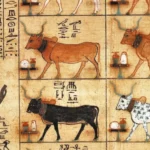
Animal mummification was also very common in ancient Egypt. Animals were mummified for different religious and social reasons, including sacred animals and family pets. Some animals were worshipped as gods, while others were raised for ritual sacrifice such as cats, ibises and cows. Many of these animals were also buried with their owners.
The idea of a “Mummy’s Curse” did not begin in modern times but was rooted in ancient Egyptian beliefs. Warnings carved inside tombs threatened punishment for anyone who disturbed the burial, calling upon the anger of the gods or the spirits of the dead. These beliefs expressed fear of divine punishment from the spiritual world rather than fear of the mummies themselves.

Ancient-Egyptian-Mummification-Tools-Linen-Oils-Amulets-Canopic-Jars-EgyptaTours
Mummification needed many tools and materials, most of which were very specialized. The ancient Egyptians used different items to make sure the process was done correctly.

Royal-Egyptian-Mummies-Inside-Decorated-Sarcophagi-Display-EgyptaTours
Not all mummies were the same. The ancient Egyptians mummified different types of bodies, each for a special reason.
After death, the Pharaohs of Egypt were mummified and buried in very elaborate tombs so they could take their proper place in the afterlife among the ancient Egyptian gods. The same mummification process was also given to members of the royal family, high-ranking officials, nobles and the elite of society. In addition, common people were also mummified if they were able to afford the cost as the process was considered expensive. For religious reasons, many ancient Egyptians also chose to mummify animals that were seen as sacred, including bulls, cats, crocodiles, snakes, birds and other animals.
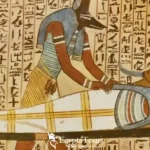
The ancient Egyptian embalmer used different methods in the mummification of the Pharaohs process, so there was a method he used with kings and senior statesmen, but it was very expensive, and in it the mummification of the Pharaohs process begins inside the tent of the god or the place of purification,
which was called in the hieroglyphic language “br-Abd”, where the corpse is placed On the stone embalming table, the embalmer begins by breaking the nose bone using a chisel and a hammer, then takes a hook and removes the brain from the hole he made, and fills the skull with a thick layer of bitumen and flax saturated with gum or resin extracted from plants, in order to protect it from the microorganisms that breed inside the corpses.
Studies conducted on the mummies of some kings, including Thutmose I, II and III, confirmed that their heads contain the brain, which confirms that the ancient Egyptian did not follow a typical technique in embalming bodies, and with successive studies of the mummies of the pharaohs over the course of families, it was proven that the embalmer did not adhere to one method.
In embalming, it is even difficult to find two mummies that are similar, either in the method of embalming or in the materials used.
As for the second step, the embalmer performs it to get rid of all the soft materials that cause bacterial putrefaction, so he cuts the left side of the lower abdomen, from which he removes all the internal organs, washes them well, then immerses them in natron salt, and treats them with hot resin, then they are placed in four canopic pots on top of each other.
The form of the children of the god Horus, the liver is placed in the bowl of “Emesti” in the form of a human being, the lungs are placed in the bowl of “Wahabi”, and the stomach is placed in the bowl of “Dua – Mut – F”, which is in the form of the head of the “jackal” wolf, while the intestines are placed in a bowl ” Ugly – Snow – F” with the head of a hawk.
The embalmer leaves nothing but the heart and kidneys in the body, then washes it inside and out with a solution consisting of 15 substances, including date wine, myrrh, henna, cedarwood oil, and onions, then fills the chest cavities with balls of linen saturated with resin, perfumes and natron solution,
which are Substances that prevent bacterial decomposition, after that the corpse is buried inside natron salt for a period of up to 40 days, until the tissues are completely dry of all fluids and fats.
The body is transferred again to “Bar-Abd”, so that the priests can purify it with the waters of the Nile.
This step is considered the most important step in the embalming stages, to determine the time required to prepare the body, in addition to the belief of the ancient Egyptians in the power of the Nile to resurrect man again, and the purification process is completed by adding Cedar oil, precious oils and perfumes, mummy massage with incense and cinnamon.
In the end, liquid resin is poured on the mummy, and its task is to close the pores, as it is an insulator for moisture and minute insects.
After that, the embalmer closes the eyes, ears, and nose with wax, and then wraps the entire mummification of the pharaohs with tens of meters of linen saturated with glue, which carries in its folds amulets and a scroll of funerary papyrus, and decorates it with ornaments and throws On it are flowers,
the last ritual remains before him to complete the funeral ceremonies, so he recites prayers and in the meantime opens the mouth of the mummy, so that her senses can return again in the underworld, and finally puts her in the coffin that bears a mask that resembles the features of the deceased, and is decorated with phrases from the Book of the Dead, then he is buried. Inside his tomb, which contains all the items he needs on his journey to the other world.
As for the common people and the middle class, there were simpler and less extravagant steps in embalming their dead, and these rituals continued until the advent of Christianity, but they declined significantly in the Roman and Hellenistic eras,
so that the quality of preservation was less than previous eras, although a little was added to it, as it was added on The mummy is a roll of linen crowned with a golden piece in the middle, in addition to preserving the limbs or the entire body with a layer of gold. In the Byzantine era, the use and development of embalming stopped.
The presence of mummified mummies was not limited to Pharaonic Egypt only, but many of them were found in other countries and civilizations. In South America, a mummified boy’s head was found in the Chilean desert.
He belonged to the “Chenkoro” group, that group that had no civilizational features other than mummification of the Pharaohs.
And they had their own way of embalming, so they used to start by extracting the viscera, then drying the body with hot ashes and stuffing it with herbs, then they would wrap the body with the skins of pelican birds, or sea lions, then a clay mask would be placed on its face, and among the materials used in the embalming process was the poisonous arsenic, which led to abortion of fetuses, so most of the mummies in the region are children.
In Europe and North America, mummies were offered as offerings, and they were found preserved naturally because of the icy nature, as a man was found in the Alps five centuries ago, known as the Iceman, and dates back to the Iron Age, while the acidic nature in western Europe was able to preserve the mummies naturally, but the color of the corpse changes to a dark brown color, and most of those mummies were found with their heads smashed or suffocated, the most famous of which is a mummy in the village of Tollund, Denmark, dating back two thousand years ago.
Mummies were also found in the state of Yemen, dating back to 1200 BC. They were wrapped in linen inside mummified leather bags in an elaborate manner, despite their presence in rugged desert areas, and it seems that they were performed for certain religious rituals, and because of the high quality of mummification of the Pharaohs, Yemen ranked third. At the world level in mummification of the Pharaohs after Egypt and Chile.
The preparation for the afterlife included the Book of the Dead, which contained spells and instructions to guide the deceased through the underworld. Important parts of this book included:
Parts of the Book of the Dead were often written on the tomb walls or included as papyrus scrolls with the mummy.
The Nile River was very important in the mummification process. Natron, the natural salt used to dry and preserve the body, was found near the Nile. Water from the river was also essential for different stages of mummification and purification.

Archaeological-Study-Of-Pharaoh-Mummy-Using-CT-Scan-Technology-EgyptaTours
This science remained a secret of the Pharaohs, so that we did not know about it except what was mentioned by the Greek historian Herodotus, as he wrote down some mummification of the Pharaohs methods during his visit to Egypt in the fifth century BC, but with recent discoveries our information about that science increased, especially when the American mission discovered Affiliated to the American University of Memphis, Cemetery No. 63 in the Valley of the Kings, which contained 8 coffins, inside them were remnants of embalming tools and materials, which were used to preserve the mummy of King Tutankhamun, which opened a great door to reveal his hidden secrets.
Modern archaeology has greatly increased our knowledge of mummification.
Some important discoveries and studies include:
Mummification is the process of preserving a body after death to prevent decay. In ancient Egypt, this involved removing internal organs, treating the body with chemicals, and wrapping it in linen.
Egyptians believed in an afterlife where the spirit would need the body. Mummification of the pharaohs ensured the pharaoh’s body stayed intact, allowing their ka (spirit) to recognize it and live on.
The entire process took about 70 days. This included 40 days for drying the body and 30 days for wrapping and rituals.
Key materials included natron (a type of salt), resins, oils, and linen. Natron was used to dehydrate the body, while resins and oils helped preserve and protect it.
Organs were removed and placed in canopic jars or treated and returned to the body. The heart was often left in place, as it was believed to be the center of intelligence and emotion.
Canopic jars held the mummified organs and were essential for the afterlife. They were often decorated with the heads of the four sons of Horus, each protecting a specific organ.
No, mummification of the pharaohs was reserved for the elite, especially pharaohs. Common people often received simpler burials due to cost and complexity.
Techniques improved with experience. Early mummification of the pharaohs were poorly preserved, but over centuries, Egyptians perfected the art, leading to better-preserved remains.
Religion was central. Mummification of the pharaohs rituals and practices were deeply tied to religious beliefs about the afterlife and maintaining the deceased’s identity.
Yes, the most famous is likely Tutankhamun, whose tomb was discovered mostly intact in 1922. His mummy and treasures provided valuable insights into Egyptian burial practices.
Today, non-invasive techniques like CT scans and X-rays are used to study mummies. These allow researchers to learn about health, diet, and life without damaging the remains.
Absolutely. Mummies provide insights into health, disease, and lifestyles of ancient Egyptians. They also reflect cultural, religious, and technological advancements of the time.


Explore our top-rated Egypt travel packages and embark on an unforgettable journey. From the Pyramids of Cairo to the magical temples of Luxor, Aswan, and Abu Simbel, discover expertly curated tours designed for your perfect Egyptian adventure