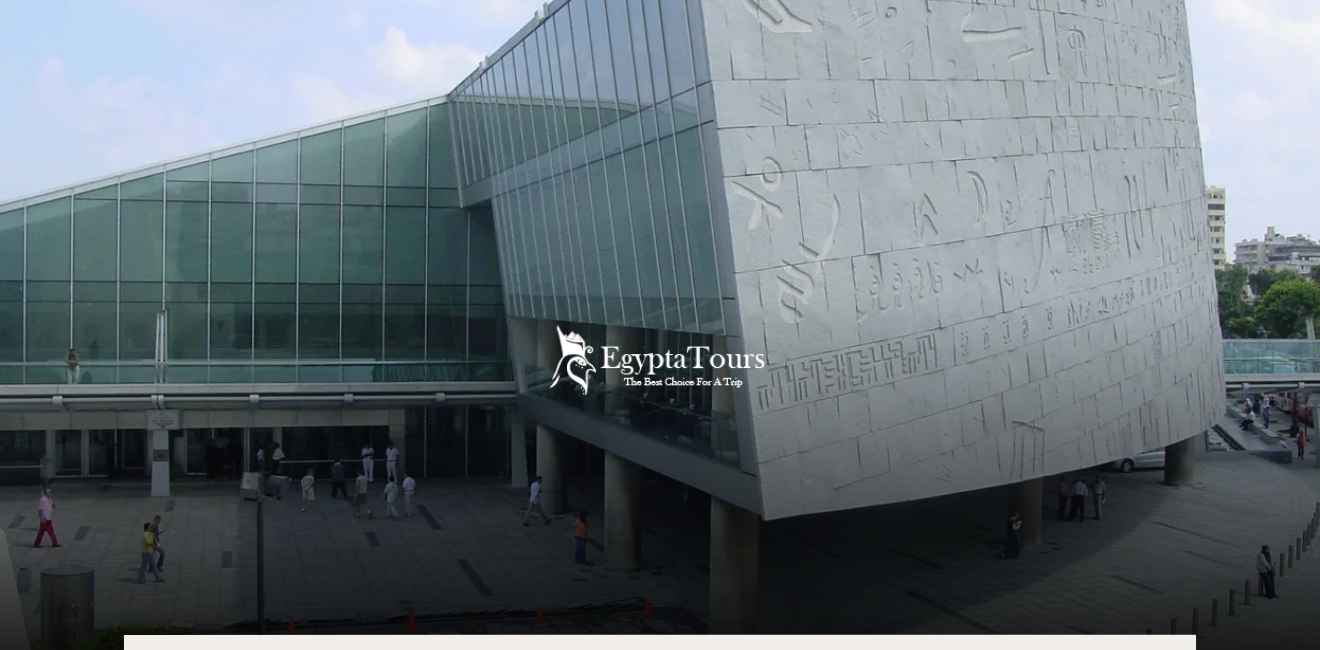
The Ultimate Guide to the Ancient Library in Alexandria Egypt
📋 Summary & Quick Facts
Imagine standing in the exact city where the greatest minds of the ancient world once gathered to unlock the secrets of the universe. The ancient Library of Alexandria wasn’t just a building; it was the intellectual beating heart of antiquity, holding over 500,000 priceless manuscripts. While the original structure was tragically lost to history, its incredible legacy has been beautifully reborn.
Today, the breathtaking modern Bibliotheca Alexandrina stands proudly on the Mediterranean coast, offering travelers a once-in-a-lifetime chance to explore world-class museums, rare antiquities, and stunning architecture. If you are planning a trip to Egypt, exploring this modern marvel—and the ancient history buried beneath it—is an absolute must-do for your itinerary.
Why You Need to Visit: Key Takeaways
-
-
Walk in the Footsteps of Legends: Founded in the 3rd century BCE, the original library was a bustling university campus that attracted history-making geniuses like Euclid and Archimedes.
-
Mind-Blowing History: At its peak, the ancient repository held over 500,000 papyrus scrolls covering everything from astronomy to medicine. Today, the modern library honors that history with a massive space designed to hold up to eight million books!
-
Incredible On-Site Museums: A guided tour today isn’t just about reading. You will get to explore the massive Antiquities Museum, which features actual ancient artifacts pulled straight from the Mediterranean seabed.
-
The Ultimate Modern Revival: The new Bibliotheca Alexandrina is an architectural masterpiece. Alongside its books, it features a cutting-edge digital archive, a panoramic interactive display, and rare, historic manuscripts you cannot see anywhere else.
-
An Unforgettable Tour Experience: Whether you are taking a day trip from Cairo or spending a few days on the coast, adding an expertly guided tour of the Alexandria Library will give you a profound appreciation for Egypt’s role in shaping human history.
-
The ancient library in Alexandria Egypt is one of the most remarkable cultural institutions to have ever existed. Founded by Ptolemy I Soter in the 3rd century BC, the library was home to some of the most treasured collections of books and manuscripts from around the world. It was a beacon of learning for centuries, until it was destroyed in a fire in the 1st century AD.
Today, the legacy of the Bibliotheca of Alexandria still lives on, with its impact being felt in numerous cultures around the world.
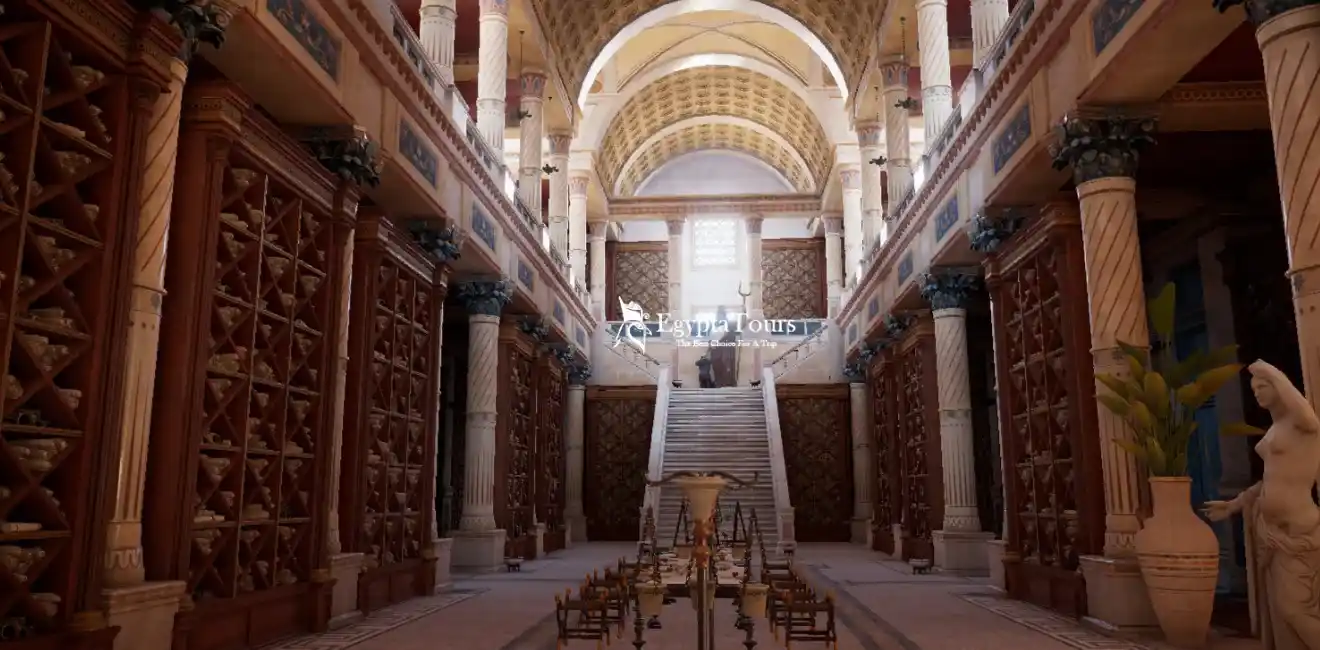
The-History-of-the-Bibliotheca-of-Alexandria-ancient-library-legacy-EgyptaTours
The library of Alexandria Alexandria Egypt is a monumental example of the greatness of Ancient Egyptian civilization. The library was built in the 3rd century BCE in the city of Alexandria, which was founded by Alexander the Great himself.
The library served as a major center for the collection, organization, and preservation of manuscripts and other works of literature, earning it the revered title of the great library of the ancient world.
The library was established by Ptolemy I Soter, the first ruler of the Ptolemaic dynasty that followed Alexander’s death. It was built on the orders of Ptolemy II Philadelphus, who gathered a large collection of works from around the ancient world. The most famous librarian of the library was Callimachus, who created a catalog system for the collection and is credited with helping to make the library so renowned.
The library attracted scholars from far and wide, providing them with access to the various works in its vast collections. For example, Euclid studied there, and Archimedes studied geometry in the library. Additionally, the library contained works from many famous authors such as Homer and Plato, further contributing to its importance as a repository of knowledge.
The Library of Alexandria was not only a place of learning; it was also an important part of cultural life in Alexandria. It became an integral part of the city’s identity, offering both locals and visitors an opportunity to enjoy its collections. Although the Library is no longer standing today, its legacy lives on through its contribution to scholarship and the promotion of literacy.
Bibliotheca of Alexandria Collection
Commonly referred to as the “Alexandria Library,” this was one of the most expansive repositories in the ancient world. Containing works from across the Mediterranean and beyond, it allowed access to rare scholarly materials not available anywhere else.
In its heyday, the collection boasted over 500,000 manuscripts. Its impressive archives included:
-
Diverse Languages: Manuscripts written in Greek, Hebrew, Latin, and Arabic.
-
Renowned Authors: The original works of legendary thinkers like Plato, Aristotle, Homer, and Hippocrates.
-
A Vast Range of Subjects: Comprehensive texts covering mathematics, astronomy, geography, medicine, philosophy, history, and literature.
-
Ancient Storage: Much of the collection was recorded on traditional papyrus scrolls, while others were carefully preserved in parchment manuscripts.
Bibliotheca of Alexandria Architecture
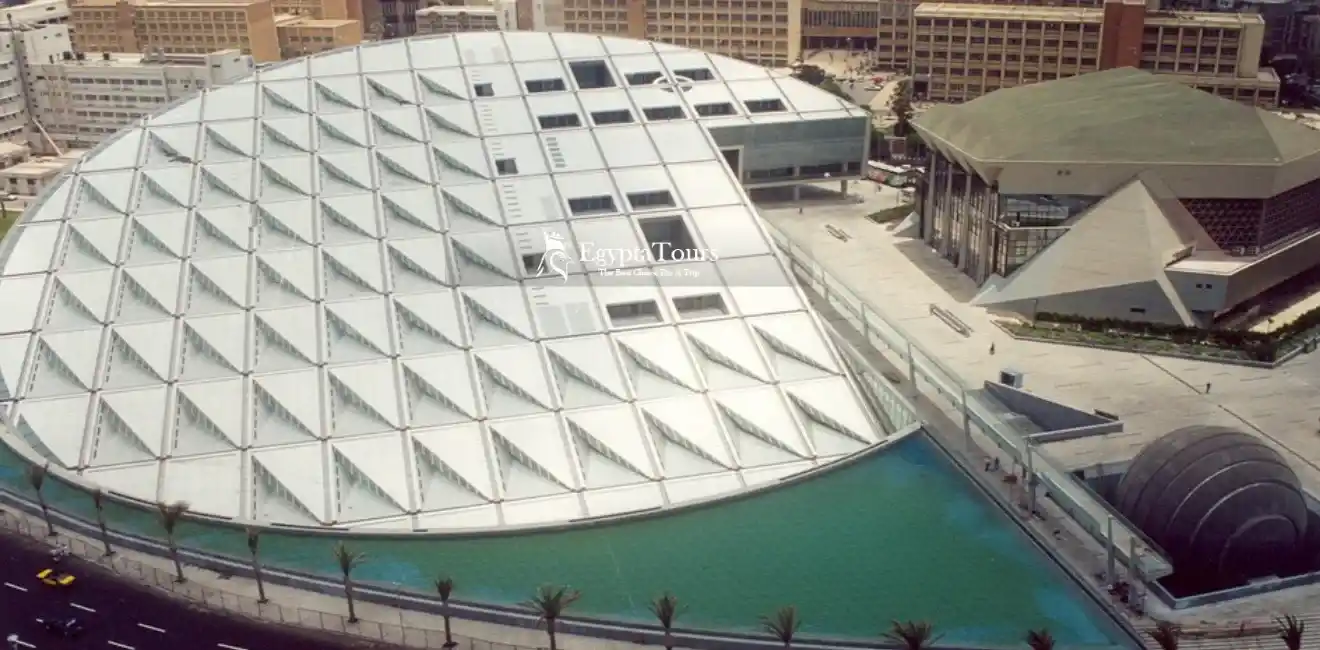
Bibliotheca-Alexandrina-architecture-Mediterranean-coast-EgyptaTours
The Bibliotheca of Alexandria was once a magnificent sight to behold. It was constructed in the 3rd century BCE, making it one of the oldest libraries in the world. The ancient library was comprised of three buildings which were all interconnected.
The first building contained the reading rooms where scholars and researchers studied. The second building contained the lecture hall, where famous speakers such as Aristotle and Cleopatra were invited to deliver their speeches. Finally, the third building contained the collection of books and documents from across the known world.
The Library was built with an impressive amount of grandeur, to match its immense importance. Columns lined the hallways, adorned with marble carvings and statues depicting ancient gods and goddesses.
The exterior of the library was decorated with vivid mosaics and intricate designs, creating a beautiful façade that captivated visitors. Inside, visitors could find an array of sculptures, paintings, and tapestries which further enhanced the library’s regal beauty.
Today, visitors can still view the remains of the original architecture of the Library. Though much of it has been destroyed by time, tourists can marvel at the columns and statues which still stand in its ruins. The remnants of this ancient building serve as a reminder of how remarkable the Library was in its heyday and serves as an inspiration for modern libraries today.
Bibliotheca of Alexandria Significance
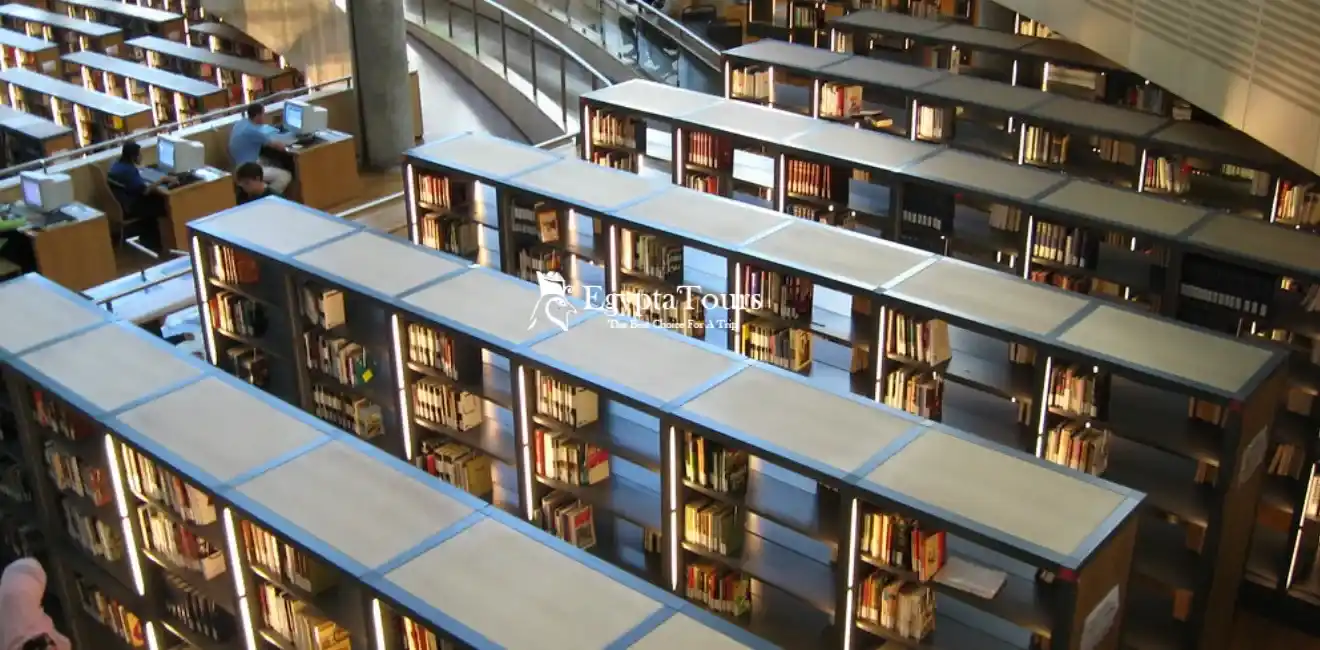
Importance-of-Bibliotheca-of-Alexandria-modern-library-EgyptaTours
The Bibliotheca of Alexandria was a major center of learning in the ancient world. Located in the city of Alexandria, Egypt, it was founded by Ptolemy I Soter and funded by the wealth of Egypt. It was an impressive structure that held many scrolls, manuscripts and other artifacts related to science, mathematics, philosophy, and literature.
Its significance was far-reaching, influencing scholars from all around the Mediterranean region and laying an intellectual foundation that would later inspire early religious leaders, including the patriarchs of Alexandria.
The Library played an important role in preserving and transmitting knowledge from ancient cultures to the modern world. It was a storehouse of knowledge from all around the world, including works from Greece, Rome, Egypt, Persia and India. The Library also served as a center for the translation of these works into Greek and Latin, making them accessible to scholars of the ancient world.
It was also a premier research center for scholarship, boasting a renowned school of philosophy and many leading academics.
The Library held a wealth of information about astronomy, mathematics, medicine, geography and more. It was said to contain over 700,000 scrolls at its peak, making it one of the largest libraries in the ancient world.
The Library’s destruction in 48 BCE has been called a tragedy by some. However, its legacy lives on in the form of its influence on later scholarship and scientific advances. Today, the ruins of ancient library in Alexandria Egypt are a testament to its significance in human history.
Services of Bibliotheca of Alexandria
The main library has a capacity of up to eight million books. It also offers access to print-on-demand books through the Espresso Book Machine, making reading more convenient for visitors.
The Taha Hussein Library provides specialized materials for the blind and visually impaired, using advanced software that enables them to read books and journals easily. The library is named after Taha Hussein, the renowned Egyptian professor of Arabic and literary critic who lost his sight at the age of three.
The library also features a Nobel Prize in Literature collection, containing works of laureates since 1901. The Nobel Section was officially inaugurated on April 24, 2002, by Queen Silvia of Sweden and Queen Sonja of Norway.
The Museums and Exhibitions
The modern Bibliotheca Alexandrina houses several world-class museums and permanent exhibitions tailored for international visitors:
-
Antiquities Museum: Founded in 2001, this museum houses over 1,316 artifacts, including stunning underwater antiquities recovered from the Mediterranean seabed near the Eastern Harbour.
-
Manuscript Museum: This hub for academic research contains the world’s largest collection of digital manuscripts, offering rare access to ancient texts and books.
-
Sadat Museum: Dedicated to former Egyptian President Anwar Al Sadat, this exhibit displays his personal belongings, his Nobel Prize medal, and the military robe he wore during his assassination.
-
Our Digital World: An exhibition showcasing digital archives of former Egyptian presidents, the Encyclopedia of Life, and digitized versions of significant historical books.
-
Impressions of Alexandria: A two-part photographic and artistic memory exhibition highlighting the city’s deep cosmopolitan and cultural diversity.
Administration of Bibliotheca of Alexandria
According to Presidential Decree No. 76 of 2001, the Bibliotheca Alexandrina is managed by a Board of Patrons, a Board of Trustees and a Director. The founding director was Ismail Serageldin who held the position until May 2017. He was succeeded by Mustafa El-Feki.
The Board of Trustees consists of a minimum of fifteen members and a maximum of thirty members. Five of these members hold positions by virtue of their government roles, including the Minister of Higher Education and Scientific Research, Minister of Culture, Minister of Foreign Affairs, the Governor of Alexandria and the President of Alexandria University.
Post-Revolution Engagement
During the Egyptian Revolution of 2011, the library was temporarily closed, yet young people gathered around the building to protect it from looters and vandals. University students from nearby institutions make up approximately 80% of the library’s visitors. In 2011, the library organized a series of seminars and public events focused on the revolution and social service topics, all of which were freely accessible to the public.
The Criticism of Bibliotheca of Alexandria
Many critics argue that the Bibliotheca Alexandrina is a failed project, serving primarily as a governmental entertainment initiative. Concerns have also been raised about potential censorship affecting the library’s collections.
The building’s design, which symbolizes a sunrise, has drawn criticism from those who believe excessive funds were spent on construction instead of the library’s collections. Due to limited funding, the library held only 500,000 books in 2002. However, in 2010, an additional 500,000 books were donated by the French National Library. The library continues to rely heavily on donations to expand its collection.
On the opening day, the Manuscript Center exhibition faced international criticism for including the fabricated and anti-Semitic text “The Protocols of the Elders of Zion”, alongside the Bible and Torah, in a display of sacred texts from monotheistic religions. Initially, the director of the Manuscript Center, Youssef Ziedan, justified its inclusion in an article published in an Egyptian newspaper.
In response to the criticism, the library director ordered the removal of “The Protocols of the Elders of Zion” from the exhibition. Ziedan subsequently issued a statement on his personal website, denying the quotations attributed to him in the article and acknowledging that “The Protocols of the Elders of Zion” is a fabricated, racist work.
The Legacy
It was home to some of the most influential minds in the ancient world and it stands today as a testament to the power of knowledge and creativity.
The Bibliotheca of Alexandria also played an important role in preserving knowledge and passing it down from generation to generation. It was a place where people from all walks of life could come together to discuss ideas, trade books, and share their wisdom.
The works stored within this library continue to inspire people around the world today.
The Bibliotheca of Alexandria serves as a reminder of the importance of libraries and knowledge. It stands as an example of the power that can be attained through education, research, and creativity. The legacy of the Bibliotheca will continue to live on for generations to come, inspiring people to think outside of the box and pursue their dreams.
Tours To Bibliotheca of Alexandria
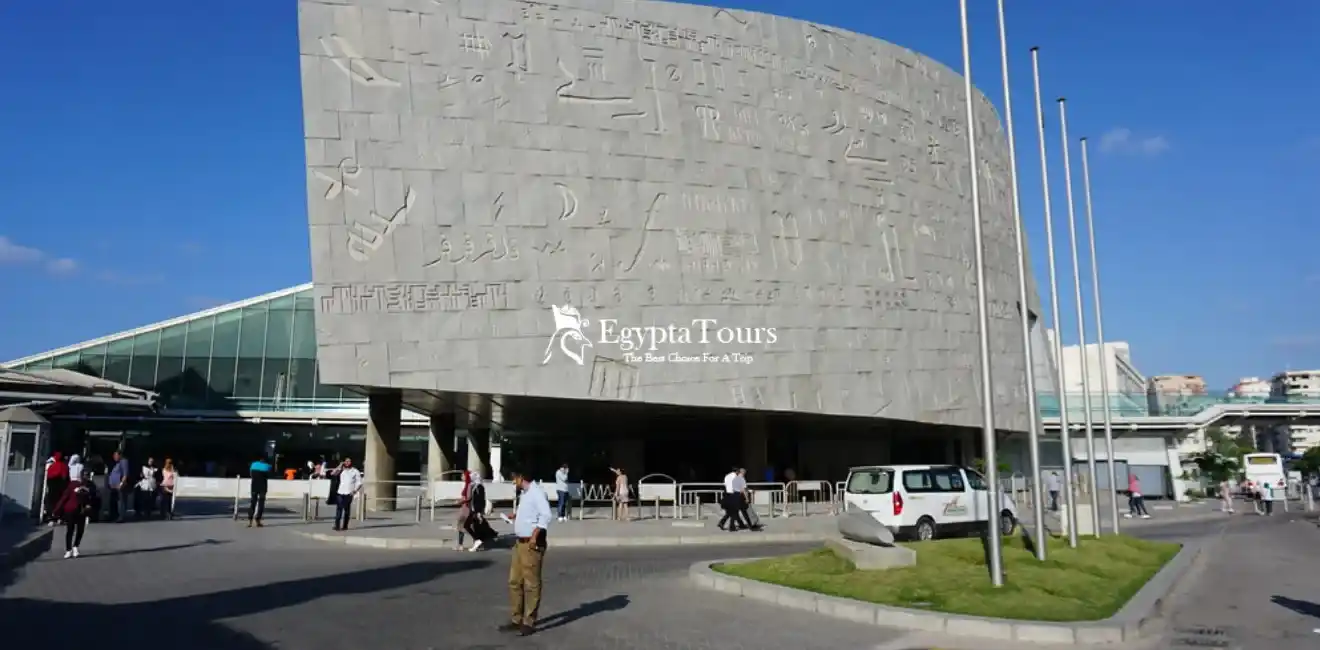
Tourists-visiting-Library-of-Alexandria-waterfront-building-EgyptaTours
Travelers can visit the legendary Bibliotheca of Alexandria, located in Egypt. It was once one of the most renowned libraries of its time and still remains a symbol of knowledge and ancient history. Visitors are able to take a tour of the library to discover its amazing legacy.
The tours of Bibliotheca of Alexandria will take visitors through its awe-inspiring architecture. The building is full of intricately decorated halls, ancient artifacts, and exhibits that reflect the library’s long history.
Visitors will be able to explore the many rooms of the library and get an understanding of its grandeur.
Top Tours Including the Bibliotheca of Alexandria:
-
Alexandria Day Tour from Cairo (Including Bibliotheca Alexandrina)
-
Half-Day Alexandria City Tour with Library Visit
-
Full Alexandria Historical Tour (Library, Citadel & Catacombs)
Discover Egypt Through Our Tour Categories:
Discover Egypt Through Our Tour Categories

Bibliotheca-of-Alexandria-EgyptaTours
Visitors can also learn about the incredible collection that was housed in the Bibliotheca of Alexandria. During its heyday, the library contained an estimated 500,000 scrolls, a vast number for its time. Much of this collection was tragically destroyed during a fire, but visitors can still find some remnants of the library’s collection in its modern-day exhibits.
No tour of the Bibliotheca of Alexandria would be complete without understanding its significance. Once considered one of the world’s greatest libraries, it was a center for learning and academic study. It also served as a meeting place for scholars from around the world and helped to spread knowledge throughout antiquity.
Today, visitors can visit the Bibliotheca of Alexandria to learn about its impressive legacy. As an iconic symbol of learning, it serves as a reminder of what we can achieve when knowledge is shared freely and openly. By taking a tour, travelers can gain a deeper appreciation for one of the most incredible libraries in history.
Unraveling the Mysteries of the Bibliotheca of Alexandria
What Was the Bibliotheca of Alexandria?
The Bibliotheca of Alexandria was an ancient library located in Alexandria, Egypt. It was one of the largest and most significant libraries of the ancient world, serving as a major center for scholarship and learning.
When Was the Library Established?
It’s believed to have been founded in the early 3rd century BCE, during the reign of Ptolemy I or Ptolemy II of Egypt.
What Were Its Contents?
The library housed hundreds of thousands of scrolls. These included works on philosophy, literature, science, mathematics, and many other subjects from all over the known world.
Why Is It Considered Important?
It was a hub for intellectual exchange and housed works by notable figures like Homer, Plato, and Socrates. The library played a crucial role in preserving the works of ancient civilizations and advancing knowledge.
Who Used the Library?
Scholars, philosophers, researchers, and teachers from different parts of the world visited. It was also open to those who were curious and eager to learn.
What Happened to the Library?
There are several theories about its destruction. Some believe it was burned during Julius Caesar’s siege of Alexandria in 48 BCE. Others suggest it declined over centuries due to lack of funding or multiple fires.
Are There Any Remnants Today?
Unfortunately, no physical remnants exist today. However, the Bibliotheca Alexandrina, a modern library in Alexandria, aims to commemorate its legacy.
How Did It Influence Modern Libraries?
The library set a precedent for the modern research library. Its dedication to learning and knowledge preservation inspired the establishment of similar institutions around the world.
Did It Really Have a School for Scholars?
Yes, it was associated with the “Museum” or “House of Muses,” which functioned as a research institute. Scholars could work, study, and live there.
How Did It Collect Works?
The library had agents who searched for works around the Mediterranean. Works were often borrowed, copied, and then stored. Legend has it that ships docking in Alexandria had to surrender their books for copying.
Can We Access Any Texts Today?
While many original works were lost, numerous texts have been preserved through copies made by other cultures and later libraries.
Similar Posts
About EgyptaTours

EgyptaTours is a name synonymous with trust, excellence, and unforgettable travel experiences, proudly standing as one of the leading travel agencies in Egypt. Renowned for its deep expertise, personalized service, and carefully crafted itineraries, EgyptaTours serves as the ultimate gateway to discovering Egypt in its most authentic and inspiring form.