





Egypt Airports: Complete Guide to Major & International Airports
Egypt Airports represent one of the main pillars of its infrastructure. They connect Egypt to the outside world and its internal cities, in addition to opening Egypt’s windows to the world. They also boost trade and increase the flow of tourists, which directly reflects on the economy and society. The state is constantly working on developing airport buildings and their services to ensure a better travel experience and achieve sustainable development goals in Egypt.
The number of Egypt Airports has increased recently to keep pace with the expansion of the civil aviation system within Egypt. The airports are distributed throughout different parts of Egypt, including regional and international airports.
The air transport sector has recently developed to increase the capacity for large numbers of passengers, in addition to developing other modern technologies such as radar systems, updating the satellite network, and securing voice and long-range communications to ensure the safety of flights.
Major International Egypt Airports
There is a large number of international Egypt Airports that offer both international and domestic flights simultaneously:
Cairo International Airport
Major-International-Airports-in-Egypt-EgyptaTours-Cairo-International-Airport
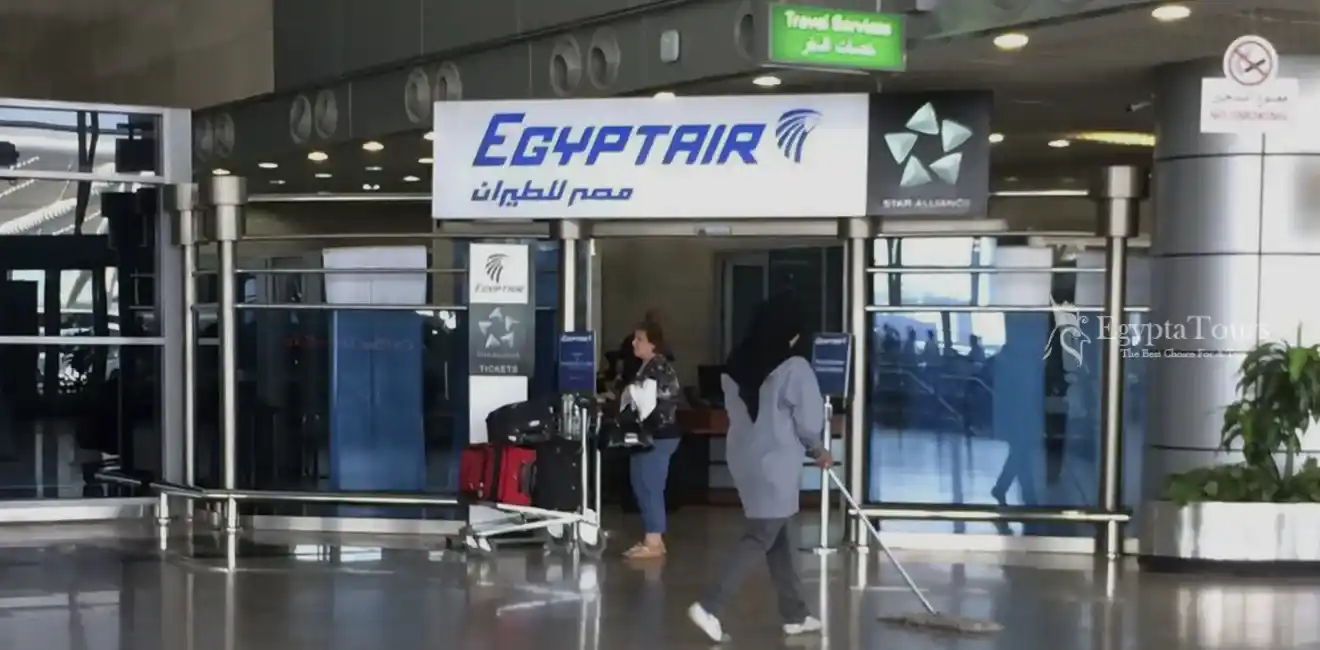
Cairo International Airport is the largest and oldest of Egypt Airports, established in 1942. It consists of 4 runways for aircraft take-off and landing and has 3 passenger terminals. It is distinguished by having a dedicated area for transporting passengers to their accommodations.
Borg El Arab Airport in Alexandria
Borg El Arab Airport is the second-best airport in Egypt. The airport is located in the city of Alexandria on an area exceeding 50,000 meters and has two runways to accommodate more than 11 aircraft.
Hurghada International Airport
Hurghada-International-Airport-Exterior-EgyptaTours-Egypt-Airports
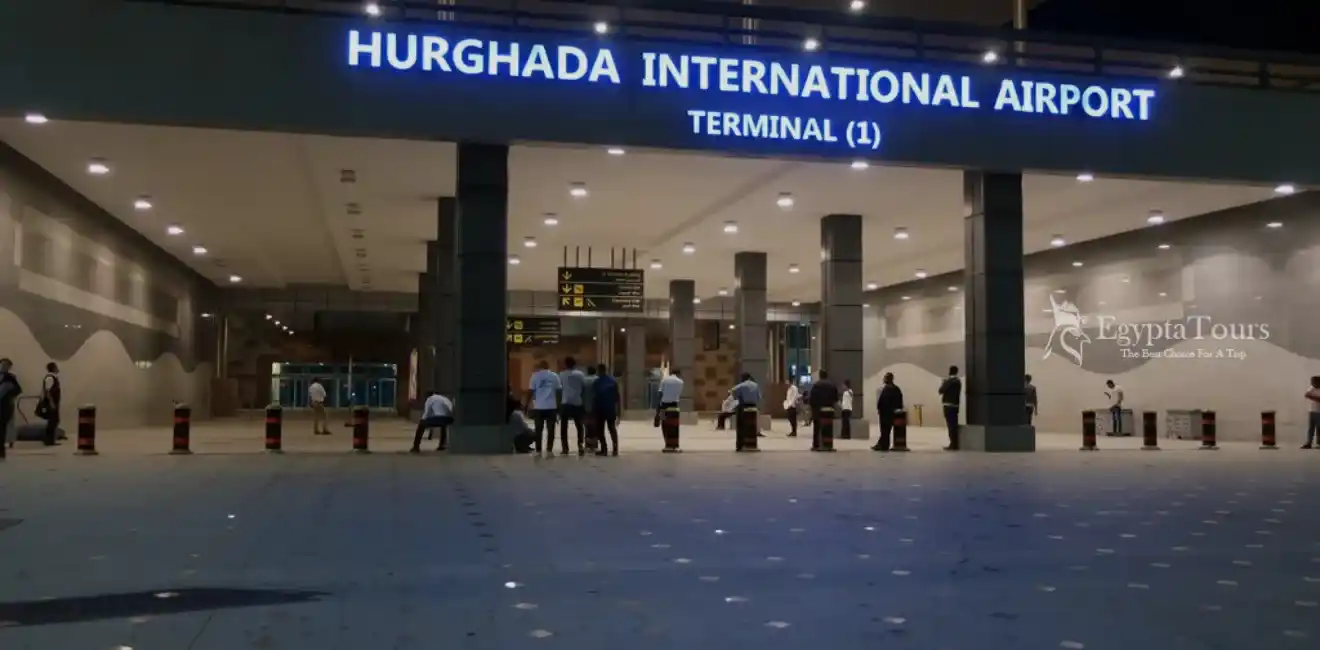
It is located a few kilometers from the city of Hurghada on an area exceeding 218 billion square meters, and its passenger capacity reaches 3,000 passengers per hour.
Sharm El Sheikh International Airport
The airport is located in the city of Sharm El Sheikh on an area of 253 billion square meters. It consists of two runways to accommodate about 46 aircraft and a passenger terminal to accommodate more than 4,000 passengers per hour.
Luxor International Airport
The airport is located 6 miles from the city center on an area of 242 million square meters, and its passenger capacity reaches 4,000 passengers per hour.
Aswan International Airport
The airport is located 10 miles from the city of Aswan with an area exceeding 3 million square meters. Its capacity for aircraft is about 28 planes, while for passengers it is 3,200 passengers per hour.
Capital International Airport
Capital International Airport is Egypt’s main airport serving the new capital, which is located about 28 miles east of Cairo. It was built alongside Sphinx International Airport to reduce the pressure on Cairo International Airport. This new airport is designed to connect Egypt’s future economy with the rest of the world.
It opened in July 2019 with a trial period before starting regular operations in 2020. The construction was led by Hassan Allam Holding, and it is managed by the Egyptian Airports Company, which is owned by the Egyptian Armed Forces.
The airport covers 16 square kilometers and sits at an elevation of 833 feet. Its main building spans 54,000 square feet. It can handle about 1 million passengers each year and has plenty of space to grow. The airport serves not only the public but also petroleum companies, private jets, and air taxis.
The terminal area is 38,000 square feet and can manage 300 passengers per hour. The airport has eight parking spots for aircraft, 45 service and admin buildings, an air control tower, and a runway that is 11,980 feet long, able to accommodate large planes. The runway is equipped with advanced lighting and automatic landing systems.
Sphinx International Airport

Sphinx-International-Airport-Egypt-Airports-EgyptaTours
The Egyptian Air Force originally used Cairo West Air Base as a military base. The Egyptian government later transformed the base into a commercial airport to reduce traffic congestion at Cairo International Airport. Before commercial flights began, the airport was named Sphinx International Airport. In October 2018, EgyptAir Express conducted the first test flight to Cairo West Sphinx International Airport.
Sphinx Airport received its first international flight from Fly Jordan, arriving from Jordan with 104 passengers on board. This marked the first flight on the new route between Jordan and Giza.
The airport’s public relations team welcomed the passengers with flowers and souvenirs, while helping with the arrival and departure procedures for the passengers and their waiting relatives.
This was the first international flight to land at the airport since it opened in January 2019, after a 15 day test operation for EgyptAir’s domestic flights.
Marsa Alam International Airport
One of the newest airports built near the Red Sea is Marsa Alam Airport, located just 60 km north of the city of Marsa Alam. It serves as a hub for leisure flights from Europe. The airport is the only privately owned airport in Egypt, owned by the M.A Al-Kharafi Group from Kuwait. It was built in 2003 to meet the growing demand from European tourists visiting the southern Red Sea region. The airport can handle up to ten million tourists each year.
Almaza Airport
Almaza Airport is one of the two main airports in Cairo. The term Heliopolis Aerodrome is mentioned in earlier Biggles books, but it usually refers to a different Royal Air Force station near Almaza that is no longer in use.
The exact location of the first landing ground is unclear, but it was created in the Heliopolis district of Cairo in 1910 for an air race. During World War I, the Royal Flying Corps set up barracks and an airstrip south of Heliopolis. After the war, this became the R.A.F. Heliopolis station. When Imperial Airways started the Cairo Baghdad Basra route in 1927, this aerodrome also served as Cairo’s airport.
El Alamein International Airport

El-Alamein-International-Airport-Egypt-Airports-EgyptaTours
El Alamein International Airport is a great entry point from the skies of Alexandria to the world. It is located in El Dabaa, in the Matrouh Governorate of Egypt, on the northern coast, about 99 miles (160 kilometers) west of Alexandria. The airport covers a large area of 25 square miles (64 square kilometers) and has a single terminal that can handle up to 600 passengers per hour.
The airport has a single runway that is 11,480 feet (3,499 meters) long, built to handle operations of A380-800 aircraft. The runway is made of asphalt, allowing for smooth takeoffs and landings. El Alamein International Airport is owned and managed by the International Airports Company, a subsidiary of KATO Investment.
Sohag International Airport
Sohag International Airport, equipped with the latest infrastructure and airport systems, is one of the best airports in Egypt. It offers high safety standards and preventive measures to ensure your security.
Inside the airport, you’ll find shops, restaurants, cafes, children’s play areas, baggage packing machines, travel and tourism offices, Wi-Fi, banks, ATMs, information desks, lost and found offices, a clinic, quarantine facilities, a car park and smoking areas. The airport is located about 40 km from Sohag city. Public transport is available at the airport, making it easy to travel to any part of the city or other areas within Egypt.
Abu Simbel International Airport
Abu Simbel Airport is a regional airport located in the beautiful southern region of Egypt, in Abu Simbel. In 2011, the airport served 119,326 passengers, which was a 75.6% drop compared to 2010. The airport is a public facility operated by the government, sitting at an elevation of 616 feet (188 meters) above sea level.
The airport has a runway designated 15/33, which is 3,000 meters (9,843 feet) long and paved with asphalt for aircraft operations. Airlines that operate at the airport include Air Cairo, offering flights to Aswan and Cairo, and EgyptAir, which also provides flights to Aswan.
Alexandria International Airport

Alexandria-International-Airport-Egypt-Airports-EgyptaTours
The airport covers an area of about 650 acres and handles small and medium sized planes, as well as private jets. It has a passenger terminal with two halls one for departures and one for arrivals. The airport sees around 7,808 flights take off and land each year.
The airport offers all necessary safety measures and provides everything you need, including shops, restaurants, cafes, a children’s playground, Wi-Fi, banks, ATMs, currency exchange, information desks, a lost baggage office, a clinic, quarantine facilities, parking and smoking areas. Public transportation is also available to take you to any location within Egypt.
Assiut International Airport
Assiut Airport is a key airport located in Assiut, Upper Egypt, serving as an important air hub in the region. It is a four hour drive from Luxor and four and a half hours from Hurghada. Airlines operating at Assiut Airport include Air Cairo, with flights to Amman Queen Alia, Jeddah, Kuwait City, Medina, Riyadh and Dammam. EgyptAir offers flights to Cairo, Fly Egypt has routes to Amman Queen Alia, Jeddah, and Kuwait City and Jazeera Airways flies to Kuwait City.
This public airport is operated by the government and serves Assiut and the nearby areas. It is located 772 feet (231 meters) above sea level and has a single runway that is 9,905 feet (3,019 meters) long, paved with asphalt to ensure smooth aircraft operations.
Marsa Matrouh International Airport
Marsa Matruh International Airport is an important international airport that has served 99,515 passengers since 2001. It is a public airport managed by the government, located in the city of Marsa Matruh, Egypt. The airport sits at an elevation of 94 feet (29 meters) above sea level and has two runways, each 9,843 feet (3,000 meters) long, paved with asphalt for smooth aircraft operations. These runways are essential for handling takeoffs and landings, making the airport a key air gateway in the region.
El Arish International Airport
El Arish International Airport is an important airport located south of El Arish. It covers an area of 400 acres (160 hectares) and serves as a key air hub in the region, especially for travel between Egypt and Palestine. The airport’s terminal can handle 200 passengers per hour, and its runway is 9,905 feet (3,019 meters) long, with space to park up to four aircraft. The airport can accommodate a total of about 6,000 passengers.
The airport is strategically important because it is close to the Gaza Strip, located about 28 miles (45 kilometers) from the Rafah Border Crossing. It is operated by the government and serves both El Arish in Egypt and the Gaza Strip in Palestine. The airport sits at an elevation of 121 feet (37 meters) above sea level, and its runway is paved with asphalt to ensure smooth aircraft operations.
Port Said International Airport
Port Said Airport is the main entry point for the free-trade city of Port Said, located at the northern end of the Suez Canal. In 2011, the airport handled 36,962 passengers, playing a key role in the region’s growth. This led to a modernization project, with a partial opening in February 2011. The upgrade is considered vital for the city’s industrial growth and strengthens its position as an important transportation hub.
The airport is managed by the government and serves the city of Port Said, which is located 8 feet (2 meters) above sea level. It has a single runway that is 7,707 feet (2,349 meters) long and paved with asphalt to ensure safe and smooth aircraft operations.
Taba International Airport

Taba-International-Airport-Egypt-Airports-EgyptaTours
Taba International Airport is located on the Sinai Plateau at an elevation of 2,470 feet, serving the city of Taba, Egypt, and mainly handling charter flights. Originally, it was Israel’s Etzion Air Force Base after the Six Day War but became a civilian airport in 1979 when it was handed back to Egypt. The airport is close to the borders of Israel and Jordan and allows tourists to visit certain parts of Egypt without a visa for up to 14 days.
Located 13 km from Taba and 30 km from Taba Heights, the airport was renamed in 2000 after major improvements. However, passenger traffic dropped significantly, from 41,142 in 2014 to 13,488 in 2015. This decline led to plans in 2016 by Thales Group to modernize the airport’s air traffic management system.
El Kharga Local Airport
Kharga Airport is a regional airport in the New Valley Governorate, established in 1962 by the Desert Development Authority, covering around 850 acres. In 1989, the airport was upgraded with a small passenger terminal. Later, it was further expanded with a VIP lounge and the runway was extended to 3,500 meters. The airport is located about 7 km from Kharga city, and the headquarters for the new administrative capital of Kharga was built near the airport.
Kharga Airport’s passenger terminal can handle up to 100 passengers annually. The airport has one main runway, labeled 18/36, which is 3,500 meters long and 45 meters wide. There are two terminals to serve passengers. The airport is equipped with lighting for both the runways and terminals, including night lighting for better visibility.
Tur Sinai Local Airport
Tur Sinai Airport was founded in 1949 to serve pilgrims traveling to the Holy Kaaba, with health quarantine procedures for those arriving from Saudi Arabia. Pilgrims were then transferred from Tor Sinai Airport to Almaza Airport in Cairo. The airport operated for general air traffic until it was closed after the June 1967 events. It reopened in 1984 but was limited to domestic flights. In 1996, the airport was upgraded with longer runways and a larger apron, officially reopening in 2000.
The passenger terminal can handle 100 passengers each year. The airport has two runways: the main runway, which is 3 kilometers long and 45 meters wide, and the secondary runway, also 3 kilometers long but 24 meters wide. Both runways have the same direction (10/28). There is one apron, and both the runways and apron are equipped with lighting, including night lighting for better visibility.
Regional Airports and Their Domestic Role
There are a large number of regional Egypt Airports, such as Port Said, the Administrative Capital, the Oases, and El Tor, among others, in addition to domestic and international airports like Arish, Saint Catherine, Sohag, and Abu Simbel. These airports contribute to facilitating movement within the country and connecting tourist cities, which enhances the flow of tourists and activates international tourism to Egypt.
Safety and Security Standards in Egyptian Airports
Safety-and-Security-Standards-in-Egypt-Airports-EgyptaTours
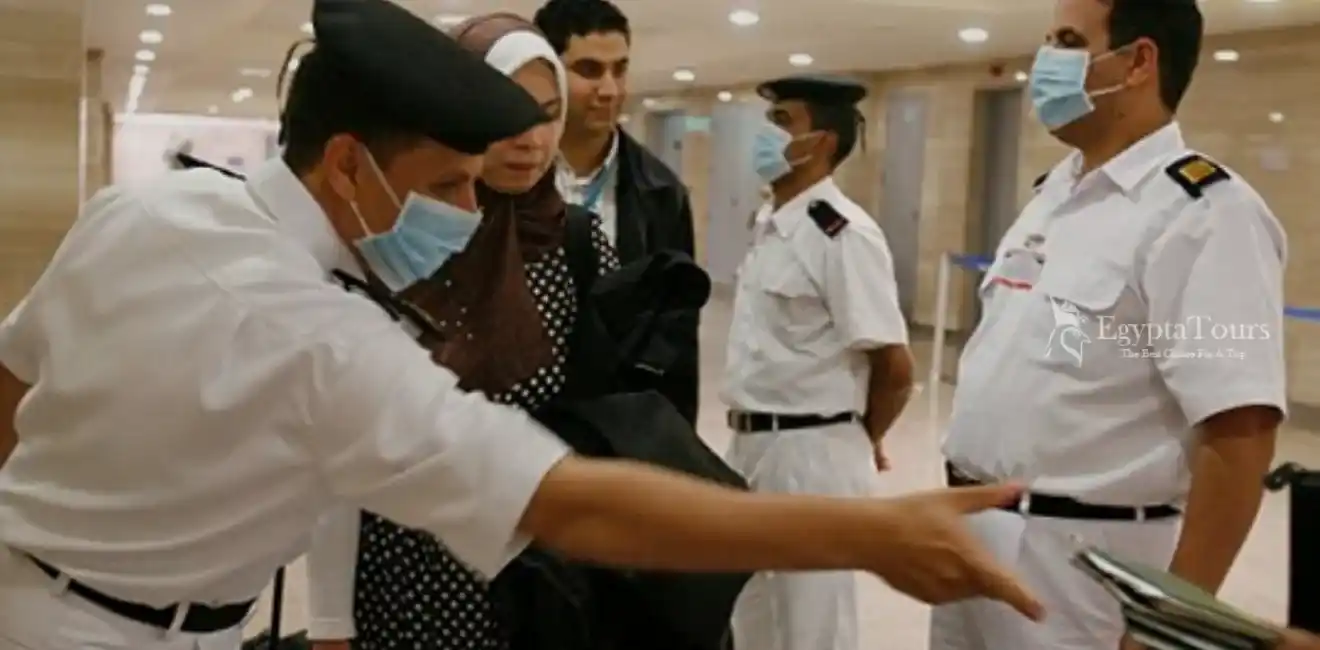
Egypt Airports apply the latest safety and security standards as part of recent updates, including:
- Implementing an SMS (Safety Management System) to improve safety procedures in all airlines.
- Providing an operations management for safety standards to help identify errors and address them quickly.
- Providing environmentally friendly equipment and tools to assist in rescue and firefighting attempts.
- Providing energy-saving LED systems for lighting poles.
- Implementing safety programs in airports accredited by the ICAO organization.
Facilitating Procedures for Foreign Travelers
Egypt Airports have facilitated travel procedures for passengers through some electronic services such as:
Self-Service Kiosks:
- Entering passenger data.
- Scanning the passport.
- Choosing seat locations on the plane.
- Printing the boarding pass.
There are also a number of other services inside the airports to facilitate travel operations, such as:
- Installation of an interactive smart screen to display flight schedules and locations.
- Provision of cafeterias and sleeping pods for transit passengers.
- Free automated train and shuttle bus services for comfortable transit between airport terminals.
- Implementation of specific services for people of determination, with dedicated areas for boarding and alighting in the travel hall to facilitate their movement.
Ground Transportation to and from Airports
Ground-Transportation-to-and-from-Egypt-Airports-EgyptaTours
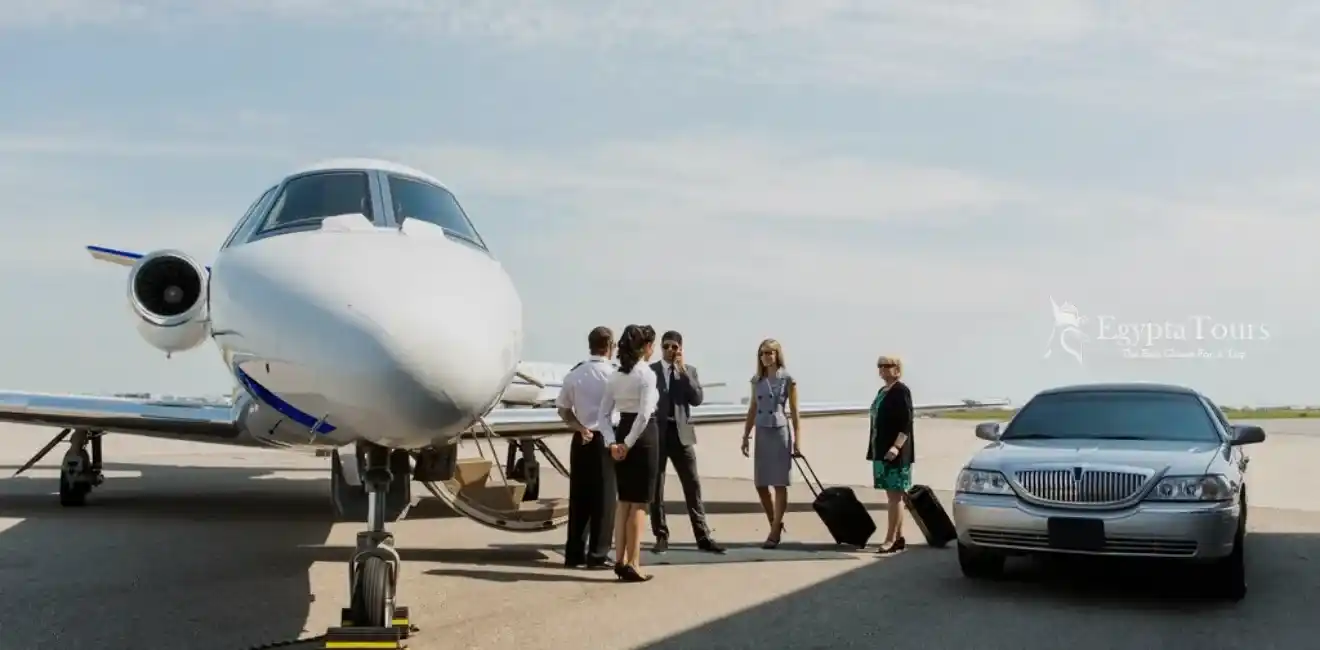
Ground transportation is available from Egypt Airports to various parts of the country through:
- Mwasalat Misr buses for transportation from the airport to various areas within Cairo.
- Superjet buses for transportation from Cairo Airport to different cities and governorates of Egypt.
- Taxis and limousines for transportation from the airport to hotels or other destinations.
- An automated train for easy movement within the airport terminals.
Common Basic Services Among Airports
A set of necessary services is provided within Egypt Airports to achieve high service efficiency.
These are:
Ground Handling Services
- Air conditioning service and aircraft maintenance.
- Passenger baggage screening service.
- Internal aircraft cleaning service.
- Aircraft lavatory service.
- Headrest service.
- Ground power services.
There is also another set of services such as:
- Cargo services.
- Support and labor services.
- Mail services.
- Crew transport services.
- Aircraft cleaning services.
Logistical Challenges and Traffic Congestion
Shipping companies face increasing difficulties in transporting goods due to a number of logistical challenges:
- Lack of training for the human sector: This leads to errors and delays in delivery operations. Therefore, it is important to know what skills suit each person and employ them accordingly, with the need for continuous training to ensure the highest quality.
- Delays and slowness in delivery operations: This occurs in cases of traffic congestion or delayed aircraft arrivals. Therefore, customers must be informed of the delay, and tracking systems should be in place to reach the shipment’s location as quickly as possible.
- Not knowing the delivery time: Many wish to know the exact location of their orders to track their shipments. Therefore, there must be instant update systems for order locations to know the correct delivery time.
Many commercial operations between countries, which include importing and exporting products and goods, are exposed to damage, loss, or delays, as a result of the congestion of order operations or the logistical problems mentioned above. Therefore, one must deal with caution to avoid any problems and ensure the easy arrival of goods.
How Tourism Benefits from Airport Improvements
Egypt Airports have been witnessing significant developments and improvements recently to boost economic development and include a sustainable environment. This contributes to improving tourism and enhancing the traveler experience through the development of the airport’s infrastructure and the improvement of its external appearance, in addition to providing a set of safety standards and facilities for travelers.
Conclusion
The Ministry of Civil Aviation and the air transport sector in Egypt have worked to increase the number of domestic and international Egypt Airports to provide comfort for arrivals to reach their destinations quickly and with high efficiency, while providing the latest quality and safety standard technologies inside the airports.
FAQS
What are the main airports in Egypt?
The main Egypt Airports are the international airports such as Cairo Airport, Luxor Airport, and Borg El Arab Airport.
Does Cairo have two airports?
Yes, there are two airports in the Cairo area: Cairo International Airport and Sphinx International Airport.
What is the cheapest airport to fly into Egypt?
There is no airport known as the “cheapest,” but there are airports that offer cheap flights, such as Sharm El Sheikh Airport and Hurghada Airport.
What are the four international airports?
Egypt has several major international airports, Cairo, Borg El Arab, Hurghada, and Sharm El Sheikh airports being among the busiest.
What is the newest airport in Egypt?
Egypt opened one of its newest airports in 2019 to be a tourist destination for Egypt’s landmarks, which is Sphinx Airport west of Cairo.
About EgyptaTours

EgyptaTours is a name synonymous with trust, excellence, and unforgettable travel experiences, proudly standing as one of the leading travel agencies in Egypt. Renowned for its deep expertise, personalized service, and carefully crafted itineraries, EgyptaTours serves as the ultimate gateway to discovering Egypt in its most authentic and inspiring form.