





Egyptian Goddess Nekhbet
Egyptian Goddess Nekhbet was considered one of the most important, famous and powerful goddesses of ancient Egypt. Her worship started as the protector of a small city called Nekheb, then she became one of the two goddesses guarding all of Egypt after its unification. Nekhbet has always been associated with protection and strength and her images and inscriptions can be found on temples and statues, showing how significant she was to the ancient Egyptians.
Learning about Egyptian Goddess Nekhbet is not considered just exploring a myth, it’s a way to understand how the ancient Egyptians thought and how they connected their daily lives with gods and powerful symbols. In this article, we will dive deeper into Egyptian Goddess Nekhbet and explore her appearance, her importance and the symbols connected to her that are still remembered today.
About- the -Egyptian- Goddess- Nekhbet- The- Protector- of -Egypt
Egyptian Goddess Nekhbet (/ˈnɛkˌbɛt/, sometimes spelled Nekhebet) was one of the earliest local goddesses in ancient Egyptian mythology and the protector of the city of Nekheb which literally means “She of Nekheb.” Over time, with the unification of Egypt, Nekhbet became the guardian of Upper Egypt and one of the two main goddesses protecting all of Egypt alongside Goddess Wadjet.
Texts from the Fifth Dynasty pyramids show that Egyptian Goddess Nekhbet was also considered a creator goddess, described with the title:
“Father of Fathers, Mother of Mothers, she who existed from the beginning and creator of this world.”
For the ancient Egyptians, Nekhbet was not just a local goddess, she was a symbol of national protection and power. She was shown on the king’s Nemes crown as a vulture or a cobra. By the Fourth Dynasty, the vulture crown was also used for the Great Royal Wife, highlighting Nekhbet’s importance in both royal and religious life.
Evidence shows that Egyptian Goddess Nekhbet was already well-known during the Pre-Dynastic period, closely associated with the city of Nekheb. Over time, the worship of Nekheb merged with the center of Old Horus in Nekhen and the Pharaoh’s Nebty name combined Nekhbet and Wadjet, making her the representative of Upper Egypt and cementing her role as a powerful protector of the entire kingdom.
The depiction of the Egyptian Goddess Nekhbet
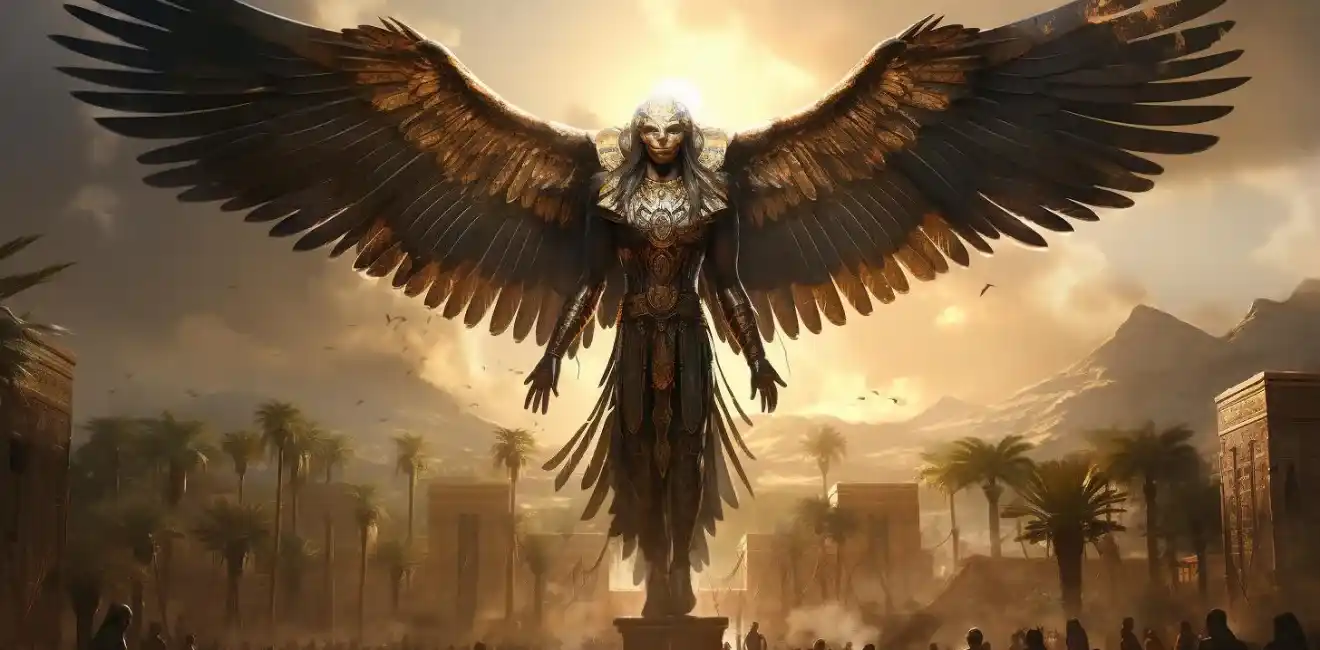
In the beginning, depictions of Egyptian gods showed the animal itself directly. Later, artists began representing the gods as human bodies with animal heads. However, some individual gods continued to be shown in their original animal form during the historical periods after 3000 BCE, such as Horus as a falcon, Wadjet as a cobra and Nekhbet as a vulture.
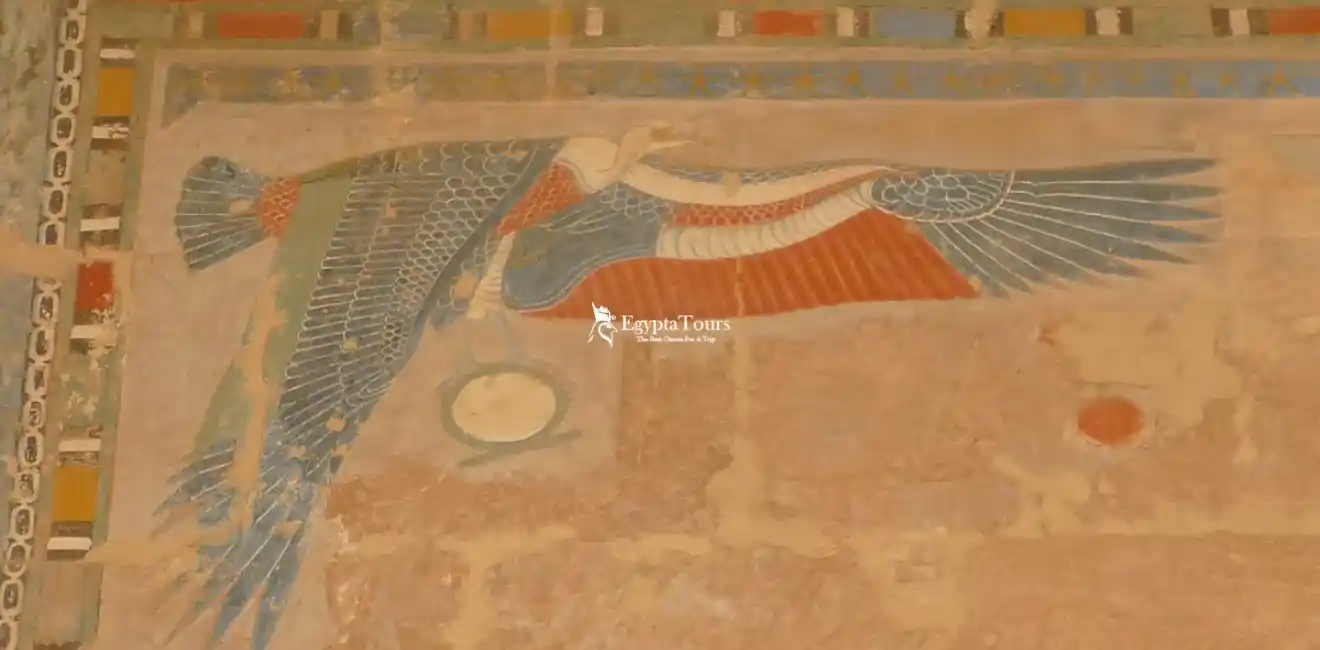
In ancient Egyptian art, Egyptian Goddess Nekhbet was usually depicted as a vulture. Alan Gardiner identified the type used in divine icons as the griffon vulture while Ariel B. Kozloff suggests that vultures in New Kingdom art more closely resemble the hanging-face vulture.
During the New Kingdom, the vulture appeared on royal crowns alongside the Uraeus, often interpreted as representing Nekhbet and Wadjet, though in some funerary contexts, they are seen as Isis and Nephthys.
Nekhbet is often shown hovering with outstretched wings over the king, holding the Shen ring which symbolizes eternal protection. Her protective wings commonly appear above pharaohs during religious ceremonies, offerings or battles.
Common Images and Symbols of Nekhbet:
- White vulture with outstretched wings: symbolizes purity, motherhood and protection.
- Woman wearing the vulture crown: connects her to royal authority and sovereignty.
- Vulture goddess holding the Shen ring: represents eternity and the continuity of life.
- Vulture placing the royal crown on the pharaoh’s forehead: shows Nekhbet’s care and influence over the kings.
- Scepter and feather: sometimes held to indicate her high status.
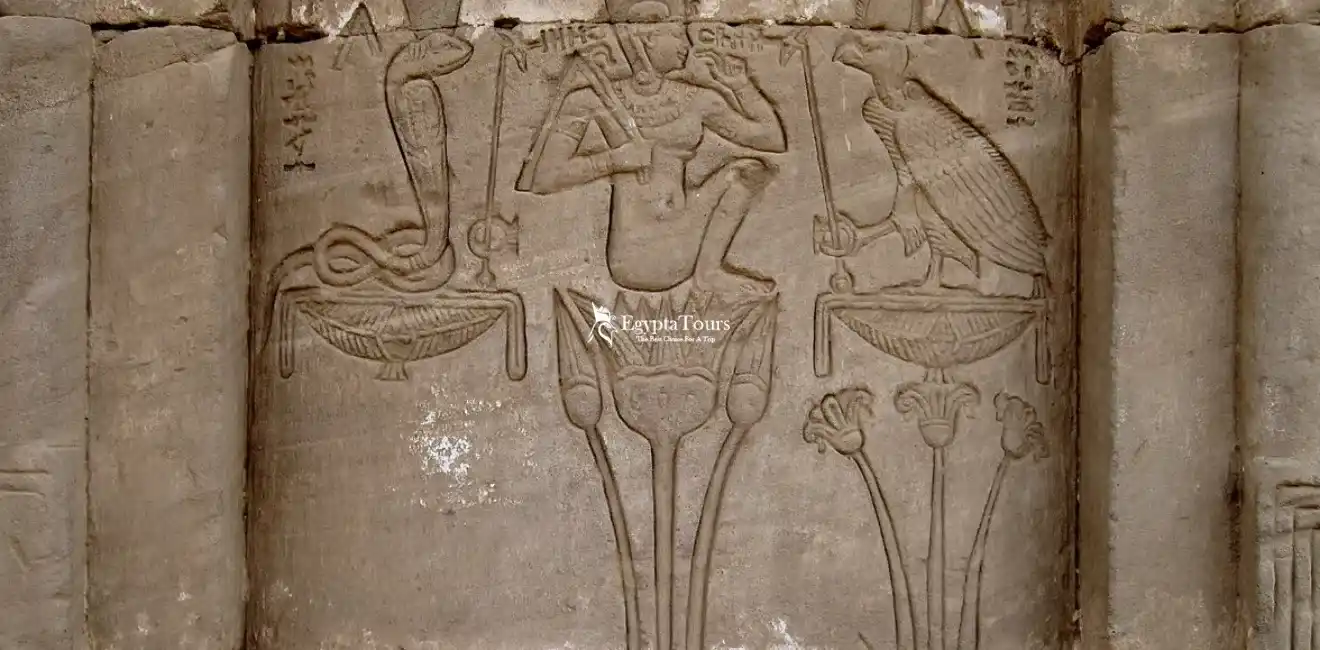
- Two Ladies symbol: when appearing with Wadjet on the king’s name or official documents, symbolizes the unity of Egypt and the protection of the crown.
The Meaning of the Vulture in Egyptian Religion
For the ancient Egyptians, the vulture represented:
- Pure motherhood
- Vigilant protection
- Purity and cleanliness
- Watching over the dead
Vultures were seen as divine beings because they clean the land, protect their nests and soar for hours over the desert, qualities that the Egyptians considered sacred rather than negative.
The Roles of Egyptian Goddess Nekhbet
The -Roles -of -Egyptian- Goddess- Nekhbet
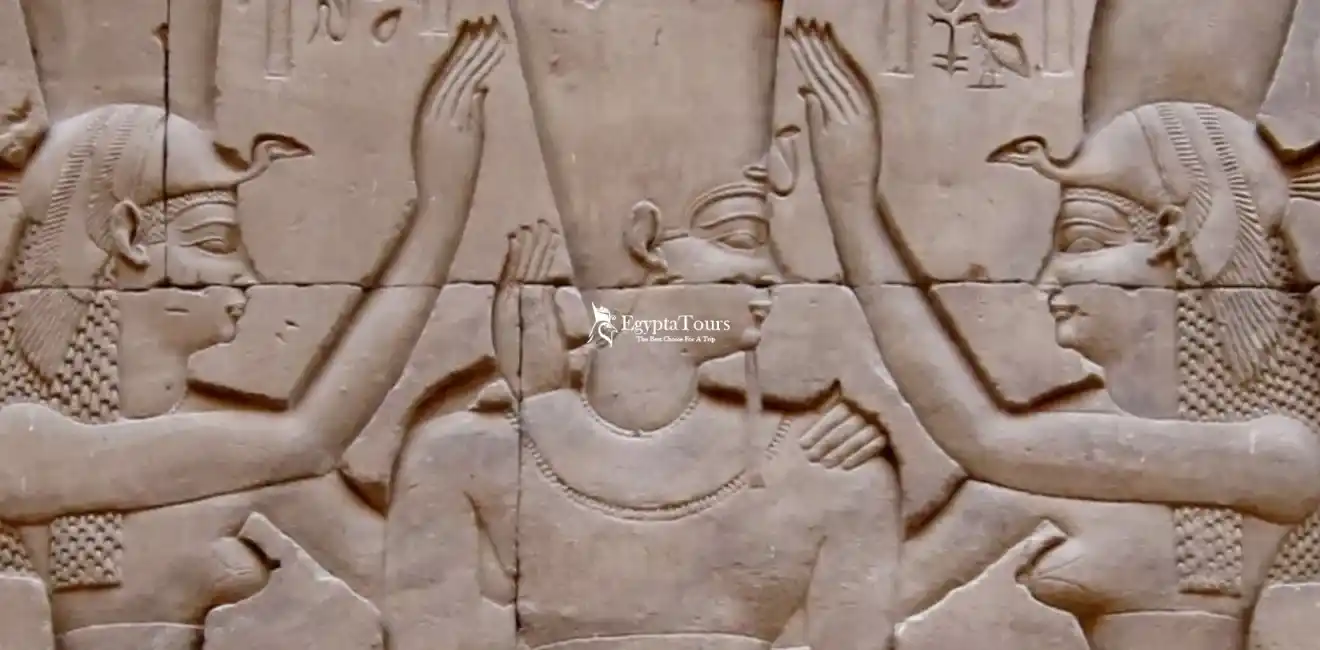
Nekhbet as the Protective of Mothers and Children
Egyptian Goddess Nekhbet became a protector of mothers, newborns, and families in general, providing them with the same maternal care she offered to the Pharaoh. Vulture amulets and protective feathers were common among women seeking a safe and healthy birth.
Nekhbet’s name appears in healing spells, funerary documents, and magical papyri, showing that ordinary Egyptians relied on her in times of danger or during important life transitions.
The Protection in Tombs and Temples
Nekhbet played an important role in protective spells, especially in the Book of the Dead where she safeguarded:
- The deceased on their journey to the afterlife
- Coffins and shrines
- Ritual tools
- Temple doors and ceilings
Her wings acted as a protective shield for both body and soul.
Her Role in Royalty
Nekhbet’s protection of the Pharaoh appeared in three key stages:
- Birth: She oversaw royal births to ensure the legitimacy of the child.
- Coronation: She appeared in coronation scenes, placing the royal crown on the Pharaoh.
- Reign: She protected the Pharaoh in war, diplomacy and rituals, often shown hovering above him during battles against enemies.
Her presence on royal symbols made her a constant companion to kings and queens, serving as a continuous guardian of the throne and the kingdom.
The Myths of the Egyptian Goddess Nekhbet
The- Myths -of- the -Egyptian -Goddess- Nekhbet
The Egyptian Goddess Nekhbet had one of the oldest temples in Egypt which was located in the city of Nekheb, also known as El Kab. This city was closely linked to Nekhen, the religious and political capital of Upper Egypt at the end of the Pre-Dynastic period (around 3200–3100 BCE) and it may have remained important during the Early Dynastic Period (around 3100–2686 BCE). Archaeological evidence shows that the earliest settlements in Nekhen date back to the Naqada I culture or late Badarian culture. At its peak, around 3400 BCE, the population of Nekhen was no less than 5,000 and may have reached up to 10,000 people, highlighting its significance as a major cultural and religious center.
Egyptian Goddess Nekhbet was the protective goddess of Upper Egypt and often appeared together with her counterpart in the Nile Delta, the goddess Wadjet as the “Two Ladies.” One of the important titles of every Pharaoh was the Nebty name which begins with the hieroglyphs representing “the guardian of the Two Ladies,” showing the great respect and central role Nekhbet held in protecting the land and the kings.
The Rituals and Public Worship of the Egyptian Goddess Nekhbet
Although detailed festival schedules have not survived, Nekhbet is believed to have:
- Participated in processions in the city of Nekheb
- Received offerings during royal births and coronations
- Taken part in celebrations with Wadjet to honor the unity of Egypt
- Performed protective rituals during birth and harvest seasons
Nekhbet was an integral part of daily life for the ancient Egyptians, not distant from them but a continuous protector of both ordinary people and rulers.
The Temples and Sacred Sites of the Egyptian Goddess Nekhbet
The -Temples- and -Sacred -Sites- of -the -Egyptian -Goddess- Nekhbet
Nekhbet had several important worship centers in ancient Egypt and was connected to multiple sacred sites:
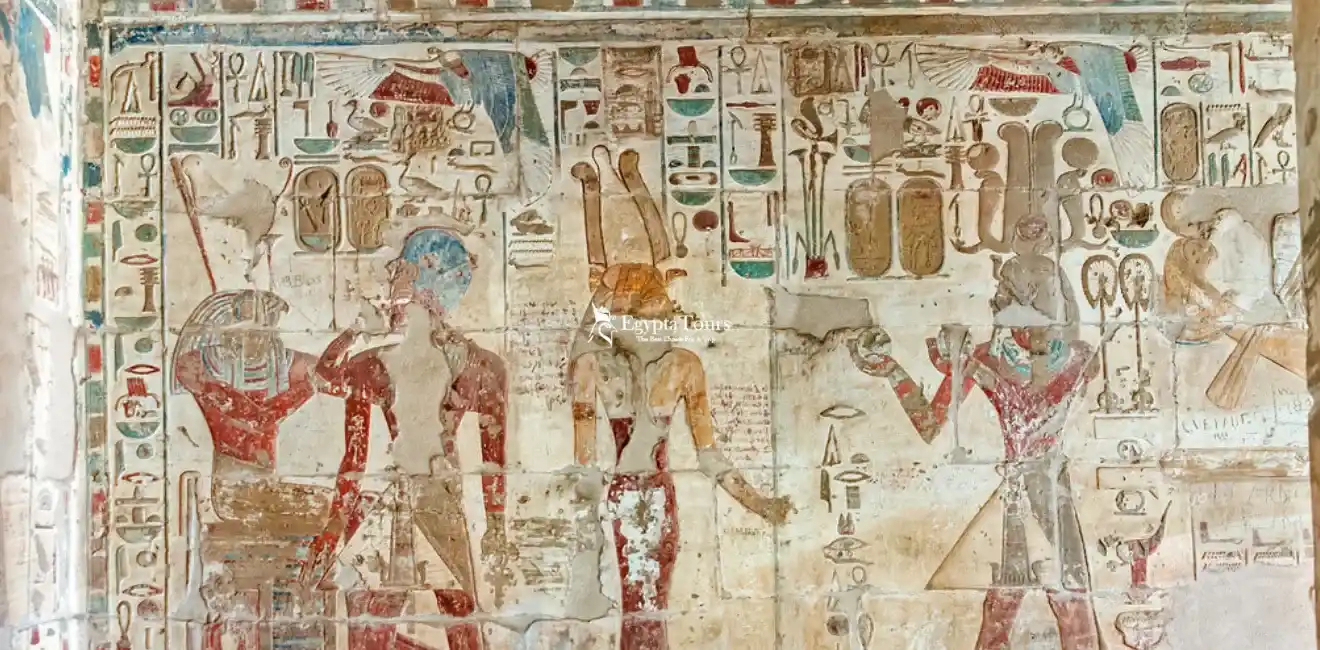
- Nekheb (El Kab): A major center of worship south of Luxor, featuring temples, ancient walls, officials’ tombs and inscriptions of kings and priests.
- Edfu: Nekhbet appears as a protector in ritual scenes at the Temple of Horus.
- Karnak and Luxor: Although she had her own city, she also appears in the major temples of Thebes.
- Elephantine Island: Another location associated with her worship.
On the Palermo Stone
Thutmose IV confirmed his protector:
“Nekhbet, the White of Nekheb. She established the adornments of my majesty, placed her hands behind me and bound the Nine Bows (enemies of Egypt) for me.”
Nekhbet in Deir el-Bahari
Her connection to the Eye of Ra gave her a strong link to the sun but she was also described as the healthy eye of Horus (the moon) and called “Lady of the Sky.”
Nekhbet is usually depicted as a woman wearing the crown of Upper Egypt or the vulture crown but she was sometimes shown as a woman with a vulture head, a serpent or a vulture wearing the white crown. When in vulture form, she often spreads her wings for protection and carries the Shen ring, and sometimes the feather of Maat in her claws.
She was frequently seen alongside Wadjet and in human form, the two could be distinguished only by their crowns. Sometimes she was depicted nursing the Pharaoh or as a cow, reflecting aspects of Hathor.
A temple dedicated to her in Nekheb included a birth house, a series of small temples, a sacred lake and some early tombs. It is believed to have been first established during the Early Period, with major construction projects occurring during the Eighteenth Dynasty and most of the current remains date to pharaohs of the Twenty-Ninth and Thirtieth Dynasties.
The relationship with other gods
Nekhbet was considered the consort of the god Hapy in his role as protector of Upper Egypt but she was also associated with Horus, who was linked to Upper Egypt. Because she often took the form of a griffon vulture and was connected to birth, she had a close association with the goddess Mut and with the cow goddess Hathor, earning the title “Great White Cow of Nekheb.”
Like many Egyptian deities, Nekhbet also had a darker side. She was linked to the “Eye of Ra” alongside many goddesses and was often depicted hovering over the Pharaoh in battle, offering protection and threatening his enemies.
She also took on a protective role in interactions with other deities. In one myth about the conflict between Set and Horus, Nekhbet and Wadjet (as winged serpents) stand beside Horus (as the winged sun disk) while he chases Set and his fleeing followers.
FAQs
Who was Egyptian Goddess Nekhbet and what was her role in ancient Egypt?
Egyptian Goddess Nekhbet was one of the most important and powerful goddesses of ancient Egypt. She began as the protector of the small city of Nekheb and later became one of the two main goddesses guarding all of Egypt after its unification, alongside Goddess Wadjet. Nekhbet symbolized protection, strength and national guardianship. She was considered a protector of the Pharaoh, the royal family and the people of Egypt, appearing in temples, statues and royal crowns to show her authority and importance.
How was Egyptian Goddess Nekhbet depicted in ancient Egyptian art?
In early Egyptian art, gods were depicted as animals, but later artists often used human bodies with animal heads. However, some gods, including Nekhbet, continued to be shown in their original animal form. Nekhbet was primarily depicted as a vulture. She sometimes appeared as a woman wearing the vulture crown or the crown of Upper Egypt as a woman with a vulture head as a serpent or as a vulture wearing the white crown. She often spread her wings for protection and carried symbols like the Shen ring, representing eternity and sometimes the feather of Maat.
What symbols are associated with Egyptian Goddess Nekhbet?
There were different symbols strongly connected to Nekhbet. One of them was the white vulture with outstretched wings representing purity, motherhood and protection. The vulture crown links her to royal authority and sovereignty. The Shen ring signifies eternal protection and the continuity of life. Occasionally, she holds the scepter and feather to indicate high status. When appearing with Wadjet as the Two Ladies, they symbolize the unity of Egypt and the protection of the crown.
What role did Nekhbet play in protecting mothers and children?
Egyptian Goddess Nekhbet was considered protective of mothers, newborns and families, providing them with the same maternal care she offered to the Pharaoh. Vulture amulets and protective feathers were commonly used by women seeking a safe and successful birth. Her name is found in healing spells, funerary documents and magical papyri, showing that ordinary Egyptians relied on her protection in times of danger or major life transitions.
How did Nekhbet protect the Pharaoh?
Nekhbet’s protection of the Pharaoh occurred in three main stages. During birth, she oversaw royal deliveries to ensure the legitimacy of the child. During coronation, she appeared in the scenes, placing the royal crown on the Pharaoh. During the reign, she protected the Pharaoh in war, diplomacy and religious rituals, often depicted hovering over him during battles or ceremonies. Her presence on royal symbols and crowns made her a continuous guardian of both kings and queens, ensuring the security of the throne and the kingdom.
What were the main temples and sacred sites dedicated to Nekhbet?
Nekhbet had several important worship centers. Nekheb (El Kab), south of Luxor, was a major center featuring temples, ancient walls, tombs of officials and inscriptions of kings and priests. Edfu shows Nekhbet as a protector in ritual scenes at the Temple of Horus. She also appeared in major temples of Karnak and Luxor. Elephantine Island was another location associated with her worship. A temple in Nekheb included a birth house, small temples, a sacred lake and early tombs with major construction during the Eighteenth Dynasty.
How was Nekhbet connected to other Egyptian gods?
Nekhbet was considered the consort of Hapy, protector of Upper Egypt and was closely associated with Horus, also linked to Upper Egypt. She often appeared as a griffon vulture and was connected to birth which linked her to the goddess Mut and the cow goddess Hathor, earning the title “Great White Cow of Nekheb.” She was also associated with the Eye of Ra, giving her a solar connection and was sometimes depicted protecting the Pharaoh in battle, threatening enemies. In myths, she and Wadjet appear as winged serpents alongside Horus during conflicts with Set.
What is the significance of Nekhbet in ancient Egyptian daily life and religion?
Nekhbet was an integral part of daily life in ancient Egypt. She was not distant from ordinary people, she protected mothers, children, the royal family and the Pharaoh. She was invoked in protective spells, healing rituals and funerary papyri. She participated in festivals, processions, offerings and seasonal rituals for birth and harvest. Her role reflected the Egyptian belief that gods actively protected and guided both ordinary life and the affairs of the state.
What myths and historical records mention Nekhbet?
Nekhbet appears in myths and historical records including the Palermo Stone where Thutmose IV described her as “Nekhbet, the White of Nekheb. She established the adornments of my majesty, placed her hands behind me, and bound the Nine Bows (enemies of Egypt) for me.” She also features in myths about conflicts between Set and Horus, standing with Wadjet as winged serpents to assist Horus in his pursuit of Set and his followers.
How did Nekhbet’s worship evolve over time?
Nekhbet’s worship began in the Pre-Dynastic period at Nekheb, later expanding across Upper Egypt. She merged symbolically with Wadjet in the Pharaoh’s Nebty name to represent the protection of the Two Ladies, the unity of Egypt and the Pharaoh’s divine authority. Initially a protector of royal mothers and children, she later extended her protective role to all Egyptians, becoming a national guardian and a central figure in both royal and religious life.
About EgyptaTours

EgyptaTours is a name synonymous with trust, excellence, and unforgettable travel experiences, proudly standing as one of the leading travel agencies in Egypt. Renowned for its deep expertise, personalized service, and carefully crafted itineraries, EgyptaTours serves as the ultimate gateway to discovering Egypt in its most authentic and inspiring form.