Ramses IV: Uncovering The Secrets of Powerful Reign
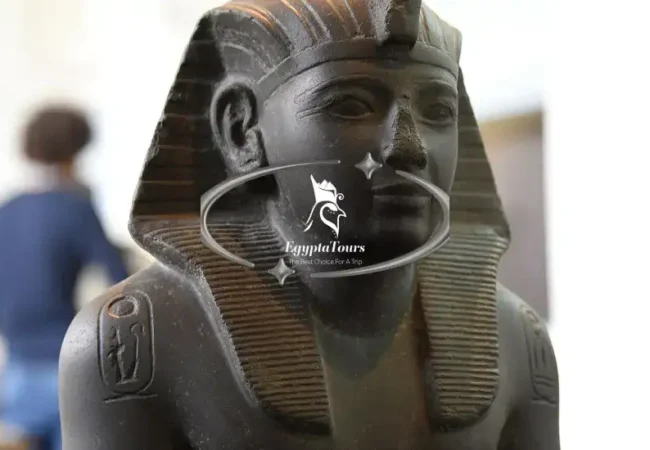
Ramses IV (also written Ramsses or Rameses). King Rameses IV is the...



Stretching along the Mediterranean coastline from Port Said all the way to the city of Alexandria, the Egyptian Nile Delta is the green heart of Egypt. For thousands of years, this triangular patch of incredibly fertile land has been the absolute backbone of the country’s agriculture. It’s also deeply tied to history, most famously as the spot where the Rosetta Stone was discovered.
However, today the delta is in serious trouble. While it still supports a huge variety of wildlife and produces a massive chunk of the nation’s crops, climate change is taking a heavy toll. Rising sea levels, rapid soil erosion, and salty groundwater are actively eating away at the land, posing a very real threat to the future of the delta and Egypt’s food supply.
Key Takeaways
The Nile Delta is a delta located in northern Egypt (the Delta region), where the Nile branches into two arms flowing into the Mediterranean Sea. The Damietta branch is in the east, terminating at the city of Damietta, while the Rosetta branch is in the west, ending at the city of Rosetta.
Recognized as one of the largest river deltas in the world, it stretches from Port Said in the east to the city of Alexandria in the west., and is named the delta because it resembles a triangle. It covers a vast distance of 240 kilometers along the Mediterranean coastline and earned its name because its shape closely resembles a triangle.
The delta is characterized by fertile agricultural land suitable for cultivation at any time. The length of the delta from north to south is approximately 160 km. It begins in the south near Cairo at the Qanater Khalili area.
The Nile Delta region consists of five main governorates: Dakahlia, Damietta, Kafr el-Sheikh, Menoufia, and Gharbia. The Nile Delta is located in northern Egypt, where the Nile River reaches the Mediterranean Sea.
The name delta is attributed to the Greek historian Herodotus, who visited Egypt around 450 BC. He gave this name to the triangular shape of the Nile River Delta because of its resemblance to the Greek letter delta. Today, all other river deltas in the world derive their geographical term from the Egyptian Nile Delta.
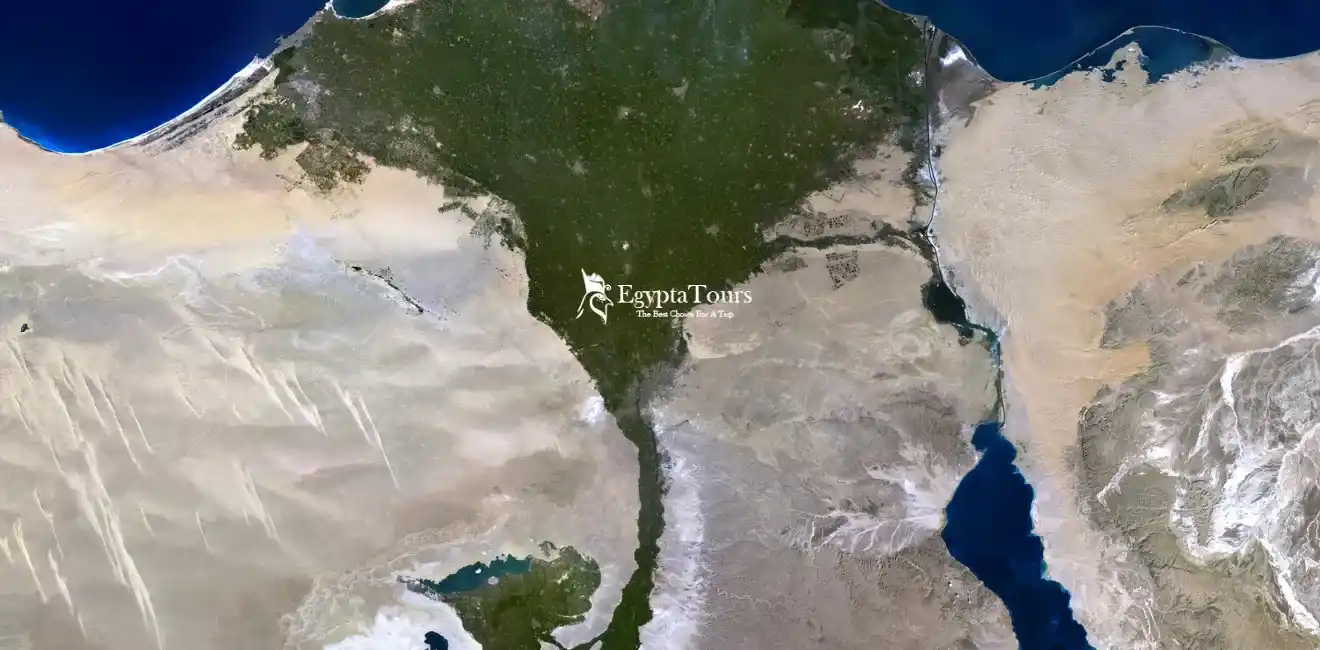
Shape -and -Composition- Map- of -Nile- Delta
This region is highly characterized by its fertile agricultural land, which is suitable for cultivation year-round.
Dimensions: The area stretches approximately 160 kilometers from north to south, beginning near Cairo at the Qanater Khalili area.
Main Governorates: The region encompasses five primary governorates: Dakahlia, Damietta, Kafr el-Sheikh, Menoufia, and Gharbia.
Name Origin: The name was coined by the Greek historian Herodotus, who visited Egypt around 450 BC. He named it after the Greek letter “delta” due to its triangular shape. Today, all other river deltas in the world derive their geographical term from the Egyptian Nile Delta.
The terrain was formed over millennia by silt carried downstream with the annual floods from the river’s sources. As the water reached the Mediterranean, the silt accumulated and settled, creating dry, fertile land.
Today, the northern boundaries are eroding due to a decrease in silt deposition, the natural forces of the Mediterranean Sea, and—most importantly—global sea levels rising by about 30 centimeters over the past two centuries.
This rise has formed major coastal lakes, such as Lake Manzala (Dakahlia) and Lake Burullus (Kafr el-Sheikh).
Since the construction of the High Dam, the land has become less fertile, forcing farmers to rely on chemical fertilizers.
While surface soil can reach a depth of 70 feet, fertility decreases from south to north as coastal salinity increases.
For thousands of years, Egyptians have inhabited this region, building the first state in history and establishing an advanced agricultural civilization that surpassed neighboring desert cultures. Historically, it has also been an area of attraction for desert Bedouins surrounding Egypt.
In ancient times, the river branched into seven distinct arms. Today, due to flood control and historical soil erosion, only two remain (Damietta and Rosetta). The original seven, from east to west, were:
Pelusiac
Tanitic
Mendesian
Phatnitic (Modern-day Damietta)
Sebennytic
Bolbitinic
Canopic (Modern-day Rosetta)
Because of its strategic location, the northern borders were frequently attacked. During the Crusades, major battles like Mansoura and Fariskur took place here. The Egyptians were victorious, famously capturing King Louis IX of France in the house of Ibn Luqman in Mansoura.
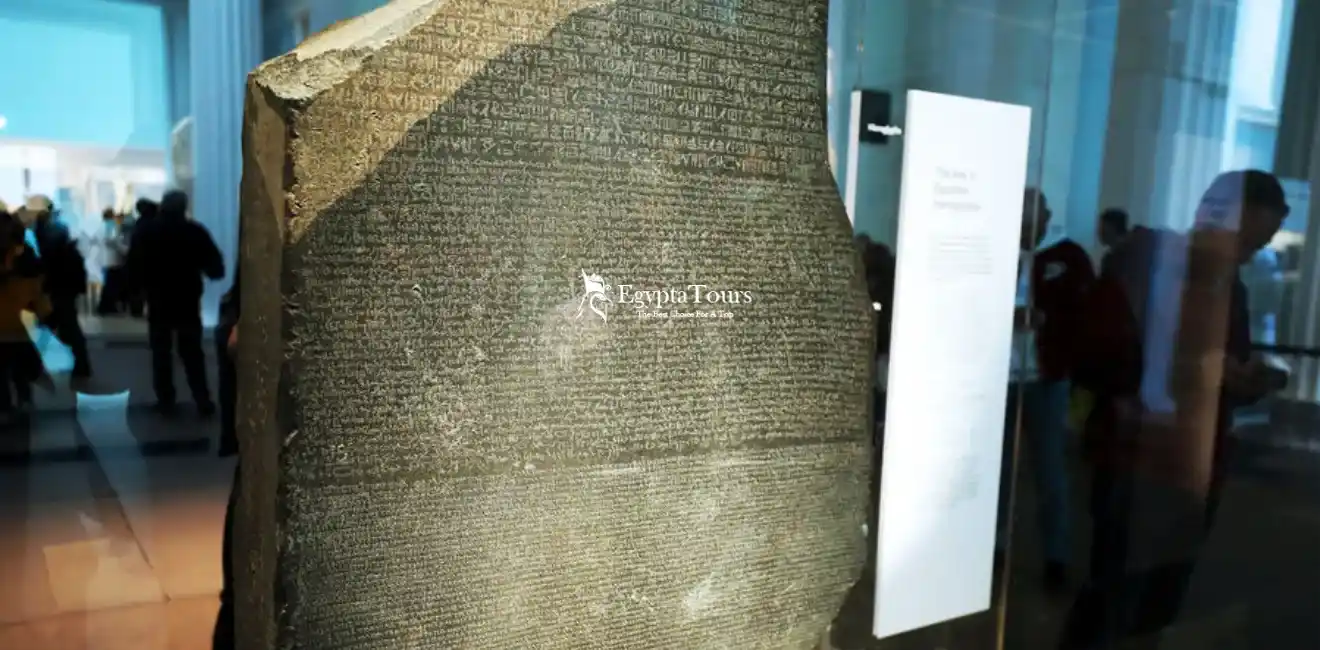
The- Rosetta -Stone
The Rosetta Stone is a slab of granite inscribed with a royal decree from 196 BC and its primary purpose is that it is the key to deciphering the ancient Egyptian hieroglyphics. It was discovered by French soldiers in 1799 near the city of Rosetta and was transported to London by British forces in 1801.
The text is written in three languages, hieroglyphic, demotic (ancient Egyptian) and ancient Greek which allowed the French scholar Jean François Champollion to decipher hieroglyphics in 1822. The text includes three different writings of the same royal decree:
It is 113 cm tall, 75 cm wide and 27.5 cm thick. Thanks to the comparison of the texts written in the three languages, the understanding of ancient Egyptian civilization was fully realized after hieroglyphics had been mysterious for over 1,600 years.
The French scholar Jean François Champollion played a key role in deciphering hieroglyphics in 1822, after comparing the royal names such as Ptolemy and Cleopatra between the texts.
It has been permanently displayed at the British Museum in London since 1802. Its discovery: it was discovered by a French officer named Pierre François Bouchard while restoring a fortress in the city of Rosetta at a site called Fort Julian.
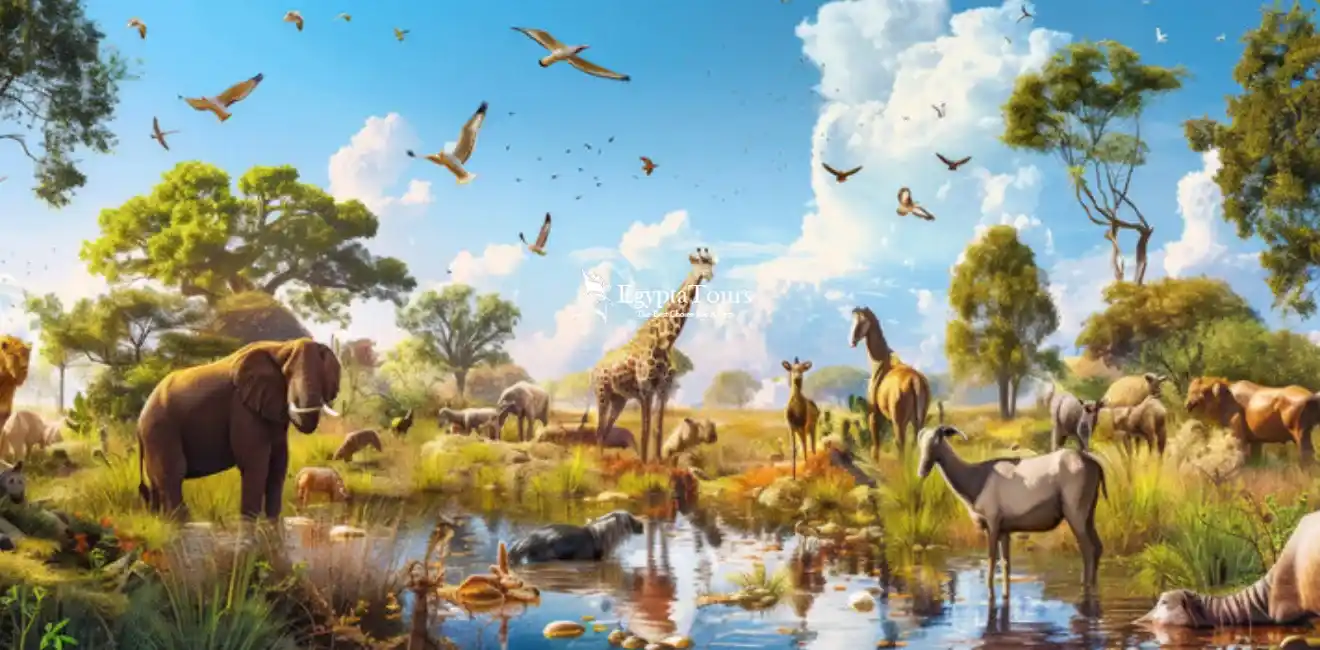
Animals- and -Plants -in -the -Nile -Delta
During the autumn, parts of the Nile River are covered in red, characteristic of the lotus flowers. The Nile River is also distinguished by the plants from which papyrus leaves are made which are no longer as abundant as they once were.
Hundreds of birds come from all over the world to the Nile Delta in winter.
The most notable are large flocks of gulls which come in huge numbers, and some birds such as the heron and the sandpiper, make the delta their home. Frogs, sea turtles and mosquitoes are also common in the delta and the Nile crocodiles, which once existed, have completely disappeared from the Nile Delta along with many river fish. The main crops in the Nile Delta include rice, wheat, cotton, corn, clover, fruits and other crops from temperate regions.
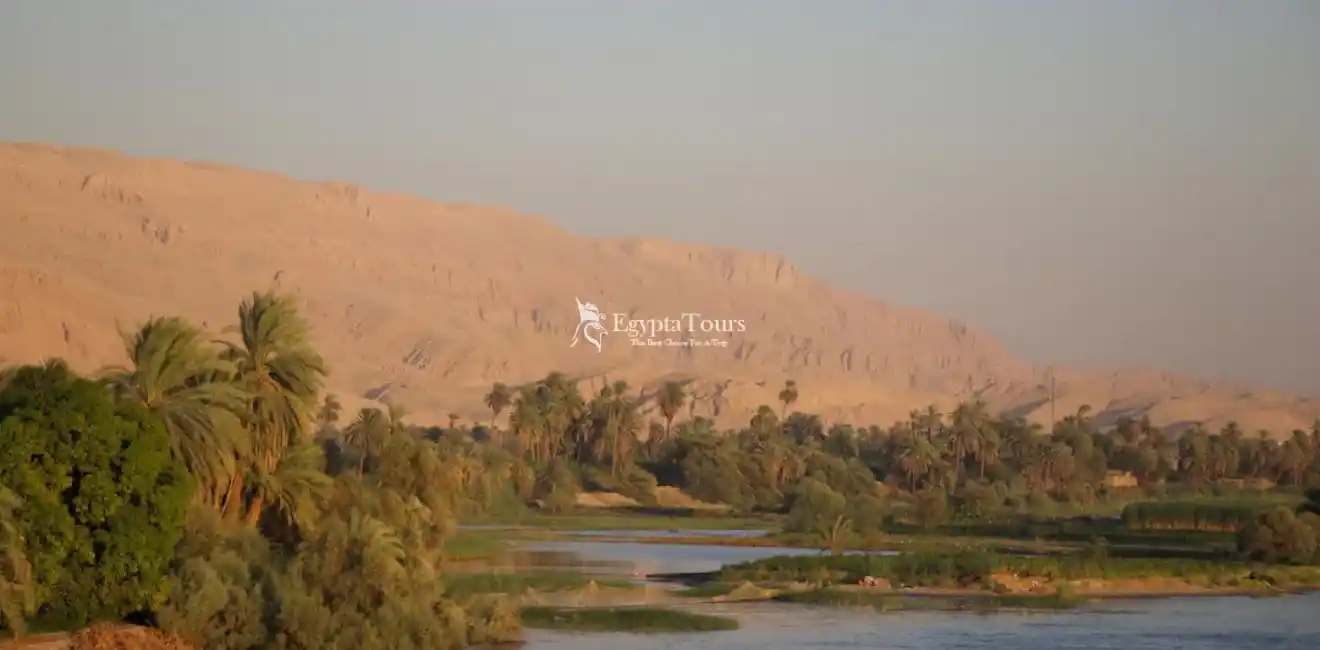
The -climate -in -the- Nile -Delta
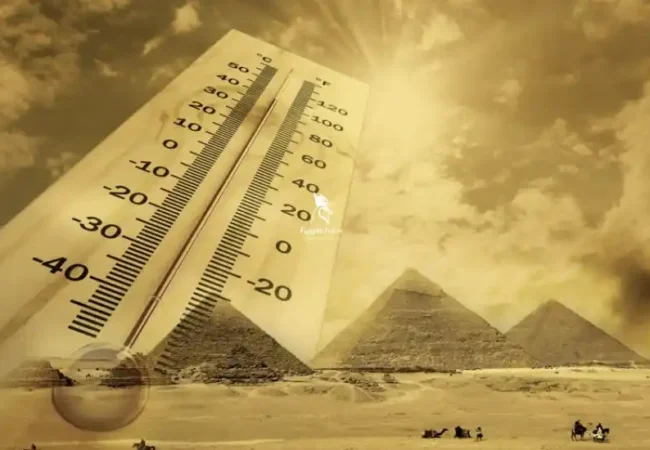
The climate in the Nile Delta is Mediterranean with rain falling in winter but not in large amounts. July and August are among the hottest months in the delta with an average temperature of about 30 degrees Celsius and a maximum temperature of 48 degrees Celsius. In winter, the temperature usually ranges between 5 degrees and 15 degrees Celsius.
The rate of soil erosion in the Nile Delta is 50 km each year and according to estimates, the Nile Delta will completely disappear by the year 2550.
Agriculture in the Nile Delta leads to numerous negative environmental impacts, most notably soil degradation and increased salinity due to the excessive use of untreated irrigation water, fertilizers and pesticides which reduces crop productivity. Climate change exacerbates the problem with rising sea levels and the intrusion of saline water threatening to flood parts of the delta and degrade soil quality as well as increasing evaporation rates.
Negative Environmental Impacts:
Farmers have begun to abandon the lands they inherited from their ancestors due to the concentration of salt coming from the sea into their fields; the fertile lands have turned white after being abundant with goodness for years.
The Nile Delta region in Egypt, an important agricultural area for Egypt’s food security, faces a significant threat due to the rising sea levels caused by climate change.
This threatens the loss of thousands of acres of the Nile Delta, making them unsuitable for living, farming, or investment; sea levels have been rising by 3.2 mm annually since 2012 in Egypt threatening to flood and erode the northern shore of the delta and pushing saline water into the soil and groundwater that farmers use for irrigation. High temperatures also accelerate the evaporation process, increasing the concentration of salt.
The delta was formed by the silt of the Nile which came with the floods from the sources of the Nile and ultimately settled at the Mediterranean Sea where the silt accumulated to create dry land. With the floods and the abundance of silt, the delta was formed, the Nile Delta takes on a triangular shape when viewed from above.
The northern boundaries of the delta have eroded due to the decrease in the amount of Nile silt from which the delta was formed and because of the Mediterranean Sea. More importantly, the main reason has been the fluctuations in global sea levels, which have been observed to have risen by about 30 centimeters over the past two centuries. As a result, coastal lakes have formed, the most significant being Lake Manzala in Dakahlia and Lake Burullus in Kafr el-Sheikh.
The Nile River is also distinguished by the plants from which papyrus leaves are made, which are no longer as abundant as they once were.
Hundreds of birds come from all over the world to the Nile Delta in winter. The most notable are large flocks of gulls which come in huge numbers, and some birds, such as the heron and the sandpiper, make the delta their home. Frogs, sea turtles and mosquitoes are also common in the delta and the Nile crocodiles which once existed, have completely disappeared from the Nile Delta along with many river fish.
The main crops in the Nile Delta include rice, wheat, cotton, corn, clover, fruits and other crops from temperate regions.
The Rosetta Stone was discovered in 1799 in the coastal city of Rosetta, located in the west of the delta. It is the stone that deciphered the mysteries of ancient Pharaonic civilization.
due to the rising sea levels caused by climate change.
This threatens the loss of thousands of acres of the Nile Delta, making them unsuitable for living, farming or investment.



Explore our top-rated Egypt travel packages and embark on an unforgettable journey. From the Pyramids of Cairo to the magical temples of Luxor, Aswan, and Abu Simbel, discover expertly curated tours designed for your perfect Egyptian adventure