






Ihy
Ancient Egyptian gods played an important role in the lives of the Egyptian people. The ancient Egyptians believed that every part of life and nature was controlled by a god such as the sun, the Nile, love, music and justice.
These gods were not seen as distant beings but were shown in human or animal forms, with families and emotions similar to humans. This made the gods easy to understand and close to daily life. Each god had a specific role, special temples and religious rituals and festivals were held in their honor.
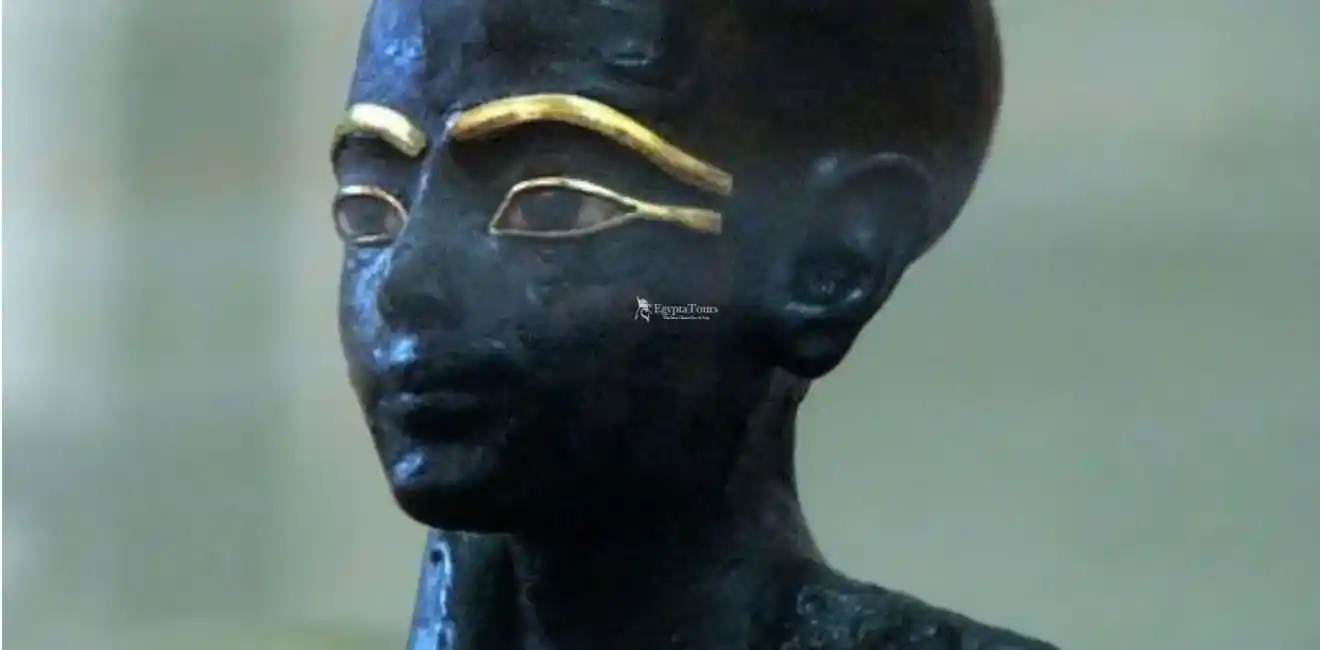
Among these gods was Ihy, a god closely connected to joy and music. Ihy was usually shown in the form of a young child, which made him a symbol of innocence and happiness. He was strongly linked to music, especially the sistrum, a sacred rattle used in temple ceremonies. The sound of this instrument was believed to bring comfort, happiness and protection from evil.
Ihy was considered the son of the goddess Hathor, the goddess of love and music and for this reason he was closely associated with her worship. Both were especially honored in the Temple of Dendera. Through Ihy, the ancient Egyptians expressed the importance of music and joy in their religious life. Worship was not only about silence and seriousness but also about singing, celebration and happiness.
In this way, Ihy represents a gentle and positive side of ancient Egyptian religion. He shows how belief, music and joy came together and how religious rituals could be full of life and harmony through the image of a joyful child god.
Ihy -The -Ancient- Egyptian- God -of- Music
Ihy was a minor deity in ancient Egyptian religion and his name appeared only a few times in the Coffin Texts and the Book of the Dead. Even so, he was connected with important meanings such as childhood, music and joy. Ihy was usually shown as a child god which reflects the Egyptian idea of the gods as a closely connected family.
Ihy was a god who represented the joyful excitement of playing the sistrum (a sacred rattle). His name may mean “the player of the sistrum,” directly referring to his role or it may mean “the calf,” pointing to his close relationship with the cow goddess Hathor who was often described as his mother.
In other traditions, he was considered the son of other goddesses such as Isis, Sekhmet or Neith. However, Horus was consistently regarded as Ihy’s father. Ihy was usually depicted as a child holding a sistrum, or as a naked child placing his finger in his mouth. He was worshipped together with Horus, the god of Edfu and Hathor, the goddess of Dendera, especially at the temple of Dendera.
The Divine Family of Ihy
The -Divine -Family- of -Ihy
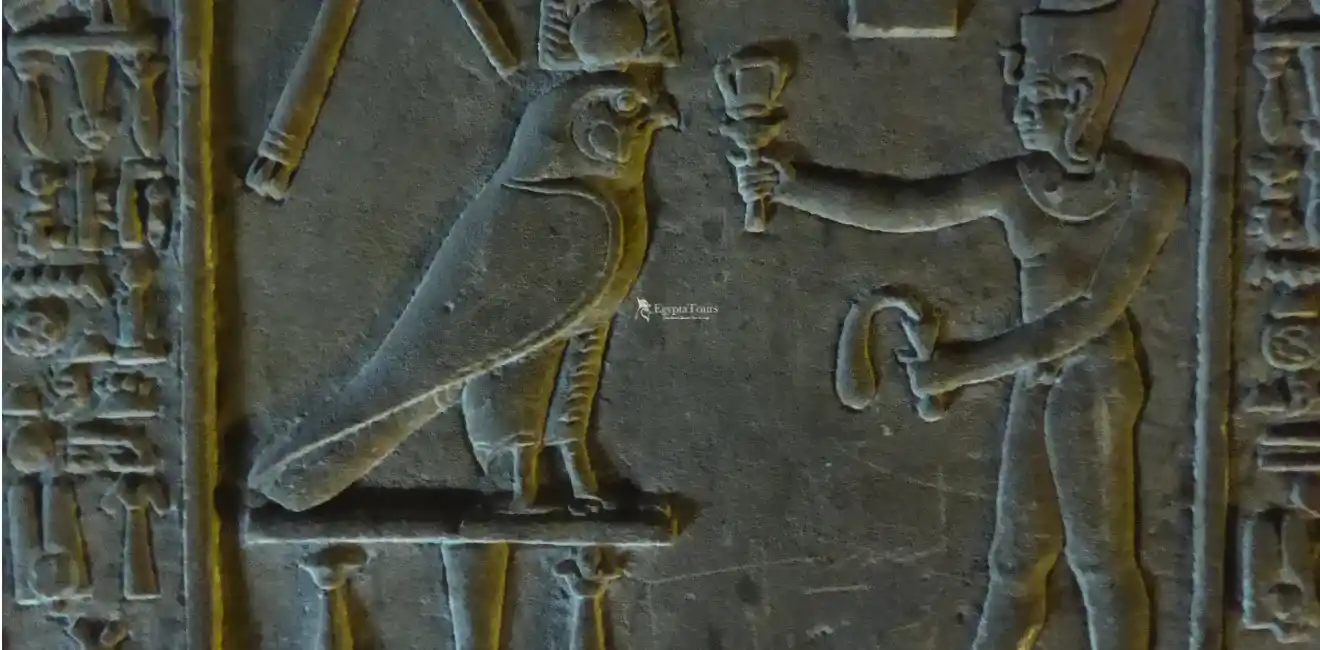
Although Ihy was considered a minor god in Upper Egypt, he belonged to an impressive divine family. Early references describe him as the son of Horus, Isis, Sekhmet, or Neith. Over time, religious beliefs developed, and Ihy came to be seen as the first son of Ra and Hathor. Egyptologists note that he was loved by his divine family because he represented the ideal child.
Despite symbolizing the beauty and innocence of childhood, ancient texts suggest that all of Egypt feared him. This shows that even though Ihy appeared as a simple child god, he was treated with respect and reverence.
The Appearance of Ihy
The- Appearance- of -Ihy
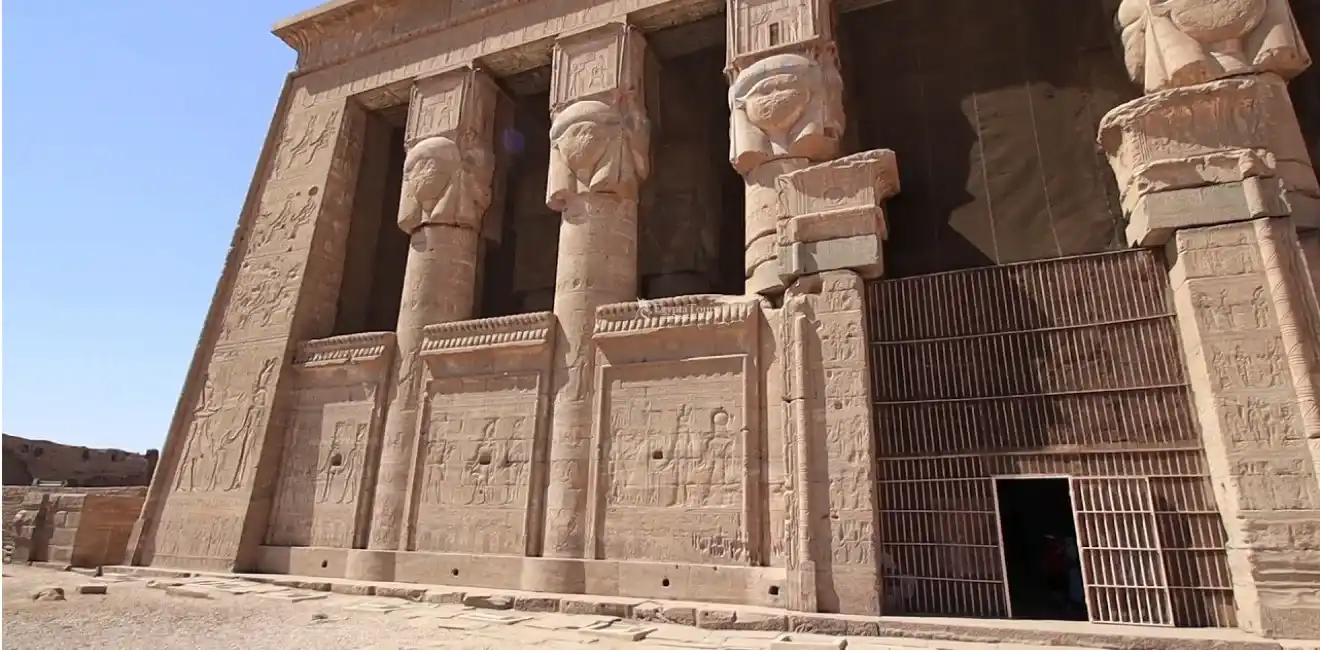
In the mammisi (birth house) at the Temple of Dendera, Ihy is shown as a small naked child. He wears side-locks of hair, which indicate that he is under the age of fourteen. One hand is raised with a finger to his mouth, while the other holds a sistrum, a sacred rattle made of copper or bronze. He also wears the sacred menat necklace and the double crown (the red and white crowns) decorated with the uraeus.
The Joy of Childhood
Ihy was known as the Egyptian god of music and represented the playful side of childhood. He was seen as the true joy that comes from playing the sistrum. The worship of Hathor was strongly connected to Upper Egypt, and playing the sistrum was an essential part of her religious rituals.
Scene of the Gathering of the Gods at the Temple of Dendera
Scene -of- the- Gathering -of -the- Gods- at -the -Temple- of -Dendera
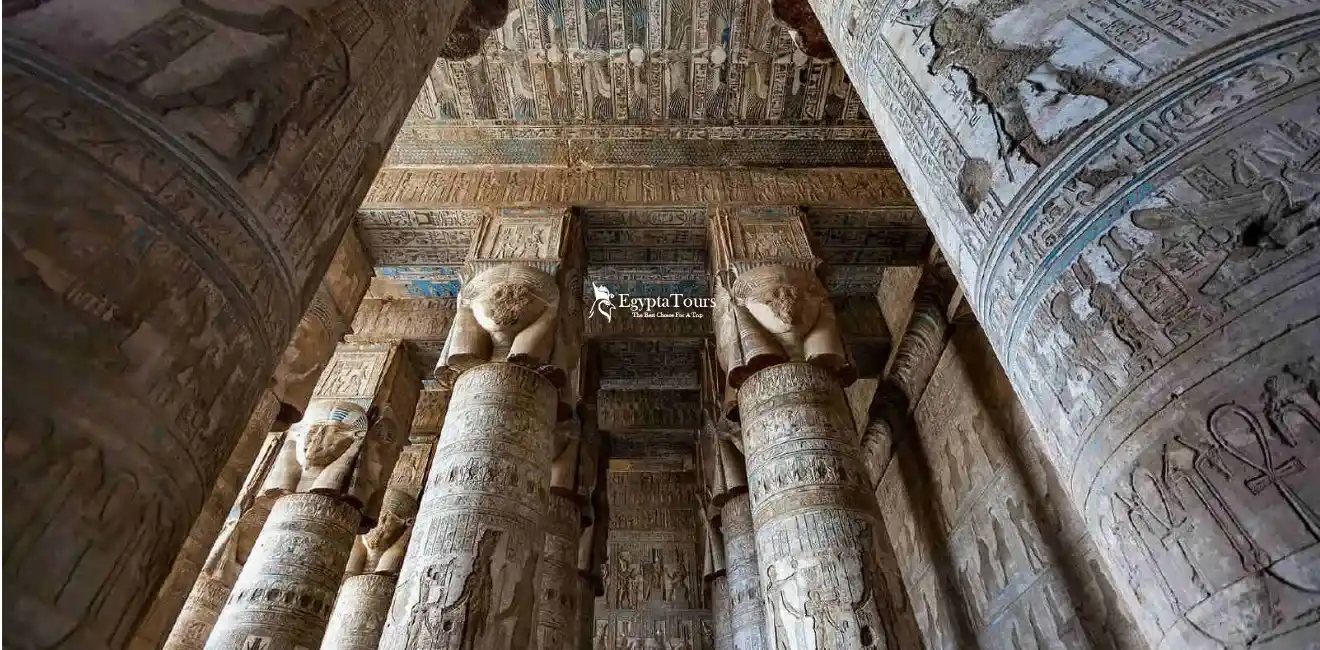
The Temple of Dendera is located in Qena Governorate and was mainly dedicated to the worship of the goddess Hathor who was associated with love, beauty, joy and music. Among the many inscriptions and decorations that cover the ceiling of the temple, this scene stands out as one of the most important. It presents several key religious ideas through clear and expressive artistic forms.
The Temple of Dendera is considered one of the greatest Egyptian temples, as it preserves many important scenes that tell us about the religious and artistic life of ancient Egypt. On the ceiling of this magnificent temple, there is a unique and meaningful scene showing the goddess Hathor surrounded by her children. This scene clearly reflects her sacred role as a protective and caring mother, as well as a divine source of inspiration.
In the center of the scene stands Hathor while to her right appears Horus Sematawy, the god who unites the Two Lands of Upper and Lower Egypt. On her left stands Ihy, the child god of music who was known as the skilled player of the sistrum and as a symbol of the sacred calf. Together, these figures form a harmonious composition that shows the deep connection between religious belief and decorative art in ancient Egyptian civilization.
Hathor: The goddess of love
In this scene, Hathor appears in her familiar and graceful form. She wears her well known crown made of cow horns with the sun disk placed between them. Hathor was an important symbol of love, motherhood, kindness and generosity. She was closely connected to music, dance and religious celebrations. Sacred songs and musical performances were played for her inside the temples. Because of these qualities, Hathor was worshipped by both the pharaohs and the common people all over Egypt.
Horus Sematawy: the Unifier of the Two Lands
To the right of Hathor stands Horus Sematawy. He represents the divine king and the unity of Upper and Lower Egypt. His position beside Hathor shows their sacred relationship. In some myths, Hathor was believed to be his mother or his wife. Horus is shown wearing the double crown which clearly represents his authority and his role as the ruler of the whole country. Through this image, Horus stands for power, order and stability.
Ihy: the god of music and the Player of the Sistrum
On the left side of Hathor appears Ihy, the child god who is closely connected with music and happiness. Ihy was known as the son of Hathor and was often shown holding the sistrum, a sacred rattle used in religious rituals. This instrument was believed to bring blessings and protect people from evil. Ihy was also linked to the image of the sacred calf which adds to his spiritual and symbolic importance in ancient Egyptian religion.
The Religious and Artistic Meanings of the Scene
This scene is more than just a decoration on the temple ceiling. It has deep religious meaning. It shows the importance of motherhood in ancient Egyptian beliefs and explains the strong relationships between the gods using clear visual symbols. Hathor standing with her children represents balance and harmony. Horus shows strength and royal power, while Ihy shows music, joy and celebration. Together, they express the ancient Egyptian idea of order and harmony in both religious and political life.
From an artistic point of view, the scene is known for its fine details and bright colors. These colors have remained beautiful even after thousands of years. This shows the great skill of ancient Egyptian artists in combining religious meaning with visual beauty.
The scene of the gathering of the gods on the ceiling of the Temple of Dendera is still one of the most impressive examples of ancient Egyptian religious and artistic expression. It shows Hathor as a loving and protective mother while her children have important roles in keeping order and spreading music and joy. This scene remains a lasting example of the greatness of ancient Egyptian civilization and its unique artistic creativity.
FAQs
What are the Religious and Artistic Meanings of the Scene of the Gathering of the Gods at the Temple of Dendera?
This scene is more than just a decoration on the temple ceiling. It has deep religious meaning. It shows the importance of motherhood in ancient Egyptian beliefs and explains the strong relationships between the gods using clear visual symbols. Hathor standing with her children represents balance and harmony. Horus shows strength and royal power, while Ihy shows music, joy and celebration. Together, they express the ancient Egyptian idea of order and harmony in both religious and political life.
How is the appearance of Ihy?
In the mammisi (birth house) at the Temple of Dendera, Ihy is shown as a small naked child. He wears side-locks of hair, which indicate that he is under the age of fourteen. One hand is raised with a finger to his mouth, while the other holds a sistrum, a sacred rattle made of copper or bronze. He also wears the sacred menat necklace and the double crown (the red and white crowns) decorated with the uraeus.
Although Ihy was considered a minor god in Upper Egypt, he belonged to an impressive divine family. Early references describe him as the son of Horus, Isis, Sekhmet, or Neith. Over time, religious beliefs developed, and Ihy came to be seen as the first son of Ra and Hathor. Egyptologists note that he was loved by his divine family because he represented the ideal child.
Despite symbolizing the beauty and innocence of childhood, ancient texts suggest that all of Egypt feared him. This shows that even though Ihy appeared as a simple child god, he was treated with respect and reverence.
Who was Ihy?
Ihy was a minor deity in ancient Egyptian religion and his name appeared only a few times in the Coffin Texts and the Book of the Dead. Even so, he was connected with important meanings such as childhood, music and joy. Ihy was usually shown as a child god which reflects the Egyptian idea of the gods as a closely connected family.
How was Hathor depicted at the Scene of the Gathering of the Gods at the Temple of Dendera?
In this scene, Hathor appears in her familiar and graceful form. She wears her well known crown made of cow horns with the sun disk placed between them. Hathor was an important symbol of love, motherhood, kindness and generosity. She was closely connected to music, dance and religious celebrations. Sacred songs and musical performances were played for her inside the temples. Because of these qualities, Hathor was worshipped by both the pharaohs and the common people all over Egypt.
About EgyptaTours

EgyptaTours is a name synonymous with trust, excellence, and unforgettable travel experiences, proudly standing as one of the leading travel agencies in Egypt. Renowned for its deep expertise, personalized service, and carefully crafted itineraries, EgyptaTours serves as the ultimate gateway to discovering Egypt in its most authentic and inspiring form.