The Most Famous Rulers of ancient Egyptian Pharaohs
The Egyptian civilization is one of the greatest civilizations known to history,...



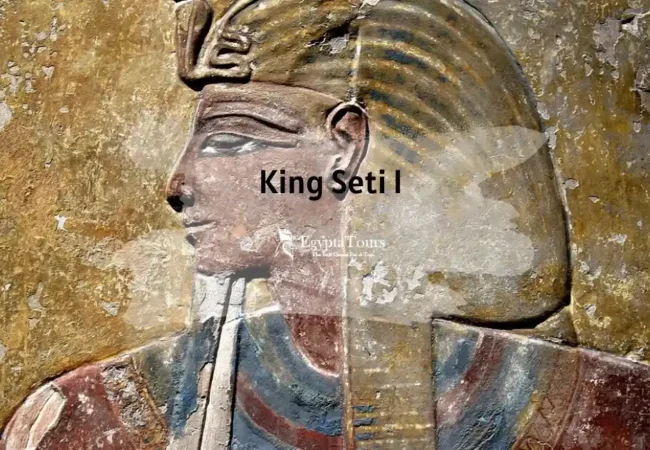
The rule of the pharaohs had a major impact on ancient Egyptian civilization, with each leader leaving a distinct mark on history. A highly significant period is the start of the 19th Dynasty, established by a ruler originally known as Paramessu. Although he reigned for a brief period of about two years, he is considered a crucial king. He founded a powerful dynasty that continued with his son, Seti I, and his grandson, Ramesses II, who would later become one of the greatest pharaohs in history.
Coming from a military background, the king was renowned for his exceptional administrative and leadership skills. His brief reign paved the way for national stability after a challenging era, serving as a vital bridge between the end of the 18th Dynasty and the military resurgence of the 19th Dynasty.
About -Ramesses- I
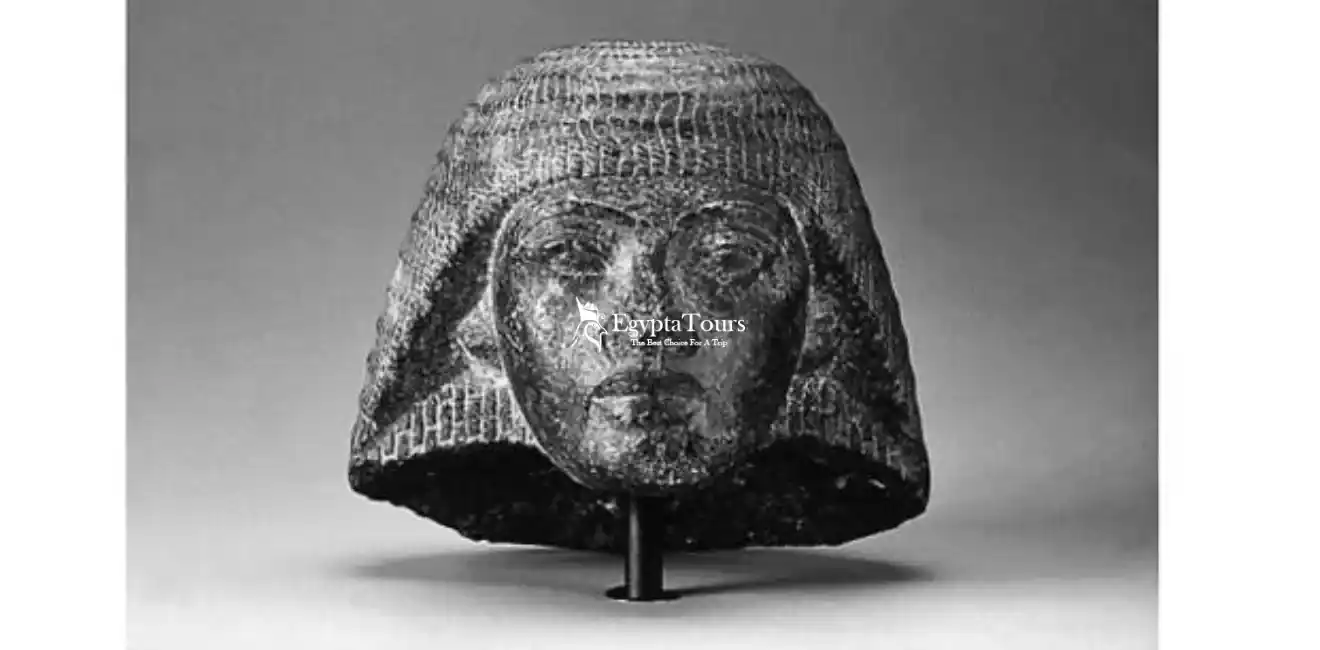
Ramesses I was the first pharaoh of Egypt’s 19th Dynasty. The exact dates of his reign are not fully certain but it is usually dated to around 1292 – 1290 BC or 1295 – 1294 BC.
His short reign represented a transitional phase between the rule of Horemheb who restored stability to Egypt at the end of the 18th Dynasty and the strong rulers of his own family, especially his son Seti I and his grandson Ramesses II.
He originally had a military career and became king at an advanced age. He ruled Egypt for about two years before his death. After him, his son Seti I took the throne and continued Egypt’s military campaigns and construction activities. He was later followed by his son Ramesses II who became one of the most famous and powerful pharaohs in Egyptian history.
Under the 19th Dynasty, Egypt experienced great cultural and military growth and became one of the leading powers in the region. However, the strength of the dynasty started to weaken later particularly during the reign of Ramesses III as a result of palace conspiracies.
The -Family -of -Ramesses- I
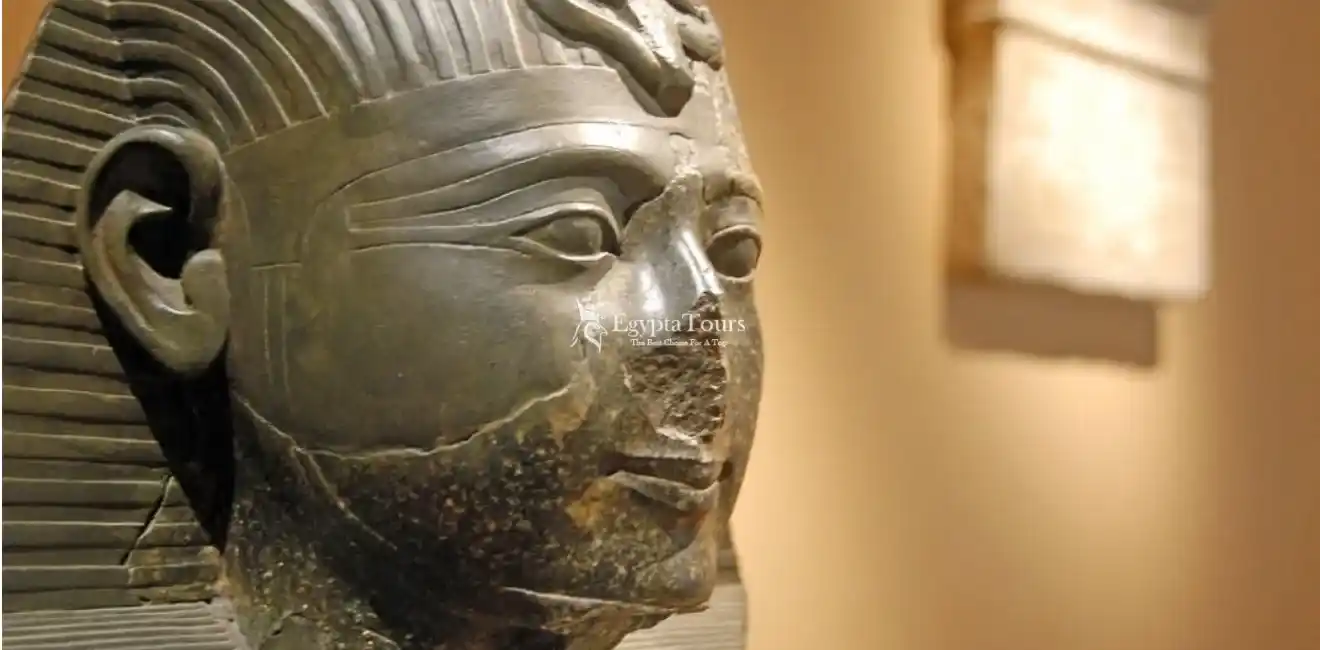
Born into a noble family from the Nile Delta near Avaris, the future pharaoh was initially named Paramessu. He did not possess royal blood; instead, his influence stemmed from deep roots within the Egyptian military.
Archaeological studies have confirmed that the father of Ramesses I was a man named Seti (or Sutekh) who held several military and administrative titles. These same titles were later inherited by his son. His mother was called Tia, whose name appears on the Four Hundred Year Stela. She held the title “Lady of the House,” a common title that reflected a respectable social status for women in ancient Egypt.
She also carried the title “Singer of Ra,” meaning a servant of the sun god Ra. This may explain why her son was named Paramessu, a name linked to the god Ra which later became a common royal name among the kings of the Nineteenth Dynasty.
His Family originated from the city of Sret in the Nile Delta. This confirms that there was no family relationship between him and King Horemheb, who came from the city of Hut-nesut and was associated with the god Horus, not the god Set who was worshipped by the family of Ramesses.
It is likely that the family’s roots in the northern Delta encouraged the kings of the Nineteenth Dynasty to establish a new royal capital in this region, near the modern site of Qantir, in addition to other political and religious reasons.
Depictions in the funerary temple at Abydos—built by his son, Seti I—highlight the king’s strong familial bonds. These rare, emotionally expressive carvings depict him alongside his family members, offering sacrifices to Osiris.
His primary wife, Queen Satre, is prominently featured. She held prestigious titles such as Great Royal Wife, Mother of the King, and Lady of the Two Lands.
Paramessu began his career in the military and gradually rose through the ranks. He inherited his father’s position and became Chief of Archers then was promoted to commander of the fortress of Sileh which was responsible for protecting Egypt’s northeastern borders. Later, he reached the rank of commander of cavalry, one of the highest military positions at the time. This shows that he was successful, trusted and closely connected to the royal court.
During Horemheb’s reign, Paramessu held great authority and worked closely with the king much like Horemheb himself had once done under Pharaoh Ay.
Learning from past political events, Horemheb ensured a smooth transition of power by appointing Paramessu as his heir and granting him the title of deputy ruler of the state. Paramessu was also appointed vizier, a role that was reshaped during this period to serve the interests of the military elite rather than the traditional bureaucratic class.
After Horemheb’s death, Paramessu ascended the throne and took the royal name Ramesses I. He adopted several royal titles presenting himself as the founder of the Nineteenth Dynasty. However, he was already advanced in age when he became king. His reign was short, lasting about one and a half to two years but it marked an important transitional period between the Eighteenth Dynasty and the powerful rulers of the Nineteenth Dynasty, especially his son Seti I and his grandson Ramesses II.
Before ascending the throne, Ramesses I held many important titles including Commander of the Garrison, Overseer of the Mouths of the Nile, Commander of the Archers and Commander of the Army of the Lord of the Two Lands.
He also held the honorary title of Charioteer of the Pharaoh, a prestigious position granted only to high-ranking individuals because of its close physical proximity to the king. In addition, he served as Deputy of the King in Upper and Lower Egypt, Chief Judge, Overseer of the Courts of Justice and Priest of the Goddess Maat.
Despite holding these high offices, He never carried the title “King’s Son” or “Relative of the Pharaoh.” This confirms that there was no blood relationship between him and Horemheb and that their connection was based on military partnership and political trust.
It is likely that Horemheb deliberately prepared Ramesses I to succeed him in order to continue the military and administrative policies that had begun during the reign of King Ay.
He came to power at an advanced age and had one young son, Seti I who already possessed strong military and administrative experience. Although the reign of Ramesses I was short, he followed the same path laid down by Horemheb. He focused on completing internal reforms and restoring stability to the state, preparing Egypt to regain its political and military strength in the ancient Near East.
This policy became clearly evident during the reign of his son Seti I who continued to strengthen the state internally and restore Egyptian influence abroad especially in Asia. This approach later became a defining feature of the Nineteenth Dynasty.
Paramessuadopted the royal name Menpehtyre, meaning “Established by the power of Ra,” while his personal name Ramesses meant “Ra has engendered him.” Already advanced in age when he became king, he appointed his son Seti I as heir and military leader while focusing on domestic affairs, including construction work at Karnak Temple.
Originally known as Pramessu, Ramesses I came from a respected military family and had served as a commander under Horemheb. Although his reign lasted only about 17 months to two years, he played an important role in stabilizing Egypt and strengthening the new 19th Dynasty.
One of his most significant achievements was completing the restoration of the traditional religion after the Amarna Period. Building on Horemheb’s efforts, he reinforced the worship of Amun and helped eliminate the remaining influence of Akhenaten’s Aten cult, contributing to Egypt’s political and religious stability.
Although the reign of King Ramesses I was very short, he left behind several important monuments spread across different parts of Egypt. His remains were found from Serabit el-Khadim in the Sinai Peninsula in the north to Amada in Nubia in the south. This wide geographical spread shows that he had religious and building activities throughout the country despite ruling for a limited time.
At Serabit el-Khadim, a stela of King Ramesses I was discovered recording his restoration of monuments dedicated to the goddess Hathor, Lady of Turquoise. Another stela from the same site shows the king offering two libation vessels to Hathor. These monuments are especially important because they indicate that the turquoise mines of the region were reopened during the reign of Ramesses I after being abandoned for about three generations since the time of Amenhotep III.
In the Qantara region, archaeologists discovered the base of a large statue in the form of a falcon. The base is carved with a scene showing King Seti I presenting vessels to the god Horus, Lord of Mesen.
The inscription explains that Seti I dedicated this monument to eternally preserve the name of his father, King Ramesses I before the god. The work appears to have remained unfinished at Seti I’s death and later his son Ramesses II added an inscription on the back stating that he completed the monument bearing the name of his grandfather Ramesses I. What is remarkable is that Ramesses II chose to complete a monument for his ancestors instead of claiming it for himself, which was uncommon during his reign.
The archaeologist Naville found several objects at Tell el-Yahudiya bearing the name of King Ramesses I. These finds indicate that the king had some form of activity or presence in this area.
A statue base attributed to King Paramessu is preserved in the Louvre Museum. It is believed to have originally come from the city of Memphis, one of the most important political and religious centers in ancient Egypt.
A stone fragment bearing the royal cartouche of King Ramesses I was found near a well in an area close to Sheikh Abada providing further evidence of his monuments.
Near Bab al-Futuh in Cairo, a stone block engraved with one of the royal titles of Ramesses I was discovered. The fine quality of the carving suggests that this block once belonged to an important monument that was later reused in the area.
The archaeologist Petrie discovered a fragment at Abydos bearing the Horus name of King Ramesses I. A statue of the king was also found with an antiquities dealer in El-Balina near Abydos. Its inscriptions state that Seti I erected it to firmly establish and eternally preserve his father’s name in this region. In the temple at Abydos, Ramesses I and his wife Satre are represented as sacred statues placed inside the sacred barque. His name also appears in the royal king list carved on one of the chambers of the Great Temple.
Despite not being of royal origin and despite his short reign, He was fully accepted as a legitimate king by his successors. He was even worshipped as a god like other Egyptian pharaohs. Several monuments show his son Seti I and his grandson Ramesses II venerating him. Evidence of his cult also appears in private tombs and stelae proving that he continued to hold religious importance among both the royal family and ordinary people after his death.
The- Works -of- Ramesses -I
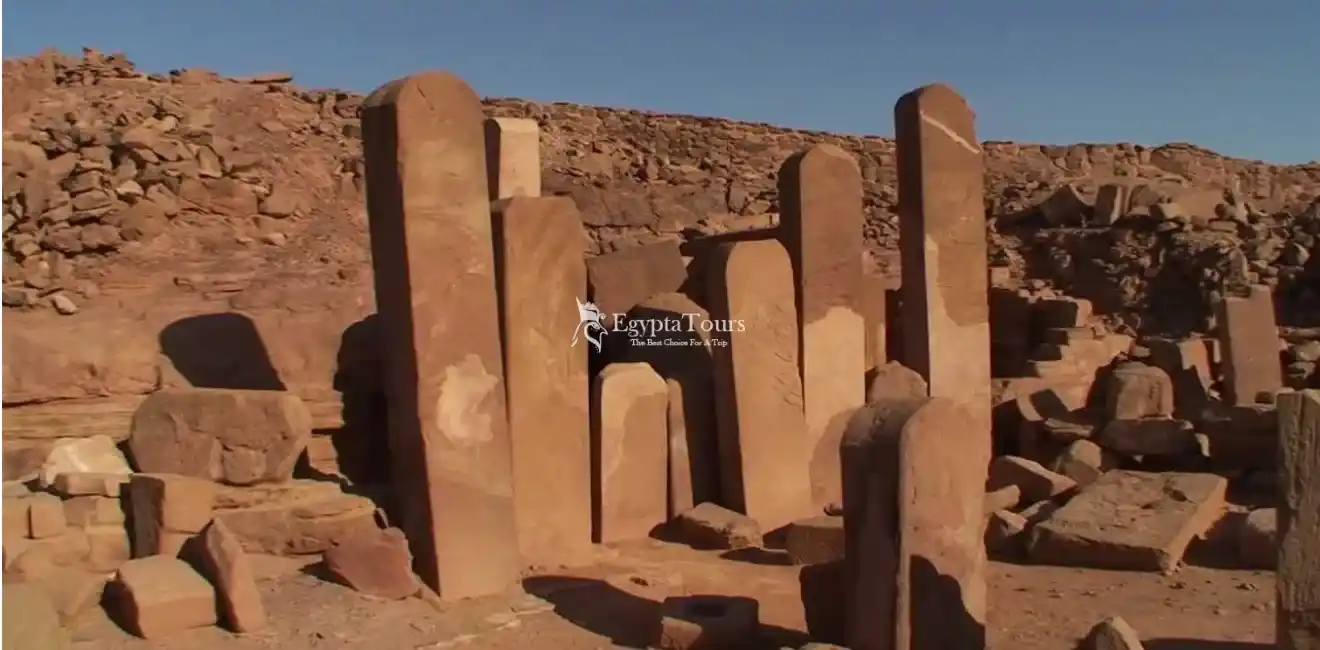
Although the reign of King Ramesses I was very short, he left behind several important monuments spread across different parts of Egypt. His remains were found from Serabit el-Khadim in the Sinai Peninsula in the north to Amada in Nubia in the south. This wide geographical spread shows that Ramesses I had religious and building activities throughout the country despite ruling for a limited time.
At Serabit el-Khadim, a stela of King Ramesses I was discovered recording his restoration of monuments dedicated to the goddess Hathor, Lady of Turquoise. Another stela from the same site shows the king offering two libation vessels to Hathor. These monuments are especially important because they indicate that the turquoise mines of the region were reopened during his regin after being abandoned for about three generations since the time of Amenhotep III.
In the Qantara region, archaeologists discovered the base of a large statue in the form of a falcon. The base is carved with a scene showing King Seti I presenting vessels to the god Horus, Lord of Mesen.
The inscription explains that Seti I dedicated this monument to eternally preserve the name of his father, King Ramesses I before the god. The work appears to have remained unfinished at Seti I’s death and later his son Ramesses II added an inscription on the back stating that he completed the monument bearing the name of his grandfather Ramesses I. What is remarkable is that Ramesses II chose to complete a monument for his ancestors instead of claiming it for himself, which was uncommon during his reign.
The archaeologist Naville found several objects at Tell el-Yahudiya bearing the name of King Ramesses I. These finds indicate that the king had some form of activity or presence in this area.
A statue base attributed to King Ramesses I is preserved in the Louvre Museum. It is believed to have originally come from the city of Memphis, one of the most important political and religious centers in ancient Egypt.
A stone fragment bearing the royal cartouche of King Ramesses I was found near a well in an area close to Sheikh Abada providing further evidence of his monuments.
Near Bab al-Futuh in Cairo, a stone block engraved with one of the royal titles of Ramesses I was discovered. The fine quality of the carving suggests that this block once belonged to an important monument that was later reused in the area.
The archaeologist Petrie discovered a fragment at Abydos bearing the Horus name of King Ramesses I. A statue of the king was also found with an antiquities dealer in El-Balina near Abydos. Its inscriptions state that Seti I erected it to firmly establish and eternally preserve his father’s name in this region. In the temple at Abydos, Ramesses I and his wife Satre are represented as sacred statues placed inside the sacred barque. His name also appears in the royal king list carved on one of the chambers of the Great Temple.

Monuments -of -Ramesses -I- at- Karnak
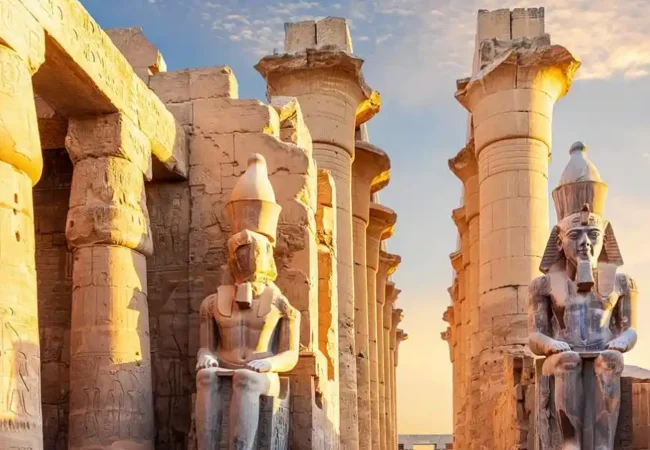
The monuments of Ramesses I at Karnak are among the clearest signs of his architectural ambition. The most famous is the Great Hypostyle Hall, the largest columned hall in ancient Egyptian architecture. It measures about 170 feet in length and 338 feet in width covering an area of nearly six thousand square yards. The columns are arranged in sixteen rows with the two central rows rising higher than the others and crowned with open papyrus capitals.
The central columns reach a height of about sixty nine feet, while their capitals alone measure nearly eleven feet high. Each column has a circumference of approximately thirty three feet making their scale truly impressive.
The side columns are about forty two and a half feet high, with a circumference of around twenty seven and a half feet. In front of the hall stands a gateway known today as the Second Pylon, flanked by flagpoles that once carried banners during religious festivals.
Due to his advanced age and short reign, He could not complete this massive project. Its completion was left to his son Seti I and later his grandson Ramesses II.
Scholars believe that the original design of the hall was initiated by him rather than Horemheb whose contribution was limited to decorating the Second Pylon. The construction of this hall likely had both religious and political motivations, especially to satisfy the priests of Amun and strengthen the legitimacy of the new royal family.
His Short is clearly reflected in his tomb in the Valley of the Kings, tomb number sixteen. It consists of only two chambers and decoration is limited to the burial chamber alone. The scenes and texts inside depict the journey of the sun god through the underworld.
The king’s sarcophagus was placed in the center and decorated with painted scenes instead of carved reliefs suggesting that the tomb was unfinished at the time of his death.
Toward the end of the Twentieth Dynasty, his mummy was moved along with other royal mummies due to tomb robberies and was eventually hidden in the Deir el-Bahari cache. His original coffin appears to have been lost, as his mummy was later placed in a reused coffin dating to the Twenty First Dynasty.
Because of his brief reign, He was unable to build his own funerary temple. However, his son Seti I constructed a small temple for him next to his own great temple at Abydos. Despite its modest size, the temple was beautifully designed and built of white limestone. It consisted of a main hall with two side chambers, surrounded by a strong enclosure wall and preceded by a small forecourt.
The reliefs on the temple façade show a dedication scene in which Seti I presents offerings to his father Ramesses I. The accompanying inscriptions include prayers for the king’s spirit and emphasize the devotion of the son to his father. The gateway also bears inscriptions later added by Merneptah, the grandson of Seti I.
The only monument firmly dated to the reign of Ramesses I is a stela found at Wadi Halfa, dated to the second year of his reign. The stela records the establishment of a permanent offering cult in the temple of the god Horus of Buhen.
It mentions offerings of bread, beer and vegetables as well as the appointment of priests and temple servants.
At the end of the inscription, the name of Seti I appears suggesting a possible correlation between father and son. The reference to captives and servants also implies that a military campaign took place in Nubia, most likely led by Seti I.
The king died after a brief reign of 16 to 24 months. He was laid to rest in the Valley of the Kings in Tomb KV16, discovered in 1817 by Giovanni Belzoni. Because of his sudden passing, the tomb was small and hastily completed, featuring painted (rather than carved) decorations.
The Journey of the Mummy: In antiquity, his mummy was moved to the Deir el-Bahari cache by priests to protect it from looters. In the 19th century, modern tomb robbers sold the remains, and the mummy eventually ended up in a quirky Canadian museum alongside various oddities.
After remaining unrecognized for over 130 years, it was purchased by the Michael C. Carlos Museum in 1999. Following extensive medical and historical testing including CT scans and radiocarbon dating the remains were confidently identified. In October 2003, the pharaoh was officially repatriated to Egypt with full honors and is now displayed at the Luxor Museum.
Ramesses I is best known as the founder of Egypt’s 19th Dynasty, one of the most important royal families in ancient Egyptian history. Although he ruled for only a short time, he helped bring stability to the kingdom and established a strong dynasty that would shape Egypt’s future. His son, Seti I, and his grandson, Ramesses II, later became two of Egypt’s most successful and well known pharaohs, continuing the legacy that he began.
Although He ruled Egypt for only a short time, his impact was much greater than the length of his reign. He did more than simply become king he helped bring stability to Egypt during an important period of change. Coming from a military background rather than a royal family, he helped establish a strong new ruling line that would guide Egypt into one of its most successful eras. His experience as a soldier influenced his leadership, placing importance on order, loyalty, and a clear plan for succession.
One of Ramesses I’s greatest achievements was securing the future of his family. He involved his son Seti I and later his grandson Ramesses II in positions of responsibility, helping prepare them for leadership. This decision laid the foundation for one of the most powerful dynasties in ancient Egyptian history. His story also shows that a capable and dedicated individual could rise through the ranks and reach the highest position in the kingdom, even without being born into the royal family.
In the 1956 film The Ten Commandments, directed by Cecil B. DeMille, He is portrayed by Ian Keith as the pharaoh who orders the killing of every first-born male among the Hebrew slaves in Egypt. The movie presents Bithiah who shelters the future prophet Moses, as the daughter of Ramesses I and the sister of Seti I. However, this portrayal is artistic interpretation rather than historical fact since the biblical account in Exodus 1:15-22 does not actually mention the pharaoh’s name.
He was originally known as Paramesh. He was born into a noble military family from the Nile Delta, most likely near the former Hyksos capital of Avaris. His father was a military officer named Seti who held the title of Chief of Archers. This background shows that Ramesses came from a respected and influential family within the army.
It is likely that Ramses I had prepared a tomb in Saqqara when he was a vizier but it was not used after he became king. He was buried in the Valley of the Kings and his tomb (KV16) was discovered by Giovanni Belzoni in 1817. The tomb was small and unfinished with a red granite sarcophagus that was painted instead of carved and many errors due to haste.
Despite not being of royal origin and despite his short reign, He was fully accepted as a legitimate king by his successors. He was even worshipped as a god like other Egyptian pharaohs. Several monuments show his son Seti I and his grandson Ramesses II venerating him. Evidence of his cult also appears in private tombs and stelae proving that he continued to hold religious importance among both the royal family and ordinary people after his death.
Ramses I changed his personal name to Ramses, meaning “Ra has engendered him” and adopted the royal name “Menpehtyre” meaning “Established by the power of Ra.”
Ramses was elderly when he was crowned and he appointed his son Seti I as heir to lead military operations, while he focused on domestic affairs such as completing the second gate of the Karnak temple which was started by Horemheb.
Ramses I ruled for a short period as is evident from the scarcity of contemporary monuments that mention him, and his tomb was small and hastily completed. According to the Jewish historian Josephus, citing Manetho, he ruled for 16 months but evidence suggests that his reign lasted at least 17 months and possibly up to about two years.
Before ascending the throne, He held many important titles including Commander of the Garrison, Overseer of the Mouths of the Nile, Commander of the Archers and Commander of the Army of the Lord of the Two Lands.
He also held the honorary title of Charioteer of the Pharaoh, a prestigious position granted only to high-ranking individuals because of its close physical proximity to the king. In addition, he served as Deputy of the King in Upper and Lower Egypt, Chief Judge, Overseer of the Courts of Justice and Priest of the Goddess Maat.



Explore our top-rated Egypt travel packages and embark on an unforgettable journey. From the Pyramids of Cairo to the magical temples of Luxor, Aswan, and Abu Simbel, discover expertly curated tours designed for your perfect Egyptian adventure