Ancient Egypt Tomb Robbers
Ancient Egypt Tomb Robbers are considered a theft of eternity or a...



The Ennead, also known as the Great Ennead, was a group of nine gods in ancient Egyptian mythology, worshipped in Heliopolis. The main gods in the group were Atum, the sun god, and his children: Shu and Tefnut. Then, their children were Geb and Nut, and their children were Osiris, Isis, Set, and Nephthys. Sometimes, Horus the Elder, an older version of the falcon god, is also included in the Ennead, but not as the son of Osiris and Isis.

Status- within- ancient- Egypt
The Great Ennead was just one of many groups of nine gods in ancient Egypt. The priests of Heliopolis, who supported this group, claimed it was the most important, but their claim wasn’t accepted everywhere. Each region, or nome, had its own local gods and the priests of these gods argued that their deities were the most powerful.
For example, in Memphis, which is near Heliopolis and part of modern Cairo, the priests of Ptah considered him to be greater than the Nine gods of the Ennead. Memphis had its own creation story and the nearby city of Hermopolis had yet another creation story, called the Ogdoad, which explained the creation of the world by eight different gods.
History
The ancient Egyptians created several groups of nine gods (enneads) as their country unified under Dynasty I, bringing together many local religions. Egyptian mythology often had different stories to explain the same things. What makes this interesting is that no one story was considered the most correct; instead, the truth was seen as a combination of all the different stories.
The Pyramid Texts from Dynasties V and VI mention several types of enneads, including the Great Ennead, the Lesser Ennead, the Dual Ennead and the Seven Enneads. Some pharaohs created their own enneads, which included themselves as gods. A famous example is Seti I from Dynasty XIX, whose mortuary temple at Redesiyah featured an ennead with six main gods and three forms of himself as a god. The ennead listed in the Egyptian calendar of lucky and unlucky days.
The most important group was the Great or Heliopolitan Ennead of Awanu (called Heliopolis by the Greeks and Romans). This ennead focused on the family of the sun god Atum and was popular from the Old Kingdom to the Ptolemaic period.
The exact origin of the Heliopolitan Ennead is unclear, but it likely started when the worship of Ra, which was most powerful during Dynasty V, began to lose influence in Dynasty VI. Egyptologists believe that the priests of Heliopolis created the Ennead to show Atum’s superiority over other gods, placing some gods in less important roles and leaving others out completely.
One key god left out was Osiris, the god of life, death, and the afterlife, who was later added as Atum’s great grandson. However, in the 20th century, some Egyptologists have questioned this idea. After Ennead became well known, Ra’s worship (connected to Atum) grew stronger again, until it was replaced by the worship of Horus. Eventually, Ra and Horus were combined as Ra-Horus of the Horizons.

Egypt’s -Ancient -Deities
In ancient myths, the Elder Goddess Gaea called upon the Earth’s life force, Demiurge, and the essence of chaos, which was known as the primordial ocean of nothingness. In ancient Egyptian belief, these two forces were called Neith and Nun. Together, they created Atum, and later Thoth, the ancestors of the Egyptian gods. Millions of years ago, Gaea realized that dinosaurs had reached their evolutionary limit, so she decided to focus on mammals instead. Gaea’s brother, the dark god Set called Apep by the ancient Egyptians drew power from the dinosaurs and used them to destroy the mammals.
Fearing Set’s power, Gaea called on Atum to protect her. Atum and Set fought fiercely for countless years until Atum changed into the huge, powerful Demogorge and forced Set to flee. Atum then took the form of Ra, the sun god worshipped in ancient Egypt, while Thoth became the moon god. As Ammon Ra, Atum ruled over the Ogdoad, the first group of Egyptian gods, with Thoth acting as his advisor and chief official. These gods were known to humans as the Hermopolitan gods.
The Ennead, also called the Pesedjet the Heliopolitan gods, or the Egyptian gods, stop aging once they reach adulthood and can’t die in normal ways. They are immune to regular diseases and injuries and have superhuman healing, strength, endurance, and reflexes. The only way an Ennead could die is if a large part of their body is destroyed, but even then, other gods might be able to bring them back to life. Their flesh and bones are much denser than human tissue about two and a half times stronger. Average gods can lift around 30 tons, while goddesses can lift about 25 tons.
Many Ennead gods have extra superhuman powers. For example, Bes, the god of luck, can change the chances of events to benefit himself or hurt others. Most Ennead gods are skilled in shapeshifting and can change from human form into the animal form that is most important to them. Most of them like to appear with a human body and the head of an animal.
The Ennead are gods worshipped by the people of Egypt in North Africa. Seth often fights against the other Egyptian gods, even going to war with the Elder God Set and stealing his followers. The Thunder God Thor, also known as Thor Odinson from Asgard, helps Ennead many times. Sometimes, with the help of his fellow Avengers, Thor defeats the troublesome god.
The Ennead join the Council of the Godheads when powerful beings like the Celestials or other threats come to Earth. Osiris is usually Ennead’s representative, but sometimes his son, Horus, the sun god, steps in for him.

The- Sun- God- Ra
In Ancient Egyptian mythology, Ra was the sun god and the father of the Great Ennead, holding the highest power over all other gods and goddesses. He was believed to be the creator of the universe and all the people who live in it. Every day, Ra traveled through the sky, giving light and warmth to the Earth. At the end of the day, he went to the underworld of the dead and then returned the next morning. People thought that Ra sailed in a boat that could travel on the waters of Nun at night and fly through the sky during the day.
The sun’s return in the morning was seen as Ra’s victory over darkness, bringing happiness to everyone. Ra had different forms depending on the time of day: Ra, Atum and Khepri. He was always at the center of the boat, with Horus steering it on his daily journey. There were two boats in Egyptian mythology: the Matet, which meant becoming stronger and sailed through the sky in the morning, and the Semket, which meant becoming weaker and was the boat of the night.
In the Book of the Dead, there are spells that praise the great power of Ra, who could travel across the entire universe in just a few hours, a journey that would normally take thousands of years. Many gods and goddesses joined the sun god’s boat on this journey, including Thoth, the god of wisdom, and Ma’at, the goddess of truth.
There were also mythical creatures like the two fish, Abtu and Ant, who guided the boat through the dark sea. Additionally, the deceased king was often shown as part of the crew, sitting at the front of the boat, holding the records of Ra, and doing what was needed. According to Egyptian mythology, the souls of the dead usually traveled with Ra’s boat during the night. The goddess Nehebka, who was responsible for bringing life back to matter, helped to satisfy and please these souls.
The boat of the night usually started its journey from the mountains of sunset called Manu. According to the myth, the solar boat was often attacked by Ra’s enemies including Sebau, a group of evil spirits and Apophis, a giant serpent who was considered Ra’s biggest enemy and a threat to the entire universe.
Despite these dangers, Ra and his wise and powerful companions were usually able to defeat the enemies and the solar boat would reach its destination safely every day. The ancient Egyptians believed that natural events like fog and eclipses were caused by Apophis trying to stop the sun from rising. However, Ra’s sunbeams and scorpions would sting Apophis, pushing him away from the boat.
When Apophis managed to escape, he would change into a black cat, known for its agility. Many temple walls have pictures showing how Apophis was tortured every night with knives, spears and other weapons. The night was often linked with blood representing the blood from Apophis’s wounds.
Apophis had many names, which made the job of the crew on the solar boat harder and the poor souls of the dead became victims of this evil enemy. To help Ra defeat Apophis, Egyptians wrote down all of his names on papyrus and placed it with the dead. This was believed to help Ra overcome the evil of Apophis. The sun rising every morning was seen as proof of Ra’s power, his ability to travel such a long way in a short time and defeat his enemies every night.
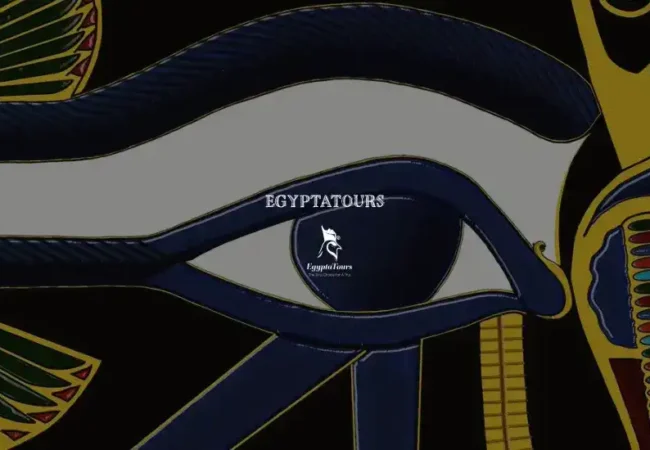
The Eye of Ra is one of the most famous myths in ancient Egyptian mythology. It was believed that Ra had two eyes: a solar eye surrounded by a cobra and a lunar eye. According to one myth about the battle between Horus and Seth, Seth managed to capture Ra’s lunar eye and threw it out of the world which caused it to be destroyed. However, it was later restored by Thoth who plays an important role in the stories of Horus, Isis and Osiris. The restored eye became known as the Wedjat.
Many myths talk about how Ra grew old and tired of rising every morning, traveling across the world in his solar boat and serving the people on Earth. At that time, Ra was supposed to hand over some of these duties to his sons and grandsons who are part of the Great Ennead. One interesting myth about Ra during this time can be found on the walls of Seti I’s tomb near Luxor.
Some parts of the inscription have been lost but scholars have been able to fill in the gaps with their own guesses. The myth shows Nut, the sky goddess as a cow carrying Ra on her back with her father, Shu supporting her. According to this story, Ra, tired from his life, called out to Nun for help. Nun then asked Nut to appear as a cow and carry Ra on her back to help him.
Nut was made responsible for carrying Ra forever, but when she became tired and her limbs began to shake, Ra asked her father, Shu, the god of air, to support her. When the people on Earth saw what was happening to Ra because they had neglected him, they gathered an army and decided to fight his enemies.
Ra was pleased with their efforts and forgave them for their past wrongs. Ra then started to give some of his daily tasks to other gods and goddesses like Geb and Thoth, to ease his burden. He told Geb, the god of the earth, to protect the people from his enemies, the serpents. He also made Thoth, the god of wisdom, his assistant and ordered him to record Ra’s plans and the punishments for his enemies.

The- God -of -the -Air -shu
Shu was the god of air in ancient Egyptian mythology and the father of Nut, the sky goddess. He was often shown supporting her with his hand along with Geb, the god of the earth. Shu was usually depicted as a human with a large, light ostrich feather on his head. In the Coffin Texts, Shu is described as the brother of Tefnut and the first god that Ra created, on the same day Ra was created.
There are different myths about how Ra created Shu and Tefnut without a companion and some stories say that Shu was the son of Hathor or Lusaset. Shu was considered a companion and helper of Ra as he was the dawn breeze that clears the way for the sun to rise. People believed Shu was the one who destroyed the darkness and made the world a safe place for humans to live.

The -Goddess -of- Humidity -Tefnut
Tefnut was known as the goddess of mist and was the sister of Shu. She and Shu were the parents of Nut, the sky goddess and Geb, the god of the earth. Tefnut is often shown in temple walls either as a woman with the head of a lioness holding the solar disk surrounded by a cobra, as just a lioness, or as a woman with the solar disk and cobra on her head. She is also shown in the myths as one of the gods who helps weigh the heart of the deceased in front of Thoth and Anubis, as seen in the Papyrus of Ani and Hunefer.
Tefnut is also the hero of an interesting myth called The Return of the Eye of Ra. In the myth of the creation of the sun and the moon, when Ra created Shu and Tefnut, he sent his eye to watch over them. After the eye finished its task, it found another eye taking its place, which made her angry. To calm her down, Ra made one of his eyes the solar eye, which appeared as a cobra fighting his enemies, and the other the lunar eye. Tefnut is often connected with Ra’s lunar eye in many myths.
According to the walls of the temples at Edfu and Dendera, Tefnut became angry with her father Ra and left him. She took the form of a lioness, terrifying the people and animals in Nubia and living off their flesh and blood. Living in this wild, uncivilized place made her more destructive and wild.
To fix this, Ra decided to bring her back and use her power to protect himself from his enemies. He sent Thoth and Shu to convince her to return to Egypt. Thoth persuaded her that in Egypt, she would live a prosperous life, be respected, and receive sacrifices from the people. Tefnut’s return, as the Eye of Ra, was a big event and was celebrated in the temples.
Once back in Egypt, she became gentle and kind again. The main message of this myth is that people living in a civilized environment tend to be more kind, respectful and peaceful than those who live in wild, uncivilized areas.

Geb-God-of-the-Earth-Ancient-Egyptian-gods-and-goddesses-EgyptaTours
Geb was the god of the earth in ancient Egyptian mythology and the son of Tefnut and Shu. According to the myths, Geb was created to make Ra’s life happier and more lively. He was responsible for the living creatures on Earth and the dead who were buried in the underworld. In many papyri, he is shown as one of the gods who helps weigh the heart of the deceased alongside Thoth and Anubis.
Geb was usually depicted as a man wearing the white crown of Lower Egypt or with a goose on his head, as the goose was a symbol for him. His statue can be seen in the temple at Dendera, and it is believed that he was one of the gods in Heliopolis. There was also a gilded wooden statue of him in the tomb of Tutankhamun, which was used to protect the king.
One myth says that Ra asked Geb to remove dangerous snakes that were causing problems by drawing them out of their holes in the earth. It is believed that Geb used spells and rituals to complete this task. Geb was the father of powerful gods: Osiris, Isis, Seth and Nephthys.
In one myth, Geb entrusted Osiris with the rule of the earth and helped him defeat his enemies, as mentioned in the Pyramid Texts. To end the conflict between his sons Horus and Seth, Geb made Horus the ruler of Upper Egypt and Seth the ruler of Lower Egypt.

The- Goddess -of -the -Sky -Nut
Nut was the goddess of the sky and the daughter of Shu in ancient Egyptian mythology. In the Pyramid Texts, Nut is described as a beautiful and powerful goddess who covers the entire earth with her arms, and she is held up by her loving father, Shu. Nut is the hero of many myths that show her as a protector of both humans and gods.
She was known as the great protectoress because of her strength and care for her children. Nut is often shown on the ceiling of the temple at Dendera and in the tomb of Ramses VI in Luxor, where she is depicted as a beautiful woman with long arms, a large chest, and detailed features. Sometimes she is shown holding a water vase, or pouring water to purify the souls of the dead.
Nut is one of the most important members of the Ennead and appears in many myths. One well known myth says that the sun travels across her body on the solar boat during the day, and at night, she swallows it. The next morning, she gives birth to the sun again. Another myth tells of how Geb was unhappy with Nut eating her sons every night, but Nut insisted on doing it to protect them.
One interesting myth is about Nut’s role when Ra was facing problems with the people on Earth. To escape their anger, Ra climbed onto Nut’s back, and she took the form of a cow goddess. Because of this, Nut is often shown as a cow goddess in temple walls, with the sun placed near her front legs.
The myth says that Ra cursed Nut, whom he considered his wife, because of her love affair with Geb. The curse prevented her from giving birth on any of the days of the solar year. Nut asked Thoth, the god of wisdom, for help. Thoth played a game of draughts (checkers) with the moon and won one seventy second part of each day. In total, Thoth won five days, which he added to the 360 days of the solar year, making it 365 days instead.
During these five days, Ra’s curse didn’t affect Nut, so she was able to give birth. She had her son Osiris (the god of the dead) in the first year, Horus the Elder in the second, Seth in the third, Isis in the fourth and Nephthys in the fifth. This way, the nine gods were born, and it explains why Nut is called the Great Mother in some myths.

The -Goddess -of -Mystery -and- Magic -Isis
Isis is one of the most important and respected goddesses in ancient Egyptian mythology. She was the daughter of Geb and Nut and the sister and wife of Osiris. She was known as the Great Mother or the Mother of the Universe because of the great sacrifices she made to protect her son, Horus, from his evil uncle Seth, who wanted to kill him after killing Osiris.
There is a song of lament that talks about her deep love and loyalty for her husband, Osiris, and the hard work she did to collect the pieces of his body and protect her son. In the Book of the Dead, Isis is shown standing with her sister Nephthys behind Osiris, helping him as the chief god of the dead.
She is also thought to be the goddess of grains, helping her husband, the god of grains, because she was closely linked with the Nile. The paintings on the walls of the Temple of Philae, a major temple dedicated to Isis, show her feeding Horus, and some show Thoth giving gifts to her and her son.
Isis also appears in paintings on the walls of the Temple of Luxor, where she is shown protecting Khnum, the god who is shaping a child on his potter’s wheel in the Birth Room. Many more paintings, amulets, and statues of her were found in the Temple of Seti I and in the tomb of Tutankhamun. The myths about Isis show some contradictions in her actions.
One surprising thing is her attitude toward Seth despite him killing her husband and causing her great pain, she sympathized with him and helped him escape from Horus. Another part of the myth explains that she made her grandfather Ra suffer in order to gain more power to achieve her own goals. With help from Thoth, she gained magical powers, which she used both on her enemies and her allies. Additionally, her grief over Osiris’s death caused the death of the sons of the king of Byblos, who had tried to protect and help her.
The Knot of Isis was a symbol representing Isis’s power and was usually made from red stone. Almost every woman wore this amulet to receive Isis’s wisdom and knowledge. When Isis was shown holding the Papyrus Scepter (described below), the amulet was made with a green stone and was used as a charm for fertility. It was often worn around the neck or chest, sometimes along with other gods’ amulets.

The- God -of -the -Hereafter -Osiris
Osiris is one of the most well known ancient Egyptian gods. He was considered the eldest son of Nut and Geb and the father of Horus the Younger. Osiris was seen as the chief god of the underworld and rebirth, responsible for judging the souls of the dead. Anubis, his assistant, prepared the bodies before they stood before Osiris.
People believed that Osiris had the power to bring the dead back to life and that the Nile River was his deathbed. There is a lot of information about how Osiris treated the souls of the recently dead in the Book of the Dead, the Coffin Texts and the Pyramid Texts.
In the Book of the Dead, Osiris is described as the lord of immortality, ruler of both the north and south of the earth, the prince of gods and humans, and the lord of Mendes and Abydos. In earlier times, Osiris was seen as the god of fertility. It is also said that the crook and flail he carries were symbols of his connection to Anedjti, the main god of the village of Busiris in the Delta.
After the gods of Egypt were united, Osiris became the chief god of the underworld. He was often shown as a man holding the crook and flail, and Abydos was the main place where he was worshiped. Osiris was honored in many temples, and his statue can be seen in the drawings on the walls of temples in Upper Egypt, like the temples of Dendera and Philae.
He was usually depicted as a man with a beard, holding a crook and flail, wearing a white mummy’s dress, and a white crown of Lower Egypt. Sometimes, he was shown with a white crown and two feathers on his head. Most images of Osiris show him sitting on the throne of Ma’at or sitting on a throne floating on water.
The famous myth of Osiris is told in detail in the Pyramid Texts. It says that Osiris was killed by his brother Seth, who was jealous of Osiris’s great power to help humans and grow crops. Seth put Osiris’s body in a coffin and sent it away. After a long search, Isis, Osiris’s wife and the mother of Horus, found his body.
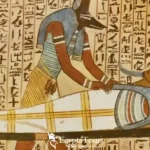
But Seth had cut it into pieces and scattered them across the land. Isis searched for all the pieces and gathered them. With the help of Thoth and Anubis, she wrapped Osiris’s body in mummy clothes. When Horus grew up, he took revenge on Seth and ended his uncle’s evil actions.

The- God -of- the -Uncontrolled -Power-Seth
Seth was the main enemy of the good gods in ancient Egyptian mythology, always defeated in battle even though he was very strong. He was the god of storms, winds, and the desert, which symbolized death. He was married to Nephthys and the father of Anubis, the god of death with a jackal head, but Nephthys supported Isis against him.
In earlier times, people in Upper Egypt worshipped him, seeing him as a helpful god who protected the dead and fought against the serpent Apophis in the solar boat. Seth was usually shown as a man with an animal’s head and a forked tail, or just as an animal, often colored red.
He was connected to animals like serpents, crocodiles, donkeys, pigs and fish. The only sacrifice offered to him was a red ox. Seth had a strong position during the 19th and 20th dynasties, as seen in paintings in the Valley of the Kings, where he was shown teaching Thutmose III how to use a bow and arrow.
Most of Seth’s statues have been destroyed over time, but there is still one in the Cairo Museum showing Seth and Horus crowning Ramesses III, along with some drawings in Kom Ombo and Edfu that tell the story of his fight against his nephew Horus. Seth’s evil actions were caused by his jealousy of his brother, who was the god of corn and plants.
Seth trapped his brother in a coffin and sent it to an unknown place where he died. When his wife, Isis, who had suffered trying to protect their son, found the body, Seth cut it into pieces. When Horus, his nephew, grew up, he was able to defeat Seth, and Horus ordered the destruction of all temples built to worship Seth.
In the Book of the Dead, Seth is described as a god with an evil nature since his birth, and many stories show his villainous actions. For example, he joined forces with Apophis, the enemy of Ra, who Seth was supposed to fight. Together, they attacked Ra’s solar boat, trying to stop the sun from rising by using clouds, mist, rain and darkness.
There are other stories about battles between the good gods, like Ra and Thoth, against Seth, and Seth was usually defeated in the end. One interesting story told by the historian Herodotus talks about the power of Seth. He says that one day, Seth went to visit his mother Nut in her temple after being away for a long time, but the guards stopped him because they didn’t recognize him.
This made Seth very angry, so he gathered an army and destroyed the temple walls. Later, a group of priests wanted to place a golden statue of Seth inside the temple, but another group of priests stopped them, and they fought. Some of the priests were even killed. Herodotus explains that this was actually a planned fake battle as part of a religious festival.

The- God -Sister -Nephthys
Nephthys was a minor goddess in the Ennead in ancient Egyptian mythology. She was known as the wife of Seth and the mother of Anubis, the jackal headed god of death. There is no clear evidence that she was worshipped in temples in Egypt, but she played an important role in the cult of Osiris. Nephthys was usually shown as a woman wearing a headdress with hieroglyphs spelling her name and signs meaning Lady of the House. She was often shown together with her sister Isis, especially in scenes from the time of Seti I and Ramesses III.
The two sisters were seen as opposites: Nephthys represented death, decay and darkness, while Isis represented life, rebirth, light and day. Some carvings show Nephthys standing with Isis behind Osiris. The Book of the Dead explains that Nephthys helped Isis collect the pieces of Osiris’s body and assisted in his rebirth. In some scenes, Nephthys and other goddesses were responsible for protecting the organs of the dead.
She was one of the four goddesses shown guarding the funerary shrine of Tutankhamun, now in the Egyptian Museum, and she also appears on the mummy cartonnage of Shepenkhonsu. One rare but interesting myth tells of a secret love relationship between Nephthys and Osiris, which was discovered by her husband Seth. Because of this story, some people believed that Anubis was not Seth’s son.
Nephthys was the sister and helper of Isis and Osiris, and the sister and wife of Seth. She was a protective goddess who guarded the dead and also protected Horus. She was usually shown wearing a headdress with the hieroglyphs of her name, Nebet-Het, placed on her chest or stomach.
The Ennead, also known as the Great Ennead, was a group of nine gods in ancient Egyptian mythology, worshipped in Heliopolis. The main gods in the group were Atum, the sun god, and his children: Shu and Tefnut. Then, their children were Geb and Nut, and their children were Osiris, Isis, Set and Nephthys. Sometimes, Horus the Elder, an older version of the falcon god, is also included in the Ennead, but not as the son of Osiris and Isis.
The Eye of Ra is one of the most famous myths in ancient Egyptian mythology. It was believed that Ra had two eyes: a solar eye surrounded by a cobra and a lunar eye. According to one myth about the battle between Horus and Seth, Seth managed to capture Ra’s lunar eye and threw it out of the world which caused it to be destroyed. However, it was later restored by Thoth who plays an important role in the stories of Horus, Isis and Osiris. The restored eye became known as the Wedjat.
Tefnut is also the hero of an interesting myth called The Return of the Eye of Ra. In the myth of the creation of the sun and the moon, when Ra created Shu and Tefnut, he sent his eye to watch over them. After the eye finished its task, it found another eye taking its place, which made her angry. To calm her down, Ra made one of his eyes the solar eye, which appeared as a cobra fighting his enemies, and the other the lunar eye. Tefnut is often connected with Ra’s lunar eye in many myths.
In one myth, Geb entrusted Osiris with the rule of the earth and helped him defeat his enemies, as mentioned in the Pyramid Texts. To end the conflict between his sons Horus and Seth, Geb made Horus the ruler of Upper Egypt and Seth the ruler of Lower Egypt.


Explore our top-rated Egypt travel packages and embark on an unforgettable journey. From the Pyramids of Cairo to the magical temples of Luxor, Aswan, and Abu Simbel, discover expertly curated tours designed for your perfect Egyptian adventure