The Victorious Rise of King Ahmose: How He Unified Egypt and Ushered in a New Dynasty
Ahmose was a pharaoh and the founder of Egypt’s Eighteenth Dynasty during...



Senusret I was also known as Sesostris I, he was considered one of the most important kings in the history of Egypt. His reign lasted more than forty years during which Egypt underwent significant changes that helped shape the image we know today of the Middle Kingdom.
Despite the many monuments and inscriptions he left behind, it remained difficult to fully assess his rule as the true personality behind the statues and depictions is still unknown. Unlike the New Kingdom pharaohs such as Thutmose III, Amenhotep III and Ramesses II, Senusret I was not widely recognized as one of the famous Egyptian kings. While we have some hints about the character of New Kingdom rulers, the kings of the Old and Middle Kingdoms often remain in obscurity, frequently mentioned only by name with few additional details.
Senusret- I’s -Family -and -Personal -Life
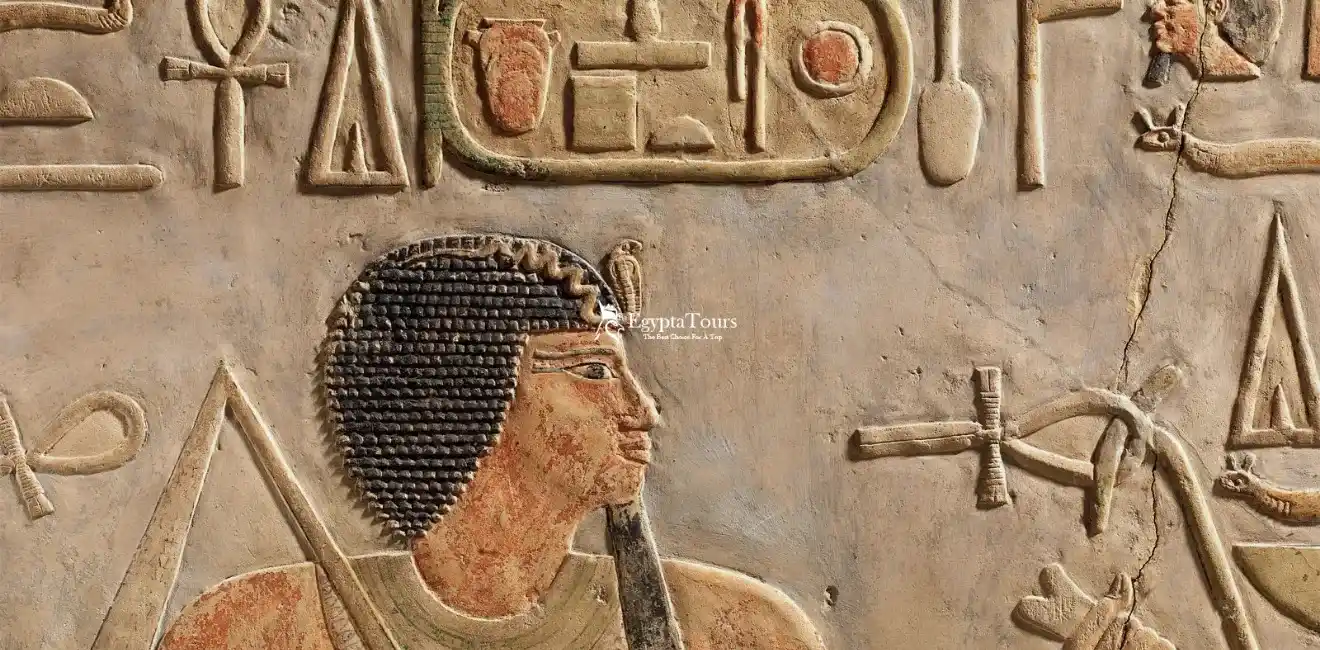
The family relationships of Senusret I are well known. He was the son of Amenemhat I and his mother was a queen named Neferitatjenen. His principal wife was Neferu III, who was also his sister or half-sister. Together, Senusret I and Neferu III had at least two children.
Their son, “Amenemhat II,” succeeded his father on the throne and is believed to have died around 1895 BCE. They also had a daughter named Sebat, who is likely Neferu III’s child, as she appears with her in a single inscription. In addition, there is another child, Itaket who was considered one of their children, although the evidence for this is less clear.
Archaeological records also suggest the possible existence of additional daughters including Neferusobek, Neferraptah and Nensid who may have been daughters of the pharaoh, though their identities are not fully confirmed.
Neferu III as both the daughter of Amenemhat I and the wife of Senusret I, held the highest royal titles: “King’s Daughter,” “King’s Wife” and “King’s Mother.” While only two daughters, Itaket and Sebat, are explicitly documented, the existence of other potential daughters remains possible.
This family structure highlights the close interconnections within the royal household where the king’s main wife was also his sister and the continuity of the royal line was carefully maintained through their children.
The- Early -Life -of -Senusret -I
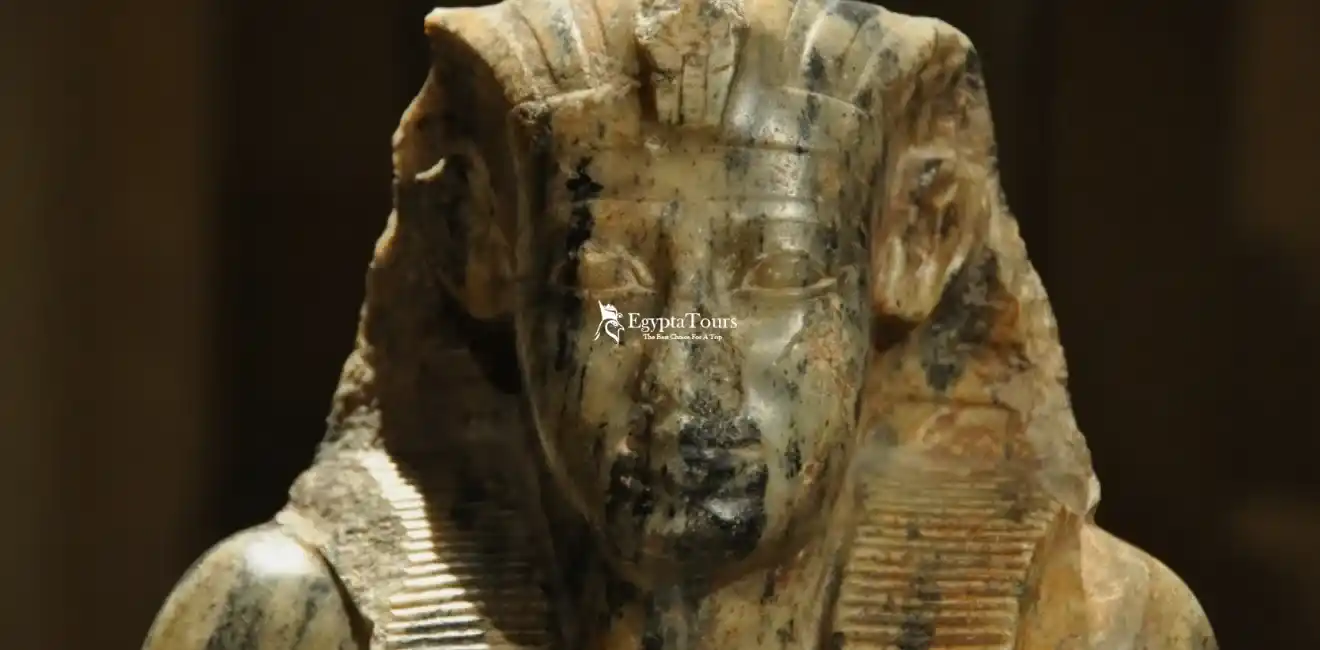
Senusret I, the son of Pharaoh Amenemhat I, the founder of the Twelfth Dynasty, was born in the early twentieth century BCE. He was named after his grandfather Senusret, who later appears in some sources as the “god’s father” and the founding figure of a new line of kings.
His mother was Neferitatjenen, about whom very little is known. Only a 19th-century copy of a statue inscription depicting her has survived while the statue itself is now lost, leaving her identity mysterious. Senusret’s name means “Man of the goddess Wosret” and may refer to his maternal grandmother.
At the beginning of his father’s reign, Amenemhat I moved the capital from Thebes to a new city called Itj-tawy (“Seizer of the Two Lands”) about 60 km south of modern Cairo. The exact location of the city remains unknown, but it was highly symbolic, situated at the boundary between Upper and Lower Egypt, in the center of the country as it was regarded at the time.
Senusret probably received his education at the royal court from private tutors, possibly alongside the children of the royal family and the sons of high officials. There, he met Intefiqer who later became vizier and one of the leading officials during Senusret I’s reign. Intefiqer had been raised in the royal palace from a young age as the “foster child of the king.”
During his reign, Senusret I governed Egypt through a long period of peace and prosperity, constructing many monuments, expanding and stabilizing the country’s borders and establishing trade relations with the kingdom of Syria.
His rule took place during the Middle Kingdom, which experienced relative political stability and a flourishing of literature and art. The Middle Kingdom encompassed the rule of three dynastic families: parts of the Eleventh, the Twelfth and parts of the Thirteenth Dynasties.
When Senusret I reached an age considered adult, around the twentieth year of his father Amenemhat I’s reign, his father decided to make him an official co-ruler under the royal name Kheperkara Senusret. Egypt now had two kings ruling together and both were granted the full royal titulary of the pharaoh.
This is the first recorded instance in Egyptian history of two kings sharing power in this way. The primary purpose of this arrangement was to secure the succession and prevent disputes which were common when a king died, especially at the beginning of a new dynasty.
Senusret celebrated his first year as a young co-ruler under the title Horus, while his father held the title of the greater ruler, Osiris. A double-dated inscription from Abydos records the thirtieth year of Amenemhat’s reign and the tenth year of Senusret’s.
In the thirtieth year of Amenemhat’s rule, the king was assassinated while Senusret was away on a military campaign, paving the way for his solo rule. The Story of Sinuhe indicates that upon hearing of the assassination, Senusret hastily returned to the palace, leaving his troops behind, likely fearing that he might also be targeted by conspirators.
He later had to suppress the rebel forces with force after a civil conflict erupted to secure full control over the state. While the exact methods by which he regained authority are unknown, it is historically certain that he successfully consolidated his rule following these events. Amenemhat I was buried in a pyramid at Lisht, not far from the new capital Itj-tawy.
Senusret I- as -Sole- Ruler
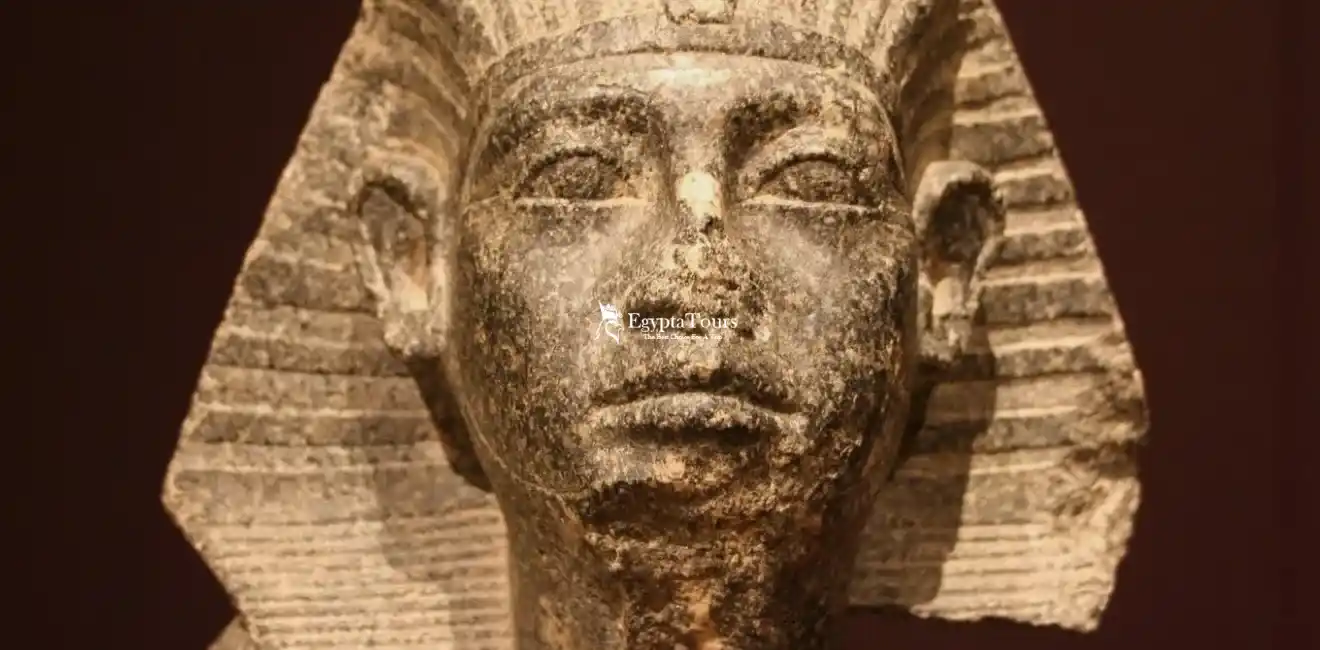
After the death of his father, Senusret I became the sole ruler and took the royal name Kheperkara meaning “the ka of Ra is created” reflecting his connection to the Egyptian sun god Ra. Sometimes he is referred to by the ancient Greek name Sesostris.
During his reign, Senusret continued the military campaigns initiated by his father, expanding Egypt’s control southward into Nubia and constructing a chain of fortresses to secure the new territories and protect valuable resources, including gold, copper and precious stones.
He also managed Egypt’s western borders against the Libyans, while in the northeast he established diplomatic relations with the kingdom of Syria, ensuring safe trade routes and a steady flow of goods such as rice, ivory and other commodities. Within Egypt, he reorganized the internal boundaries of the country, allowing local governors to maintain some authority but he exercised supreme control over the entire kingdom. This ensured central authority and reinforced Egypt’s unity and stability throughout his reign.
Senuheit, who was a contemporary of King Senusret I and fought alongside him in the Lobia campaign, provided a vivid and detailed account of the king, blending truth with praise. He described him as a unique deity without equal, masterful in judgment, decisive in giving commands,
and with all spirits and activities under his absolute control. He had subjugated foreign lands, while his father remained in the palace to receive reports confirming the execution of his orders. Senuheit portrayed him as a powerful hero who achieves victory with his own strong hands, unmatched in direct combat, capable of breaking enemy ranks, relentless against cowards, a wide-striding conqueror, whose enemies cannot escape.
He also emphasized that Senusret I was courageous before crowds, relentless against eastern adversaries, delighted in capturing enemies, wielding his shield and trampling foes underfoot, delivering only a single, fatal blow.
No arrow could miss its target, no bow could bend against him and armies fled before his might as they would before the gods. He was beloved, generous and winning hearts with his charm. His city adored him more than itself and men and women rejoiced at his passing. Senusret I was destined to be king from birth, and created to rule, punish desert dwellers, and lead his lands with divine favor.
The -Coronation -Ceremony- of -Senusret I
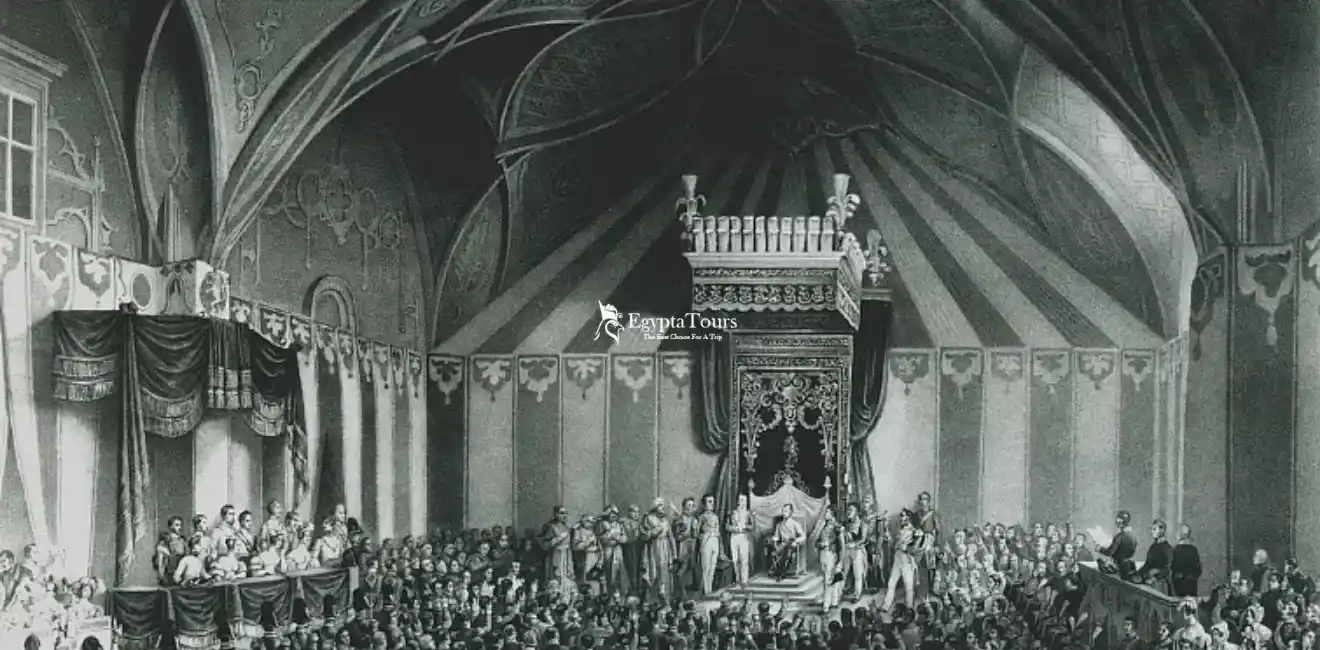
Upon ascending the throne, Senusret I held a royal coronation festival aimed at asserting his legitimacy and promoting himself. The ceremony mirrored what Horus did when ascending the throne after Osiris, his father, who had been killed by his brother Set.
The ceremony was staged as a theatrical reenactment of the Osiris and Horus myth, where Osiris represented the deceased king and Horus, meaning Senusret I, represented the successor. This Middle Kingdom performance was one of the largest propaganda tools to consolidate his rule and introduce the people to his rightful kingship. It was discovered by Koebel in 1895–1896 at the Ramesseum.
Senusret’s -Firmness -And -The -Behavior- Of -Provincial- Governors
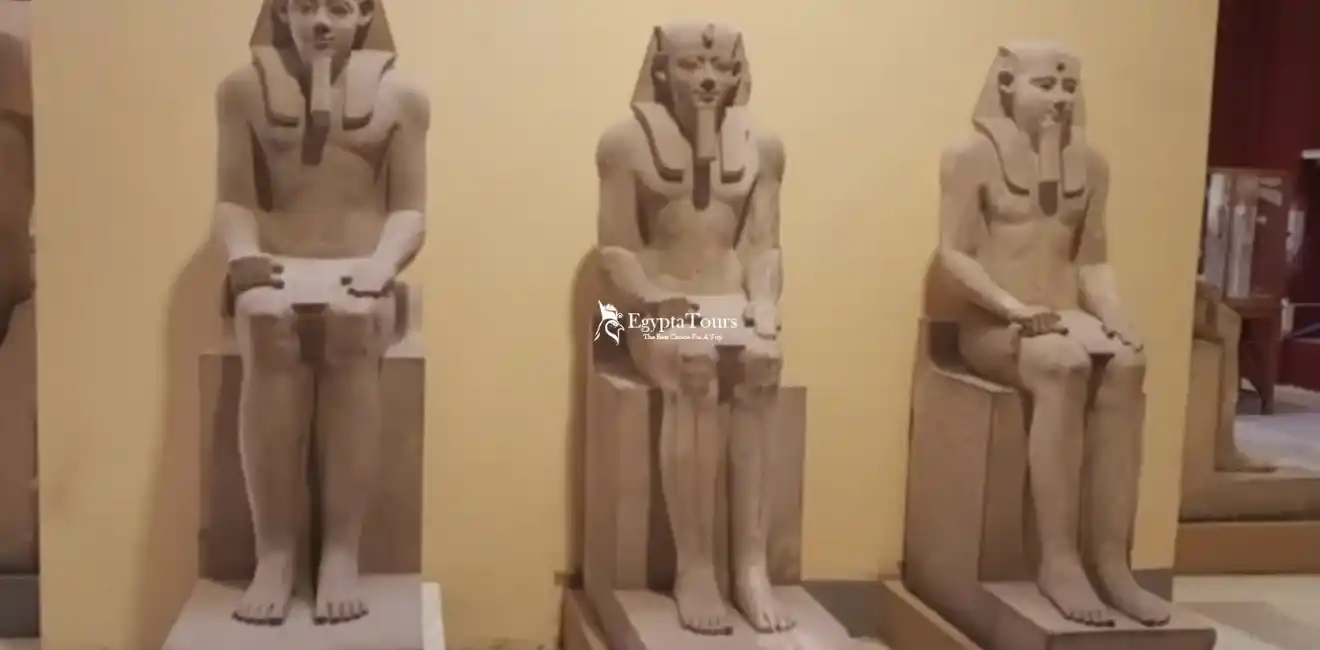
The inscriptions found from the era of this pharaoh indicate that he was a very vigilant and firm ruler. He closely monitored all the men in his administration, to the point that they feared him and carried out their duties with complete accuracy and honesty.
This is clearly reflected in what “Amini” said about his governance of the Ghazal Province. If we take his words as truthful, they portray a picture of a just ruler who governed in a way that respected a higher authority above him.
Amini mentions: “I was a ruler loved by the people, and the people of my town also loved me. I spent many years managing the Ghazal Province, and I personally supervised all the taxes due. The heads of the crown’s workers in the province gave me three thousand bulls with their plows. Every year, I presented to the palace all the livestock and taxes I collected, and I never neglected any duty.”
This description shows that Amini was satisfied with his administration, as such acts were recorded publicly for everyone to see and documented in official records. He also sought to achieve social justice for all people, which was in line with the Pharaoh’s policy.
Amini says about himself: “I did not mistreat any man’s daughter, nor harm any widow. I did not look down on any peasant, nor neglect any herder. I did not oppress any chief of workers or exploit his laborers.
There was no one miserable or hungry in my land. During years of famine, I plowed all the fields to the southern and northern boundaries of the province to protect the lives of the people and provide them with food.
I distributed wealth to widows and married women equally, and I did not favor the great over the small in any of my gifts. Even when the Nile returned with abundant grain, I did not take the fields for myself, nor did I deprive those who were late in receiving their share.”
Amini’s words almost serve as an ideal example of fairness and good governance. They reflect the spirit of his era, which was emerging from a long period of chaos and poverty. At the same time, these statements also reveal the injustices that were common in the fiefdoms before the Twelfth Dynasty and it seems that Amini wanted to clear his name before Senusret and show how his system achieved social justice.
Zefay- Haabi- Governor- of- Nubia- and- His -Tomb
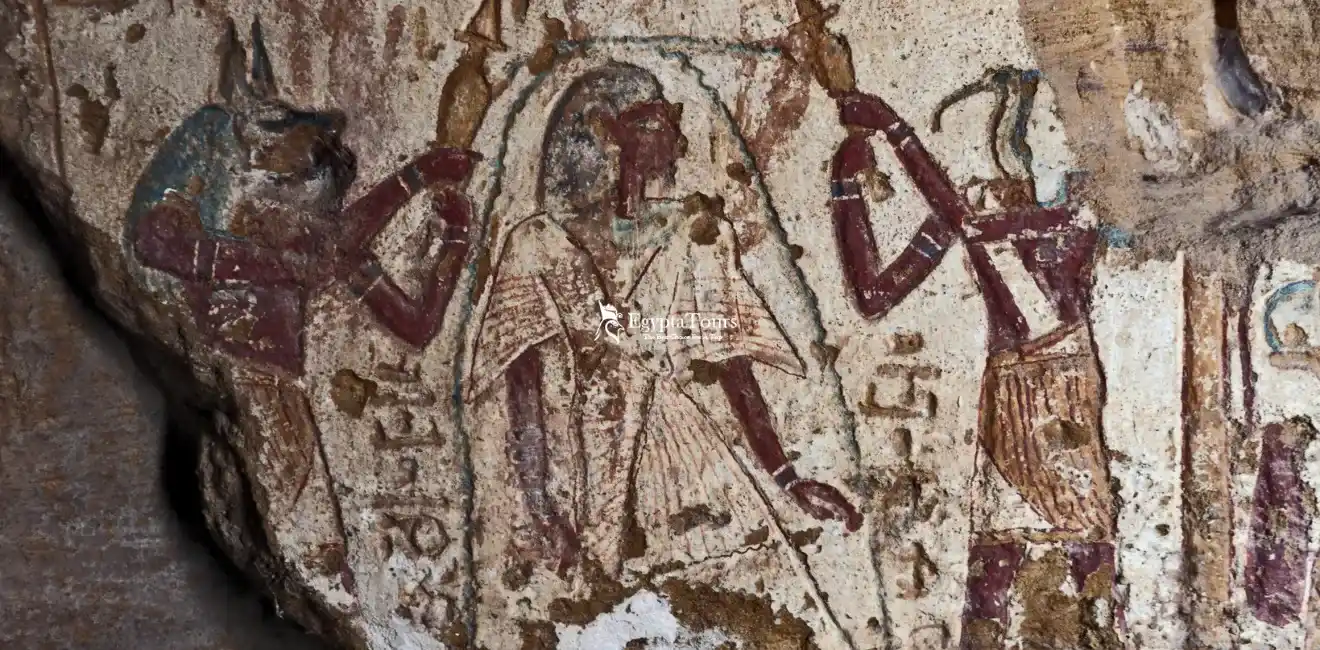
As a result of Senusret’s great campaign to the lands of Sudan, these regions came under Egyptian control, extending as far south as the Third Cataract. The Pharaoh appointed an Egyptian governor for this region, named Zefay Haabi who was well-known among scholars of ancient Egyptian history even before the discovery of his magnificent tomb in the town of Kerma in 1914–1915 BCE.
Zefay Haabi’s titles were “Hereditary Prince, Governor, and High Priest.” He inscribed on the walls of his tomb unique texts containing ten stipulations concerning the endowment of his temple, each detailing the obligations of the priests regarding religious and funerary ceremonies.
These inscriptions provide important information about Egyptian festivals and rituals during the Twelfth Dynasty. Some Egyptologists believe that these inscriptions were a condensed version of original conditions that had been written on sealed papyri.
Interestingly, Zefay Haabi was not buried in his grand tomb in Egypt but in Kerma, Sudan where he was interred along with a group of his soldiers who were killed to accompany him in the afterlife.
Zefay Haabi said to his Ka-priest: “Look! All the things you have agreed upon with the priests under your supervision must be carried out accurately, and nothing should be neglected. You must explain these matters to your son and heir so that he becomes the next priest.
I have given you lands, slaves, cattle, gardens, and everything needed by a man of high status to manage my affairs with a sincere heart and oversee all my matters as I placed them in your hands. All these matters are written before you and will pass to your son, who will continue the duties after me.”
Zefay Haabi trusted the priest because he knew that the priest’s success in performing his duties was linked to his own interests. He also believed that his spirit, the “Ka,” traveled from Kerma to his statues to continue receiving offerings and participating in the rituals.
His tomb in Kerma contained funerary furniture reflecting Nubian art and its influence by Egyptian styles, showing the gradual Egyptianization of the Nubians. Egyptian culture during the Middle Kingdom was fully dominant and the country was self-sufficient, rarely extending beyond its borders except when threatened by neighboring kingdoms. This policy remained largely the same during the New Kingdom as well.
The- Nubians’ -Advance- into -Egypt -during- the -First -Feudal -Period
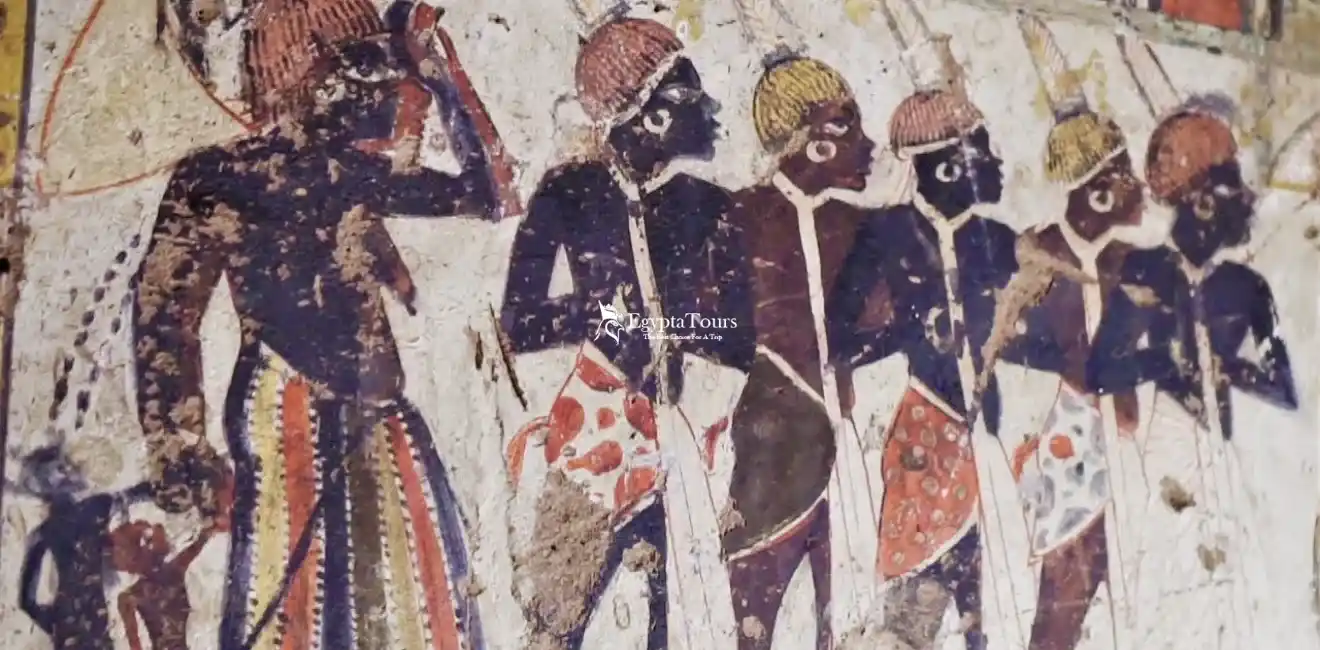
Recent archaeological discoveries in Nubia reveal that an incursion took place by peoples from Sudan between the Old Kingdom and Middle Kingdom, spreading north as far as the Second Cataract.
These tribes were neither Negro nor the ancient inhabitants of Lower Nubia but belonged to a different ethnic group known as the “Hamites.” They lived in round huts and had round burial mounds, and their culture was simple yet connected to ancient Egyptian traditions.
These Cushites established a powerful kingdom in Dongola and made Kerma their capital south of the Third Cataract, representing the oldest known urban civilization in Africa. Each king was buried under a massive mound along with his servants and family members, and his funerary belongings reflect the advancement of pottery,
carving, and painting techniques in Egyptian style. Egyptians had also established factories and workshops to supply these needs.
The Dongola kingdom posed a threat to Egypt’s southern borders, which is why the Twelfth Dynasty kings made this area a battlefield and defensive zone. Senusret I extended Egyptian control to the Second Cataract, while the decisive strike came later under Senusret III.
Snowhet- and- Senusret I
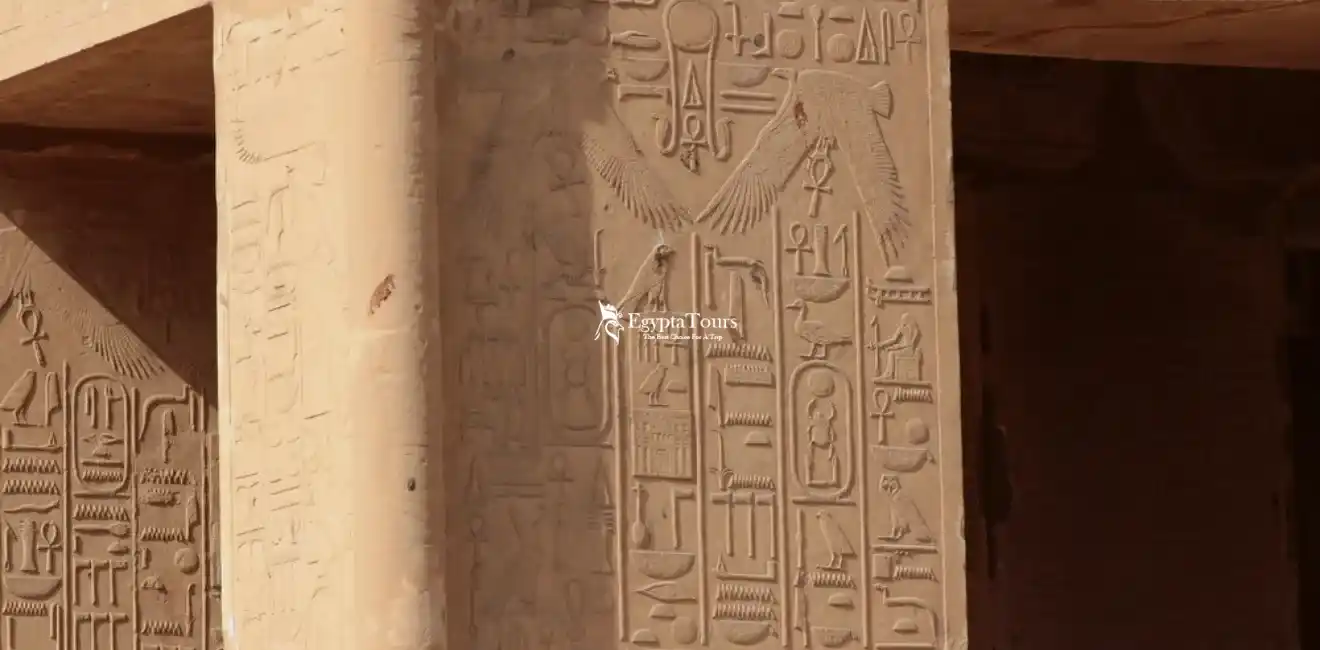
When Snowhet fled to the land of Palestine after Senusret seized power, he found himself in a situation that required adapting to a new reality. Upon meeting the tribal chief Amoo Nenshi, he did not fail to describe the new Pharaoh to the chief with all his distinctive qualities:
courage, decisiveness, and skill, reflecting his own position after the death of Amenemhat I. This description clearly shows Snowhet’s desire to improve his status among the nomads, even though he never explained the reason for his flight himself.
The story reveals a side of the Egyptian character in that era, where a mixture of naivety and cunning, insightfulness, a sense of grandeur, and talent for humor and wit are evident. It also highlights aspects of the life of the nomads and their tribes, making Snowhet’s story an important source for researchers in social and religious history, as it combines astonishing wonders with striking facts.
After Snowhet completed his description of the Pharaoh, the chief welcomed him saying: “Truly, Egypt is fortunate to have this new king but consider staying with me, and I will treat you with compassion.” From this point, Snowhet began to describe his life within the tribe, the prominent status he achieved, and the duels he engaged in with one of Palestine’s champions, saying:
“The chief made me head of his children, married me to his eldest daughter and granted me the freedom to choose the best lands within the tribe’s boundaries, even extending my holdings to other lands.
The land was called ‘Ya’ and it was abundant with figs and vineyards, its wine surpassing its water, honey readily available, olive trees plentiful, fruits hanging fully on the trees, with barley and wheat grown there and livestock countless.
I also enjoyed the love of the people and the tribal prince appointed me as their leader, providing me with all I needed—bread and wine, cooked meat and roasted poultry as well as desert game, sweets and milk in all forms.”
Snowhet spent many years in this environment, and his children grew up to become strong men who governed their own tribes. Messengers from the royal court would come to his home, where he provided water to the thirsty, guided the lost to the right path, and returned stolen property to its owners. When some nomads rebelled,
he restrained them through his position as commander of the Palestinian prince’s army, driving them from pastures and wells, seizing their livestock, and capturing their people, all with high skill and strategy, thus earning the prince’s respect and everyone’s affection.
“A strong man from Palestine came to challenge me in my camp. He was an unparalleled champion, swearing to fight me and conspiring to steal our livestock with the counsel of his tribe. When I confronted him, I told him that I was neither his ally nor one of his followers,
and that I had not acted against him in any way. The truth is that his anger arose from seeing me carry out the orders, and I responded to him that I am like a bull among the herd; if his heart is determined to fight, let him show his will, for fate knows each person’s destiny.”
The following night, Snowhet carefully prepared his weapons. At dawn, the Palestinian appeared with his assembled forces and the duel began in front of a crowd of men and women with every heart anticipating the fight. Snowhet managed to evade his weapons,
struck him with an arrow to the neck, causing him to fall, and shouted victory. His authority and prestige among the nomads were confirmed, leaving him free from any threat, as he seized the man’s possessions and looted his camp, thereby increasing his wealth and status.
Despite all the glory he had achieved, Snowhet felt a longing for his homeland. He prayed to the god, asking to return to the royal court and to have his body buried in the land of his birth. He expressed sorrow for his advancing age and physical weakness,
wishing his youth would return so he could serve the queen, witness the beauty of her children, and participate in the funerary ceremonies as befits royal status, affirming his desire for immortality and rest after a life full of journeys and struggles.
When King Kheperkare learned of his condition, he sent royal gifts and delegations to delight him and show generosity. His eldest son became responsible for the tribe and all his possessions, while the messages of loyalty and celebrations of his arrival continued, reflecting the deep respect and appreciation for his former servant who had become part of the elite.
The king issued an official decree stating that Snowhet had committed no wrongdoing, that his flight was by the will of the god, and that he would attain a high position upon his return to the palace.
The decree included details of the celebrations and honors after his death, including grand funerals, tomb decorations, gold and lapis lazuli statues, and everything reflecting the grandeur of the royal office. The decree reached Snowhet while he was in the middle of his tribe. Overjoyed, he thanked the god for his return and the protection of his body, received the royal messages and gifts warmly, and ultimately became part of the royal palace among the king’s children and court officials.
Although there are few detailed records about Senusret I’s reign, and Manetho provides only very brief references, it is clear that three major aspects define his rule. The first is a massive building program, in which he rebuilt numerous temples across Egypt.
The second is his military campaigns, including the conquest of parts of Lower Nubia and the construction of a chain of fortresses along the Nile to secure the territories. The third is his strict control over the state, where he imposed taxes on the population in the outer regions and organized forced labor for various state projects, including pyramid construction, ensuring the king’s authority was strongly felt throughout Egypt.
The- Building -Program- During -the- Reign -of -Senusret I
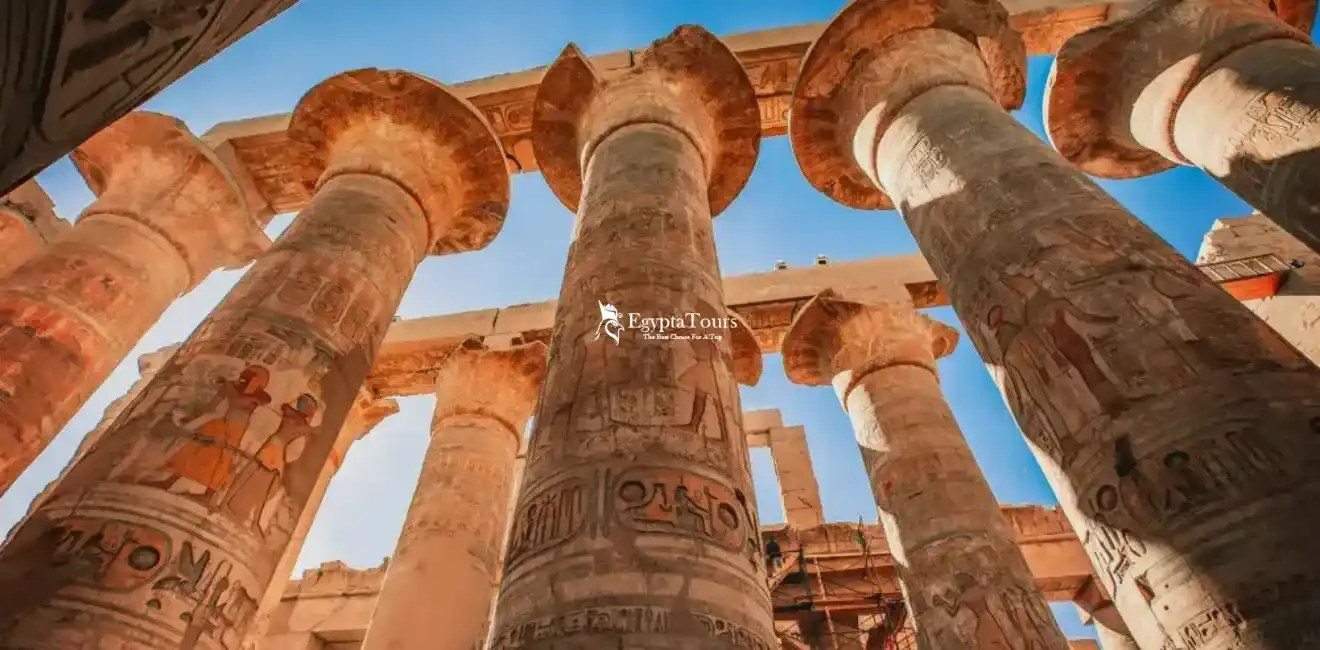
In the Old Kingdom, local temples were generally small, simple, and undecorated, with few statues, while elaborate decorations were mostly limited to royal temples or the temples of Ra. During the Middle Kingdom, this changed, as small local temples were demolished and replaced with stone buildings filled with inscriptions and statues, often depicting the king alongside the gods to assert his divine status, and bringing religious matters under the king’s direct control. Senusret I’s building program was systematic and all temples were rebuilt using new stones, reflecting his authority and divine role.
At Karnak, Senusret I built a shrine known as the White Chapel, or the ceremonial chapel, to celebrate the Heb-Sed festival in its 30th year. It featured high-quality inscriptions of the king, and was later reassembled from multiple stone pieces discovered by Henry Chevrier in 1926. These buildings served as the main foundation for the later larger temple.
Senusret I also rebuilt the Temple of Osiris at Abydos, which became one of the most important religious centers in the Middle Kingdom. The temple, known as Khenti-Amentiu, had previously existed since the Old Kingdom but his work reinforced the temple’s significance. The temple continued to be associated with him for over 200 years and was referred to during the Thirteenth Dynasty as the “Temple of Senusret I.”
At Elephantine, he conducted works in the Temple of Satet contributing to the local religious infrastructure and reinforcing royal presence in Upper Egypt.
Senusret I also undertook projects at the Temple of Min at Qubbet, the Temple of Montu in Armant and the Temple of Montu in El-Tod where a long inscription of the king has been preserved showing his extensive building activity across Egypt.
The -Religious -Constructions- of -Senusret I
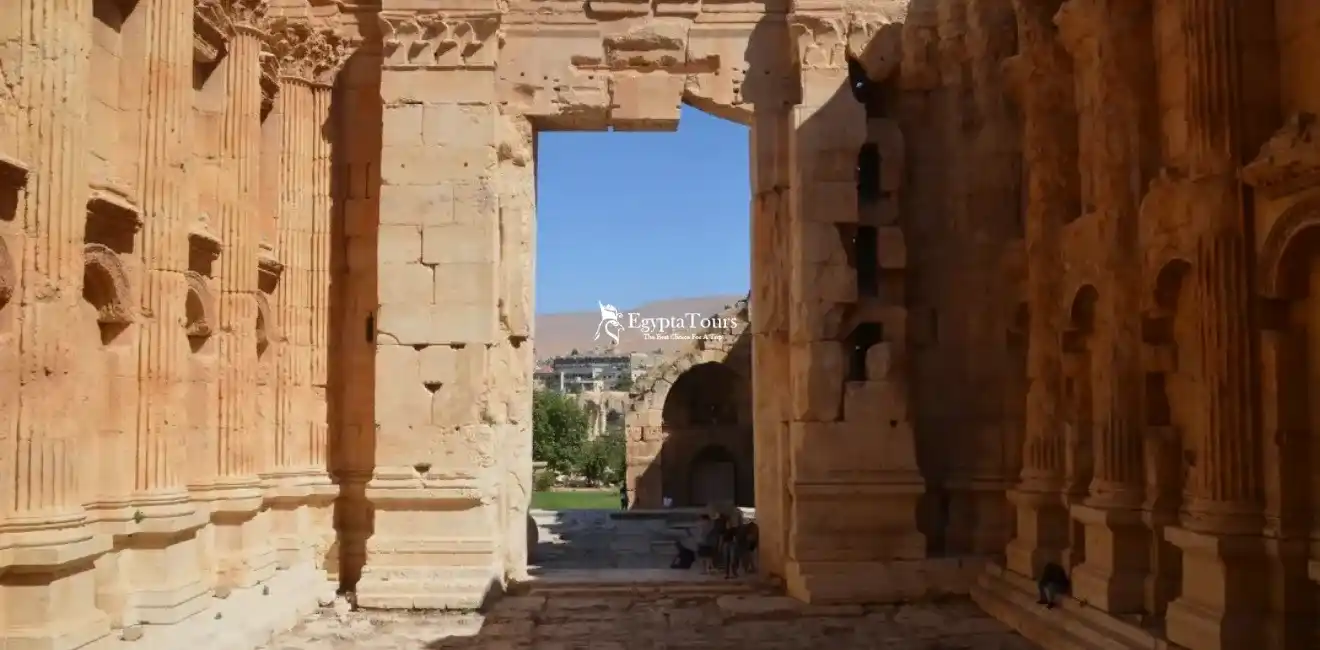
The second step that King Senusret I took to gain the favor of the people and ensure their loyalty was the construction of religious buildings honoring the gods, particularly the sun god “Ra.” He built a temple dedicated to Ra in the city of Heliopolis (modern Ain Shams). Fortunately,
a papyrus dating about 500 years after his reign has survived containing the magnificent inscriptions that Senusret prepared to commemorate the grand celebration held upon the completion of the Sun Temple. Initially, these inscriptions were engraved on a stela placed in the temple courtyard but were later copied onto the papyrus. Unfortunately, the papyrus has not survived completely, though the remaining portions provide substantial information.
When he was crowned with the Double Crown, symbolizing Upper and Lower Egypt. When he assumed sole kingship after his father’s death, Senusret gathered his council and sought the opinions of the nobles and court officials. Addressing them, he declared:
“Behold! My majesty resolved to undertake a great deed for the future: to establish a monument and engraved stela for the god Hor Akhti who appointed me as guardian of this land. He granted me the power to maintain order and entrusted all things under His protection, over which the sun shines, and all things obey His will.
I have fulfilled all that He desires for I am king by His will. Since my youth, I have been victorious and strong, even before I left my mother’s womb and it was destined that I would become Lord of the Two Lands.”
He further proclaimed that he would construct a magnificent temple for his father, the sun god Atum, ensuring it would be a luminous place, supply its altar with food and build his house on the sacred land so that his name would be immortal like the pinnacle of the pyramid and the sacred lake adjoining the temple would continue to be revered. He concluded: “What I do is righteous, and what I seek is supreme.”
The council fully endorsed his decision, affirming the execution of his will. The king then began giving instructions for the ceremonial laying of the temple’s foundation stone, directing the chief seal-bearer, the head of ceremonial, the treasury director and the overseer of his “crowns’ secrets” to carry out every task precisely as commanded. The king donned his crown with the twin plumes followed by all officials. The chief of the choir and the sacred scribes then extended the measuring cord and drove the boundary stakes marking the temple’s limits while the royal scribe walked before the assembly, proclaiming the royal decrees.
The purpose of these elaborate actions was to assert his lineage from the god Ra and legitimize his rule, especially since his ancestry was in doubt. He also intended for his name and memory to endure forever in the City of the Sun.
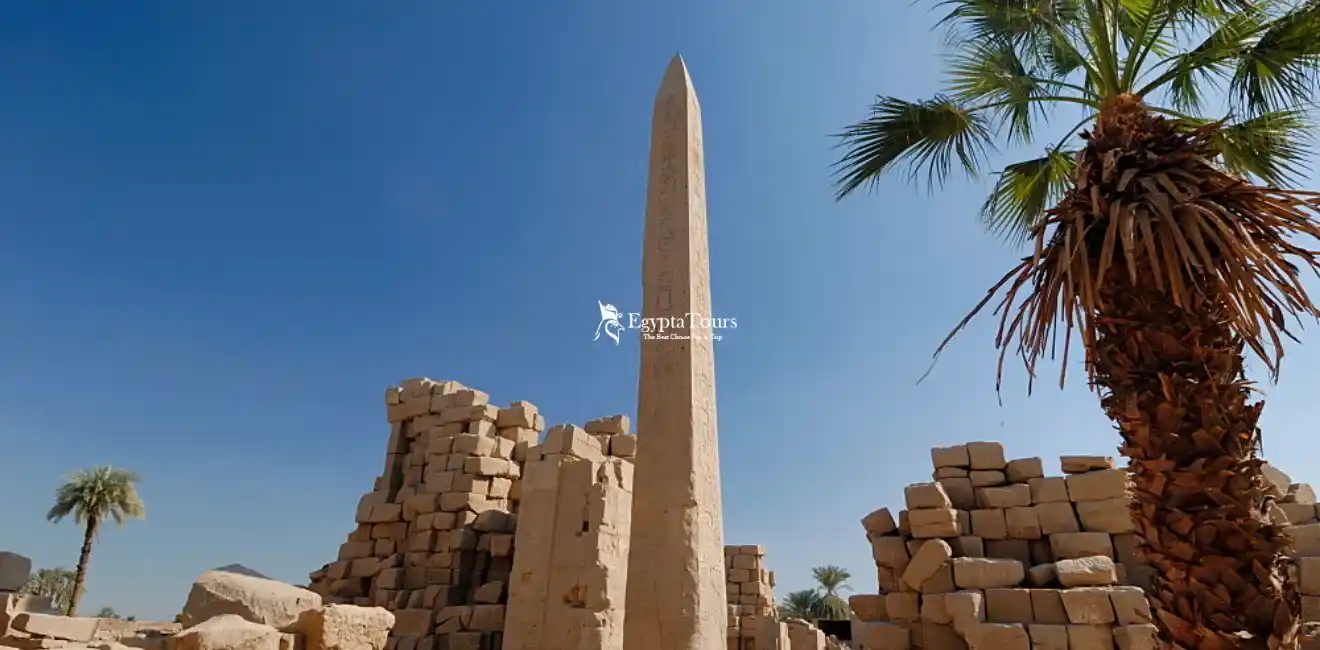
Had the king lived again, he would have seen that time spared only three stone monuments from all this grandeur, the most significant being his obelisk, which still stands in its original location in Matariya. It is the oldest of the five obelisks that remain in situ.
Other pharaonic obelisks were transported to European and American capitals. Rome alone possesses nine obelisks, each over 29 feet tall, while Senusret’s obelisk rises 66 feet from a single block of red granite with inscriptions on all sides affirming that it was erected by Senusret I to commemorate the Sed festival marking the thirtieth anniversary of his reign.
Abd al-Latif al-Baghdadi recorded in 1190 CE that he saw two great obelisks at Heliopolis: one standing and the other toppled and broken, with a copper pyramidion that remained on the ground until 1200 BCE. In 1912, Flinders Petrie discovered remnants of another obelisk here belonging to Thutmose III.
The other two stones of the temple bore inscriptions of Senusret’s names and titles while another listed the sacred gifts he presented to the gods reflecting his desire to revive the worship of neglected deities and the prosperity of the country’s mineral wealth and temples.
Senusret I aimed for complete control over Egypt, ensuring that the population in distant areas, such as the Nile Delta, the oases and the so-called “marsh dwellers,” were under the supervision of officials and employed in state projects including the construction of his pyramid.
Work was organized through what was called the Great Fence, where most Egyptians were required to serve for a set period in often difficult conditions and the Shabti amulets symbolized the execution of labor on behalf of the individual, reflecting the belief that this labor would continue for them in the afterlife.
One of the most significant military events during the reign of Pharaoh Senusret I was the major campaign he conducted as far as the Third Cataract. The aim of this campaign was to subjugate the Nubian tribes in these regions and to secure Egypt’s southern borders.
These borders extended approximately 250 kilometers south of Wadi Halfa which is now considered the northern boundary of Sudan. Consequently, Lower Nubia and northern Sudan became free from any raids or invasions by the Nubians.
This campaign took place in the eighteenth year of Senusret I’s reign and was led by the noble commander Mentuhotep.
The commander left an inscription in the temple at Wadi Halfa, depicting Senusret I standing before the war god Montu who tells the king:
“You have placed all the kingdoms of Nubia under your feet, O gracious god.”
The inscription shows the god leading ten Nubian captives before the Pharaoh, each representing a different tribe. Beneath the image were inscriptions of the Pharaoh’s deeds, of which only fragments survive, unclear in meaning.
Mentuhotep later inscribed some of his personal achievements and claimed credit for the campaign, believing the Pharaoh would not notice. However, the Pharaoh became aware of Mentuhotep’s claims, erased his name from the relief and removed all the honors he had attributed to himself, making him one of those who fell into disgrace.
Additional important information about this campaign comes from other sources, including inscriptions in the tomb of Amenemhat, the governor of the region of Al-Ghazal in Beni Hassan, also known as Amini.
He wrote these inscriptions in the forty-third year of the Pharaoh’s reign, corresponding to the twenty-fifth year of his rule in Al-Ghazal, indicating the continued autonomy of hereditary provincial governors.
In his inscriptions, Amini recounts the campaign:
“I followed my lord when he set out to the south to defeat his enemies among four barbarian nations. I proceeded south as the son of Prince Khnumhotep, wearing the royal ring and commanding the soldiers of Al-Ghazal province,
deputizing for my father who was still alive but unable to lead the army due to old age. I traversed the land of Kush, sailed along the river southward, advanced to the borders of the new territories, and brought back all the tribute.
My praise reached the sky. Thereafter, His Majesty returned safely after defeating the enemies in the fallen land of Kush, and I returned in his retinue with my head held high, with no loss among my soldiers.”
Amini also recorded two campaigns whose objective was not warfare but the search for gold. Due to the challenging terrain, it was necessary for soldiers to accompany the expeditions. He led around four hundred soldiers in the first expedition and approximately six hundred in the second. If the first expedition was the same as the one commanded by Mentuhotep, Amini served only as the commander of his provincial soldiers.
This Nubian campaign is also mentioned in the biography of an official from Elephantine named Sernubet, inscribed on the wall of his tomb near Aswan. This nobleman, who governed Lower Nubia and southern territories, is depicted with his dogs and participated in the campaign. The surviving inscriptions indicate that he attended the expedition to defeat the fallen land of Kush and brought his forces along.
A scribe named Ikadidj left an inscription in the “Buried Al-Araba,” now housed in the British Museum, describing his expedition to the outer oasis. Upon his return, he ordered the preparation of his tomb in the sacred Al-Araba, stating:
“I came from Thebes as the Pharaoh’s personal agent to fulfill his commands. I led a detachment of soldiers to visit the land of the oasis inhabitants,
as I am an outstanding official, recognized by my lord for my insight and praised by the palace staff. I built this tomb on the steps of the throne of the Great God Osiris to be in his retinue, while the soldiers following His Majesty provide offerings for my spirit from their bread and supplies, just as the king’s messenger does when inspecting His Majesty’s borders.” Ikadidj dated these events to the thirty-fourth year of the Pharaoh’s reign.
Senusret I’s 18th year campaign in Lower Nubia reached the second cataract and the expedition is mentioned in inscriptions from Buhen. Several local officials participated, including Amenemhat, governor of the Oryxes region, who served as Overseer of Soldiers. In his 25th year, Egypt experienced famine caused by low Nile floods. In addition, the king sent multiple expeditions to quarry stones from the Sinai Peninsula and Wadi Hammamat to supply his building projects.
The execution of these building projects and military campaigns relied on important officials who helped implement the king’s policies. Vizier Intefqar served as the chief official during the first half of the reign, supervising Nubian campaigns and construction works in Abydos. Treasurer Montuhotep oversaw the construction of the Karnak Temple and the Osiris Temple at Abydos and had a large tomb in Lisht. Several high-ranking overseers are known,
including Hor, who led a jadeite expedition to Wadi el-Hudi in the 9th year, Nakhr in approximately the 12th year with a tomb in Lisht, and two officials named Intef, sons of women called Zatamon and Zatuser, who also held high administrative positions.
Local governors or nomarchs, played a significant role in the administration, including Amenemhat of the Oryxes, Djefaihapi of Asyut and Sarenubt I of Elephantine, who maintained special relationships with the king, and royal craftsmen were sent to decorate Sarenbut’s tomb.
In his 43rd year, Senusret I appointed his son Amenemhat II as co-regent, giving him the title Horus, while Senusret, at about sixty years old, became the senior ruler with the title Osiris taking on a more administrative role. A double-dated inscription from Webawet-Aa confirms the 44th year of Senusret and the 2nd year of Amenemhat II, establishing the official co-regency and the orderly succession of the throne.
During the reign of Senusret I, Egypt enjoyed a long period of wealth, stability and relative peace as records indicate that he ruled for approximately forty five years. Following the tradition of his father, he likely appointed his son, Amenemhat II, as co-ruler about three to four years before his death ensuring a smooth succession and continuation of the royal line. Senusret I passed away around 1926 BCE and was buried in his pyramid at Lisht, located roughly one mile from his father’s pyramid and his son, Amenemhat II, known as Nubkare, succeeded him, continuing his father’s legacy.
The architectural and artistic projects commissioned by Senusret I had a lasting influence on the local styles, often referred to as the royal style and his building works were spread throughout the country to consolidate his power and authority.
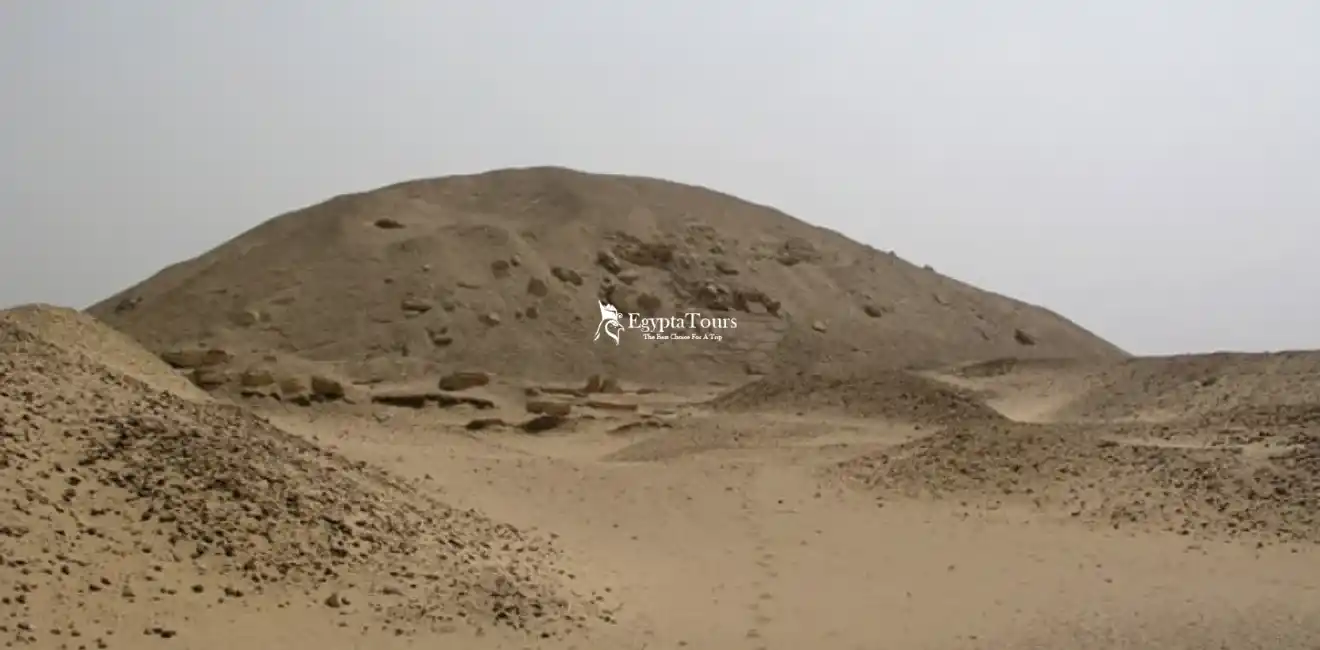
His pyramid at Lisht, constructed of limestone, stood approximately sixty one meters high with a base length of about 105 meters and while it remains the best-preserved pyramid on the site, much of its funerary structure has collapsed into stones and debris.
The pyramid complex included nine smaller pyramids for royal women, among which the names Neferu and Itaket are known. Senusret’s mortuary temple, however, has survived well and is modeled after the late Old Kingdom pyramid temples.
His reign transformed Egypt significantly, establishing the model of the Middle Kingdom state, building temples across the country, enforcing control over the population, conducting foreign campaigns and leaving a legacy that led to his later worship as a god.
The- Monuments- of -Senusret I- Across -the -Country
This pharaoh constructed numerous buildings and temples across various regions of Egypt. Among his most prominent monuments is a temple in Fayoum, of which only the obelisk with a rounded top remains today in Abgig.
In Tanis, some of his statues were discovered, including a bust that is nearly detached, an exceptional example in Egyptian sculpture as it has no supporting column as is usual in Egyptian statues. A statue of him in the form of a Sphinx was also found in Faqous.
Senusret I was highly active in establishing temples throughout the country. He built several temples, including one in Al-Atelah in the Asyut Governorate and temples in “Al-Araba Al-Madfouna”, Dendera, Qift and Karnak.
Amenhotep III later demolished the old Karnak temple and used its stones for constructing his Third Pylon, but the engineer Shefrih found the stones intact during repairs, and the temple was rebuilt in a free location at Karnak from white limestone, dedicated by Senusret I to the god Amun-Ra.
The temple’s inscriptions show exquisite craftsmanship and artistry and represent some of the finest examples surviving from the Twelfth Dynasty. Its facade also bears the names of all the provinces of Upper and Lower Egypt, marking the first instance of full documentation of provincial names during the Middle Kingdom
Construction in Al-Araba Al-Madfouna was carried out under the supervision of his First Vizier, Mentuhotep, who left a stela now preserved in the Cairo Museum, stating:
“I supervised the temple’s construction, built the house of the god, dug its sacred lake, and excavated the well by order of His Majesty the King, the Falcon. I worked on the temple, built it from ‘Ain’ stone, supervised work on the sacred boat and applied its colors.
I made tables inlaid with lapis lazuli, amethyst, turquoise, silver, and copper, as well as collars of turquoise and ornaments of all selected gemstones to present to the god during festival celebrations.”
Additionally, an altar was found in the town of Tod near Armant, as well as remains of a temple in Nekhen (modern El-Kab), and another altar in Nekheb on the opposite bank (Weigall, Guide to the Antiquities of Upper Egypt. A statue base was discovered in Elephantine, along with temple stones made of granite, and a stela bearing the king’s name from Philae is now in the British Museum (Budge, Guide to the Egyptian Galleries, Sculpture.
The construction employed breccia stone from the quarries of Wadi Hammamat in the Eastern Desert, where inscriptions still record campaigns carried out in the sixteenth and thirty-eighth years of his reign, as well as several inscriptions on granite rocks at the First Cataract, dated to the first, thirty-third, and forty-first years.
The king’s name was found behind the city of El-Kab, at the beginning of the desert route to the gold mines, confirming that these mines were exploited during his reign. Operations were also conducted in the turquoise and copper mines of Sinai. At Serabit el-Khadim, numerous remains from his rule were discovered, including a doorway threshold, altar, stela and seated statue.
In the marble quarries at Hatnub near Tell el-Amarna, stone cutting activities were carried out, with rock inscriptions still attesting to this.
Senusret I appears to have been the first to exploit the quarries of the Western Nubian Desert during the Middle Kingdom. The site lies 65 km northwest of Abu Simbel. It was discovered by chance when Egyptian military police noticed stone blocks engraved with the names of some Old Kingdom kings, including “Zedfrā”.
The quarries yielded diorite, used by Khafre for his statues, and other hard stones such as fine-grained pink granite and dark white quartzite. Sandstone stelae, dark and yellow, bearing the names of Senusret I and officials such as Hannu son of Mentuhotep, with references to the protection of the goddess Hathor, were also found.
Senusret I sent multiple expeditions to gather amethyst from Wadi el-Hudi in his 20th, 21st, 22nd, 24th, 28th and 29th years. These expeditions left detailed stelae recording their activities:
The most notable is the stela of Hor, carved from white limestone, documenting the expedition to collect amethyst from southeastern Nubia. It details the king’s achievements in subjugating foreign lands, expanding Egypt’s borders, unifying the country, and providing resources and large quantities of amethyst.
Near the southern First Cataract, two stelae were found at the Buhen Temple in front of Wadi Halfa, considered among the most important monuments of Senusret I. This temple was built to commemorate his victories and to honor the local gods (MacIver and Wolley, Buhen, pp. 89, 95).
Monuments of this king are dated from the first to the forty-fifth year of his reign.
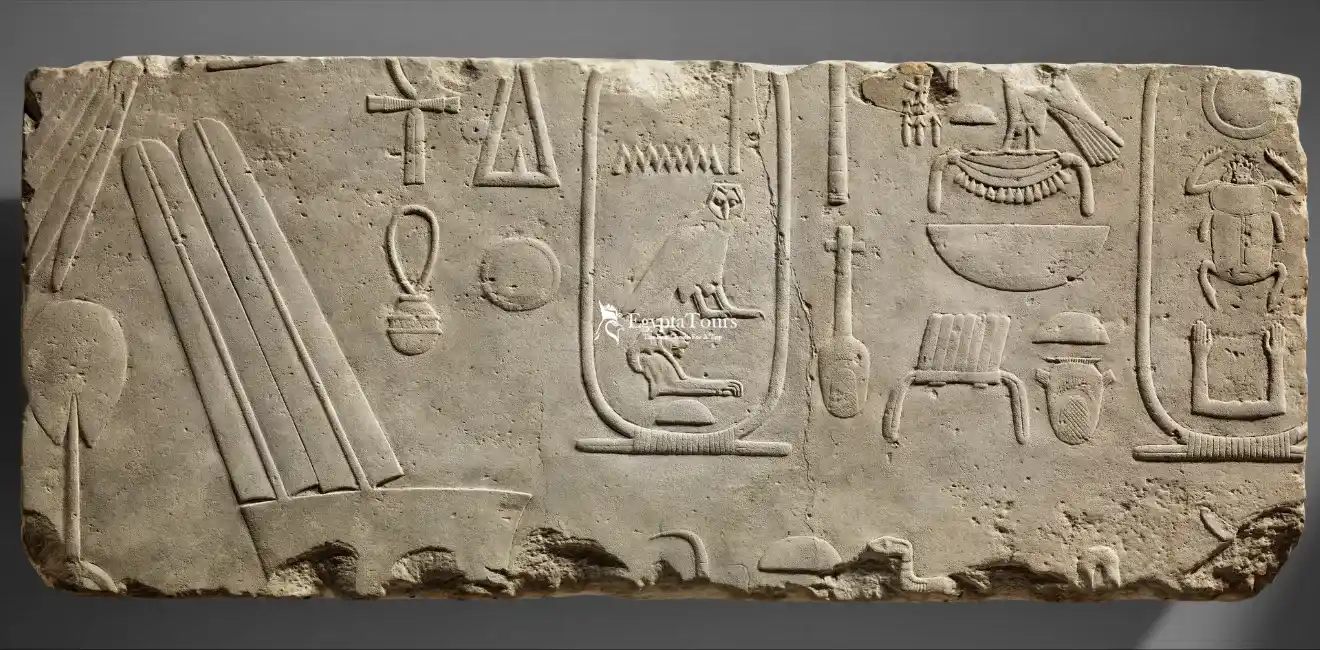
The -Texts -of- the -Stelae -Documenting -Senusret I’s -Amethyst -Expeditions
In the twentieth year of the reign of King Senusret I, the vizier “Mentuhotep” son of “Hannu” son of “Bebi” left a stela recording his role in the expedition to extract amethyst from Nubia. It reads:
“In the twentieth year of the reign of His Majesty the Falcon King, King of Upper and Lower Egypt, ‘Kheperkare’ son of the Sun, Senusret, Hor eternal, I, the Greatest of the Tens of the South, appointed by Ma’at (Justice), supervised the amethyst expedition.
My lord sent me with life, health, and safety to bring amethyst from the land of Nubia. I reoccupied the areas I had previously worked, and I brought back a very large amount of amethyst from the mines.
The strength and favor of the Lord of the Palace guided me, and before his awe the people of foreign lands submitted, and his sword made all lands labor for him. The desert where they were located was given to me by the order of ‘Mentu’, the inhabitant of ‘Ayon’, and Amun, Lord of the Crowns of the Two Lands, so that it may remain eternal.”
In the twenty-fifth year of the king’s reign, Mentuhotep recorded a continuation of the expedition on the same stela:
“In the twenty-fifth year of the reign of Hor, Living of Births, Lord of the Two Goddesses, King of Upper and Lower Egypt ‘Kheperkare’ (the spirit of Ra comes into existence), son of the Sun, Senusret the Good God, Lord of the Living Lands forever: I returned to continue extracting amethyst, being the loyal and beloved servant of my lord…”
Also in the twentieth year, the army commander “Intef” left a stela, unfinished, stating:
“In the twentieth year of the reign of Hor, Living of Births, the Good God, Lord of the Two Lands, ‘Kheperkare’, who lived like Ra, eternal: I, bearer of the seal and army commander Intef, am the trusted servant of the king and do all that pleases him, and I have lived free of guilt.”
In the same year, the Chief Treasurer “Intef Iqr” left a black granite stela, though its inscriptions are eroded:
“I, Chief Treasurer and Seal-Bearer ‘Weni’, made this stela for my army commander Intef, who always executes the king’s wishes daily. I am Intef Iqr, ruler of Thebes, minister and keeper of the secrets of the king’s houses. I was sent to bring amethyst and gold… and I brought a very large amount.”
In the twenty-first year, the official “Mentonsu” son of “Hetbi” son of “Adan” left a beautifully carved granite stela:
“In the twenty-first year of the reign of His Majesty Hor, Living of Births, the Good God Senusret, the Living Eternal: I am his servant and trusted official, always executing his wishes every day. I followed my lord’s steps on the well-built roads he made, and the stela ends with a depiction of the king.”
This raises the question: did the king himself visit these mines? The stela is now preserved in the Aswan Museum.
In this year, two granite stelae were left:
“In the twenty-second year, going forth to fetch amethyst for Hor, the Living of Births, the Good God, son of the Sun, King of Upper and Lower Egypt, Kheperkare, who lives forever. My servant Senusret son of Weni accompanied me on the journey.”
“In the twenty-second year, the King of Upper and Lower Egypt ‘Kheperkare’ son of the Sun Senusret, giver of life like Ra, eternal. Sebek son of … the praised, descended in peace.”
In the twenty-fourth year, a fifth expedition took place, continuing the search for amethyst. It appears the scribe carved Senusret’s name hurriedly, without the royal cartouche.
A stela by “Wadi”, Chief of the People, mentions only the king’s titles and customary expressions of loyalty, accompanied by his trusted servant “Harur”, the stonecutter.
Two stelae were discovered:
“In the twenty-ninth year, the Greatest of the Tens of the South, Hannu, went forth, may he live, be strong and healthy, with his faithful servant Senb-Ha-Eshtaf, who works every day pleasing his lord.”
“In the thirty-ninth year, the Greatest of the Tens of the South, Hannu son of Mentuhotep, may he live, be strong and healthy, accompanied by his faithful servant Shamsu-Sankh, who works daily pleasing his lord.”
These indicate that Hannu and his two assistants went together to the mines.
The most important stela was that of “Hor”, sent by Senusret I to fetch amethyst from southeastern Nubia and Wadi el-Hudi. Made of white limestone, it reads:
“Hor, Living of Births, Lord of the Two Goddesses: the Scourge and the Punisher, Living of Births, King of Upper and Lower Egypt Kheperkare, son of the Sun Senusret, the Good God, who slays the Oneti (inhabitants of southeastern desert), beheads those in Asiatic lands, encircles the Hanbu, reaches the limits of the subdued and the Nubians, crushes the heads of rebels, expands the borders of Egypt, opens the lands for his country, unites the Two Lands by his beauty.
Lord of strength and war in foreign lands, his sword subjugates rebels, and those who revolt die by his majesty. He places his enemies in chains, is gentle to those who serve him, and gives the breath of life to those who implore him.
Lands provide him food, and ‘Geb’, the god of the Earth, reveals his secrets to him. Foreign lands submit, mountains rejoice in him, and all places reveal their secrets. His envoys are many, and his messengers do as he wills. His possessions include plains and valleys, everything under the solar disk owes him tribute, and all good things (the ‘Eye’) are brought to him, the Lady of Creation with all that she made.”
The stela also emphasizes that King Kheperkare loved Hor of Nubia, praised the lady at the head of Nubia, granted life, stability, and health like Ra, and sent Hor to carry out the expedition under army protection, gathering large quantities of amethyst and transporting it on sledges. All local inhabitants were made to serve according to the king’s command.
Near the southern First Cataract, two stelae were discovered at the Buhen Temple, in front of Wadi Halfa, considered among the most important monuments of Senusret I. The temple was built to commemorate the king’s victories over his enemies and honor the local gods.
In the forty-third year of his reign with Senusret approaching seventy, he decided to share the rule with his son, Amenemhat II. A document preserved at the Leiden Museum records: “The forty-fourth year of Senusret’s reign, corresponding to the second year of Amenemhat II’s rule.”
Just as Amenemhat I had prepared his son Senusret I, Senusret trained Amenemhat II in governance and military affairs. He sent him with the commander Amini to visit the remote regions of the kingdom, ensure the submission of local rulers, and suppress anyone who disobeyed.
Senusret I passed away after a long and fruitful reign of forty-six years, with his son sharing power for four years. This is confirmed by the Turin Papyrus and dated monuments from the forty-fifth year of his reign.
An important stela in the British Museum, dated to the third year of Amenemhat II, corresponds to the forty-fifth year of Senusret’s reign. It recounts the life of the royal scribe Sementu, who began his service as a child under Amenemhat I and later became the royal scribe and director of all royal works. He held the titles of Crown Prince and royal ring-bearer, noted for his disciplined behavior, calmness, and loyalty to the king.
The- Pyramid- of -Senusret I
Senusret I built a pyramid for himself on the southern side of his father’s pyramid temple at Lisht and was buried there after a life full of achievements. The entrance was at the base, and the passage to the burial chamber was blocked with large granite blocks. Although robbers dug a tunnel, the chamber remained inaccessible due to rising groundwater.
The pyramid was surrounded by a large enclosure adorned with inscribed panels, and the altar was near the temple. The High Priest of Heliopolis, Imhotep, built a tomb nearby, likely supervising the pyramid construction.
Two cedar wood statues of Senusret were found, one wearing the crown of Upper Egypt, the other the crown of Lower Egypt. The treasury official Mery recorded an inscription documenting the eternal mortuary chapel, possibly referring to the Lisht pyramid or another tomb of the king.
The pyramid was named “Protected of Places,” found on a damaged inscription in Memphis, referring to a foundation dedicated to the pyramid and to Amenemhat I’s pyramid. Ten limestone statues were planned but never installed, remaining buried in sand until discovered in 1894, alongside six other statues of the king and a statue of him as Osiris, and thirteen altars donated by his priestesses. All are now in the Egyptian Museum, except one damaged statue.
The king’s residence during Senusret’s reign appears to have been in a place called “Eth Tu” near the Lisht pyramid. Archaeological evidence also shows that officials and priests of the 12th and 13th dynasties were keen to establish shrines and statues for themselves, explaining the many offering tables, stelae, and statues in the complex.
Senusret I, also known as Sesostris I, was a pharaoh of Egypt’s Twelfth Dynasty. He ruled for about 45 years and is considered one of the most important kings of the Middle Kingdom.
His father was Amenemhat I and his mother was Neferitatjenen.
His principal wife was Neferu III, who was also his sister or half-sister.
His son, Amenemhat II, succeeded him on the throne.
Senusret I was made co-ruler around the twentieth year of Amenemhat I’s reign. This was the first recorded instance in Egyptian history of two kings ruling together, and it helped secure the succession.
He sent multiple expeditions to Nubia and Sinai to collect amethyst, gold, and other valuable resources. Officials documented these expeditions on stelae to show the king’s control over mining and trade.
He built temples, celebrated religious festivals, and held coronation ceremonies modeled on the myth of Osiris and Horus to legitimize his rule and connect himself with the god Ra.
He ruled for approximately 45 years.
He was buried in his pyramid at Lisht, near the pyramid of his father Amenemhat I.

Explore our top-rated Egypt travel packages and embark on an unforgettable journey. From the Pyramids of Cairo to the magical temples of Luxor, Aswan, and Abu Simbel, discover expertly curated tours designed for your perfect Egyptian adventure