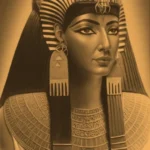
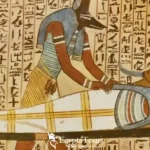
The Divine Birth of Queen Hatshepsut
Queen Hatshepsut was one of the most remarkable rulers of Ancient Egypt....



The king is linked to the famous Sesostris Canal, an early waterway connecting the Nile with the Red Sea, which improved trade and transportation.
Senusret III built temples and pyramids, including the famous Black Pyramid in Dahshur, showing the architectural development of the Middle Kingdom.
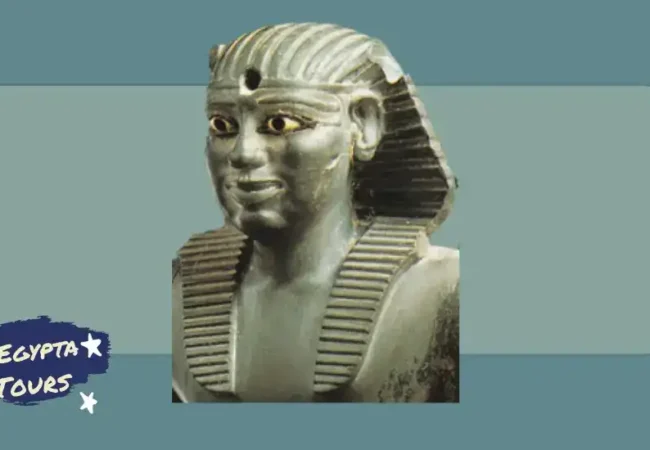
Senusret III is considered one of the greatest kings of ancient Egypt and an immortal legend in the memory of the Pharaonic civilization. He combined strict rule with political cunning.
His star shone in the Middle Kingdom as a brilliant leader and skilled administrator.
The Greeks called him “Sesostris,” and stories and legends were woven around him due to his majesty and strength.
He became a symbol of the ideal ruler in the eyes of his people and his enemies alike.
His achievements are still recounted with admiration today. Through this article, you will learn more about this great king.

Who-was-Senusret-III-EgyptaTours
Senusret III set out with a brilliant vision to expand the borders of Middle Egypt.
He left his lasting mark on the land of Nubia, where he built impregnable fortresses on the banks of the Nile such as Buhen and Toshka near Oronarte extending his influence to the upper reaches of the Third Cascade. This period lasted from 1866 BC. 1863 BC.
These achievements were not limited to the south. A rare obelisk documents the details of his military campaigns that swept through Nubia and extended as far as Palestine testament to his military genius and political power.
As part of his efforts to extend his influence beyond his borders he built a military fortress in the Phoenician city of Byblos. He also established the fortresses of Semna and Ghumna behind the Second Cataract to secure the southwest of the kingdom.
In 1894 researcher Morgan noted the presence of inscriptions carved into granite rocks on Sahel Island near Aswan recording the famous Sesostris Canal project.
This demonstrates the great engineering achievements of this legendary ruler who also included his son in the government.
Senusret III devised a bold unprecedented plan to connect the Red Sea and the Mediterranean Sea with the Nile River. Thus the first waterway in history was born known as the “Sesostris Canal,” the Greek name given by historians to this legendary king.
He did not stop there, but rather added an extension dubbed the “Sulphur Canal,” which served as a new artery for trade transporting caravans and goods between Egypt and the Land of Punt, and allowing ships to reach Mediterranean islands such as Crete and Cyprus.
This canal not only stimulated trade but also sparked a major agricultural renaissance that contributed to Egypt’s prosperity under the Middle Kingdom.
Senusret III was no less cunning in politics than fierce in combat. He launched no fewer than four military campaigns into Nubia recorded during the eighth tenth, sixteenth, and nineteenth years of his reign.
His campaign in his eighth year is a landmark as his victories are documented on a stone tablet erected in the fortress of Semen confirming that he was able to secure Egypt’s southern borders and halt the Nubian advance.
In the sixteenth year of his reign Senusret engraved on an immortal tablet words that represented his philosophy of rule and his combative approach. They read, “I have expanded the borders of my country beyond what my ancestors could achieve, and I have increased the extent of my kingdom beyond what I inherited from my fathers.
I am a king who does not limit himself to words, but rather implements what the mind envisions.
I do not accept silence when attacked, but rather I respond with weakness for those who surrender to aggression whet the enemy’s appetite. Courage is the weapon of the will, and cowardice is the mark of defeat for those who retreat at the borders.”

King-Senusret-III-Most-Important-Projects-EgyptaTours
King Senusret III innovated a massive engineering project ordering the construction of the first known waterway connecting the Nile River to the Red Sea later known as the Sesostris Canal.
This canal began at the Pelusiac branch of the Nile Delta near the city of Bastet (present-day Zagazig), and extended through the Wadi Tumilat to the Gulf of Suez forming a waterway connecting the Red Sea and the Mediterranean Sea.
The Sesostris Canal was not just a local project it opened Egypt’s trade routes to the civilizations of the East and the West.
Through this waterway trade relations flourished between Egypt and the land of Punt (located in the Horn of Africa) the Levant, and Mediterranean islands such as Cyprus and Crete.
This canal established Egypt’s position as a global trading center unrivaled in ancient times. Senusret III never neglected the country’s southern borders.
He built a defensive network of fortified fortresses along Nubia to ensure Egypt’s security from any external incursion or threat.
On one of the rock inscriptions in the south he left a stern message to his sons: “Whoever among my descendants maintains these borders is truly my son… but whoever neglects or abandons them, I will not be related to him.”*
This great pharaoh did not limit himself to defensive and commercial projects he extended his architectural influence to include temples and cities bearing his unique character.
In Abydos he built a magnificent temple that embodies the grandeur of the Middle Kingdom, and he also erected another temple in Madamud which to this day bears witness to the refinement of his architectural taste and the power of his rule.
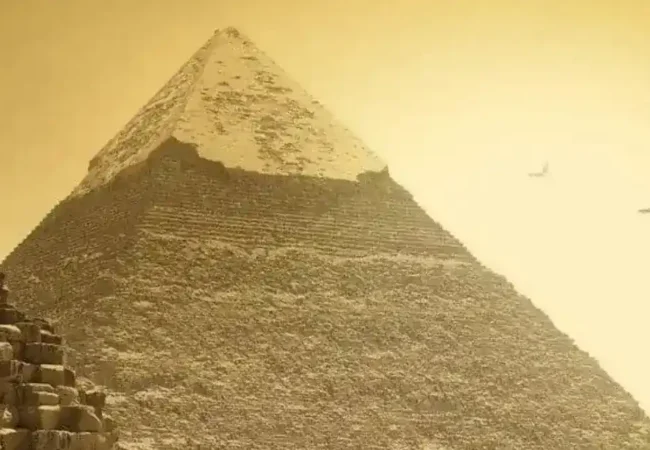
One of his most important projects was the construction of his first pyramid in the Dahshur area known as the “Black Pyramid.”
This represented a transitional phase in pyramid design.
Despite technical problems that prevented its completion as intended this edifice demonstrated his boldness in undertaking new experiments in the world of funerary architecture.

the-location-of-the-tomb-of-King-Senusret-III-EgyptaTours
Senusret III ruled from northern Egypt making the capital “Itjtawy” the center of his power.
This city whose features have been lost to time was located near the Fayum region approximately 450 kilometers north of the city of Abydos.
Despite the importance of this capital its location remained a mystery for centuries as if it were a secret buried in the sands of ancient Egypt.
This was until American researcher Sarah Parcak a National Geographic explorer was able, through satellite imagery analysis techniques to pinpoint a site that is highly likely to be the remains of this lost capital.
The ancient Egyptians called the fortress of “Semna” “Semna of King Khakaure.” It was considered one of the greatest defensive fortresses constructed during the reign of Senusret III:
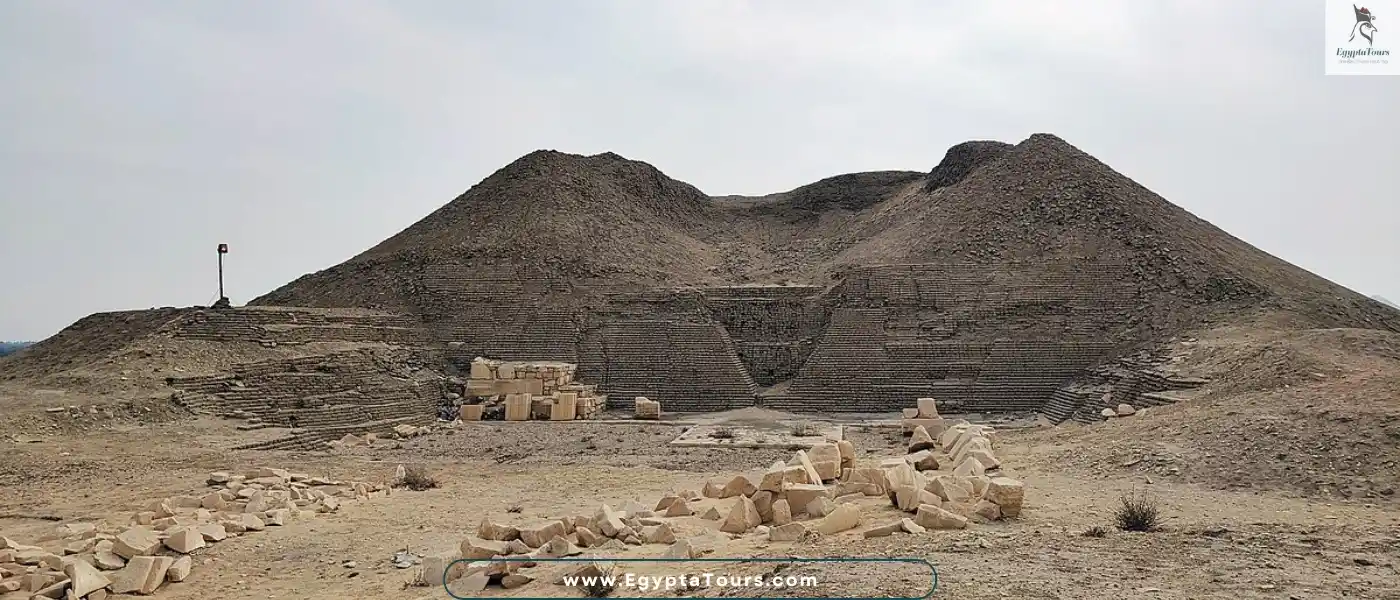
The-Pyramid-of-King-Senusret-III-EgyptaTours
King Senusret III built his distinctive pyramid in the Dahshur area, north of Lisht specifically in Lahun.
He used mud bricks and clad it with stone. He named it “Hetep,” meaning “peace.”
This pyramid also featured a unique architectural structure.
The entrance to the burial chamber was located far from the body of the pyramid on the western side while a second entrance was found on the eastern side passing through the tomb of a queen and three princesses before reaching the chamber.
After more than thirty-eight years of a powerful and prosperous reign King Senusret III’s life ended, and his son Amenemhat III succeeded him on the throne of Egypt.
Senusret III was immortalized in a poem found among the papers of Kahun whose greatness was evident in words including:
He waged four successful campaigns against the Nubians to secure the southern border. He also expanded the network of forts in Nubia and built new temples and cities such as the temples of Abydos and Madamud.
One of his most important projects was the digging of the Sesostris Canal which connected the Red Sea to the Mediterranean via the Nile.
The canal dug by Senusret III is called the Sesostris Canal after the Greek name for the king.
It is considered the first waterway to connect the Red Sea and the Mediterranean.
Whoever protects Egypt’s borders is my son and represents a true lineage like a son who protects his homeland and ancestors. However whoever abandons protecting the borders and refuses to defend them is not my son and was not born of my lineage.
In conclusion, King Senusret III is considered one of the greatest rulers of ancient Egypt.
He was distinguished by his military wisdom and innovations in infrastructure and administration through his great efforts in protecting borders establishing waterways, and constructing defensive structures.
His achievements were milestones in the history of ancient Egypt and contributed to its political and economic development.



Explore our top-rated Egypt travel packages and embark on an unforgettable journey. From the Pyramids of Cairo to the magical temples of Luxor, Aswan, and Abu Simbel, discover expertly curated tours designed for your perfect Egyptian adventure