





Unfinished Obelisk in Aswan Uncovering the Mystery of Egypt
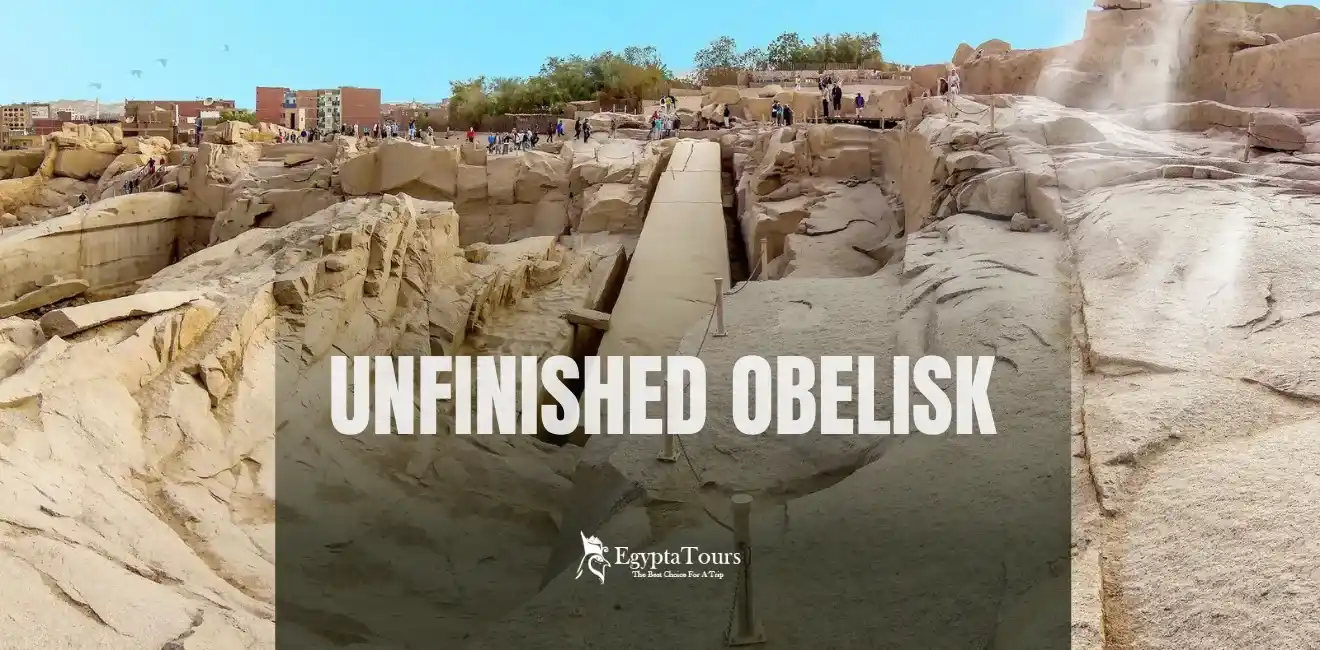
he Unfinished Obelisk in Aswan, Egypt is an archaeological mystery that has captivated the attention of historians and archaeologists for centuries. This enigmatic structure was discovered in the late 19th century and stands 97 feet tall, with only the bottom portion of the obelisk intact.
It is believed to have been carved out of a single piece of granite and would have been the largest obelisk ever created in antiquity. Despite its unfinished state, it is clear that the obelisk was intended to be an impressive and imposing monument.
Scholars have been unable to agree upon who created the obelisk, what its purpose was, and why it was left incomplete. However, further research and analysis have begun to uncover some of the secrets of the Unfinished Obelisk in Aswan, Egypt.
Historical-Background-of-the-Unfinished-Obelisk-EgyptaTours
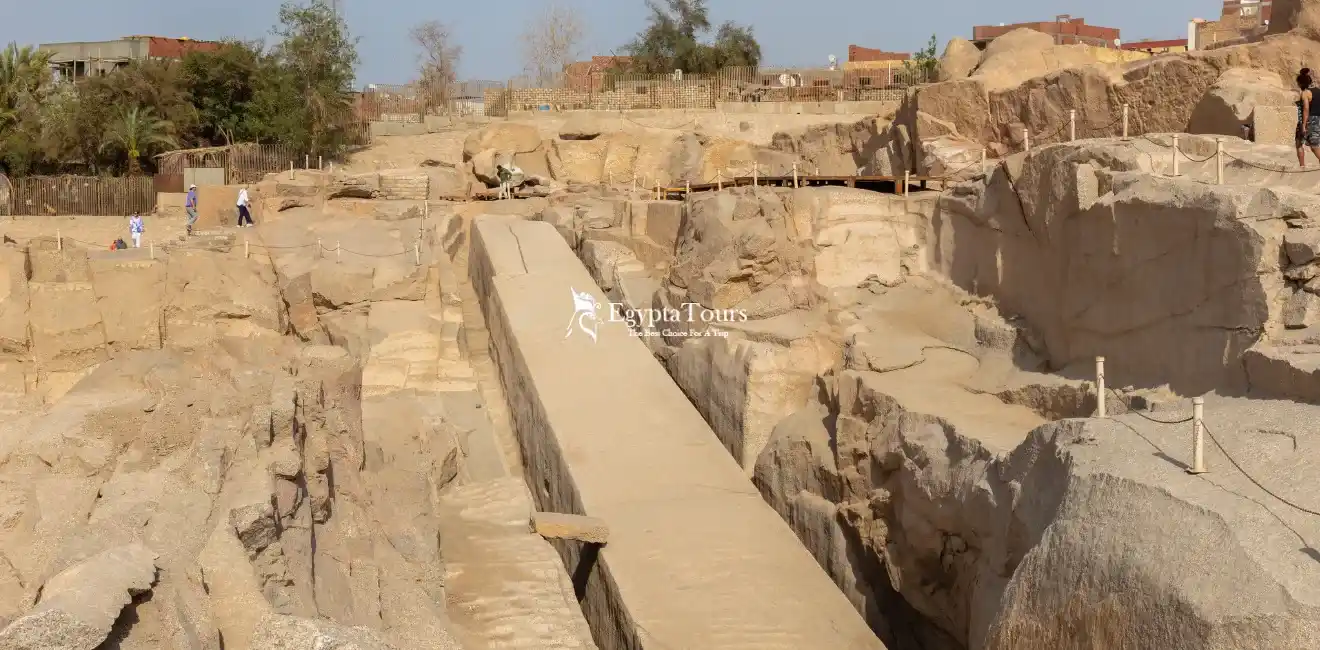
The Unfinished Obelisk dates to Egypt’s Eighteenth Dynasty, approximately 1550-1295 BCE, representing the pinnacle of ancient Egyptian stone-working ambitions. Archaeological evidence suggests this massive monument was commissioned during Queen Hatshepsut’s reign, though some scholars attribute it to her successors. With an estimated unfinished obelisk weight of 1,200 tons, it would have stood as the heaviest obelisk ever completed, towering 42 meters high.
The monument’s creation reflects Egypt’s sophisticated quarrying techniques at Aswan’s granite quarries, where royal stonecutters extracted red granite for temples and monuments throughout the kingdom. However, a critical crack discovered during construction forced workers to abandon the project, leaving behind invaluable insights into ancient Egyptian engineering methods that would influence monument construction for centuries.
The obelisk in Aswan is the lone survivor of a group of three obelisks that once stood in the Temple of Isis. Carved from red granite and erected in the New Kingdom (1550-1070 BC), this temple was dedicated to the Egyptian goddess Isis (who was also the wife of Osiris and mother of Horus).
The Temple of Isis was constructed on an island in the Nile River near what is now the city of Aswan, Egypt. It was built during the reign of Thutmose III and remained in use for about 2,000 years until the 4th century AD. The three obelisks were erected during the reign, and reign of Thutmose III and his son, Amenhotep II. The obelisks were carved from single blocks of granite and weighed approximately 400 tons each.
They were erected in front of the Temple, with one between the other two. The remaining obelisks each stood over 70 feet tall and would have been visible from the river.
The Purpose of the Unfinished Obelisk
The-Purpose-of-the-Unfinished-Obelisk-EgyptaTours
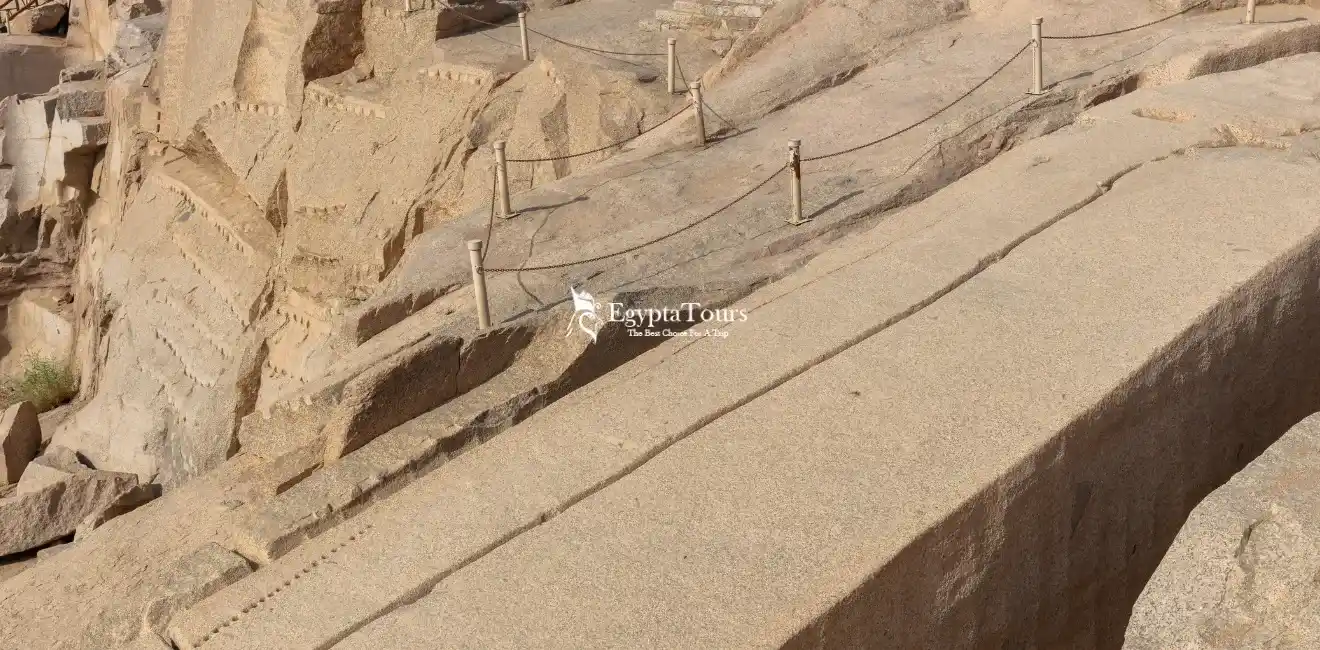
The Unfinished Obelisk was conceived as a monumental testament to divine power, likely intended for the Karnak Temple complex in Luxor. This massive granite monolith would have stood as the largest obelisk ever erected, measuring approximately 42 meters in height and weighing an estimated 1,200 tons when completed.
Ancient Egyptian obelisks served multiple sacred purposes: marking temple entrances, commemorating pharaonic achievements, and channeling solar energy through their pyramidal tops. The unfinished obelisk crack that ultimately doomed the project reveals the ambitious scale of this undertaking, as artisans pushed the boundaries of their stone-working capabilities to create an unprecedented monument.
Evidence suggests this obelisk was commissioned during Hatshepsut’s reign, intended to complement her existing obelisk at Karnak and demonstrate her divine legitimacy as pharaoh. The sheer ambition of the project reflects the period’s prosperity and technological confidence, making its ultimate abandonment all the more intriguing.
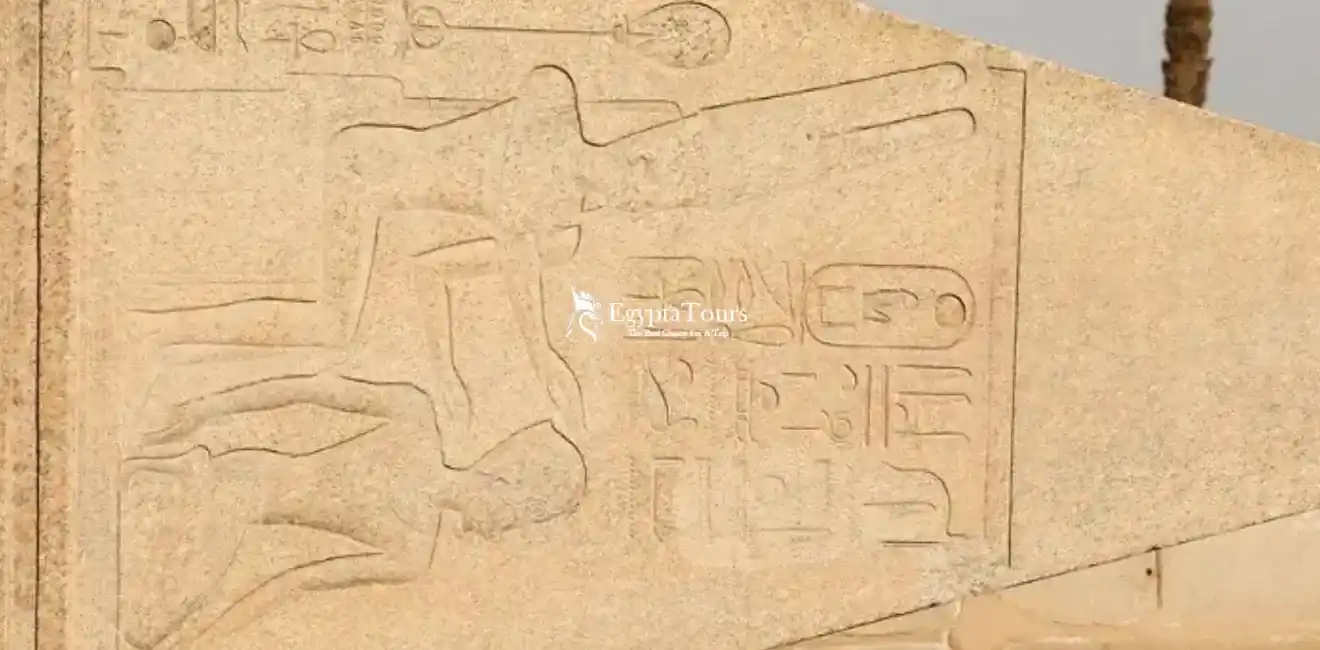
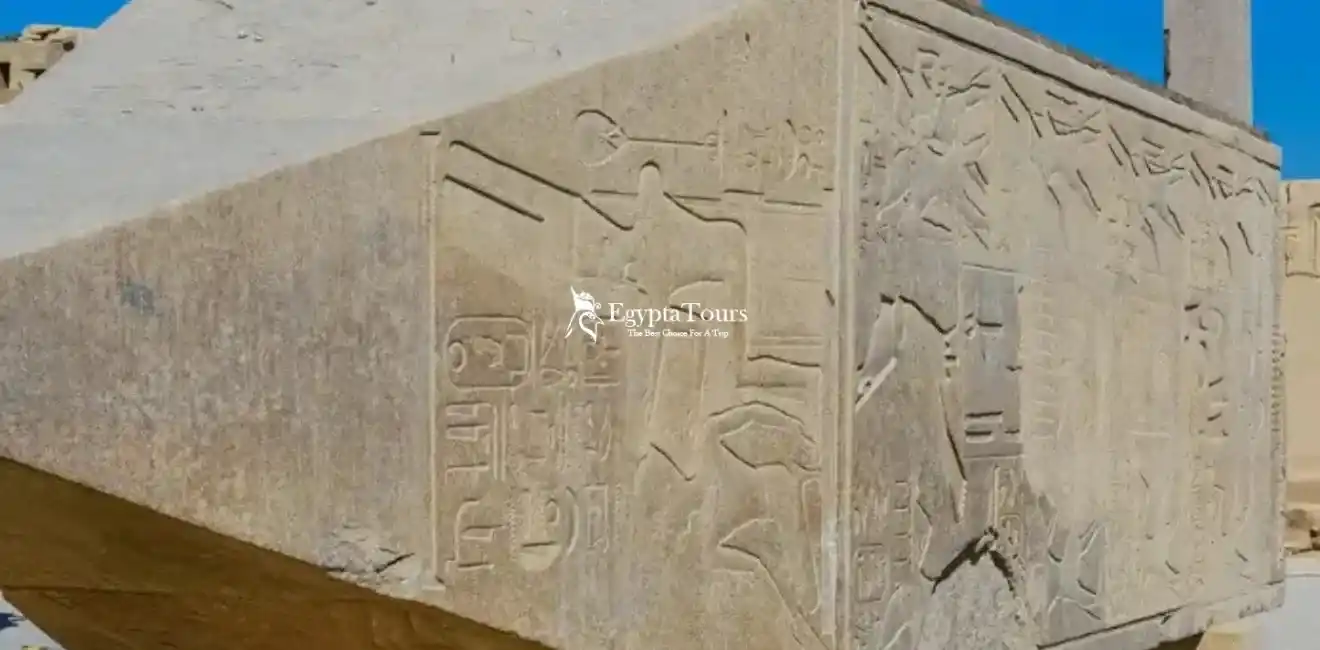
Roughly translated, the hieroglyphs on the obelisk describe the construction of the Temple of Isis and Thutmose III’s dedication of the obelisks. However, the obelisk clearly was not completed, nor was it ever finished. Scholars have tried to come up with reasonable explanations for why the obelisk was left incomplete. Some scholars assume that the obelisk was meant to be a pair with the other two obelisks and thus was never meant to be finished.
Some historians believe the obelisk was meant to be a single structure with two smaller pillars added to the sides and another smaller column on top. Scholars also believe it is possible that the obelisk was meant to be dedicated to a different pharaoh.
Potential Reasons for its Incompletion
Potential-Reasons-for-its-Incompletion-EgyptaTours
The Unfinished Obelisk remains frozen in time, abandoned mid-creation for reasons that continue to intrigue archaeologists and visitors alike. The most widely accepted theory centers on the massive crack that developed across the obelisk’s surface during quarrying operations. According to archaeological evidence, this fissure rendered the monument structurally unsound and unsuitable for its intended ceremonial purpose.
However, alternative theories suggest the project may have been halted due to the death of Queen Hatshepsut or shifting political priorities within the royal court. The enormous scale of the undertaking—requiring coordinated efforts from hundreds of workers over several years—made it vulnerable to disruption from political upheaval or resource shortages.
Today, visitors paying the modest unfinished obelisk ticket price can witness firsthand the ancient tool marks and quarrying techniques that reveal both the ambition and ultimate failure of this colossal project. The site serves as a remarkable testament to ancient Egyptian engineering capabilities while preserving the mystery of why such an extraordinary effort was ultimately abandoned.
It was previously believed that the unfinished obelisk had been left unfinished due to a technical error in the carving process. However, recent discoveries suggest that the unfinished obelisk may have been carved out of a single block of granite because it was meant to be a double-sided monument.
A double-sided obelisk would have required a large amount of space to be carved. Statues of Thutmose III were discovered in the quarry next to the Temple of Isis and were carved out of the same type of granite used for the obelisk. The unfinished obelisk seems to have been carved out of a single block of granite because it was meant to be carved from both sides.
Recent Discoveries
While the Unfinished Obelisk has been known for decades, modern archaeological techniques continue to reveal new insights about this ancient marvel. Recent ground-penetrating radar surveys have detected additional quarried chambers beneath the granite bedrock, suggesting the site was more extensively worked than previously understood.
Digital 3D mapping technology has also provided unprecedented detail about the obelisk’s construction marks and tool patterns. These high-resolution scans, now referenced in various academic databases including the unfinished obelisk wiki, have allowed researchers to better understand the sophisticated techniques ancient Egyptian craftsmen employed in their quarrying operations.
Additionally, new geochemical analysis of the granite composition has helped archaeologists trace the potential destinations of other obelisks carved from the same Aswan quarries, strengthening connections between this site and monuments found throughout Egypt and beyond.
Theories on Who Built the Obelisk
Archaeological evidence points to Queen Hatshepsut as the most likely commissioner of this massive undertaking during Egypt’s 18th Dynasty. The Unfinished Obelisk’s dimensions suggest it was intended to complement her existing obelisks at Karnak Temple, making this unfinished obelisk worth studying as a testament to her ambitious building programs that rivaled any pharaoh’s legacy.
However, some scholars propose alternative theories, suggesting the obelisk could have been commissioned by Thutmose III or even later rulers who sought to create monuments of unprecedented scale in the granite quarries of Aswan.
Thutmose III is the most likely candidate for the builder of the Unfinished Obelisk in Aswan, Egypt because he was the last pharaoh to rule during the New Kingdom (during which the Temple of Isis was constructed). He was a prolific builder and dedicated temples to the goddess Isis in at least three different cities.
He likely commissioned the construction of the Temple of Isis and the three obelisks in honor of his dead wife. It is possible that the Temple of Isis and the obelisks were meant to be a final resting place for Thutmose III’s wife. However, Thutmose III died before the Temple was completed, and his son, Amenhotep II, died before the obelisks were finished. It is possible that the Temple and the obelisks were left unfinished because of a shortage of funds or a shortage of workers. It is also possible that the Temple of Isis and the obelisks were left unfinished due to a shift in religious practices.
Evidence Suggesting the Obelisk was Built for Queen Hatshepsut
Several compelling pieces of evidence link the unfinished obelisk directly to Queen Hatshepsut, one of ancient Egyptian history’s most powerful female pharaohs. The monument’s massive proportions align perfectly with Hatshepsut’s known preference for grandiose architectural projects that would cement her divine authority.
Archaeological analysis reveals the obelisk’s intended height of 42 meters would have made it the tallest ever erected, matching Hatshepsut’s ambitious building campaigns at Karnak Temple. The quarrying techniques and tool marks discovered at the site correspond precisely with construction methods used during her 22-year reign from 1479-1458 BCE.
Most significantly, the obelisk’s abandonment timeline coincides with political upheaval following Hatshepsut’s death, when her successor Thutmose III systematically erased her monuments. The project’s sudden halt suggests it was specifically commissioned for this controversial queen, whose architectural legacy faced deliberate destruction throughout the New Kingdom period.
Discover Unfinished Obelisk By Category
| Category Name |
|---|
| Alexandria Tour Packages |
| Cairo Short Breaks |
| Giza Pyramids Day Tours |
| Egypt Honeymoon Packages |
| Egypt Travel Packages |
| Luxor Short Breaks |
| Nile Cruises |
| Egypt Sahara Tour Packages |
Theories Surrounding the Unfinished Obelisk
Some scholars believe that the Temple of Isis and the obelisks were meant to be a funerary monument for Thutmose III’s wife. This would make sense because the Temple was dedicated to the goddess Isis, who was also the wife of Osiris and mother of Horus. The goddess Isis is often depicted as a mother figure in Egyptian culture. It is also possible that the Temple and the obelisks were meant to become a funerary monument for Thutmose III.
He was a very powerful and influential pharaoh who served as regent for his son and became pharaoh himself. It is possible that he intended for the obelisks to be a final resting place for himself. However, he died before the Temple was completed, and his son died before the obelisks were finished.
Evidence Suggesting the Obelisk was Built for Queen Hatshepsut
Evidence-Suggesting-the-Obelisk-was-Built-for-Queen-Hatshepsut-EgyptaTours
Some scholars believe that the Temple of Isis and the obelisks were dedicated to Queen Hatshepsut (the wife of Thutmose II, who ruled during the New Kingdom). There is some evidence to suggest that the Temple of Isis was dedicated to Queen Hatshepsut.
To begin with, the Temple originally had the same dedication as the Temple of Isis and was dedicated to the goddess Isis. However, the inscriptions were later changed to dedicate the Temple to the goddess Hathor. Hathor was a different Egyptian goddess and represented fecundity, sexuality, and joyfulness. It is also known that Thutmose III built many temples dedicated to Hathor.
Therefore, it is possible that the Temple of Isis was initially dedicated to the goddess Hathor, but was later dedicated to the goddess Isis after Thutmose III built his own temples to the goddess Hathor. If the Temple of Isis and the obelisks were dedicated to Queen Hatshepsut, it would explain why they were left unfinished. It is possible that they were intended to be a funerary monument for the queen, but she died before they were finished.
Archaeological Findings of the Aswan Quarry
One of the most important discoveries made at the Aswan Quarry was the partial remains of a granite block that was carved out, but never removed from the quarry. This unfinished granite block was later discovered to be the same type of granite used to carve the obelisks at the Temple of Isis.
It is possible that the construction of the Temple of Isis and the three obelisks was a joint effort between Thutmose III and Queen Hatshepsut. It is also possible that the Temple of Isis and the obelisks were dedicated to both Thutmose III and Queen Hatshepsut. The unfinished block found in the quarry may have been intended for the unfinished obelisk, but it was later abandoned.
Tours Include a Visit To Unfinished Obelisk
Most Aswan day tours and Nile cruise itineraries incorporate the unfinished obelisk as a key archaeological stop alongside the Philae Temple and High Dam. Visitors can walk directly among the ancient granite blocks where workers abandoned the construction of the unfinished monument over 3,000 years ago. EgyptaTours notes that guided tours typically allocate 45-60 minutes for exploring the quarry site, allowing time to examine the precision tool marks and understand the ancient Egyptian engineering methods that created this massive stone giant.
| Tour Name | Duration |
|---|---|
| Egypt 12 Days : The Ultimate Itinerary | 12 Days – 11 Nights |
| 10 Days Cairo & Nile Cruise and Hurghada Trip | 10 Days – 9 Nights |
| 4 Days Cairo and Aswan Tour Package | 4 Days – 3 Nights |
| 5 Days Cairo, Aswan and Abu Simbel Tour Package | 5 Days – 4 Nights |
| Aswan Sightseeing – One Day Tour | 1 Day – 10 Hours |
Conclusion
The Unfinished Obelisk in Aswan stands as one of the most fascinating archaeological sites in Egypt—not because it was completed, but because it wasn’t. Left embedded in the granite bedrock, it offers a rare, behind-the-scenes look at how ancient Egyptians quarried, shaped, and engineered massive stone monuments thousands of years ago.
More than a historical curiosity, the Unfinished Obelisk helps archaeologists and visitors alike understand the ambition, precision, and challenges faced by ancient builders. From the tool marks still visible in the stone to the massive crack that halted its construction, every detail tells a story of trial, skill, and human limitation.
For modern travelers, visiting the Unfinished Obelisk is both educational and humbling. It complements the grandeur of Egypt’s finished temples and monuments by revealing the process behind them. Whether you’re a history enthusiast, a curious traveler, or exploring Egypt as part of a broader Aswan itinerary, this site provides context that few other landmarks can match.
In the end, the Unfinished Obelisk reminds us that even in one of the world’s greatest civilizations, not every monumental plan reached completion—and that unfinished projects can sometimes leave the most powerful legacy.
FAQs About the Unfinished Obelisk in Aswan
What is the current ticket price for visiting the Unfinished Obelisk?
The entrance fee varies for international visitors, Egyptian nationals, and students, with most tour operators including admission costs in their comprehensive Aswan packages.
How long does a typical visit take?
Most visitors spend 30-45 minutes exploring the quarry site and examining the massive granite monument up close.
Can visitors climb on the obelisk?
No, climbing on the ancient monument is strictly prohibited to preserve this archaeological treasure for future generations.
What is the Unfinished Obelisk?
The Unfinished Obelisk represents ancient Egypt’s most ambitious stone-carving project that was never completed. This massive granite monolith lies partially carved in the northern quarries of Aswan, offering unprecedented insights into ancient Egyptian stone-working techniques and the mysterious circumstances that led to its abandonment.
How big would the Unfinished Obelisk have been if completed?
The Unfinished Obelisk would have been a colossal monument, measuring approximately 42 meters (137 feet) tall and weighing around 1,200 tons when complete. This massive scale would have made it the largest obelisk ever erected in ancient Egypt, dwarfing even the famous obelisks that still stand today.
The sheer ambition behind this project becomes clear when considering that successful ancient obelisks typically weighed between 200-500 tons, making this planned monument more than double the size of most completed examples. The impressive dimensions reveal the extraordinary engineering capabilities ancient Egyptians possessed, setting the stage for understanding the royal patron who dared commission such an unprecedented undertaking.
Why was the Unfinished Obelisk abandoned?
The obelisk was abandoned due to a large crack that appeared during its construction. This flaw made it unsuitable for completion and use in the intended structure.
How big would the Unfinished Obelisk have been if completed?
If completed, the obelisk would have stood about 42 meters (approximately 138 feet) tall and weighed around 1,200 tons, making it the largest known ancient obelisk.
Who commissioned the Unfinished Obelisk?
The obelisk is believed to have been commissioned by Queen Hatshepsut during the 18th dynasty. She was one of Egypt’s most successful pharaohs.
What makes the Unfinished Obelisk significant?
It offers a unique look at ancient Egyptian quarrying techniques and the labor involved. The tool marks and the quarry site provide valuable archaeological insights.
Can visitors see the Unfinished Obelisk today?
Yes, visitors can explore the site in its original location in the northern region of Aswan’s stone quarries. It’s a popular tourist attraction, showcasing the ingenuity of ancient Egyptians.
How is the Unfinished Obelisk preserved?
The site has been preserved as an open-air museum. Efforts focus on protecting it from weathering and damage, ensuring its historical value remains intact.
Are there any other obelisks in Aswan?
Yes, Aswan has several ancient obelisks, though none as large or as famously incomplete as the Unfinished Obelisk. These structures are part of Egypt’s rich archaeological landscape.
What’s the best way to visit the Unfinished Obelisk?
Guided tours are available, providing detailed information about its history and significance. It’s advisable to visit during cooler months to avoid the extreme heat.
How does the Unfinished Obelisk compare to other ancient obelisks?
While it surpasses others in scale, its incomplete state makes it a unique study in ancient engineering attempts and failures. Compared to completed obelisks, it serves as a raw testament to the challenges faced by ancient builders.
About EgyptaTours

EgyptaTours is a name synonymous with trust, excellence, and unforgettable travel experiences, proudly standing as one of the leading travel agencies in Egypt. Renowned for its deep expertise, personalized service, and carefully crafted itineraries, EgyptaTours serves as the ultimate gateway to discovering Egypt in its most authentic and inspiring form.