Ancient Egypt and Bronze age Civilizations
📋 Summary & Quick Facts
- Ancient Egypt was one of the oldest and most powerful civilizations, growing along the Nile River around 3150 BCE after the unification of Upper and Lower Egypt under King Narmer.
- It is part of the wider Bronze Age world (around 3300 to 1200 BCE), a period when early civilizations like Mesopotamia, the Indus Valley and the Hittites also developed advanced societies using bronze tools and weapons.
- Like other Bronze Age civilizations, Egypt depended heavily on rivers for survival, especially the Nile which provided water, fertile soil, agriculture and trade routes.
- Egypt became a strong and stable civilization due to key factors such as the Nile’s predictable flooding, strong political organization and its strategic location connecting Africa, Asia and Europe.
- During the Bronze Age, Egypt developed cities, pyramids, writing systems and complex social structures, making it one of the most influential civilizations that shaped human history and influenced later cultures.
Ancient Egypt and Bronze age Civilizations is one of the oldest and most enduring civilizations in the world, emerging in Northeast Africa along the banks of the Nile River. It is distinguished by its long and complex history, spanning from around 3150 BC, starting with King Menes’ unification of Upper and Lower Egypt, and extending to the Roman Empire’s conquest.
They made significant contributions to the development of human civilization, and their monumental legacy remains a testament to their greatness.
The estimation of the age of the Egyptian civilization varies depending on definitions, but the known history of ancient Egyptian civilization begins around 3100 BC,. Some opinions suggest that the age of the civilization may reach 7000 years or more,
The known ancient Egyptian history, including the construction of the pyramids, begins around 3100 BC.
Prehistoric periods: Archaeological evidence indicates the presence of people living in Egypt before that, during prehistoric periods
Different estimates: Archaeological evidence indicates the presence of people living in Egypt before that, during prehistoric periods, where Neolithic communities flourished.
Controversy over the oldest age: There is debate about the antiquity of the Egyptian civilization, with some opinions suggesting evidence of its existence before 3000 years.
The Bronze Age was distinguished by the rise of many great civilizations that combined the character of arts and architecture at the same time. From its beginning in 3100 BC until the beginning of the entry into the new era, meaning until about 1200 BC, a series of civilizations arose, represented as follows:
The Sumerians.
The Sumerian civilization arose specifically between the Tigris and Euphrates rivers. It was distinguished by its skill in writing, religion, and architecture. They excelled in “Sumerian writing,” and they had independent cities in which agriculture and irrigation were developed, and interest was paid to the fields of astronomy and mathematics.
The Amorites.
They were interested in building various kingdoms, which were located in the Levant and the north of the country. Among them were “Qatna,” “Mari,” and “Babylon,” which is the most famous in their history, as it was a famous capital in the commercial and cultural fields.
The Canaanites.
Known as a strong people, their greatest presence was in the Levant and Palestine. They were interested in the manufacture of glass and various textiles. As for their religious rituals, they varied between washing and purification, in addition to the offerings that were placed with the dead, as thousands of their artifacts have been found.
The Egyptians.
The ancient civilization that is known to this day, especially in the presence of the pyramids, which are known as the “Seven Wonders of the World,” as the world visits them from different countries. They were the first to make statues. As for the political level, it was known for stability and recovery.
The Hittites.
They arose in the northern part of Anatolia, specifically in the center of the city. It was officially established in 1600 BC, and today it is still part of some countries such as Turkey, Syria, and Lebanon. They were known for their skill and strength, as the government was very organized with laws that had to be followed.
The Minoans.
It is called the “Minoan civilization,” and it was located on the island of “Crete,” where they excelled in extracting minerals. They had experience in the field of maritime navigation. After years, invasions and wars followed them, but despite that, the palaces were built again, and the walls and towers were built anew.
Characteristics of ancient Egyptian civilization
Its history was marked by a series of stable kingdoms interspersed with periods of instability, reaching its peak during the New Kingdom era before entering a period of decline.
The ancient Egyptian civilization left a clear mark on other cultures, such as the Phoenicians and Greeks, and its artistic and architectural achievements inspired writers and travelers throughout the ages.
Achievements of ancient Egyptian civilization
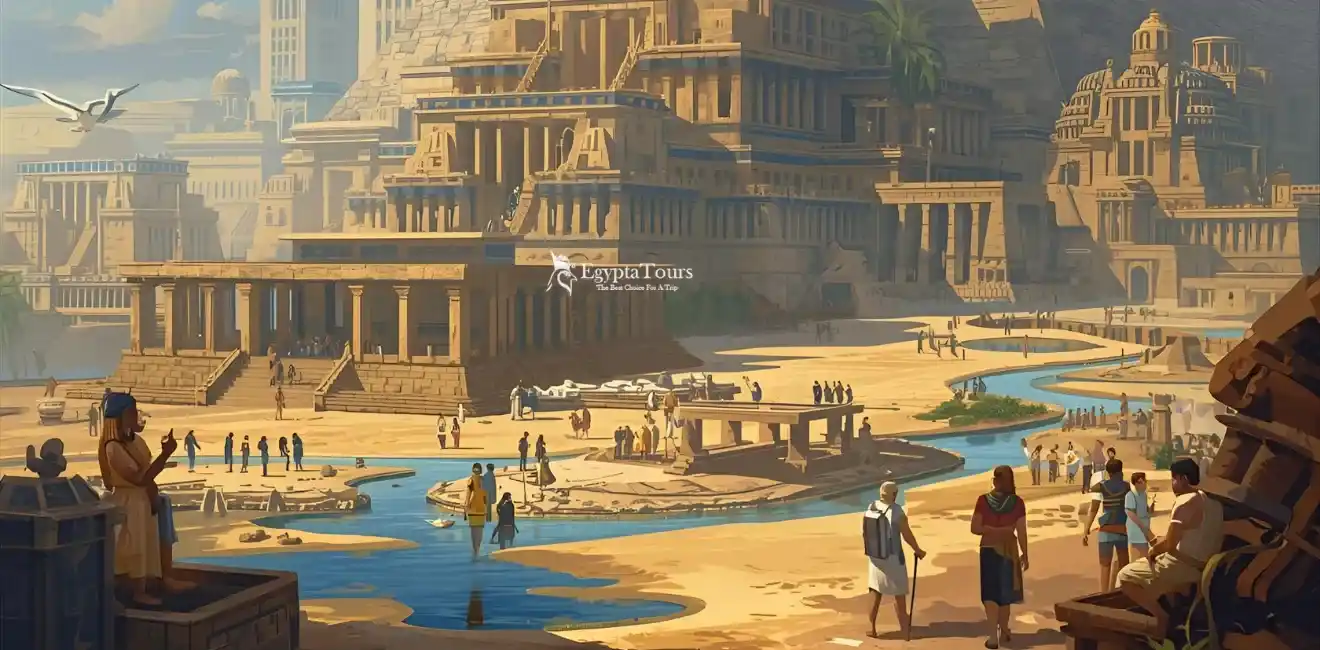
Achievements Of Ancient Egyptian Civilization
Architecture: The civilization was famous for building massive pyramids, temples, and obelisks.
Engineering mastered quarrying, surveying, and building techniques, enabling them to construct massive pyramids and temples.
Science and Medicine developed an effective mathematical system, excelled in medicine through herbal remedies and fracture treatment and were the first to create an accurate 365-day solar calendar.
Mathematics and Astronomy developed a mathematical system, used astronomy in temple and tomb construction, and were the first to develop an accurate solar calendar.
Literature: They created new forms of literature, such as wisdom and narrative literature, and authored the oldest known peace treaty in history with the Hittites.
Religion and Art: had a polytheistic religion, believed in the afterlife, which led to the construction of pyramids and massive tombs.
Writing: They invented hieroglyphics, one of the oldest writing systems in the world, in addition to other forms of writing like hieratic.
Factors of Success of Ancient Egyptian Civilization:
The Nile River: The predictable flooding of the Nile and controlled irrigation were essential factors in producing surplus crops, contributing to increased population density and social and cultural development.
Geographical Location: Egypt’s unique geographical location connected it to the continents of Asia, Africa, and Europe, making it a center for trade and culture.
Political Stability: The civilization succeeded in building politically stable empires, despite periods of relative instability, allowing for development in various fields of life.
Landmarks of Ancient Egypt:

Landmarks Of Ancient Egypt
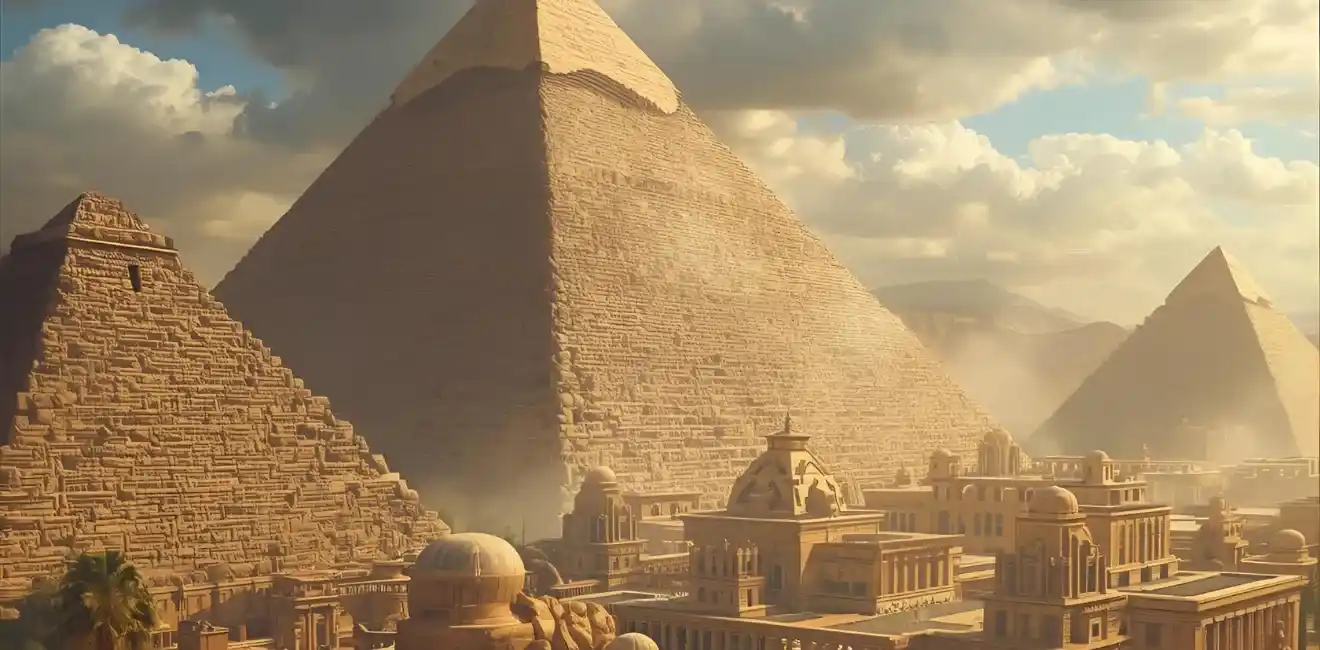
Pyramids of Giza: Considered one of the most famous ancient Egyptian landmarks and a symbol of Egyptian civilization, built with stone blocks and covered with limestone.
The sphinx a statue located next to the pyramids, representing the body of a lion and the head of a human
Luxor and Karnak Temples: considered one of the largest temples in the world, embodying the magnificence of ancient Egyptian architectural art, featuring numerous statues and inscriptions that reflect its rich history.
Valley of the Kings: Site of famous pharaonic tombs, including Tutankhamun’s tomb, discovered by Howard Carter.
Egyptian Museum: Houses the world’s largest collection of ancient Egyptian artifacts,
Saqqara: Ancient burial site of the capital city of Memphis, featuring the Step Pyramid designed by Imhotep.
The Rise of Ancient Egypt and Bronze Age Civilizations
The focus in The Ancient Egypt and Bronze Age Civilizations was on the production of bronze, which gave successive civilizations a technological advantage in this matter. The focus was also on the writing aspect, as it was known for its use of the oldest practical writing systems. Here, several civilizations arose in Europe, Africa, and Asia that relied on collecting food, nuts, and wild resources, in addition to creativity in the field of hunting.
The Role of the Nile River in Unifying The Egyptian State
Going back to 5000 BC, the independent tribes found that unity and the attempt to form one nation were the main cornerstones in building an ancient civilization. Its importance was represented in several fields that helped to form one Egyptian state, through:
-
The commercial field:
Products were transported from ancient Egypt to several countries through the Nile River, and here economic stability was achieved for the ancient Egyptian empire.
-
The food field:
Meat was not the only primary source of food, but it was replaced by wheat and barley that were present on the banks of the river.
The Reliance of Ancient Egypt and Bronze Age Civilizations on Rivers in Their Lives
Ancient civilizations arose on the banks of rivers. For example, ancient Egypt was on the Nile River, while ancient China was on the “Yellow River,” while the “Fertile Crescent” was known for its presence on the Tigris and Euphrates rivers. The presence of rivers was life for them because they were considered drinking water, not to mention that they made the land suitable for agriculture.
The reliance on rivers was not only for drinking and irrigation, but also in the field of fishing, whether for fish or for animals that relied on the rivers. The Nile River, which reached a length of 6,670 kilometers and consists of the White Nile and the Blue Nile, gave status to different countries such as Sudan, Uganda, and Congo. The Yellow River was the reason for the rise of agriculture and industry as well.
Factors of Success of Ancient Egypt and bronze age civilization
The Nile River:
The predictable flooding of the Nile and controlled irrigation were essential factors in producing surplus crops, contributing to increased population density and social and cultural development.
Geographical Location:
Egypt’s unique geographical location connected it to the continents of Asia, Africa, and Europe, making it a center for trade and culture.
Political Stability:
The civilization succeeded in building politically stable empires, despite periods of relative instability, allowing for development in various fields of life.
How the Nile Helped the Prosperity of Agriculture and Transportation in Egypt
The Nile River was known as the artery that connected Egypt to the world and contributed to its development and the emergence of different civilizations on its land. It was the reason for the existence of different ships and boats used for daily transportation and fishing, as well as large ships used to transport heavy goods, which led to the strengthening of the commercial pattern, and at the same time, the focus on the agricultural pattern by paying attention to agricultural crops that were exported to different parts of the world.
Political and Economic Organization in Ancient Egypt.
The system of government in ancient Egypt was known as “monarchy,” as it was like a complex pyramid that allowed civilizations to flourish and enjoy absolute power. The pharaoh was known as the “lord of the two lands,” while the ministers and officials were the backbone of the Egyptian administration. All of this, without the Egyptian army, would never have been able to achieve internal stability, nor even preserve the ancient monuments until this time. At the same time, there was great interest in the agricultural field, which helped to rise and open up to the world.
Natural Borders and Their Effect on Protecting Egypt.
Egypt is known to have a strategic location in the world, as it is located specifically in the “Sinai Peninsula.” It is bordered on the north by the “Mediterranean Sea,” on the east by the “Red Sea,” on the west by “Libya,” and on the northeast by “Palestine.” Therefore, it has different terrains, and thus it forms a strong barrier to prevent armies from entering with force, and thus it makes it stable and safe in the ancient world.
Geographical Differences Between Egypt and Mesopotamia
Both Egypt and Mesopotamia represent a strategic importance in the world, as they became the ambition of invaders. But looking at the geographical location of each of them, they have a different nature, which is as follows:
Ancient Egypt:
- It is located in the northeastern part of Africa.
- It is distinguished by the Nile River.
- It is distinguished by the presence of a stable nature and natural reserves in the desert, which made the population united, leading to the establishment of a strong central state.
Mesopotamia:
- It is known as “Iraq.”
- It is distinguished by the presence of the Tigris and Euphrates rivers.
- It is open to both the Gulf countries and the deserts, and thus the matter was reflected negatively on it, as it became the ambition of invaders.
Bronze Age Civilization
The Bronze Age civilization spans from 3300 BCE to 1200 BCE, flourishing after the Stone Age, and is characterized by the use of bronze, development of metal smelting techniques, and the emergence of primitive writing in some regions. These civilizations spread across various regions, including the Indus Valley Civilization in South Asia, ancient Egyptian civilization in the Nile Valley, and diverse European civilizations such as the Unetice culture and the Lusatian culture.
These societies were marked by the emergence of cities, development of writing, construction of massive architectural structures, and extensive trade between regions.
Characteristics of Bronze Age Civilization
Metallurgy: The Bronze Age saw significant developments in metallurgy, where humans learned to smelt copper and mix it with tin or arsenic to create bronze. Bronze, which was harder and more durable than other metals available at the time, was used to make tools, weapons, vessels, and jewelry.
Urban and Technological Development: Cities emerged and societies became more complex and organized. In some regions, primitive writing systems emerged, as seen in the Indus Valley Civilization.
Social and Political Structures: Some civilizations saw the emergence of a warrior class and ongoing wars, as in the Unetice culture. There were complex political systems, with the presence of large kingdoms and empires like Egypt and the Hittites.
Trade: Trade was thriving, especially in metals like bronze and amber, which contributed to the wealth of some civilizations like the Northern Bronze Age. There were extensive trade relations between different civilizations in regions like the Near East and the Mediterranean.
Achievements of the Bronze Age Civilization
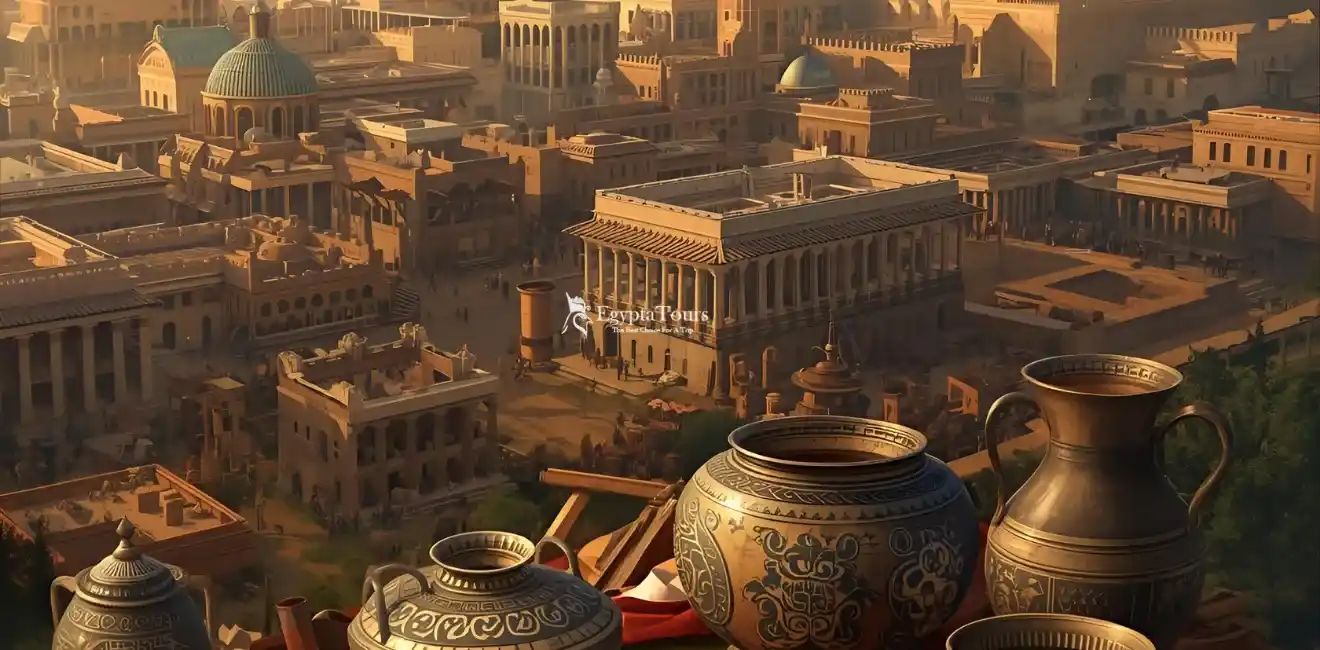
Achievements Of The Bronze Age Civilization
Technological and Industrial Achievements:
Bronze Metallurgy: Humans were able to smelt copper with tin or arsenic to produce bronze, an alloy stronger and more durable than copper alone, used to make strong tools and weapons like axes and swords.
The Wheel: The invention of the wheel was one of the most significant achievements, leading to its use in carts and transport.
Pottery: The potter’s wheel was used to make better and more efficient pottery.
Glass Production: Some civilizations (like the Assyrians) developed techniques for glass production.
Agriculture and Resource Management.
Irrigation Systems: Effective irrigation systems were developed to meet agricultural needs, such as canals that brought water to major cities like Nineveh.
Agricultural Tools: New agricultural tools made of bronze were developed, such as ploughs and shovels.
Writing, Urbanism, and Society:
Emergence of Writing Systems: The Bronze Age saw the invention of new writing systems, such as Linear B in the Mycenaean civilization, which allowed for organized record-keeping.
City Formation: Large urban cities were built, complex social structures developed, and class systems emerged in these cities.
Trade: Extensive trade networks were established, with a thriving trade in commodity metals.
Other Cultural Achievements:
Literature and Treaties: New forms of literature appeared, and the oldest known peace treaties were made, such as the treaty between the Hittites and Egyptians.
Navigation: Knowledge of navigation greatly improved, allowing access to a wider range of lands.
Mathematics and Medicine are Systems of mathematics and practical and effective medical systems were developed.
Examples of Bronze Age Civilizations
Indus Valley Civilization One of the oldest urban civilizations in the world, flourished between 2600 and 1900 BC, and was distinguished by high technical development in metallurgy.
Canaanite Civilization flourished during the Bronze and Iron Ages and was famous for agriculture, industry, and maritime trade European Bronze Age: Includes several regional civilizations such as the Unetice culture in Central Europe, and the Atlantic Bronze Age which connects the civilizations of Portugal, Britain, and relies heavily on maritime trade.
Civilizations in the Near East: Include powerful civilizations such as the Egyptians, Babylonians, and Hittites, which possessed advanced technological knowledge and huge urban centers.
FAQS
Is the Egyptian civilization a Bronze Age civilization?
Yes, the Egyptian civilization is part of the Bronze Age civilization, which extended for about 3100 years BC, and in which the focus was on the use of bronze in various fields of life.
What was happening in Egypt during the Bronze Age?
Egypt was unified and the Old Kingdom was also established. Art and engineering flourished and the Giza pyramids were built, in addition to the expansion in the agricultural and commercial fields with the Levant countries.
How did Egypt survive the collapse of the Bronze Age?
The geographical location in which Egypt was known, being surrounded by the desert and the Red and Mediterranean Seas, was a great opportunity for the inability to occupy it.
Why is the civilization also known as the Bronze Age civilization?
Because during this period, bronze was used in weapons and statues as a substitute for stone and copper.
What were the factors that contributed to the success of ancient Egyptian civilization?
The Nile River:
The predictable flooding of the Nile and controlled irrigation were essential factors in producing surplus crops, contributing to increased population density and social and cultural development.
Geographical Location:
Egypt’s unique geographical location connected it to the continents of Asia, Africa, and Europe, making it a center for trade and culture.
Political Stability:
The civilization succeeded in building politically stable empires, despite periods of relative instability, allowing for development in various fields of life.
Why was the Bronze Age named so?
The Bronze Age was named so because humans began using copper alloys bronze to make tools and weapons instead of stones. This era was marked by significant technological advancements, where the discovery of mixing copper with other metals like tin or arsenic led to the production of an alloy stronger, more durable, and easier to shape than pure metals or stones.
Mention the most important features of ancient Egyptian civilization?
Its history was marked by a series of stable kingdoms interspersed with periods of instability, reaching its peak during the New Kingdom era before entering a period of decline.
The ancient Egyptian civilization left a clear mark on other cultures, such as the Phoenicians and Greeks, and its artistic and architectural achievements inspired writers and travelers throughout the ages.
What were the factors that contributed to the success of ancient Egyptian civilization?
The Nile River: The predictable flooding of the Nile and controlled irrigation were essential factors in producing surplus crops, contributing to increased population density and social and cultural development.
Geographical Location: Egypt’s unique geographical location connected it to the continents of Asia, Africa, and Europe, making it a center for trade and culture.
Political Stability: The civilization succeeded in building politically stable empires, despite periods of relative instability, allowing for development in various fields of life.
What are the most important characteristics of the Bronze Age civilization?
Metallurgy: The Bronze Age saw significant developments in metallurgy, where humans learned to smelt copper and mix it with tin or arsenic to create bronze. Bronze, which was harder and more durable than other metals available at the time, was used to make tools, weapons, vessels, and jewelry.
Urban and Technological Development: Cities emerged and societies became more complex and organized. In some regions, primitive writing systems emerged, as seen in the Indus Valley Civilization.
Social and Political Structures: Some civilizations saw the emergence of a warrior class and ongoing wars, as in the Unetice culture. There were complex political systems, with the presence of large kingdoms and empires like Egypt and the Hittites.
Trade: Trade was thriving, especially in metals like bronze and amber, which contributed to the wealth of some civilizations like the Northern Bronze Age. There were extensive trade relations between different civilizations in regions like the Near East and the Mediterranean.
What were the causes of the collapse of the Bronze Age?
Natural and Environmental Factors: Drought and Famine: Severe droughts caused widespread agricultural disruptions, leading to famines that significantly impacted societal stability.
Earthquakes: Natural disasters like earthquakes are believed to have contributed to the destruction of cities and infrastructure.
Collapse of Trade Routes: The Bronze Age economy heavily relied on international trade, especially for securing raw materials like copper and tin necessary for bronze production.
Trade Disruption: Invasions, wars, and general instability disrupted sea and land trade routes, causing severe economic collapse as access to necessary materials became unavailable.
Social and Political Factors: Invasion and Wars: The invasions by the Sea Peoples, who are believed to have attacked many civilizational centers in the Eastern Mediterranean, contributed to widespread destruction.
Internal Conflict: Political centralization and population growth exacerbated social instability, increasing the intensity of internal conflicts and revolts.
Political Fragility: The increasing fragility in the political structure of kingdoms weakened their ability to face external and internal challenges together.
Why was the Bronze Age named so?
The Bronze Age was named so because humans began using copper alloys bronze to make tools and weapons instead of stones. This era was marked by significant technological advancements, where the discovery of mixing copper with other metals like tin or arsenic led to the production of an alloy stronger, more durable, and easier to shape than pure metals or stones.
Similar Posts


About EgyptaTours

EgyptaTours is a name synonymous with trust, excellence, and unforgettable travel experiences, proudly standing as one of the leading travel agencies in Egypt. Renowned for its deep expertise, personalized service, and carefully crafted itineraries, EgyptaTours serves as the ultimate gateway to discovering Egypt in its most authentic and inspiring form.