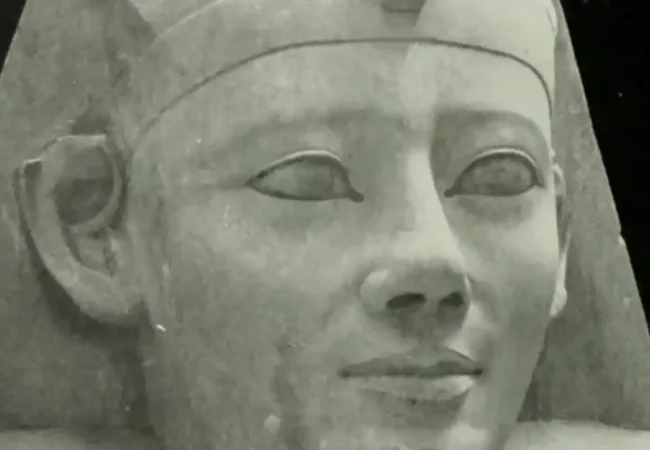
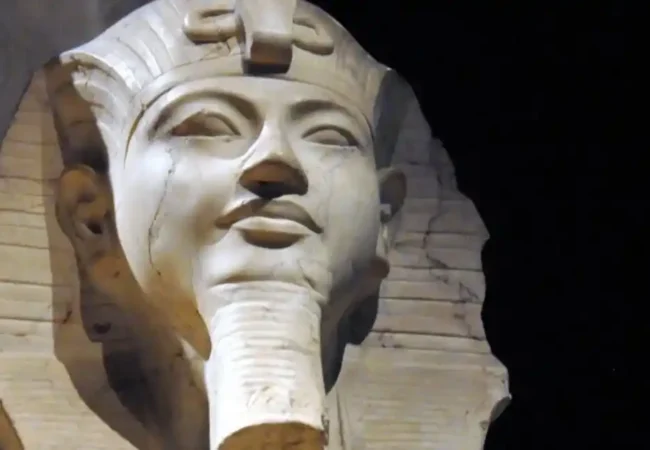
Amenemhat III, also spelled Amenemhet III (his name in ancient Egyptian means “Amun is at the front”), was a pharaoh of ancient Egypt and the sixth king of the Twelfth Dynasty during the Middle Kingdom.
His father, Senusret III, made him co-ruler, and they ruled together for about twenty years, with Amenemhat III acting as the main active king.During his rule, Egypt reached its highest level of cultural and economic success in the Middle Kingdom.
Unlike earlier pharaohs who focused mainly on wars or building temples, Amenemhat III also cared about improving the economy, developing building projects like canals and cities and supporting art and culture.
Family of Amenemhet Iii
Family -of -Amenemhat Iii
Amenemhat III was the son of Senusret III who ruled before him. There is no clear written proof that they were father and son, but historians believe this because they ruled together for a time. The name of his mother is not known. He may have had several sisters or half-sisters, including Menet, Mereret, Senetsenbetes, Sithathor and a woman whose name is partly known as Khnemet.
Two of his wives are known: Aat and Khenemetneferhedjet III. Both were buried in his pyramid at Dahshur. Hetepti, who was the mother of Amenemhat IV, may have been another wife.
He had one confirmed daughter, Neferuptah. It seems she was being prepared to become ruler after him because her name was written inside a royal cartouche (a special oval used for kings’ names). The Egyptologists Aidan Dodson and Dyan Hilton believe Neferuptah was first buried in Amenemhat III’s second pyramid at Hawara, but after she died young, her body was moved to her own pyramid. However, the Egyptologist Wolfram Grajetzki disagrees. He says she was never buried at Hawara and may have lived longer than her father and been buried somewhere else.
Two other children who later became rulers are also believed to be his: a son, Amenemhat IV and a daughter, Sobekneferu. Some historians think that Amenemhat IV might actually have been his grandson instead of his son.
The tombs of three other princesses Hathorhotep, Nubhotep and Sithathor were found at the Dahshur complex. However, it is not certain if they were daughters of Amenemhat III, because this burial area was used by royal family members during the Thirteenth Dynasty as well.
Reign of Amenemhat Iii
The strong military and internal policies of Senusret III, which brought Nubia back under Egyptian control and reduced the power of local governors (nomarchs), allowed Amenemhat III to inherit a stable and peaceful country.
He focused mainly on a large building program, especially in the Faiyum region. There, he built a temple for Sobek, a small shrine for Renenutet, put up two huge statues of himself at Biahmu and helped expand Lake Moeris.
He built two pyramids for himself, one at Dahshur and another at Hawara. This made him the first pharaoh since Sneferu of the Fourth Dynasty to build more than one pyramid. Near his pyramid at Hawara, he also built a pyramid for his daughter, Neferuptah.
To get materials for his building projects, Amenemhat III used stone quarries in Egypt and the Sinai, where workers mined turquoise and copper. Other materials came from different places: schist from Wadi Hammamat, amethyst from Wadi el-Hudi, fine limestone from Tura, alabaster from Hatnub, red granite from Aswan and diorite from Nubia. Many inscriptions record the work done at these places, especially at Serabit el-Khadim.
There is little evidence of military campaigns during his reign, although a small campaign is recorded at Kumma in his ninth year as king. He also sent a few trading expeditions to Punt.
Amenemhat III ruled Egypt for at least 45 years. A broken papyrus from El-Lahun that mentions a 46th year probably also belongs to his time as king.
Near the end of his rule, he made Amenemhat IV co-ruler with him. A rock inscription from Semna in Nubia shows that Year 1 of Amenemhat IV was the same as Year 44, 46, or 48 of Amenemhat III.After Amenemhat IV, Sobekneferu became ruler. She was the last king (queen) of the Twelfth Dynasty.
Amenemhat III Achievements
Amenemhat Iii -Achievements
In the Sinai Peninsula
Amenemhat III was very active in the Sinai Peninsula. Several missions were sent to Wadi Maghara. During one mission in his second year as king, workers decorated the Temple of Hathor. This is also the only mission where copper mining is clearly mentioned.
An inscription found at Ayn Soukhna suggests that the mission started from Memphis and may have crossed the Red Sea by boat to reach the peninsula.
There was another mission to Wadi Nasb in his 20th year as ruler. In addition, about 18 or 20 missions were sent to Serabit el-Khadim during his reign. There are also many other inscriptions from his time, but their exact dates are unknown.
In Egypt
One of the small shrines (naos) from the funerary temple of Amenemhat III at Hawara is now in the Egyptian Museum in Cairo. In the sculpture, the figure on the left who bends his arm across his chest to hold the “ankh” (symbol of life) near his partner’s face, is Amenemhat III. The figure on the right is his son and successor, Amenemhat IV.
An inscription from Amenemhat III’s 43rd year comes from Tura and talks about cutting limestone for a mortuary temple, either the one at Dahshur or at Hawara.
A stone slab (stela) found at Gebel Zeit, 50 km (31 mi) south of Ras Ghareb on the Red Sea coast, shows mining work at the galena mines there. The inscription has part of a date suggesting it was made after his 10th year as king.
Several missions went to Wadi Hammamat to get schist. A few missions were sent to Wadi el-Hudi, southeast of Aswan, to collect amethyst. Another mission went to Wadi Abu Agag, near Aswan, in his 13th year as king.
In Nubia
There were quarries at Gebel el-Asr in Lower Nubia, northwest of Abu Simbel and west of Lake Nasser. This place is best known as the source of diorite used for six of Khafre’s seated statues. During the Middle Kingdom, the area also provided gneiss and chalcedony.
The chalcedony deposits are also called “Stela Ridge” because it was a spot where containers with stelae (stone slabs) and offerings were left. Nine of these objects were made during the reign of Amenemhat III.
Trade expeditions in Amenemhat III Reign
During the reign of Amenemhat III, there was a mission to Punt. It was organized by the chief steward, Senbef. He divided the mission into two groups. The first group, led by Amenhotep, went to Punt to get incense. The second group, led by Nebesu, went to the mines called Bia-Punt to collect rare metals.
In total, there were two to five missions during Amenemhat III’s rule. Two of the stone slabs (stelae) found at the site show that missions took place in his 23rd and 41st years as king.
The Black Pyramid In Dahshur
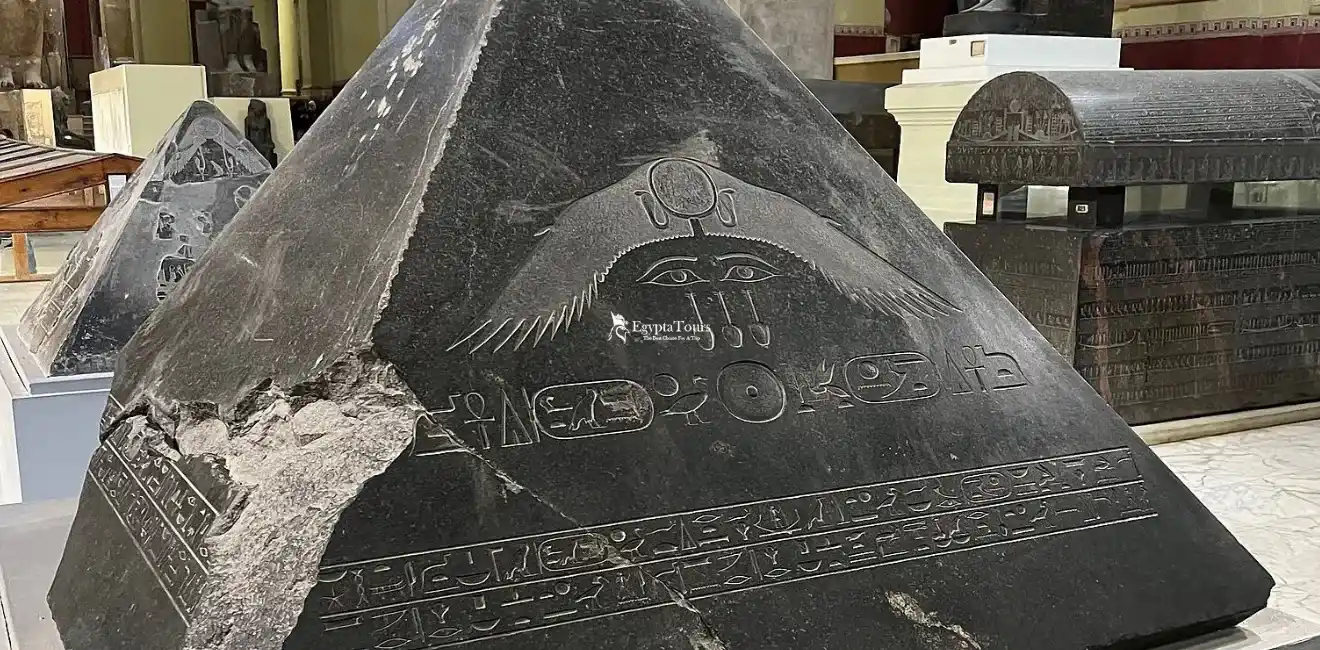
The -Black- Pyramid -In -Dahshur
The building of the pyramid at Dahshur, called the “Black Pyramid,” started in the first year of Amenemhat III’s rule. The main part of the pyramid was made entirely of mudbrick and was strengthened by making a stepped core instead of using a stone frame.
The outside was covered with 5 m (16 ft) thick blocks of fine white Tura limestone, held together with wooden dove-tail pegs. The pyramid was 105 meters (344 ft) long. The top was finished with a grey granite pyramidion 1.3 m (4.3 ft) high which is now in the Egyptian Museum in Cairo. The pyramidion had a band of hieroglyphs on all four sides.
In front of the pyramid was a simple mortuary temple. It had an offering hall and an open courtyard with columns. The complex was surrounded by two walls made of mudbrick. From the mortuary temple, a mudbrick-walled causeway led to the valley temple. Two queens, Aat and an unknown queen, were buried here and their bodies were found in their chambers.
The Pyramid of Amenemhat Iii at Hawara
The second pyramid is at Hawara in the Faiyum Oasis. Construction started around the 15th year of Amenemhat III’s rule, after the Dahshur pyramid had ongoing problems. The pyramid’s core was made entirely of mudbrick and covered with fine white Tura limestone. Its length was between 102 m (335 ft) and 105 m (344 ft).
The pyramid had a gentler slope to reduce the risk of collapse and avoid the same problems that happened at Dahshur. Inside, the builders took extra safety steps, such as lining the chamber pits with limestone.
The Pyramid of Neferuptah
The pyramid of Neferuptah was about 2 km (1.2 mi) southeast of Amenemhat III’s pyramid at Hawara. It was dug up by Nagib Farag and Zaky Iskander in 1956. Most of the pyramid above ground was gone, and the underground part was filled with groundwater. However, her tomb itself was mostly untouched, including her sarcophagus and burial items.
Sculpture in Amenemhat Reign
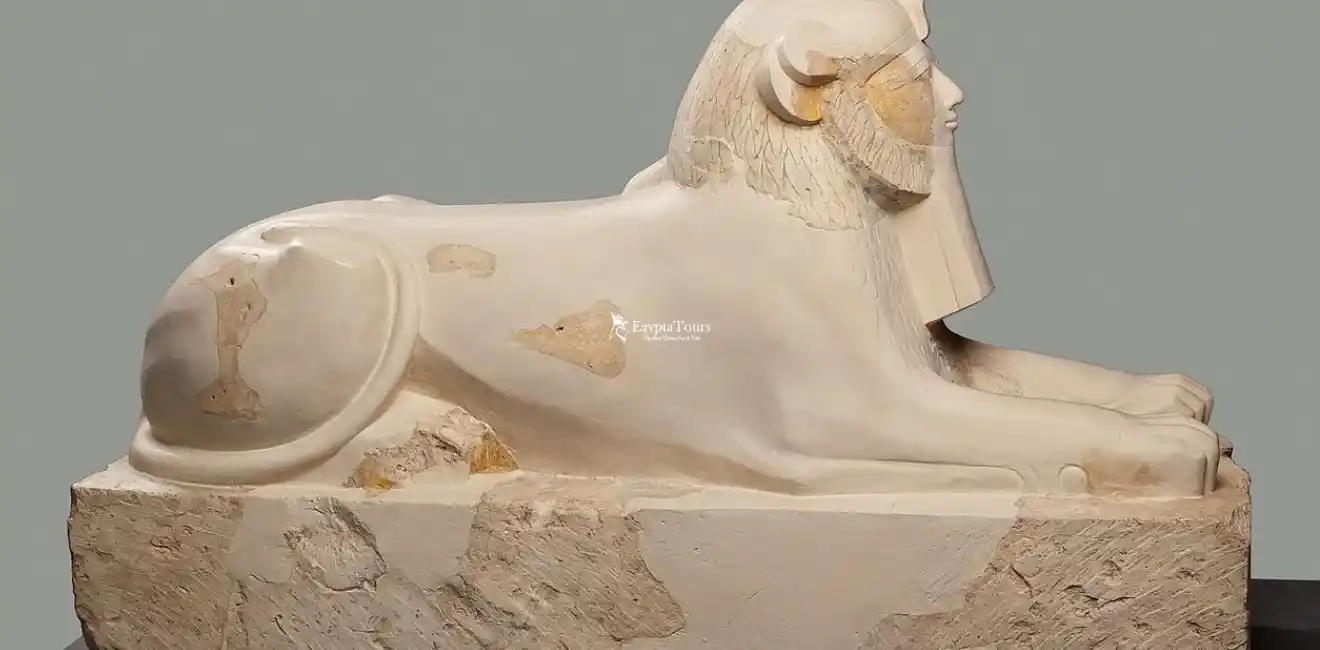
Sculpture -in- Amenemhat- Reign
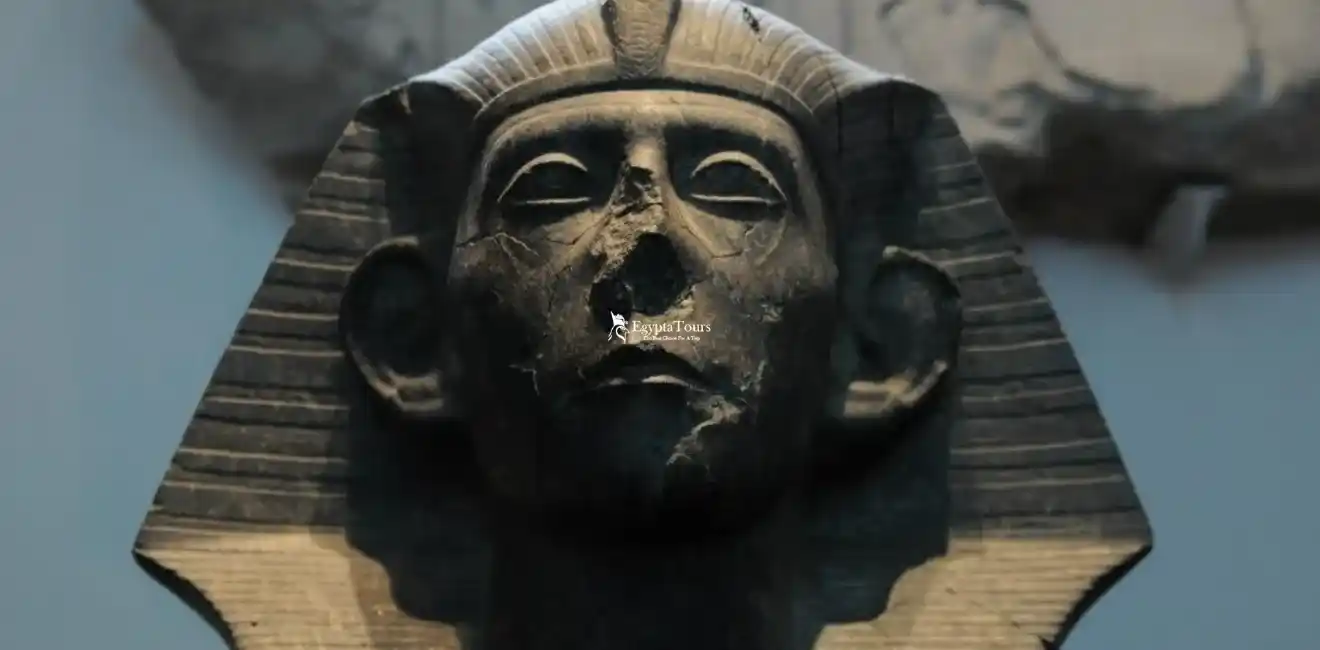
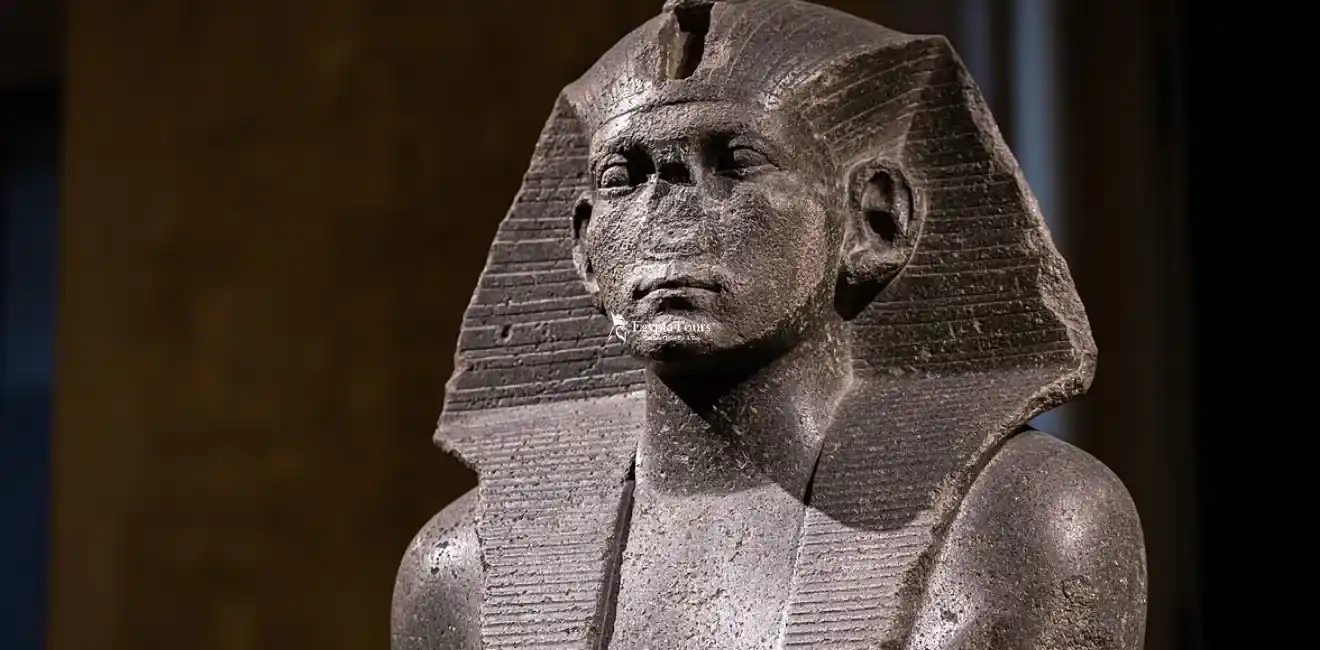
Amenemhat III and Senusret III are the best known rulers of the Middle Kingdom because of the large number of statues made of them. About 80 statues are linked to Amenemhat III. His statues followed the style of Senusret III. Many different kinds of stone were used for his sculptures, including white limestone, obsidian, chalcedony and copper alloys.
The king also introduced new types of statues, often inspired by much older works. Examples include: an expressive style sculpture in the Ny Carlsberg Glyptotek, Copenhagen; a humanized-style sculpture in the Staatliches Museum Ägyptischer Kunst, Munich; a half-life-sized head made of mottled stone; a granite statue in the Egyptian Collection of the Hermitage Museum, St. Petersburg; and other statues of Amenemhat III.
The Statue of Amenemhat III
Joseph Hekekyan discovered the Statue of Amenemhat III in 1854 at Memphis, Egypt. The Egyptian Museum in Berlin bought the statue in 1855. It is one of the most famous pieces in the museum and one of the most important sculptures from Ancient Egypt.
The statue is made of granodiorite and is 200 cm tall. It shows Amenemhat III in a praying position. The king’s throne name is still visible on his belt. Later, during the 19th Dynasty, King Merenptah added his own inscriptions to the statue and his names and titles are on the back pillar.
Officials During Amenemhat III Reign
The vizier Kheti (H̱ty) worked around year 29 of Amenemhat III’s rule. He is mentioned on a papyrus from El-Lahun.
Another vizier from this time was Ameny (Ỉmny). His name appears on two rock inscriptions found in Aswan.
Khnumhotep (H̱nmw-ḥtp) was an official who served for at least 30 years, from the first year of Senusret II up through Amenemhat III’s reign.
The treasurer Ikhernofret (Y-ẖr-nfrt) was still working in the early years of Amenemhat III. This is shown on a funerary stela in the Egyptian Museum in Cairo.
Another chief steward, Senbef (Snb=f), is known from a stela about an expedition at Mersa and from a papyrus document. There were also many other officials during Amenemhat III’s rule.
Legacy of Amenemhat III
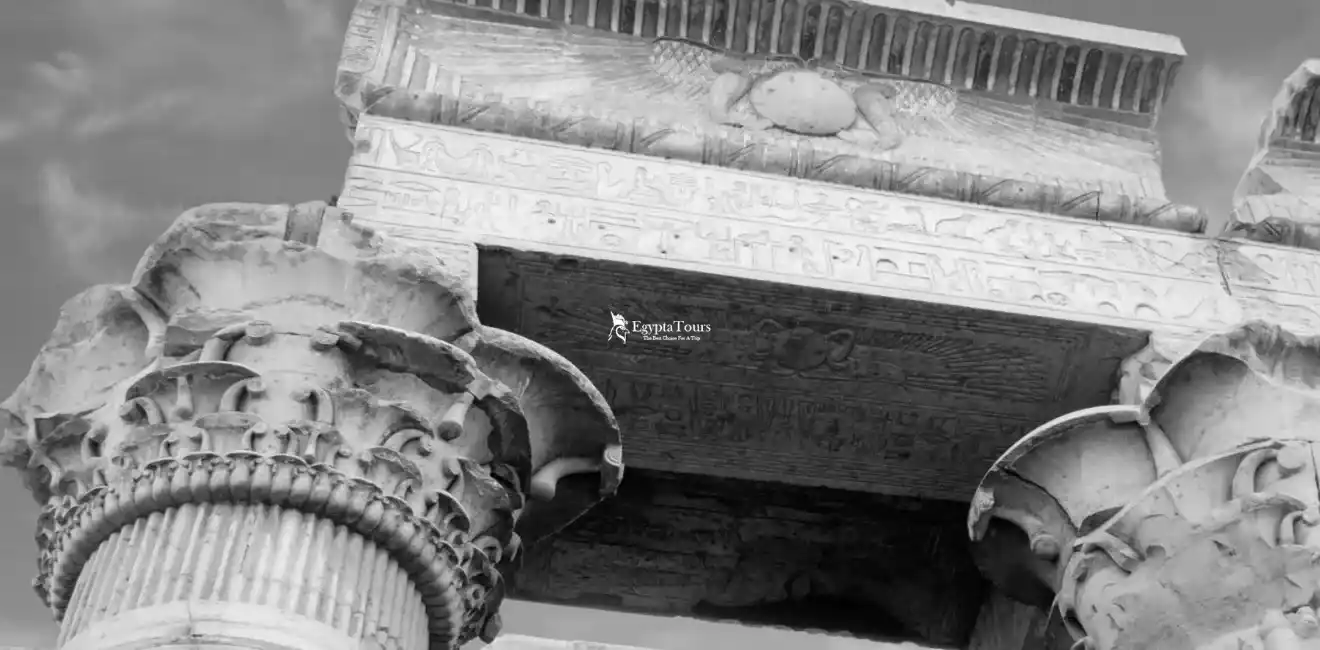
Legacy -of -Amenemhat Iii
Amenemhat III is thought to be one of the best pharaohs of the Middle Kingdom. He is known for being an effective ruler, building impressive structures, and helping Egypt become prosperous.
His rule is often seen as the high point of the Middle Kingdom, setting an example for later kings.
The cultural and building achievements during his reign had a lasting effect on Egyptian society. He supported temples, religion, and the arts, helping to preserve and improve Egypt’s cultural heritage. Projects like developing the Faiyum Oasis also helped keep the kingdom’s economy strong.
The remains of his pyramids, temples, and other monuments give important information about the architecture and engineering of the Middle Kingdom. Objects and writings from his time also help us understand how the government worked, the religious beliefs, and daily life in that period.
Death and Succession
Amenemhat III died around 1814 BCE. The details of his death are not clearly known. He was followed on the throne by his son, Amenemhat IV. Amenemhat IV kept up his father’s policies and building projects, though his reign was shorter and less influential. The 12th Dynasty remained stable after this succession.
FAQs
Who was Amenemhat III?
Amenemhat III was a pharaoh of ancient Egypt and the sixth ruler of the Twelfth Dynasty during the Middle Kingdom. He is known for making Egypt wealthy and culturally strong and for building important structures like pyramids and temples.
How long did Amenemhat III rule Egypt?
Amenemhat III ruled for at least 45 years, and some records suggest he may have ruled slightly longer, making him one of the longest-reigning pharaohs of the Middle Kingdom.
What are Amenemhat III’s major achievements?
He built two pyramids, developed the Faiyum Oasis to improve agriculture, sent trade expeditions to Punt, and supported art, culture, and religious projects across Egypt.
What was special about the Black Pyramid at Dahshur?
The Black Pyramid had a mudbrick core covered with fine white Tura limestone. Its top was finished with a granite pyramidion. It was an innovative design but had structural problems that led Amenemhat III to build a second pyramid at Hawara.
What were Amenemhat III’s building projects in the Faiyum region?
He expanded Lake Moeris, built temples for Sobek and Renenutet, constructed statues and shrines, and improved agriculture by developing irrigation systems, which strengthened Egypt’s economy.
How did Amenemhat III contribute to Egypt’s economy?
He developed agricultural land, improved irrigation, organized mining and trade expeditions, and ensured building projects provided jobs, helping Egypt prosper.
Who were some important officials during his reign?
Officials included viziers Kheti and Ameny, treasurer Ikhernofret, chief steward Senbef, and Khnumhotep, who served from Senusret II’s time through Amenemhat III’s reign. They managed administration, trade and building projects.