Goddess Serket: The Ancient Egyptian Scorpion Goddess of Protection
📋 Summary & Quick Facts
Yes, Serket was important in everyday life, especially for protection from venomous creatures. People carried amulets and used spells in her name. She was also respected by healers and priests who practiced both medicine and magic.
Key Takeaways
-
The Goddess of Healing and Breath: Serket’s core role was preventing suffocation from toxic venom, earning her the name “Serket hetyt” (she who lets the throat breathe).
-
The Royal Guard: She held deep ties to Egypt’s earliest pharaohs (like Kings Scorpion I and II) and was heavily relied upon to protect the living king during childbirth and daily life.
-
Masterpiece of KV62: Her most globally recognized image is the stunning gilded wooden statue discovered guarding the Canopic Shrine in King Tutankhamun’s tomb in the Valley of the Kings.
-
The Canopic Quartet: In the afterlife, she stood as one of the four essential protector goddesses, facing the West to safeguard the internal organs of the dead.
-
Living Legacy: While she didn’t have massive, dedicated standalone temples, recent archaeological discoveries (such as the 2025 Tetinebefou tomb find in Saqqara) prove her immense presence in daily Egyptian medicine and popular worship
Serket is an ancient Egyptian goddess known for protecting people from scorpion stings and other venomous bites. She was mainly worshipped in Lower Egypt during the Predynastic Period, long before the pyramids were built.
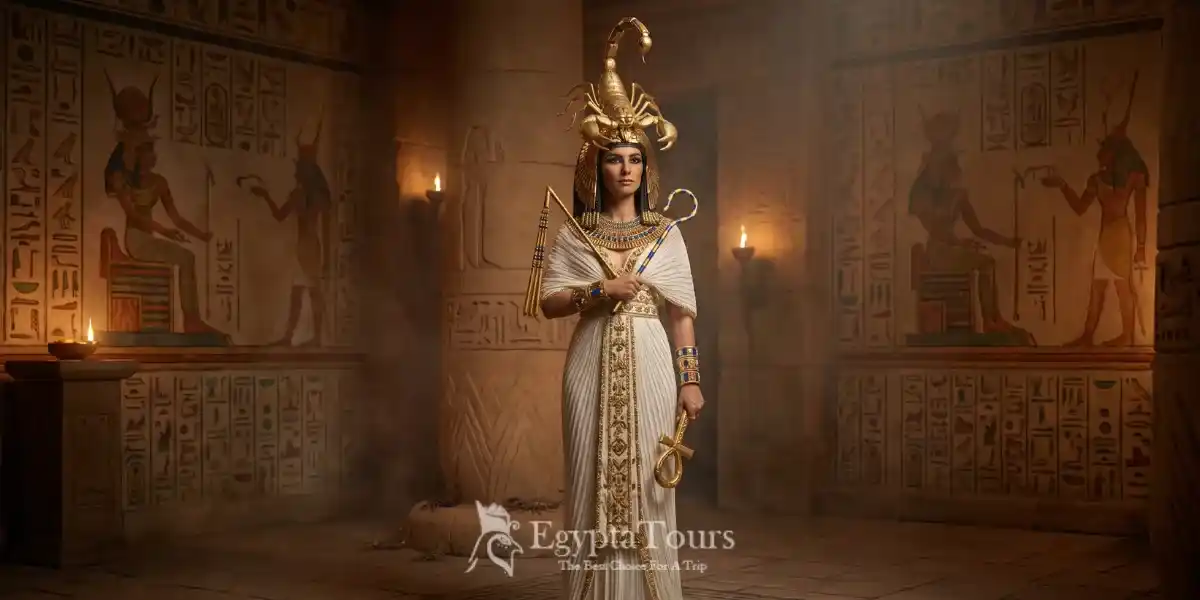
In Egyptian art, Goddess Serket is usually shown as a woman with a scorpion on her head, often with its tail raised as if ready to strike. She commonly holds an ankh which stands for life and a war sceptre, a symbol of power.
Her name comes from the phrase “Serket hetyt” which means “she who lets the throat breathe” showing her role in healing and protecting people from poison.
Serket is one of the most interesting goddesses in ancient Egyptian mythology. She was known as the goddess of scorpions and a strong protector, especially of kings. People believed she stood between magic and medicine, as well as between the human world and the spiritual world.
Her name appears in important funerary texts, and she was called upon for healing, safe childbirth and protection from dangerous creatures like scorpions.
This article will take a closer look at Serket, including her character, her role in Egyptian religion, the symbols connected to her, and how her story developed over time. Whether you are studying mythology, writing about ancient Egypt or simply curious about ancient beliefs, Serket offers many fascinating ideas to explore.
Egyptian goddess Serket Names
Serket was an ancient Egyptian goddess connected with healing, magic, and protection. One meaning of her name is “she who gives breath” which links her to saving lives. Because many creatures in Egypt had dangerous venom, people believed Serket could protect both the living and the dead, especially from poison that could cause paralysis or death.
Some scholars think her connection to the scorpion may come from a misunderstanding of her name. Instead of a desert scorpion, it may have referred to a water scorpion, a type of insect that can breathe underwater. This idea fits with the meaning of her name and her link to breathing and life.
Serket was believed to cure scorpion stings and protect against other poisons, like snake bites. She was also thought to guard the gods themselves from the great serpent of chaos, Apep.
Egyptian goddess Serket Family
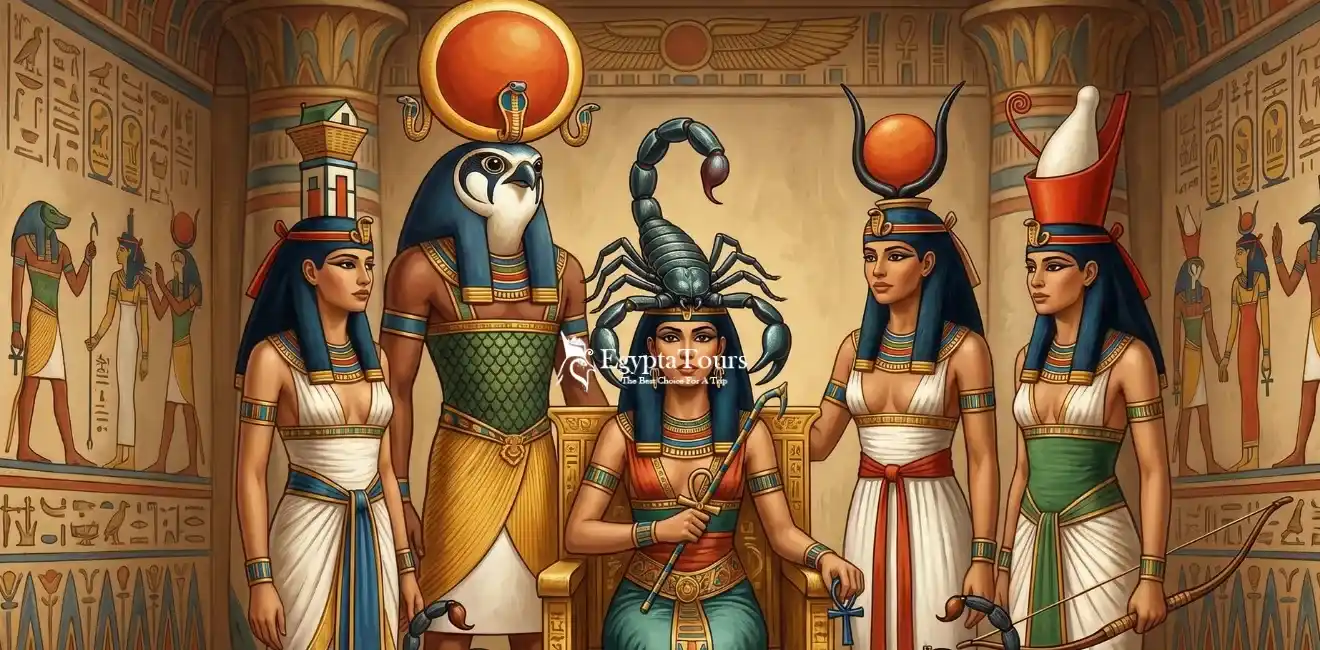
An-Illustration-Of-Sekret-Family-Inside-A-Temple-With-The-Goddess-Serket-Seated-Centrally-On-A-Golden-Throne
Not much is known about Serket’s family background. In some traditions, she is said to be the daughter of the goddess Neith and the god Khnum. This would make her the sister of Sobek and Apep.
In other stories, Serket is described as the mother of a deity named Nehebu Kau.
Serket’s Appearance and Symbols
Serket is usually shown as a woman with a scorpion on top of her head. The scorpion is her main symbol and shows who she is. In some magical texts, she can also appear in a more animal-like form.
Some of the main symbols connected to Serket include:
The scorpion
Protective knots or symbols used in amulets
Healing spells and formulas
Breath and air, linked to her power to help people breathe again
Her images are easy to recognize in tombs and temple carvings, especially in places connected to Osiris and the afterlife.
Egyptian goddess Serket Story
During the Middle Kingdom, Serket was believed to play a role in the Underworld. In a text called the Book of the Two Ways, she is said to guard a dangerous turn along the path of the dead. She was also thought to have the power to control and restrain the great serpent Apophis (Apep).
In the New Kingdom, Serket was seen as a mother figure and was given the title “Serket the Great, the Divine Mother.” In the ancient Near East, the scorpion was often linked with motherhood which helped strengthen this idea. Even earlier, in the Old Kingdom, Serket was believed to care for and nurse the king.
In New Kingdom temple scenes, such as those at Luxor Temple and the mortuary temple of Hatshepsut, Serket is shown alongside Neith. Together, they assist the god Amun and the queen, especially in scenes connected to royal birth, showing her role in protection and motherhood.
Serket in Tutankhamun’s Tomb
While Serket’s origins trace back to the Predynastic Period, her most famous depiction was discovered in the Valley of the Kings, inside the tomb of King Tutankhamun (KV62). When archaeologists opened the young pharaoh’s treasury room, they found a magnificent gilded wooden Canopic Shrine.
Standing at one of the four sides of this shrine is an elegant, golden statue of Serket. With her arms beautifully outstretched in a permanent gesture of protection and her signature scorpion resting on her head, she guards the king’s internal organs.
The ancient sculptors crafted her with a slight turn of the head, a subtle stylistic choice from the Amarna period that makes the figure look incredibly lifelike.
Today, this breathtaking masterpiece is one of the most celebrated artifacts in Egyptian history, drawing countless travelers to view it in person at the museum in Cairo.
The Four Protector Goddesses & Canopic Jars
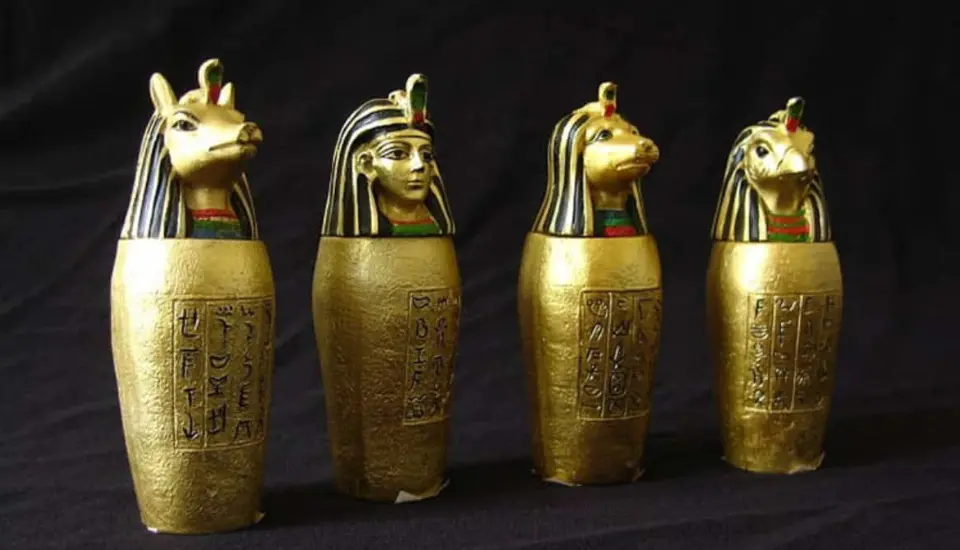
In ancient Egyptian funerary practices, the preservation of the pharaoh’s internal organs was just as critical as mummifying the body. These organs were placed in four separate canopic jars, each guarded by a specific minor deity known as a “Son of Horus.”
Serket rarely worked alone in the underworld; she was part of a powerful quartet of protector goddesses alongside Isis, Nephthys, and Neith. Serket’s specific cosmic assignment was to face the cardinal direction of the West and protect the falcon-headed god, Qebhsenuef, who was responsible for safeguarding the deceased’s intestines.
| Protector Goddess | Canopic Jar Details |
| Serket | Qebhsenuef (Falcon) — Intestines (West) |
| Isis | Imsety (Human) — Liver (South) |
| Nephthys | Hapi (Baboon) — Lungs (North) |
| Neith | Duamutef (Jackal) — Stomach (East) |
Temples and Worship Centers
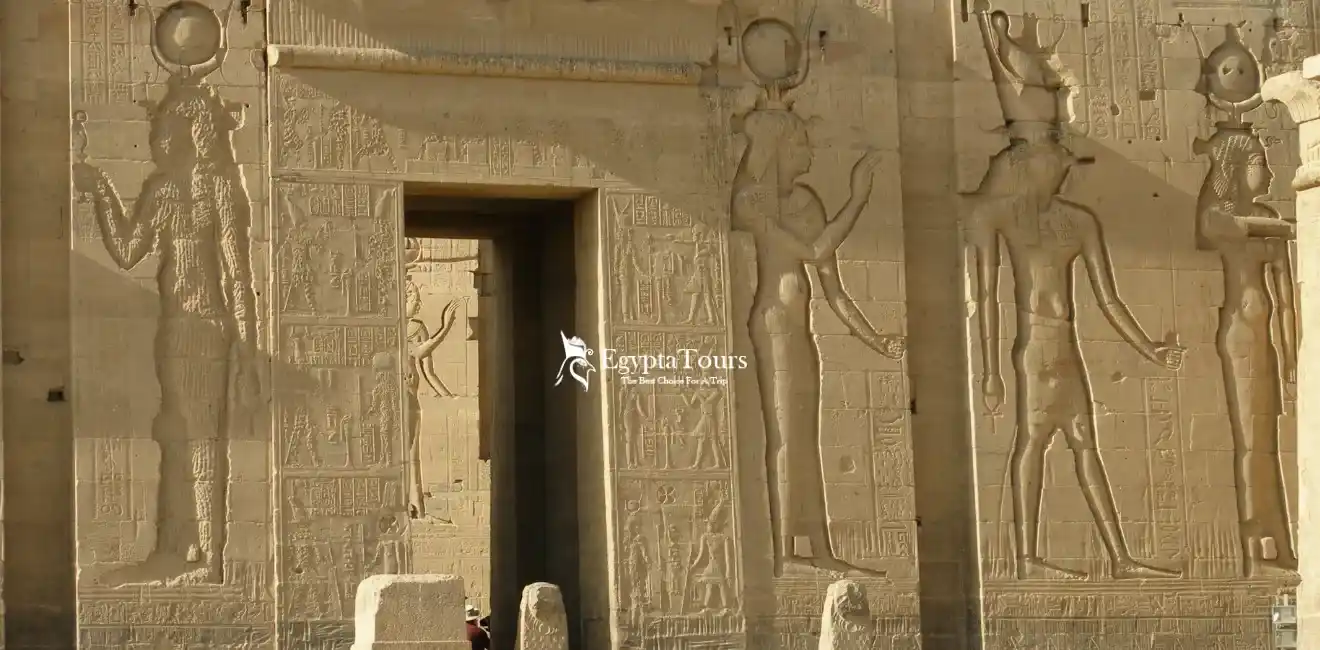
Goddess-Serket-Temples-and-Worship-Centers-EgyptaTours
Serket did not usually have her own independent temples but she was still honored in many larger temple complexes dedicated to other gods. She was worshipped in places such as the Temple of Isis at Philae, temples in Thebes and areas in the Faiyum region.
She was also connected to healing centers where religious and medical rituals were performed. Priests who practiced healing magic often called on her name in their spells. These spells have been found written on papyrus texts and carved on magical stone stelae, showing her important role in protection and healing.
Egyptian goddess Serket and Egyptian Medicine
In ancient Egypt, medicine was a mix of practical treatment and magical beliefs. Because bites from snakes and scorpions were common, people believed Serket also played a role in real healing methods.
Medical papyrus texts include spells that were said to be spoken to Serket for protection and recovery. Some treatments combined herbs and minerals with prayers that mentioned her name. Healers also used protective charms and spoken incantations that called on her power.
Images of Serket can also be found on protective stone stelae called cippi. These were used to guard people and families from dangerous animals like scorpions and snakes.
Serket in Daily Life and Popular Worship
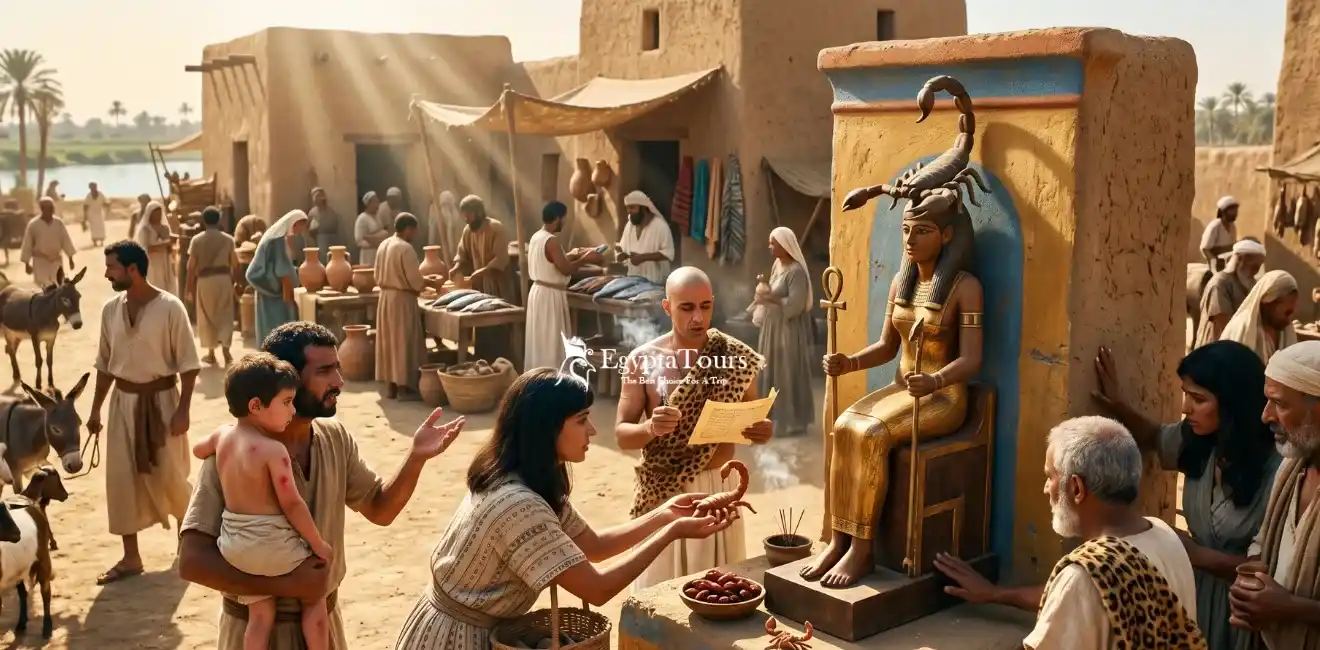
A-Vibrant-Detailed-Illustration-Of-Daily-Life-In-An-Ancient-Egyptian-Village-With-Townspeople-Worshipping-A-Golden-Statue-Of-Serket
The worship of Serket is believed to go back to at least Egypt’s First Dynasty and she is mentioned on a funerary stone found in Saqqara. Most evidence of her worship comes from the Old Kingdom period.
Even though no major temples are known to have been built for her, she was still an important goddess for early kings in the Predynastic Period, especially rulers like Scorpion I and Scorpion II. They looked to her for protection against the dangerous, venomous creatures found in Lower Egypt.
In January 2025, French-Swiss archaeologists uncovered the tomb of a high-ranking palace doctor in Saqqara named Tetinebefou. In his tomb, Serket is mentioned and he is described as the “director of medicinal plants and conjurer of the goddess Serket,” showing her connection to healing and medicine.
Even with this link to healing, Serket is not often mentioned directly in many spells about scorpion stings, although her protective power was still widely believed in.
Where to See Serket Today
Want to see Serket in person during your trip to Egypt? You are in luck. Her image is still incredibly well-preserved in several famous spots.
The Cairo Museum The absolute best place to start is the museum in Cairo.
Here, you can stand right in front of the famous golden statue of Serket from King Tutankhamun’s tomb. The details are so lifelike, it feels like she is still actively guarding the young king’s shrine today.
Hatshepsut’s Temple in Luxor If you head south to Luxor, you can find her carved directly into the ancient stone.
Take a walk through Queen Hatshepsut’s Mortuary Temple at Deir el-Bahari. Look closely at the royal birth scenes on the walls, and you will spot Serket standing proudly next to the goddess Neith.
The Valley of the Queens For the most vibrant, full-color paintings of the goddess, you have to visit the Valley of the Queens.
Inside the magnificent Tomb of Nefertari, Serket is painted in brilliant detail, shown guiding the famous queen safely into the afterlife.
FAQs
Who is Serket in ancient Egyptian mythology?
Serket is an ancient Egyptian goddess known for protection, healing, and magic. She was especially associated with guarding people from scorpion stings and venomous bites. She also played an important role in funerary beliefs, protecting the dead and helping guide them safely into the afterlife.
What does the name Serket mean?
The name Serket comes from the phrase “Serket hetyt,” which means “she who lets the throat breathe.” This reflects her healing power, especially her ability to save people affected by poison or paralysis and restore their ability to breathe.
What is Serket the goddess of?
Serket is mainly the goddess of scorpions, healing, and protection. She was believed to protect against venomous animals like snakes and scorpions. In addition, she was linked to magic, medicine, childbirth, and the afterlife.
How is Serket usually shown in ancient Egyptian art?
Serket is typically shown as a woman with a scorpion placed on top of her head. The scorpion often has its tail raised, ready to strike. She may also hold an ankh (symbol of life) and a was sceptre (symbol of power), emphasizing her protective and life-giving role.
Did Serket have a role in healing and medicine?
Yes, Serket was strongly connected to healing. Ancient Egyptians prayed to her for protection from poison and used spells, amulets, and remedies in her name. Medical texts often combined herbal treatments with magical incantations that called upon her power.
Was Serket important in daily life in ancient Egypt?
Yes, Serket was important in everyday life, especially for protection from venomous creatures. People carried amulets and used spells in her name. She was also respected by healers and priests who practiced both medicine and magic.
Similar Posts
About EgyptaTours

EgyptaTours is a name synonymous with trust, excellence, and unforgettable travel experiences, proudly standing as one of the leading travel agencies in Egypt. Renowned for its deep expertise, personalized service, and carefully crafted itineraries, EgyptaTours serves as the ultimate gateway to discovering Egypt in its most authentic and inspiring form.