


Alexander Temple
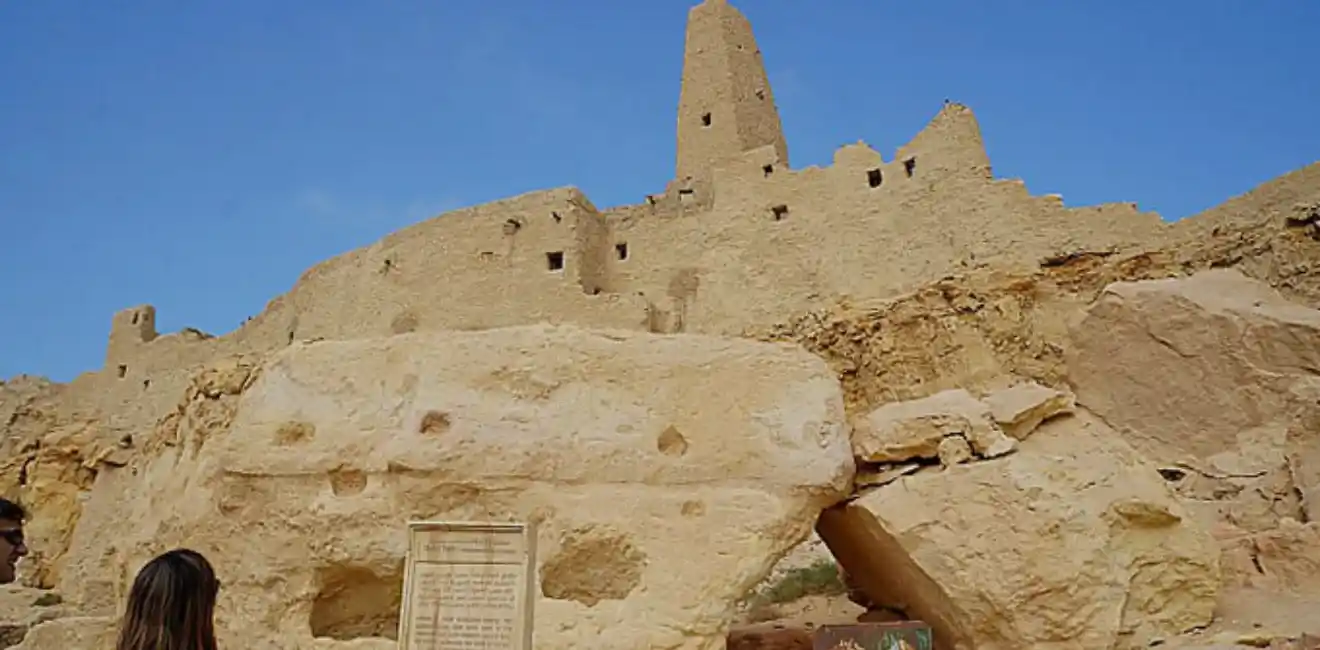
Alexander Temple is one of the most famous archaeological sites in the Bahariya Oasis. It is considered the only temple built in Egypt for the Greek leader Alexander the Great. Its walls feature images and inscriptions of Alexander the Great presenting offerings to the renowned Egyptian god Amun, reflecting the beliefs of the time.
The temple documents an important period in Egypt’s history and serves as a vital link between the Egyptian and Greek civilizations. This article presents key information about the temple, the reason for its construction, and its historical significance.

Who-Was-Alexander-the-Great-EgyptaTours
Alexander the Great, also known as Alexander III of Macedon, was one of the most important kings of Macedon, which is modern-day Greece. Born in the city of Pella in 356 BC, Alexander was educated by one of ancient Greece’s most famous philosophers, Aristotle, between the ages of 13 and 16. Aristotle taught him philosophy, science, and politics.
He was crowned king of his country in 336 BC after the assassination of his father, King Philip. From the moment he took the throne, he worked to continue his father’s legacy of military expansion. He launched major military campaigns across many lands, establishing the largest empire of the ancient world.
This empire stretched from Greece in the west to India in the east and included several regions such as Anatolia, Mesopotamia, Egypt, and the Levant.
Alexander implemented a policy of cultural fusion throughout his empire. His campaigns were not just about political control; he also worked to blend his Hellenistic Greek civilization with the cultures of the peoples in other lands. He founded more than 20 cities bearing his name across his empire, including the city of Alexandria in Egypt.
Alexander conquered Egypt in 332 BC, and the Egyptians welcomed him as a liberator from the oppressive Persian rule. From his entry into Egypt, he worked on the cultural fusion between the two civilizations, a fact confirmed by much evidence, most notably Alexander Temple in the Bahariya Oasis.
Alexander the Great died in 323 BC in the city of Babylon in Iraq, leaving behind a great legacy that was later divided among his generals.
Location of Alexander Temple in Bahariya Oasis
The temple is located in the Giza Governorate in the Western Desert, within the Bahariya Oasis. Specifically, it is in an area called Ain el-Tabinieh, about 5 kilometers southwest of the town of El Qasr.
The Bahariya Oasis is distinguished by its stunning natural beauty, numerous water springs, and its Pharaonic, Greek, and Roman ruins. It was a meeting point for civilizations and cultures, which has given it historical importance.
History and Importance of the Temple’s Construction

History-and-Importance-of-the-Alexander-Temple-Construction-EgyptaTours
The Macedonian leader had his temple built in the late fourth century BC while he was traveling through the Bahariya Oasis on his way to the Oracle Temple in the Siwa Oasis. Alexander the Great ordered its construction and dedicated it to the worship of the gods Horus and Amun.
This was done to win the support of the Egyptians by showing respect for their traditions and the deities they believed in, making Alexander Temple both a religious and political symbol.
Alexander Temple gains its importance from being the archaeological site where a number of cartouches bearing his name were found, confirming the temple’s dedication to him. Additionally, it reflects the cultural traditions of both Egyptian and Greek civilizations.
Temple Design and Architectural Features

Alexander-Temple-Design-and-Architectural-Features
The temple’s design was based on a blend of Egyptian and Greek engineering. The temple was built in the traditional style of Pharaonic Egyptian monuments, while Greek touches were added. This confirms Alexander’s vision of unifying popular cultures and winning the support of the people.
The temple is preceded by an empty granite forecourt. It consists of a main rectangular hall made up of 45 mud-brick rooms, followed by a number of columns and then the two sacred chambers for the worship of the god Amun, according to Egyptian belief.
The entrance to the temple, the sacred hall, and the temple’s enclosure wall were built of massive stone and adorned with decorations and inscriptions of a Greek artistic style. The temple’s entrance faces south because temples, especially desert temples, were built in the direction of the wind. This explains why its entrance is in the south, facing the wind.
Discovery and Excavation of the Temple
Alexander Temple was discovered during the exploratory visits of Dr. Ahmed Fakhry in the Western Desert during the first half of the twentieth century, in 1939. Several essential parts of the temple were uncovered at that time.
The remaining parts and chambers of the temple were revealed by the expedition of Dr. Zahi Hawass in 1994, which led to the discovery of all the antiquities of the Bahariya Oasis region, shedding light on a number of historical periods in Egypt.
Inscriptions and Decorations Inside the Temple
All the columns and walls of Alexander Temple are adorned with a number of inscriptions and decorations derived from Greek art, which illustrate the most prominent roles of Alexander the Great in Egypt:
- Inscriptions showing Alexander presenting offerings to the god Amun, a deity of the ancient Egyptians.
- Decorations depicting the coronation of Alexander as the son of the god Amun at the Oracle Temple in the Siwa Oasis.
- Other drawings confirming that the priests of Egypt considered him a legitimate ruler of the country and bestowed upon him some of the titles of the ancient pharaohs.
Nearby Tourist Attractions
The Bahariya Oasis is rich with ancient Egyptian antiquities and historical sites from the Greek and Roman civilizations, which reveal an important truth about Egypt’s history.
Alexander Temple is surrounded by a group of significant tourist attractions, including:
- The Oracle Temple: This is the temple in the Siwa Oasis that Alexander visited, where he was crowned the son of the god Amun according to their legends.
- Siwa Protected Area: This area in the Siwa Oasis includes a collection of water springs and salt lakes.
- Gebel el-Dakrour: Located in Siwa, this is a Pharaonic archaeological site famous for its therapeutic hot sands.
- Tombs of the Nobles: These are tombs with a great history in Bahariya, dating back to the Pharaonic and Greco-Roman periods.
Why Did Alexander Choose the Bahariya Oasis to Build the Temple?
There are several reasons that made Alexander the Great prefer to build his temple in the Bahariya Oasis:
- It was one of the most important strategic and military points on the borders of Egypt’s western desert.
- The area had historical and religious significance, as it was dedicated to the worship of the god Amun-Ra.
- It commemorated Alexander’s return from his journey to the Siwa Oasis.
- He ordered the construction of Alexander Temple to thank the gods for his safe return.
Conclusion
Alexander Temple is one of the remnants of Greek history and its monuments in Egypt, especially during the reign of Alexander the Great. In this article, we have presented all the information about the temple, from the history of its construction and its importance to its archaeological features and the reason for its establishment.
FAQs
What did Alexander the Great do at the Luxor Temple?
Alexander built a new chapel for himself inside the temple. The interior of the chapel was decorated with a set of inscriptions depicting Alexander worshipping the Egyptian gods, which demonstrates his commitment to Egyptian cultural traditions.
Is Alexander the Great buried in Egypt?
The burial place of Alexander the Great remains a great mystery in history. Some sources indicated that after Alexander’s death in Babylon, Iraq, his body was moved several times between cities until a mausoleum was built for him in Alexandria, Egypt. However, this mausoleum has not been found to this day.
Why did Egypt accept Alexander?
The Egyptians welcomed the entry of Alexander the Great for several reasons, the most important of which was to be rid of Persian rule. Their prior knowledge of the Greeks made them believe they would be better rulers than the Persians. Alexander also worked to respect Egyptian traditions, having himself crowned as the son of the god Amun, which further increased his acceptance by the Egyptians.