







Ancient Egyptian Calendar: How the Pharaohs Measured Time
The Ancient Egyptian calendar is a solar calendar developed by the ancient Egyptians to divide the year into 13 months, and is based on the cycle of the sun. The Egyptian calendar is considered one of the first calendars known to humanity.
It is also the most accurate to date in terms of climate and agricultural conditions during the year; Therefore, the Egyptian farmer depends on it during the planting seasons and the crops that he grows during the year, from thousands of years until the present day. The Egyptian year begins on September 11 according to the Gregorian calendar.

Ancient-Egyptian-calendar-EgyptaTours
The Ancient Egyptian calendar dates back to the year 4241 BC, as it began before the Dynastic Era and the formation of the unified Egyptian state. The ancient Egyptians then discovered the lunar calendar year and divided it into seasons, lunar months, days, and hours.
They were also able to differentiate between the simple year and the leap year, which represented an astronomical miracle at that time.
The Coptic calendar, or the “martyrs’ calendar,” is based mainly on the ancient Egyptian calendar, which is called the solar (stellar) calendar, which is the calculation system developed by the ancient Egyptians to divide the year, and their year consisted of 13 months.
It was calculated based on the cycle of the sun, and it is considered one of the first and most accurate calendars known to humanity in terms of climate and agricultural conditions during the year.
So much so that Egyptian farmers have been relying on it to determine planting and crop seasons for thousands of years.
Ancient Egyptian calendar contributed to setting the various calendars for ancient civilizations, despite their differences in whether they were solar or lunar Calendar
Despite the passage of thousands of years since the beginning of the ancient Egyptian calendar, which relied on the Nile flood to determine the beginning of the year, it is also the one that regulates agriculture in Egypt until now.
Researchers believe that the Ancient Egyptian calendar was founded by the ancient Egyptians, and calculations were made according to the rotation of the sun, with the year being divided into thirteen months.
Despite the series of changes that occurred later, it is the most accurate to date due to weather conditions as well as the different growing seasons.
This ancient Egyptian calendar is highly accurate, and was a marvel of its time. But it is not completely compatible with the Gregorian solar calendar currently in effect in the world.
How the Ancient Egyptians Used the Stars to Create Their Calendar
Timekeeping in Ancient Egypt started more than 5,000 years ago. The Egyptians used the stars to measure time and created one of the earliest calendars in history. A key part of their system was the star Sirius, also called Sopdet or Sothis. Each year, Sirius appeared in the sky just before sunrise and this event happened at the same time as the flooding of the Nile River.
This rising showed the start of Akhet, the season of flooding. It was very close to the length of the solar year, but it was about 12 minutes shorter. Over many years, this small difference added up and caused the calendar to shift by about 25 days throughout Ancient Egyptian history. This calendar system showed how much the Egyptians cared about astronomy and how they used the stars to guide their farming and daily life.
Months of the Ancient Egyptian Year
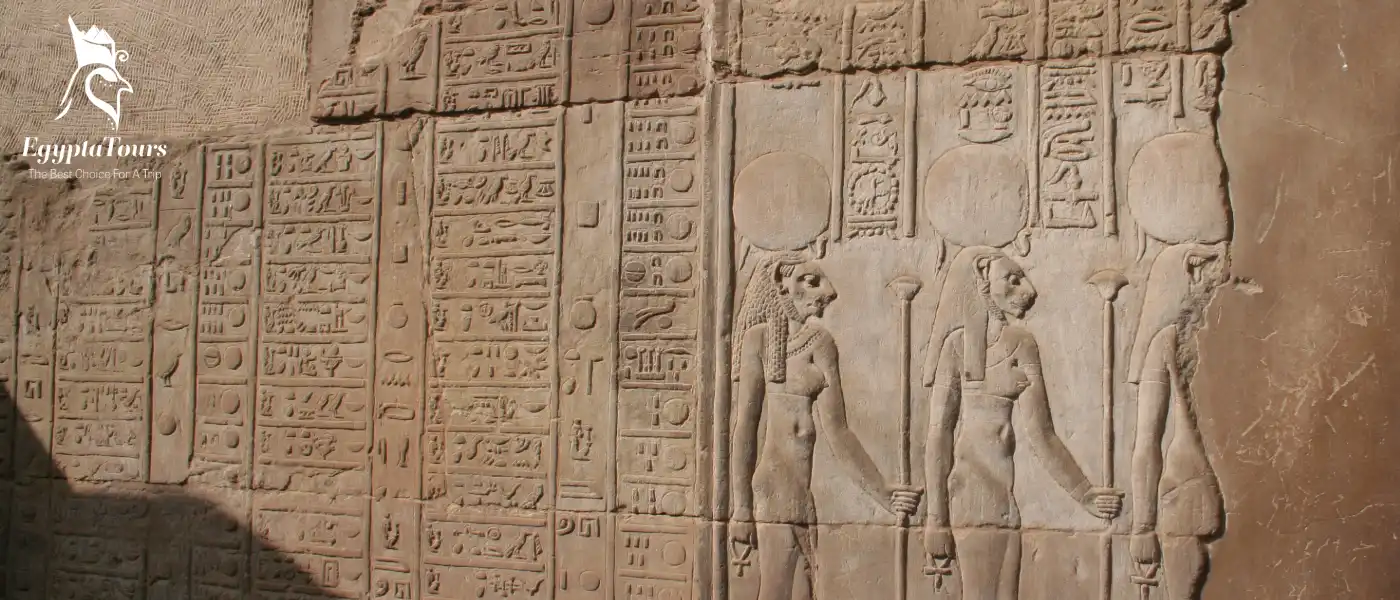
Seasons -of-the-year-in-the-ancient Egyptian-calendar-EgyptaTours
The Coptic months are the ancient Egyptian months in the ancient Egyptian calendar.
The ancient Egyptians used them in everything related to agriculture and harvesting, and these months are still used in the contemporary Egyptian countryside because they are linked to the dates of planting and harvesting.
The Egyptian farmer still relies on the Coptic calendar to cultivate his land because of its connection to the flooding and drying of the Nile and to plant and harvest crops.
Interest in following the beginnings and ends of the Coptic months was linked to the weather condition, and with the feeling of extreme cold and low temperatures, Egyptians await the end of the month of “Toba,” one of the coldest months of the year.
And prepare to enter the month of “Amshir,” in which temperatures begin to moderate, while enduring the weather it brings. Bad Brings a lot of mostly dusty storms.
The origin of the Coptic calendar goes back to 1235 BC, when the Pharaohs divided the year into 12 months and each month has 30 days, adding to that five days called the minor month or the days of forgetfulness.
Also in the fourth year a day is added to the days of forgetfulness, so it becomes six days instead of five. This was by order of Ptolemy III in the year 238, so the number of days in the year become 365 days, the same as the year in the solar calendar.
The Coptic months bore ancient Egyptian hieroglyphic names, then were changed to Coptic, and remained linked to many popular proverbs, which express the weather condition and its connection to agriculture.
Names of the Ancient Egyptian Months
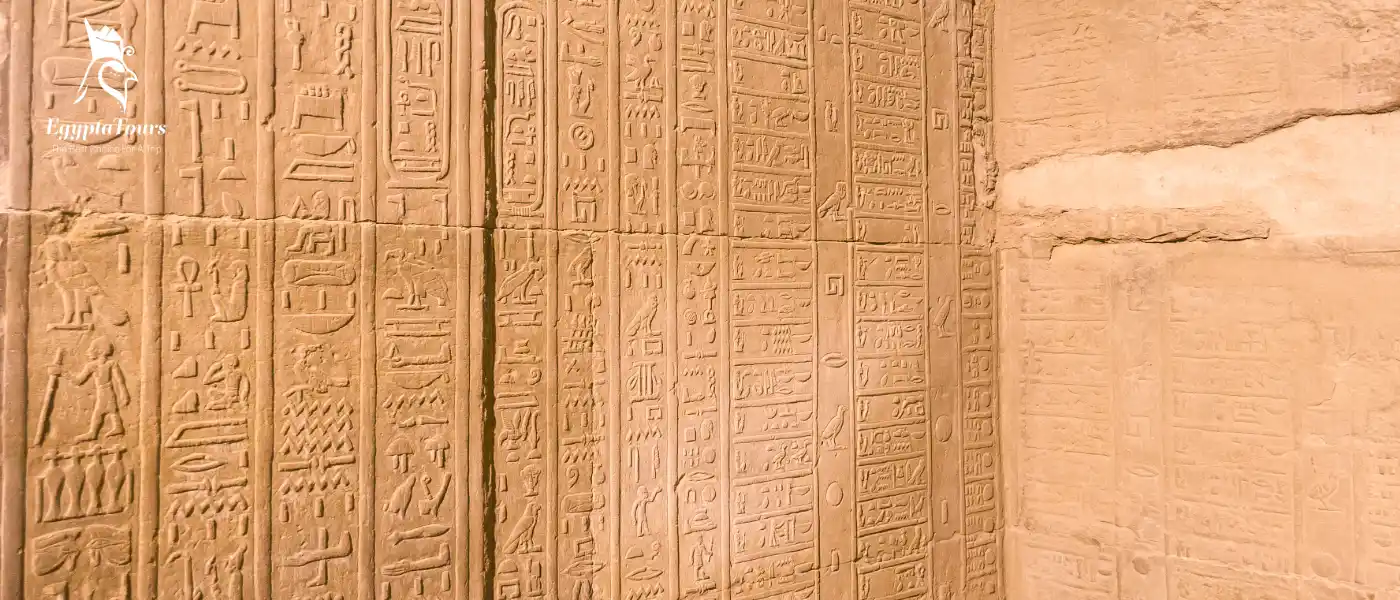
Names-of-the-Ancient-Egyptian-Months-Ancient-Egyptian-calendar-EgyptaTours
Although the Coptic calendar or Egyptian civil calendar disappeared among the Gregorian, Syriac, and Hijri calendars, the Egyptian farmer continued to embrace this ancient Egyptian calendar.
And continued to work according to it in his agriculture since it was known in 4241 BC, as it was linked in the Egyptian conscience with the agricultural crop cycle, due to the Nile flood.
And its drought, to plant crops and then harvest them, and it is compatible with the weather throughout the seasons of the year without the slightest change or change.
The months of the Coptic year begin with the month of Tut, and are in order:-
1 -Tut
2- Babah
3- Hattur
4- Kahik
5- Tuba
6- Amshir
7- Baramhat
8- Barmuda
9- Bashans
10- Baouna
11- Abib
12- Mesra.
Seasons of the year in the ancient Egyptian calendar
Seasons -of-the-year-in-the-ancient Egyptian-calendar-EgyptaTours
It is worth noting that the ancient Egyptians divided the year into 3 seasons, the first chapter is “Akhet”, which means the horizon or the rising of the sun in hieroglyphs.
In it, the land is prepared for cultivation and sowing, and the “Bart” season, which is winter, which is the season of germination, then the “Shammu” season, which is the season of harvest and drought.
Thus, the seasons were divided according to the agricultural cycle, which is the basis of Egyptians’ lives since the dawn of history in the ancient Egyptian calendar.
Each of the three chapters contains 4 months. The “Akhet” chapter includes the months of “Tut,” which is the first month in the ancient Egyptian year
And is attributed to the god Tut, the god of science and arts and the inventor of writing, then the month of “Baba,” which is the second month and is attributed to Hapi, the god of the Nile.
The month “Hator” is the third month and is derived from “Hathor”, the sacred cow, which is the god of beauty and fertility, and the month “Kahk” is the fourth month.
And is derived from the hieroglyphic name “Kahaka” which means the best, and it is the name of the sacred calf “Apis”.
The “Part” season includes 4 in the ancient Egyptian calendar. The months are “Toba”, which is the first month in the Bart season and means growth.
And the month “Amshir” is the second month in the season and derives from Mushir, the god of wind and whirlwinds among the ancient Egyptians.
The third month is “Baramhat”, which is the month of the beginning of crop growth, and the fourth is the month of “Barmuda” and a derivation of “Renutet”, who is the goddess of nourishment and the spirit during childbirth.
As for the last chapter in the ancient Egyptian calendar, “Shammu,” it includes the months “Bashenes,” which comes from the moon god and is called “Khonsu” among the ancient Egyptians.
The second month is “Baounah,” which means celebrating the valley, and then the month “Aviv.”
It is the third month in the “Shammu” chapter, which is derived from Apophis, the serpent killed by Horus, who is the god of darkness and chaos according to Egyptian mythology.
Finally, the month of “Mesra,” which is the last month, which is derived from the word “Mes-en-Ra,” which means the birth of the sun.
In the end, the ancient Egyptians were the first to celebrate New Year’s Eve in history, and 5,000 years ago they were keen to hold New Year’s Eve celebrations every year amid great spectacles and noisy celebrations. The ancient Egyptian year contained many holidays that were linked to the ancient Egyptian calendar. Such as New Year, bi-monthly holidays, and the beginning of the seasons.”
The Ancient Egyptian Calendar System
The earliest Egyptian calendar was based on the flood period, called Achet, from June to October. The flood covered the land with rich black mud, making it good for farming in the growing season, called Peret. The Schemu season was the harvest which started and ended with the new Nile flood around the end of February. Egyptian farming followed this cycle. The year had three seasons. Ancient Egypt used three different calendar systems.
The Earliest Ancient Egyptian Calendar
Unlike other early civilizations which started months when the new crescent moon first appeared, the earliest calendar, based on a 12-month lunar cycle, began each month when the old moon crescent could not be seen in the east at sunrise. A 13th month was added to stay in sync with the serpent’s spiral rise.
The Following Egyptian Calendar
The second calendar which started in 2900 BCE, had 365 days divided into three seasons. Each season had four months and each month had 30 days. This calendar was made by carefully watching the serpent’s spiral rise. At the end of the year, 5 extra days were added, making a total of 12 months with 30 days each. It was called a wandering calendar and was used for keeping records and administration.
The Last Egyptian Calendar
The third calendar, used in the fourth century, matched the lunar cycle with the solar year. The calendar had 25 civil years which were almost equal to 309 lunar months. Religious leaders resisted many changes to the calendar including the Ptolemaic dynasty’s leap year in 239 BCE. The Roman Senate added a leap year in 23 BCE to align the lunar and public calendars. After 1,460 years, the calendar was off by one year because one extra day was added every four years.
Days, Times and Hours in the Egyptian Calendar
In the lunar calendar, each day had its own name, while the civil calendar listed days according to the months. These names helped show the main phases of the moon.
Days were divided into secular hours which changed length depending on the time of year. The ancient Egyptians first divided the day into 24 hours. They noticed that summer hours were longer than winter hours because of the daylight.
The ancient Egyptians made different tools to tell time. One was the shadow clock which used a bar’s shadow to show the time on four markers. Because it was hard to see the sun and stars, they also made the water clock (clepsydra). Water would slowly drip from one container to another through a small hole, and marks on the containers showed how many hours had passed.
Some of the earliest water clocks can be found in the Magical Temple of Karnak. During the 1582 Gregorian calendar reform, the Alexandrian Roman philosopher Claudius Ptolemy divided the equinoctial hour into 60 minutes and listed over 1,000 stars in 48 constellations. The ancient Egyptians knew early on that time was very valuable.
How Ancient Egyptians Measured Time
The ancient Egyptians created smart ways to measure day and night. One early tool was the shadow clock which used the sun and the shadow’s length to tell the time. Another important tool was the water clock (clepsydra), made to help tell time when the sun or stars couldn’t be seen. Water flowed from a top container to a lower one through a small hole and marks on the container showed how many hours had passed.
Some of the oldest water clocks were found in Karnak Temple, showing that the Egyptians were very skilled in engineering and measuring time. Later, the Roman Alexandrian philosopher Claudius Ptolemy improved Egyptian timekeeping by dividing the hour into 60 minutes. Ptolemy’s work on stars helped prepare for the 1582 Gregorian calendar reform and included a list of over 1,000 stars in 48 constellations.
How the Ancient Egyptian Calendar Worked
The Egyptian calendar organized daily life, farming tasks, religious ceremonies, festivals and royal events. It matched important rituals and festivals with the sun, stars and seasons, helping people know the right time to plant, harvest and perform temple ceremonies.
For example, the yearly Festival of Opet to honor Amun was planned using the calendar and took place during the flooding season (Akhet), showing the link between the gods, the Nile and Egypt’s wealth. The calendar also organized work schedules, especially in royal workshops where workers followed a regular workweek based on decans and usually rested on the last two days of each decan.
The Nile and the Egyptian Flood Calendar
The Nile River was very important for the Egyptian calendar because it helped farming and life in Egypt. The first season, Akhet, happened during the Nile’s yearly flood which left rich soil on the farms and made the land ready for planting.
The calendar and the Nile were closely connected, helping Egyptians plan farming and keep food supplies stable. The calendar was also linked to religion, as the Nile was seen as a gift from the gods.
The flood calendar shows how Egyptians used the Nile’s yearly flood to measure time. The flood came around June and lasted until October, making the farmland rich and ready for crops. The first season, Akhet, was the flood, followed by Peret for growing and Shemu for harvesting.
This calendar helped farmers plan planting, watering and harvesting. Because the flood was regular, it made Egypt very stable and the calendar also had a religious meaning, connecting people to the gods.
Myths and Stars in the Ancient Egyptian Calendar
Ancient Egyptian myths connected events in the sky with their gods, especially the star Sirius. The Egyptians linked Sirius to the goddess Sepdet. They believed this star announced the Nile flood, which was caused by the tears of the goddess Isis as she cried for her dead husband, Osiris, the god of the underworld.
According to the myth, the tears of Isis filled the Nile and brought life to the dry land. The first appearance of Sirius in the sky was seen as a sign of Isis’s love and loyalty and it stood for new life and growth. Through this story, the Egyptians linked their everyday life and farming success to their gods, mixing religious beliefs with their observations of nature.
Understanding the Ancient Egyptian Calendar
What was the structure of the Ancient Egyptian calendar?
The Ancient Egyptian calendar had 12 months, each with 30 days. Each month was divided into three weeks, and each week was 10 days long. This structure resulted in a year of 360 days, with an additional five days added at the end as epagomenal days.
How did the Egyptians handle the discrepancy between their calendar and the solar year?
To align their calendar with the solar year, which is about 365.25 days, they added five extra days at the end of the year. These days were known as the epagomenal days and were considered outside the regular calendar.
What were the names of the months in the Egyptian calendar?
The Egyptian months were named after significant agricultural or religious activities. Some of these names include Thoth, Phaophi, Athyr, and Choiak. These names varied slightly over time and across regions.
Did the Ancient Egyptians use a leap year system?
No, the Egyptians didn’t use a leap year. Their calendar drifted over time since they didn’t account for the extra quarter of a day each year. This drift accumulated, causing the start of the year to gradually shift through the seasons.
How did the calendar affect religious festivals?
Religious festivals were initially fixed to specific days of the year but eventually drifted through the seasons due to the lack of a leap year. However, the Egyptians adapted, linking festivals to lunar cycles or astronomical events.
Was the Egyptian calendar used for agricultural purposes?
Yes, the calendar was closely tied to agricultural cycles, particularly the flooding of the Nile. The year was divided into three seasons: Akhet (flooding), Peret (planting), and Shemu (harvesting), aligning with vital agricultural activities.
How did the calendar influence Egyptian culture?
The calendar played a central role in organizing agricultural, civil, and religious life. It helped structure daily activities and events, anchoring the annual cycle of work and worship.
Did other cultures adopt the Egyptian calendar?
Influences of the Egyptian calendar echoed in various regional systems, particularly through interactions with the Greeks and Romans. Yet, these cultures adapted it to fit their own needs, leading to the development of new calendar systems.
About EgyptaTours

EgyptaTours is a name synonymous with trust, excellence, and unforgettable travel experiences, proudly standing as one of the leading travel agencies in Egypt. Renowned for its deep expertise, personalized service, and carefully crafted itineraries, EgyptaTours serves as the ultimate gateway to discovering Egypt in its most authentic and inspiring form.