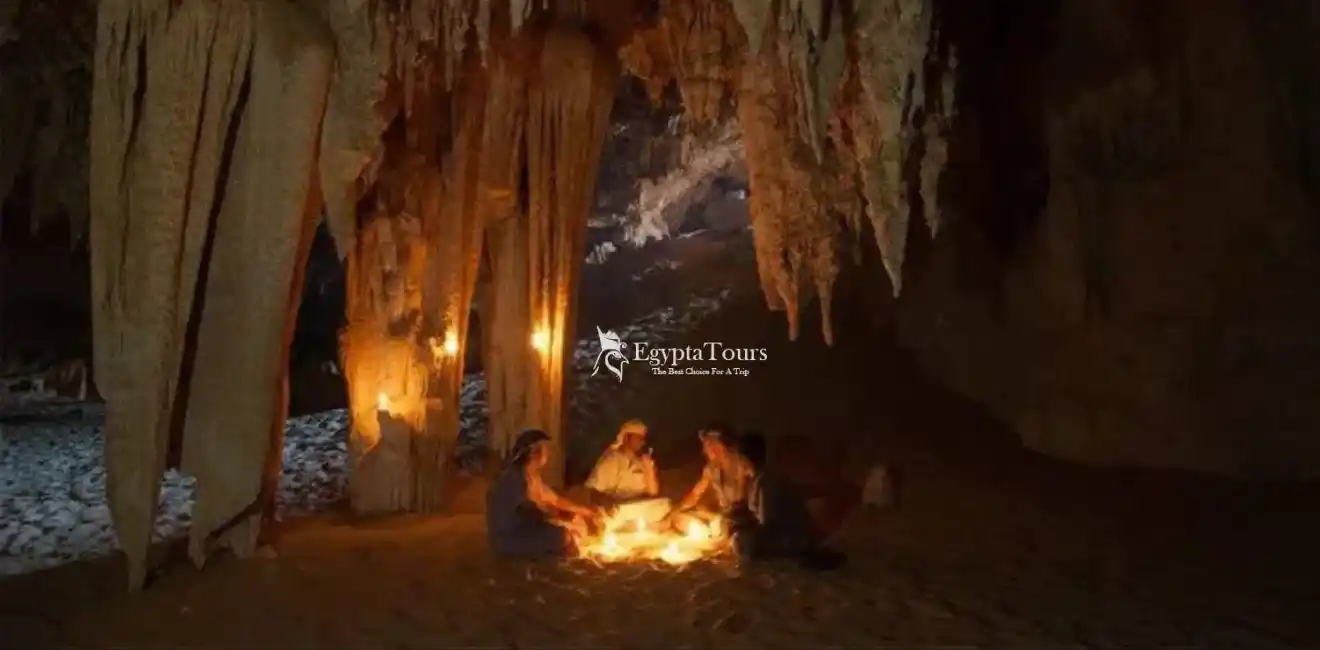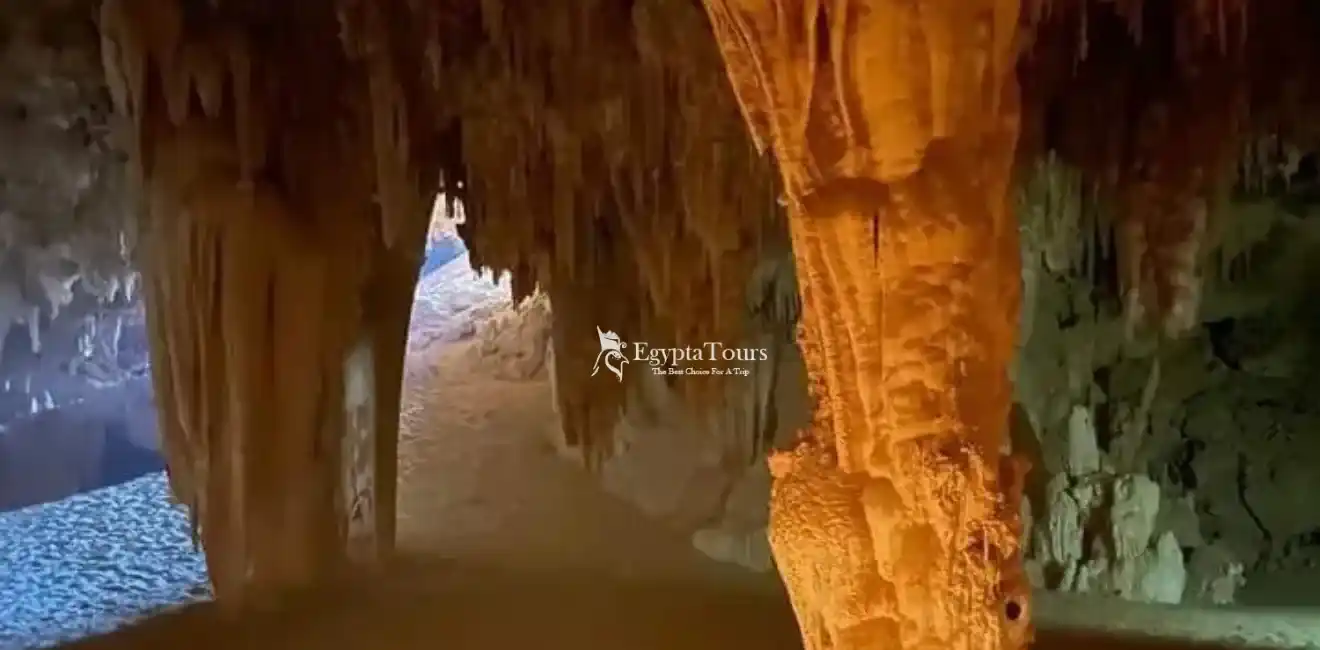



To More Inquiry


Bahariya Oasis (Arabic: الواحات البحرية, romanized: El-Wāḥāt El-Baḥrīya, “the Northern Oases”) is a bleakness and a naturally wealthy oasis in the Western Desert of Egypt. The roughly oval valley stretched from northeast to southwest, has a length of 94 km, a extreme width of 42 km and covers a region of about 2000 km2.
The valley is enclitic by mountains and has many springs. Located in Giza Governorate, the major economic sectors are agriculture, iron ore mining, and tourism. The major agricultural products are dates, guavas, mangos, and olives.

White-Desert-of-Egypt-Bahariya-Oasis-EgyptaTours
The Western Desert of Egypt is a zone of the Sahara that lies west of the river Nile, up to the Libyan fringe, and south from the Mediterranean Sea to the outlines with Sudan.
It is termed in contrast to the Eastern Desert which expands east from the Nile to the Red Sea. The Western Desert is essentially rocky desert, though a place of sandy desert, popular as the Great Sand Sea, lies to the west against the Libyan border. The desert covers place of 680,650 km2 (262,800 sq mi) which is two-thirds of the land place of the country.
Its highest altitude is 1,000 m (3,300 ft) in the Gilf Kebir plateau to the far south-west of the country, on the Egypt-Sudan-Libya border.
The Western Desert is arid and uninhabited keep for a chain of oases which expend in an bow from Siwa, in the north-west, to Kharga in the south. It has been the scene of fight in modern times, specially during the Second World War.
Administratively the Western Desert is divided among different governorates; in the north and west, the Matrouh Governorate administers the zone from the Mediterranean south to approx. 27°40’ N latitude, and the New Valley Governorate from there to the Sudan border, while in the east accessories of the Western Desert lie in the Giza, Fayyum, Beni Suef, and Minya Governorates.
In ecology, an oasis is a fertile zone of a desert or semi-desert environment that sustains plant life and supplies habitat for animals. Surface water and land may be current, or water may only be accessible from wells or underground channels produced by humans.
In geography, an oasis may be a present or past rest stop on a transportation path, or less-than-verdant place that nonetheless supplies access to underground water through deep wells created and maintained by humans.
The word oasis derives into English from Latin: oasis, from old Greek: ὄασις, óasis, which in turn is a immediate borrowing from Demotic Egyptian.
The term for oasis in the latter-attested Coptic language (the descendant of Demotic Egyptian) is wahe or ouahe which means a “hostel place”. Oasis in Arabic is wāḥa
Black-Desert-of-Egypt-Bahariya-Oasis-EgyptaTours
Bahariya Oasis was a serious center of agriculture and wine production and a root of minerals since Pharaonic Ages. Unfortunately, few of the sites from this era have been excavated and what little is popular of Bahariya’s Oasis early history is documented in tomb paintings in the Nile Valley, mostly from the Middle Kingdom and early Modern Kingdom onwards.
A view in the tomb of the Vizier Rekhmire at Thebes from Dynasty XVIII, offers people of the ‘Northern Oasis’ wearing striped kilts and presenting compliment.
The oasis starts to flourish during Libyan judge of Egypt in the Third Intermediate Era as a major route from the Libyan border to the Nile Valley and a strategic crossing of many caravan paths to other oases.
By Dynasty XXVI Bahariya Oasis had its own local governors and had grown into an important center of trade.
Near Bawaiti is the tomb of a Dynasty XIX provincial governor Amenhotep Huey and many tombs of Dynasty XXVI governors of the area, as well as an ibis cemetery from the same era.
There are also two temples, one dating to King Apries of Dynasty XXVI and the other to the rule of the Greek ruler Alexander the Great.
Until recently the little information we have had of the Romans in Bahariya Oasis came specially from a great quantity of Roman Papyri found at Oxyrhynchus (el-Bahnasa), which tell us that the oasis was garrisoned by Roman troops taken from the larger station there.
The presence of many Roman debris and an elaborate order of aqueducts suggests that Bahariya Oasis was heavily populated during this era.
In March 1996 a guard riding his donkey from the Temple of Alexander stumbled into a cavity in the sand which confirm to be a tomb.
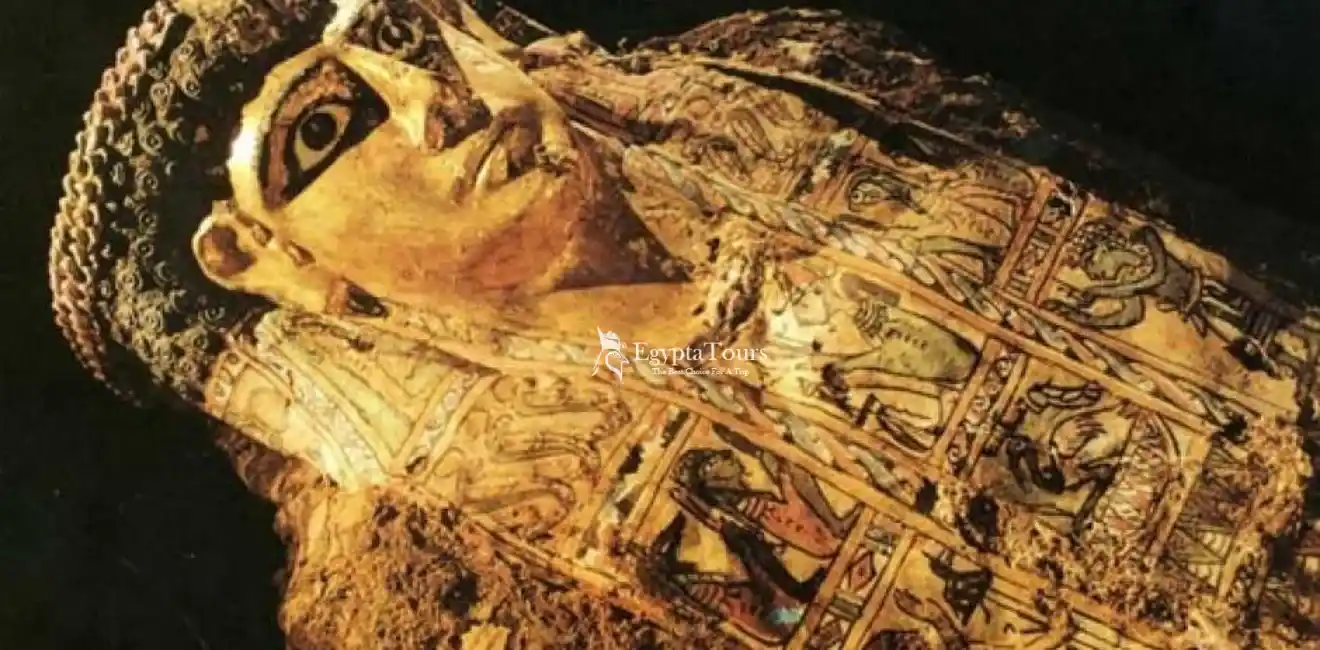
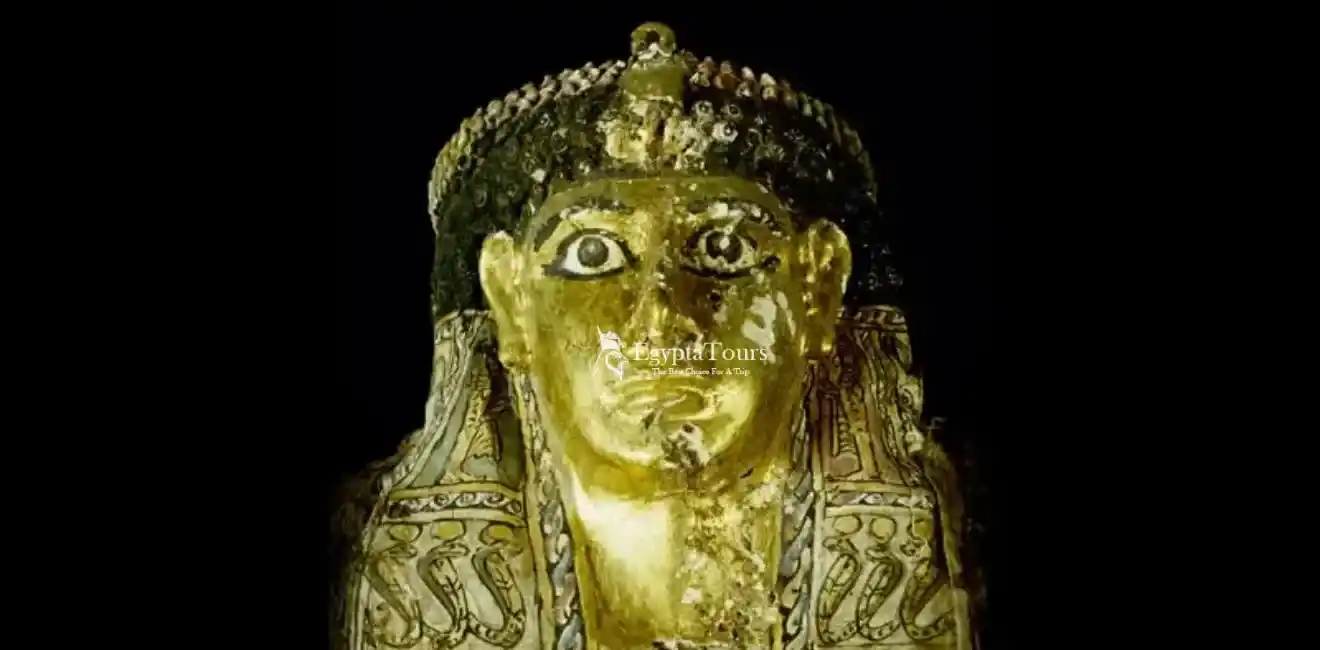
This starts an excavation which has posteriorly led to the astonishing discovery of a vast necropolis including possibly as many as 10,000 well-preserved mummies of Graeco-Roman history, some wearing spectacular golden facemasks. Bahariya Oasis, long counted to be a backwater in Egyptian date, has now become one of the most remarkable archaeological sites in Egypt and popular all over the world for its ‘Valley of the Golden Mummies’.
The people of Bahariya Oasis sound to have clung to their traditional faith longer than in any of the other oases. After the Roman decline Bahariya had a strong Christian people and even had its own pontiff, although there is a suggestion by archaeologists that there may still have been followers of the elder heathen cults during this period.
Even though Islam was brought to the oasis as early as the 7th century, Christianity stayed strong in Bahariya longer than in any of the different oases, right up to the 17th century, and no monuments from the Islamic Era have yet been found.

Bahariya-Oasis-attractions-EgyptaTours
Al-Wahat al-Bahariya, ‘the northern oasis’, located in a great depression around 360 km southwest of Cairo. In the past, when people from Bahariya wanted to go to the Nile Valley, they often wait for a caravan to threat, they traveled in three days among the Nile and the oasis.
It Is completely encompassed by high steep slopes. In the Cretaceous Era (145 to 65 million years ago), volcanic episodes formed the basalt columns that control the oasis. At 128 m above sea level, the oasis has the highest point of all western desert oases.
It covers a region of nearly 1,800 km²; at the longest point, it is 94 km and at the widest 42 km.
1- THE WHITE DESERT
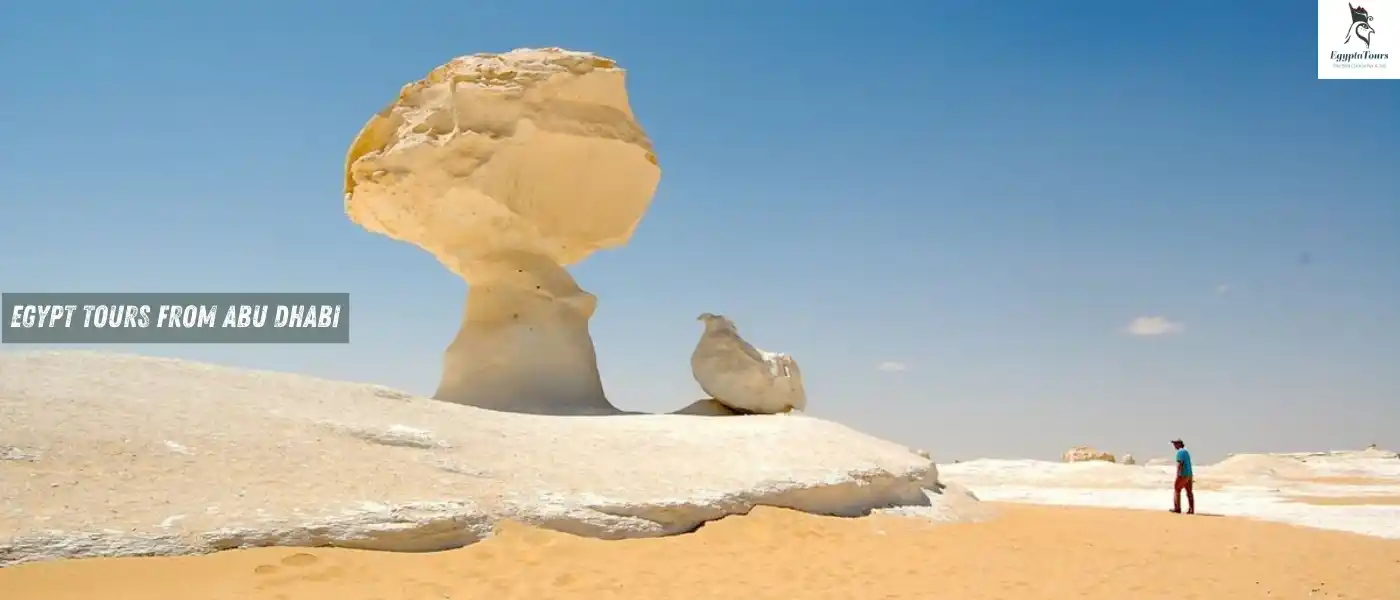
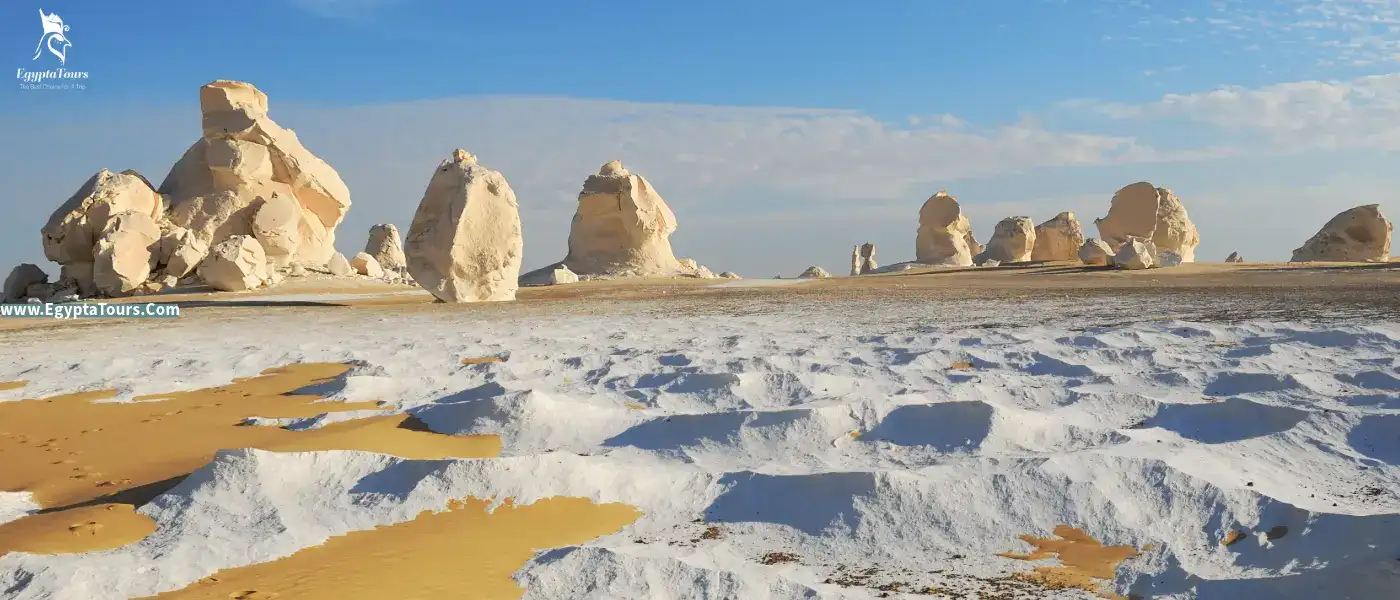
Most guests to Bahariya Oasis go there to see the White Desert, el-Sahara el-Beida, the region to the north-east of Qasr el-Farafra which is famous for its spectacular scenery.
The chalk-white landscape is strewn with alien forms, boulders of brilliant white which push up from the surface of the desert, massive by the clear light of noon, shimmering gold at sunset or blackened and shrunken in a cloud-filled sky.
Many of the fashioning are given descriptive names – sculpted by the cruel desert winds into weird forms which constantly vary over time.
In the remote past, the White Desert was a sea-bed, the sedimentary categories of rock formed by marine fauna when the ocean dehydrated up.
Later a homeland for many peregrinations flock of giraffe, gazelle, elephant, and other animals, the desert would have been a savannah with lush green parts and lakes full of fish, a quixotic hunting ground for pre-historic man.
The landscape we see today was formed by the plateau breaking down, leaving harder rock formed standing while the softer parts are corroded away by wind and sand. In some accessories, the chalk surface still has the appearance of pictorial wind-ruffled waves on water
Natural wonder of Egypt, the White Desert is now a protectorate, popular as the White Desert Park, where designated paths must be dangle when driving in 4WD vehicles. The outer parts nearest the road are popular as the Old Desert and can be connected in a normal vehicle.
Many guests choose an overnight camping safari to witness the drama of both sunset and dawn. The new paths are laid out to guide vehicles past the most popular desert landmarks, first a field of giant ‘mushrooms’, followed by an old lone Acacia tree.
Desert-of-Egypt-Bahariya-Oasis-EgyptaTours
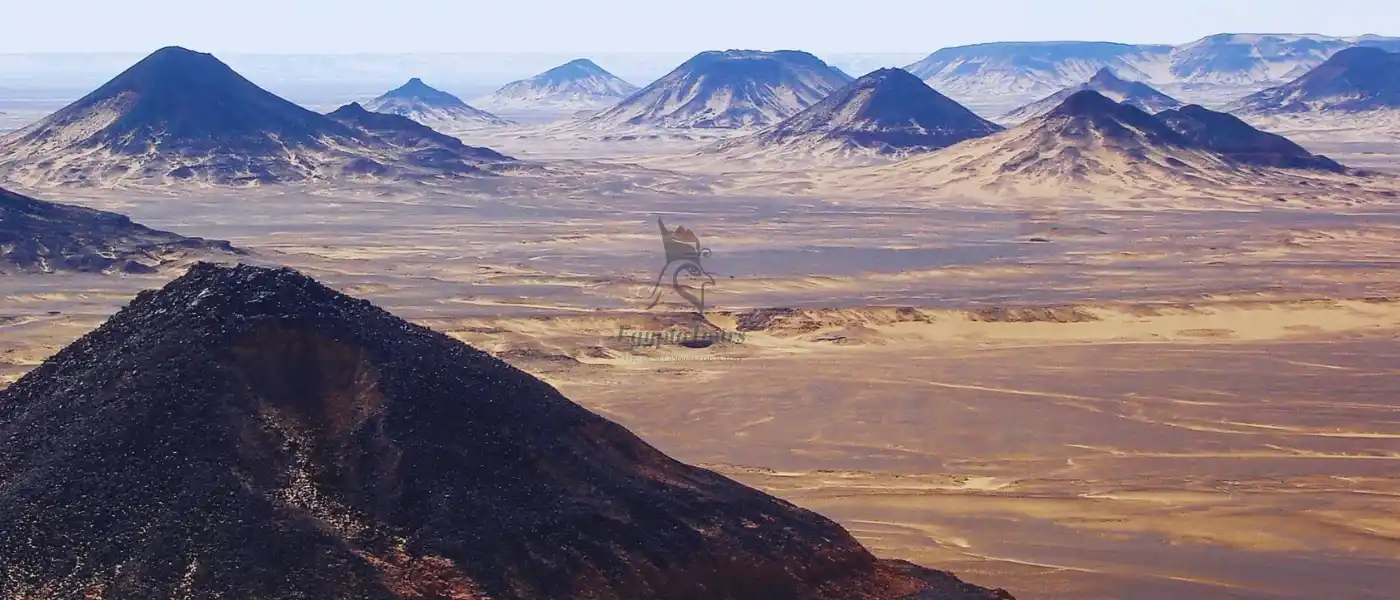
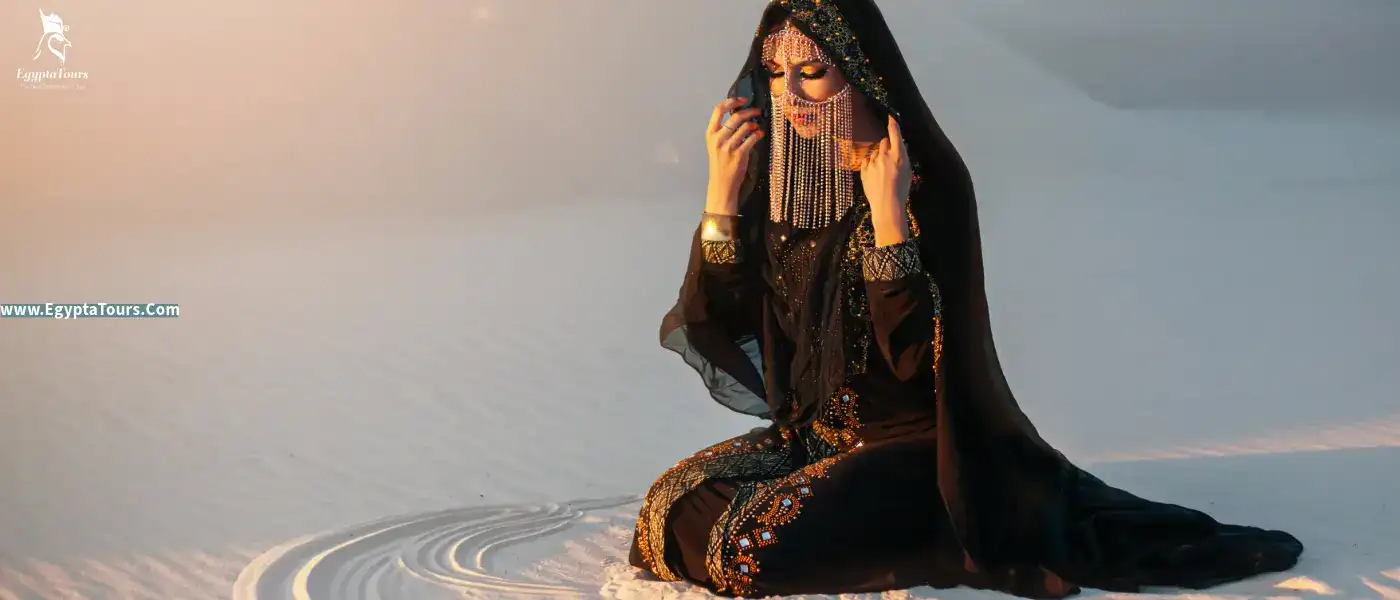
Now whole mountains are expansion out for you in an almost straight line along the horizon. We are oncoming Sahara Suda, the Black Desert, a favorite safari destination for domestic tour groups. The ground to the right and left of the path is filled with black stones.
Weaving in and out of these mountains is big fun. Although a skilled 2-wheel driver can manage most of it, there is a good opportunity the car will eventually get glued.
Take a guide—they are not costly and can narrat your things you will never discover by your-self.
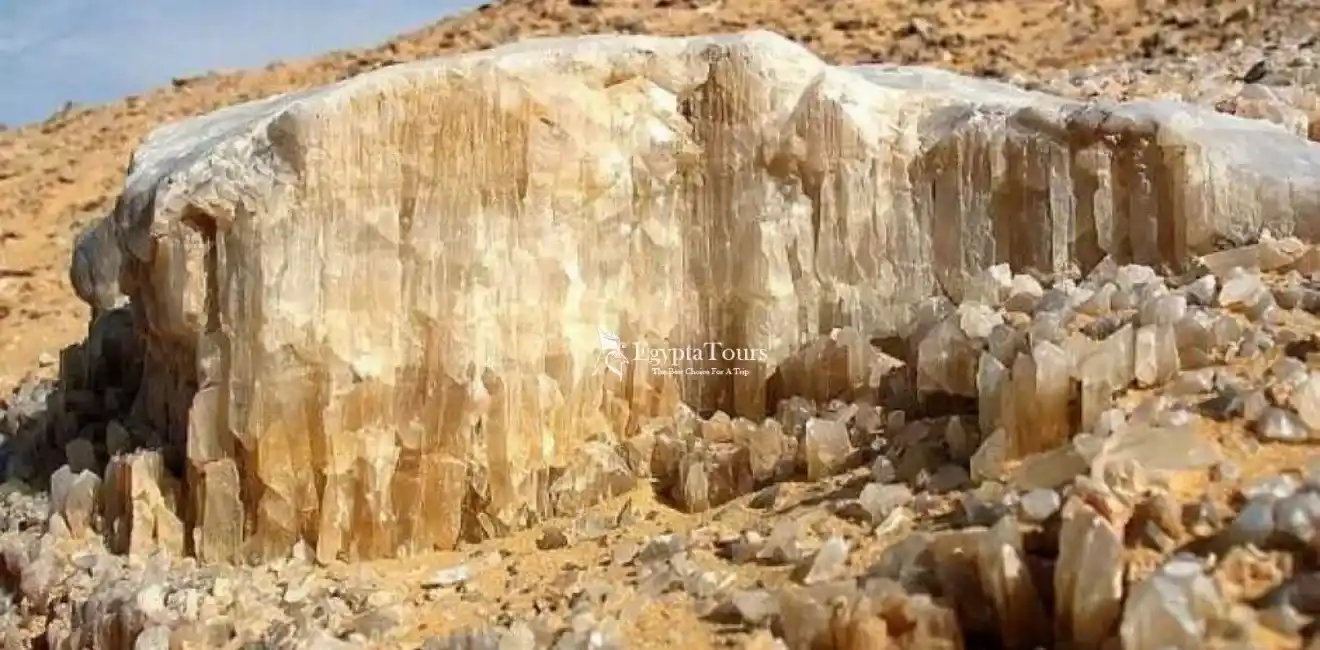
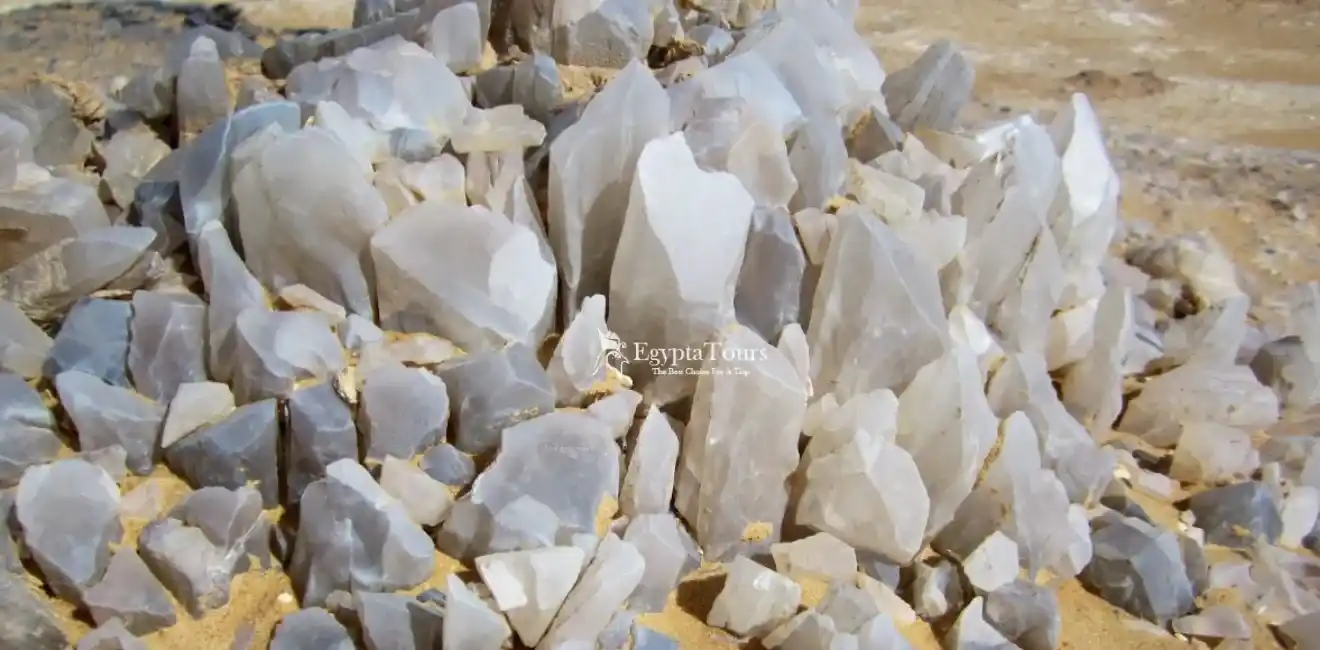
The Crystal Mountain is among the oasis Bahariya and Farafra, northern of the White Desert, Egypt. The Crystals are maybe Barite (Schwerspat, BaSO4) and/or Calcite crystals (CaCO3). The hill was opened during works at the route from Farafra to Bahariya by incident and destroyed in part.
Many years ago, A donkey fell into a hole and find a spectacular Mummy with a gilded Coffin, kept under enwrap as excavation constant, the find announced to the world as the valley of Golden Mummies. It is though that this place may include as many as 10,000 intact from the Roman Era
Valley of Agabat is passionate within the white desert. You have to be there to feel the out-worldly fairness of the place. Millions of years ago, the zone used to be under the sea. Over the years, special rock formations of limestone, chalk (and maybe sand) advanced.
When you stand over the small rock cliff at one of the valleys and the valley with the rock formation uncover before you, and there is not a single effect of another living being in the all vicinity – you’ll find a private moment of peace and goodwill.
Black or English Mountain This mountain is featured by a destruction at its summit. It is not hard to climb the mountain and the vision from the top show a panorama of the northern section of the oasis.
At one oratory of the top are the ruins of a World War I lookout hereafter, which was manned by Captain Williams, after whom the mountain is sometimes plead. Williams was posted to Bahariya to watch troop movements by the Sanusi. The house, contain three rooms and a bath, is now in debris.
This is the same Captain Claud Williams of the Light Car Patrols for whom Williams thread along the border of Libya and Egypt.
The tombs at Qasr Selim (26th Dynasty) In 1938 the Egyptian archaeologist Ahmed Fakhry (1905-1973) found four tombs at the top of Qarat Qasr Selim. Two of the tombs are richly ornamented and open to the public.
The two tombs belong to Zed-Amun-ef-ankh and his son Bannentiu, members of a wealthy family of trader. They lived during Ahmose II’s (570 – 526 BC) rule. The inlet of the hypostyle burial chamber of Zed-Amun-ef-ankh exist at the bottom of a hole five m deep. It includes scenes of the burial procession and the Four Sons of Horus.
According to the old inscriptions Bannentiu had served as both a vicar and prophet. The burial chambers of this tomb can be reached through a shaft about 6 meters deep.
The scenes in the inner funeral chamber include a well-preserved representation of the Judgement Hall of Osiris and the weighing of the heart of the lifeless.
Unfortunately, both tombs were reused as burial area during Roman period and robbed in new times, when some mummies, beads, and amulets were taken. Luckily, both tombs still depict some grand ornament and are useful to our conception of early life in this Oasis.
Bahariya lies about 365 kilometers southwest of Cairo. The main town is Bawiti, a 4 to 5 hour drive.
It is the gateway to the Black Desert, the White Desert, and Crystal Mountain. It also has hot springs and the Valley of the Golden Mummies.
October to April offers mild days and cool nights. Summer is very hot, with daytime highs that can exceed 40°C.
Hire a private car, book a tour, or take a public bus. The road is paved, and travel time is usually 4 to 5 hours.
You do for any off-road desert sections. The highway to Bawiti is fine for regular cars.
Yes, many tours start in Bahariya and enter the White Desert area. Overnight camping requires permits, which tour operators arrange.
Yes, permits are checked at police and protectorate checkpoints. Licensed guides handle paperwork for safaris and camping.
Two to three days covers main highlights. Add a day if you want a slower pace or extra hikes.
Black Desert, White Desert, and Crystal Mountain are top picks. In-town, visit the Valley of the Golden Mummies and the local museum.
The main road is monitored and usually safe. Go with licensed guides for desert routes, and follow local advice and checkpoints.
Bring a hat, sunglasses, sunscreen, and a scarf for wind. Pack layers, sturdy shoes, a refillable bottle, and a headlamp for camp.
Nights can drop near freezing in winter. Even in spring, nights feel chilly in the open desert.
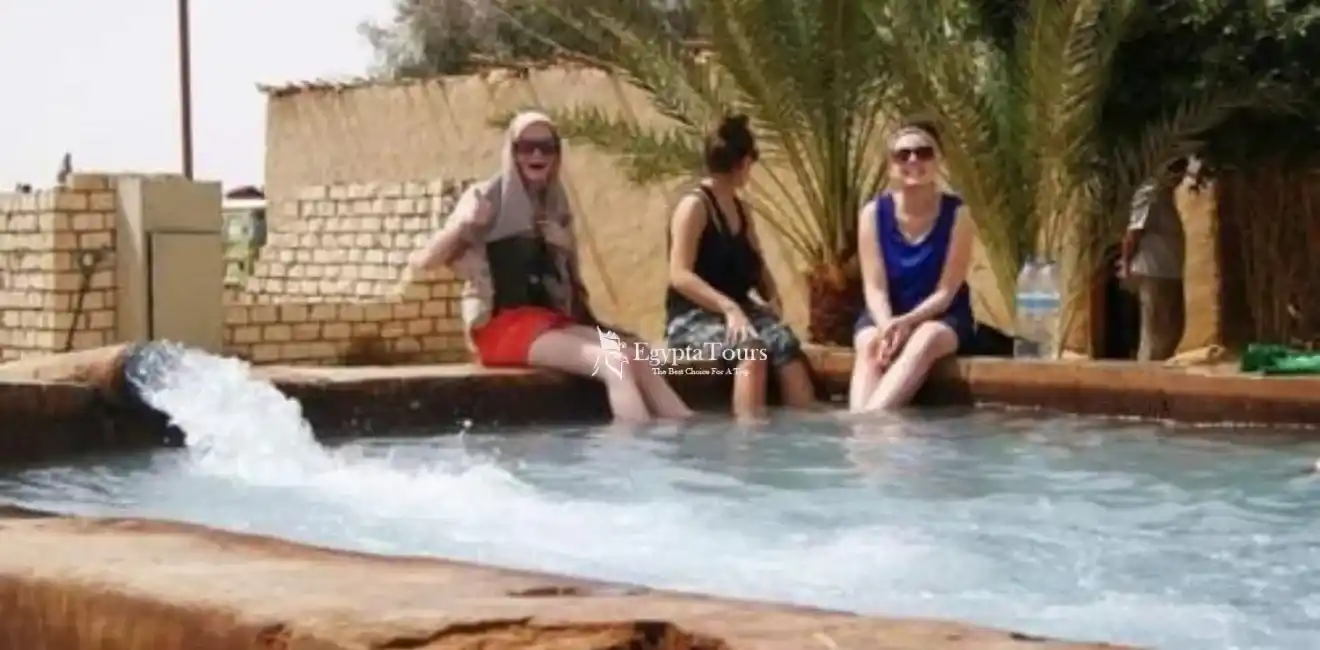
Yes, several springs sit near Bawiti and nearby villages. Ask your lodge to arrange a visit during off-peak hours.
Spring can bring khamsin winds with blowing sand. Goggles or a snug scarf help, and guides time trips to avoid worst conditions.
Do not go off-road without a local guide and a 4×4. Navigation is tricky, and phone signals can be weak or absent.
Dress modestly in town and villages. Ask before taking photos of people, and support small local businesses when you can.
Yes, in designated areas with permits. Use a licensed operator, and follow leave-no-trace practices.
Drone use needs prior permission. Rules are strict near protected sites and checkpoints.
Basic snacks and water are easy to find in Bawiti. ATMs exist but can be unreliable, so carry cash from Cairo.
You will find simple guesthouses and small ecolodges. Most offer meals, hot water, and help with tour bookings.
There is a clinic in Bawiti for minor issues. For serious cases, evacuation to Cairo is standard.
Look for desert fox tracks, beetles, and hardy shrubs. Please do not feed animals or collect fossils or stones.
Alcohol is limited, bring your own if needed. In town, choose modest clothing out of respect.
Yes, with tickets and sometimes a guide. Touch nothing, and follow posted rules to help protect the finds.
Prices vary by group size, route, and camping options. Ask a few licensed operators for quotes before you go.
TAXES INCL/PERS
TAXES INCL/PERS
TAXES INCL/PERS
TAXES INCL/PERS
TAXES INCL/PERS
TAXES INCL/PERS
TAXES INCL/PERS
TAXES INCL/PERS
TAXES INCL/PERS