Discover the Magical Treasures of the Alexandria National Museum
The Alexandria National Museum is one of the most prominent cultural and...



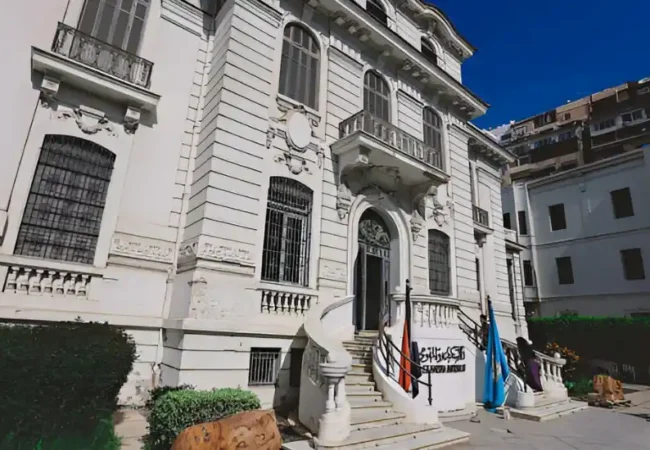
The Graeco Roman Museum is an archaeological museum in Alexandria , Egypt. It displays a wide collection of artifacts found in and around Alexandria, mostly from the Ptolemaic and later Roman periods, specifically from the founding of Alexandria in the 3rd century BC to the 3rd century AD.

Graeco- Roman -Museum
Erected in 1892, the museum was originally housed in a five-room apartment within a small building on Rosetta Street later known as Avenue Canope, and today Horriya. In 1895, it was relocated to a larger facility near Gamal Abdel Nasser Street. Its first director was Giuseppe Botti. From 1904 to 1932, he was succeeded by Evaristo Breccia and later by Achille Adriani. The museum was officially opened in 1895 by Khedive Abbas II. It also published the Bulletin of the Alexandria Archaeological Society.
The museum showcases various artifacts dating back to the Greco-Roman Ptolemaic period of the 3rd century BC, including a black-granite statue of Apis, the sacred bull of the ancient Egyptians, along with mummies, a sarcophagus, textiles, and other items that provide insight into Greco-Roman culture and its interaction with ancient Egypt.
The museum’s collection was formed through generous contributions from affluent Alexandrians, as well as through excavations carried out by the museum’s successive directors, both inside the city and in the surrounding areas. Additional items were provided by the Antiquities Authority in Cairo, especially those from the Pharaonic era and from various early-20th-century excavations in Fayoum and Benhasa.
The museum is located in a historic structure whose elegant neoclassical façade, featuring six columns and a pediment, carries a prominent inscription in Ancient Greek. It comprises 27 galleries in addition to a charming garden. From 1970 to 1974, Soheir Bakhoum served as curator.
The museum was closed in 2005 for extensive restoration work. In February 2022, the Secretary-General of the Supreme Council of Antiquities, Mostafa Waziri, announced that the museum would reopen within a few months. On 11 October 2023, Egyptian Prime Minister Mostafa Madbouly presided over the reopening ceremony, marking the end of 18 years of renovation efforts.

The -Museum’s -Most -Famous -Statues

Artifacts -In -The -Graeco- Roman -Museum
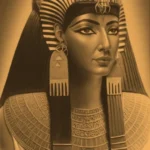
This statue, recovered from the waters of Abu Qir in 1989, depicts a deified Ptolemaic queen rendered in the Egyptian style and dressed in the attire of Isis, a common royal Ptolemaic practice dating back at least to the reign of Ptolemy II. She wears a short-sleeved tunic and a fringed mantle, the ends of which are tied into the traditional Isis knot between her breasts, and she is shown wearing a sandal.
In her right hand, she holds the ankh, the symbol of life, while in her left she carries a cornucopia filled with grapes and various fruits, representing fertility and abundance. This symbolism reflects Isis’s association with the Nile inundation and the fertility of the land.
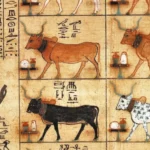
a depiction of the sacred bull worshiped in ancient Egypt.
Part of a black basalt slab with a hieroglyphic inscription on one side. It represents part of a sarcophagus.
A small braided ring in the shape of an intertwined braid.
A small, eye-shaped piece (August) with a perforated side hole and hollow inside.
A gold plate with a Greek inscription consisting of six rectangular lines.
A statue of a bearded man believed to be the Nile god.A statue of a bearded man believed to be the Nile god.
A semi-circular coin with an eagle spreading its wings on one side and Greek letters on the other side, and a royal face on the other side.
A semi-circular dish with raised, outward-pointing edges, irregularly dented parts, and a circle in the center.

Importance -Of- The -Greco-Roman -Museum
Unique specialization: It is the first and largest museum in the Middle East dedicated to the Greek and Roman periods, making it a key resource for studying this era.
Heritage preservation: Established to safeguard the archaeological finds in Alexandria, particularly those documenting the city’s foundation and the influence of other civilizations on it.
Cultural interaction documentation: The museum displays artifacts that reflect the interaction and mutual influence between ancient Egyptian, Greek, and Roman civilizations.
Cultural and educational center: It promotes cultural awareness and education through its exhibits and houses restoration laboratories, an archive, and a specialized library.
Tourism development: The museum plays an important role in enhancing Alexandria’s cultural identity as an international tourist destination by presenting the city’s history in an engaging way.
The museum showcases various artifacts dating back to the Greco-Roman Ptolemaic period of the 3rd century BC, including a black-granite statue of Apis, the sacred bull of the ancient Egyptians, along with mummies, a sarcophagus, textiles, and other items that provide insight into Greco-Roman culture and its interaction with ancient Egypt.
A semi-circular coin with an eagle spreading its wings on one side and Greek letters on the other side, and a royal face on the other side.
It is the first and largest museum in the Middle East dedicated to the Greek and Roman periods, making it a key resource for studying this era.
The museum plays an important role in enhancing Alexandria’s cultural identity as an international tourist destination by presenting the city’s history in an engaging way.


Explore our top-rated Egypt travel packages and embark on an unforgettable journey. From the Pyramids of Cairo to the magical temples of Luxor, Aswan, and Abu Simbel, discover expertly curated tours designed for your perfect Egyptian adventure