



Hieroglyphic Translator: Translate Ancient Egyptian Symbols
Have you ever wanted to translate Egyptian hieroglyphs and know the secrets of ancient Egyptian writing? The Hieroglyphic Translator is the perfect tool to decode Egyptian symbols quickly and accurately. If you are a history lover, archaeology student or interested in the mysteries of Egypt, the hieroglyph translator lets you discover the secret of pharaohs and ancient civilizations like never before and understand messages from thousands of years ago and bring the stories of the Nile and its ancient Egyptian culture to life.
A hieroglyphic translator is a tool for deciphering this system and converting it into modern languages, helping researchers uncover details about the lives of ancient Egyptians and understand their rich cultural heritage.
Hieroglyphs are one of the oldest writing systems used by the ancient Egyptians, representing one of the greatest cultural and civilizational achievements of that era.
This writing was used on temple walls, tombs, monuments, and in religious and administrative texts. Hieroglyphic writing relied on pictorial symbols representing sounds and ideas, making it a complex and precise language.
There are hieroglyphic translators, but translating hieroglyphs is not as straightforward as using modern language translation tools.
Translating hieroglyphs requires specific tools and techniques, such as hieroglyphic dictionaries, AI-based programs, and the efforts of scholars and researchers in the field of Egyptology.
A decree of the mr-sn priests, the hm-ntr priests, the priests who enter the sanctuary to perform clothing rituals for the gods, the scribes of the divine book and the scribes of the House of Life, the other priests who have come from the temples of Egypt to Memphis on the festival of the Reception of the Rulership by King Ptolemy, living forever, beloved of Ptah, the Manifest God whose excellence is fine. Because of that, there are hieroglyphic translators but it must be understood that translating hieroglyphs is not as simple as using modern language translation tools.
Translating hieroglyphs requires important tools and techniques including hieroglyphic dictionaries, AI-based programs and the dedicated efforts of scholars and researchers in the field of Egyptology.
The Meaning of Hieroglyphic Writing
The hieroglyphic writing was the official writing method in ancient Egyptian civilization and it was called the Egyptian language. This method combined pictorial elements, syllabic elements and distinctive letters, numbering more than 1000 distinct characters.
This method was used in religious litters which were written on papyrus and wood. The demotic and Proto Sinaitic writings were derived from it and it is considered the origin of the Phoenician writing, and most writing methods are taken from hieroglyphic writing.
It is also said that this method is considered one of four systems that did not develop under external influence but rather developed independently over time. It was deciphered in the 1820s through the Rosetta Stone.
The hieroglyphic writing is the official writing method in ancient Egypt and it was called the Egyptian language. This method combined pictorial elements, syllabic elements and distinctive letters, numbering more than 1000 distinct characters.
This method was used in religious literature on papyrus and wood. The demotic and Proto Sinaitic writings were derived from it and it is considered the origin of the Phoenician writing. Most writing methods are derived from hieroglyphic writing.
It is said to be one of four systems that did not develop under external influence but rather developed independently over time. It was deciphered in the 1820s through the Rosetta Stone.
Why Do You Need a Hieroglyphic Translator to Understand Pharaonic Inscriptions?
Why-Do-You-Need-a-Hieroglyphic-Translator-to-Understand-Pharaonic-Inscriptions-EgyptaTours
A hieroglyphic translator is necessary for understanding Pharaonic inscriptions due to the complex and unique nature of this writing system, which the ancient Egyptians developed. Below are the key reasons why:
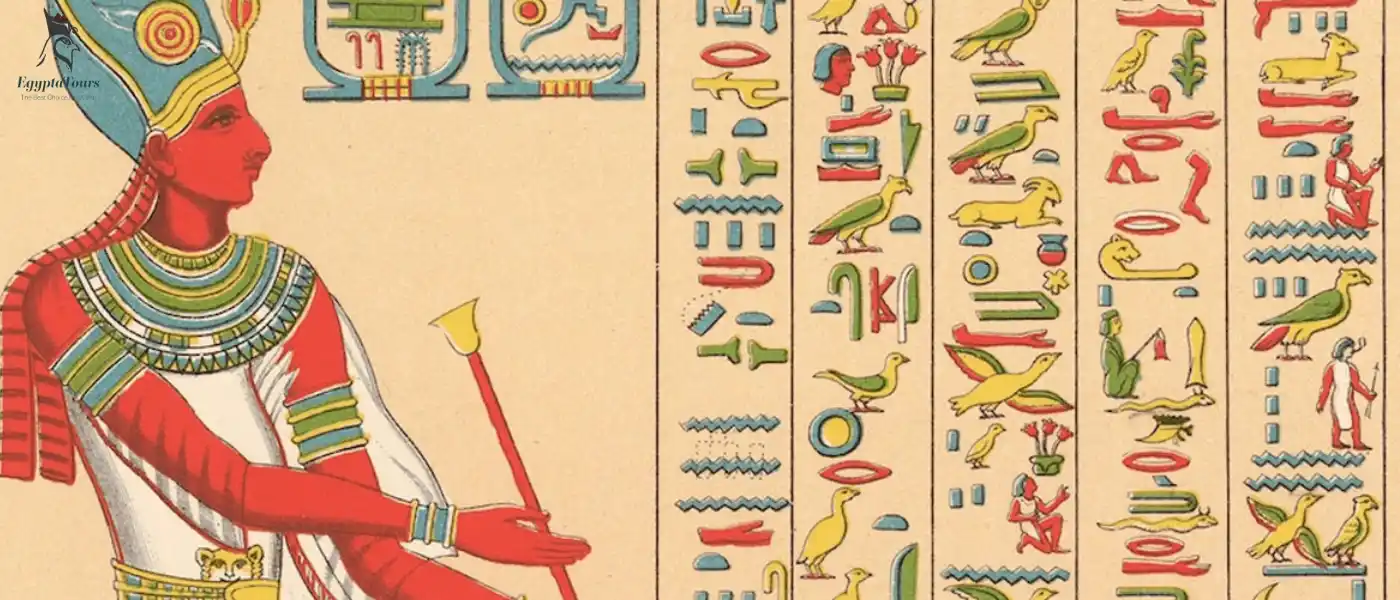
- Hieroglyphs are not just simple pictorial symbols but a complex system containing three types of symbols: phonetic symbols that represent sounds or syllables, semantic symbols that represent specific words or ideas, and determinative symbols that indicate the meaning of the word or provide contextual clues. Understanding the text requires knowledge of how these symbols are used together in different contexts.
- The hieroglyphic language is entirely different from modern languages in terms of grammar and style. It was heavily influenced by the cultural and religious context of ancient Egyptian civilization, with many texts containing symbolic or religious meanings that are difficult to understand without a solid understanding of the historical background.
- Hieroglyphic texts were often written without spaces between words or punctuation marks, making it challenging to interpret the text. This requires expertise in deciphering the symbols and understanding their proper placement.
- Hieroglyphic texts are diverse, including religious, administrative, funerary, and poetic texts. Each type of text has its own style and vocabulary, which requires a specialized translator.
- Learning hieroglyphs is not simple. It includes hundreds of symbols that must be memorized, and understanding their use depends on context and placement within the text.
For these reasons, a hieroglyphic translator (whether a specialized human expert or a modern tool) is essential for unlocking these writings and translating them into understandable meanings. This allows us to discover details about life, culture, and religion in ancient Egypt.
History and Development of the Hieroglyphic Language
Hieroglyphic writing is considered the oldest writing system in ancient Egypt and the longest in use. It was known for its clarity and beauty. Over time, the ancient Egyptians needed a simpler form of writing which led to the emergence of hieratic script. This simplification later developed into demotic writing. These scripts were an essential part of the ancient Egyptian writing system and played an important role in understanding ancient Egyptian history, culture and language.
Hieratic writing was more fluid and easier to use. It was used to record religious and medical texts, as well as administrative records and scientific and literary documents, representing an important development from hieroglyphic writing.
Later, demotic writing appeared, followed by the Coptic script which was used in Egypt during the Greek and Roman periods and was based on the Greek alphabet.
The ancient Egyptian language passed through several stages. The formative stage began from the First Dynasty until the middle of the Eighth Dynasty as shown clearly in inscriptions found on monuments. During the middle period writing reached a stage of maturity, extending from the middle of the Eighth Dynasty to the Twenty-fifth Dynasty.
Demotic writing appeared in the eighth century BC and continued until the fifth century AD. The Coptic stage then began in the third century AD and officially ended with the entry of Islam into Egypt when Arabic replaced it.
The hieroglyphic script is the development of Egyptian scripts and the longest in duration, and is considered a clear and beautiful script. At some stages, the Egyptians needed to simplify it, resulting in the hieratic writing. Then, simplification was represented in the demotic writing.
The hieratic writing was more fluid, simple and easier to write and was used to document religious, medical, administrative, scientific and literary documents. This script represents a tremendous development of hieroglyphic writing.
Then, the demotic followed by the Coptic which was the writing system in Egypt during the Roman and Greek eras and is based on the Greek alphabet.
The language in the ancient era represented the stage of laying the first foundations, and was born from the first dynasty until the middle of the eighth dynasty. The inscriptions on the artifacts clarify the language in this period.
In the middle era, writing reached a stage of maturity from the middle of the eighth dynasty until the twenty fifth.
The demotic writing stage appeared in the eighth century BC and continued until the fifth century AD.
Then, the Coptic stage began in the third century AD and officially ended with the entry of Islam into Egypt and was replaced by Arabic.
How Have Hieroglyphic Translation Methods Evolved Over Time?
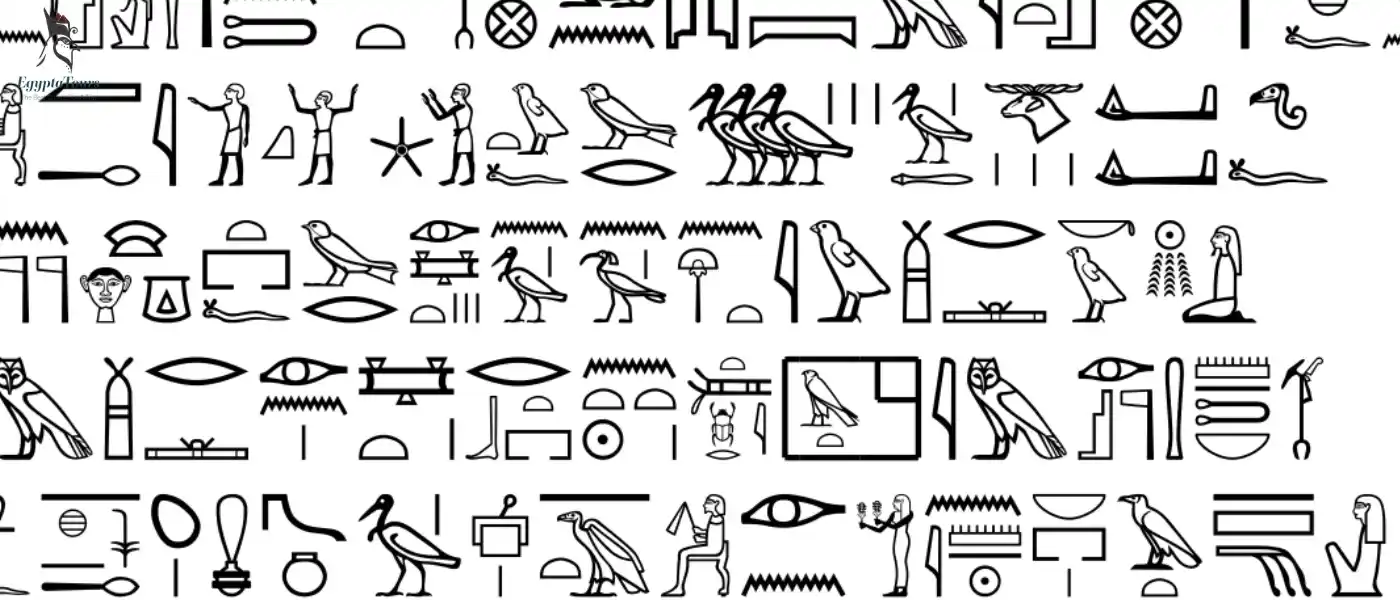
How-Have-Hieroglyphic-Translation-Methods-Evolved-Over-Time-EgyptaTours
The methods for translating hieroglyphs have evolved significantly over time, from the early attempts to decipher the ancient writing to the use of modern technologies.
Below are the stages of development of these translation methods:
Early Attempts
In ancient times, Egyptian priests were the ones who could read hieroglyphs. However, over time, this knowledge was lost. During the Middle Ages, travelers and orientalists attempted to decipher the writing without sufficient knowledge or resources.
Discovery of the Rosetta Stone (1799)
In the late 18th century, the French army discovered the Rosetta Stone, which contained texts in three languages: hieroglyphic, Demotic, and Ancient Greek. This discovery allowed the use of Greek as a key to unlocking the hieroglyphic script.
Decoding by Champollion (1822)
In the early 19th century, Jean-François Champollion succeeded in deciphering hieroglyphs by comparing texts and analyzing the symbols. He confirmed that hieroglyphs consisted of both phonetic and semantic symbols, leading to a revolution in the understanding of this ancient writing system.
Use of Dictionaries and Specialized Studies
After the code was cracked, scholars began using dictionaries such as “Gardiner’s Dictionary” to document the hieroglyphic symbols, which helped in understanding architectural, religious, and administrative texts more comprehensively.
Modern Techniques
In recent decades, techniques like artificial intelligence and text analysis programs have been used to speed up the translation process. For instance, the “JSesh” program has become an important tool for editing hieroglyphic texts.
Digital Translation and Open Publishing
With technological advances, digital databases have been created containing hieroglyphic texts alongside translations.
This has made it easier for researchers to access ancient texts and has opened the door to greater scientific collaboration.
The Importance of the Hieroglyphic Translator and Why Do You Need it?
King Ptolemy who was called the living forever, the Manifest God whose excellence is great, son of King Ptolemy and Queen Arsinoe, the Father-loving Gods, is known for granting many favours to the temples of Egypt and to all who are under his kingship. He considered himself a god, the son of a god and a goddess and is like Horus, son of Isis and Osiris who protects his father Osiris. His heart is beneficent towards the gods as he has given large amounts of money and grain to the temples of Egypt.
Hieroglyphs are not just simple pictorial symbols but a complex system containing three types of symbols: phonetic symbols that represent sounds or syllables, semantic symbols that represent specific words or ideas and determinative symbols that indicate the meaning of the word or provide contextual clues. Understanding the text requires knowledge of how these symbols are used together in different contexts.
The hieroglyphic language is entirely different from modern languages in terms of grammar and style. It was heavily influenced by the cultural and religious context of ancient Egyptian civilization with many texts containing symbolic or religious meanings that are difficult to understand without a solid understanding of the historical background.
Hieroglyphic texts were often written without spaces between words or punctuation marks making it challenging to interpret the text. This requires expertise in deciphering the symbols and understanding their proper placement.
Hieroglyphic texts are diverse, encompassing religious, administrative, funerary and poetic texts and each type of text possesses its own distinct style and vocabulary which necessitates the expertise of a specialized translator. “He took every care to send foot soldiers, horsemen and ships against those who approached by the shore and by the sea to launch an attack on Egypt, he expended a great amount of money and grain against these enemies, in order to ensure that the temples and the people who were in Egypt would remain secure.”
Learning hieroglyphs is not simple. It includes hundreds of symbols that must be memorized and understanding their use depends on context and placement within the text. “let these days, the 17th and the last, become festivals each month in all the temples of Egypt and there should be performed burnt offerings, libations and the rest of the things that are normally done on the other festivals, on both festivals each month and what is offered in sacrifice should be distributed as a surplus to the people who serve in the temple”
For these reasons, a hieroglyphic translator is so important for unlocking these writings and translating them into understandable meanings. This allows us to discover details about life, culture and religion in ancient Egypt.
Famous Translators Specializing in Hieroglyphics
Many scholars have specialized in the study and translation of hieroglyphs and played a prominent role in deciphering this ancient writing. Below are some of the most famous hieroglyphic translators:
- Jean-François Champollion: The founder of modern Egyptology, Champollion succeeded in deciphering hieroglyphs in 1822 by analyzing the Rosetta Stone.
- William Goodwin: A British scholar who contributed to the early understanding of hieroglyphs in the 19th century.
- Thomas Young: Helped in studying the Rosetta Stone and discovered some phonetic symbols in hieroglyphic writing.
- Zahi Hawass: A contemporary Egyptologist who worked on translating and interpreting hieroglyphic inscriptions found in Egyptian monuments.
- Alan Gardiner: He created “Gardiner’s Dictionary,” which is considered a primary reference for understanding hieroglyphic symbols.
- Edward William Lane: An English orientalist who translated many ancient Egyptian texts and contributed to the study of hieroglyphs.
- Jacques Frankfort: A specialist in hieroglyphic studies and the interpretation of funerary texts.
Famous Translated Hieroglyphic Texts and Their Meanings
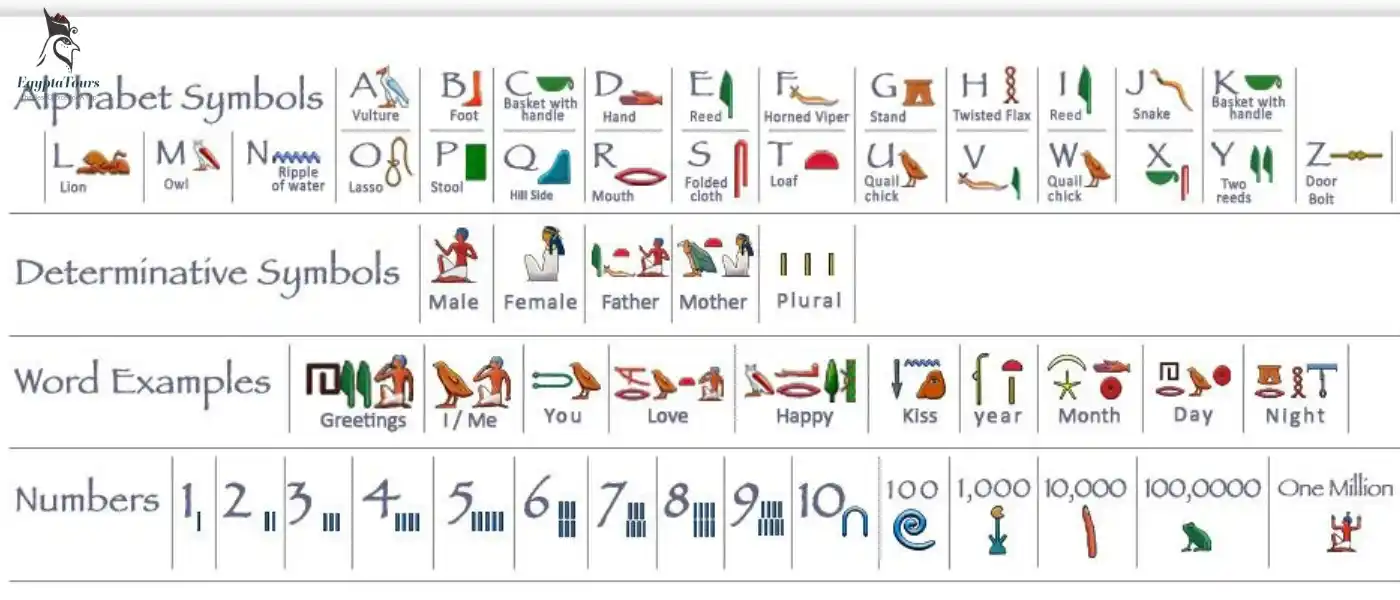
Famous-Translated-Hieroglyphic-Texts-and-Their-Meanings
Below are some of the most famous translated hieroglyphic texts and their meanings:
- Pyramid Texts: Considered the oldest religious texts discovered inside pyramids, these texts contain spells and rituals meant to ensure the eternal life of the Pharaoh Unas in the afterlife. These texts represent the funerary beliefs of ancient Egyptian civilization.
- Battle of Kadesh Texts: These texts relate to the Battle of Kadesh between Pharaoh Ramses II and the Hittites, showing Ramses’ victory and documenting the peace treaty between the two sides. These texts are considered among the oldest peace treaties in history.
- The Book of the Dead: A collection of spells written on papyrus and placed in tombs to ensure the deceased’s safe passage through the afterlife and access to eternal life.
- Abu Simbel Temple Texts: These texts are engraved on the walls of the Abu Simbel temple, built by Ramses II. They contain information about his military victories and details about his royal life, showcasing the power of the Pharaohs and their connection to religious traditions.
- Rosetta Stone Texts: The Rosetta Stone is the primary tool that allowed for the decoding of hieroglyphic symbols. It contains the same text in three languages: hieroglyphic, Demotic, and Ancient Greek, helping scholars understand hieroglyphic writing and laying the foundation for deeper studies.
The importance of using Dictionaries and Specialized Studies
After the hieroglyphic code was successfully deciphered, scholars began to depend heavily on specialized dictionaries and academic studies to document and classify hieroglyphic symbols. One of the most important references used by researchers was Gardiner’s Sign List which helped organize symbols and clarify their meanings. These resources made it easier to understand a wide range of ancient Egyptian texts including architectural inscriptions, religious texts and administrative records, leading to more accurate interpretations of ancient Egyptian writing.
Can Electronic Translators Be Relied Upon to Decode Hieroglyphic Symbols?
While electronic translators can assist in translating some simple hieroglyphic symbols or short texts, they cannot be fully relied upon to decode hieroglyphs.
Hieroglyphic writing is complex and requires a deep understanding of the cultural and religious context in which it was written.
Electronic translators may fail to interpret symbolic meanings or texts with deep significance, so human expertise in Egyptology remains essential for accurate translation.
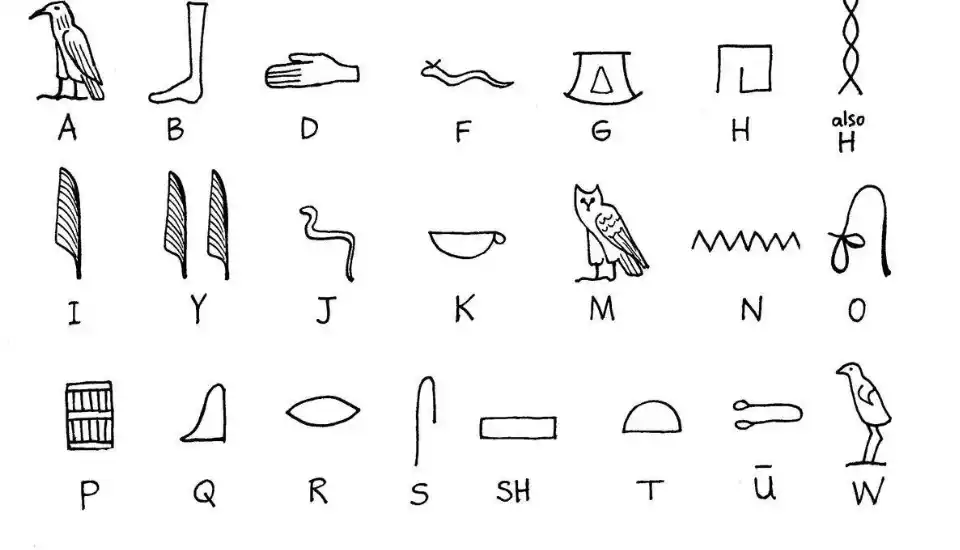
A Hieroglyphic Translator is a tool that converts English text into ancient Egyptian hieroglyphics, offering users a glimpse into the ancient Egyptian writing system.
The translator works by matching modern words or letters with symbols from the ancient script, allowing individuals to translate simple phrases into the ancient Egyptian language.
These translators provide a fun and educational way to explore the symbolic and intricate nature of Egyptian hieroglyphics, a writing system used for religious texts, inscriptions, and monuments throughout ancient Egypt.
Efforts of Arab Scholars in Deciphering Codes
History has proven the efforts of Arab scholars in deciphering language codes after the scientist Champollion, over distant periods of time. Arab scholars in the Islamic era were interested in this writing, especially chemistry scholars, due to their insistence on knowing the secrets of chemistry in this civilization and how to convert metals into precious metals.
They were knowledgeable about the different forms of language. One of the most prominent scholars is Jabir ibn Hayyan, who wrote two books, “Solving Symbols” and “Keys to Treasures and Results”. The two books include attempts to read hieroglyphic symbols.
After him, the Egyptian scholar Ayoub ibn Maslama, who accompanied the Abbasid Caliph Al Ma’mun on a trip to Egypt, was able to read some inscriptions. And Dhul Nun, who was skilled in reading inscriptions on temple walls. And many other scholars.
What is the meaning of hieroglyphic writing?
The hieroglyphic writing is the official writing method in ancient Egypt and it was called the Egyptian language. This method combined pictorial elements, syllabic elements and distinctive letters, numbering more than 1000 distinct characters.
How did the Hieroglyphic Language develop?
The hieroglyphic script is the development of Egyptian scripts and the longest in duration, and is considered a clear and beautiful script. At some stages, the Egyptians needed to simplify it, resulting in the hieratic writing. Then, simplification was represented in the demotic writing. The hieratic writing was more fluid, simple and easier to write and was used to document religious, medical, administrative, scientific and literary documents. This script represents a tremendous development of hieroglyphic writing.
FAQs
Can Hieroglyphs Be Translated Using Google?
Google can be used to translate some simple hieroglyphic texts, especially when the texts are short or contain common symbols. However, accurate and complete translation of hieroglyphic texts through Google faces significant challenges because hieroglyphs consist of both phonetic and semantic symbols that require a deep understanding of cultural and religious context.
Who Was the First to Read Hieroglyphics?
The first to read hieroglyphics scientifically was Jean-François Champollion in 1822, after he deciphered the hieroglyphic code using the Rosetta Stone.
What Does the Symbol 𓂸 Mean?
This symbol is used to denote existence and is often used to represent life or living.
What does a hieroglyphic translator actually do?
Most “hieroglyphic translators” do one of two things. Some convert modern text into a rough hieroglyph-style spelling, usually by matching sounds or letters to a small set of common signs. Others try to read hieroglyphs from an image or typed sign list, then output a transliteration (a scholarly letter-based rendering) and sometimes a guess at meaning.
The key limitation is that Egyptian hieroglyphs aren’t an alphabet. They mix sound signs (often consonants), word signs, and determinatives (extra signs that hint at meaning). So a tool can be useful for learning and quick experiments, but it’s not the same as translating Spanish to English.
If you need a trustworthy reading of a real inscription, you’ll usually want a transliteration first, then a translation with notes about grammar and context.
Why do hieroglyphic translations look inconsistent across different tools?
Because there isn’t one simple, one-to-one mapping. Ancient Egyptian spelling can vary by time period, region, and style. Writers also used phonetic complements (extra sound signs) and determinatives that don’t translate as spoken words.
Tools also make different choices about how to handle vowels. In most stages of Egyptian, writing mainly records consonants, so any English-style “pronunciation” is an informed guess. One translator might output something that looks readable in English, while another sticks to a scholarly consonant-based transliteration.
Even the direction matters. Hieroglyphs can be written left-to-right or right-to-left, and you read toward the faces of people and animals. If a tool guesses the direction wrong, everything downstream can look off.
Can I translate a photo of hieroglyphs with a hieroglyphic translator?
Sometimes, but expectations should stay realistic. Photo-based translation needs two hard steps: sign recognition (identifying each symbol) and sign ordering (figuring out the correct reading order in grouped layouts). Lighting, erosion, stylized carving, and overlapping signs can trip up recognition fast.
If you’re trying to get the best result, use a clear, straight-on image, crop tightly to the text, and increase contrast. If the output seems scrambled, the tool may have misread direction or treated stacked groups as a simple line.
For anything important, treat the result as a starting point, then verify signs against a reputable sign list and a grammar reference.
What’s the difference between transliteration and translation for hieroglyphs?
Transliteration is a sign-to-letters rendering used by Egyptologists, it keeps close to what’s written (mostly consonants) and helps you analyze grammar. Translation is the meaning in modern language, which often requires interpretation.
A single set of signs can be ambiguous without context, because the writing system packs a lot into short strings and can omit details a modern reader expects. Transliteration is usually the step that lets you check whether a proposed translation makes sense.
If a tool jumps straight to English without showing how it read the signs, it’s harder to trust or correct. When possible, look for output that includes both the sign sequence and a transliteration.
Is it accurate to translate English words directly into hieroglyphs?
Not in a strict sense. Hieroglyphs were used to write Egyptian languages, not English, and many modern words don’t map cleanly to ancient concepts. What most tools can do is produce a phonetic approximation (spelling a name by consonant sounds) or a decorative rendering that looks “Egyptian.”
That can be fine for learning, art, or a name pendant, but it isn’t the same as an ancient Egyptian person writing your English sentence. If accuracy matters, decide what you want: a phonetic spelling of a name, a short phrase expressed in reconstructed Egyptian, or a copied line from an actual ancient text. Each option has different tradeoffs.
About EgyptaTours

EgyptaTours is a name synonymous with trust, excellence, and unforgettable travel experiences, proudly standing as one of the leading travel agencies in Egypt. Renowned for its deep expertise, personalized service, and carefully crafted itineraries, EgyptaTours serves as the ultimate gateway to discovering Egypt in its most authentic and inspiring form.