






King Amenhotep III: The Golden Age Pharaoh of Ancient Egypt
King Amenhotep III, stories and secrets revealed by the ancient Egyptian through his great civilization that spans thousands of years, and they continue to dazzle the world until now.
From time to time, one of the mysteries of that history that extends over several centuries is solved, some of which were recorded on the walls of temples in the time of ancient Egyptian writing. Others have not yet been recorded, but are revealed by archaeological treasures emerging from the ground.

About-King-Amenhotep-III
pharaoh Amenhotep III (sometimes written Amenophis III) was the ninth pharaoh of the Eighteenth Dynasty *18th Dynasty*, and one of the greatest rulers of ancient Egypt in history.
He ruled Egypt in the period between (1391 BC – 1353 BC) or (1388 BC – 1351 BC)
In the second year of his reign, Amenhotep III married Queen Tiye. She did not have royal origins, but her parents held high-ranking positions in the state.
She gave birth to his successor, Amenhotep IV, who believed in one god and represented him in the sun (Aten) as the giver of life. He called himself Akhenaten, which means “the savior of Aten.”
King Amenhotep III had many wives, including diplomatic marriages to foreign princesses, such as Princess Gluheba, daughter of the King of Metna (in Iraq today).
And the princess of two rivers, and he married his sister Isis. In the thirtieth year, he married another sister of his called Set Amun.
It is known that he fathered six children, including two sons, Thutmose IV, the eldest son, who died during his lifetime, and Amenhotep IV, and four daughters. It is possible that Amenhotep IV (Akhenaten) shared the throne with his father and was one of the last to worship Amun.
The Ancestry and Genetics of the king Amenhotep III
Genetic studies have confirmed that king Amenhotep III was the father of both the KV55 mummy, identified in research as Akhenaten, and the individual known as “The Younger Lady.” These two were siblings, and later they became the parents of Tutankhamun. A later study published in 2020 examined the royal family line using Y-chromosome DNA (Y-DNA) and mitochondrial DNA (mtDNA).
Although the genetic data obtained was incomplete, the results showed that Amenhotep III shared the same Y-DNA haplogroup, R1b with both his son and his grandson, supporting the family relationships proposed in earlier research. However, the exact sub-branch of the R1b haplogroup could not be determined.
The same study identified Amenhotep III’s mitochondrial haplogroup as H2b, a group linked to ancient population movements from the Pontic–Caspian steppe toward South Asia and often associated with the spread of Indo-Iranian languages.
In 2022, researcher S. O. Y. Keita analyzed previously published genetic data based on eight Short Tandem Repeat (STR) loci from studies conducted by Hawass and colleagues in 2010 and 2012. These studies aimed to clarify family relationships and investigate pathological conditions, including possible infectious diseases, among New Kingdom royal mummies such as Tutankhamun, Amenhotep III and Ramesses III.
Using the Popaffiliator algorithm which distinguishes genetic affinities with Eurasian, Sub-Saharan African and East Asian populations, Keita concluded that most individuals showed a genetic affinity with Sub-Saharan Africans in one of the analyses.
At the same time, he emphasized the complexity of assigning ethnic identities, noting that royal mummies may have had multiple genetic affiliations not fully captured by simple categories and that different datasets and analytical methods can produce different results.
According to historian William Stiebling and archaeologist Susan N. Helft, the differences between DNA studies carried out by various research teams have so far prevented scholars from reaching a clear consensus about the genetic composition of ancient Egyptians and their geographic origins.
In 2025, biochemist Jean-Philippe Gourdine reviewed genetic research on ancient Egyptian populations in Volume IX of the General History of Africa.
Building on earlier STR analysis that he conducted with Keita on the Amarna royal mummies, including Amenhotep III, Gourdine stated that the results showed a strong genetic affinity with present-day Sub-Saharan African populations. According to their analysis, Sub-Saharan African affinity ranged from 41% to 93.9%, compared to 4.6% to 41% for Eurasian affinity and 0.3% to 16% for Asian affinity.
Gourdine also cited similar findings from analyses conducted by the company DNA Tribes, which specialized in genetic genealogy using extensive datasets, showing strong connections between the Amarna royal mummies and Sub-Saharan African populations.
The Family and Early Life of king Amenhotep II
Amenhotep III was the son of Thutmose IV and his secondary wife, Mutemwiya. He was most likely born around 1401 BC. Later in his reign, Amenhotep ordered scenes showing his divine birth to be carved at Luxor Temple. In these scenes, he stated that his real father was the god Amun, who had taken the shape of Thutmose IV in order to conceive a child with Mutemwiya.
In Regal Year 2, Amenhotep married Tiye, the daughter of Yuya and Thuya. Tiye remained the Great Royal Wife for the entire reign of Amenhotep III. During this period, many commemorative scarabs were produced and widely distributed. On the so-called “marriage scarabs,” Amenhotep emphasized his divine authority and confirmed the legitimacy of Queen Tiye as his chief wife.
Amenhotep and Tiye had at least two sons: Crown Prince Thutmose and Amenhotep IV who later became known as Akhenaten. They also had several daughters, most commonly identified as Sitamun, Henuttaneb, Iset, Nebetah and Beketaten. Most of these daughters are frequently shown in statues and reliefs dating to Amenhotep’s reign. However, Nebetah is known from only a single reference, appearing on a colossal limestone statue group from Medinet Habu while Beketaten is attested only during the Amarna Period.
Amenhotep III is sometimes suggested to be the father of Smenkhkare or Tutankhamun with different theories proposed regarding their mothers. These ideas, however, are less widely accepted compared to the evidence for his other children.
Besides Queen Tiye, Amenhotep III had several additional wives. In Regal Year 10, he married Gilukhepa, the daughter of Shuttarna II, king of Mitanni. Later, around Regnal Year 36, he married Tadukhepa, the daughter of Tushratta of Mitanni. Other wives, whose names are not recorded, included a daughter of Kurigalzu, king of Babylon; a daughter of Kadashman-Enlil, also king of Babylon; a daughter of Tarhundaradu, ruler of Arzawa and a daughter of the ruler of Ammia in modern-day Syria.
In the final decade of his reign, Amenhotep III married at least two of his own daughters, Sitamun and Iset. Jar-label inscriptions dating to Regnal Year 30 show that Sitamun had been granted the title of Great Royal Wife by that time. Although such marriages were unacceptable to ordinary Egyptians, royal incest was not unusual among the ruling family. A statue restored by Amenhotep III for his grandfather, Amenhotep II, depicts Sitamun accompanied by a young prince. This scene has led to suggestions that Sitamun may have been the mother of Smenkhkare and/or Tutankhamun.
The Life and Reign of Amenhotep II
Amenhotep III most likely came to the throne when he was between six and twelve years old. Although it would be expected that a regent ruled Egypt until he reached adulthood, no regent is clearly mentioned in the surviving historical records. In Regnal Year 11, Amenhotep ordered the creation of an artificial lake in Tiye’s hometown of Djakaru.
To mark this achievement, he celebrated the Festival of the Opening of the Lake during the third month of the Inundation season, on day sixteen. On that occasion, he personally rowed the royal barge called Aten-tjehen across the lake. This event was recorded on at least eleven commemorative scarabs.
Other scarabs from Amenhotep’s reign state that during the first ten years of his rule, he killed either 102 or 110 lions, emphasizing his strength and royal power.
Battle Participation
Amenhotep III is known to have taken part in only one military campaign. In Regnal Year Five, he personally led a successful campaign against a rebellion in Kush. At that time, he was probably between eleven and seventeen years old. This military success was commemorated by three rock-cut stelae discovered near Aswan and Saï in Nubia. The official texts describing the victory highlight Amenhotep’s military skill and bravery, using exaggerated language that was common in royal inscriptions of that period.
Court of Amenhotep III
There is strong archaeological evidence for the officials who served at the court of Amenhotep III, mainly based on the discovery of their tombs in the Theban Necropolis. Among the most important court officials were the viziers Ramose, Amenhotep, Aperel and Ptahmose. Other high-ranking officials included the treasurers Ptahmose and Merire, the high stewards Amenemhat Surer and Amenhotep (Huy) and the Viceroy of Kush, Merimose.
Amenhotep, son of Hapu, held many important positions during the reign of Amenhotep III. He is especially famous for being granted permission to build his own mortuary temple behind that of the king. After his death, Amenhotep, son of Hapu was deified and became one of the very few non-royal individuals in ancient Egypt to receive worship.
Malkata Palace
The palace of Malkata was constructed in the 14th century BC and was originally known as Per-Hay, meaning “House of Rejoicing.” During the reign of Amenhotep III, the palace was also called Tjehen-Aten or “the City of the Dazzling Aten,” referring to the sun disk. Built mainly of mud-brick, Malkata served as Amenhotep’s main residence during the later years of his reign. Construction began around Regnal Year 11 and continued until the king moved there permanently around Regnal Year 29. Once completed, Malkata became the largest royal palace ever built in Egypt.
Atenism
In his 30th Regal Year, Amenhotep III adopted the royal title “Aten-Tjehen,” meaning “the Dazzling Sun Disk.” This title reflects his growing interest in the Aten god and his role in elevating Aten from a relatively minor deity to a solar disk favored by royal support. Amenhotep III likely intended to reduce the political power of the Amun priesthood but not to the extreme measures later taken by his son Akhenaten. During his reign, Amenhotep III did not promote Aten as the only god and his main religious devotion remained focused on Amun-Ra, the combined deity of Thebes’ god Amun and the sun god Ra.
Even so, Amenhotep named a royal boat and a Theban palace after Aten, including the palace of Malkata. He also named his youngest daughter Queen Tiye as Beketaten, meaning “Handmaid of Aten.” One major reason the cult of Aten later failed under Akhenaten was its lack of beliefs concerning the afterlife. Traditional Osirian religion promised Egyptians an ideal existence after death in the Field of Reeds, known as A’Aru. This concept was replaced under Atenism by an emphasis on continued existence only in the present world.
Sed Festivals
Amenhotep III celebrated three Sed festivals during his reign, held in Regnal Years 30, 34, and 37, all at the palace of Malkata in Western Thebes. Special structures, including a temple of Amun and a festival hall, were constructed specifically for these celebrations. The Sed festival was an ancient tradition dating back to the Old Kingdom and involved ritual activities meant to prove the king’s physical and spiritual fitness to continue ruling Egypt. Based on evidence from inscriptions left by Queen Tiye’s steward, Khenruef, the festival may have lasted between two and eight months.
Amenhotep III intended his Sed festivals to surpass all previous celebrations in scale and splendor. He appointed Amenhotep, son of Hapu, to organize the ceremonies, possibly because he was among the few officials still alive who had served during the previous Sed festival of Amenhotep II. In preparation for the first festival, Amenhotep, son of Hapu, assigned scribes to collect information from ancient records and inscriptions, mainly from old funerary temples, describing the proper rituals and costumes.
Throughout Egypt, temples were constructed and statues erected along the Nile. Craftsmen and jewelers produced commemorative objects such as jewelry, ornaments and stelae. The scribe Nebmerutef supervised every stage of the festival.
He instructed Amenhotep III to strike the doors of the temples with his ceremonial mace, while Amenhotep, son of Hapu stood beside him, mirroring his actions like a royal shadow. The king was accompanied by Queen Tiye and the royal daughters and when moving from one location to another, the banner of the jackal god Wepwawet, “Opener of Ways,” was carried ahead of him. The king changed his costume at each major ritual event.
One of the most important moments of the Sed festival was the dual coronation ceremony. Amenhotep III was crowned separately as king of Upper Egypt and Lower Egypt. During the Upper Egypt coronation, he wore the white crown, while the red crown was used for the Lower Egypt ceremony.
Following the Sed festival, Amenhotep III was no longer viewed as a near-divine ruler but as a fully divine king. It is possible that he later traveled throughout Egypt, reenacting parts of the festival for different audiences. Very few Egyptian kings lived long enough to celebrate their own Sed festival and for those who did, the ceremony marked their transition into divinity.
International Relations
Diplomatic relations during the reign of Amenhotep III are documented in the Amarna Letters, a group of clay tablets discovered near the city of Amarna. These letters were exchanged between Amenhotep and rulers of Assyria, Mitanni, Babylon, Hatti and other regions. Most of the correspondence includes requests for gold and luxury gifts from the Egyptian king. The letters span from around Regal Year 30 of Amenhotep III until at least the end of Akhenaten’s reign.
In Amarna Letter EA 4, the Babylonian king Kadashman-Enlil I quotes Amenhotep III firmly rejecting a request to marry one of the Egyptian king’s daughters, stating that no daughter of the king of Egypt had ever been given in marriage to a foreign ruler. This refusal followed long-standing Egyptian royal custom, which allowed claims to the throne through descent from a royal princess.
It may also have served as a diplomatic strategy to strengthen Egypt’s prestige as Amenhotep himself married foreign princesses while denying his own daughters to foreign kings.
The Amarna Letters also describe the exchange between Amenhotep III and the Mitanni king Tushratta concerning the statue of the healing goddess Ishtar of Nineveh late in Amenhotep’s reign. Many scholars once believed that Amenhotep requested the statue to cure him of various illnesses, including painful dental abscesses. However, William L. Moran’s analysis of Amarna Letter EA 23 challenges this idea.
The arrival of the statue coincided with Amenhotep’s marriage to Tadukhepa, the daughter of Tushratta, in Regnal Year 36. Letter EA 23 is dated to the fourth month of winter, day one, of that year. In the letter, Tushratta does not mention healing the king but instead explains that Ishtar wished to visit Egypt, a land she loved, just as she had done during the reign of his father when she had been honored there.
Tushratta expresses hope that Amenhotep would honor the goddess even more and then allow her to return home, asking Ishtar to protect both kings and preserve their friendship.
The most likely explanation is that the statue was sent to Egypt to bless the marriage of Amenhotep and Tadukhepa, just as it had previously been sent to bless the marriage of Amenhotep and Gilukhepa. Moran supports this interpretation and also notes that the contents of Amarna Letter EA 21 reinforce the idea that the gods, including Ishtar, were asked to bless the royal marriage.
During the 14th century BCE, Amenhotep III also sent an expedition to Cyprus to establish Egyptian control over the island. Egyptian influence there continued for several centuries, during which settlements were established and copper and other raw materials were exported to Egypt in exchange for luxury goods and other products. Egyptian control over Cyprus was occasionally disrupted by the actions of other powers, including the Hittites and the Mycenaeans.
The love story of King Amenhotep III

King-Amenhotep-III-Love-Story
In his mid-teens, Amenhotep was focused not on the army, but on his one true love, a woman named Ti. She was mentioned as the “Great Royal Wife They married as a child!”
She was a truly amazing woman. Her parents, Yuya and Touya, were non-royal officials; her father was a charioteer and a priest, while her mother was a priestess.
The tomb of Yuya and Toya was discovered in 1905, archaeologists have found a lot of riches there, and DNA testing carried out on their mummies in recent years has proven key in identifying the unidentified bodies.
One of Tiye’s brothers was a prominent priest named Anin, and many have suggested that the famous Eighteenth Dynasty official Ay, the alleged father of Queen Nefertiti and eventual pharaoh after King Tut, was one of her brothers.
The love story of King Amenhotep III and Queen Tiye is the story that challenged customs and traditions about her and for which he ordered changing the sacred laws of the priests of Amun.
Tiye was of non-royal blood and it was not permissible for them to marry. For her sake, he ordered the creation of a vast lake for his great beloved, and for her sake he ordered the establishment of a mortuary temple dedicated to her worship in the Sadanqa area, 210 km south of Wadi Halfa.
This love is also witnessed by a giant statue of the king, with his beloved Tiye sitting next to him in the same size, in an artistic indication of the elevation of the matter and the greatness of love.
So Ti married her husband when they were very young, but the most interesting thing about her is the way she is depicted in statues.
Amenhotep ordered statues showing him, the king, and Ti in the same size, indicating their importance in the royal court, which were equal to statues of the pharaoh.
In a culture where visual size was everything, bigger was better, so an equally big king and big queen showed them as equals.
This egalitarian depiction is largely unprecedented, showing Amenhotep’s devotion to his wife, allowing her to exert an influence similar to his own, so that Ti assumes masculine and regal poses, appearing on her throne as a sphinx who crushes her enemies.
And obtains her own sphinx, now, Not only is she an equal to the king in the way she is portrayed, but she fulfills his roles
King Amenhotep III and his accession to the throne
About-King-Amenhotep-III-throne
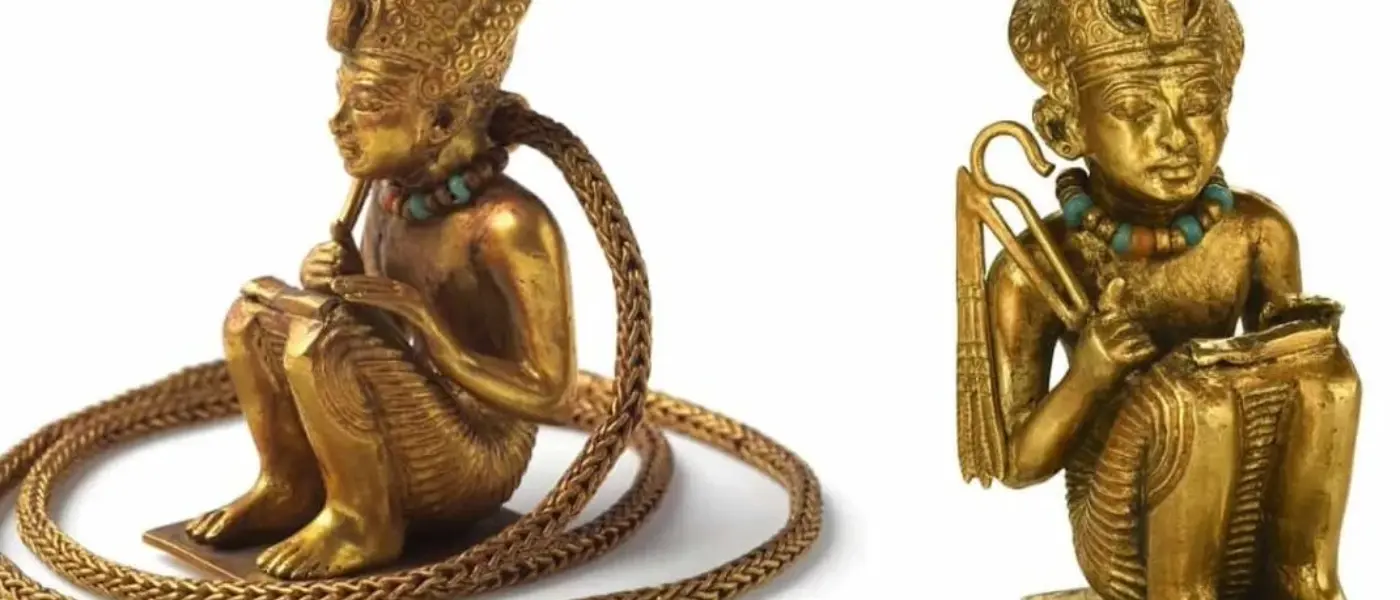
Our story today is with King Amenhotep III (1405-1370 BC), who assumed power at a young age, after the death of his father, King Tuthmosis IV, at the age of approximately twelve.
And his mother had a secondary wife called “Mut-em-Wya”, and he continued to rule the country alone. For about thirty-six years, during which he was the greatest monarch in the civilized world.
And Egypt was the largest empire in the ancient East and the one with political and literary sovereignty in it.
King Amenhotep III was considered the greatest king who carried out construction and reconstruction work during the era of the Eighteenth Dynasty, and the activity
An interest that the previous kings exerted in the fierce wars was exploited by him in designing the buildings with which he wanted to decorate his country.
In the early years of his reign, King Amenhotep III was interested in sports, especially hunting and hunting, as he was a great hunter
Where a scarab was found for him recording that he captured a hundred wild bulls on a royal hunting trip that lasted two days, and another scarab that he released in the tenth year.
It was mentioned that since his accession to the throne, he had killed 102 lions on hunting trips. He showed little interest in military operations, as King Amenhotep III faced some unrest in the fifth year of his rule in the country of Kush (Nubia).
But the fighting was taking place with a small group of rebels, and after he defeated them, he expanded his territory until he reached the Fourth Cataract.
A memorial of this campaign was written near the rocks of Konoso Island in Nubia, and his campaign against Nubia was described on a stela of obesity, which is now in the British Museum.
Another revolution took place in the town of Abhat, located after the Second Cataract, and Nubia had self-administration under the supervision of the royal son of Kush.
Amenhotep sent his deputy to the southern regions and Amenhotep son of hapu to suppress the revolution, but King Amenhotep III did not participate in it. Most of his rule was characterized by stability and prosperity.
The Monuments and Legacy of Amenhotep II

King-Amenhotep-III-Effects-achievements
Royal Statues and Visual Legacy
Amenhotep III is distinguished from all other Egyptian pharaohs by the large number of statues that have survived from his reign. More than 250 statues of the king have been identified, forming a continuous series of royal portraits that reflect different stages of his long rule.
Egypt at the Height of Power
At the time of his death, Amenhotep left behind a kingdom that was internationally respected and at the height of its political power and influence. At the same time, Egypt remained firmly rooted in long-established political and religious traditions dominated by the powerful priesthood of Amun.
Akhenaten and the Challenge to Tradition
These deep-rooted traditions were later challenged by the religious reforms of his son, Akhenaten. Akhenaten’s actions disrupted the established order and raised a fundamental question about whether the authority of the pharaoh could surpass the collective power of Egyptian society as embodied in the cult of Amun. Akhenaten went as far as relocating the capital away from Thebes, the main center of Amun’s worship, and founding a new city, Amarna, dedicated to the Aten.
Building Projects at Karnak and Luxor
Amenhotep III carried out extensive building projects at Karnak, including work at Luxor Temple, where he added two pylons, a colonnade behind the new entrance, and a new temple dedicated to the goddess Maʿat. He dismantled the Fourth Pylon of the Temple of Amun at Karnak in order to construct a new Third Pylon, creating a new monumental entrance.
Along the central axis of the newly formed forecourt, he erected two rows of columns with open papyrus capitals. The forecourt between the Third and Fourth Pylons, often referred to as the obelisk court, was decorated with scenes showing the sacred funerary barques of the gods Amun, Mut and Khonsu. Amenhotep III also initiated construction on the Tenth Pylon of the Temple of Amun.
Quarries and Nubian Monuments
The king’s earliest recorded actions, during his first and second regnal years, included opening new limestone quarries at Tura, south of modern Cairo, and at Dayr al-Barsha in Middle Egypt, to supply stone for his ambitious construction programs. In Nubia, Amenhotep III erected monuments on a massive scale, effectively covering the region with new buildings.
These included a small colonnaded temple at Elephantine dedicated to Thutmose III, a rock-cut temple at Wadi es-Sebua dedicated to Amun “Lord of the Ways” and the temple of Horus of Miami at Aniba, as well as newly founded temples at Kawa and Sesebi.
Mortuary Temple and the Colossi of Memnon
On the west bank of the Nile, Amenhotep III constructed an enormous mortuary temple which at the time was the largest religious complex in Thebes. However, its location close to the floodplain caused severe damage and within less than two centuries the structure had largely collapsed.
Much of its stonework was later reused by Merneptah and other pharaohs for their own building projects. The only elements that remained standing were the monumental entrance gateway and the Colossi of Memnon, two colossal seated statues of Amenhotep III, each standing about 18 meters (59 feet) high.
Statues of Sekhmet and Royal Sculpture
Amenhotep III also built the Third Pylon at Karnak and commissioned 600 statues of the goddess Sekhmet for the Temple of Mut, south of the main Karnak complex. Many of the finest statues of the New Kingdom date to his reign, including two impressive rose granite lions that once stood in front of the temple at Soleb in Nubia, as well as a large number of royal sculptures.
Several seated statues made of black granite, depicting Amenhotep wearing the nemes headdress, were discovered both behind the Colossi of Memnon and at Tanis in the Nile Delta. In 2014, two enormous statues of Amenhotep III that had collapsed during an earthquake around 1200 BC were reconstructed from more than 200 fragments and reassembled at the northern gate of his mortuary temple.
Luxor Temple Statue Cache
One of the most remarkable discoveries of royal statuary from Amenhotep III’s reign occurred in 1989, in the courtyard of the king’s colonnade at Luxor Temple. This cache included a nearly intact pink quartzite statue of the king, standing about 1.8 meters (6 feet) high and wearing the Double Crown.
The statue had been placed on a sled and may have functioned as a cult image. Notably, the name of the god Amun was deliberately erased wherever it appeared in the king’s cartouche, clearly reflecting Akhenaten’s campaign against the god worshiped by his father.
Aten-tjehen and Royal Titles
Amenhotep III frequently used the epithet Aten-tjehen, meaning “the Dazzling Sun Disk.” This title appears in his royal titulary at Luxor Temple and was also used as the name of one of his palaces, the royal barge from Regnal Year 11 and even a military unit within his army.
The Dazzling Aten Settlement
In 2021, archaeologists uncovered a settlement near Amenhotep III’s mortuary temple known as the Dazzling Aten. The settlement is believed to have been established by the king to house craftsmen and laborers involved in royal construction projects at Thebes. The site included its own bakery and cemetery, indicating a fully organized community.
Sed Festival Stela
A Sed Festival stela of Amenhotep III was removed from Egypt and taken to Europe by an art dealer. Formerly owned by Eric Cassirer, it is now thought to be held in a private collection in the United States. The stela, carved from white alabaster, measures 10 by 9 centimeters, although only the upper half has survived.
On the front, the god Heh, symbolizing the number one million, holds notched palm branches representing years, along with the cartouche of Amenhotep III, symbolically granting the king a reign of a million years. The side depicts a series of festival symbols, including the Sed emblem, identifying the object as part of the king’s royal jubilee.
The top and back show deliberate damage where the cartouche was chipped away, which Cassirer interpreted as further evidence of Akhenaten’s destruction of references to Amun. Other deities shown on the stela such as Re and Maʿat, were left unharmed, suggesting the altered stela may later have been displayed during Akhenaten’s reign.
Commemorative Scarabs and Foreign Marriages
Another notable feature of Amenhotep III’s reign is the discovery of more than 200 large commemorative stone scarabs spread across a wide geographic area, extending from Syria, including Ras Shamra, to Soleb in Nubia. In addition, five scarabs record the arrival of his wife Gilukhepa of Mitanni in Egypt, accompanied by a retinue of 317 women. She was the first of several foreign princesses who became part of the Egyptian royal family during Amenhotep III’s reign.
The Death of King Amenhotep III and his tomb

King-Amenhotep-III
King Amenhotep III died after ruling for 38 years, at the age of fifty, perhaps due to an unknown illness. The tomb that he prepared for himself was discovered in 1799, which is tomb No. 22 in the Valley of the Kings.
It was discovered by Gouloh and Devillier. It was found empty and the walls were destroyed due to pressure and weather factors, and his mummy was not inside it.
His mummy was found in a cemetery near Deir el-Bahri. It was hidden by priests and discovered in 1881.
The Burial and Mummy of Amenhotep II
Amenhotep III was buried in tomb WV22, located in the Western Valley of the Valley of the Kings near Thebes. This tomb is the largest in the West Valley and contains two side chambers that were prepared for his Great Royal Wives, Tiye and Sitamun. Despite this, there is no clear evidence that either of them was actually buried in this tomb.
Later, during the reign of Smendes in the Third Intermediate Period, Amenhotep III’s mummy was removed from WV22 and transferred to the royal mummy cache in tomb KV35. Several other pharaohs from the Eighteenth and Nineteenth Dynasties were placed there as well. The mummy remained hidden in this cache until it was discovered in 1898 by Victor Loret.
The mummy of Amenhotep III shows features that are unusual for the Eighteenth Dynasty, especially the extensive use of subcutaneous stuffing which was intended to give the body a more lifelike appearance. The mummy is registered under the museum inventory number CG 61074.
In April 2021, the mummy of Amenhotep III was ceremonially moved from the Museum of Egyptian Antiquities to the National Museum of Egyptian Civilization. This transfer took place as part of the event known as the Pharaohs’ Golden Parade, during which the mummies of seventeen kings and four queens were relocated together.
Unraveling the Legacy of King Amenhotep III
Who was King Amenhotep III?
Amenhotep III was the ninth pharaoh of the Eighteenth Dynasty of Egypt, reigning from about 1386 to 1349 BC. Known for his prosperous and stable rule, he expanded Egypt’s wealth and influence significantly.
What were King Amenhotep III’s major achievements?
Amenhotep III is celebrated for his vast building projects, including the construction of temples and statues, most famously the Colossi of Memnon. He enhanced Egypt’s trade networks and fostered diplomatic relations with neighboring regions.
How did Amenhotep III contribute to Egyptian architecture?
During his reign, Amenhotep III commissioned an extensive array of structures across Egypt. He built the Luxor Temple and expanded the Karnak Temple complex. His reign marked a high point in ancient Egyptian art and architecture.
What was Amenhotep III’s relationship with other nations?
Amenhotep III was a skilled diplomat. He maintained peace through marriage alliances and treaties, notably with Mitanni, Babylon, and Assyria. His diplomacy helped secure Egypt’s influence and prosperity.
What role did religion play in Amenhotep III’s reign?
Religion was central to Amenhotep III’s rule. He promoted the worship of the sun god Aten and initiated a religious shift that would continue under his successors. He was also seen as a divine manifestation.
How did Amenhotep III influence the arts?
His reign marked a golden age for Egyptian art. He encouraged artistic innovation, resulting in more lifelike and dynamic representations in sculptures, reliefs, and paintings, which reflected the wealth and power of his era.
What was the significance of the Amarna Letters in Amenhotep III’s reign?
The Amarna Letters are a collection of diplomatic correspondence from Amenhotep III’s time. They offer insights into his diplomatic relations, showcasing his strategic alliances and the international scope of his influence.
How did Amenhotep III ensure the continuity of his dynasty?
He secured his dynasty’s future by appointing his son, Amenhotep IV (later Akhenaten), as co-regent. This transition facilitated a smooth succession, maintaining stability and continuity in Egyptian leadership.
Where is Amenhotep III buried?
Amenhotep III was initially buried in a tomb in the Valley of the Kings. However, due to tomb robberies, his mummy was moved several times and eventually found in a cache in Deir el-Bahri.
Why is Amenhotep III’s reign considered a peak of ancient Egyptian civilization?
His era was marked by prosperity, stability, and cultural and artistic flourishing. His diplomatic and architectural achievements laid the groundwork for what many consider the apex of ancient Egyptian civilization.
About EgyptaTours

EgyptaTours is a name synonymous with trust, excellence, and unforgettable travel experiences, proudly standing as one of the leading travel agencies in Egypt. Renowned for its deep expertise, personalized service, and carefully crafted itineraries, EgyptaTours serves as the ultimate gateway to discovering Egypt in its most authentic and inspiring form.