Luxor Temple: A First-Timer’s Guide to Egypt’s Festival Temple on the Nile
📋 Summary & Quick Facts
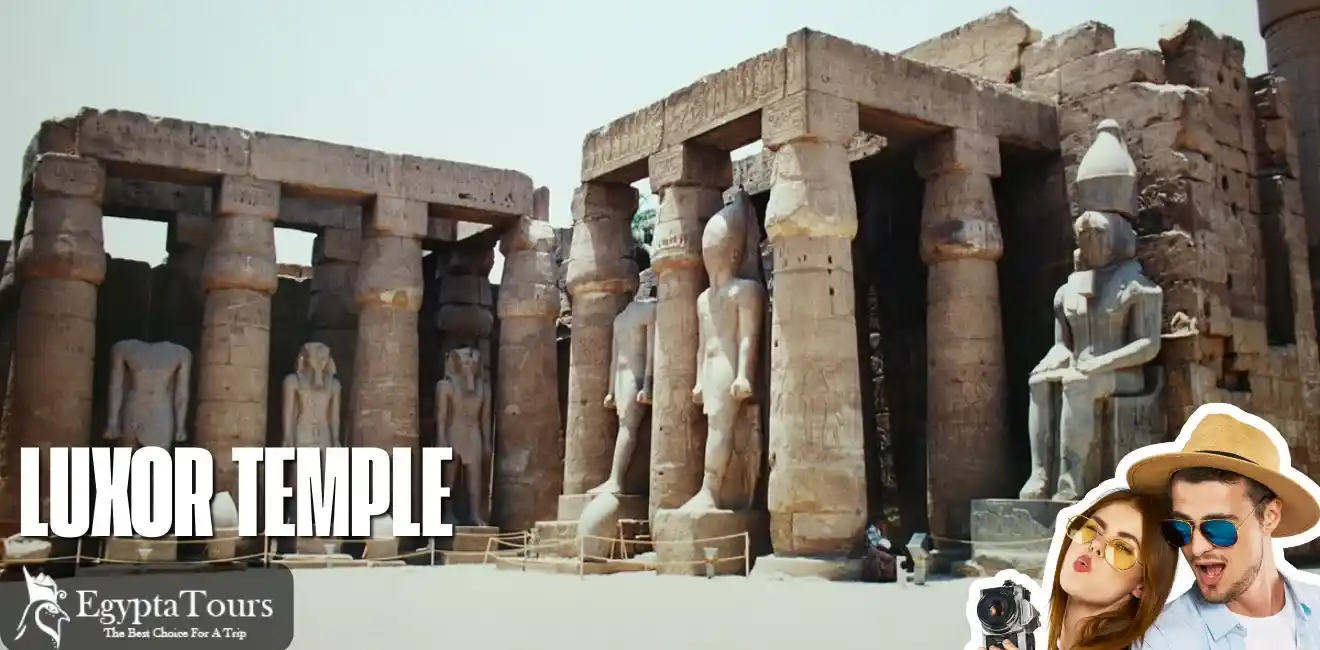
Located on the east bank of the Nile in the heart of ancient Thebes, Luxor Temple is a breathtaking New Kingdom monument that stands as a testament to the grandeur of Ancient Egypt. Unlike mortuary temples built to honor the dead, this sanctuary was a “living engine” dedicated to the rejuvenation of kingship and the worship of the Theban Triad—Amun, Mut, and Khonsu.
Initiated by Amenhotep III and massively expanded by Ramesses II, the complex grew dynamically over centuries, with subsequent rulers like Tutankhamun and Alexander the Great leaving their own historical marks. Today, its colossal statues, towering columns, and intricate relief carvings offer visitors an unparalleled glimpse into ancient religious festivals, royal coronations, and the enduring resilience of Egyptian architecture.
Key Takeaways
-
-
A Monument of Kingship, Not a Tomb: Unlike the sealed tombs of the Valley of the Kings, this site was an active religious center used for public worship, royal coronations, and the annual Opet Festival to renew the pharaoh’s divine right to rule.
-
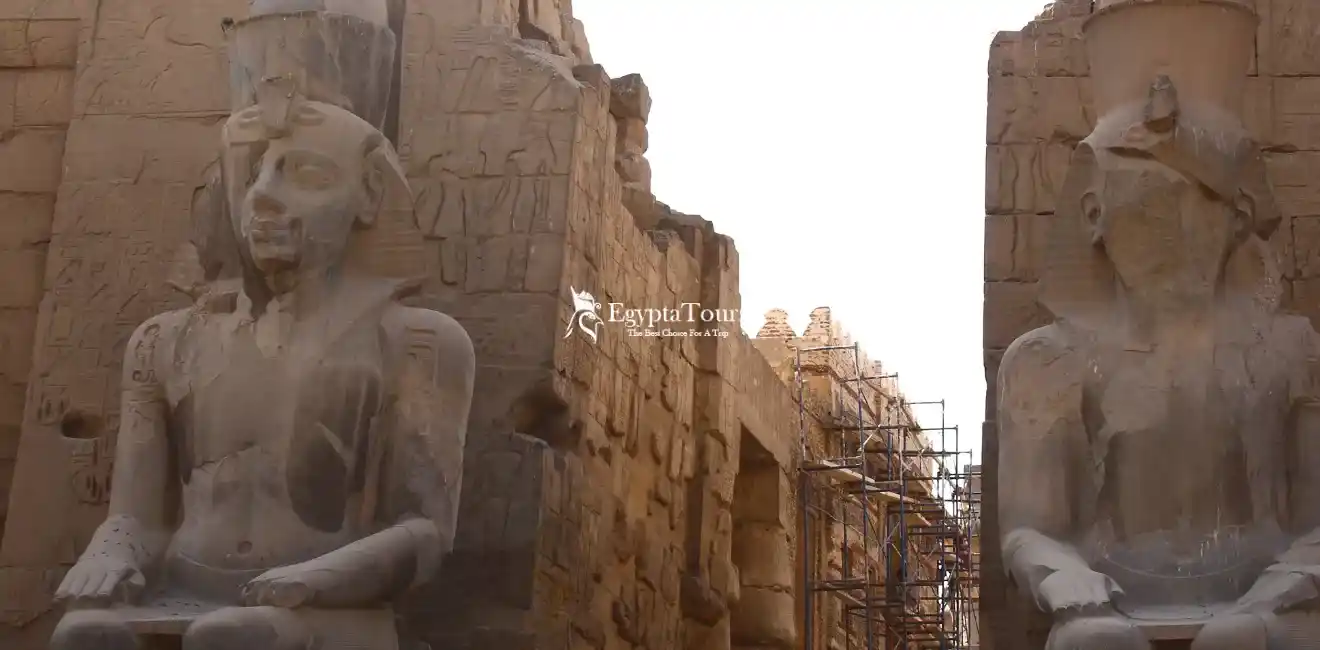
The Master Builders: The refined core of the complex was constructed by Pharaoh Amenhotep III in the 14th century BCE, while Ramesses II later added the grand pylon entrance, the massive courtyard, and the iconic guardian statues.
-
Dedicated to the Theban Triad: The sanctuary served as a grand shrine to honor Amun (the king of the gods), his consort Mut, and their son Khonsu.
-
A Layered History: The temple evolved like a living city block. Over centuries, rulers spanning from Tutankhamun to Alexander the Great continually added shrines, halls, and carvings to weave themselves into the site’s powerful legacy.
-
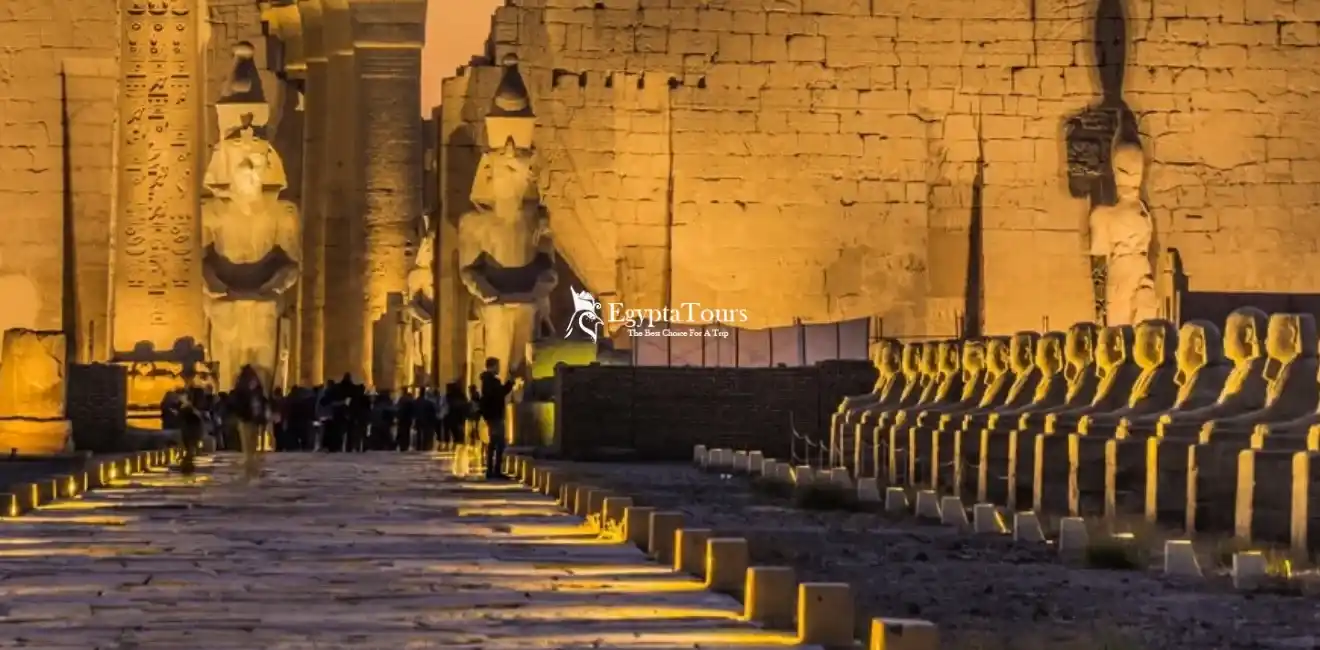
Connected to Karnak: The site is physically and spiritually linked to the nearby Karnak Temple via the majestic Avenue of Sphinxes, which served as the primary procession route during major ancient festivals.
-
Smart Visitor Planning: To avoid the heat and crowds, the best times to visit are early morning or late afternoon into the evening, when dramatic lighting beautifully illuminates the towering columns and detailed hieroglyphs.
-
The temple is a magnificent ancient History temple located in the city of Luxor in Egypt. Originally built by Amenhotep iii during the New Kingdom era, the monument stands as a stunning testament to Ancient Egyptian culture and history
Its hieroglyphic inscriptions, along with its various statues and carvings, provide visitors with a unique window into the past. As one of the largest and most well-preserved temples in Egypt, Luxor Temple is an awe-inspiring sight that is sure to leave any traveler with a lasting impression.
Location-of-The-Luxor-Temple-EgyptaTours
This magnificent sanctuary is located in the city of Luxor, Egypt. Situated on the east bank of the Nile River, the temple is a short distance away from the Valley of Kings, Valley of Queens and the city of Thebes. Built in 1400 BCE, this temple was once a part of the ancient city of Thebes and was dedicated to the god Amun.
The structure is one of the most recognizable landmarks in the region, with its two large pylons, obelisks, court, and hypostyle hall. Visitors to the temple can also view numerous carved reliefs that depict stories from Ancient Egyptian mythology.
When it was built
When-was-Luxor-Temple-built-EgyptaTours
Temple pf Luxor Egypt, located in Luxor, Egypt, was built by Pharaoh Amenhotep III in the 14th century BC. The temple is one of the most famous historical sites in Egypt and a popular destination for travelers to explore.
It is believed that Amenhotep III ordered the construction of the temple to glorify himself and the god Amun. It took around 20 years to complete and was finished during the reign of his son Akhenaten. The temple was then used as a religious center and a place of worship for many centuries until it was damaged by earthquakes and other natural disasters.
Sanctuary Construction and Growth
Unlike isolated mortuary monuments built with a single finish date, this sanctuary grew dynamically over centuries. Think of it more like a city block that kept getting new wings and upgrades. Pharaohs added halls, courtyards, statues, and shrines to tie themselves to the gods, and to the idea of rightful rule.
At its heart, The Complex is linked to kingship and renewal. One of its biggest roles was during major festivals, when sacred images traveled in procession, crowds gathered, and the city’s religious calendar came alive. This wasn’t only a place to remember the dead, it was a place to renew the bond between the gods, the king, and the people.
Names matter here, but the timeline can stay clear. Amenhotep III shaped much of the elegant core. Later, Tutankhamun and Horemheb left scenes on the walls that still hold traces of that turbulent era. Ramesses II made the entrance shout his name in stone. Much later, Alexander the Great added a shrine that shows the temple’s long afterlife, even as Egypt’s rulers changed.
A temple built for renewal, not for burials
This site was never intended to be a sealed tomb for burials. Instead, it operated as an active religious center where priests performed daily rituals, offered food and incense, and cared for sacred spaces as if the gods truly lived there. The goal was to keep ma’at, the Egyptian idea of balance, order, and right living. When the world felt steady, the Nile rose on time, crops grew, and society held together.
The temple also connects to the Theban Triad: Amun, Mut, and Khonsu. You don’t need a theology degree to get the point. Amun was a major god of Thebes, Mut was his consort, and Khonsu was their child. This grand pathway physically connected the monument to the nearby Karnak Temple, Amun’s main cult center.
This is where the difference from tomb sites becomes sharp. Tombs were sealed and protected, meant for one person’s afterlife. Mortuary temples honored a dead king’s spirit. This sacred space stayed active, used, and re-used, with the city around it changing while the rituals carried on.
The big builders and their “signature” spots
The complex grew over time like a living neighborhood, with major leaders leaving their signature marks:
-
Amenhotep III: Built the refined heart of the complex, including the core chambers and the famous colonnade zone with its towering, palm-like stone columns.
-
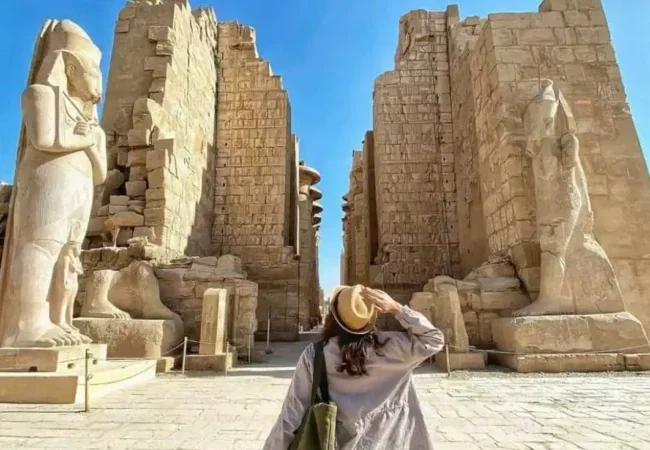
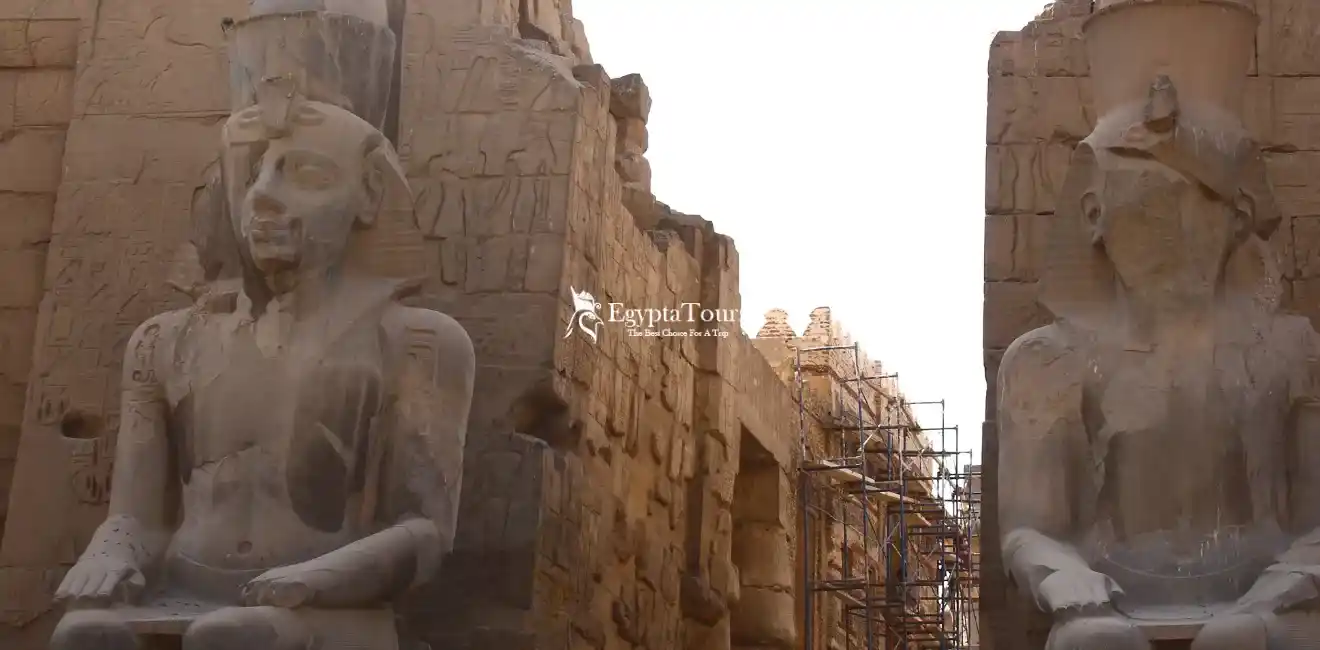
Ramesses II: Added the massive pylon entrance, a large courtyard, two grand obelisks (only one remains), and monumental statues that guard the gateway.
-
Tutankhamun & Horemheb: Left highly detailed relief scenes tied to royal legitimacy and ancient festival imagery.
-
Alexander the Great: Built a unique shrine inside the complex, proving that even much later leaders wanted to be part of the monument’s historical story.
What the Temple Was Used for
When-was-Luxor-Temple-built-EgyptaTours
The sanctuary served many vital roles for the Ancient Egyptians, including:
-
Religious Worship: It was a major pilgrimage site for those seeking blessings, especially from the god Amun.
-
Royal Ceremonies: The site was heavily used to crown Pharaohs and hold royal rituals.
-
Festivals and Entertainment: It hosted massive public celebrations and religious festivals.
-
A Secure Vault: It was used to safely store precious artifacts, including gold items and weapons.
-
An Immense Library: The complex housed a vast collection of some of the most important historical texts and books of the era.
The Temple’s Connection to The God Amun
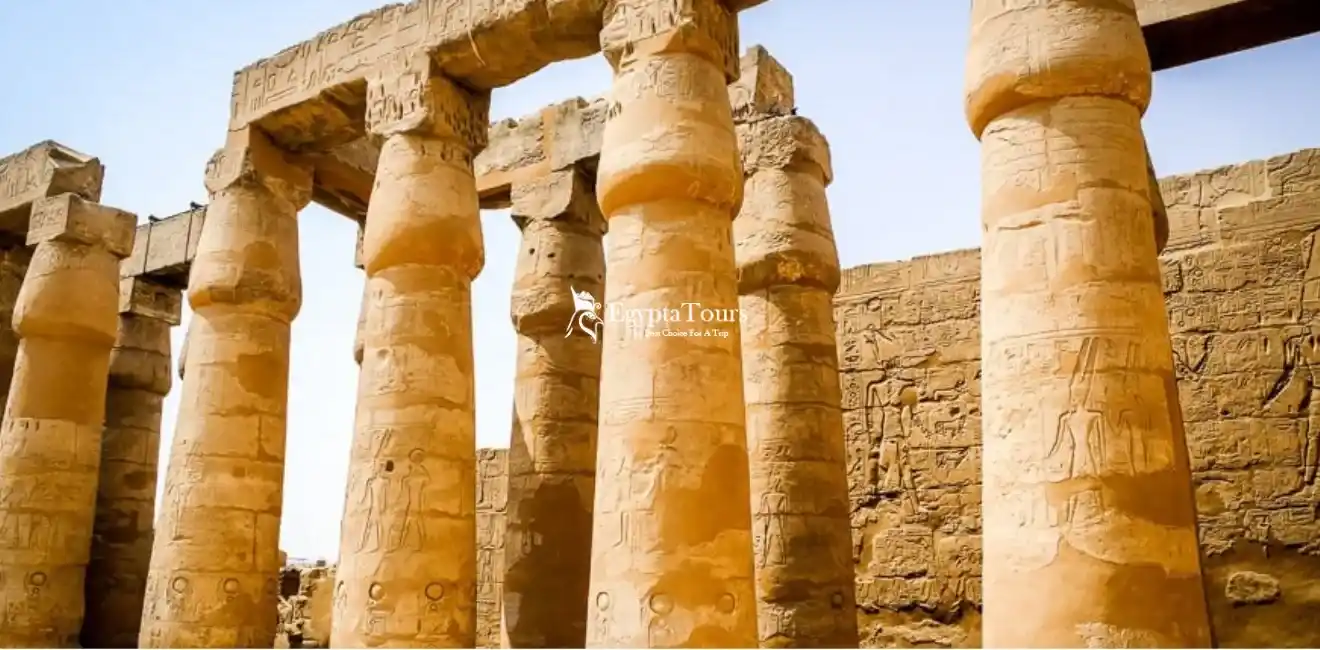
The-temple’s-connection-to-the-god-Amun-EgyptaTours
The sanctuary was primarily dedicated to Amun (the king of the gods), his consort Mut, and their child Khonsu. Amun was known as the king of the gods and had a large presence in the city of Thebes. He was considered to be the patron of Pharaohs and was often worshipped as the lord of Thebes. As such, Temple pf Luxor Egypt was built in honour of Amun and served as a grand shrine to the god.
The temple is connected to the god through its design, which prominently features a double statue of Amun-Ra, the combination of Amun and Ra, another important deity.
This statue stands at the entrance of the temple, and is seen as a symbol of power, strength, and prosperity. Additionally, many of the reliefs and hieroglyphics found throughout the temple depict scenes from Egyptian mythology associated with Amun. Through these images, visitors can gain an understanding of how strongly the Egyptians venerated this god.
The structure is a testament to the religious devotion of the Ancient Egyptians, and it continues to provide insight into their religious beliefs today. Its connection to the god Amun provides visitors with an opportunity to explore the intricate relationship between Ancient Egypt’s gods and its people.
Detailed History of the Builders
Situated on the east bank of the Nile River, this magnificent New Kingdom monument stands as a breathtaking testament to Ancient Egyptian culture and history.
The complex, located on the east bank of the Nile River in the city of Luxor (ancient Thebes), was commissioned during the New Kingdom and later completed by Ramesses II.. The construction of the temple was designed to honor the god Amun, who was associated with the city of Thebes.
The original temple structure was erected between 1390–1352 BCE and consisted of a small court, two pylons, and a colonnade hall. The temple was later expanded upon by Ramesses II, with two massive obelisks, two large courts, and several smaller courts added.
Ramesses II also added a grand avenue of sphinxes connecting this site directly to the nearby Temple of Karnak. The construction of the temple was overseen by a high priest named Useramun, who is thought to have been related to Amenhotep III.
The sacred grounds served as a major pilgrimage site for Egyptians from all over the country who wanted to pay homage to the god Amun and worship at his temple. It was also used for important ceremonies such as coronations and royal jubilees. In addition to being used for religious purposes, the temple was a symbol of royal power and grandeur, serving as a backdrop for many royal processions.
Sadly, the monument declined in importance after the fall of Egypt’s New Kingdom. Although it was still visited by pilgrims and tourists, it was mostly forgotten until its rediscovery in the 19th century CE. After being excavated and studied by archaeologists, it has become one of Egypt’s most iconic landmarks, serving as a window into the past and a reminder of the grandeur of Ancient Egyptian civilization.
The Fall of the Temple
Like many ancient Egyptian landmarks, the sanctuary experienced a gradual decline through changing empires, looting, and abandonment. As various rulers of Egypt rose and fell, the temple was subject to destruction, changes in ownership, and looting. It was also abandoned at times throughout its history.
Significant destruction occurred when fanatical groups, viewing the art as idolatry, destroyed original decorations and dismantled architecture to build churches. During this period, much of the original artwork and decoration was destroyed by fanatical Christians who believed it was a form of idolatry. In addition, some of the original architecture was torn down to make way for churches.
European explorers caused further damage to the walls and carvings while digging through centuries of accumulated sand. Several European explorers visited Egypt during this time and decided to dig through the sand which had been covering the temple for centuries. This digging damaged many of the walls and even destroyed some of the carvings.
Despite these hardships, the remaining ruins stand today as a powerful symbol of resilience. While it may not be in its original condition, the remaining ruins still offer insight into Ancient Egyptian life and culture.
How to visit Luxor Temple without Stress (tickets, timing, and respectful behavior)
Because it is located right in the city center, this is one of the easiest major sites in Egypt to fit into a half-day itinerary, In January 2026, expect standard security checks and ticketing at the entrance, with hours that can vary by season.
Plan for comfort. The stone reflects heat during the day, and the site has uneven ground in places. If you visit with a guide, you’ll get faster context on what you’re seeing. If you go on your own, reading a few signs well beats rushing past everything.
Best times to go, how long to stay, and what to bring
Early morning is calmer and cooler. Late afternoon into evening can be the most dramatic, because the temple lighting makes columns and reliefs stand out.
Most people do well with 60 to 90 minutes inside. If you like slow photography or detailed wall scenes, add time.
Bring a few basics:
- Water and a hat for sun and glare.
- Comfortable shoes for stone paths and steps.
- A small flashlight to spot carvings in shaded corners.
A popular half-day plan is combining this site with Karnak, connected by the Avenue of Sphinxes. Seeing both helps the story click, because the procession route suddenly makes sense.
Simple etiquette that protects the site and keeps you welcome
This is a world-famous monument and part of a living city. To protect the site and ensure you are welcome, please follow these simple rules:
-
Do not touch or climb: Never touch fragile carvings or climb on stonework, as the natural oils from your hands cause permanent damage over time.
-
Respect the mosque: Be mindful of the active mosque inside the complex. If prayers are happening, keep your voice low and give worshippers space.
-
Ask before photographing: Always ask for permission before taking pictures of locals or staff members.
-
Stay on the paths: Always walk on marked paths and avoid stepping into roped-off areas.
Conclusion
This incredible landmark is best understood as a living temple built for renewal, public worship, and festivals, not a hidden burial site. It’s also one of Egypt’s most walkable ancient places, with an iconic entrance, towering columns, and wall scenes you can learn to read in minutes. A smart visit comes down to timing, comfort, and respect for both the monument and the people around it.
Save a simple route, go near sunset if you can, and pair it with Karnak to see the full procession story in your mind’s eye.
Tours To Discover Luxor Temple
| Tour Name | View Tour |
|---|---|
| Luxor East Bank Day Tour | View Tour |
| Luxor Full Day Tour (East & West Bank) | View Tour |
| Luxor Temple Night Tour | View Tour |
| Nile Cruise with Luxor Temple Visit | View Tour |
| Luxor Highlights Private Tour | View Tour |
| Luxor Short Break Package | View Tour |
| Egypt Nile Cruise & Luxor Tour Package | View Tour |
People Also Ask
What is Luxor Temple, and where is it located?
It’s an ancient Egyptian temple complex situated on the east bank of the Nile River in Luxor (formerly Thebes). It’s a significant historical site, renowned for its architectural grandeur and rich past.
Who built it, and when was it constructed?
Amenhotep III started building the core structure around 1400 BCE, and it was later expanded by Tutankhamun, Horemheb, and Ramses II.
What was its main purpose?
It was primarily a center for the festival of Opet, a celebration honoring the god Amun, his consort Mut, and their son Khonsu. It acted as both a religious and political symbol.
What are the main architectural features?
Noteworthy features include massive stone pylons, colossal statues of Ramses II, a central courtyard, and a grand peristyle court. The avenue of sphinxes connecting it to Karnak is also highly significant.
Can you visit The Temple of Luxor today, and are there guided tours?
Yes, the complex is open to the public, and guided tours are readily available to offer deeper insights into its history and architecture.
What’s the best time to visit?
The best time to visit is between October and April when the weather is cooler. Early morning or late afternoon visits provide a more comfortable and less crowded experience.
How long should I plan to spend there?
Visitors typically spend about 1 to 2 hours exploring the grounds. This allows enough time to appreciate the detailed carvings without feeling rushed.
Are there any nearby attractions worth visiting?
Yes, nearby attractions include Karnak Temple, the Valley of the Kings, and the Colossi of Memnon. These sites, along with Luxor Temple, form part of the ancient city of Thebes, a UNESCO World Heritage site.
How should I prepare for a visit?
Wear comfortable shoes and lightweight clothing. Carry water, sunscreen, and a hat. It’s also wise to bring a guidebook or enlist a local guide.
Is it different from Karnak Temple?
Yes. While both were dedicated to the god Amun, Karnak served as the main religious complex, whereas this site was focused heavily on royal ceremonies and the annual Opet Festival.
Why is it so important in ancient Egyptian history?
It symbolized the renewal of kingship and divine authority, playing a central role in coronation rituals to reinforce the pharaoh’s connection to the gods.
Can it be visited at night?
Yes, it is famous for its nighttime illumination. Visiting after sunset offers a unique atmosphere that beautifully highlights the columns and statues.
Is Luxor Temple a UNESCO World Heritage Site?
Yes. The Complex is part of the Ancient Thebes UNESCO World Heritage Site, which includes Karnak Temple, the Valley of the Kings, and other nearby monuments.
Are there inscriptions and carvings inside The Temple?
Yes, the temple walls are covered with detailed hieroglyphs depicting religious rituals, royal achievements, and scenes from the Opet Festival.
Is It suitable for children and families?
Yes. The open layout and spacious courtyards make it family-friendly. However, supervision is advised due to uneven stone surfaces.
Is there an entrance fee for Luxor Temple?
Yes, there is an entrance ticket required. Prices may vary, so it’s best to check official sources or tour operators before visiting.
How does The Complex reflect ancient Egyptian architecture?
It showcases classic New Kingdom architecture, including axial planning, massive pylons, symmetrical courtyards, and monumental statuary.
Was Luxor Temple modified after ancient times?
Yes. Parts of The Temple were reused during Roman times, and later a mosque (Abu Hagag Mosque) was built within the temple complex and remains in use today.
Is It accessible for visitors with limited mobility?
Some areas are accessible, but uneven terrain and steps may present challenges. Guided tours can help plan accessible routes.
What makes This historical site unique compared to other Egyptian temples?
Unlike most temples, This magical Temple was not dedicated to a cult statue but to the rejuvenation of kingship, making it unique in religious purpose.
Can this be included in a Nile cruise itinerary?
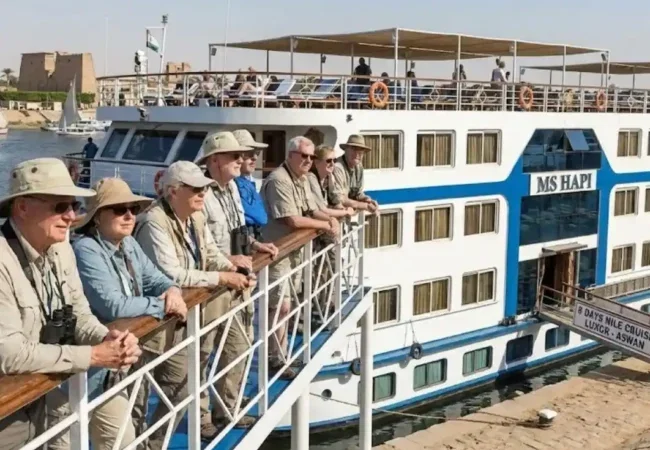
Absolutely. Many Nile cruises include this exact site as a core part of their East Bank excursions.
Similar Posts
About EgyptaTours

EgyptaTours is a name synonymous with trust, excellence, and unforgettable travel experiences, proudly standing as one of the leading travel agencies in Egypt. Renowned for its deep expertise, personalized service, and carefully crafted itineraries, EgyptaTours serves as the ultimate gateway to discovering Egypt in its most authentic and inspiring form.