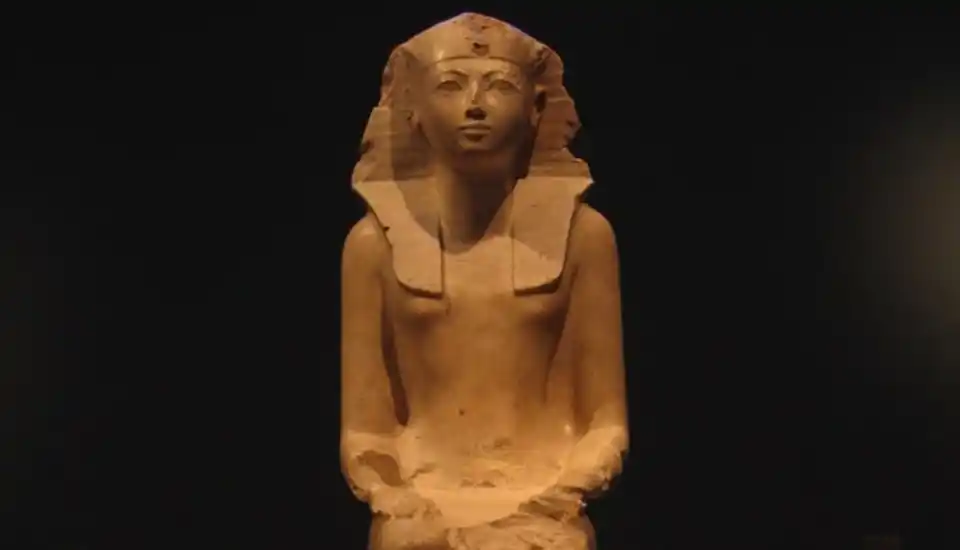
Queen Hatshepsut family Tree
📋 Summary & Quick Facts
Hatshepsut was born into the core royal bloodline of Egypt’s 18th Dynasty as the daughter of Thutmose I. She married her half-brother Thutmose II to preserve dynastic legitimacy, served as regent for her young stepson Thutmose III, and ultimately took the throne as pharaoh in her own right — one of the few women in Egyptian history to do so.
🔑 Key Takeaways
- Father: Thutmose I — pharaoh of the 18th Dynasty
- Mother: Ahmose — Thutmose I’s principal wife
- Great-grandfather: Ahmose I — founder of the New Kingdom
💍 Marriage & Family
- Husband: Thutmose II — her half-brother
- Daughter: Neferure — held the title “God’s Wife of Amun”
- Stepson/successor: Thutmose III — later ruled alone
🏛️ Legacy
- Reign: ~21–22 years — one of ancient Egypt’s most prosperous periods
- Mortuary temple: Deir El-Bahri (Djeser-Djeseru), designed by Senenmut
- Known for: the Punt trading expedition, twin obelisks at Karnak, and ruling as a full pharaoh — beard, titulary, and all
Queen Hatshepsut is one of the most powerful women to ever rule ancient Egypt. Her family tree explains why: she was born into the core royal bloodline of the early 18th Dynasty, and she used that lineage to justify ruling as pharaoh in her own right — not just as a regent.
Here is what her family actually looked like, based on inscriptions, tomb evidence, and current Egyptological research.
Hatshepsut’s Family Tree at a Glance
| Person | Relationship | Notes |
|---|---|---|
| Thutmose I | Father | Pharaoh, 18th Dynasty; expanded Egypt’s borders into Nubia and the Levant |
| Ahmose | Mother | Generally identified as Thutmose I’s principal royal wife |
| Thutmose II | Husband (half-brother) | Son of Thutmose I by a secondary wife, Mutnofret |
| Neferure | Daughter | Hatshepsut’s only well-attested child; held the title “God’s Wife of Amun” |
| Thutmose III | Stepson and nephew | Son of Thutmose II by a secondary wife, Iset; later ruled alone |
| Ahmose I | Great-grandfather | Founder of the New Kingdom; expelled the Hyksos |
Who was Hatshepsut’s father?
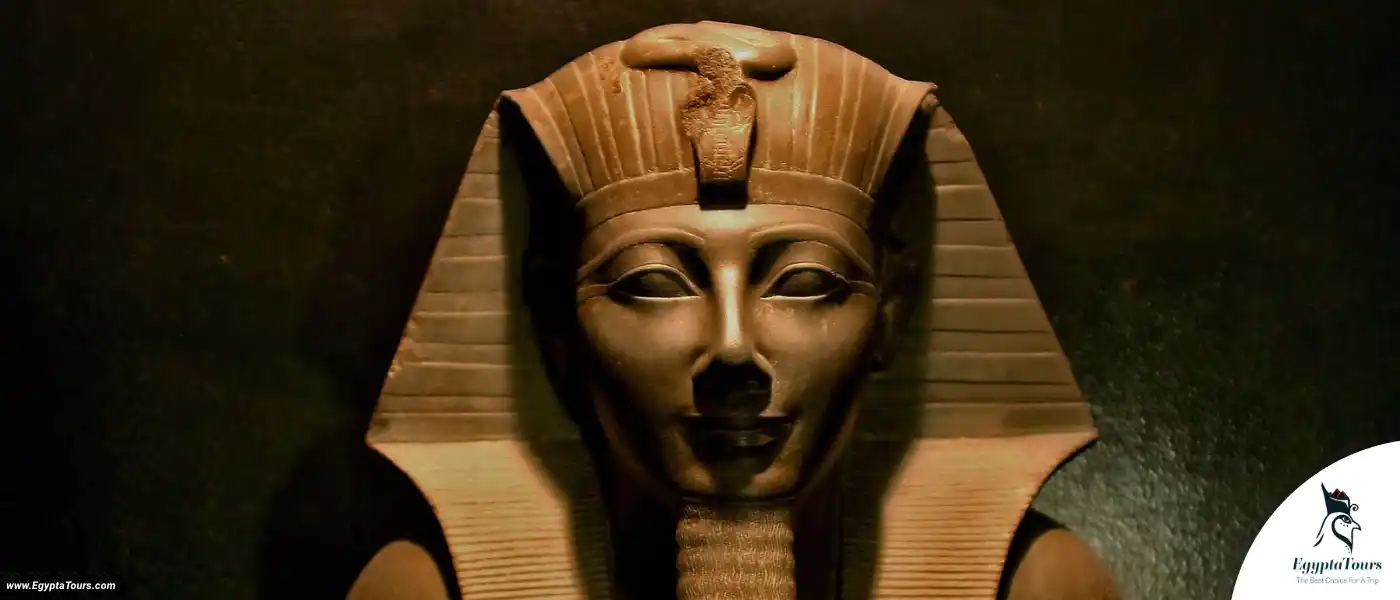
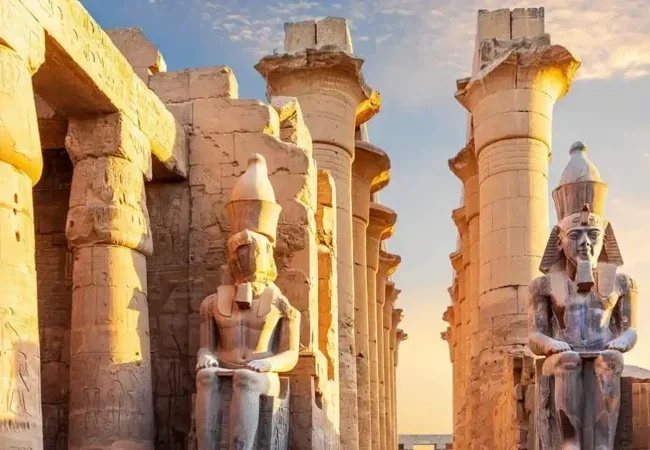
Pharaoh Thutmose I, father of Queen Hatshepsut
Hatshepsut was the daughter of Thutmose I, a successful military pharaoh who expanded Egyptian territory further than most of his predecessors. Being his eldest surviving daughter by his principal wife gave Hatshepsut her strongest claim to legitimacy — stronger, in her view, than that of her half-brother Thutmose II, whose mother, Mutnofret, was a secondary wife rather than the chief queen.
Hatshepsut’s great-grandfather was Ahmose I, the pharaoh who drove out the Hyksos and founded the New Kingdom — a lineage she leaned on heavily when asserting her right to rule.
Who Was Hatshepsut’s Mother?
Her mother was Queen Ahmose, widely identified as Thutmose I’s principal wife. (She is sometimes confused with the earlier, more famous Ahmose-Nefertari, wife of Ahmose I — a different queen from an earlier generation.) Later in her reign, Hatshepsut reinforced her legitimacy further by claiming divine birth as the literal daughter of the god Amun, a common propaganda device used by Egyptian pharaohs.
Who Did Hatshepsut Marry?
Hatshepsut married her half-brother, Thutmose II, likely in her early-to-mid teens — a standard practice among Egyptian royalty at the time, intended to keep succession and legitimacy within the family line. Thutmose II became nominal king, but inscriptions and administrative evidence suggest Hatshepsut held considerable real influence during his reign.
Thutmose II died relatively young, after roughly three to thirteen years on the throne (sources vary). Claims that Hatshepsut had him killed are speculation with no supporting evidence and are not accepted by mainstream Egyptologists.
Did Hatshepsut Have Children?
Hatshepsut’s only well-documented child is Neferure, who appears repeatedly in temple reliefs and inscriptions and held the significant religious title “God’s Wife of Amun.” Neferure likely died before adulthood.
A second daughter is sometimes proposed by researchers, but the evidence is thin and contested — this is a genuine area of scholarly uncertainty rather than a settled fact, and any claim naming a specific second daughter should be treated cautiously. (Note: Meritre-Hatshepsut, a wife of Thutmose III, is sometimes confused with a daughter of Hatshepsut, but she is generally treated as a separate individual with disputed — not confirmed — parentage.)
There is no reliable evidence Hatshepsut had a surviving son.
How Was Thutmose III Related to Hatshepsut?
Thutmose III was Hatshepsut’s stepson and nephew:
- His father was Thutmose II (Hatshepsut’s husband)
- His mother was Iset, a secondary wife
- Hatshepsut governed as his regent while he was a child, then later ruled as pharaoh alongside him and eventually in her own right
Because Hatshepsut was Thutmose I’s daughter and Thutmose III was Thutmose I’s grandson, she was simultaneously his aunt by blood and his stepmother by marriage.
Who Were Hatshepsut’s Siblings?
Records point to several siblings, though the evidence is incomplete and early childhood deaths were common:
- Amenmose — an older brother believed to have died young
- Wadjmose — also thought to have died in childhood
- Neferubity — a sister recorded as dying young
Thutmose II, her eventual husband, was a paternal half-brother from a different mother.
How Did Hatshepsut Become Pharaoh?
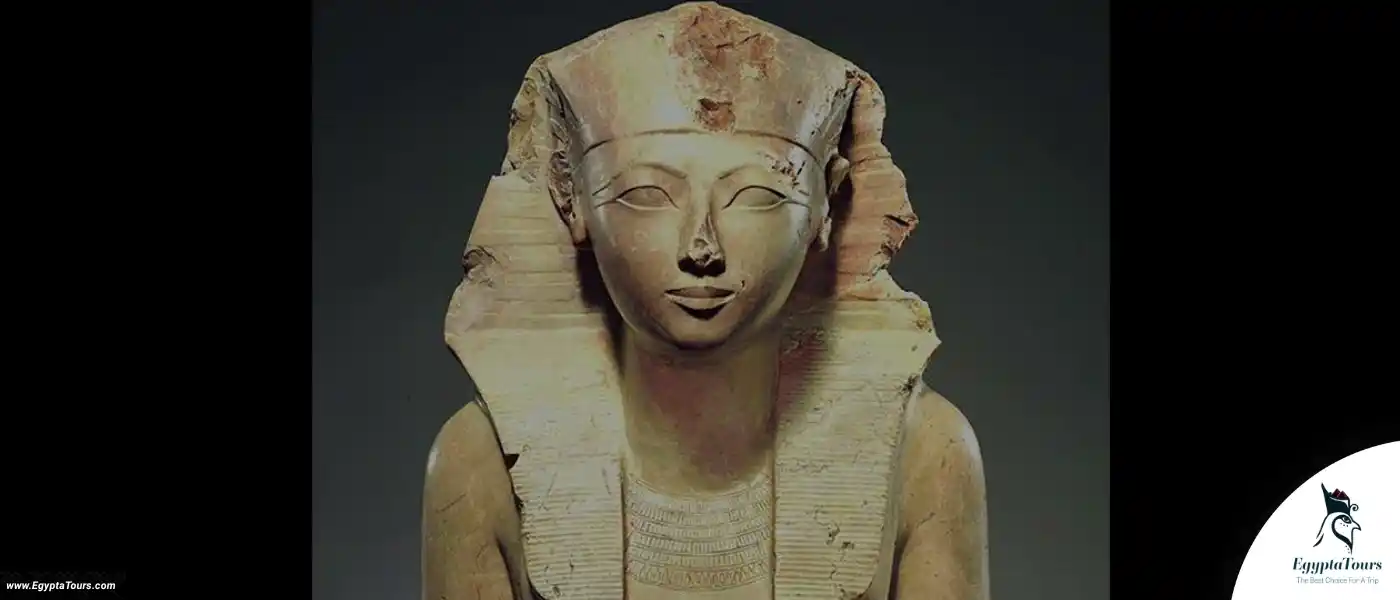
Illustration of Hatshepsut’s rise to power as pharaoh of Egypt
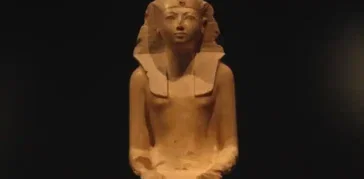
Hatshepsut first served as regent for the young Thutmose III after her husband’s death. Within a few years she took the unprecedented step of having herself crowned as pharaoh in her own right, adopting full royal titulary, the traditional false beard, and masculine dress in official imagery — standard visual language of Egyptian kingship rather than a personal disguise.
Her claim to the throne rested on three pillars: descent from Thutmose I, marriage into the royal line, and a proclaimed divine birth as daughter of Amun.
What Do the Inscriptions at Deir El-Bahri Tell Us?
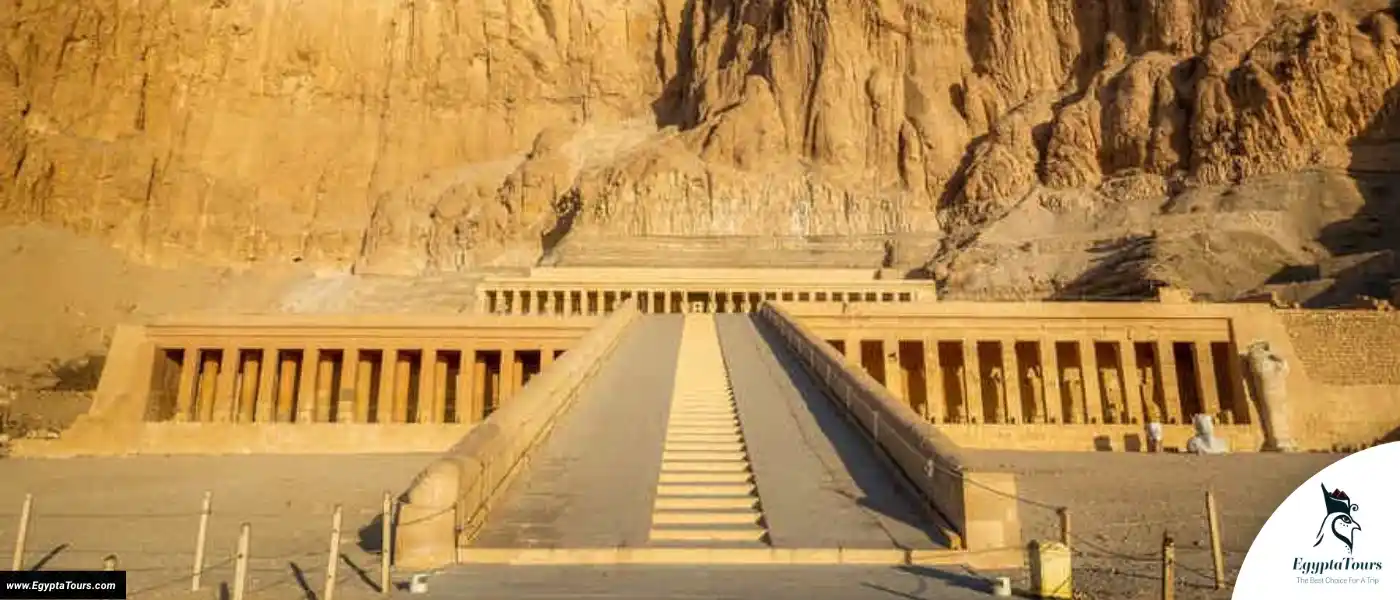
Hieroglyphic inscriptions at Deir el-Bahri documenting Hatshepsut’s reign
Most of what we know about Hatshepsut’s lineage comes from her mortuary temple at Deir El-Bahri, known as Djeser-Djeseru (“Holy of Holies”), designed under the direction of her chief steward, Senenmut. Its reliefs record:
- Her claimed divine birth story
- The famous trading expedition to the Land of Punt, bringing back incense, myrrh trees, and exotic goods
- Two granite obelisks she erected at Karnak in honor of Amun-Ra
After her death, Thutmose III ordered many of her images and cartouches defaced or removed — likely a political move to reassert his own line’s legitimacy rather than personal animosity, though historians still debate the motive. Enough survived at Deir El-Bahri and elsewhere to reconstruct her reign and lineage in detail.
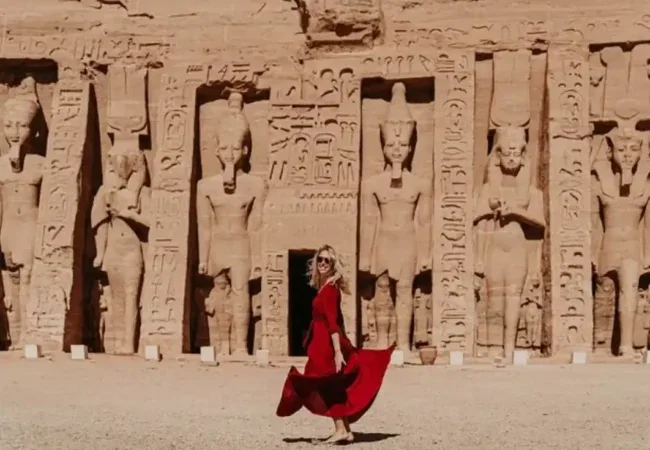
Walk Through Hatshepsut’s Temple Yourself
See the reliefs, obelisks, and reign of Egypt’s greatest female pharaoh up close at Deir el-Bahri in Luxor.
Was Hatshepsut and Senenmut a Real Relationship?
Senenmut, Hatshepsut’s chief steward and the architect of her mortuary temple, held an unusually high number of titles for his background, and some inscriptions place him in close proximity to Neferure, suggesting he tutored her. This has led some Egyptologists to speculate about a personal relationship between Senenmut and Hatshepsut. It remains speculation — there is no inscription confirming a romantic relationship — and should be presented as one interpretation among historians, not settled fact.
How Did Hatshepsut Die?
Hatshepsut ruled for roughly 21–22 years and died in her mid-to-late forties. Examination of a mummy identified as hers in 2007 pointed to poor health, including possible diabetes and bone cancer, though identification and cause of death are still debated among researchers. She was originally interred in tomb KV20 and later associated with KV60 in the Valley of the Kings.
FAQs
Who were Hatshepsut’s parents?
Thutmose I and Queen Ahmose, his principal wife.
Who did Hatshepsut marry, and why?
Her half-brother Thutmose II, following the royal Egyptian custom of marrying within the family to preserve dynastic legitimacy.
Did Hatshepsut have children?
Yes — her well-documented child is her daughter Neferure. A possible second daughter is proposed by some researchers but not confirmed.
How was Thutmose III related to Hatshepsut?
He was her stepson (son of her husband Thutmose II) and her nephew (grandson of her father Thutmose I).
Was Hatshepsut of royal blood?
Yes. She was the daughter of Thutmose I and Queen Ahmose, both of the core royal line, which is what she cited as the basis for her right to rule.
Did Hatshepsut marry her son?
No. She married her half-brother, Thutmose II, in keeping with royal marriage customs of the time.
Similar Posts

About EgyptaTours

EgyptaTours is a name synonymous with trust, excellence, and unforgettable travel experiences, proudly standing as one of the leading travel agencies in Egypt. Renowned for its deep expertise, personalized service, and carefully crafted itineraries, EgyptaTours serves as the ultimate gateway to discovering Egypt in its most authentic and inspiring form.