




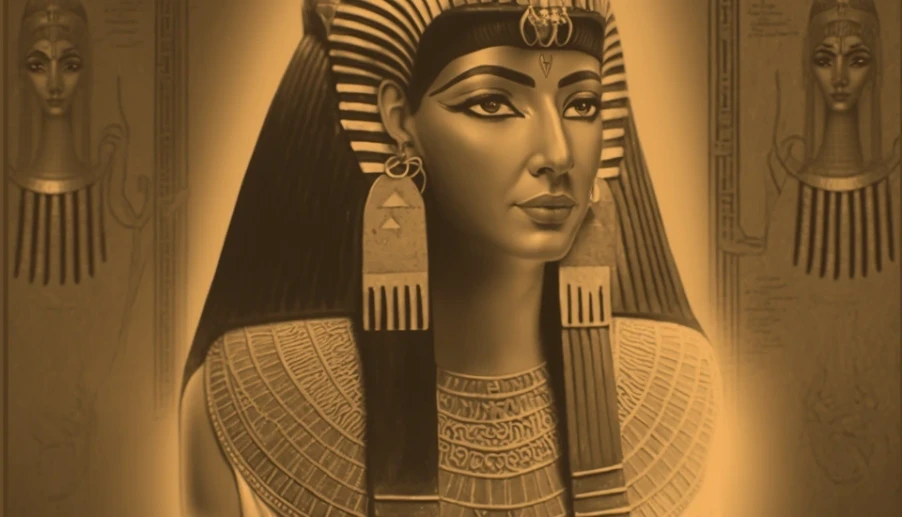
Queen Nefertari: The Legendary Beauty and Power Behind Ancient Egypt
Queen Nefertari, the beloved wife of Upper and Lower Egypt, was one of the most prominent queens of ancient Egypt.
Nefertari married Pharaoh Ramses II and was deeply cherished by him, as seen in the grand tomb he built for her in the Valley of the Queens.
Renowned for her beauty, wisdom, and influence, Nefertari played an important role in royal ceremonies and diplomacy during Egypt’s golden age.
Queen Nefertari lived in the Nineteenth Dynasty (ca. 1295-1255 BC), and her full name was Nefertari-Merytemut, meaning “the beautiful companion, beloved of Mut.”
She was the beloved great royal wife of Pharaoh Ramesses II, one of Egypt’s most famous queens, alongside Cleopatra, Nefertiti, and Hatshepsut.
Her tomb, QV66, is the largest, most magnificent and ornate in the Valley of the Queens.
Ramses II also built a temple for her in Abu Simbel next to his huge monument.
He even made the statues on its façade the same size as his own.
She gave birth to four sons (Amun-hir-khepeshef, Mery-Ra, Pa-Ra-wenem-ef, and Mery-Atum) and four daughters (Baketmut, queen Nefertari, Merytamun and Henuttaui).
Within the line of succession, queen Nefertari sons were always favored over other sons of JRW Isisnofret’s. But in the end, the crown went to Merneptah, the son of Queen Isisnofret.
Queen Nefertari, as the inscriptions attest, attended the opening ceremony of the Abu Simbel temples in the 24th year of the reign of Ramesses II. After that event, it disappeared, and was 40 to 50 years old, as reconstructed from historical records.
The tombs of Ramesside queens represent, for the first time, a separate royal counterpart that is parallel to the tombs of kings in terms of form and function.
The cosmological depiction of the Ramesside royal women’s tombs was highly complex, with each, like contemporary tombs of kings, serving as a microcosmic representation of the deceased’s personal underworld and evoking the deceased’s processes of reimagining, renewal, and rebirth.
He imagined that she would have an experience in the afterlife.
Furthermore, the improvements made to the tombs of royal Wives at Ramesside were part of the overall Ramesside expansion of all royal tombs.
This phenomenon was driven by a complex set of ideological, historical, and religious circumstances specific to the Ramesside period, but has roots in the late Eighteenth Dynasty: the mythologizing and elevation of the royal role, and the restoration of the title of “God’s Wife” to the throne.
The Ramesside dynasty’s need to establish its own political legitimacy in the wake of the post-Amarna succession crisis, and the Ramessides’ complex response to the religious and ideological changes brought about By <strong>Akhenaten</strong> during the Amarna period.
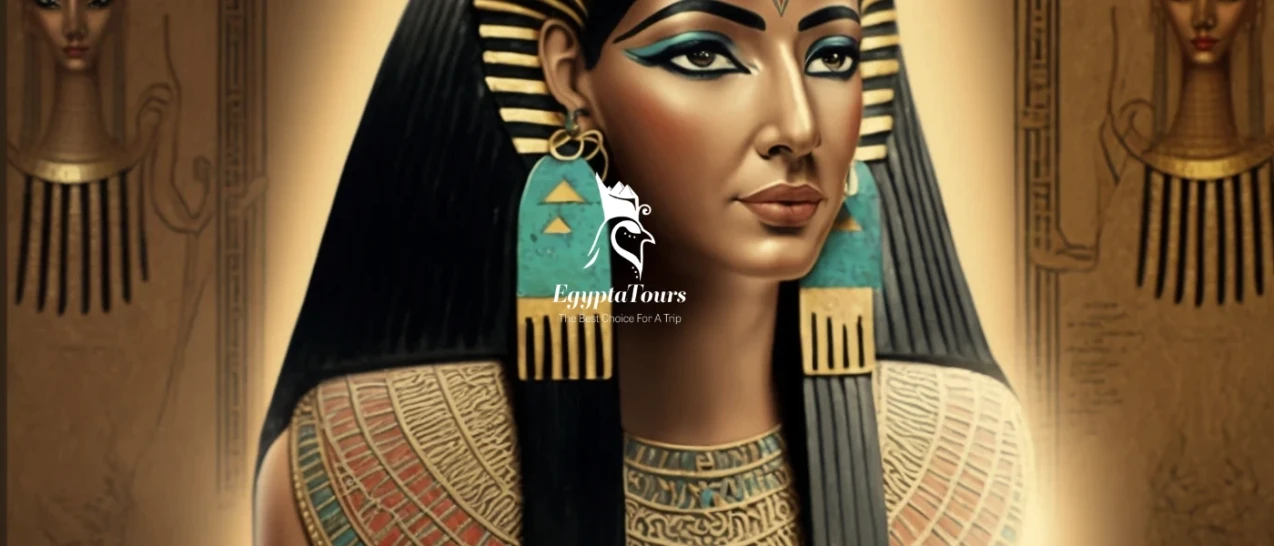
The-Person-and-Queen-Nefertari-Family
Queen Nefertari origins are unknown, but finds in her tomb, which include a cartouche of Pharaoh Ai (found on what was either a cane earring or a chest hilt), suggest that she may have been connected to the 18th-century rulers.
The ruling family included Tutankhamun, Nefertiti, Akhenaten, and Ay.
She married Ramesses at the age of thirteen, who was only fifteen himself, before becoming pharaoh.
She was the most important of his eight wives for at least the next twenty years.
She died sometime during the twenty-fifth royal period of Ramesses’ reign, and her cause of death remains uncertain.
Although she had at least four sons and two daughters, none of them ascended to the throne.
The heir to the throne of Ramesses II is Prince Merneptah, his thirteenth son from another wife, Istnoferet.
Queen Nefertari children
Not all of the names of Ramesses’ more than 100 children are known, and in many cases their mothers cannot be identified with certainty.
The following children can be attributed to queen Queen Nefertari:
Prince Amun-Har-Khapeshef, Crown Prince, Commander of the Forces.
Prince Pareherwenemef.
Prince Meriatum, High Priest of Heliopolis.
Prince Meryre.
Princess Meritamen, chantress of Amun and priestess of Hathor.
Princess Henuttawy.
There could be others.
Queen Nefertari: The Beloved Egyptian Queen of Pharaoh Ramesses II
Queen Nefertari Titles
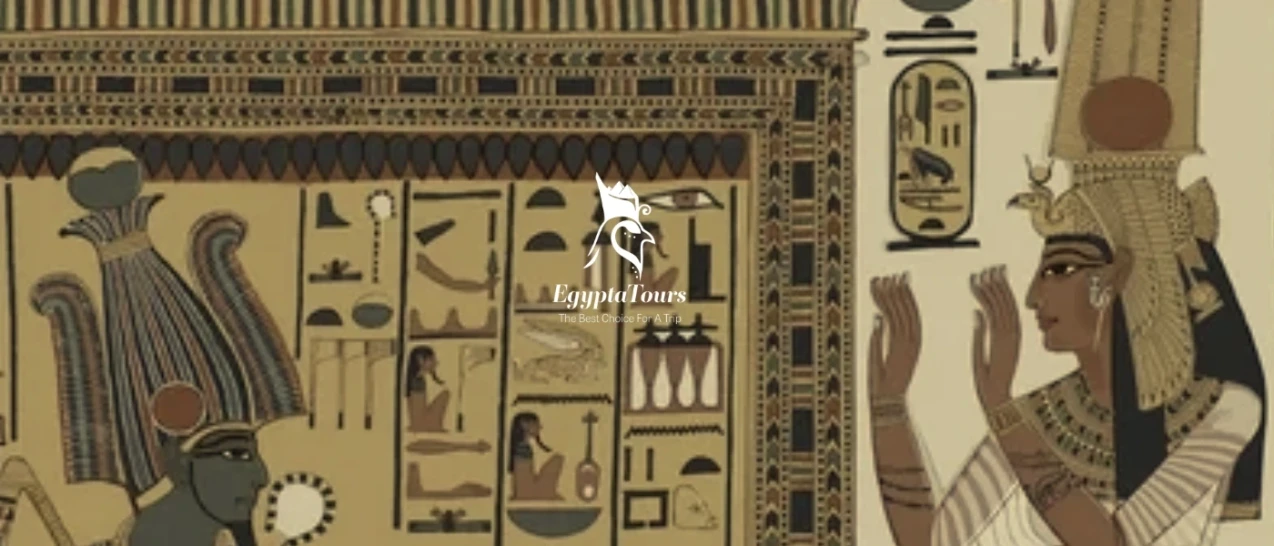
Queen-Nefertari-Titles-EgyptaTours
- “The King’s Great Wife”: This, and the following three titles, identify Queen Nefertari as the pre-eminent wife among the eight known wives of Ramesses II.
- “The king’s great wife, his beloved,”
- “The Wife of the Strong Bull”,
- “God’s wife”,
- “Mother of the King” This confirms the selection of one of queen Nefertari sons to succeed Ramesses.
- “Genetic noble”, this indicates that queen Nefertari came from a noble lineage.
- “great praise”
- “The Lady of Magic, Sweetness and Love,”
- “Lady of Upper and Lower Egypt”: This, and the following two forms, indicate that queen Nefertari played some role in state affairs.
- “Lady of the Two Lands”,
- “Lady of all lands,”
- “Cute in two feathers”: This reference refers to her favorite headdress with two feathers, the same one worn by the god Amun.
- “For whom the sun shone”: a unique inscription on the façade of her temple in Abu Simbel.
- “A great blessing”: perhaps referring to some of the judicial roles she held.
It Is worth noting that in the occurrences of her titles there are two hieroglyphic spellings of “mistress” or “mistress.”
They are ((nbt) and ((Hnwt). The word mistress does not, of course, have its modern meaning, which is “illicit lover.”
Perhaps they had a specific difference among the ancient Egyptians.
The Diplomatic Role of Queen Nefertari
Queen Nefertari was not from a royal family but from a noble family in Thebes and was associated with the goddess Mut who was specific to Thebes at that time. Despite this, she was named Lady of the Two Lands due to her well-known political role which exceeded the world’s perception of queens in ancient Egypt. She sent a diplomatic message to the queen and king of the Hittites in Asia addressing them in an elegant manner and was a main reason for the peace that occurred between them.
In ancient times, queens did not have a say in politics, but she stood firm in the face of problems and also greatly helped her husband in politics. She strengthened the relationship between Egypt and the Hittites and helped stop the war that was draining both peoples. She also helped sign the first peace treaty, making her one of the most important queens of her era whose role has been preserved to this day and her efforts in politics and other fields have been praised.
She was characterized by wisdom, reason and knowledge of how to solve things. She appeared in official events related to governance and appeared with her husband in important events. She had other roles such as playing the sistra in front of the gods leading royal children in ceremonies and being an important part of celebrations.
There are letters in Turkey from Nefertari, called Naptera in which she begins by saying “I, your sister” addressing the queen as if she were her sister. She sent many gifts to Puduhepa such as jewelry and clothes.
Location and Modern History
The Tomb of queen Nefertari (QV66) was discovered by Ernesto Schiaparelli in 1904, located at the bottom of the north side of the main valley in the Valley of the Queens.
The limestone In the Thebes region is not of very high quality and is subject to crushing by earthquakes; It also has strips of flint.
All this meant that it was necessary to apply several layers of plaster to the walls before painting.
Due to several serious problems affecting its beautifully painted walls, the cemetery was closed to the public in the 1950s. Repairs were made to try to patch up serious cracks in the plaster, with large areas completely destroyed.
But it was not until 1986 that the first serious modern work to stabilize the paintings was carried out by the US Getty Conservation Institute.
Later, in February 1988, the full restoration process began, preceded by various studies conducted by an international team of scientists.
It was found that the main cause of the damage was not ancient tomb robbers, but nature itself.
Even here, it was not the earthquakes but the salt that caused the problem. The local limestone contains salt, as does clay from the Nile River used to make plaster.
Water seeping through the rocks created crystals, causing the plaster to crack and the paint to peel.
These crystals, which can grow very large, often up to centimeters in size, have removed large areas of plaster from walls, much of which has been impossible to restore.
Even from the time Schiaparelli photographed the tomb, the effect of the destruction was gradual, as can be seen from a comparison of the condition after the last restoration and the black-and-white photograph taken by Schiaparelli.
Previous attempts at preservation were made by taping large strips of paper or thick gauze over the incisions.
These had a detrimental effect and had to be carefully removed, and the plaster and paint secured, using more modern techniques, before the final cleaning and restoration work could be completed.
The goal of the project was to stabilize and clean the cemetery, not to return it to its original state. However, small missing areas were filled in with plaster.
They were not painted to match the missing color, but were drawn in “trattegio” (straight lines) to produce an almost identical match of color; Water-based paint was used for easy removal if it turned out to be unsuitable at some point in the future.
This, from a distance, gives the visual effect of solid color, but allows future historians and preservationists to identify the area as not being the original one.
Restoration was completed in April 1992, but the tomb was not reopened to the public until November 1995.
Entry was severely restricted, limiting the size of the collection and the number of visitors per day in order to try to preserve the fragile microclimate. No form of photography was allowed.
In January 2003 it was closed again to the public. Even the limited number of tourists has an impact on the surface of the paintings. Their moist, bacteria-laden breath causes mold to grow on the surface.
The grave is after all a closed environment. It was opened again in 2016, but to a very limited extent.
The Finds
Upon its discovery, it was found that queen Nefertari tomb had been severely damaged, looted, and left open to the elements of nature and humanity.
Among the remains found by Schiaparelli were several scarabs, pieces of the queen’s pink granite coffin lid, and parts of a gilded coffin lid. More details about the coffin follow below.
There were also numerous pottery sherds and the remains of about thirty shabti (or ushabti) figures, as well as the lid of the shabti box.
In one of the cavities in the wall of the burial chamber, a very wooden column made of magic bricks was found.
As mentioned earlier, it was either a reed pommel or a chest handle, and included a cartouche of Pharaoh Ay. The only body parts were the legs.
Some pieces of queen Nefertari jewelry appeared in the antiquities market in Luxor in 1904, and were purchased by the Boston Museum of Fine Arts. Among them were a large gilt silver plate, a small embossed gold plate, a gilt bronze pendant and four servant statues.
It is reasonable to assume that these items were part of the queen’s burial equipment.
During the preservation process carried out by the Getty Institute, a gold piece of a bracelet was found in one of the annexes of the burial chamber.
And last but not least, there was a pair of queen Nefertari sandals, which somehow escaped the clutches of the thieves.
The Sarcophagus Remains
The remains of the pink granite cap found by Schiaparelli are in the Turin Museum.
The coffin was rectangular. As was usual with royal coffins from the Eighteenth Dynasty, they combined images and texts.
These texts were produced in longitudinal and transverse bands, to imitate mummy fasteners. See the picture and draw the line
At the foot end, the statue of Isis is located between Nekhbet and Wadjet, leading one to assume that at the head end there were two figures of Anubis squatting on either side of Nephthys.
Above the lid, at the level of her face, the goddess Nut can be recognized, with outstretched wings, kneeling on the hieroglyphic sign of gold.
Nefertari Egypt prayer is addressed to the great goddess: “Come down, my mother Nut, and spread yourself over my body so that you place me among the eternal stars that are within you, and so that I do not die.”
The goddess replied: “I spread over the body of my daughter, Osiris, the great king’s wife, mistress of the two lands, queen Nefertari, beloved.”
Death, justified, in the very name of Nut, Ra himself purified you. Your mother Nut will be pleased to lead you towards the horizon.
You have been vindicated by the great God.
One mystery remains: Where is the main body of the coffin located? Was the statue of Queen Nefertari removed, as with many others, and reused for another deceased in the Third Intermediate Period?
Christian Leblanc recorded an alarming fact: when he searched the tomb of Queen Tuya, the mother of Ramesses II, he found fragments of a pink granite sarcophagus bearing the name…Queen Nefertari!
Leblanc suggests that these fragments came from the main body of the queen’s coffin, which was dragged out of her tomb and then smashed.
These pieces were then reused by the new occupants of the Toya Tomb for internal functions.
Regarding the mummy: Schiaparelli found only part of the knees in the funeral chamber, among the pieces of mummification material.
This was a very sad ending to “The Most Beautiful of All.”
General Layout – Architecture
Queen-Nefertari-Tomb-General-Layout – Architecture
The tomb is entered via a flight of eighteen steps approximately in a northerly direction.
The tomb consists of seven rooms and a secondary flight of steps.
It is built on two levels: three rooms located on the upper floor, and the main burial chamber and its three annexes can be accessed via the secondary staircase.
The burial chamber is divided into three chambers in width, with the central section being 0.6 meters lower than the front and back levels. This room also has four columns.
The south-north axis of the tomb is not straight, but turns east on the descent to the lower chambers.
This deviation is almost certainly due to the fact that the architect had to take into account some now unknown obstacle.
The tombs on either side (QV68 and QV80) do not appear to be close enough to be this reason.
The waiting room contains a seating structure on two sides (west and north) on which offerings are placed.
This has spaces between the supports, all of which are decorated.
The burial chamber contains a solid mastaba on all sides, interspersed with entrances to the three front chambers and a small place cut into the middle of the western side mastaba.
This probably held a canopic chest containing queen Nefertari mummified entrails.
The tomb and Its decorations are of exceptionally high quality, with almost every surface decorated in vibrant colours.
It was produced by workers responsible for the Valley of the Kings from the village of Deir el-Medina.
Although queen Nefertari died sometime during the twenty-fifth royal year of Ramesses’ reign, all evidence indicates that her tomb was completed in time for her burial.
The work of producing the tomb required several different types of craftsmen, each specialized in their own task.
The work would have been progressive, with each skill following the one before it; No one waits for the entire tomb to be completed before starting.
Stonemasons (carvers) were still working piecemeal in many of the rooms as their work continued through plasterers who applied at least two coats, to make the poor quality limestone suitable for decoration.
The final layer is a layer that contains a mixture of vegetable gums to make the colors adhere better. The designs would then be produced in plan form, and other craftsmen would then sculpt the drawing in relief.
Finally, actual painters will use a rich palette of colors to bring the walls to life.
The entire ceilings are painted dark blue and decorated with yellow stars. The exception is the soffit (ceiling) of the entrance to the first room, under the entry staircase.
At the bottom of all the walls is a black dado (or sheltered area), separated from the scenes above by a red (top) and yellow ochre band. Exceptions are: under the seat of the antechamber and burial chamber; Although a shallower version exists above the burial chamber seats.
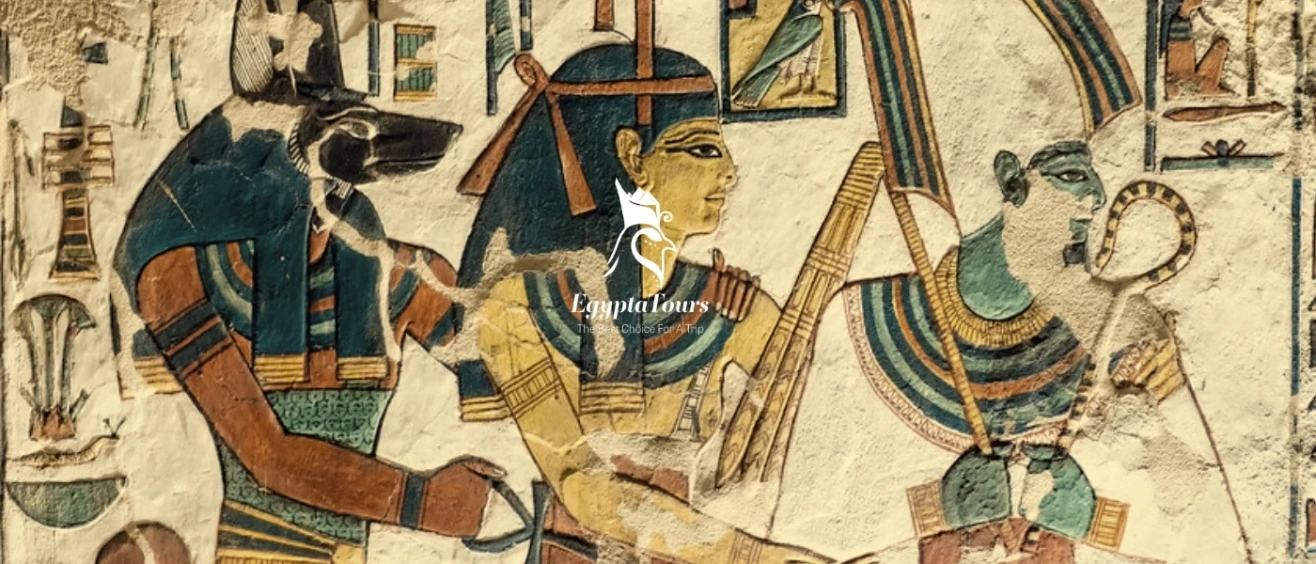
The walls do not contain images taken from her daily life, but consist of a journey through the underworld, to be forever united with Osiris.
Then the journey continues outside, to the entrance at the bottom of the stairs leading to the upper world.
Here the queen emerges from the eastern horizon and is reborn in the form of a solar disk (see d1-soffit), immortalizing her victory over the world of darkness forever.
Because queen Nefertari was not a pharaoh, and because there were no scenes of daily life, the choice of texts used on the walls was somewhat restricted.
Those that were finally chosen, whether by architects, priests, or perhaps Ramesses himself, were taken from the Book of the Dead.
The Secret of the Eye of Horus Tattoo on Queen Nefertari’s Arm
They say Nefertari was suffering from an evil eye because of the death of her children when they were young. She gave birth, named the child but he died, This happened several times.
Ramses II was still the crown prince then he became king at the age of 23. The births continued and the babies kept dying. Ramses believed an evil eye was affecting his children.
Egypt at that time knew charms against magic and evil eyes and had various forms of amulets especially the Eye of Horus. The Eye of Horus is an ancient Egyptian symbol with protective properties against envy, evil spirits, harmful animals and disease.
That’s why Nefertari is depicted with an Eye of Horus tattoo on her arm as a charm to protect her and her children from the evil eye.
The Secrets of Nefertari’s Mummy
Researchers started by examining the three bone fragments using X rays. The scan confirmed that the bones were from human knees that had been fractured post mortem with no signs of disease. The examination allowed researchers to distinguish between the bones and the fabric used to wrap the body during mummification.
The scan also revealed that the bones belonged to an adult over 40 years old. Anthropological analysis suggested that the knee measurements indicated the bones were likely those of a female, with a 90% probability. This female was slightly taller than the average Egyptian woman of the time. The estimated height of the queen was between 165 and 168 cm similar to the average height of ancient Egyptian and Greek men.
Chemically, researchers analyzed the embalming materials used to preserve the remains. They found no bitumen or pine tree extracts indicating the mummification likely occurred during the New Kingdom period.
The embalming technique involved applying animal fat to the wrapping fabric not directly to the body giving the burial a specific religious and political significance of the period.
Ultimately, researchers couldn’t use DNA testing to conclusively confirm the identity of the bones. Carbon dating yielded conflicting results.
Archaeological tests provide fragmented information, and it’s up to the researcher to piece it together. In the end, all evidence points to the mummy being Queen Nefertari whose death hasn’t stopped the world from being fascinated by her story.
Abu Simbel Temple
Abu Simbel Temple is one of the most magnificent temples built by King Ramses II and perhaps the most beautiful in Egypt. It’s a unique temple that combines architecture and astronomy.
The temple was built by Ramses II as a gift to his beloved wife Nefertari and it’s dedicated to the goddess Hathor. It’s a witness to the love story between the king and his wife.
The temple is famous for its astronomical phenomenon, where the sun’s rays align with the inner sanctum twice a year, on February 22nd and October 22nd. The temple walls depict King Ramses II’s victory over the Hittites.
Abu Simbel Temple is one of Egypt’s most important archaeological sites attracting visitors from around the world. The temple’s concrete dome is the largest in the world with a diameter of 65 meters and a height of 23 meters.
The temple dates back to 2400 BC and commemorates the Battle of Kadesh, one of King Ramses II’s most important battles.
The smaller temple next to the main one is a witness to the love story between King Ramses II and his wife Nefertari. It’s considered one of the most beautiful temples built during Ramses II’s reign.
Artistic Depictions of Queen Nefertari in Ancient Egypt
Queen Nefertari was a prominent female figure in ancient Egypt, she was shown in a way that reflects her political and religious status.
Nefertari’s artistic representation is different from Nefertiti’s. Nefertari followed the classical ideal style of the Ramesside era while Nefertiti’s art was associated with experimentation and realism in the Amarna period.
Nefertari also was a model of ideal royal femininity, combining beauty, dignity and wisdom. Her features were harmonious and calm reflecting the stability and quiet strength that characterized her personality.
Visual Equality with the Pharaoh
Nefertari was shown at the same scale as Pharaoh Ramses II in some depictions reflecting her status as a co ruler especially in her small temple at Abu Simbel that shows her important role as a partner in governance. This equality in the size was a clear visual statement of her political role.
The Direct Religious Presence
Nefertari was depicted standing directly before gods or offering sacrifices herself. She was portrayed with goddesses like Hathor, Isis, Mut and Nut emphasizing her direct connection to the divine realm.
The Symbolism of Colors
Artists used colors with clear religious symbolism to depict Nefertari. Gold symbolized eternity, blue represented protection and red and reddish brown indicated vitality. Her clothing was soft and transparent expressing royal elegance.
Royal Crowns and Symbols
Nefertari wore various crowns like the two feather crowns associated with Amun and the sun disk between Hathor’s horns. These symbols reflected her legitimacy, power and connection to the protective deities of the king and queen.
Conclusion
Queen Nefertari stands as proof that beauty and power can align. As Great Royal Wife to Ramesses II, she shaped court and ritual life. Her letters to Hittite Queen Puduhepa show calm diplomacy after years of war. At Abu Simbel, a temple honors her, and statues place her beside the king. Her tomb in the Valley of the Queens holds luminous art that celebrates her status. Art, titles, and texts paint a steady image of a partner in rule. Remember her as a leader with grace, a voice that still carries.
Queen Nefertari: FAQS
What happened to Queen Nefertari?
Queen Nefertari died around 1240 BC, although the exact cause of her death is unknown.
Who is Nefertari in the Bible?
Nefertiti is the Queen of Egypt, and the first lady in the royal court of Akhenaten, and he is the philosopher-Pharaoh himself, who gave her this beautiful name.
Did queen Nefertari love Ramses?
In some cases they came from a deep and meaningful love. Queen Nefertari was no ordinary woman, and Ramesses wanted the world to know how important she was to him.
Did she have children with Ramesses II?
Yes. Records name several children, including the prince Amun-her-khepeshef and the princess Meritamen, who later held high rank.