Eye of Ra vs Eye of Horus: Unlock the Powerful Symbolism
Ancient Egypt is full of wonders that are discovered by prospectors and...



The Exodus (Hebrew: יציאת מצרים, romanized: Yəṣīʾat Mīṣrayīm meaning “Departure from Egypt”) is regarded as the foundational myth of the Israelites. Its account is distributed across four of the five books of the Pentateuch, namely Exodus, Leviticus, Numbers and Deuteronomy. The Exodus narrative recounts the period in which the Israelites were enslaved in Egypt, followed by their escape, the crossing of the Red Sea and their journey toward the Promised Land under the leadership of Moses.
Within Judaism, the Exodus occupies a central religious position. It is remembered daily in prayers and commemorated annually during festivals such as Passover. Early Christian thought interpreted the Exodus symbolically, seeing it as a foreshadowing of resurrection and salvation through Jesus.
Islam also recounts the Exodus in the Qur’an within the broader story of Moses who is considered one of the major prophets. In more recent history, the narrative has inspired other groups including African Americans seeking liberation and equality as well as movements connected to liberation theology.
Modern scholarly consensus holds that the Pentateuch does not present an accurate historical account of Israelite origins. Instead, the Israelites are believed to have emerged as a group within the central highlands of Canaan during the late second millennium BCE, particularly around the time of the Late Bronze Age collapse,
developing out of indigenous Canaanite society. Most scholars accept that the Exodus story may preserve certain historical memories but these bear little resemblance to the biblical version. While many researchers date the composition of the Pentateuch to the Persian (Achaemenid) period in the fifth century BCE, some components of the tradition are older, as references to the Exodus appear in eighth-century BCE prophets such as Amos and Hosea.
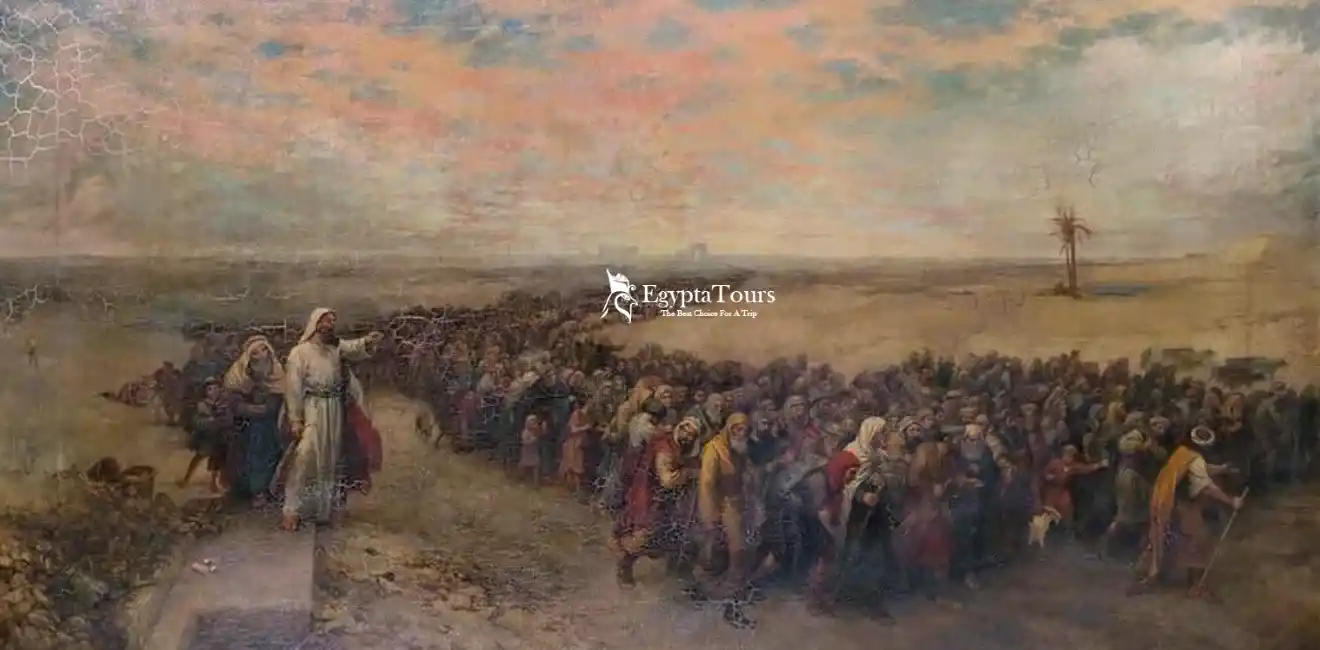
The -Exodus -In -the -Bible
The Exodus narrative recounts Israelite enslavement in Egypt, the divine plagues, their departure, the revelation at Mount Sinai and their wilderness wanderings up to the edge of Canaan. The theological message emphasizes that Yahweh liberated the Israelites from bondage establishing them as his people through a covenant.
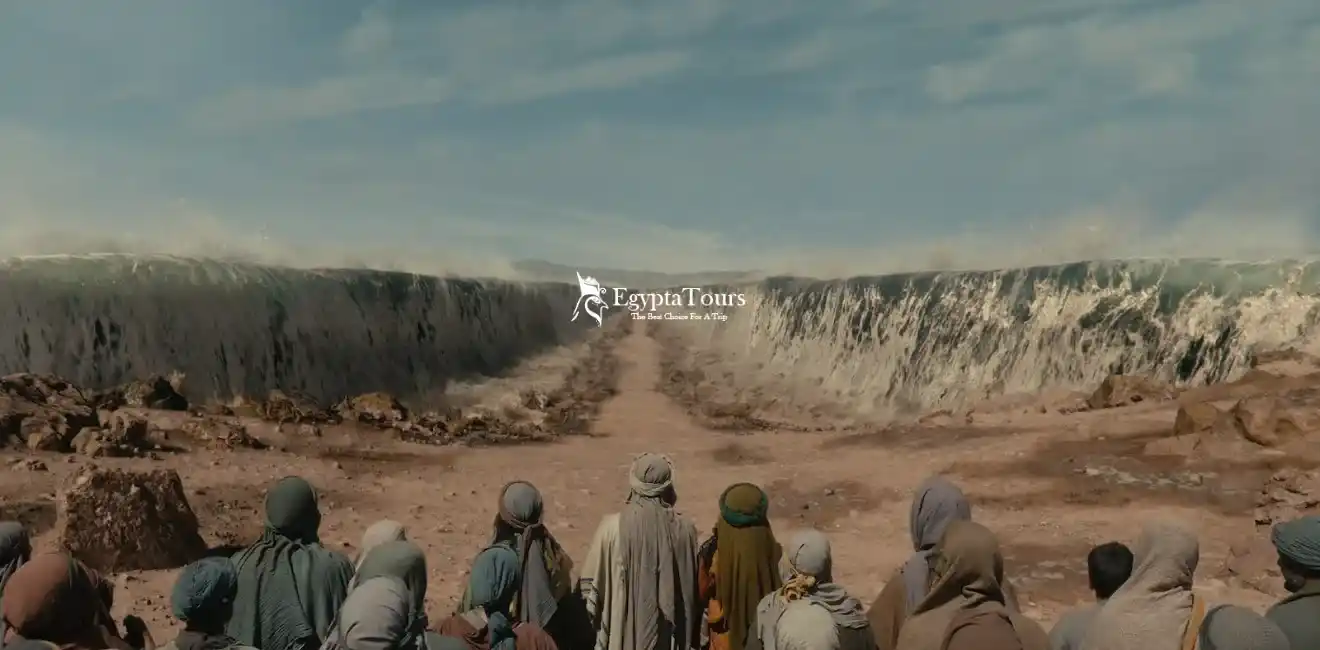
The- Exodus -Narrative
The account is presented mainly in the first half of Exodus, while the remainder of that book describes the first year in the wilderness. The story then continues for thirty-nine additional years across Leviticus, Numbers and Deuteronomy. According to Genesis,
the Israelites had originally settled in Egypt during a famine, living in Goshen under the protection of Joseph who had risen to high office in Pharaoh’s court. Exodus opens after Joseph’s death when a new Pharaoh arises who does not remember him.
This Pharaoh becomes alarmed by the growing Israelite population and forces them into labor, making them build the storage cities of Pithom and Rameses. He also orders the killing of all newborn Hebrew boys. One child, Moses, survives when his mother places him in a basket on the Nile.
Pharaoh’s daughter finds and adopts him, naming him Moses. As a young man, Moses kills an Egyptian who is beating a Hebrew slave and flees to Midian where he marries Zipporah, daughter of the priest Jethro. After the old Pharaoh dies, a new ruler ascends the throne.
According to Ezekiel, the Israelites in Egypt also engaged in idolatrous practices, worshipping Egyptian gods which angered Yahweh. Although he considered destroying them, he refrained to protect the honor of his name.
While tending sheep near Mount Horeb, Moses encounters Yahweh in a burning bush and is instructed to return to Egypt to free the Israelites and lead them to Canaan. Aaron joins him and together they convince the Israelites through miraculous signs. They ask Pharaoh to permit a religious journey into the wilderness but he refuses and intensifies their labor.
Aaron’s staff turns into a serpent before Pharaoh, yet the Egyptian magicians replicate the sign, though Moses’ serpent consumes theirs. Pharaoh remains unmoved.
Yahweh then sends a series of plagues upon Egypt, each time Pharaoh refuses to release the Israelites. The magicians can imitate only the first plagues. Pharaoh repeatedly promises compliance but withdraws once the plagues cease.
Moses establishes the month of Aviv as the first month of the Hebrew calendar and instructs the Israelites in the Passover ritual. During the final plague, the firstborn of Egypt die, while Israelite homes marked with lamb’s blood are spared. This event is to be remembered forever.
After the death of his son, Pharaoh drives the Israelites out. Yahweh guides them with a pillar of cloud and fire. Pharaoh pursues them but Moses parts the Red Sea, allowing Israel to cross before the waters drown the Egyptians.
In the wilderness, the Israelites complain and Yahweh provides water, manna and protection from enemies such as the Amalekites. Jethro advises Moses to appoint judges. At Sinai, Yahweh reveals himself and gives the Ten Commandments,
forming a covenant promising the land of Canaan. Laws governing worship and priesthood follow. When the Israelites worship a golden calf, they are punished but the covenant is renewed. A tabernacle is constructed and a census is taken before departure from Sinai.
Twelve spies are sent into Canaan. Their negative report causes the people to refuse entry and Yahweh decrees forty years of wandering. Only Joshua and Caleb will enter the land. Rebellions and further punishments occur. Miriam and Aaron die during the journey. Moses is barred from entering Canaan for striking the rock instead of speaking to it.
The Israelites encounter hostile nations, survive plagues and serpents, and experience episodes involving Balaam and Midian. They conquer territories east of Jordan. Moses delivers a final address, appoints Joshua as successor, views the Promised Land from Mount Nebo, and dies.

About- Moses
Moses (active in the 14th–13th century BCE) was a Hebrew prophet, teacher and leader who delivered his people from slavery in Egypt during the 13th century BCE. At the Covenant ceremony on Mount Sinai where the Ten Commandments were given, he established the religious community known as Israel.
As the interpreter of the Covenant’s laws, he organized the community’s religious and civil life. In Jewish tradition, Moses is revered as the greatest prophet and teacher and Judaism has sometimes been loosely referred to in Western Christendom as Mosaism, or the Mosaic faith. His influence continues to shape the religious practices, moral values and social ethics of Western civilization underscoring his enduring significance.
Few historical figures have been surrounded by as much disagreement as Moses. Early Jewish and Christian traditions regarded him as the author of the Torah, that is, the first five books of the Bible and some conservative groups still believe these books were written by him.
In contrast, the German scholar Martin Noth presented a different view. While admitting that Moses may have played a role in preparing for the conquest of Canaan, he was highly skeptical of the traditional picture of his importance.
He argued that the Exodus and Sinai traditions came from two different groups that experienced these events separately and transmitted them independently. He believed that the biblical narrative tracing the Hebrews from Egypt to Canaan was the work of an editor who combined several traditions around a central figure, Moses who was originally an obscure personality from Moab.
This account adopts a middle position between these two views, following the scholar William Foxwell Albright. It accepts the core of the biblical story but recognizes that it acquired additions through centuries of oral and written transmission.
It also agrees that the study of the different sources of the Torah is valid but sees them as multiple versions of a single sequence of events. Other critical approaches, such as literary study, oral history, redaction criticism, and archaeology, are considered essential tools for understanding the text. The most accurate historical interpretation comes from combining all this evidence. Nevertheless, the sources remain too limited to draw more than a general outline of Moses’ life.
According to the biblical account, Moses’ parents belonged to the tribe of Levi. The term “Hebrew” did not originally refer to an ethnic group but to a social class known as the “Habiru,” meaning hired workers. The Hebrews lived in Egypt for generations and were later enslaved because of fear of their growing numbers. The pharaoh’s name is not mentioned in the text, which has led scholars to disagree about the date of these events.
Some interpret a verse in First Kings stating that the Exodus occurred 480 years before the building of the Temple, placing it around 1440 BCE. This, however, conflicts with archaeological evidence. The store cities built by the Hebrews were in the Nile Delta,
while Thutmose III’s capital was in Thebes in the south. In addition, the kingdoms of Edom and Moab had not yet been established. Excavations show that the cities said to have been entered by the Hebrews were destroyed around 1250 BCE.
Because tradition counted twelve generations between Moses and Solomon and estimated forty years per generation, the number 480 appears symbolic. Since a generation is closer to twenty-five years, the Exodus is more likely to have occurred around 1290 BCE. Accordingly, the oppressing pharaoh would have been Seti I and the pharaoh of the Exodus would have been Ramses II. Moses was probably born in the late fourteenth century BCE.
The Egyptians ordered the killing of every male Hebrew newborn. Moses’ parents hid him for three months and then placed him in a basket on the Nile, where he was found by the pharaoh’s daughter and raised in the royal palace. Although the story is often questioned historically, the name Moses is derived from the Egyptian “mose,” meaning “born” as in the name Thutmose.
Moses grew up in the royal court, learning religion, administration and warfare and gaining broad knowledge of the Near East. When he learned of his Hebrew origin, he went to see his people and killed an Egyptian who was beating a Hebrew slave. He then fled to Midian.
Moses crossed Egypt’s eastern border into the region of Midian. There he defended the daughters of the priest Jethro at a well, married Zipporah and worked as a shepherd. One day he saw the burning bush that was not consumed and there he received God’s call to free his people.
God revealed himself as Yahweh, meaning “the one who is,” and assured Moses of his guidance. When Moses hesitated because of his speech difficulty, his brother Aaron was appointed as his spokesman.
Ramses II was a proud ruler after his defeat at Kadesh and filled Egypt with massive building projects. When Moses demanded the release of the people, Pharaoh refused with contempt and increased the Hebrews’ oppression. Then the plagues came, which some scholars view as natural events used to pressure Pharaoh, beginning with the reddening of the Nile due to silt and algae.
As the plagues continued, Pharaoh partially relented but reversed his decisions each time. After the ninth plague, hope rested on a final divine intervention.
The Hebrews left Egypt, probably numbering about fifteen thousand rather than two million. They were trapped by the Egyptians at the Sea of Reeds, likely a shallow lake in northeastern Egypt. A strong east wind parted the waters, allowing the Hebrews to cross and the Egyptian army drowned when the waters returned. Moses and Miriam sang a song of victory.
They traveled south toward Mount Sinai. Despite complaints of hunger and thirst, they reached the mountain of God where Moses had seen the burning bush.
Moses modeled the covenant on Hittite treaties between a lord and a vassal. Yahweh had freed them and therefore they were obligated to obey him. The Ten Commandments formed the conditions of the covenant.
Monotheism was not yet philosophical but practical: Yahweh was supreme over all gods. Representing him in images was forbidden because he could not be embodied. The commandments aimed to establish a just society that respects life and human dignity.
Moses faced repeated rebellions. At Meribah, he struck the rock in anger and this was considered a fault that barred him from entering Canaan. He bypassed Edom and Moab and defeated Sihon and Og. Before his death, he renewed the covenant, ascended Mount Nebo to view the promised land and then disappeared with the location of his grave remaining unknown.
Moses wrote some records, but they form only part of the Torah, making full authorship impossible. Nevertheless, he laid the foundation of Israelite law. He was at once leader, prophet, lawgiver and priest, a combination unmatched in any other figure.
His greatness came from his relationship with God, his humility, his forgiveness and his constant awareness that his strength came from God. For this reason, he remained the greatest prophet of Israel and one of the most influential figures in human history.
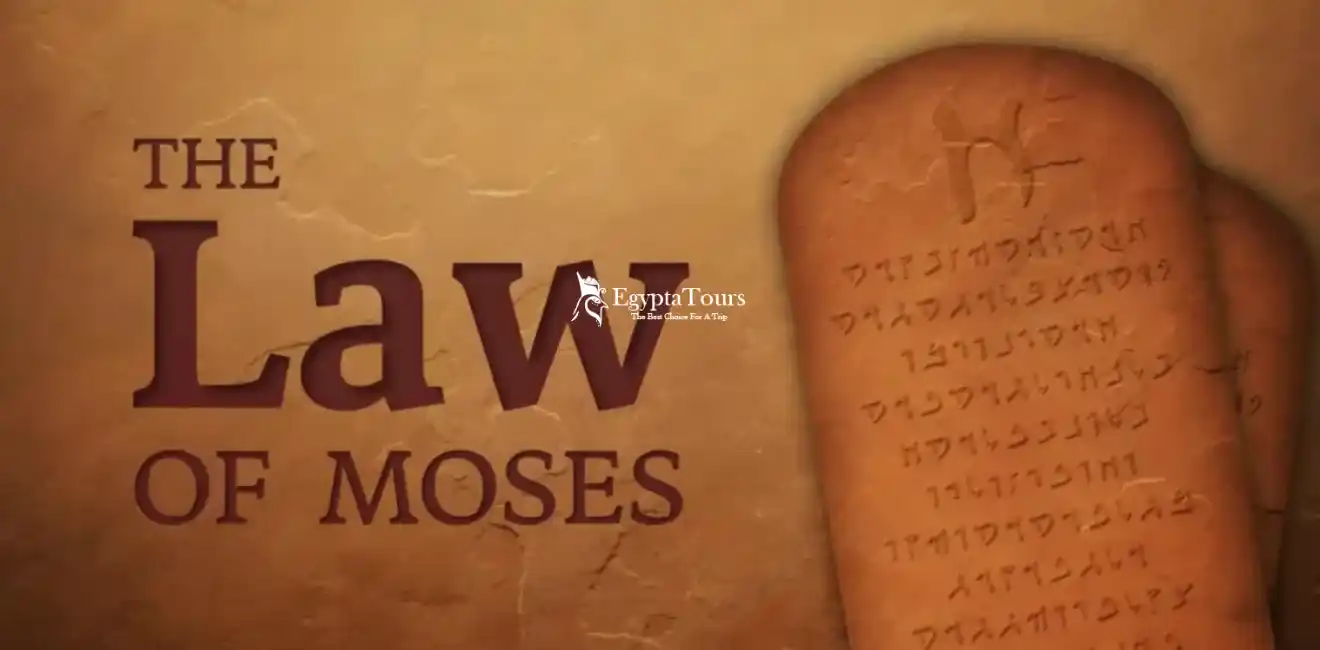
The- Covenant -and -Law -of- Exudes
The central moment of the Exodus is the covenant at Sinai, by which Yahweh commits to protect Israel as his chosen people, and Israel agrees to obey his laws. This covenant is reaffirmed in stages including the Ten Commandments and later renewal in Moab. The laws are preserved in several codes including the Decalogue, the Book of the Covenant, the Holiness Code and Deuteronomic law.
Modern scholarship presents two main perspectives. The dominant view accepts that the Exodus tradition may contain distant historical memories but largely reflects later ideological construction. A minority view, associated with biblical minimalism, argues that the story was created in the exilic and post-exilic periods with little historical basis.
Most scholars interpret the Exodus primarily as a national origin myth that shaped Jewish identity and institutions rather than as a factual historical record. Few mainstream scholars today support a literal reading of the biblical account. No direct archaeological or external textual evidence confirms the people or events described, leading historians to exclude the Exodus from formal reconstructions of Israelite history.
The majority of contemporary scholars do not regard the biblical narrative of the Exodus as a reliable historical account for several reasons. A widespread agreement exists that the Exodus traditions were composed many centuries after the time period in which the events are supposedly set.
Scholars note that the Book of Exodus itself attempts to anchor the story firmly in history by reconstructing a specific chronology, dating the Exodus to the 2666th year after creation (Exodus 12:40–41), placing the construction of the tabernacle in the year 2667 (Exodus 40:1–2, 17), stating that the Israelites lived in Egypt for 430 years (Exodus 12:40–41), and naming specific locations such as Goshen (Genesis 46:28), Pithom, and Ramesses (Exodus 1:11). It also gives a precise figure of 600,000 Israelite men (Exodus 12:37).
The Book of Numbers further reports that during the wilderness period there were 603,550 Israelite males aged twenty and above which implies a total population of approximately 2.5 to 3 million people when women and children are included.
Such a large population would have been impossible to sustain in the Sinai Desert. In addition, the geographical details are imprecise as places such as Goshen have not been securely identified and there are internal chronological inconsistencies within the Pentateuch.
No modern effort to match Moses with a specific historical Egyptian figure has achieved scholarly consensus and no known period of Egyptian history corresponds closely to the biblical description of the Exodus. Certain aspects of the narrative are overtly miraculous and resist rational explanation including the Plagues of Egypt and the parting of the Red Sea. Furthermore, the Bible does not provide the names of any of the pharaohs involved which further complicates comparisons between the biblical account and archaeological reconstructions of Egyptian history.
Although Egyptian texts from the New Kingdom refer to “Asiatics” residing in Egypt as laborers and slaves, these individuals cannot be securely identified with the Israelites. Moreover, no Egyptian source from the period describes a mass departure of slaves comparable to the biblical Exodus. The earliest known historical reference to Israel, the Merneptah Stele dating to around 1207 BCE, situates them in or near Canaan and offers no indication of any prior exodus from Egypt.
Archaeologist Israel Finkelstein argues, based on his study of the travel itineraries in Exodus, Numbers and Deuteronomy, that the biblical account reflects a long-term cultural memory spanning from the sixteenth to the tenth centuries BCE rather than a single historical event, stating that its beginnings are vague and no longer traceable. Modern archaeology instead points to continuity between Canaanite and early Israelite settlements suggesting that Israel primarily emerged from within Canaanite society with no evidence that a foreign population from Egypt formed the core of early Israel.
Despite the lack of archaeological confirmation, Avraham Faust argues that most scholars nevertheless accept that the Exodus story contains a historical core, reconstructed from collective memories of similar events, with Kenton Sparks describing it as “mythologized history.” Faust maintains that this core is unlikely to be based solely on Egyptian influence in Late Bronze Age Canaan or on the Hyksos rulers of Egypt.
He also excludes Midianite activity as helpful for dating the Exodus or identifying proto-Israelites. Similarly, Manfred Bietak rejects equating the Hyksos expulsion with the flight of enslaved Israelites, noting that the Hyksos were portrayed as a ruling elite engaged in trade and seafaring,
which contrasts with the biblical image of oppressed Israelites. Many scholars propose that a small group with Egyptian origins may have merged with early Israel and contributed their own Exodus tradition to the wider population. William G. Dever tentatively associates this group with the Tribe of Joseph while Richard Elliott Friedman connects it with the Tribe of Levi.
Those scholars who accept Faust’s concept of a historical core often date the activities of a possible Exodus group to the thirteenth century BCE during the reign of Ramses II of the Nineteenth Dynasty while others prefer the twelfth century BCE under Ramses III of the Twentieth Dynasty.
Support for the existence of historical traditions behind the Exodus myth includes documented movements of small Semitic-speaking groups into and out of Egypt during the Eighteenth and Nineteenth Dynasties, elements of Egyptian culture reflected in the biblical narrative and the Egyptian origins of names such as Moses, Aaron and Phinehas.
Estimates of the number of participants in such a migration range from several hundred to a few thousand individuals. Proposed dates for the Exodus vary with 1130 BCE commonly suggested and 1525 BCE less frequently proposed in order to align with the expulsion of the Hyksos and related events such as the Ahmose I Tempest Stele and the Thera eruption.
In 2023, Faust summarized the scholarly consensus regarding the size of the Exodus group, stating that most scholars believe it involved only a few thousand people or perhaps even just a few hundred.
Joel S. Baden notes that the presence of Semitic-speaking slaves in Egypt, who at times escaped in small numbers, may have served as inspiration for the Exodus tradition. It is also possible that harsh Egyptian domination of Canaan in the late second millennium BCE, particularly during the Nineteenth and Twentieth Dynasties, encouraged some Canaanites to incorporate the story of a small group of Egyptian refugees into their own collective memory.
Nadav Na’aman similarly argues that Egyptian oppression in Canaan created a shared memory that was later transferred to Egypt in popular tradition. The expulsion of the Hyksos during the Seventeenth Dynasty is also frequently considered as a historical parallel or possible source for the narrative.
Many other scholars reject these interpretations and instead view the Exodus traditions as largely a creation of the Jewish community during and after the Babylonian exile, with minimal historical foundation. Lester Grabbe argues that there is no compelling reason to assume that the Exodus must be historically grounded, and suggests that the details of the story correspond more closely to the seventh through fifth centuries BCE than to the second millennium BCE.
Some scholars further propose that the Israelites originated in Canaan itself and emerged from the Canaanite population, though this view is contested by others. Philip R. Davies suggests that the Exodus story may have been influenced by the return of Israelites and Judeans who had been stationed in Egypt as Assyrian garrison troops during the fifth and sixth centuries BCE.
The earliest indications of the traditions underlying the Exodus appear in the writings of the northern prophets Amos and Hosea, both active in the eighth century BCE in the Kingdom of Israel. Their southern contemporary Isaiah, however, seems unaware of any Exodus tradition.
Micah, who was active in Judah at roughly the same time, refers to the Exodus only once and scholars debate whether this passage was inserted later by an editor. Jeremiah, working in the seventh century BCE, explicitly mentions both Moses and the Exodus.
On this basis, the story may have originated several centuries earlier, possibly in the tenth or ninth century BCE. Evidence suggests that it developed in multiple forms within Israel, in Transjordan and in the southern Kingdom of Judah, before being brought together into a unified tradition during the Persian period. The narrative was likely further reshaped and expanded in the sixth century BCE under the influence of the return from Babylonian exile.
Biblical evidence indicates that the Exodus functioned as a foundational myth or state ideology for the Northern Kingdom of Israel. Psalms 80 and 81 describe God as bringing a vine out of Egypt and preserve ritual memories of Israel’s deliverance as well as a form of the Ten Commandments.
The Book of Kings recounts how King Jeroboam I established two golden calves at Bethel and Dan, declaring, “Here are your gods, O Israel who brought you up out of the land of Egypt.”
Scholars connect these calves with the golden calf made by Aaron in Exodus 32, noting that both accounts use nearly identical wording. The Exodus episode is widely viewed as a polemical narrative directed against the Bethel cult. Egyptologist Jan Assmann suggests that the event,
dated around 931 BCE, may preserve a partially historical memory linked to Pharaoh Sheshonq I. Stephen Russell dates the tradition to the eighth century BCE or earlier, arguing that it reflects an authentic northern Exodus tradition later reworked in Judah.
Russell and Frank Moore Cross propose that northerners may have believed Aaron fashioned the calves, while the association with Jeroboam was possibly added by a Judahite editor. Pauline Viviano, however, argues that neither Hosea’s references to the calves nor Jeremiah’s frequent condemnations of idolatry demonstrate knowledge of a Sinai golden calf tradition.
Some of the earliest Judahite evidence for the Exodus appears in Psalm 78, which presents the Exodus as the beginning of a history culminating in the construction of the Jerusalem temple. Pamela Barmash argues that the psalm serves as a polemic against the Northern Kingdom and must predate its destruction in 722 BCE because it does not mention that event. The psalm’s version of the Exodus differs from the Pentateuch: Moses is not mentioned, and manna is called “food of the mighty” rather than wilderness bread.
Nadav Na’aman identifies additional Judahite traditions, including the Song of the Sea and Psalm 114, and notes the political importance the Exodus narrative acquired in Judah. A cultic object associated with the Exodus in Judah was the bronze serpent, the nehushtan, which according to 2 Kings 18:4 had been made by Moses and worshiped in the Jerusalem temple until King Hezekiah destroyed it during his religious reforms. In Numbers 21:4–9, Moses fashions the bronze serpent.
Meindert Dijkstra considers its Mosaic origin historically unlikely, yet believes its association with Moses is genuine rather than a later editorial invention. Mark Walter Bartusch observes that Kings does not mention the nehushtan earlier and suggests it was transferred to Jerusalem from the Northern Kingdom after its fall in 722 BCE.
The Sinai revelation may originally have been independent of the Exodus tradition. Joel S. Baden points out that narrative seams remain visible: the story of Israel’s rescue from Egypt gives little indication that they are being led anywhere other than Canaan,
yet they unexpectedly travel to an obscure mountain with no clear geographical logic. There is also broad agreement that the lawgiving tradition in Deuteronomy was initially separate from the Exodus narrative, with Deuteronomy’s earliest form usually dated to the seventh century BCE. The material in Leviticus and Numbers is generally regarded as later priestly additions.
Scholars largely agree that the Torah or an early form of the Pentateuch, was published in the mid-Persian period in the fifth century BCE, echoing the traditional Jewish view that Ezra played a central role in its promulgation.
Many theories explain how the Pentateuch was formed, but two have been particularly influential. The first, Persian Imperial Authorization, proposed by Peter Frei, suggests that Persian authorities required Jerusalem’s Jews to present a unified law code in exchange for local autonomy.
Although this theory was strongly criticized at a 2000 symposium, the relationship between Persian rule and Jerusalem remains significant. The second theory, associated with Joel P. Weinberg and known as the Citizen-Temple Community model,
holds that the Exodus narrative served the needs of a post-exilic community centered on the Temple, which functioned as an economic and social institution. The Exodus story thus acted as an identity marker defining who belonged to Israel and strengthening unity around new institutions.
Greek and Latin writers from the Ptolemaic period record Egyptian traditions about the expulsion of foreigners resembling the Exodus story. These accounts often draw on memories of the Hyksos period and are strongly anti-Jewish.
The earliest non-biblical version comes from Hecataeus of Abdera, preserved by Josephus and Diodorus. He reports that Egyptians blamed a plague on foreigners and expelled them, after which Moses led them to Canaan. Moses is portrayed favorably in this account.
Manetho, also preserved by Josephus, recounts that 80,000 lepers and impure people, led by a priest named Osarseph, allied with the former Hyksos and seized Egypt before being driven into Syria. Osarseph then gave them laws and changed his name to Moses. This identification may be an interpolation or derive from Manetho himself.
Other versions are found in Lysimachus of Alexandria, Chaeremon of Alexandria and Gnaeus Pompeius Trogus. Tacitus claimed the Hebrews worshipped a donkey to mock Egyptian religion, while Plutarch asserted that the god Seth was expelled from Egypt and had sons named Juda and Hierosolyma.
These stories likely represent Egyptian polemical responses to the biblical Exodus. Jan Assmann proposed that they stem from oral traditions predating Egyptian familiarity with the Hebrew Bible and combine memories from multiple historical periods,
especially the Amarna and Hyksos eras. There is broad agreement that these narratives originally had no connection with the Jews. Erich S. Gruen suggests that Jews may later have inserted themselves into Manetho’s account, reinterpreting negatively viewed Egyptian actions in a positive light.
The remembrance of the Exodus occupies a central place in Judaism and Jewish culture. In the Bible, the Exodus is repeatedly referred to as the event through which the Israelite people were formed and their relationship with God was established, as emphasized by the prophets Hosea, Jeremiah and Ezekiel. Jewish prayers recall the Exodus every day and it is commemorated annually during the festivals of Passover,
Shavuot and Sukkot. The fringes attached to traditional Jewish prayer shawls serve as a physical reminder of the duty to observe the commandments given at the climax of the Exodus: “Look at it and recall all the commandments of the Lord” (Numbers).
The festivals connected with the Exodus originally developed as agricultural and seasonal celebrations but were later fully integrated into the narrative of Israel’s deliverance from oppression by God.
For Jews, Passover commemorates the liberation of the Israelites from Egyptian bondage, their eventual settlement in Canaan and the “passing over” of the angel of death during the killing of the firstborn. Central to Passover is the ritual meal known as the Seder during which elements of the Exodus story are retold.
The Haggadah states that every generation must remember and identify itself with the Exodus, as expressed in the words of the Pesaḥim: “In every generation a person is duty-bound to regard himself as if he personally has gone forth from Egypt.
” Because the Israelites departed Egypt in haste without time for their bread to rise, unleavened bread, matzoh, is eaten during Passover and Jewish homes are cleansed of all leavened products, known as chametz.
Shavuot commemorates the giving of the Law to Moses on Mount Sinai and calls Jews to renew their commitment to the covenant. In some traditions, Shavuot is followed by the Three Weeks, a period of mourning for what are regarded as the two gravest sins in Israel’s relationship with God:
the worship of the Golden Calf and the loss of faith shown by the Twelve Spies. A third festival, Sukkot, the Festival of Booths, recalls the Israelites’ dwelling in temporary shelters after leaving Egypt.
It celebrates God’s care for them during their desert wanderings without permanent homes or reliable food. During this festival, a sukkah, a temporary shelter, is built and used for rituals, symbolizing the transitory nature of the Israelites’ homes in the wilderness.
Christian practices such as the eucharist and the celebration of Easter draw directly on the symbolism of Passover and the Exodus. In the New Testament, Jesus is frequently associated with Exodus themes. Although some scholars have suggested that the Gospel of Mark functions as a midrash on the Exodus, this view is not widely accepted. Mark presents Jesus’ blood as establishing a new covenant, in a manner comparable to Moses’ sacrifice of bulls that sealed the earlier covenant.
In the Gospel of Matthew, Jesus is portrayed as reversing the path of the Exodus by fleeing to Egypt to escape Herod’s massacre of the innocents and later returning. Additional parallels include his baptism in water and his testing in the desert, where he successfully resists temptation, unlike the Israelites. The Gospel of John repeatedly identifies Jesus as the Passover lamb, a theme also found in 1 Peter and 1 Corinthians.
Biblical scholar Michael Graves describes Paul’s discussion of the Exodus in 1 Corinthians and his comparison of the Corinthian church to the Israelites in the wilderness as the two most significant New Testament references to the Exodus.
John further presents Jesus as manna, as water flowing from a rock, and as a pillar of fire. Early Christians commonly interpreted the Exodus typologically, viewing it as a foreshadowing of Jesus and his mission.
In Romans, Paul interprets Pharaoh’s hardened heart as a symbol of the hardened hearts of Jews who rejected Christ. Early Christian writers such as Justin Martyr, Irenaeus and Augustine emphasized that the New Covenant in Christ superseded the Mosaic covenant and was open to all people, not only to Jews.
The Exodus is also recounted in the Qur’an where Moses is one of the most prominent prophets and messengers. He is mentioned more frequently than any other individual and his life is narrated more extensively than that of any other prophet.
Throughout history, many groups have drawn inspiration from the Exodus story. Early American settlers interpreted their migration from Europe to America as a new Exodus. Thomas Jefferson and Benjamin Franklin even proposed that the Great Seal of the United States depict Moses leading the Israelites through the Red Sea.
African Americans living under slavery and racial oppression understood their struggle in terms of the Exodus and used it as a source of hope and motivation for social change. Similarly, South American liberation theology has drawn heavily on the Exodus narrative as a model of divine deliverance from injustice.
The -Book -of -Exodus
The Book of Exodus (from Greek Exodos, meaning “the way out”; Hebrew Shemot, meaning “Names”) is the second book of the Bible.
It is the first part of the story of the Exodus, which explains the origins of the Israelites.
It tells how they escaped slavery in Egypt through the power of God who chose them to be His people. Under the leadership of the prophet Moses, they traveled to Mount Sinai. There, God gave them the Law of Moses and made a covenant with them and their descendants.
God promised to make them a “holy nation and a kingdom of priests” if they remained faithful to Him. He also gave them laws and instructions to build the Tabernacle, a sacred tent where He would live among them and guide them in their holy war to conquer Canaan, the “Promised Land,” which had earlier been promised to Abraham’s descendants in the Book of Genesis.
Traditionally, Exodus and the rest of the Pentateuch were believed to have been written by Moses himself. However, scholars now date their formation to the 5th and 4th centuries BCE. Modern researchers think the first version was written during the Babylonian exile in the 6th century BCE, using earlier written sources and oral traditions, and was later revised in the Persian period in the 5th century BCE.
The American scholar Carol Meyers describes Exodus as one of the most important books in the Bible because it defines Israel’s identity: memories of suffering and escape, a binding relationship with God and the foundations of community life and law.
Most modern scholars agree that the Pentateuch does not provide a historically accurate account of Israel’s origins. Instead, the Israelites likely developed from the native Canaanite population in the central highlands of Canaan during the late second millennium BCE, around the time of the Late Bronze Age collapse.
The English title Exodus comes from the Greek word exodos, meaning “way out,” formed from ex (“out”) and hodos (“road”). In Hebrew, the book is called Shemot (“Names”), taken from its opening words: “These are the names of the sons of Israel.”
Most scholars do not accept the biblical Exodus story as literal history. One reason is that the stories were written centuries after the time they describe. Archaeologists such as Israel Finkelstein and Neil Asher Silberman argue that archaeological research in Sinai has found no evidence of even a small group of Israelites wandering there. Instead, archaeology suggests continuity between Canaanite and Israelite settlements,
indicating that early Israel emerged mainly from Canaanite society, not from a large group arriving from Egypt. They also suggest that the Exodus story may have developed from memories of the Hyksos expulsion and was reshaped to encourage resistance against Egyptian influence in the 7th century BCE.
At the same time, many scholars believe the story contains a historical core, although they disagree about what that core might be. Kenton Sparks describes it as a “charter myth” or “mythologized history.” Graham I.
Davies points out that Egyptian texts mention Semitic workers on building projects during the 19th Dynasty, which may support the idea of Semitic groups in Egypt. Egyptian cultural elements also appear in Exodus and names such as Moses, Aaron and Phinehas seem to be of Egyptian origin. Nevertheless, an increasing number of scholars view the Exodus traditions as largely created during the exile and post-exilic periods with little historical basis.
There is no full agreement about the structure of Exodus. One common view is that it is divided into two main parts. The first part (chapters 1–19) describes God rescuing Israel from Egypt and leading them to Sinai. The second part (chapters 20–40) focuses on the covenant between God and Israel.
The story begins after the events of Genesis, when Jacob’s family settled in Egypt under Joseph. Four hundred years later, a new Pharaoh, who does not remember Joseph, fears the growing Israelite population and enslaves them. He orders the death of all newborn Hebrew boys. A Levite woman, Jochebed, saves her son by placing him in a basket on the Nile. Pharaoh’s daughter finds him, names him Moses and raises him as her own.
As an adult, Moses sees an Egyptian beating a Hebrew slave and kills the Egyptian. He flees to Midian, marries Zipporah and works as a shepherd. God appears to him in a burning bush and reveals His name, often translated as “I Am that I Am.” God commands Moses to return to Egypt and lead the Israelites to freedom. On the journey, God seeks to kill Moses but Zipporah circumcises their son and the danger passes.
Moses and his brother Aaron confront Pharaoh, who refuses to release the Israelites. God sends ten plagues upon Egypt. The final plague kills the firstborn sons of Egypt, after which Pharaoh allows the Israelites to leave. He later changes his mind and pursues them but God parts the Red Sea, allowing Israel to cross while the Egyptian army is drowned.
In the wilderness, the Israelites complain but God provides manna and water. At Mount Sinai, God appears in thunder and fire and gives the Ten Commandments. Moses receives the law and instructions for building the Tabernacle where God will dwell among His people.
While Moses is on the mountain, the people worship a golden calf. Moses breaks the stone tablets in anger. After interceding for the people, he returns to the mountain and receives new tablets. He comes down with a radiant face and instructs the Israelites to build the Tabernacle. God then dwells among them and guides their journey.
The people of Israel in Egypt knew nothing except the Egyptian gods and their power, and they saw before them only the mighty magic for which Egypt was famous. Then the time came for God to intervene, and He commanded Moses to bring the people out of the land of bondage. When Moses asked God about His name, God told him that His name is “Yahweh,” meaning the self-existent God, who is everything to His people.
God began to teach Moses signs to perform, first before the people and then before Pharaoh. This raises an important question: Does God rely on miracles and signs in leading human beings? The answer is certainly no. God desires that human beings trust Him by faith, not merely depend on what their eyes can see.
But how could a people who were strangers to God, and who had known only the magic and gods of the Egyptians, believe in a God they had never known before? Therefore, God first allowed them to see some signs, then the ten plagues, in which the mighty hand of God was clearly revealed. He even allowed the sea to be divided so that the people could cross, and Pharaoh’s army to be drowned before their eyes. Thus, the people had seen God’s works and this should have led them to faith.
Nevertheless, true salvation is by faith, not by sight, as Scripture says: “Without faith it is impossible to please Him” (Hebrews 11:6). This leads to the most important question: How is this faith formed in the human heart?
For this reason, God allowed the people to pass through many trials such as bitter water, lack of water and battles against Amalek. This was not because God was unaware of their needs, He knew perfectly well that they needed water, food and security but He allowed these situations in order to test their faith and to plant firmly in their minds that He alone is able to do all things.
These experiences were a school of faith. They are exactly like the exercises that follow scientific and mathematical theories. The purpose of these problems is to fix the theory in the student’s mind. Students often complain, saying, “We have understood the lesson, so why all these exercises?” In the same way, the people of Israel complained about God’s tests, just as students complain about too many exercises, although the goal is to strengthen understanding.
Likewise, when a person decides to repent and walk in God’s way, trials and hardships often increase. Why does God allow this? Because Satan tries to frighten a person away from God’s path and to present it as a road full of pain and suffering, so that the person may abandon it. But God allows these trials so that a person’s faith may grow stronger when he sees God intervene and solve problems one after another.
Therefore, we advise every person: “Be patient and wait for the Lord, for He brings sweetness out of what is bitter.” One of the fathers said: “God’s ways may begin with bitterness but end in sweetness while the ways of the world may begin with sweetness but end in bitterness.” Thus, when trials come upon us, we should look to their end and see Pharaoh’s army drowned with the eye of faith and give thanks to God even if the trial is still painful.
God continually calls human beings to leave places of evil and sin, as Scripture says (Isaiah 52:11: Revelation 18:4). He called Abraham to leave Ur, Lot to leave Sodom, and Noah to enter the ark. Everyone who left the place of evil received life but whoever refused perished.
Even those who delayed in leaving suffered great loss, as happened with Lot. The people of Israel left Egypt carrying great possessions and Abraham became very rich. But Lot, although he was distressed by the evil of Sodom, did not leave quickly because he feared material loss, and thus he lost almost everything. He even delayed so much that the angel had to seize him by the hand, and he nearly lost his life. Therefore, coming out of evil is the beginning of a new life.
Unfortunately, many people come out of the external bondage of sin but remain enslaved to sin within their hearts. The people left the bondage of Pharaoh but their desires destroyed them in the wilderness. Therefore, we should not rejoice merely because we have overcome once or twice, but we must work out our salvation with fear and trembling.
We also notice the many complaints of the people in the wilderness. God allowed many trials in order to reveal the hidden sins within them. Often God permits hardships so that hidden faults may be exposed because these sins, if not discovered and repented of, can destroy a person.
In the beginning, God spoke to Adam and Eve face to face, but after sin, human beings were no longer able to see God. Sin became a barrier between God and humanity, and Adam and Eve hid from God’s presence. Therefore, Scripture says: “Truly You are a God who hides Himself, O God of Israel” (Isaiah 45:15).
This is because “our God is a consuming fire” and no human being can see God and live (Exodus 33:20). Human nature after the fall became weak and unable to endure God’s glory. God desires that we see His glory and rejoice in it and that it be reflected upon us so that we may be transformed into glorified bodies but in our present state we cannot bear to see Him just as one who stares at the sun to enjoy its light becomes blinded.
Therefore, it was necessary for God to reveal Himself to humanity in many ways:
Most contemporary scholars do not regard the biblical Exodus as a historically accurate account. They argue that the Pentateuch was written many centuries after the events it describes, probably during the Persian period in the fifth century BCE, using older oral traditions. Archaeology has produced no direct evidence for a mass departure from Egypt, and no Egyptian texts describe an event similar to the biblical Exodus. Moreover, the Merneptah Stele from around 1207 BCE places Israel in Canaan, not in Egypt. For these reasons, historians generally exclude the Exodus from formal reconstructions of early Israelite history.
The Exodus is described as a foundational myth because it played a central role in forming Israel’s religious and national consciousness. The narrative portrays the Israelites as a people directly rescued by God from bondage and brought into a unique covenantal relationship with Him. Through this account, Israel came to see itself as a community chosen and shaped by divine salvation, independent of whether the story is historically exact.
While the biblical text speaks of almost three million people departing from Egypt, modern scholars consider this figure unrealistic, especially given the harsh conditions of the Sinai Desert. Most researchers argue that the group was much smaller, possibly numbering only a few thousand or even several hundred individuals. In 2023, Avraham Faust summarized the scholarly consensus that the Exodus involved a limited group rather than a massive population.
Since the biblical total of 480 years is understood as symbolic rather than literal, many scholars place the Exodus around 1290 BCE during the thirteenth century BCE. According to this reconstruction, Seti I was the pharaoh during the period of oppression, Ramses II was the pharaoh at the time of the Exodus and Moses was born in the late fourteenth century BCE.
The text takes a moderate position on this question. It suggests that Moses may indeed have been a historical individual, but that his story was transmitted and reshaped over many centuries through oral and written traditions. Therefore, only the broad outline of his life can be recovered, not a detailed or strictly historical biography.
Archaeologists, including Israel Finkelstein, point out that extensive excavations in the Sinai Peninsula have produced no traces of even a small migrating group. Instead, archaeological evidence indicates continuity between Canaanite settlements and early Israelite communities, implying that Israel largely developed from within Canaanite society rather than arriving as an external population.
The name “Moses” is derived from the Egyptian term mose, meaning “born” which appears in names such as Thutmose. This linguistic connection suggests that Egyptian cultural influence played a role in shaping the biblical tradition.
Some scholars propose that the plagues may reflect natural phenomena such as the discoloration of the Nile caused by silt and algae which were later interpreted in theological terms as divine actions. However, within the biblical narrative, the plagues are presented as direct and intentional acts of God.
According to the text, the crossing probably took place at the Sea of Reeds, a shallow body of water in northeastern Egypt, rather than at the modern Red Sea. A powerful east wind may have temporarily pushed back the waters, enabling the Israelites to cross.
The number is based on a traditional scheme of twelve generations, each lasting forty years, between Moses and Solomon. Historically, a generation is closer to twenty-five years, which leads scholars to view the figure as symbolic rather than a precise chronological calculation.
Many scholars argue that only a small group with Egyptian roots left Egypt and later joined the population already living in Canaan. This group likely passed on the Exodus tradition which was eventually adopted by the wider Israelite community.
Most scholars dismiss a direct identification between the Exodus and the Hyksos expulsion, since the Hyksos were a ruling class rather than enslaved workers. Nevertheless, memories of this earlier event may have indirectly influenced later traditions about the departure of foreigners.
The earliest written references to the Exodus appear in the eighth-century BCE prophets Amos and Hosea. Over time, the tradition developed and was eventually combined into a unified narrative during the Persian period in the fifth century BCE.
Gaps in the narrative suggest that the account of receiving the law at Sinai once existed separately. The sudden arrival of the Israelites at an obscure mountain with little geographical explanation indicates that distinct traditions were later merged into a single narrative.
The Exodus is commemorated daily in Jewish prayers and annually through festivals such as Passover, Shavuot and Sukkot. It is regarded as the defining event through which Israel was constituted as the people of God.
Early Christians interpreted the Exodus symbolically, viewing it as a prefiguration of salvation through Christ. Jesus was associated with the Passover lamb and the crossing of the sea was linked to baptism and spiritual rebirth.


Explore our top-rated Egypt travel packages and embark on an unforgettable journey. From the Pyramids of Cairo to the magical temples of Luxor, Aswan, and Abu Simbel, discover expertly curated tours designed for your perfect Egyptian adventure