





What Did Ancient Egyptians Look Like
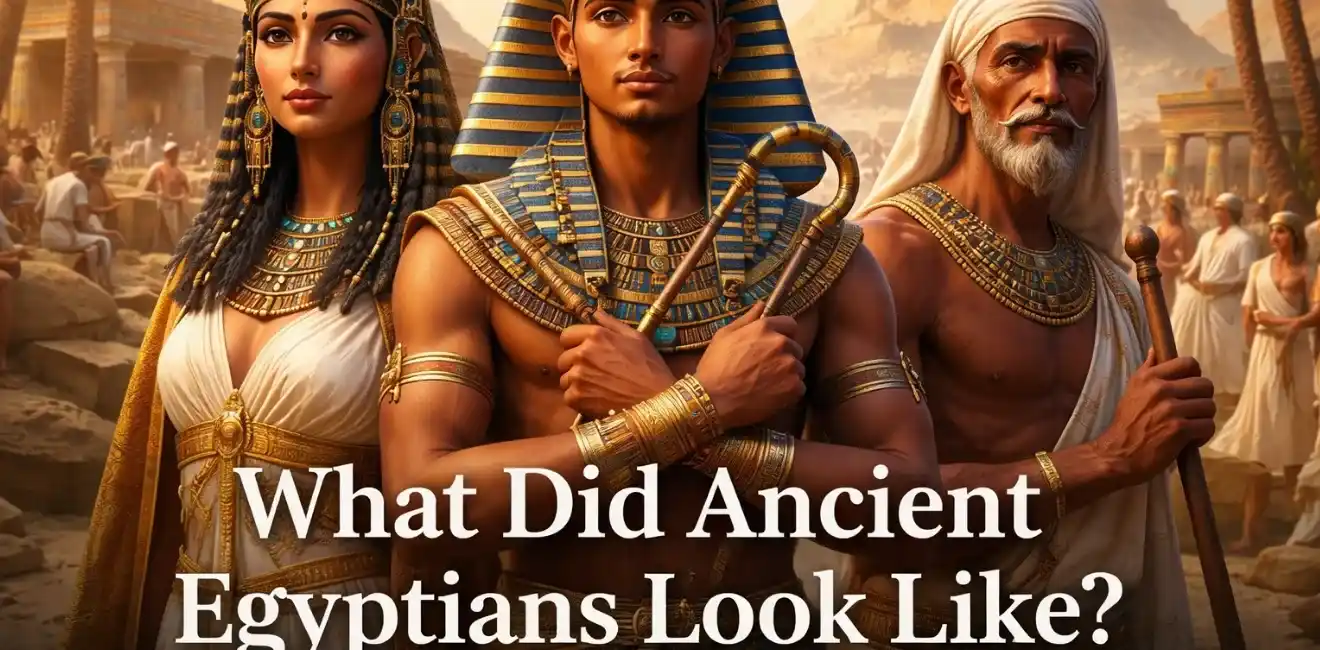
Ancient Egyptian statues, wall paintings and mummies have always made people curious about one main question: what did ancient Egyptians look like? When we look at the temples, tombs and artworks left behind, we see clear images of men and women with different skin colors, facial features and body shapes. But do these images show the real ancient Egyptian appearance, or were they created in a symbolic and artistic way?
Many people believe that ancient Egyptians all looked the same but history suggests something very different. Ancient Egypt was located between Africa, the Middle East, and the Mediterranean which made it a meeting point for many cultures and peoples. This unique location played an important role in shaping the physical appearance of ancient Egyptians over thousands of years.
Ancient Egyptian art gives us strong visual clues about skin color, hair styles, clothing and facial features. However, these artworks followed fixed rules and ideals, meaning they did not always show people as they truly looked in real life. Because of this, researchers also study mummies and human remains to learn more about ancient Egyptian physical features such as hair texture, height and health.
So, when we ask what did ancient Egyptians look like? There is no single or simple answer. By looking at ancient Egyptian art, mummies and historical evidence together, we can better understand the diversity of ancient Egyptian appearance and why this topic continues to attract so much interest today.
Ancient Egypt was a civilization that controlled much of what is now modern Egypt, located along the banks of the Nile River. Although most of the country was desert, the Nile provided a fertile environment suitable for agriculture. The incredible pyramids, temples and tombs built by the ancient Egyptians still stand today, attracting fascination from around the world.
The ancient Egyptians had a unique culture and religion, which included the worship of many gods, mummification and the use of hieroglyphic writing to communicate and record events. These cultural achievements make Egypt one of the most remarkable civilizations in history.
Other scholars suggest that ancient Egyptians may have had a wide range of physical traits because of the diverse peoples who lived in the region. There is no strong scientific consensus on their appearance, despite attempts to understand it through the study of skeletal remains, three-dimensional facial reconstructions of mummies and genetic research.
In general, the evidence indicates that the debate and study of “What Did Ancient Egyptians Look Like” is still ongoing. Some scientists argue that ancient Egyptians had significant ethnic diversity and a wide range of physical features while others believe they were primarily of African origin. Egypt cannot be classified as belonging to a single race because historical evidence from texts, art and mummies shows it was always multi-ethnic.
Nevertheless, the discussion about the racial identity of ancient Egyptians continues. DNA analyses of mummies show that relatives of the ancient Egyptians were connected to the Near East and Europe.
While some researchers believe that ancient Egyptians were black Africans, others oppose this view. Overall, there is no conclusive agreement about the presence of black Africans in ancient Egypt and research and debate about “What Did Ancient Egyptians Look Like” continues to this day.
The Ancient Egyptian Race Controversy
The question of race and ethnic identity in ancient Egypt is one of the most debated topics among historians and researchers. Ancient Egypt was located at a crossroads between Africa, the Near East and the Mediterranean, making it home to diverse peoples and different origins throughout its long history.
Some researchers argue that ancient Egyptians were primarily of African origin, while others highlight strong connections with populations from the Near East and the Mediterranean. Ancient Egyptian texts, wall paintings and statues show that Egyptians distinguished themselves culturally from neighboring peoples but they did not use the modern concept of “race” in the way we understand it today.
DNA studies of mummies reveal that ancient Egyptians had genetic links to populations in the Near East and Europe with clear evidence of genetic diversity within their own society. At the same time, other studies show that modern Egyptians carry a higher proportion of African ancestry compared to some ancient samples that have been analyzed.
Because of this, most researchers today agree that ancient Egypt cannot be classified as a single race. It was a multi-ethnic civilization, shaped over thousands of years through migration, trade, marriage and cultural interaction with surrounding peoples.
The History of the Debate About What did Ancient Egyptians Look Like and their Race Controversy
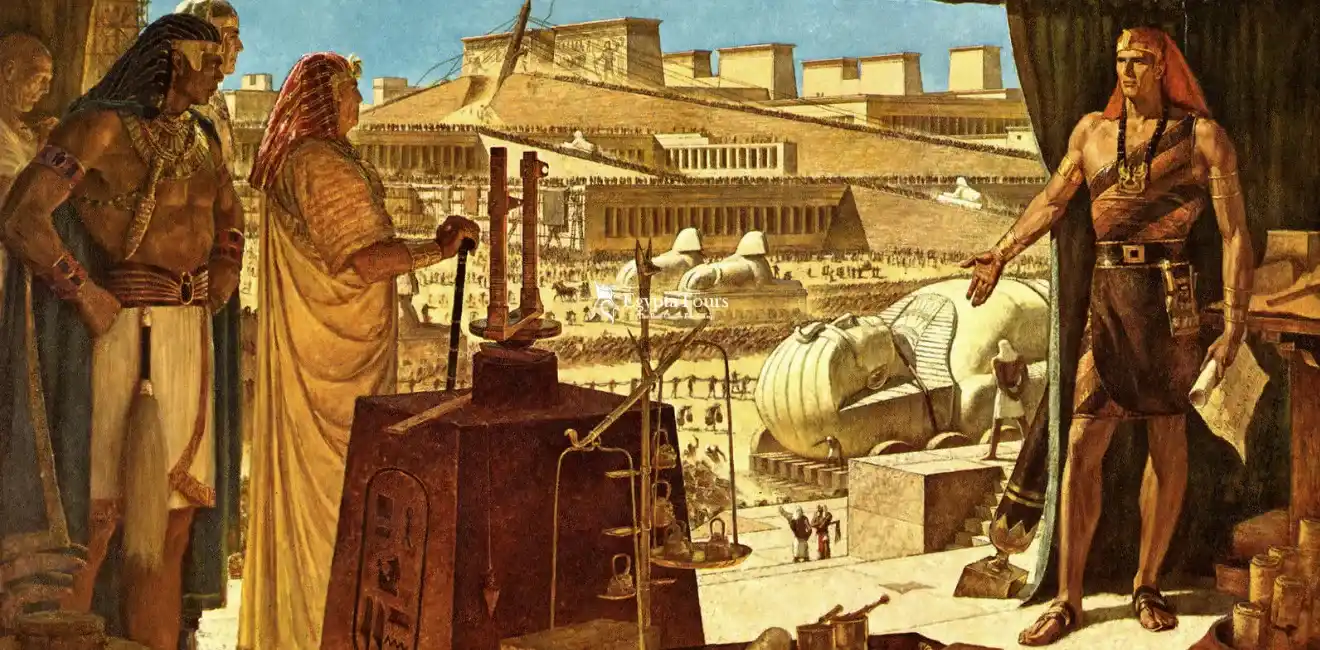
The -History- of- the- Debate- About – What- did- Ancient- Egyptians- Look- Like- and- their- Race- Controversy
Early 19th Century Controversy
The first examples of controversy over the race of ancient Egyptians came from Europeans and Americans in the early 19th century. One early example was an article published in New England magazine in October 1833, where the authors opposed the claim that “Herodotus gave them authority because they were black.” They pointed to ancient Egyptian paintings as evidence: “It may be noted that men’s skin was consistently red, and women’s skin was yellow, but it cannot be said that either had any features resembling Negro origin.”
Opinions of Constantin François Volney and Champollion
In the 18th century, Constantin François Volney wrote: “The Copts are the true representation of the ancient Egyptians because of their yellowish skin tone, which is neither Greek, Nigerian, nor Arab, their full faces, protruding eyes and thick lips. The ancient Egyptians were true Negroes of the same type as all native Africans.”
In 1839, Jean-François Champollion wrote that Egyptians and Nubians were depicted in the same way in paintings and inscriptions. He proposed that
“In the Copts of Egypt, we do not find any of the distinctive features of ancient Egyptians. The Copts are the result of intermixing with all the nations that successfully controlled Egypt and it is wrong to look for the main features of the ancient race within the Copts.”
Later Opposition and Reviews
Also in 1839, Jacque Joseph Champollion-Figeac criticized the claims of Volney and Champollion, stating that the idea that ancient Egyptians belonged to the African Negro race had long been considered a widely accepted error and that Volney’s conclusion regarding the Negro origin of ancient Egyptian civilization was unacceptable.
Debate During the Pro-Slavery Movement in the United States
The debate over the race of ancient Egyptians intensified during the pro-slavery movement in the 19th century. Some arguments supporting slavery emphasized the supposed historical, mental and physical inferiority of black people. For example, in 1851, John Campbell directly opposed Champollion and others regarding evidence of black origins in Egypt, stating:
“There is great difficulty and in my opinion an insurmountable problem, that defenders of the idea of Egyptian Negro origins do not attempt to understand, how this civilization was lost and how Egypt advanced and why because it was Caucasian.”
Influence of Religious Myths and Old Beliefs
Foster explained that the Hamites, who developed Egyptian civilization, were considered black in ancient times. This was linked to the Curse of Ham, dating back to the 6th century CE in the Babylonian Talmud, describing Ham’s descendants as cursed because they were black. However, after Napoleon’s campaign in Egypt, Europeans increasingly saw the Hamites as Caucasian, although Napoleon’s scholars concluded that the Egyptians were black.
Egypt and Slavery Debates in the United States
By the mid-19th century, the debate about the race of ancient Egyptians became directly connected to the issue of slavery. Josiah C. Nott and George Glidden argued in 1854 that “Caucasians or whites and Negroes were very different in ancient history and Egyptians were Caucasian.” Similarly, physician and anatomy professor Samuel George Morton concluded that “Although there were many Negroes in Egypt, their social status in ancient times was the same as in the United States today, being servants and slaves.”
Description of Queen Ahmose-Nefertari
In the early 20th century, Flinders Petrie, professor of Egyptology at the University of London, described Queen Ahmose-Nefertari as “the divine ancestor of the 18th Dynasty” with physical features including “a long, narrow, hooked nose and a prominent jaw.”
Linking Civil Rights Movements in the U.S.
In the late 1960s, Martin Luther King Jr. and other civil rights leaders connected the struggle of enslaved Jews in Egypt with the fight of African Americans.
All of these events show that the question What Did Ancient Egyptians Look Like has been debated for more than 200 years. Historians, scholars and researchers have offered many different views, often influenced by politics, slavery and cultural beliefs. The discussion about What Did Ancient Egyptians Look Like continues today, combining history, anthropology and modern genetic research to better understand ancient Egyptian civilization.
What Did Ancient Egyptians Look Like? Evidence from DNA and Archaeology
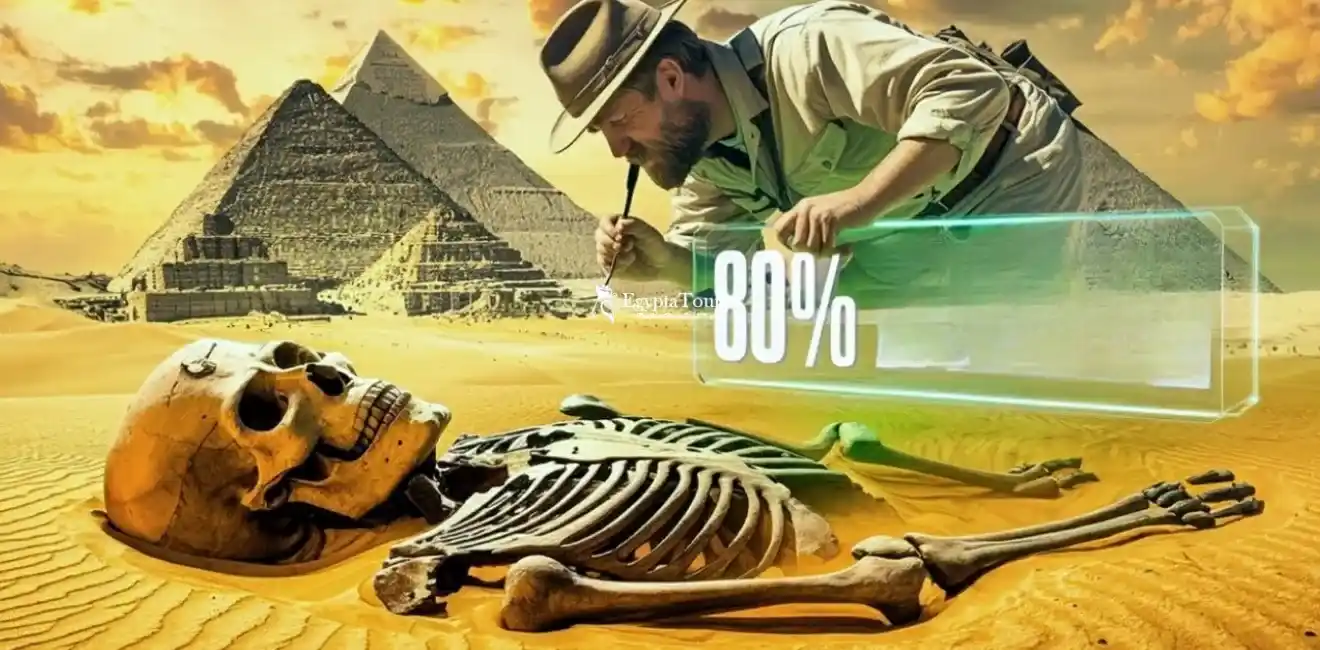
What- Did- Ancient- Egyptians- Look- Like -Evidence- from- DNA- and- Archaeology
The debate over “What Did Ancient Egyptians Look Like” continues to attract attention. Since at least the 1970s, Egyptologists, writers and scholars have discussed the origins of ancient Egyptians with some believing that they were black Africans. This perspective has even been represented in popular media such as Michael Jackson’s 1991 short film for the song Remember the Time, featuring Eddie Murphy and Magic Johnson.
On the other hand, some extremists have claimed that black civilizations never existed which is entirely false. In fact, Africa hosted several advanced empires and kingdoms throughout history. Strangely, some far-right groups have even used blood type data to claim Nordic ancestry for King Tutankhamun and other pharaohs.
Previously, DNA from mummies was difficult to analyze. However, an international team of researchers developed new methods to overcome these obstacles and discovered that ancient Egyptians were genetically closest to populations of the Near East, especially the Levant. This region includes present-day countries such as Turkey, Iraq, Israel, Jordan, Syria and Lebanon. The mummies studied were from the New Kingdom and later periods when Egypt was under Roman rule.
Were Ancient Egyptians Considered Black?
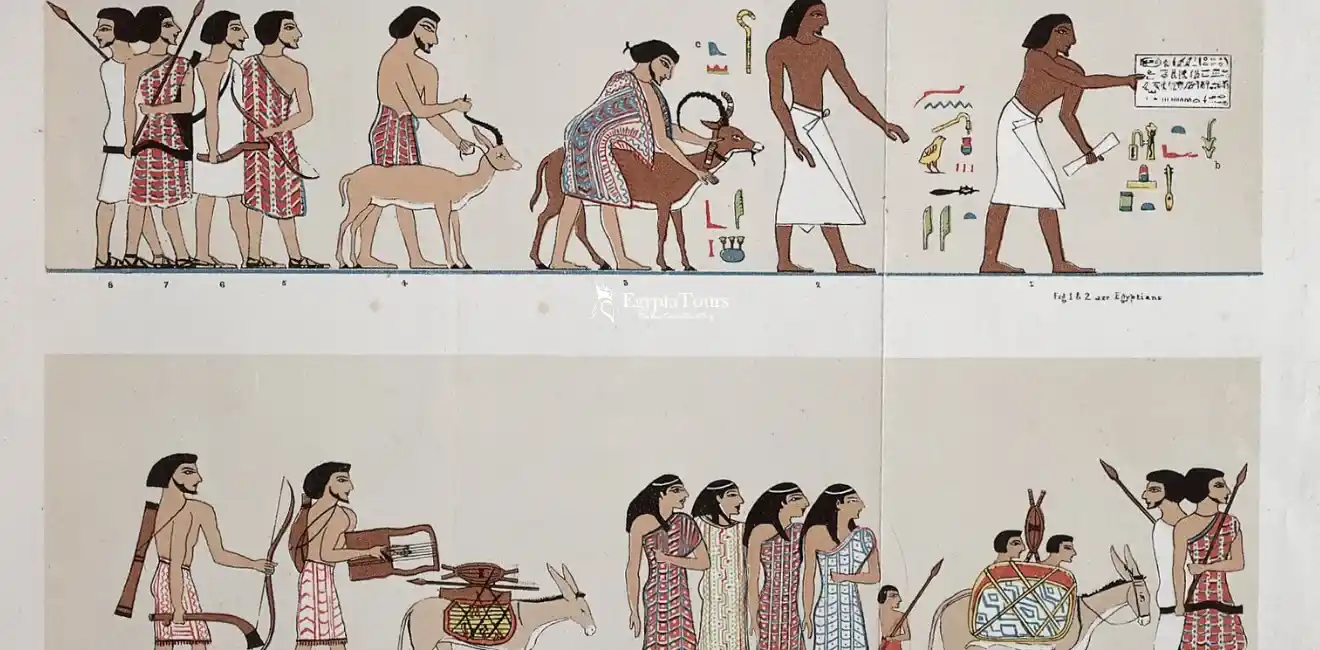
Were -Ancient- Egyptians- Considered- Black
The Egyptians did not classify themselves or others based on racial categories the way we do today. Ancient Egypt was a North African civilization located along the Nile Valley, and its population had a variety of appearances because Egypt was a crossroads between Africa, the Middle East and the Mediterranean.
People from southern Egypt, in Upper Egypt and Nubia, likely had darker skin due to their closeness to Sub-Saharan Africa. Meanwhile, northern Egyptians, from Lower Egypt near the Mediterranean Sea, probably had lighter skin because of their location and contact with Mediterranean populations.
Ancient Egyptians primarily saw themselves as part of a unique civilization with their own cultural and ethnic identity, rather than being defined by race or skin color. The modern ideas of “Black” or “white” did not exist back then.
Today, Egyptians are considered part of the Arab world but ethnically they are a mix of indigenous North Africans, Arabs (from the Arab conquest in the 7th century), Europeans (especially after Alexander the Great’s conquest) and Sub-Saharan Africans (from historical connections with Nubia and other African regions).
Because of this mix, some Egyptians today might be categorized as “Black” by modern standards but many are not. Egyptians generally see themselves as part of a unique national and cultural identity that doesn’t fit neatly into today’s racial categories.
The Eye Color of Ancient Egyptians
There is not enough evidence to prove that ancient Egyptians had blue or green eyes, despite some research speculations. It is more likely that the physical traits of ancient Egyptians were diverse, influenced by various factors such as regional origins and environmental conditions.
It is also important to note that ancient Egyptians used cosmetics and other methods such as eye makeup, to enhance their appearance. This could have affected how eye color was depicted in their paintings and artwork.
Overall, the study and discussion about the eye color of ancient Egyptians are still ongoing and researchers continue to explore this aspect of their appearance.
The Reconstructing Ancient Egyptian Faces: DNA and 3D Technology
In a remarkable achievement that seems like something out of the movie The Mummy, DNA is now helping researchers recreate the faces of people who lived more than 2,000 years ago. As Mindy Weisberger reported for Live Science, scientists used genetic information from three ancient Egyptian mummies to produce digital images of what these men may have looked like at the age of twenty-five.
These men were from Abusir el-Meleq, an ancient Egyptian city located south of Cairo and they lived between 1380 BCE and 450 CE. A team from Parabon NanoLabs displayed the reconstructed faces of the three men at the International Symposium on Human Identification in September.
The DNA reconstruction reveals what ancient Egyptians really looked like.
Parabon, a Virginia-based company that usually uses genetic analysis to help solve historical and forensic cases, stated:
“This is the first time a full DNA phenotyping analysis has been conducted on human DNA of this age.”
To approximate the men’s facial features, researchers used DNA phenotyping, a technique that predicts physical appearance from genetic markers. This method can suggest skin color, hair color and eye color, although as Caitlin Curtis and James Herrod noted in The Conversation in 2018, it has its limitations.
Other physical characteristics of the mummies were determined by examining their remains according to Hannah Sparks of the New York Post.
Parabon used DNA extracted from the mummies in 2017 to create 3D images. The earlier study, led by scientists from the Max Planck Institute for the Science of Human History in Germany, represented the first successful extraction of DNA from ancient Egyptian mummies. At the time, Ben Panko of Smithsonian described it as a “tempting possibility” that had long seemed “closer to legend than to science.”
One of the mummies analyzed in the 2017 study was Taja, whose remains are now housed at the Egyptian Museum and in Berlin’s Aegyptisches Museum und Papyrussammlung.
The Challenges of Extracting DNA from Ancient Mummies
Stephan Schiffels, a co-author of the study, told Tracy Stadter of Live Science in 2017:
“Scientists were generally skeptical about the possibility of preserving DNA in Egyptian mummies because of the hot climate, high humidity in tombs, and chemicals used in mummification. All of these factors make it difficult for DNA to survive for such long periods.”
The images released by Parabon show faces that resemble modern populations of the Mediterranean and the Near East more than they do modern Egyptians. Based on the genetic analysis, the team suggested that the mummies likely had light brown skin with dark hair and eyes.
According to Parabon, the 3D reconstructions closely match previous genomic analyses, which concluded that ancient Egyptians shared more genetic ancestry with Near Eastern populations than modern Egyptians, who received additional gene flow from Sub-Saharan Africa in later periods.
In 2017, Johannes Krause, an ancient DNA expert at the University of Tübingen in Germany and a co-author of the study, told Ben Guarino of the Washington Post that this evaluation showed “complete genetic continuity” over 1,300 years. In other words, even though Egypt experienced repeated foreign invasions, the ancient Egyptians included in the analysis were not significantly genetically mixed with the conquerors.
After predicting the probable physical traits of the three men, the Parabon team searched the company’s database for individuals with DNA similar to that of the ancient Egyptians. Using the information from the database, they modeled the height, shape and depth of the mummies’ heads and facial features. A forensic artist then completed the process, creating the final 3D images.
Eline Gritak, Director of Bioinformatics at Parabon, stated in the company’s report:
“It is amazing to see how genome sequencing and advanced bioinformatics can be applied to such ancient samples.”
Are Modern Egyptians Descendants of Ancient Egyptians?
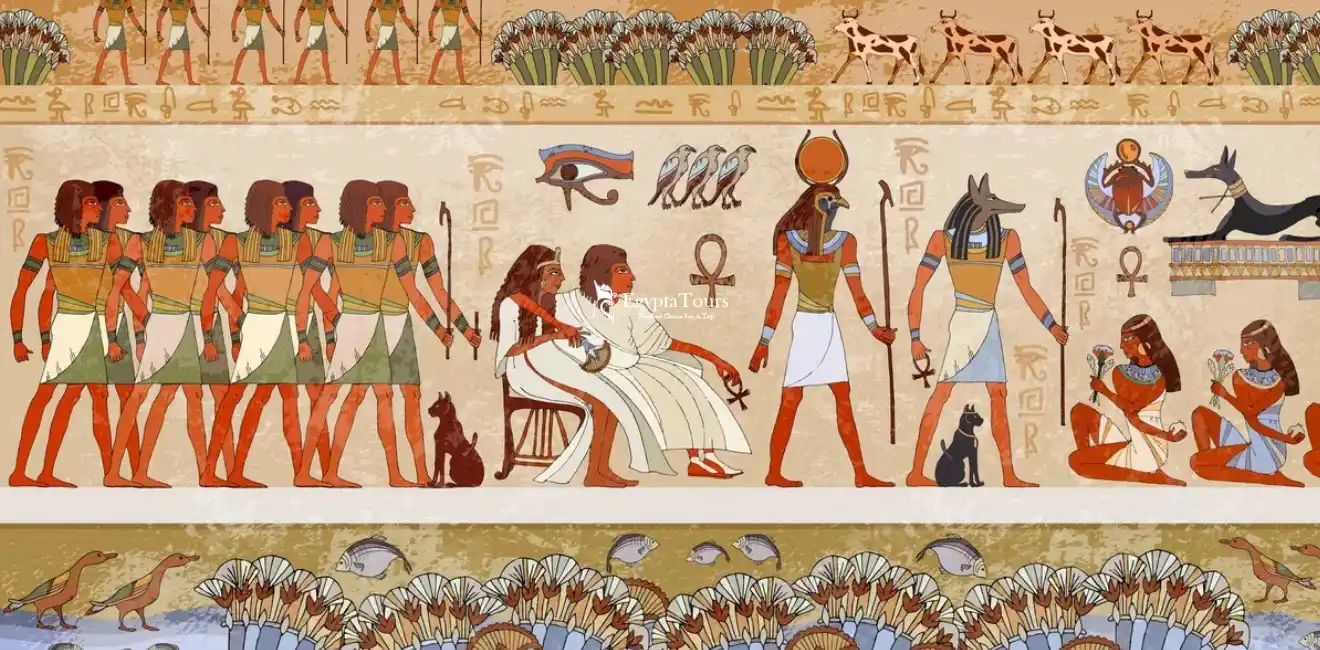
Are- Modern- Egyptians- Descendants- of- Ancient -Egyptians
Yes, modern Egyptians are connected to the ancient Egyptians. Studies of genetics and DNA analysis show that the people living in Egypt today share a link with both ancient Egyptians and populations from North Africa and the Near East. Mummies like Ramses, buried in Tomb 7 in the Valley of the Kings, provide clear evidence of this connection.
The genetic and historical continuity of Egyptians shows clearly what modern Egyptians inherited from their ancestors. Although there is some debate about the exact level of genetic continuity, most evidence indicates that modern Egyptians descend from the ancient inhabitants of Egypt. Recent genomic studies and DNA analyses of mummies confirm that a significant portion of the genetic and cultural heritage of the ancient Egyptians has been passed down through generations.
Modern Egyptians are considered direct descendants of the ancient Egyptians. Even though there has been some mixing with other populations due to invasions and foreign rulers over the centuries, the overwhelming evidence shows that people living in Egypt today are the direct continuation of the ancient population.
It is believed that Egyptian Christians, known as Copts, have maintained one of the clearest lines of continuity with ancient Egyptians. They continue to live in Egypt today, and genetic and historical data support the idea that they preserve a direct ancestral connection. Overall, research suggests that modern Egyptians carry the genetic legacy of their ancient ancestors.
Genetic studies also show that modern Egyptians have a higher proportion of African ancestry than some of the ancient mummies that have been analyzed. At the same time, they also share links with populations from North Africa and the Near East. All studies consistently show that modern Egyptians are genetically and historically the closest to the ancient Egyptians, even though debates continue regarding the precise physical traits of the ancient population.
The Specific Controversies Today About What Ancient Egyptians Looked Like
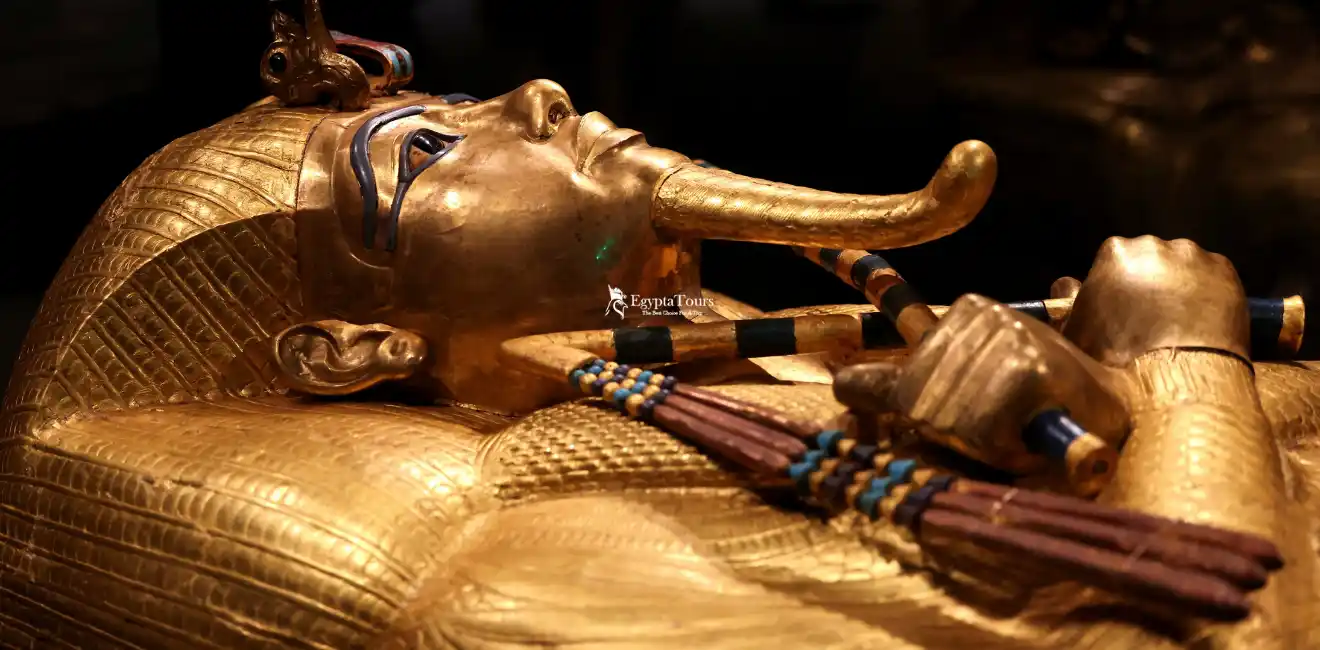
The -Specific- Controversies -Today -About- What -Ancient- Egyptians- Looked- Like
Today, debates about the appearance and racial identity of ancient Egyptians remain a sensitive topic. These issues are often described as “troubled waters” that most mainstream writers avoid when discussing Egyptology but some specific controversies have sparked attention.
King Tutankhamun
One of the most discussed cases is King Tutankhamun. Several scholars including Diop, claimed that Tutankhamun was black and criticized attempts to reconstruct his facial features such as the famous reconstruction shown on the cover of National Geographic, arguing that the king was portrayed as “too white.” Writers like Chancellor Williams argued that Tutankhamun, his parents and his ancestors were black Africans.
Forensic artists and physical anthropologists from Egypt, France and the United States created busts of Tutankhamun using CT scans of his skull. Biological anthropologist Susan Anton, who led the American team, said the skull’s features were difficult to classify. The cranial cavity suggested African ancestry, while the nasal aperture appeared narrow, usually associated with European traits. This led some experts to classify the skull as North African. Other specialists argued that neither skull shape nor nose openings are reliable indicators of race.
Even with modern technology capable of reconstructing Tutankhamun’s facial structure with high accuracy, it remains impossible to determine the exact color of his skin or eyes. Therefore, the clay model was painted using the artist’s interpretation, which relied on “the medium-dark skin tone of modern Egyptians.”
Terry Garcia, Executive Vice President of Mission Programs at National Geographic, responded to some critics about the Tutankhamun reconstruction:
The major variable is skin color. Today, we know that North African populations have a range of skin tones from light to dark. In this case, we chose a medium tone and we openly say, ‘this is an average.’ We cannot know Tutankhamun’s skin color or eye color with 100% certainty.
When American activists pressed the issue in September 2007, Zahi Hawass, Secretary-General of the Supreme Council of Antiquities, stated that “Tutankhamun was not black.” In a November 2007 issue of Ancient Egypt magazine, Hawass confirmed that none of the facial reconstructions truly resembled Tutankhamun and in his view, the most accurate representation of the young king is the golden mask from his tomb. Discovery Channel commissioned a facial reconstruction of Tutankhamun in 2002 based on CT scans of his skull.
In 2011, the genomics company iGENEA launched a DNA project for Tutankhamun, using genetic markers that were reportedly excluded from Discovery Channel’s reconstruction. According to the company, the small satellite data suggested that Tutankhamun belonged to haplogroup R1b1a2, a branch most common among males in Western Europe.
Carsten Pusch and Albert Zink, who led the team that extracted Tutankhamun’s DNA, criticized iGENEA for not consulting them before the project. After reviewing the footage, they also concluded that the methodology used by iGENEA was unscientific and described it as “simply impossible.”
These debates show how complex the question “What Did Ancient Egyptians Look Like” really is. Even today, there is no consensus about the exact physical appearance of ancient Egyptians. Researchers rely on multiple sources, including DNA, skeletal analysis, facial reconstruction, and historical records, to approach this question. What Did Ancient Egyptians Look Like continues to be a subject of scientific investigation, public fascination and heated discussion in Egyptology.
FAQs
What Did Ancient Egyptians Really Look Like?
Ancient Egyptian statues, wall paintings and mummies show people with different skin colors, facial features and body shapes. Art was often symbolic so researchers study mummies and human remains to understand real traits like hair texture, height and health. Egypt’s location between Africa, the Middle East and the Mediterranean made its population physically diverse.
Did Ancient Egyptians Identify by Race?
Ancient Egyptians did not define themselves by modern racial categories. People from Upper Egypt and Nubia likely had darker skin while northern Egyptians near the Mediterranean probably had lighter skin. They primarily identified through their civilization and culture, not skin color.
How Does DNA Reveal Ancient Egyptian Appearance?
DNA from mummies shows genetic links to Near Eastern populations. 3D reconstructions of ancient Egyptians suggest light brown skin with dark hair and eyes. These findings indicate Egypt had diverse physical traits influenced by geography and cultural interactions over time.
Are Modern Egyptians Descendants of Ancient Egyptians?
Modern Egyptians share genetic links with ancient Egyptians and populations from North Africa and the Near East. Despite mixing with other groups over centuries, Egyptians today inherit much of the genetic and cultural heritage of their ancestors with Copts preserving one of the clearest ancestral lines.
Why Is There a Debate About Ancient Egyptian Race?
For over 200 years, scholars have argued whether ancient Egyptians were black Africans, Mediterranean or mixed. Controversies include biases from history, slavery debates and reconstructions of figures like Tutankhamun. DNA, skeletal studies and art provide clues but no full consensus exists.
What Did King Tutankhamun Look Like?
Reconstructions of Tutankhamun used CT scans and DNA, showing traits of North African and Mediterranean ancestry. Skin and eye color remain uncertain so reconstructions often use “medium” tones based on modern Egyptian averages. His facial features continue to spark debate among historians and researchers.
What Clues Do Ancient Egyptian Artworks Give About Appearance?
Ancient Egyptian art shows skin color, hairstyles, clothing and facial features but these followed strict artistic rules. Researchers cannot rely solely on art so mummies and human remains are studied to understand the real physical traits of Egyptians.
How Did Egypt’s Location Affect Ancient Egyptian Features?
Egypt was at the crossroads of Africa, the Middle East, and the Mediterranean which brought many cultures and peoples. This geographic position caused a mix of physical traits over thousands of years influencing skin tone, facial structure and hair type.
What Do Mummies Reveal About Ancient Egyptian Health and Height?
Studying mummies helps scientists learn about the health, nutrition and average height of ancient Egyptians. These findings complement artistic depictions, showing a more accurate and diverse picture of their appearance.
Did Ancient Egyptians Have Connections With Europe?
DNA studies reveal that some ancient Egyptians shared genetic links with populations in Europe and the Near East. These connections were due to migration, trade and cultural exchanges over centuries.
Why Is the Eye Color of Ancient Egyptians Still Unknown?
Because there is no strong evidence proving that ancient Egyptians had blue or green eyes. Artworks may exaggerate eye color with makeup or symbolic techniques so researchers rely on DNA and skeletal analysis for clues.
How Did 3D Technology Help Reconstruct Ancient Egyptian Faces?
Scientists used DNA phenotyping and 3D modeling to recreate faces of ancient Egyptians from mummies. This shows likely skin tone, hair and facial features, helping the world see what people in Egypt looked like over 2,000 years ago.
How Did Historical Opinions Influence the Race Debate?
Since the 19th century, historians, explorers and writers have debated whether Egyptians were black Africans, Mediterranean or mixed. These opinions were shaped by European colonization, slavery debates and racial beliefs of the time.
About EgyptaTours

EgyptaTours is a name synonymous with trust, excellence, and unforgettable travel experiences, proudly standing as one of the leading travel agencies in Egypt. Renowned for its deep expertise, personalized service, and carefully crafted itineraries, EgyptaTours serves as the ultimate gateway to discovering Egypt in its most authentic and inspiring form.