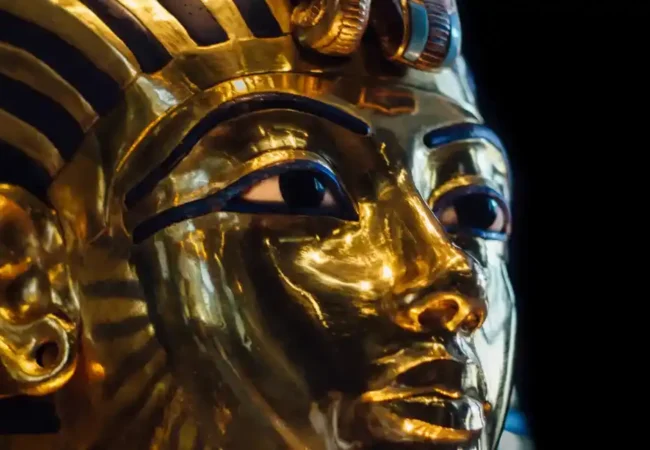
King Tut Mask
King Tut Mask was discovered in 1925 by the British archaeologist Howard...



Ancient Egypt wasn’t just one long, unbroken empire—it was a massive, 3,000-year saga. The story officially kicked off around 3100 BCE when King Narmer united Upper and Lower Egypt, creating a centralized state. From there, the civilization grew through three major “golden ages” (the Old, Middle, and New Kingdoms), leaving behind the pyramids, massive temples, and legendary names like Hatshepsut and Ramesses II.
But nothing lasts forever. A brutal mix of severe climate crises, internal power struggles, and a relentless wave of foreign invasions slowly chipped away at the pharaohs’ power. The final curtain fell in 30 BCE when Rome defeated Cleopatra, turning the once-mighty, independent empire into just another Roman province.
6 Takeaways to Remember
It all started with unification (3100 BCE). Egypt became a true powerhouse when King Narmer brought the north and south together. This move established the government, administration, and religious systems that would run the country for the next three millennia.
History is split into three main “Kingdoms.”
The Old Kingdom gave us the iconic pyramids.
The Middle Kingdom brought agricultural wealth and fortified borders.
The New Kingdom was the flashy age of empire, packed with famous faces like King Tut, Akhenaten, and Ramesses II.
Ramses III was the last great defender. He successfully fought off the mysterious, invading “Sea Peoples.” But after his death around 1155 BCE, things went downhill fast due to a devastating 150-year drought and the collapse of Mediterranean trade.
The collapse was a slow bleed, not a sudden crash. Egypt didn’t just disappear overnight. Weakened by famine, disease, and a bankrupt government, the country was eventually taken over by a rotating cast of foreigners: Libyans, Nubians, Assyrians, Persians, and Greeks.
Cleopatra’s defeat was the final blow. The 3,000-year run of the pharaohs ended permanently in 30 BCE when the Romans took over.
Geography was their ultimate superpower. How did they survive for 3,000 years? The Nile River provided incredibly reliable food, while the surrounding deserts acted as a natural shield against invaders. That, combined with a fiercely stable culture and religion, made them nearly invincible for centuries.
Ancient Egypt is one of the world’s oldest and most fascinating civilizations, lasting for thousands of years along the Nile River. It began around 3100 BCE, when Upper and Lower Egypt were unified and officially ended in 30 BCE after the death of Cleopatra VII and the Roman conquest of Egypt.
This long timeline is usually divided into several major periods, each marked by political power, cultural achievements and important historical changes.
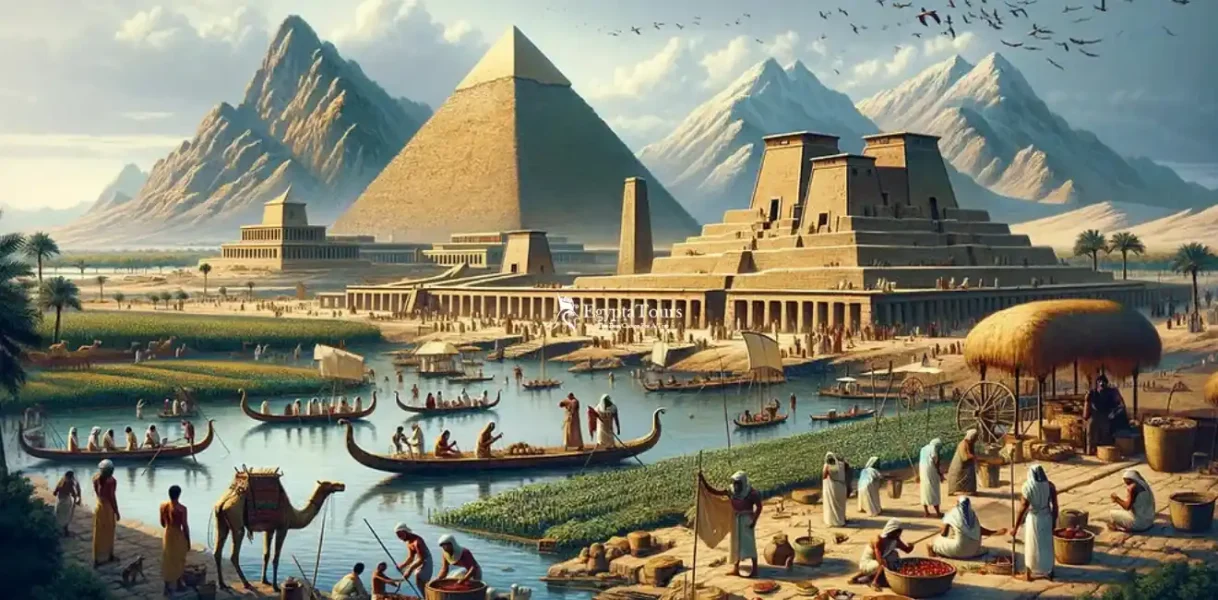
A-Complete-Timeline-about-When-Did- Ancient-Egypt-Start-and-End
Ancient Egyptian civilization began around 3100 BCE, after King Narmer, also known as Menes, successfully unified Upper and Lower Egypt. This unification marked an important turning point, starting the Early Dynastic Period and establishing a strong centralized government that helped bring stability and prosperity to ancient Egypt.
The Early Dynastic Period, also called the Thinite Period (3150–2686 BC), includes the First and Second Dynasties and marks the beginning of written history in ancient Egypt. This period started with the unification of Upper and Lower Egypt by King Menes which was a very important event in Egyptian history because it created a unified state.
Thinis, located near Abydos, became the first capital of unified Egypt, along with the northern capital Memphis, which is also attributed to King Menes. This period laid the foundation for the systems of government, administration and religion in ancient Egypt.
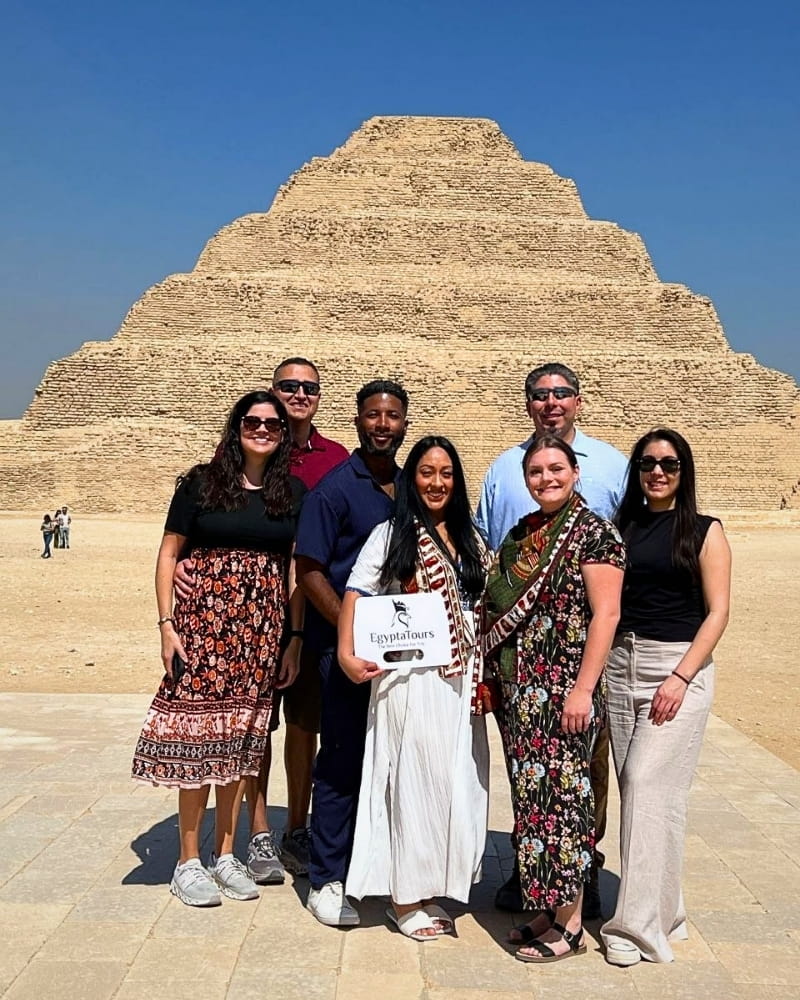
The Early Dynastic Period was followed by the Old Kingdom, which began with the Third Dynasty. One of its most famous kings was Djoser (2684–2600 BC), who built the Step Pyramid at Saqqara. This pyramid is considered the first large stone building in history and represents a major development in Egyptian architecture and thought.
The roots of civilization during this period go back to around 3600 BC, when Neolithic communities settled along the Nile River and depended on farming, gathering crops, and domesticating animals. Over time, Egyptian society grew and developed into a more organized civilization. New and distinctive pottery appeared, which was connected to high-quality pottery from Palestine.
The use of copper became widespread in tools and weapons. Egyptian architecture was also influenced by Mesopotamian ideas such as the use of sun-dried mud bricks, arches and decorated walls.
Archaeological discoveries have greatly helped in understanding this period, especially at the site of Ezbet Tell Kafour Negm in Sharqia Governorate. Excavations by Zagazig University revealed a residential area and a cemetery containing 127 graves from the Predynastic and Early Dynastic periods.
These graves included burials in a crouched position, skeletons placed inside pottery vessels and jars bearing the names and marks of King Narmer as well as various jewelry items, kohl tools, stone vessels made of schist and alabaster, copper vessels and rare amulets made of precious stones and gold. Remains of houses, ovens and hearths used by the villagers were also found.
Archaeological evidence confirms Egyptian settlement and colonization in southern Canaan from around 3200 BC. This is shown by the presence of Egyptian architecture, pottery, tools and seals including twenty serekh symbols attributed to King Narmer. There is also clear evidence of Egyptian presence and control in Lower Nubia after the end of the Nubian Group culture, showing that Egyptian influence extended beyond the Nile Valley from an early time.
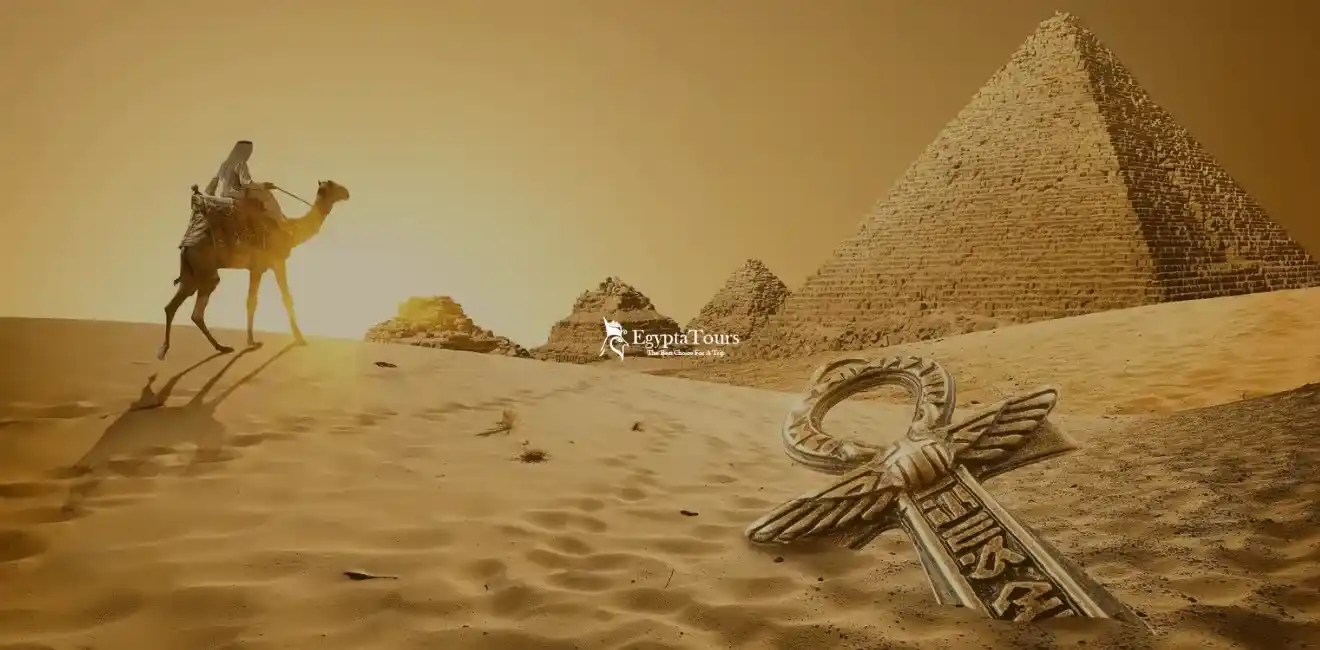
Major-Periods-of-Ancient-Egypt-EgyptaTours
The Old Kingdom in Egypt is considered the period from the Third Dynasty to the Sixth Dynasty (2686–2181 BCE). The main capital was Memphis, where Djoser (2630–2611 BCE) built his royal palace.
The Old Kingdom is best known for its pyramid building, which is why it is sometimes called the “Age of the Pyramids.” The first prominent pharaoh of this period was Djoser, who ordered the construction of the Step Pyramid at Saqqara. During this period, Egypt became a unified state ruled by the pharaoh. Local governors became officials or tax collectors. Egyptians worshiped the pharaoh as a god to ensure the annual Nile flood essential for crops.
The Old Kingdom was at its peak during the Fourth Dynasty. Sneferu built many different pyramids while his son Khufu built the Great Pyramid of Giza. Khafre and Menkaure later built the famous Giza pyramid complex.
The Fifth Dynasty began with Pharaoh Userkaf around 2495 BCE and focused on Ra, the sun god and building sun temples in Abu Sir and massive pyramids. The Trade also flourished with the Syrian coast and Punt to acquire precious woods, incense and metals.
Power gradually weakened during the Sixth Dynasty with local rulers becoming more independent. After the death of Pepi II, succession conflicts arose and Egypt suffered famine due to low Nile floods leading to the collapse of the Old Kingdom.
The Middle Kingdom was from the Eleventh Dynasty to the end of the Thirteenth Dynasty (2030–1650 BCE). The Eleventh Dynasty ruled from Thebes and followed by the Twelfth Dynasty from Lisht.
The rulers of the Middle Kingdom traced their origins to Theban leaders like Intef the Great and Mentuhotep I. Mentuhotep II finally reunited Egypt after a long struggle with the Tenth Dynasty. He led military campaigns south to Nubia and north to the Levant.
Amenemhat I founded a new capital near Lisht and restored internal stability. His son Senusret I expanded Egyptian territory and ensured prosperity. Senusret III established clear borders in Nubia and built massive forts. Amenemhat III developed the Fayum, expanded mining in Sinai and brought settlers from Western Asia to work in Egypt. In his later years, Nile floods began to fail, putting pressure on resources.
During the Thirteenth and Fourteenth Dynasties, Egypt slowly declined. Some settlers invited by Amenemhat III gained power, paving the way for the Hyksos.
The New Kingdom followed the expulsion of the Hyksos during the Second Intermediate Period. Egypt achieved its greatest territorial expansion south and north.
Hatshepsut: A female pharaoh who expanded trade south to Punt and north to the Mediterranean, ruling for twenty years.
Thutmose III: Expanded the Egyptian army and achieved major military victories.
Amenhotep IV / Akhenaten: Promoted the worship of one god (Aton) and built a new capital at Amarna, introducing major artistic and social changes.
Tutankhamun and Horemheb: Restored the old gods after Akhenaten.
Ramesses I, Seti I and Ramesses II: Built temples, reclaimed territories in the Levant and Egypt reached its peak under Ramesses II, who ruled 67 years and built massive temples like Abu Simbel.
After Ramesses III, Egypt had invasions by the Sea Peoples and Libyans, as well as economic crises, drought, famine and internal unrest. The weakened rule of Ramesses XI allowed the priests of Amun in Upper Egypt to take control while Smendes established the Twenty-First Dynasty in Lower Egypt.

When-Did-Ancient-Egypt-End-EgyptaTours
After more than three thousand years of prosperity and power, the Pharaonic civilization was in its final stage in 30 BCE when Cleopatra VII was defeated by Octavian Augustus and Egypt became a Roman province marking the end of the last ruling dynasties in the history of ancient Egypt.
The ancient civilization ended because of a complex interaction of repeated invasions, internal divisions and climate crises that struck the region. Despite Egypt’s strength at the time, these factors were greater than its ability to withstand them and in 30 BCE, a new chapter began in the country’s history under Roman rule, announcing the end of one of the greatest civilizations of the ancient world.
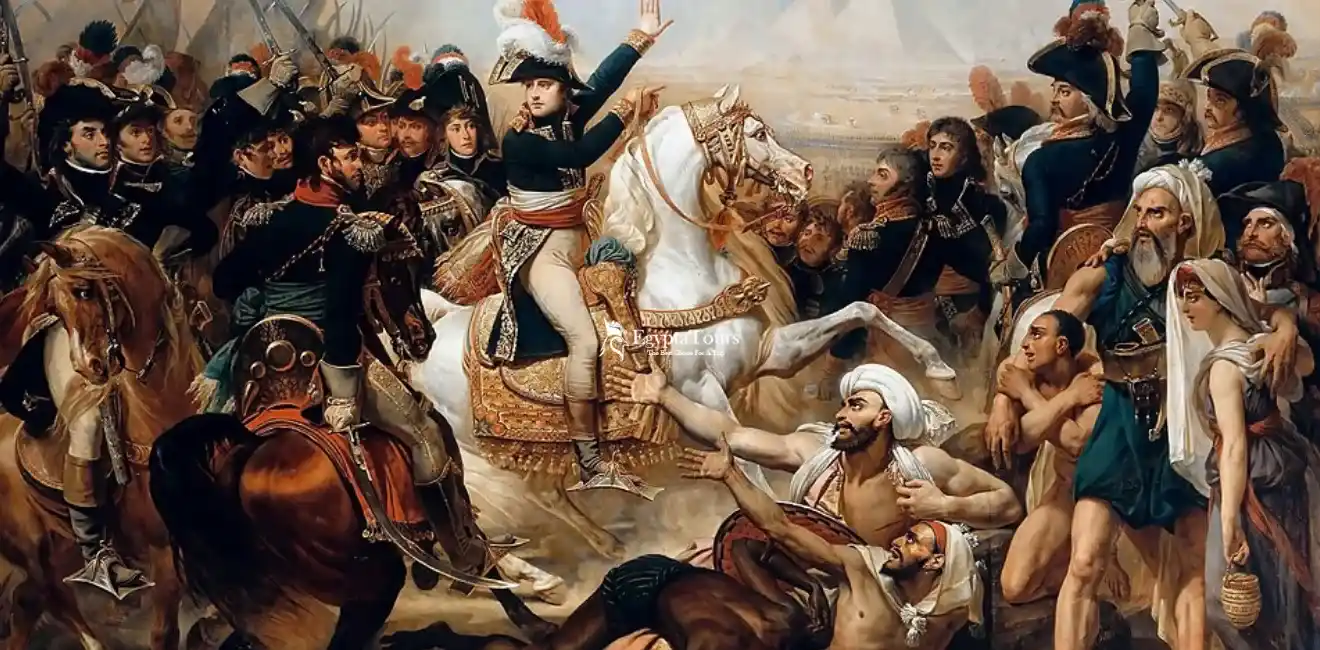
Successive-Invasions-Weakened-The-Egyptian -State
The fall of Egypt was not sudden, It was the result of a long series of invasions that exhausted the state and were imposed by regional powers:
Ramses III ruled Egypt for 31 years and is considered the last of the “great” pharaohs. His reign coincided with one of the most turbulent periods in Mediterranean history, known as the invasion of the “Sea Peoples.” The exact identity of the Sea Peoples remains uncertain, but scholars believe they were an ethnically diverse group of refugees from the western Mediterranean displaced by drought and famine, seeking new lands to conquer.
These fleets may have attacked Egypt at least twice during the reigns of Merenptah and Ramses III. In 1177 B.C., Ramses III and the Egyptian navy successfully repelled the second massive Sea Peoples invasion and he commemorated the victory on the walls of his temple and tomb at Medinet Habu. However, the victory was short-lived.
According to CT scans of Ramses III’s mummy, he was murdered in 1155 B.C. by a jealous secondary queen, marking the beginning of Egypt’s decline. Eric Cline, a Bronze Age historian, states, “After Ramses III, Egypt is never the same again.”
In the 12th century B.C., the entire Mediterranean region experienced a catastrophic event known as the “Bronze Age Collapse.” Kingdoms that fell to the Sea Peoples or suffered other disasters like drought and famine collapsed completely. The Mycenaeans in Greece and the Hittites in Anatolia lost their cities, cultures and even written languages.
Although Ramses III managed to defend Egypt, the country eventually suffered the same problems affecting the region, a megadrought lasting over 150 years and the collapse of Mediterranean trade networks. “The international connections that were strong during the late Bronze Age were cut,” says Cline. “In Egypt, the 12th century after Ramses III saw food shortages, political infighting and a rapid decline in Egypt’s role as a major international power.”
After Ramses III’s death, Egypt was ruled by a series of weak pharaohs also named Ramses. Ramses XI, who died around 1070 B.C., was the last pharaoh of the New Kingdom. Archaeological evidence gives insight into the rapid decline of Egypt. The mummy of Ramses V shows smallpox scars, suggesting a possible outbreak.
Records indicate that Ramses V and his family were buried in new tombs and a six-month restriction was placed on visiting the Valley of the Kings, possibly one of the earliest recorded disease-inspired isolation measures.
During the reigns of Ramses V and VI, Egypt also lost control of copper and turquoise mines in the Sinai Peninsula, likely withdrawing completely from Sinai and Canaan by 1140 B.C. By the reign of Ramses IX, tomb robberies became widespread due to desperate economic conditions and weakened respect for the pharaoh’s authority. During Ramses XI’s reign, some royal mummies had to be relocated for protection.
At the end of ancient Egypt, the Libyans entered from the west and managed to infiltrate the centers of power. Shoshenq I, the founder of the Twenty-Second Dynasty and the first Libyan-origin pharaoh, tried to restore the glory of Ramses III in the 10th century BCE through military campaigns and territorial expansions.
In the 8th century BCE, the Nubians took advantage of political instability and seized the throne, establishing the Twenty-Fifth Dynasty. Their rule lasted about a century before they were expelled by the Assyrians who launched a violent invasion of Egypt.
Historian Eric Klein states that the Kushite takeover marked the beginning of the end for Egypt’s independence, followed by successive invasions by the Assyrians, Persians and Greeks before the Romans arrived. In 332 BCE, Alexander the Great entered Egypt and later established the Ptolemies and made one of the most prosperous periods before Roman rule.
The Ptolemaic Dynasty ruled Egypt from 305–30 BCE with kings of Macedonian-Greek origin. They built a great capital in Alexandria and restored Egypt’s economic and scientific status. Cleopatra VII was the most famous and effective of the Ptolemies, but her conflict with Rome ended Egypt’s independence. After her defeat alongside Mark Antony at the Battle of Actium and the fall of Alexandria in 30 BCE, Egypt became a Roman province, closing the last chapter of the Pharaonic civilization.
Recent studies indicate that Egypt’s priests were aware of a major environmental threat approaching. They developed precise systems to measure the Nile’s level and predict years of drought. At the end of the Bronze Age, Ramses II decided to store large quantities of grain and water and to breed animal species that could withstand drought.
This preparation helped Egypt survive difficult periods while famines struck neighboring peoples like the Hittites. Egypt also helped some of these populations, fearing that hunger would force them to attack. However, the drought lasted longer and was harsher than any state could endure. As it continued for years, parts of the kingdom began to break apart, administrative systems collapsed and an entire phase of history eventually fell.
Ancient Egypt lasted for about 3,000 years from around 3100 BCE to 332 BCE because of its geography, society, economy and culture. The Nile River gave them fertile soil and reliable food with its yearly floods while deserts and seas protected Egypt from frequent invasions. Most people lived along the Nile which made organizing administration, taxes and labor easier.
Egypt had a strong central government with scribes, priests and administrators who kept knowledge and managed society even when dynasties changed.
The Big projects like pyramids, temples and irrigation also helped organize society, share resources and strengthen the rulers’ power. Religion and the idea of sacred kings gave stability and their conservative culture avoided big social changes that could cause problems.
The military mostly focused on defense while trade brought in luxury goods and alliances. Egypt was also very adaptable, learning from foreign rulers, using new technologies and surviving periods of crisis. Families and temples supported local communities, helping the state last longer. Unlike other empires, Egypt didn’t expand too much and avoided collapsing under its own size.
Ancient Egyptian civilization began around 3100 BCE, after King Narmer, also known as Menes, successfully unified Upper and Lower Egypt.
After more than three thousand years of prosperity and power, the Pharaonic civilization was in its final stage in 30 BCE when Cleopatra VII was defeated by Octavian Augustus and Egypt became a Roman province.
Ancient Egyptian civilization began around 3100 BCE, after King Narmer, also known as Menes, successfully unified Upper and Lower Egypt.
The Early Dynastic Period, also called the Thinite Period (3150–2686 BC), includes the First and Second Dynasties and marks the beginning of written history in ancient Egypt.
Thinis, located near Abydos, became the first capital of unified Egypt along with the northern capital Memphis which is also attributed to King Menes.
One of its most famous kings was Djoser (2684–2600 BC), who built the Step Pyramid at Saqqara.
The Old Kingdom is best known for its pyramid building, which is why it is sometimes called the “Age of the Pyramids.”
The Old Kingdom reached its peak during the Fourth Dynasty. Sneferu built different pyramids while his son Khufu built the Great Pyramid of Giza.
The Middle Kingdom lasted from the Eleventh Dynasty to the end of the Thirteenth Dynasty (2030–1650 BCE).
Mentuhotep II finally reunited Egypt after a long struggle with the Tenth Dynasty.
Hatshepsut, Thutmose III, Amenhotep IV / Akhenaten, Tutankhamun, Horemheb, Ramesses I, Seti I and Ramesses II.
Cleopatra VII was the most famous and effective of the Ptolemies but her conflict with Rome ended Egypt’s independence.
The ancient civilization ended because of a complex interaction of repeated invasions, internal divisions and climate crises that struck the region.
Ancient Egypt lasted for about 3,000 years because of its geography, society, economy and culture. The Nile River gave fertile soil and reliable food while deserts and seas protected Egypt from invasions. A strong central government, organized administration, and religion helped maintain stability. Trade, defense and adaptability to crises also supported its long-lasting civilization.


Explore our top-rated Egypt travel packages and embark on an unforgettable journey. From the Pyramids of Cairo to the magical temples of Luxor, Aswan, and Abu Simbel, discover expertly curated tours designed for your perfect Egyptian adventure