



Ancient Egyptian Religion: Gods, Beliefs and Rituals Explained
Ancient Egyptian religion was a complex belief system that played a key role in their culture.
It focused on the Egyptians’ relationships with many gods who were thought to control the world. Around 1,500 gods are known. Rituals like prayers and offerings were made to gain the favor of these gods.
The main religious practices were centered around the pharaohs, who were believed to have divine powers because of their position.
They acted as middlemen between the people and the gods and it was their duty to perform rituals and make offerings to maintain Ma’at, the balance of the universe and to fight Isfet, which represented chaos. The government spent a lot of resources on religious practices and the building of temples.
Ancient Egypt religion was a complex religious system consisting of a set of beliefs and rituals that formed an integral part of ancient Egyptian culture.
This religion centered around the interactions of the Egyptians with the many gods that they believed existed and controlled the world.
There were more than 1,500 gods. Rituals such as prayers and offerings were performed to the gods to gain their approval.
Formal religious practice was centered on the pharaohs, the rulers of Egypt, who were believed to possess divine powers by virtue of their positions, which we will discuss in detail in this article.
Ancient Egypt religion played a central role in Egyptian society, deeply influencing the culture of both Upper and Lower Egypt.
The Egyptians worshipped numerous gods, including Osiris, the god of the dead, whose resurrection symbolized the renewal of life, much like the annual Nile flood.
The human body was believed to be the vessel for the soul, leading to elaborate burial rituals.
Over time, interactions with Greeks and Romans brought new religious influences to Egypt.
Although Egypt later became a center for Islamic learning, with institutions like Al Azhar University, ancient religious traditions still influenced groups like the Coptic Christians.
Ancient Egyptian religion originated in prehistoric times and lasted for 3,500 years. Ancient Egyptian religion was polytheistic, with each god having a specific role in daily life and the universe.
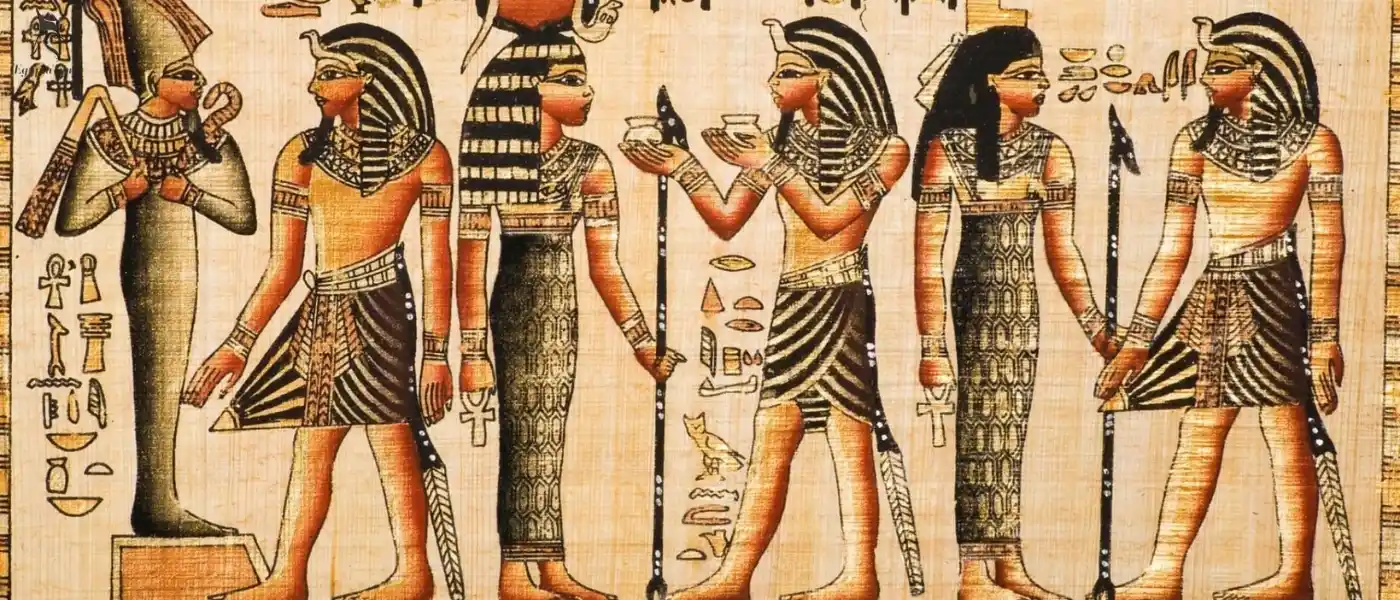
The most prominent ancient Egyptian gods were Ra, the sun god; Osiris, the god of life and death; and Isis, the goddess of magic and motherhood.
Ancient Egyptian religion evolved over the ages as it was influenced by political, social, and cultural changes.
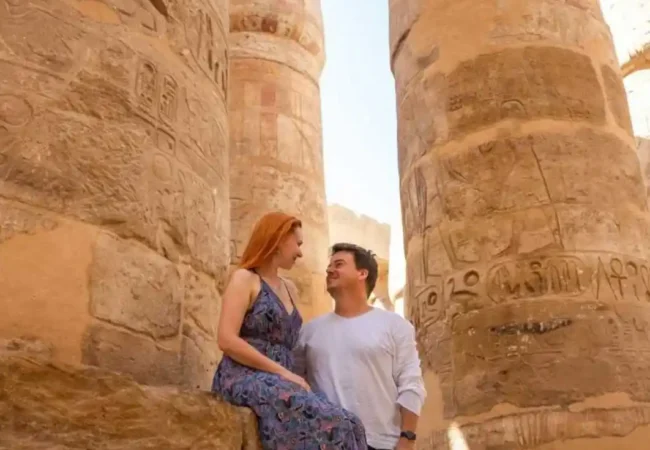
At first, worship was centered around local gods, but with the unification of Egypt under the rule of the pharaohs, worship became centralized and major temples such as the Karnak Temple and the Luxor Temple were built.
The 5 Most Famous Gods of the Ancient Egyptians
The-5-Most-Famous-Gods-of-the-Ancient-Egyptians-Ancient-Egyptian-Religion
The ancient Egyptians had many gods that they worshiped, the most famous of which are:
Ra
Ra is the sun god and one of the most important gods in the ancient Egyptian religion. The ancient Egyptians believed that Ra sails across the sky in his solar boat during the day, and descends to the underworld at night.
They considered him the creator of the universe and the source of life and light. He was worshiped throughout Egypt, especially in the city of Heliopolis.
Osiris
He is the god of the afterlife and resurrection among the ancient Egyptians. He was believed to have ruled Egypt as a just king before he was killed by his brother Set.
After his death, Osiris became the ruler of the underworld and judge of souls. He was worshiped as a symbol of hope for life after death and resurrection.
Isis
They believed that she was the goddess of magic, protection and motherhood. She was the wife of Osiris and the mother of Horus. She was considered a powerful and compassionate goddess.
She was worshiped as a protector of children and mothers and was known for her ability to use magic to protect her loved ones and bring her husband Osiris back to life.
Horus
He is the god of the sky, war and protection in ancient Egypt. He is the son of Osiris and Isis and was depicted with the head of a falcon and was considered the protector of Egyptian royalty.
The pharaoh was believed to be a living embodiment of Horus on earth and was worshipped as a symbol of strength and courage.
Anubis
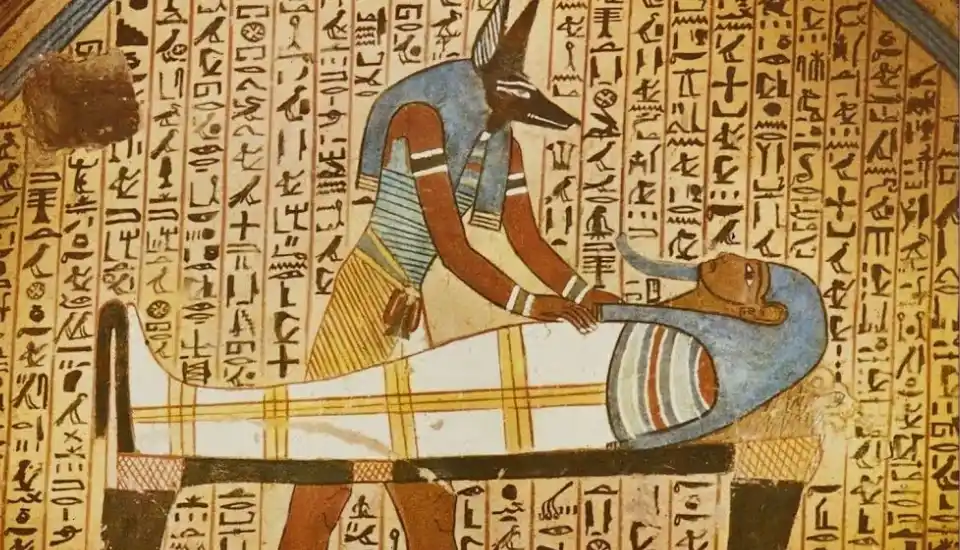
Anubis is considered the god of mummification and the dead in the Pharaonic civilization.
He was depicted with the head of a jackal and was believed to protect graves and guide souls on their journey to the underworld. Anubis was considered the protector of the dead and responsible for the mummification process, ensuring that the bodies were well preserved.
Nature and Significance
Egyptian religious beliefs and practices were deeply connected to their society from around 3000 BCE. While there were likely many old traditions from prehistory, they might not be as important for understanding later periods. This is because the rise of the Egyptian state created a new environment for religion to develop.
Religion was present in almost every aspect of Egyptian life, to the point that it’s hard to see it as just one single system. However, religion should be understood alongside other human activities and values that weren’t necessarily religious. Over its more than 3,000 years of development, Egyptian religion experienced changes in focus and practices, but it always maintained a consistent character and style throughout all periods.
It’s not correct to define religion too narrowly as just the worship of gods and human devotion.
Religious practices also included communication with the dead, activities like fortune telling and oracles and magic, which often used divine tools and connections.
Public religion in ancient Egypt focused on two main figures: the king and the gods. Both were key elements of Egyptian civilization.
The king held a special role between humans and the gods, participating in the divine world and building grand funerary monuments to ensure his afterlife.
Egyptian gods were known for their many forms, including animal shapes and combinations of animal heads with human bodies.
The most important gods were the sun god, who had many names and aspects and was linked to various supernatural beings in a cycle that reflected the changes between day and night and Osiris, the god of the dead and ruler of the underworld. With his wife, Isis, Osiris became a central figure in many religious practices during the 1st millennium BCE, especially when the worship of the sun god began to decline.
The Most prominent Religious Symbols in ancient Egyptian religion
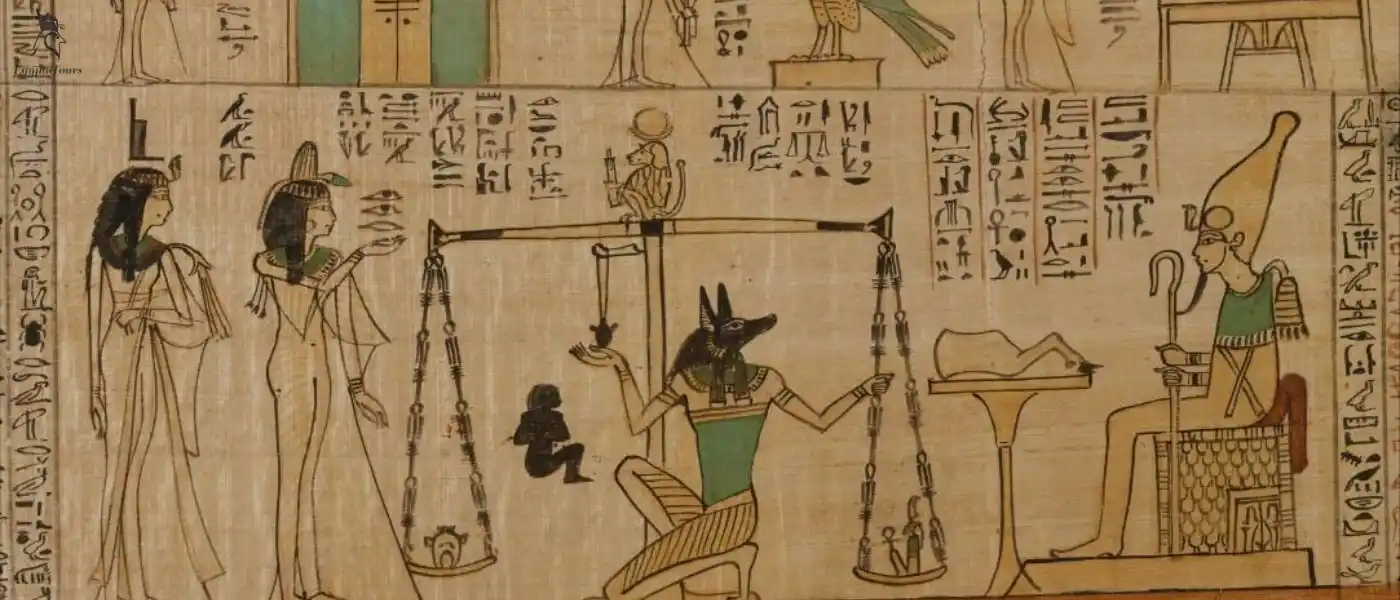
The-most-prominent-religious-symbols-in-ancient-Egyptian-religion
In ancient Egyptian religion, there were many religious symbols that played a major role in the spiritual and cultural life of the ancient Egyptians. The most prominent of these symbols are:
- The Eye of Horus: It symbolized protection, health and strength. The Eye of Horus was used as a talisman to protect individuals from evil.
- Ankh: A symbol of eternal life and was used in ancient Egyptian art and carried in the hand of the gods.
- Scarab: It was considered a symbol of resurrection and new life and was used in amulets and jewels.
- Scepter: It was a symbol of power and strength and was carried by the pharaohs and gods.
- Snake: It symbolized protection and strength and was used in royal crowns.
Cosmic Order and Religious Worldview in Ancient Egypt
The Egyptians saw the cosmos as consisting of the gods and the world they lived in Egypt being the center of it all and surrounded by a realm of chaos. Order had come from this chaos and it was believed that everything would eventually return to it.
To keep disorder away, the king’s role was to maintain the favor of the gods and keep order in society.
This view of the world, which was somewhat pessimistic, was mainly linked to the sun god and the cycle of the sun. It strongly supported the king and the elite in their role of preserving order.
Despite this more negative view, the way the cosmos was shown on monuments was positive and hopeful, depicting the king and the gods in constant harmony and mutual support.
This contrast helped emphasize how fragile the order was. The way the monuments were created also followed strict rules, defining what could be shown, how it could be shown and when it was appropriate to show it.
These rules of decorum helped reinforce the idea of order.
The most famous temples in ancient Egypt and their role in life

The-most-famous-temples-in-ancient-Egypt-and-their-role-in-life-ancient-egyptian-religion
Ancient Egypt was full of magnificent temples that played a major role in religious and social life.
Among the most famous temples and their role are:
- Karnak Temple: It is considered one of the largest temples in ancient Egypt, and it was an important religious center for the worship of the god Amun. The temple was a place for religious celebrations and royal rituals.
- Luxor Temple: It is located near the Karnak Temple, and was dedicated to the worship of the god Amun and was used in religious celebrations such as the Opet Festival.
- Hatshepsut Temple: It is located in Deir el-Bahari, and it is a funerary temple for Queen Hatshepsut and was used to perform funeral rituals and honor the queen.
- Abu Simbel Temple: Built By <strong>King Ramses II</strong>, it contains huge statues of the king and the temple was dedicated to the worship of the gods Ra, Ptah and Amun.
- Philae Temple: It was dedicated to the worship of the goddess Isis, and was an important religious center in the Ptolemaic era.
The most important ancient Egyptian beliefs

The-most-important-ancient-Egyptian-beliefs-ancient-egyptian-religion
The ancient Egyptian religion was full of beliefs and rituals that formed a large part of the lives of the ancient Egyptians. The most important of these beliefs are:
Life after death
The ancient Egyptians believed in life after death and believed that the soul moves to another world after death. For this reason, they were interested in mummifying bodies and building luxurious tombs to ensure a comfortable eternal life for the deceased.
Multiple gods
The ancient Egyptians had many gods, and each god had a specific role in daily life and nature. Among the famous gods are Ra, the sun god, Osiris, the god of the afterlife, and Isis, the goddess of magic and motherhood.
Maat
The concept of Maat represented order, justice, and balance in the universe. The pharaohs considered themselves the protectors of Maat, and sought to maintain order and justice in society.
Religious Rituals
Religious rituals were an integral part of the lives of the ancient Egyptians. They offered sacrifices and performed prayers to the gods to gain their favor and ensure the gods’ protection.
Religion as the Fabric of Egyptian Civilization
Religion shaped governance, art, law, and social structure. It was the invisible thread binding pharaohs to their people, life to death, and earth to the stars.
To understand ancient Egypt, one must enter its spiritual realm where the divine was palpably present.
The Ogdoad of Hermopolis
Parallel to the Ennead, the Ogdoad represented eight primordial gods personifying concepts like darkness, infinity, and invisibility. This mystic assembly reflected the Egyptians’ profound engagement with cosmic dualities and balance.
The Role of Atum and the Solar Cycle
Atum, often linked to the setting sun, symbolized the cyclical nature of life and death.
The sun’s daily journey across the sky was a metaphor for creation, destruction, and rebirth—an eternal rhythm at the heart of Egyptian spirituality.
Major Deities: Ra, Osiris, Isis, Horus, and Set
Ra, the solar deity, was supreme, traveling the sky by day and navigating the underworld by night. Osiris, god of the afterlife, represented resurrection and judgment. Isis, his devoted consort, was the archetype of maternal devotion. Horus, their son, embodied kingship, while Set personified chaos and disruption.
Animal Symbolism and Divine Manifestations
Egyptians revered animals as earthly vessels of the divine.
The falcon, crocodile, cat, and scarab beetle were sacred embodiments of gods. Such manifestations bridged the human and the divine, infusing the natural world with sanctity.
The Pharaoh as God-King
The pharaoh was not merely a ruler but a living deity, the earthly embodiment of Horus and son of Ra. His divine kingship ensured cosmic order, wealth, and stability for Egypt.
The Ma’at Principle: Order, Truth, and Justice

The-Ma’at-Principle-Order-Truth-and-Justice-Ancinet-Egypt-Religion-EgyptaTours
Central to Egyptian religion was Ma’at—cosmic harmony and moral righteousness. The pharaoh’s role was to uphold Ma’at, balancing chaos and maintaining universal equilibrium.
Coronation Rituals and Divine Authority
Coronation was a sacred rite conferring divine legitimacy. Through ritual, the king was invested with power, uniting spiritual and temporal realms.
The Temple as a Divine Dwelling
Temples were the homes of gods on earth, sanctuaries where divine and human worlds converged. The inner sanctum housed statues believed to be imbued with the god’s presence.
Temple Rituals and Priestly Duties
Priests conducted daily rituals, offerings, and prayers to nourish the gods. Their meticulous duties ensured the gods’ favor and the continuation of Ma’at.
Sacred Spaces: Karnak, Luxor, and Abydos
Karnak and Luxor were sprawling temple complexes that epitomized Egyptian sacred architecture. Abydos was a pilgrimage site associated with Osiris, symbolizing death and rebirth.
Daily Offerings and Temple Ceremonies
Daily offerings of food, incense, and water sustained the gods. Ceremonies often included music, dance, and ritual purification, all designed to invoke divine presence.
Major Festivals: Opet, Wepet Renpet, and the Beautiful Feast of the Valley
Festivals punctuated the religious calendar, renewing divine power and communal bonds.
The Opet festival celebrated the god Amun’s rejuvenation, while Wepet Renpet marked the New Year’s arrival.
Oracles, Divination, and Magic
Oracles conveyed divine messages, while divination and magic were pervasive tools for protection and healing. Magic was not superstition but an intrinsic aspect of maintaining cosmic balance.
The Journey Through the Duat (Underworld)
The Duat was the perilous realm of the dead, navigated by the soul seeking eternal life. This journey was fraught with challenges, guarded by fearsome entities and governed by esoteric laws.
Osiris and the Promise of Resurrection
Osiris, ruler of the afterlife, embodied resurrection and eternal life. His myth promised that death was not an end but a transformation, a return to divine wholeness.
The Book of the Dead and Funerary Texts
These sacred texts served as guides for the deceased, containing spells, prayers, and instructions to overcome obstacles in the afterlife and achieve immortality.
Tombs, Mummification, and Grave Goods
Mummification preserved the body for the soul’s reunion. Tombs were repositories of riches and ritual objects, reflecting beliefs in a continued existence beyond death.
Hieroglyphs as Sacred Language
Hieroglyphs were not mere writing but a divine script. Each symbol carried magical potency, bridging communication between mortals and gods.
Amulets, Symbols, and Their Protective Powers
Amulets were talismans imbued with protective power, worn to guard against evil forces and invoke divine favor.
Changes Over Time: From Predynastic to Ptolemaic Periods
Ancient Egyptian religion evolved over millennia, absorbing new ideas while maintaining core tenets.
The Ptolemaic period blended Egyptian and Hellenistic traditions, showcasing religious adaptability.
Influence on Neighboring Cultures and Later Religions
Ancient Egyptian religious concepts influenced Greek, Roman, and early Christian thought, leaving an indelible mark on world spirituality.
The Enduring Legacy of Ancient Egyptian Spirituality
Ancient Egyptian religion continues to captivate and inspire, its symbols, myths, and philosophies resonating through art, literature, and popular culture even today.
It is a testament to humanity’s quest for meaning and connection to the divine.
king, Cosmos, and Society
The king was the center of human society. He was responsible for keeping order for the gods and for receiving gifts from them, including life itself.
He was also seen as a kind and protective ruler over the people. The king was in charge of honoring the dead, including past kings and all deceased people. His strong role in religion matched his powerful political position. From the late predynastic period (around 3100 BCE), the Egyptian state was organized around kingship and officials who served the king. To the people, the king was more than human, as he was believed to represent a god or several gods on earth.
The king’s earliest and most important title was the Horus name. This title showed that the king was seen as a form of the main god Horus, the sky god who was shown as a falcon.
Later, more titles were added, especially Son of Re (the sun god) and Perfect God. These titles first appeared during the Fourth Dynasty (about 2575–2465 BCE), when the great pyramids were built.
The title Son of Re showed that the king had a close but dependent relationship with the most powerful god in the group of gods.
The title Perfect God meant that the king was considered a lesser god. He became perfect when he took the throne, which limited his divine status and made him different from the major gods.
The gods, the king, people and the dead all existed together in the universe, which the creator god had formed from an earlier state of chaos.
All living beings, except possibly the creator god, were expected to die at the end of time. The sun god grew old and needed to be renewed and reborn every day. The organized universe was surrounded and filled with disorder, which had to be kept under control. Disorder was especially dangerous during times of change, such as the start of a new year or the death of a king.
Because of this, the king’s duty to keep order was cosmic, not just social. Requiring people to work and serve was necessary to maintain balance in the universe.
Piety, Practical religion and Magic

Piety-Practical-religion-and-Magic-Ancient-Egyptian-Religion-EgyptaTours
Even though temples were important and very large, the evidence does not show that many people took part in temple religious activities. Archaeological finds can be misleading because, besides the main temples, there were many smaller local shrines that may have been more directly used by the people living nearby. From some periods, many offerings made by worshippers have been found in only a few temples.
These include provincial temples from the Early Dynastic and Old Kingdom periods, but the most complete evidence comes from New Kingdom temples of Hathor at Thebes, several border sites, and from the Late and Ptolemaic periods (664–30 BCE).
Although votive offerings show that many people brought gifts to temples, it is hard to know the social status of the donors, and their reasons for giving are rarely explained, probably partly due to rules of proper behavior. Two common reasons were giving gifts purely out of devotion to a god or giving them to receive a specific benefit.
Many New Kingdom offerings to Hathor were related to human fertility, which fits the second reason. Bronze statues from the Late Period often had inscriptions asking the god to give life to the donor, without mentioning a specific request.
These were probably general acts of devotion, like small private gifts of land to temples by ordinary people. These gifts were recorded on stone slabs (stelae) from the New Kingdom onward. They were similar to the large royal donations of land and other resources, which made temples very powerful in both the economy and politics.
Besides giving offerings to regular temples, there was a large increase in animal cults during the Late Period. These cults were sometimes closely linked to major gods. They included different practices focused on the mummification and burial of animals. The main bull cults, which gave important predictions (oracles), centered on one special animal kept in a shrine. The burial of an Apis bull was a major event that cost a lot of money.
Some animals, like the sacred ibis (connected to Thoth), were kept and buried in very large numbers. Burying an animal was considered an act of devotion. The most famous place for these cults and practices is the northern saqqarah necropolis, which served the city of Memphis.
Many types of animals were buried there, and people visited to consult oracles, stay overnight in the temple area and receive healing dreams. A few people lived permanently in the animal necropolis, in a way similar to living like monks in seclusion.
Personal Ritual
Most people mainly took part in official religious activities during public festivals and processions, which were meant to refresh and strengthen the gods. During these festivals, the statue of the god was taken out of its shrine, often placed on a special boat shaped platform called a bark and carried along set routes to visit other gods in their temples or to important holy places.
These public processions allowed ordinary people, who could not enter the temple itself, to connect with their gods.
Ordinary people could also reach the temple gods through special small shrines located outside the temple walls, often at the back of the building and aligned with the inner sanctuary. They could also approach the large statues at the front entrance, which acted as intermediaries between the people and the gods.
Although most people did not take part in temple rituals, they could still use religious spaces by giving votive offerings to show their devotion. Rich people often donated statues of themselves making offerings to be placed in the temple. Other votive items included stone slabs (stelae), small statues, food, amulets made from molded faience and mummified sacred animals. Very large numbers of these offerings were given in temples over many centuries.
Many of these objects still exist because, after some time, the votive offerings would fill the temple and needed to be cleared to make space for new ones. Since they were given to the gods, they could not just be thrown away. Instead, large groups of them were buried in special ritual pits on the temple grounds. Archaeologists have found and dug up several of these pits, called caches.
These caches preserved many beautiful statues and some of the most important ceremonial items from ancient times, including the famous Narmer Palette.
Conclusion
Ancient Egyptian religion, as a profound religious group, weaves together complex beliefs and practices that have fascinated scholars and enthusiasts alike throughout Egyptian history.
Central to this spiritual tapestry are the myriad gods and goddesses, or Egyptian deities, whose stories and symbolism continue to illuminate the culture’s worldview.
The Book of the Dead stands as a remarkable testament to their deep understanding of life, death, and the afterlife.
This exploration offers a comprehensive table of contents into the rich and enduring legacy of a civilization where faith and daily life were inseparable, reminding us of the timeless power of belief to shape human experience.
FAQs
What is the concept of “Maat” in ancient Egyptian religion?
The concept of “Maat” in ancient Egyptian religion represented order, justice, and balance in the universe. Maat was believed to be the goddess who embodied these values.
She was considered the foundation of the cosmic and social order, and the pharaohs were considered the protectors of “Maat”, and were obligated to maintain order and justice in society by following her teachings.
What was religion like in ancient Egypt?
The ancient Egyptian religion was an integral part of the lives of the ancient Egyptians, as their religious beliefs and rituals formed the basis of their social and cultural system.
The influence of this religion is still felt today through the monuments, temples and texts they left behind.
What were the burial rituals of the ancient Egyptians?
The burial rituals of the ancient Egyptians included mummification to preserve the body, and the placement of amulets and magical spells to protect the soul in the afterlife.
The tombs were equipped with funerary furniture and offerings to ensure a comfortable life after death.
About EgyptaTours

EgyptaTours is a name synonymous with trust, excellence, and unforgettable travel experiences, proudly standing as one of the leading travel agencies in Egypt. Renowned for its deep expertise, personalized service, and carefully crafted itineraries, EgyptaTours serves as the ultimate gateway to discovering Egypt in its most authentic and inspiring form.