The Creation of Egyptian Mythology
The ancient Egyptians explained a lot about the origin of the world...



The Horus battle mythology is one of the most foundational and thrilling narratives in ancient Egyptian history. It chronicles the epic, generations-long struggle between Horus, the falcon-headed god of the sky, and his chaotic uncle Seth, who murdered Osiris to steal the throne. Through magical trials, fierce physical combat, and the unwavering support of his mother Isis, Horus ultimately triumphs.
His victory not only restores balance to the world but cements his legacy as the ultimate symbol of divine protection, kingship, and justice—a legacy still visible today etched into the walls of massive temples across Egypt.
Key Takeaways
The Ultimate Clash of Order vs. Chaos: The central conflict of the Horus battle mythology goes beyond mere revenge; it represents the eternal struggle between Ma’at (balance, order, and civilization) and chaos, with Horus fighting to restore his father’s righteous rule.
Isis Was the Mastermind: Horus did not win his battles alone. His mother, the goddess Isis, used powerful magic, clever disguises, and political manipulation to protect her son and trick Seth during the divine trials.
Epic and Bizarre Warfare: The battles between Horus and Seth were highly imaginative, involving shape-shifting into hippopotamuses, magical spells that blinded armies, and races in heavy stone and disguised wooden boats.
The Origin of the Wedjat Eye: During the violent clashes, Horus lost his eye, which was later magically healed by Thoth. This restored “Eye of Horus” became ancient Egypt’s most famous amulet, symbolizing healing, protection, and even guiding early medical practices.
Widespread Worship & Forms: Because his myth is so vast, Horus was depicted in over fifteen different forms—including Horus the Child and Ra-Herakhty—and was the central figure of major architectural wonders, most notably the majestic Temple of Edfu.
Horus appears in many ancient Egyptian stories and is considered one of the most powerful gods. Priests of Ra included him in Ennead as the son of Isis and Osiris, often calling him the younger Horus. He is best known for fighting his uncle Seth who had done great harm to his family. Through this long struggle, Horus avenged his father and proved himself worthy, eventually being seen as the rightful heir of Ra.
There are many stories about Horus and how he was born. In some versions, he was born like a normal child. His mother, Isis, hid him on an island in Lower Egypt to keep him safe and she left him in the care of the goddess Wadjet until he grew up strong enough to face his uncle.
In other stories, Horus was special from the very beginning. It is said that Isis knew the child she carried was not ordinary and felt that he had the spirit of a falcon. She told Atum who then made a place for Horus in the sun god Ra’s boat. When Horus was born, he joined the other gods who traveled with Ra across the sky.
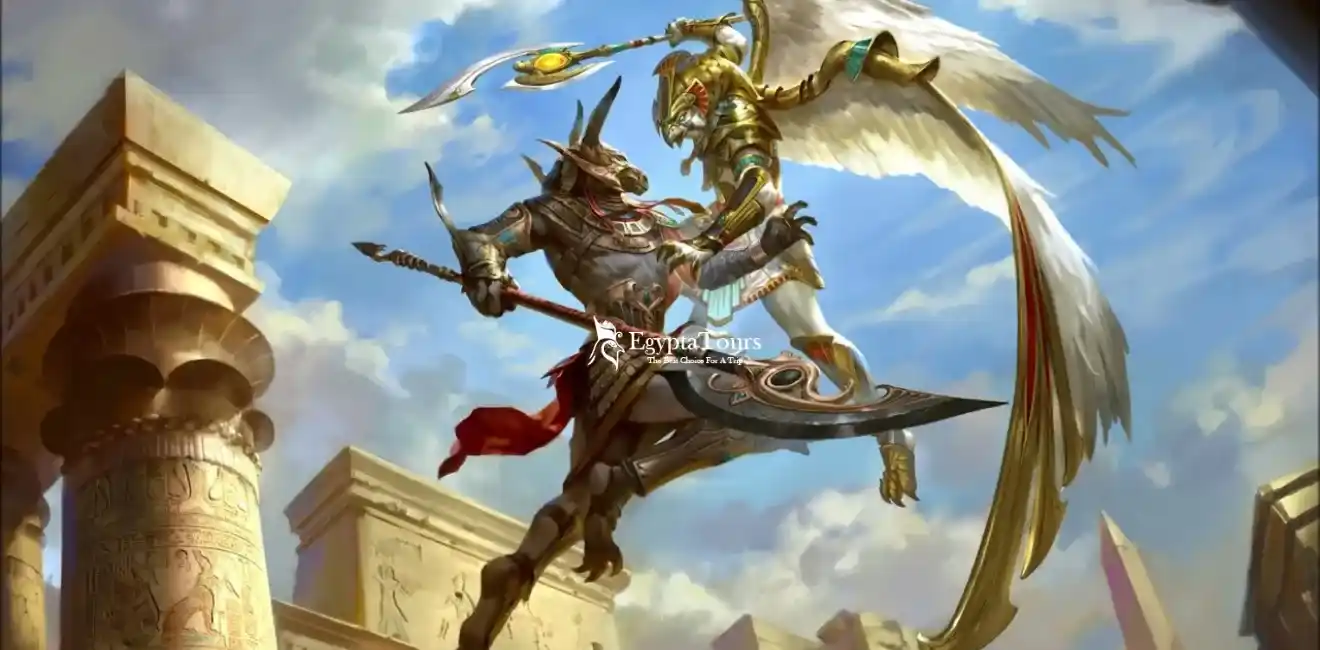
The-Battle-between-Horus-and-Seth-EgyptaTours
This is one of the longest and most interesting stories in ancient Egyptian mythology. It begins as a quest for revenge but soon turns into a struggle for power. The story also shows a clash between order and chaos, with Horus representing balance and civilization, while Seth stands for violence and disorder.
There are two main ways this story is told. In one version, it is like a heroic tale, full of battles, magic and great deeds. In the other version, the story is told in a more playful or sarcastic way, making fun of the heroes and treating their conflict as something less serious.
These different versions shape how people see the characters, making it hard to decide who is truly right or wrong. In some tellings, the gods act more like real humans, with flaws and emotions, instead of being perfect beings.
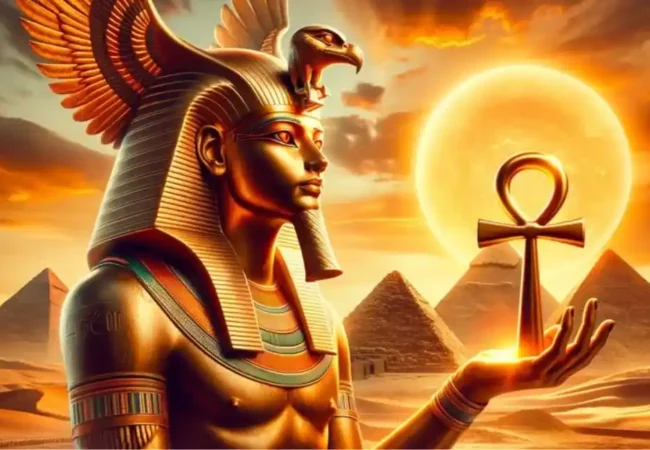
As Horus grew older, he became linked with the sun god and was known as Ra-Horakhty. He took his place among the other gods and prepared to take revenge on Seth for what he had done to his father.
The struggle between Horus and Seth went on for many years. In the end, like many Egyptian stories, it finishes with justice being restored. Horus wins, evil is defeated and balance returns to the world.
In the first clash between Horus and Seth, the sun god Ra gave Horus a large army to fight with. The god Thoth used his magic to turn Horus into a winged sun disc so he could fly above Seth’s forces. From the sky, Horus placed a spell on the enemy soldiers, making them unable to see or hear. Confused, they began fighting each other and within a short time, Seth’s army was destroyed. However, Seth himself was not among them.
Horus continued searching for his enemy and they met again in several battles. Some of these fights happened in the water, where Horus’ followers disguised themselves as animals like crocodiles and hippopotamuses and managed to win.
During one fight, Horus made a serious mistake. He thought he had found Seth, but he actually killed another fighter and cut the body into fourteen pieces, just like Seth had once done to his father. Later, Horus realized that Seth had escaped once again.
After one of his victories, Horus was honored in Edfu. Ra then ordered the priests to place the symbol of Ra-Horakhty on temples and tombs, as a sign that they were under the protection and power of the god.
In some of the battles, Horus’ followers hid themselves by taking the forms of crocodiles and hippopotamuses which helped them win fights that happened in the water. During one clash, Horus made a mistake. He thought he had found Seth, but he killed another warrior instead and cut the body into fourteen pieces, just like Seth had once done to his father. After the fight, Horus realized that Seth had escaped again.
Horus’ victory was later celebrated in Edfu. The god Ra told the priests to place the symbol of Ra-Horakhty on temple and tomb entrances to show that they were protected by divine power. At one point, Horus managed to capture Seth and asked his mother to guard him, but Seth tricked her and got away. Because of this, the conflict continued, with both sides using all their strength and weapons. After many long and difficult battles, Horus finally defeated and killed his uncle.
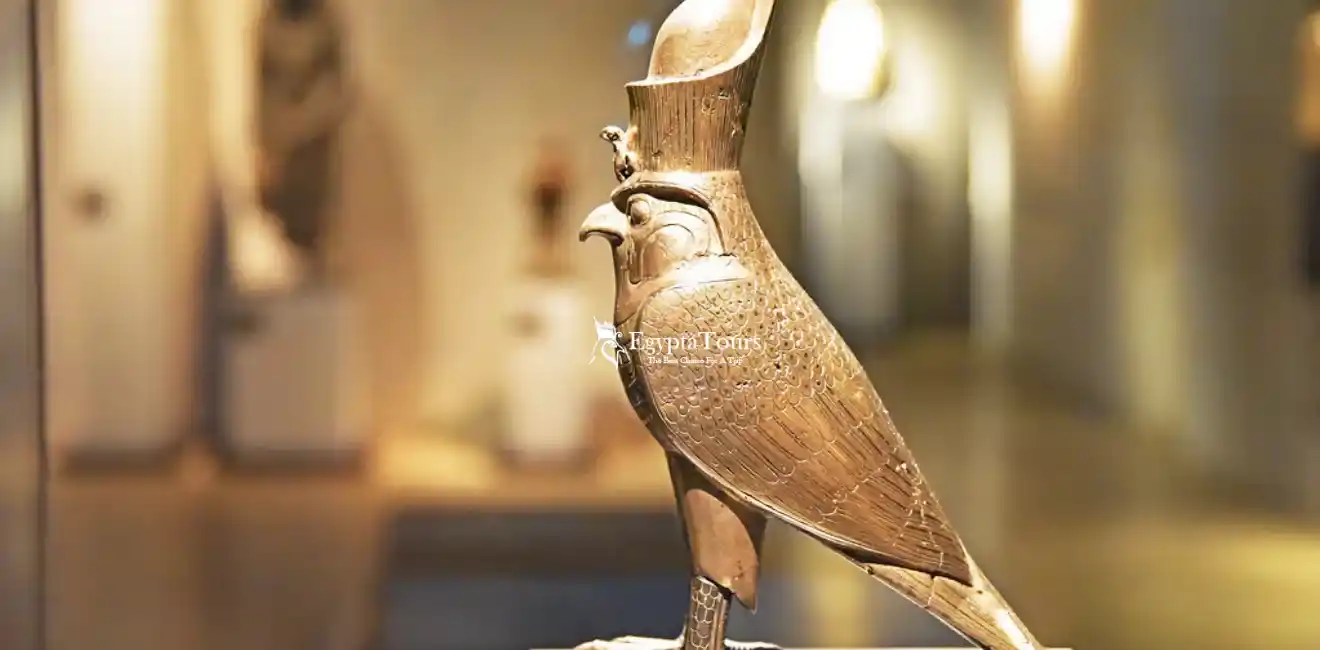
The-forms-of-God-Horus-EgyptaTours
Because there are many different stories about Horus and some of them do not agree with each other, he is shown in temple wall paintings in many forms. There are about fifteen different forms of Horus, and each one reflects either a stage in his life or a specific region in Egypt.
Some of the most well known forms are Horus the Younger, Horus the Elder, Horus the Child and Ra-Horakhty.
Horus the Child is usually shown as a young boy with a side lock of hair, often placing his finger in his mouth. In other images, he appears as a strong hero, fighting animals like crocodiles or holding a scepter as a sign of power. In texts like the Coffin Texts, Horus is described as the son of Isis and Osiris. He is also linked with Ra as Ra-Horakhty and is sometimes seen as a leading god, especially with the help of his mother.
In the Book of the Gates, Horus is said to have created people living beyond the fertile land of the Nile and to protect them in the afterlife. He is also connected to the world of the dead and sometimes takes his father’s place in the court of the underworld. In this role, he performs duties similar to Anubis and Thoth, such as guiding souls and helping them during judgment before they stand in front of Osiris.
Horus is sometimes shown performing the “opening of the mouth” ritual which means helping the dead speak and live again in the afterlife. He was also seen as a protector of kings. According to beliefs from Heliopolis, the king was connected to Horus while alive, gaining divine power, and after death, he would become like Osiris.
The gods and goddesses of Heliopolis gathered to settle the long dispute between Horus and Seth and decide who should inherit Osiris’s throne. Atum-Ra led the court and many gods and goddesses took part in the judgment. Shu and several others supported Horus, saying he was the rightful heir. However, Atum-Ra disagreed with them, mainly because he feared Seth’s anger.
Because of the disagreement, they asked the wise goddess Neith for her opinion. Neith said that Horus, as Osiris’s son, should take his father’s place. She also suggested that, to calm Seth and avoid his rage, he should be given some goddesses to satisfy him. Most of the court accepted her advice, but Atum-Ra still refused which made the other gods angry, and one of them even insulted him.
Feeling upset, Atum-Ra left the court. Later, his daughter Hathor comforted him and helped him smile again. After this, Atum-Ra announced that the case would be heard again in an open court. He also agreed to Seth’s request that Isis and other women would not be allowed to go to the island where the trial would take place.
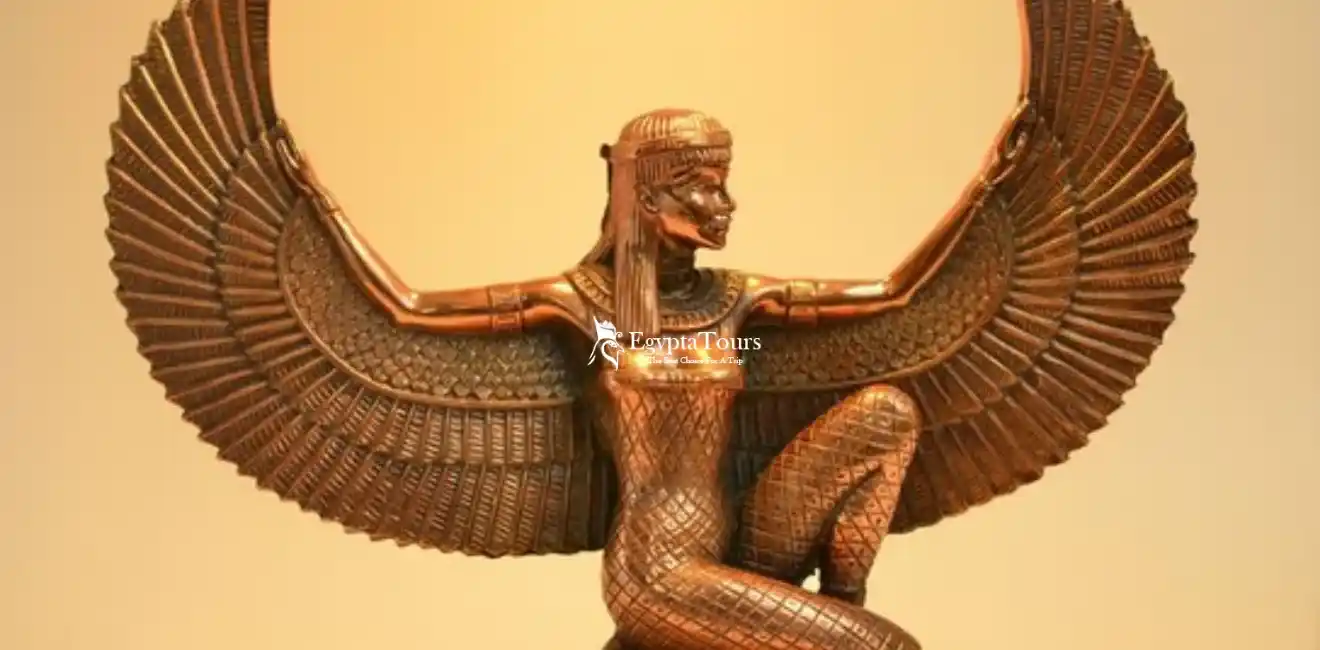
Role-of-Goddess-Isis-in-the-Trial-EgyptaTours
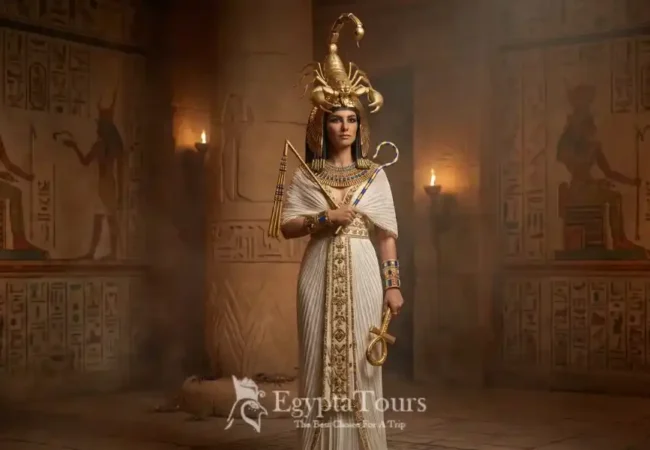
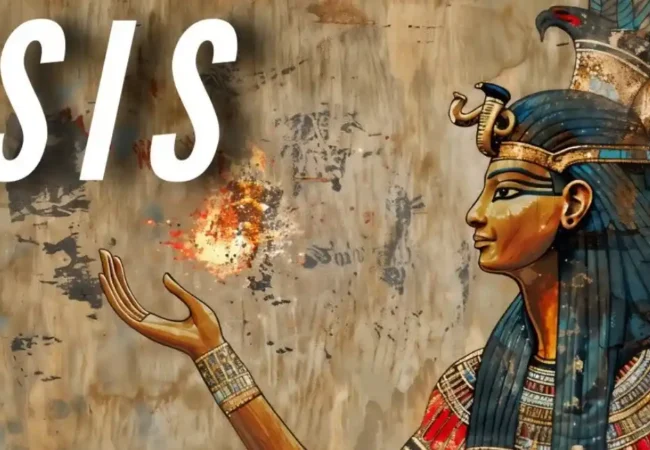
Isis was determined to attend the trial to support her son Horus, so she used her magic to reach the island despite the ban. First, she disguised herself as an old woman carrying a sick child. She asked the ferry driver to take her across the river so she could give her child milk. When he refused, she gave him a gold ring and he finally agreed to help her.
Once she arrived on the island, Isis changed her appearance again, this time becoming a beautiful young woman. Her beauty caught Seth’s attention, and he was quickly impressed by her. She told him a story similar to her own situation. She said she was a widow of a shepherd and that her husband had left her son with some livestock.
She then asked Seth for help, saying a stranger was threatening her son and trying to take away his father’s animals.
Seth, without realizing he was being tricked, gave his opinion. He said it was wrong for a stranger to take control of a father’s property while the son is still alive and able to protect what belongs to him. In doing so, he unknowingly judged himself, supporting Horus’s right to the throne.
At that moment, Isis revealed her true form as a vulture and told Seth that he had judged himself fairly and had been fooled by a simple disguise. Seth felt humiliated and the court agreed that he had been tricked. They accepted his own words as the final judgment and decided that Horus should become the ruler in place of Osiris.
Meanwhile, the ferryman Anty who had allowed Isis to cross, was punished by having his legs cut off.
Isis’s role in the conflict between Horus and Seth is complex and sometimes confusing. In some situations, her actions even seem to help Seth instead of her own son, such as when she freed Seth after Horus had captured him. Because of this, Horus often became frustrated with her decisions, since they caused him more difficulty. However, her behavior comes from one strong personal limit: she cannot bring herself to kill or seriously harm Seth who is still her family, even though he has caused great suffering.
When Seth realized he might lose, he challenged Horus to another contest. This time, both of them turned into hippopotamuses. The rule was simple: whoever could stay underwater for three months without coming up for air would win.
Isis interfered again in this fight, She made a sharp harpoon and tried to use it to kill Seth while he was in the water. But her attack went wrong and ended up hurting both Seth and Horus.
In pain, Horus called out to her for help and she quickly saved him. This made Horus very angry. When Seth also begged Isis for help, reminding her that he was her brother, she still showed mercy to him as well. Horus became so upset by this that he attacked his mother in anger.
After this, Horus and Seth agreed to stop fighting for a while and try to settle things peacefully. But Seth did not give up his plans. He tried to ruin Horus by falsely accusing him of wrongdoing, hoping this would stop him from becoming king. However, the plan failed because the god Thoth helped prevent it and the peace between them broke again.
Later, Seth challenged Horus once more. This time, they had to build boats made of stone. Horus used his intelligence and built a wooden boat made of cedar but covered it with plaster so it looked like stone. He sailed it successfully. Seth, however, believed real stone could float, so he built a heavy stone boat that immediately sank and he lost the challenge.
After many years of conflict, the gods finally decided to end the dispute. Osiris himself spoke to Atum-Ra and confirmed that Horus should be his rightful successor. The court agreed, and Horus was crowned king. He became ruler of both Upper and Lower Egypt.
To prevent Seth from causing more trouble, the gods did not punish him harshly. Instead, they gave him a place on the solar boat of Atum-Ra, where he served as a protector of the sun god and was associated with thunder and storms.
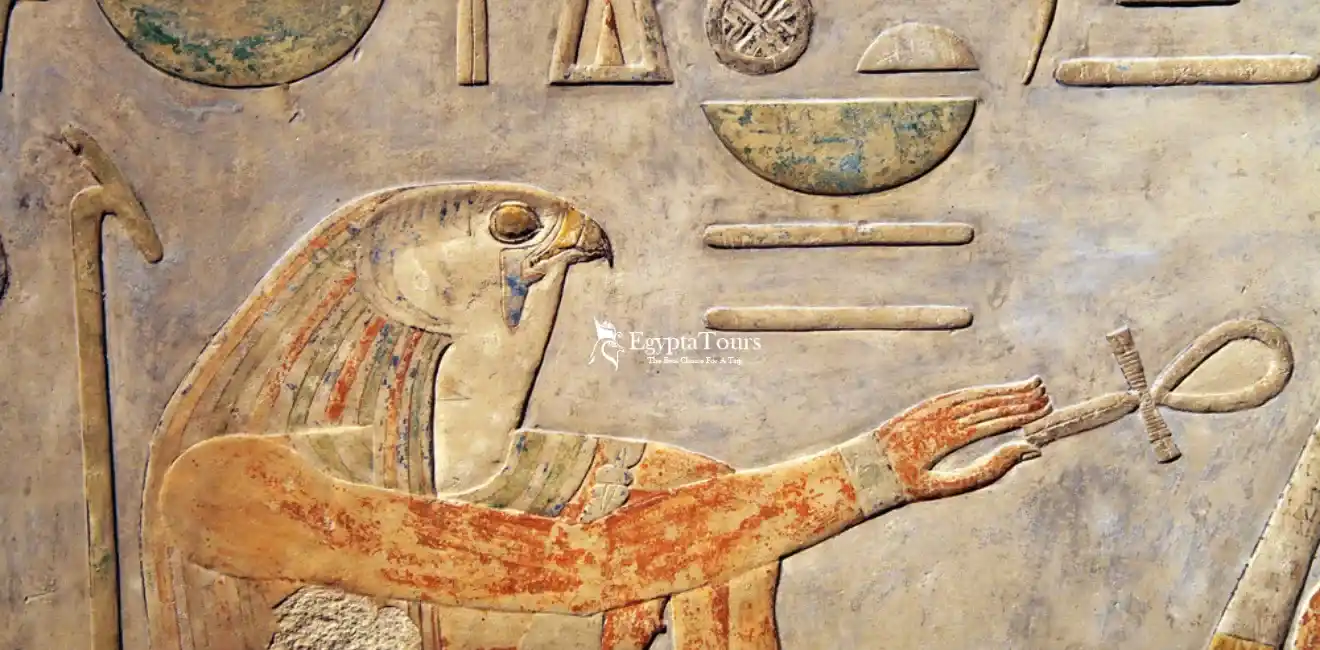
The-Worship-of-Horus-EgyptaTours
Horus was worshiped in many different parts of ancient Egypt and people showed him in different forms depending on the place.
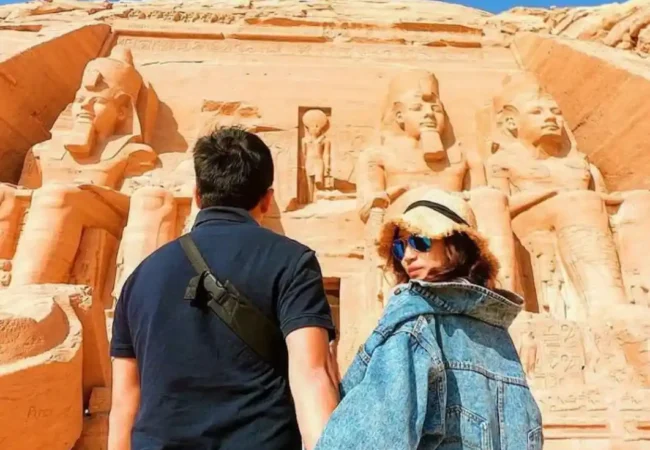
At Abu Simbel, in the temples built by Ramesses II, Horus is shown as a falcon. This form is often linked with the sun god and sometimes appears with a baboon symbol.
In Edfu, he is also shown as a falcon. There is a famous temple there dedicated to him that was built during the Ptolemaic period.
Across Egypt, there are also many small statues made from black granite that show Horus as a falcon.
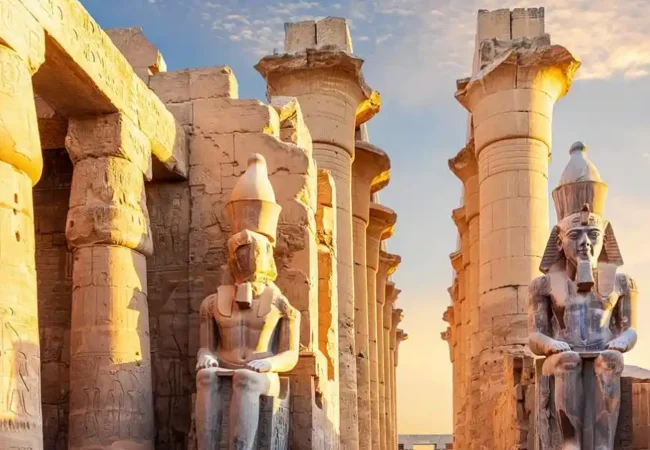
On the other hand, in Luxor, he is usually shown in a more human form, but with a falcon head on top.
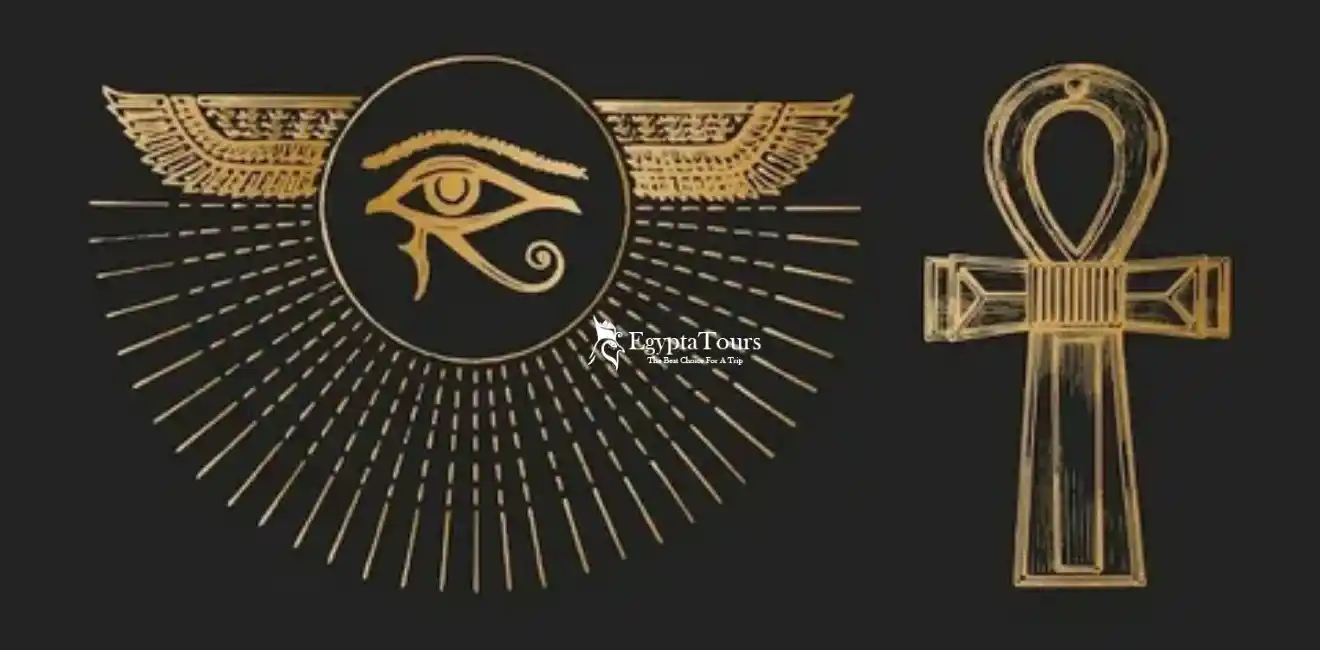
Wedjat-The-Eye-of-Horus-EgyptaTours
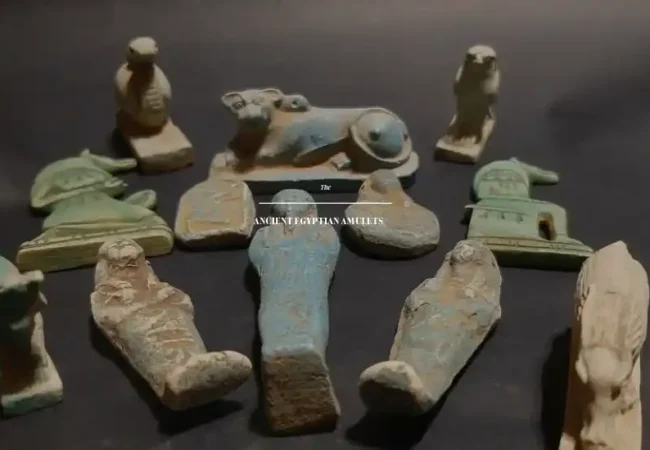
In ancient Egypt, people believed amulets had strong protective power, especially when placed with the dead. These small objects were usually put inside or around the wrappings of a mummy. Their purpose was to protect the person after death.
One of the most important amulets was the “Eye of Horus,” also called the wedjat eye. It was a well-known symbol of protection and was believed to keep evil away. Egyptians also used healing amulets during medical treatment, and the Eye of Horus was one of the most important among them.
A myth explains its origin. The god Seth killed Osiris who was the father of Horus. After this, Seth and Horus fought and Horus lost his eyes in the battle. The god Thoth later healed Horus’ eyes. In some versions of the story, Horus even used one of his restored eyes to bring Osiris back to life. Because of this story, the Eye of Horus became a symbol of healing and protection.
Over time, this symbol became so important that it is still sometimes linked to medical symbols today.
Egyptian doctors also had early medical knowledge. They examined patients in a careful and organized way. They looked at the body, touched it to check for problems and listened to signs from inside the body, much like modern doctors do.
Even though they did not understand disease the way we do today, they grouped symptoms together to describe illnesses. They also recognized serious warning signs, such as stiff neck, weak pulse and other dangerous conditions.
They understood that organs like the heart and kidneys were very important for life. Because of this belief, these organs were often left inside the body during mummification so the person could live again in the afterlife. If an organ was missing or damaged, they sometimes used special beetle shaped amulets to replace it symbolically. This can be seen as an early idea of replacing a body part with an artificial object.
The Eye of Horus was also very common among the living. People wore it as jewelry, such as rings and necklaces, to protect themselves in daily life. It was also placed on mummies especially over the area where organs were removed, to protect the body.
Some texts from the Book of the Dead were even written to be spoken over these amulets, showing how important they were in both life and death in ancient Egypt.
Horus is one of the most important and powerful gods in ancient Egyptian mythology. He is the son of Isis and Osiris and is closely connected with kingship, protection, and the sky. He is often shown as a falcon or a man with a falcon head.
The main conflict is between Horus and his uncle Seth. Seth killed Osiris and tried to take the throne of Egypt, so Horus fought him for many years to avenge his father and restore justice.
Horus represents order, justice, and stability. He is seen as a symbol of rightful rule and protection, especially for kings and rulers in ancient Egypt.
The battle began when Horus wanted to take revenge on Seth for killing his father Osiris. It turned into a long struggle for power and the throne of Egypt.
Horus once mistakenly killed another fighter, thinking it was Seth. He repeated the same act of violence that Seth had done to Osiris, which later caused confusion in the story.
Isis helped Horus in many ways using magic and clever tricks. She also disguised herself to influence Seth during the trial and support her son’s claim to the throne.
After many years of fighting, Horus finally won the battle. He became the ruler of Egypt and restored balance and justice to the world.
The myth shows the victory of good over evil, and how justice, order, and rightful leadership eventually win over chaos and wrongdoing.


Explore our top-rated Egypt travel packages and embark on an unforgettable journey. From the Pyramids of Cairo to the magical temples of Luxor, Aswan, and Abu Simbel, discover expertly curated tours designed for your perfect Egyptian adventure