



National Museum of Egyptian Civilization (NMEC) – Complete Visitor Guide 2026
National Museum of Egyptian Civilization is one of the world’s largest museums for display, preservation, research, and publication of Egyptian history, as it is the first museum dedicated to the oldest and oldest prehistoric civilizations.
The museum’s exhibits were moved from other museums in Egypt such as the Cairo Museum, the Museum of Islamic Art, the Coptic Museum, and the Royal Jewelry Museum in Alexandria.
National-Museum-of-Egyptian-Civilization-Location
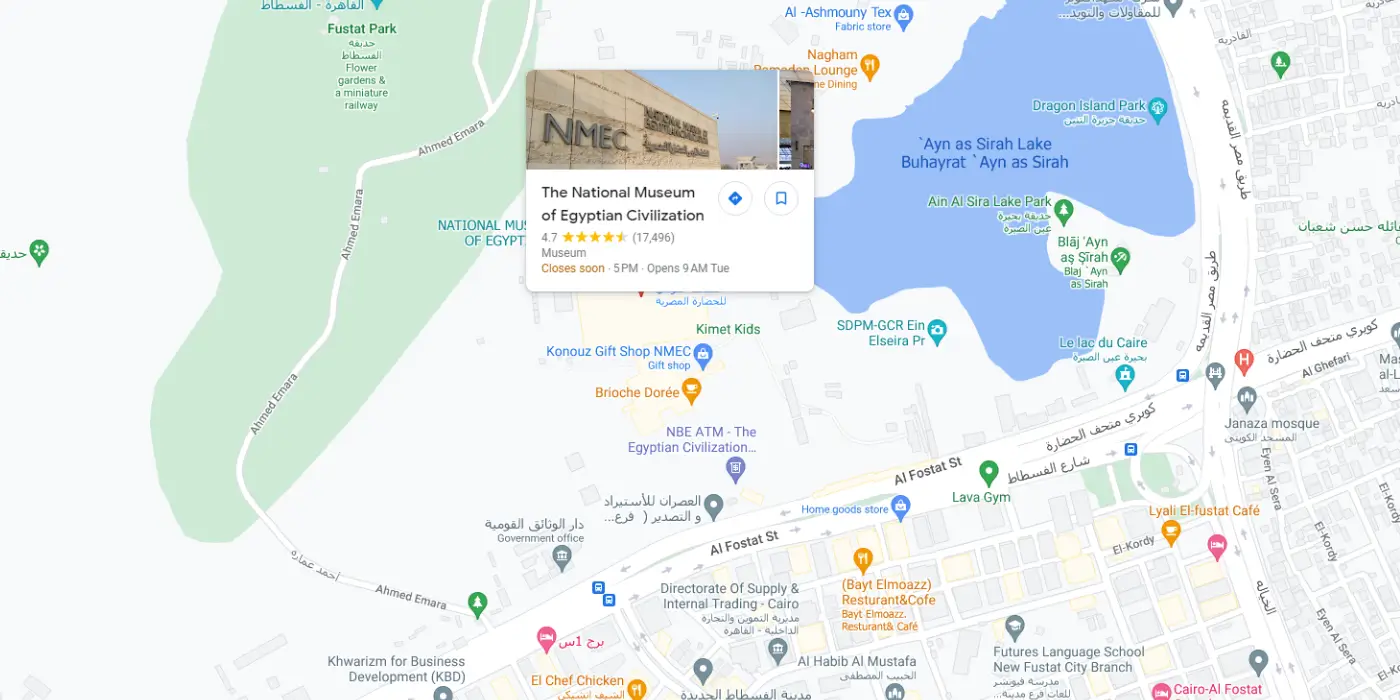
The museum is located near the Citadel of Babylon and Fustat Apartments. It is located in the heart of ancient Egypt, overlooking Ain Surra Lake. The area of the museum is 33.5 acres, 130,000 square meters of which the buildings have been allocated. The museum is expected to contain 50 artifacts dating back to ancient Egypt.
The National Museum of Egyptian Civilization is located near many archaeological sites, such as the Ezra Jewish Temple, the churches of ancient Egypt, the Mosque of Amr ibn al-Aas, excavations of the ruins of the city of Fustat, the Nilometer on Rawda Island, the Montarly Palace, and the palace of Muhammad Ali in the Manial property area.
The History of the National Museum of Egyptian Civilization
The National Museum of Egyptian Civilization (NMEC) traces its beginnings back to 1982, when a joint initiative was launched by UNESCO and the Egyptian government to select architectural designs for both the Nubian Museum in Aswan and the National Museum in Cairo. An Egyptian architect was announced as the winner of this international architectural competition.
Later, in 1999, Al-Fustat was chosen as the permanent location for the NMEC. Through the combined efforts of the Egyptian authorities, the Ministry of Culture and UNESCO, a contemporary museum was developed to emphasize the cultural dimensions of Egypt’s long, rich and diverse history. The museum depends on advanced technological systems and modern presentation techniques to display its collections in a manner that complies with international standards.
On April 3, 2021, at sunset, a major event called The Pharaoh’s Golden Parade was held to transport 22 royal mummies from Cairo’s Tahrir Square to the National Museum of Egyptian Civilization. The parade covered a distance of 5 kilometers (3 miles) and was celebrated with huge public enthusiasm.
The Art Exhibits at the NMEC
The NMEC showcases the wonders of Egyptian civilization through a wide range of art and artifacts. Exhibits are organized chronologically, covering periods such as modern and contemporary Pharaonic, Archaic, Greco-Roman, Medieval, Coptic and Islamic. There are also thematic galleries that focus on topics like state and society, writing, the Nile, beliefs, thinking, material culture and the Royal Mummies.
The museum aims to preserve Egypt’s tangible and intangible heritage, highlight its historical achievements, promote pride in Egyptian heritage and engage the community by addressing contemporary issues and supporting social development.
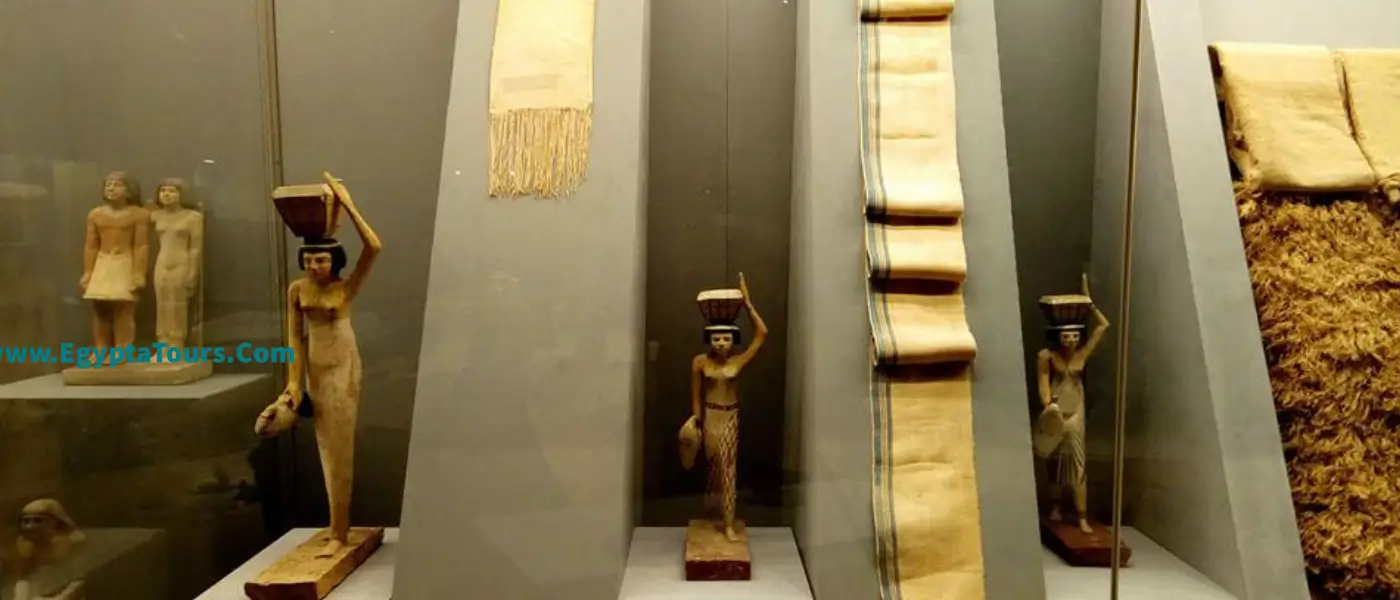
In February 2017, the museum opened a temporary exhibition called The Egyptian Crafts Through the Ages, which covered around a thousand square meters. The exhibition told the story of Egyptian craftsmanship across many areas, including hunting, agriculture, pottery, textiles, woodworking, jewelry, metalworking and glassworking. However, it focused mainly on four crafts: pottery, textiles, woodworking and jewelry. The exhibition displayed both genuine ancient artifacts and replicas.
The textile gallery holds 600 pieces including dresses of Queen Nariman and garments worn by servicemen. The pottery section displays items from the Badari culture, Naqada I, II and III cultures and objects from different historical periods up to modern times. The textile section highlights Egypt’s famous linen production and shows the evolution of textile manufacturing with relics from tombs and archaeological sites.
Woodworking is represented through tomb wall depictions and furniture and wooden artifacts from various periods. The jewelry section, which dates back to prehistoric times, presents crowns, pendants, earrings, bracelets and amulets made of gold and silver, reflecting the detailed craftsmanship and symbolic meanings of ancient Egyptian jewelry.
The NMEC also contains a rare archaeological dye-house dating to the first century of the Fatimid period (969–1171 AD). The museum includes spaces for temporary exhibitions, an education and research center, an auditorium and an exhibition focusing on the development of modern Cairo. It also hosts a variety of events, including film screenings, lectures, conferences, and cultural activities.
The Artifacts at the NMEC
The museum holds around 50,000 artifacts that show the development of Egyptian civilization and provide a clear view of ancient Egyptian heritage. Some notable items include the birth plate from the New Kingdom (1570–1050 BC), a breastfeeding statue, a seated statue of Thutmose III, statues of King Amenemhat III in the shape of a Sphinx, a red granite statue of an ancient Egyptian scholar, a Greco-Roman statue of the deity Nilus, about fifty Islamic-era niches and many small statues and amulets made of blue faience.
The exhibitions aim to show the brilliance of Egyptian craftsmanship, encourage cultural pride, preserve heritage and address modern social issues. The artifacts celebrate Egypt’s contributions to global civilization, offer a glimpse into its history, and provide historical and technical knowledge to visitors of all ages through interactive displays like panels, banners, films and mobile apps.
The NMEC is also planned to house 22 royal mummies along with 17 royal coffins from the 17th, 18th, 19th and 20th Dynasties. Eighteen of the mummies are kings, while four are queens. Some of the transferred mummies include King Ramses II, King Seti I, King Seqenenre Tao, King Thutmose III, Queen Hatshepsut, Queen Ahmose Nefertari (wife of King Ahmose I) and Queen Meritamen (wife of King Amenhotep I).
The Mummy Rooms at the NMEC
The Royal Mummy Hall is located at the center of the main exhibition area. It is the resting place for 22 royal mummies that were once in the Egyptian Museum. Each mummy has its own room, giving visitors enough space for a closer view. Next to each pharaoh is a plaque detailing their reign and important events from their time which helps visitors understand their history.
Mummies Discovered in Deir el-Bahari
The mummy of Seqenenre Tao, who ruled from 1558 to 1555 BC and was the last pharaoh of the Seventeenth Dynasty.
The mummy of Ahmose I, who ruled Egypt from 1549 to 1524 BC. He is known as the liberator of Egypt from the Hyksos.
The mummy of Amenhotep I who ruled Egypt from 1525 to 1504 BC. His tomb, KV 39, was discovered in the Valley of the Kings.
The mummy of Thutmose I, who ruled from 1506 to 1493 BC. His tomb, KV 38, is located in the Valley of the Kings.
The mummy of Thutmose II, who ruled Egypt from 1493 to 1479 BC. His tomb, KV 20, is in the Valley of the Kings.
The mummy of Thutmose III, who ruled the country from 1479 to 1425 BC. His tomb in the Valley of the Kings is KV 34.
The mummy of Seti I, who ruled from 1294 to 1279 BC. His tomb, KV 17, was discovered in the Valley of the Kings in 1817.
The mummy of Ramses II, who ruled Egypt from 1279 to 1213 BC. His tomb, KV 7, is in the Valley of the Kings.
The mummy of Ramses III, who ruled from 1186 to 1154 BC. His tomb, KV 3, is in the Valley of the Kings.
The mummy of Ramses IX, who ruled Egypt from 1129 to 1111 BC. His tomb, KV 6, is located in the Valley of the Kings.
The mummy of Ahmose-Meritamun, the daughter of Seqenenre Tao of the Seventeenth Dynasty.
The mummy of Ahmose-Nefertari, the wife of Ahmose I. Her tomb is TT 359 in Deir el-Medina.
The mummy of Hatshepsut, who ruled Egypt from 1490 to 1468 BC as a powerful pharaoh. Her tomb is KV 20 in the Valley of the Kings.
Mummies Discovered in the Tomb of Amenhotep II in the Valley of the Kings
The mummy of Amenhotep II who ruled Egypt from 1427 to 1401 BC. His tomb is KV 35 in the Valley of the Kings.
The mummy of Thutmose IV who ruled from 1401 to 1391 BC. His mummy was originally placed in tomb KV 43.
The mummy of Amenhotep III, who ruled Egypt from 1390 to 1353 BC. His tomb is WV 22 in the Valley of the Kings.
The mummy of Merenptah who ruled from 1213 to 1203 BC. He was the fourth pharaoh of the Nineteenth Dynasty and the son of Ramses II.
The mummy of Seti II who ruled from 1200 to 1194 BC. His tomb, KV 15, was discovered in the Valley of the Kings.
The mummy of Ramses IV, who ruled from 1155 to 1149 BC. His tomb is KV 2 in the Valley of the Kings.
The mummy of Ramses V who ruled from 1149 to 1145 BC. His tomb is KV 9 in the Valley of the Kings.
The mummy of Ramses VI, who ruled from 1143 to 1136 BC. His tomb is also KV 9 in the Valley of the Kings.
The mummy of Tiye, the wife of Amenhotep III. It is believed that she was buried in the Amarna tomb or in tomb WV 22 in the Valley of the Kings.
Construction of the National Museum of Egyptian Civilization.
National-Museum-of-Egyptian-Civilization-Construction
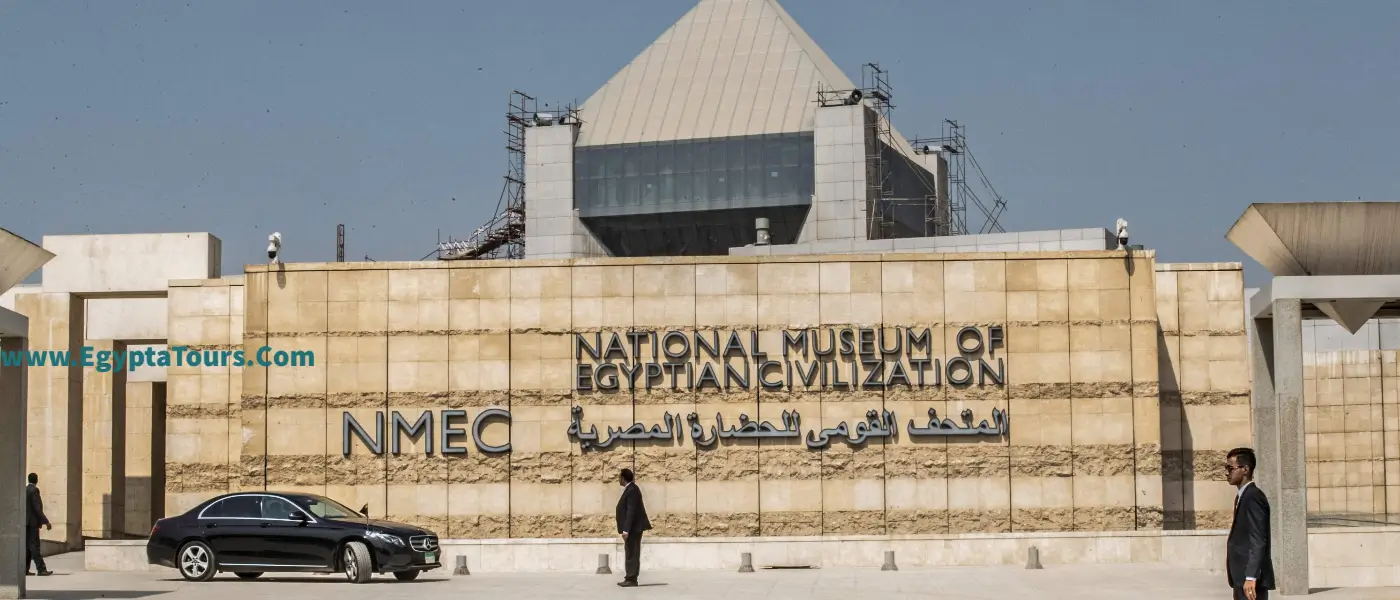
The museum architecture was designed by an Egyptian architect who won the international architectural competition. The National Museum of Egyptian Civilization architecture has an area of 23,236 square meters.
The museum displays a collection of 50,000 artifacts that reflect the development of Egyptian civilization since prehistoric times. The group is divided into two separate sectors; thematically and the other temporally.
The time group dates back to the following eras: prehistory, ancient, pharaonic, Greco-Roman, Coptic, medieval, Islamic, modern, contemporary.
The thematic collection reflects the development of civilization, the Nile, writing, society, culture, materials, religion, and thought, as well as the Royal Mummies Room.
The opening of the National Museum of Egyptian Civilization
The opening of the National Museum of Egyptian Civilization is one of the most important tourist attractions in Egypt in recent times.
Despite the passage of time, the stunning images of the royal procession of mummies held on April 3, 2021 around the world, are still fresh in everyone’s memory: the mummies of the pharaohs and the important queens of ancient Egypt were displayed in the streets of Cairo as they were transported from the Egyptian Museum to their new home at the Museum of Egyptian Civilization.
Who built the National Museum of Egyptian Civilization?
In 1982, UNESCO, at the request of the Egyptian government, undertook a campaign to build the National Museum of Egyptian Civilization in Cairo. In 1999, they searched for a suitable location near Fustat, and the current location was chosen. The first stone was laid in 2002 under President Hosni Mubarak to make it one of the largest and most important antiquities museums in the country.
In 2017, Frenchman Ricciardon, director of the American University in Cairo, donated 5,000 artifacts to the National Museum of Egyptian Civilization.
In February of the same year, the National Museum partially opened, only the temporary exhibition hall with a length of 1,000 meters including a temporary exhibition entitled “Egyptian Handicrafts through the Ages”, with the aim of showcasing the development of Egyptian handicrafts (ceramics, weaving, carpentry and jewelry).
Is the Grand Egyptian Museum the same as the National Museum of Egyptian Civilization (NMEC)?
It is important not to be confused with the Grand Egyptian Museum, the largest archaeological museum in the world located just a few kilometers from the pyramids of Giza. Instead, the Egyptian Museum of Civilization was opened in 2017, and since then, its collection has been enriched with contributions from other museums, such as the arrival of famous Pharaonic mummies.
This exhibition includes about 420 artifacts selected from some museums and fashion models, in addition to large screens showing documentaries On April 3, 2021, 22 mummies of 18 pharaohs and four queens were transferred to the museum by the Egyptian Museum in an event called “Golden Parade of Royal Mummies”. The event marked the official opening of the National Museum of Egyptian Civilization
National Museum of Egyptian Civilization Background
National-Museum-of-Egyptian-Civilization-BackGround
The museum’s permanent collection is divided into two zones, one thematic and the other temporal.
Time zones include Pharaonic, Islamic, Medieval, Coptic, Greco-Roman, Ancient, Contemporary and Modern.
Thematic areas include The Dawn of Civilization, the Nile, Writing, State, Society, Material Culture, Beliefs, Thinking, and the Royal Mummies Exhibition.
Visiting the National Museum of Egyptian Civilization
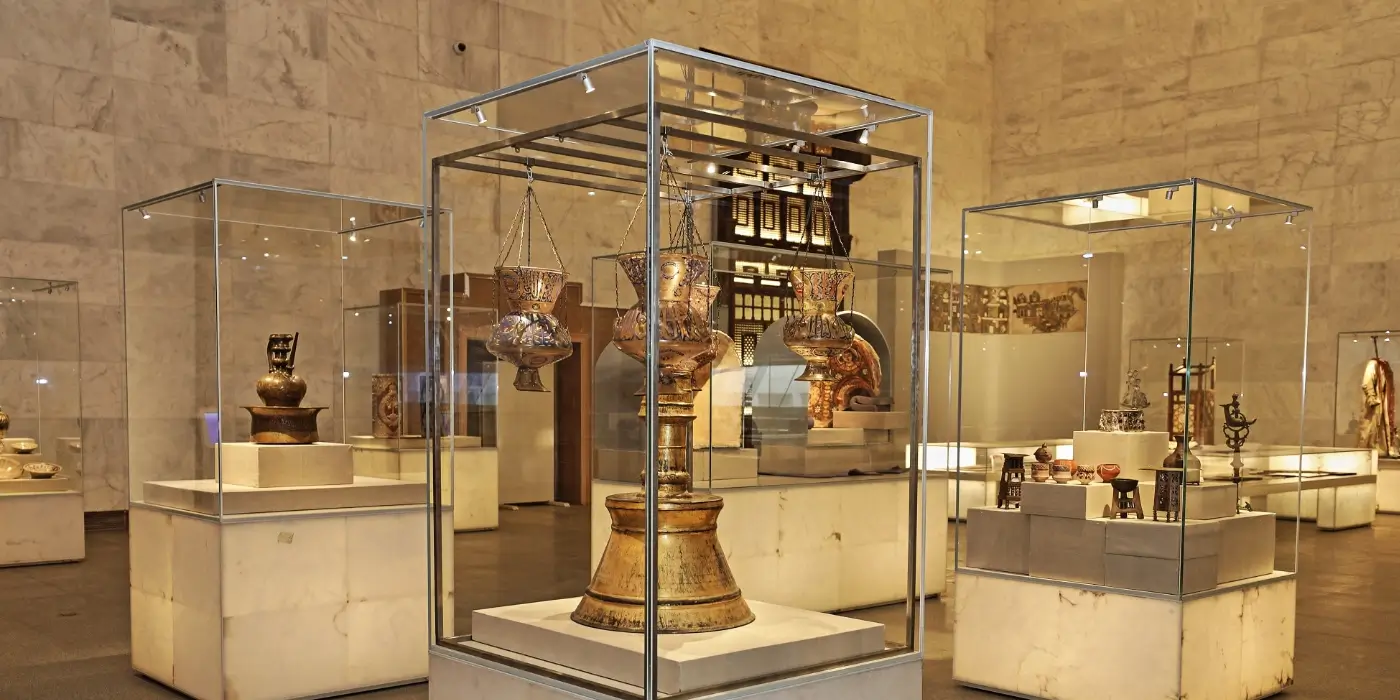
National-Museum-of-Egyptian-Civilization-Via-EgyptaTours
The MEC is open daily between nine in the morning and five in the evening. It is also open from six in the evening to nine in the evening on Friday.
Foreign visitors are expected to pay £200 plus another £50 to use the camera. Photography is strictly prohibited inside the mummy rooms, even if you have paid an extra fee for the camera.
You do not have to book tickets in advance or online. Visitors can only show up and buy tickets on site easily. Give yourself two full hours here to discover what NMEC has to do.
NMEC Ticket Prices 2026
Ticket prices for the National Museum of Egyptian Civilization (NMEC) are affordable compared to the value of the experience offered. As of 2026, entrance fees typically vary depending on nationality and student status. Foreign visitors usually pay a higher rate than Egyptian residents, while discounted tickets are available for students with valid identification.
Additional access to the Royal Mummies Hall may require a separate ticket. It is recommended to check official updates before your visit, as prices may change. Tickets can be purchased at the museum entrance, and some tour operators include NMEC tickets within their Cairo tour packages.
NMEC Opening Hours
The National Museum of Egyptian Civilization is open daily, allowing visitors flexibility when planning their Cairo itinerary. In 2026, the museum generally operates from morning until late afternoon, with extended evening hours on selected days. These longer hours provide a quieter and more immersive experience, especially inside the Royal Mummies Hall. Arriving early in the morning is ideal to avoid crowds and enjoy a relaxed visit. It is always advisable to confirm current opening times before arrival, particularly during public holidays or special events.
Facilities at the NMEC
The NMEC has the International Training Center which is the first of its kind in Egypt. Here, participants train with specialists in preventive maintenance, archaeological restoration, museum sciences, heritage preservation, human remains studies and excavations with support from UNESCO. The museum also has an Antiquities Reception area that manages the entry of artifacts including packing and unpacking operations.
There are fourteen archaeological storage rooms, maintenance laboratories, workshops, restoration workshops and printing and publishing centers. Visitors can enjoy a large theatre, cafeterias, restaurants, gift shops and more. The museum also provides educational and intellectual resources, including recent publications and periodicals about important archaeological discoveries. It hosts seminars, exhibitions and conferences in Egypt and abroad and offers the latest scientific journals and books.
Tours To NMEC by Category
| Category Name |
|---|
| Alexandria Tour Packages |
| Cairo Short Breaks |
| Day Tours |
| Egypt Honeymoon Packages |
| Egypt Travel Packages |
| Luxor Short Breaks (Valley of Nobles Tours) |
| Nile Cruises |
| Egypt Sahara Tour Packages |
What Is The Best Time To Visit The NMEC In Cairo?
The museum is open all year round, but the best time to visit is during the winter months of December and January.
The weather in Cairo during winter is cooler and more pleasant than in the hot and humid summer months. The average temperature in December is 21 °C (70 °F), and in January 24 °C (75 °F).
The cold weather makes it more comfortable to walk around the museum and see the exhibits.
If you are interested in knowing Egyptian history and culture, the National Museum of Egyptian Civilization is a must-see. The museum has something for everyone, and the winter months are the best time to visit.
An Overview About the Old Cairo District
Old Cairo is one of the old areas in the south of Cairo. The area is about two meters above sea level and accommodates nearly 600,000 people. It is bordered to the north by the characteristics of the Sayeda Zeinab neighborhood, one of the old neighborhoods in Egypt, and to the south by the Basateen area.
The most popular areas in the Old Cairo neighborhood are Fustat, Abu Saud Maps, El Fransawy, Ezbet El Fustat, Sheikh Mubarak Maps, Al Manal, Al Rawda, and Zahra.
There is also Amr Ibn Al Aas Street, the most famous street in Old Cairo, followed by Corniche El Nil Street, and Abdul Aziz Al Saud Street.
Tourist Attractions in the Ancient Egypt District
Ancient Egypt includes many tourist and recreational places, such as:
Al-Fustat Park
Ahmed Rami’s Park
Umm Kulthum Park
Al-Monastirli Palace Museum
The Coptic Museum
The Small Muhammad Ali Museum
The Mosque of Amr Ibn Al-Aas
Discover the National Museum of Egyptian Civilization
What is the National Museum of Egyptian Civilization?
The National Museum of Egyptian Civilization (NMEC) is a museum in Cairo showcasing Egypt’s rich history from prehistoric times to the present day. It’s known for its comprehensive collection, including artifacts from ancient Egypt, and unique exhibitions.
When did the National Museum of Egyptian Civilization open?
The museum had a soft opening in 2017 and fully opened to the public in April 2021. It has quickly become a major cultural attraction.
What are the museum’s main highlights?
The Royal Mummies Hall is a standout feature, housing the mummies of famed pharaohs like Ramses II and Hatshepsut. The museum also includes sections for prehistoric, Pharaonic, Greco-Roman, Coptic, Islamic, and Modern Egypt.
How can I get tickets to the museum?
Tickets can be purchased both online and at the museum entrance. It’s advisable to buy in advance to avoid long queues, especially during peak tourist seasons.
What are the opening hours?
The museum is open from 9 AM to 5 PM. On Fridays, it opens at 1:30 PM. Be sure to check the museum’s official website for any changes or holiday closures.
Is there a guided tour option?
Yes, guided tours are available and highly recommended for an enriched experience. Knowledgeable guides provide insight into the exhibits and the history they represent.
Can I take photos inside the museum?
Photography is generally allowed, but flash and tripods are prohibited to protect the artifacts. Always check specific exhibit guidelines, as some may have restrictions.
Are there facilities for visitors with disabilities?
The museum is equipped with ramps, elevators, and accessible restrooms. The staff is also trained to assist visitors with special needs.
How do I get to the museum?
The museum is located in the Fustat area of Old Cairo. It’s easily accessible via public transportation such as buses and Cairo’s Metro Line. Taxis and ride-sharing services also serve this location.
Is there a place to eat nearby?
The museum has a café and a restaurant on-site, offering a variety of food and drink options. There are also several dining choices in the surrounding area.
Can I buy souvenirs at the museum?
Yes, there is a gift shop within the museum where you can purchase books, replicas, and other Egyptian-themed souvenirs.
Is the museum family-friendly?
Absolutely. The museum offers interactive exhibits and educational activities designed for children, making it a great destination for families.
About EgyptaTours

EgyptaTours is a name synonymous with trust, excellence, and unforgettable travel experiences, proudly standing as one of the leading travel agencies in Egypt. Renowned for its deep expertise, personalized service, and carefully crafted itineraries, EgyptaTours serves as the ultimate gateway to discovering Egypt in its most authentic and inspiring form.