What did Greek replace Egyptian gods name with Their Own Deities?
When the Greeks entered Egypt and were influenced by its culture, they...



Sacrifice in ancient Egypt is one of the most prominent concepts embodied by ancient Egyptian civilization throughout the ages. It was an essential part of the religious and spiritual beliefs of the ancient Egyptians, especially since the ancient Egyptians had many gods as they believed in the afterlife.
Sacrifice was for them the most important way to communicate with the gods and obtain their satisfaction.
This is evident in many inscriptions and writings on the walls of many Egyptian temples and how sacrifice in ancient Egypt expressed respect and appreciation for the god. Many offerings were presented, the most important of which were birds, mice and many foods.
In this article, we will learn about sacrifice in ancient Egypt and how it was a basis for some social and moral values of the ancient Egyptians.

Sacrifice-in-Ancient-Egypt-EgyptaTours
Sacrifice in ancient Egypt was one of the most important things that express the religious cultures in Egypt and was considered part of the social and economic culture in ancient Egypt. They used to choose the animals to be slaughtered with great care and offer the best and most beautiful types of animals.
These animals were decorated before slaughtering. Many sacrifices were slaughtered to get closer to the gods.
It was considered a basic ritual in worship and religious holidays so that they would obtain the satisfaction of the gods and goodness, prosperity and wealth would prevail in ancient Egypt.
These offerings were presented to the gods under the supervision of a group of senior priests who were in the temples. Many offerings were presented to the gods from different types of meat, whether cows, sheep, goats or others in addition to offering bread and cakes. Banquets were held at temples and tombs.
They appreciated these animals and fed them. They used to tie the front legs and tie their eyes with cloth before slaughtering so that the knife would not be seen during slaughter, out of respect and appreciation for these offerings.
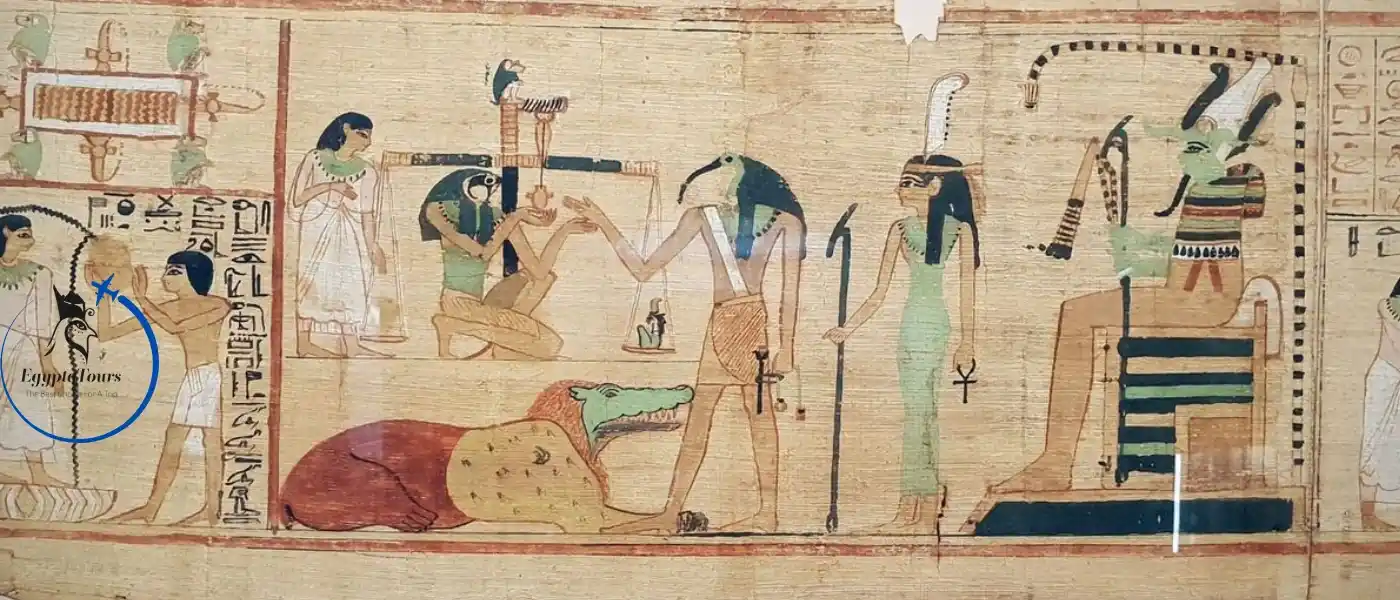
The-method-of-slaughtering in-ancient-Egypt-EgyptaTours
The sacrifice in ancient Egypt was slaughtered by the butcher and some assistants. The butcher would slaughter and another person would help him and pour water over the sacrifice to purify it.
The head butcher would supervise the slaughtering process cut the meat and hang it until it was completely dry. After that, it would be placed on tables and presented as offerings to the gods.
The sacrifice would be cleaned well and the most delicious types of food would be made for the poor.
The thigh of the bull was considered one of the most delicious parts of it.
The ancient Egyptians were keen to offer the largest and best types of animals for sacrifices. They would do this on holidays, occasions and some other days of the year.
Sacrifice in ancient Egypt was offered to the god, but there were some offerings that the ancient Egyptians offered to some natural phenomena and were offered specifically earthquakes thunderstorms, volcanoes and some other natural phenomena.
The ancient Egyptians believed that the Nile did not flow every year except after presenting a beautiful virgin bride to it.
They believed that it was a symbol of prosperity and fertility for the ancient Egyptians, so a specific holiday was set in which they would throw a beautiful bride called the Bride of the Nile until it was satisfied and continued to flow.
This ancient Egyptian custom continued among the ancient Egyptians until Egypt was conquered by Amr ibn al-Aas and the entry of Islam.
This custom continued in ancient Egypt even during the Sumerian, Babylonian, Finike, Greek and Roman civilizations.
After we learned about sacrifice in ancient Egypt, we will now learn about sacrifice in some other civilizations such as the Zinc and Inca civilizations. These peoples lived in Mexico and worshipped the sun.
These civilizations believed that human blood represented the sacred life force, so they offered human sacrifices to the gods to protect them from natural disasters. They believed that human blood was what made the gods satisfied with them.
As for the Peruvian civilization they sacrificed children between the ages of six and 15 years. They believed that it was one of the most important sacrifices offered to the gods to protect them from drought problems and wars.
They slaughtered children between the ages of six and 15 years and offered them as a sacrifice to the gods.
After we learned about sacrifice in ancient Egypt, we will now learn about sacrifice in modern Egypt. After Amr ibn al-Aas entered Egypt, the Egyptians began to sacrifice on Eid al-Adha to revive the Sunnah of the Prophet, peace be upon him, at the time when our master Abraham peace be upon him was ordered to slaughter his son Ismail, then God sent down a ram from the sky to redeem Ismail.
To this day we slaughter sacrifices on Eid al-Adha to revive this memory, and the meat of these sacrifices is distributed to the poor and needy, and part of it is distributed to relatives and household owners.
Many Muslims celebrate Eid al-Adha all over the Islamic world and sacrifice some animals such as sheep cows and goats, and they draw closer to God Almighty and choose the best types of animals for sacrifice.

The-beginning-of-offering-sacrifices-in-ancient-Egypt-EgyptaTours
The beginning of offering sacrifices is considered to have been since the beginning of life as the sons of our master Adam offered sacrifices, and these were the first sacrifices to be folded in history as God Almighty said in His Noble Book, “And recite to them the story of the two sons of Adam in truth when they offered a sacrifice, and it was accepted from one of them and not from the other.
” After that, offering sacrifices spread until the advent of the Islamic era and the entry of Islam into Egypt so sacrifices were slaughtered on the blessed Eid al-Adha, and there are some people who offer sacrifices as charity on days other than the blessed Eid al-Adha, and they are distributed to the poor and needy but Islam forbade the offering of human sacrifices and the eating of human flesh.
Offerings tables were an important and essential part of ancient Egyptian life connecting people with the gods and highlighting the importance of giving and spiritual communication with the divine. Offerings weren’t just religious acts but a daily ritual to achieve material and spiritual balance. The tables represented tools for presenting food, drink and other items to gods and spirits.
Offerings tables were a vital link between daily life and religion presented regularly to gods as a form of gratitude to seek approval and protection and to please the gods and immortalize the deceased. Offerings strengthened the spirit and provided sustenance for their eternal journey.
Tables contained different types of foods and drinks and showed the abundance, generosity and characteristic of Egypt. These included bread, meat, fruits, water, wine, vegetables, flowers and herbs symbolizing fertility and purity along with pottery, silver and copper vessels for presentation.
Offerings tables ensured the deceased’s eternal life. They were placed at tombs believing the spirit needed these offerings in the afterlife. Called “votive tables” they held food and drink made of stone and decorated with symbols of the afterlife.
Many depictions show priests presenting offerings to gods. Stone tables were found before god statues. Art and inscriptions show the Egyptians’ skill in carving and the importance of rituals connecting humans and gods highlighting funeral rituals’ significance in Egyptian life.
Offerings tables were an important part of the funerary furniture of wealthy Egyptians. They were placed in the tomb in front of an inscribed plaque, a false door or a statue so that family, friends and funerary priests could perform rituals to ensure the deceased’s eternal life. These rituals included not only actual offerings of food and drink but also ritual recitations and magical spells.
The offerings table of a man named “Jhuti” was rectangular in shape and bore the hieroglyphic sign “htp” meaning “offering”. The outer frame of the table contains writings addressed to the reader which the Egyptians believed transformed the depicted offerings into real food and drink. The text invokes Osiris, the lord of the underworld and Anubis, the god of mummification, to grant sufficient food to the owner of the table.
The scene depicted on the table includes basic Egyptian foods such as a cow’s thigh, head and ribs, birds, round and conical bread and beer. The table itself has shallow basins connected by channels, oils and liquid offerings were poured into the upper basin and flowed down to the lower levels.
Royal offerings tables held special importance considering the king the god’s earthly representative. They received special, rich offerings, luxurious food and drinks showcasing wealth demonstrating the king’s power and divine status seeking divine approval.
There is a famous formula called “Htp di nsw” which means “an offering given by the king”. It consisted of a set of words that achieved benefit for the deceased’s spirit when read and its magical value was activated, transforming it into real offerings through magical spells.
This formula was usually written in Egyptian hieroglyphs and was performed through the oral recitation of the offering formula with its various words and types and the depiction of the offerings intended to be presented to the deceased in the form of scenes or inscriptions through art or written texts.
The actual offerings were placed in the burial tomb by family members such as the son, heir or relatives who visited the tomb. The offering formula usually began with “An offering that the king gives and Osiris, the great god and lord of Abydos” followed by the name of the deceased and then “that he may be given an offering consisting of bread, beer, cattle, birds, alabaster and linen and all things good and pure on which the god lives”.
In some formulas, they mentioned names and types not commonly used in the formulas such as perfumes, oils, aromatic fats, incense and provisions and other needs of the deceased to help him in the afterlife. One of the strangest types of offerings is the presentation of hedgehogs as part of the offering table in the Old Kingdom.
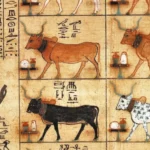
The Egyptians carefully selected bulls for sacrifice examining their hair, tongue and tail. If they found anything abnormal, they rejected the bull. The priest would seal the suitable bull then take it to the altar.
They would light a fire, pour wine on the altar and mourn the god. Then they would cut the bull’s neck separating the head from the body. They would skin it and declare a curse on the head.
They would burn the entrails and fat filling the body with bread, honey and fruits. The Egyptians would fast before the sacrifice and mourn during the burning. They would sacrifice unblemished bulls and cows but not cows as they were sacred to Isis.
Cows were considered the holiest animals buried in the city outskirts. They would collect bull bones and bury them together. The Egyptians respected animals refraining from killing them.
They would cut the legs, belly and heart declaring the sacrifice pure. The legs would be placed on the offering table used to feed the mourners.
In ancient Egypt, human sacrifices were practiced as a means to appease the gods and ensure protection and fertility. The Egyptians believed that the gods required human sacrifices to remain powerful and maintain cosmic balance.
There were practices involving the offering of humans as sacrifices to the gods such as presenting virgins to the gods to ensure the Nile’s flow and land fertility. The Egyptians offered human sacrifices as part of their religious rituals believing it would guarantee them protection and divine approval.
Human sacrifices were made in specific contexts like major festivals and significant religious occasions. The Egyptians usually selected individuals to be sacrificed from slaves or captives believing the sacrificed person’s spirit would go to the gods and ensure their protection.
There is evidence that the Egyptians used human sacrifices as a means to enhance power and authority offering human sacrifices to the gods to ensure victory in wars or protection from enemies. Human sacrifices were part of the religious practices in ancient Egypt reflecting the beliefs and traditions prevalent at that time.
Human sacrifices were practiced in ancient Egypt as evidenced by the bodies found in tombs with the pharaoh. Servants were killed to serve the pharaoh in the afterlife.
The pharaohs thought that they needed servants in the afterlife and the servants thought that they’d gain high social status by giving their lives for the pharaoh.
Human sacrifices stopped by the end of the First Dynasty as beliefs evolved. Egyptians began using shabti figurines instead of human sacrifices marking a shift in their religious practices.
The Egyptians did not worship Pharaoh himself, but they worshiped some other gods and they were They believed that Pharaoh was a link between them and these gods and they submitted to him in everything but there were some pharaohs who claimed to be gods, and the most important of them is the Pharaoh of Moses who claimed to be a god and asked all classes of people to worship him.
The pharaohs used offerings as a means of getting closer to God and the offerings were slaughtered on many holidays and formed a large part of the funeral and religious rituals in ancient Egypt.
This was drawn on the walls of many temples and tombs, and they believed that they were gaining the pleasure of God and they believed that these offerings would help them in the other eternal life that they would enjoy after death according to their belief at that time.
After the advent of Islam there are no longer people in Egypt who follow the ancient Egyptian religions, but there are some people in different parts of the world who still worship the sun and some ancient Egyptian gods and believe them to be part of their spiritual and religious beliefs.
At the end of this article, we have learned about sacrifice in ancient Egypt and why the ancient Egyptians offered offerings and sacrifices to the gods, We hope that you liked this article.

Explore our top-rated Egypt travel packages and embark on an unforgettable journey. From the Pyramids of Cairo to the magical temples of Luxor, Aswan, and Abu Simbel, discover expertly curated tours designed for your perfect Egyptian adventure