



The Cave Church in Cairo: Amazing Hidden Wonder You Must Visit
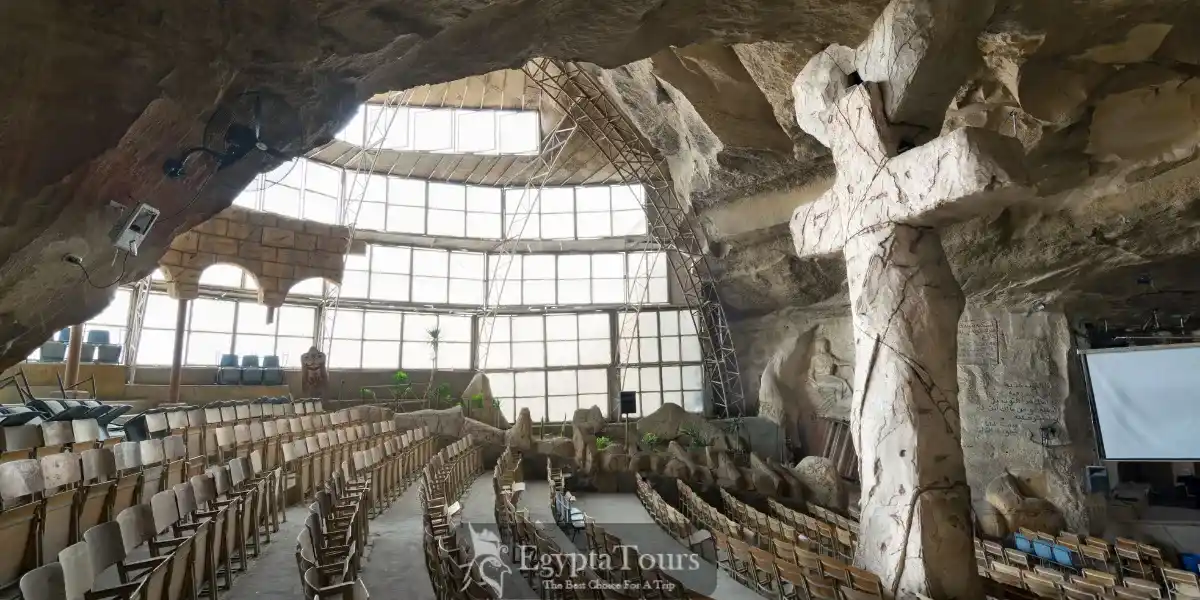
Located in eastern Cairo, specifically in the Mokattam Mountain, the Cave Church is considered one of the prominent landmarks in the area, comprising a group of Orthodox churches carved into the rock.
The construction of this site dates back to the 20th century, starting as an idea and evolving into a notable location visited by many.
This site serves as a center for gatherings, reflecting the history and activities of the local community, and forms part of the area’s cultural fabric.
In this article, we will shed light on the story of this site, its history, and the legends associated with it, while focusing on objective and cultural aspects, and providing a comprehensive view of its significance.

What-is-the-Story-of-the-Cave-Church-EgyptaTours
The church was established with the help of a person named Simon Ibrahim, who undertook an ambitious project to carve out a large cave inside the Mokattam Mountain. This endeavor was challenging, requiring careful planning and strenuous effort to create a usable space.
The walls were subsequently decorated with drawings and inscriptions that provide visual information about local stories, traditions, and beliefs.
The establishment of the Cave Church had a significant impact on the surrounding community, which was then facing difficult conditions as a designated waste collection area.
The residents lived in modest dwellings made of various scrap materials and tin.
As the church project progressed, the community united to improve their living conditions by collecting stones to build more durable houses, leading to a marked improvement in their overall quality of life, and contributing to a healthier and more stable environment.
Location and Structure of the Cave Church
Location-and-Structure-of-the-Cave-Church-EgyptaTours
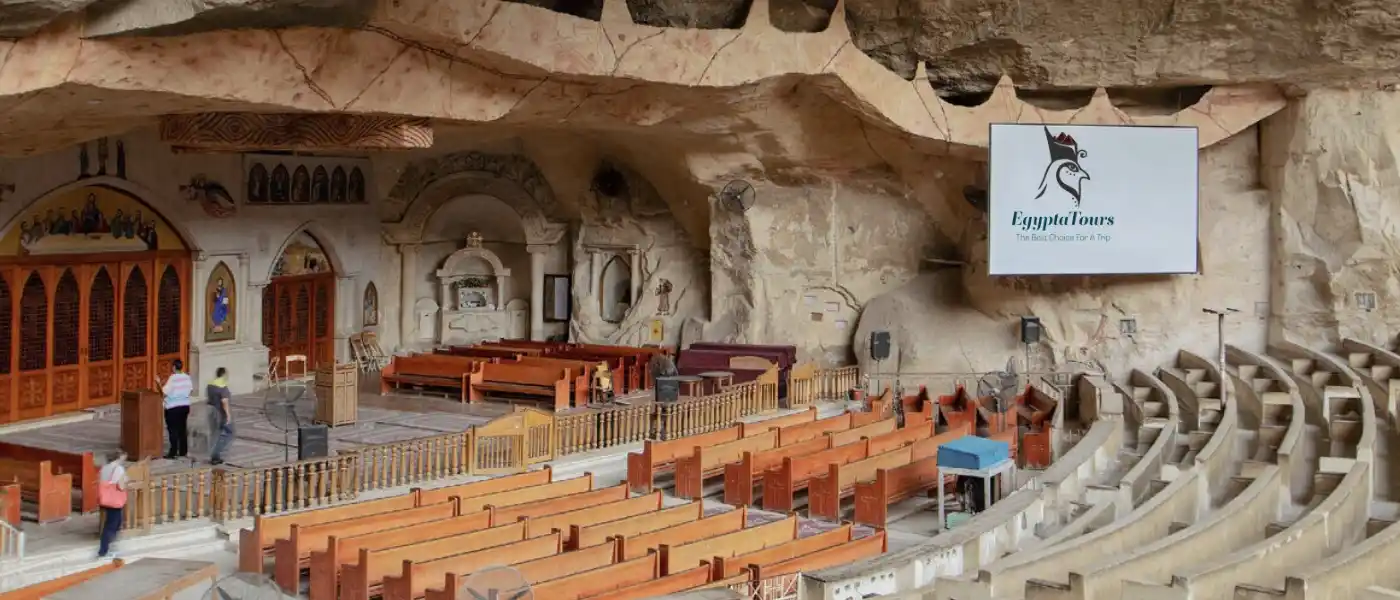
The church is located in an area known as “Garbage City,” which was named so because the majority of its residents work in waste management and recycling.
The site includes six main structures, each with its own character: the Church of Saint Anba Shenouda, the Church of Saint Anba Abram ibn Zar’a Syriani, the Church of the Angel, Mary, and Hanna, the Church of Saint Anba Paula, the Church of Saint Anba Antonios, and the Church of Saint Mark.
Each of these structures has its own unique architectural features, reflecting various aspects of local traditions and the cultural heritage of the area.
The architecture, with its meticulously carved walls and thoughtful layouts, demonstrates the considerable skill and dedicated effort involved in its construction.
The Name of the Cave Church
The-Name-of-the-Cave-Church-EgyptaTours
The site is known as the Church of Saint Simon, in honor of Simon the Tanner, a historical figure who worked in leather tanning and shoemaking. He lived during the time of Al-Mu’izz li-Din Allah al-Fatimi, and is referred to in Coptic tradition as Simon the Shoemaker.
His story, as told in legends passed down through generations, is a subject of ongoing interest and contemplation for many, providing insight into local traditions and the historical context of the area.
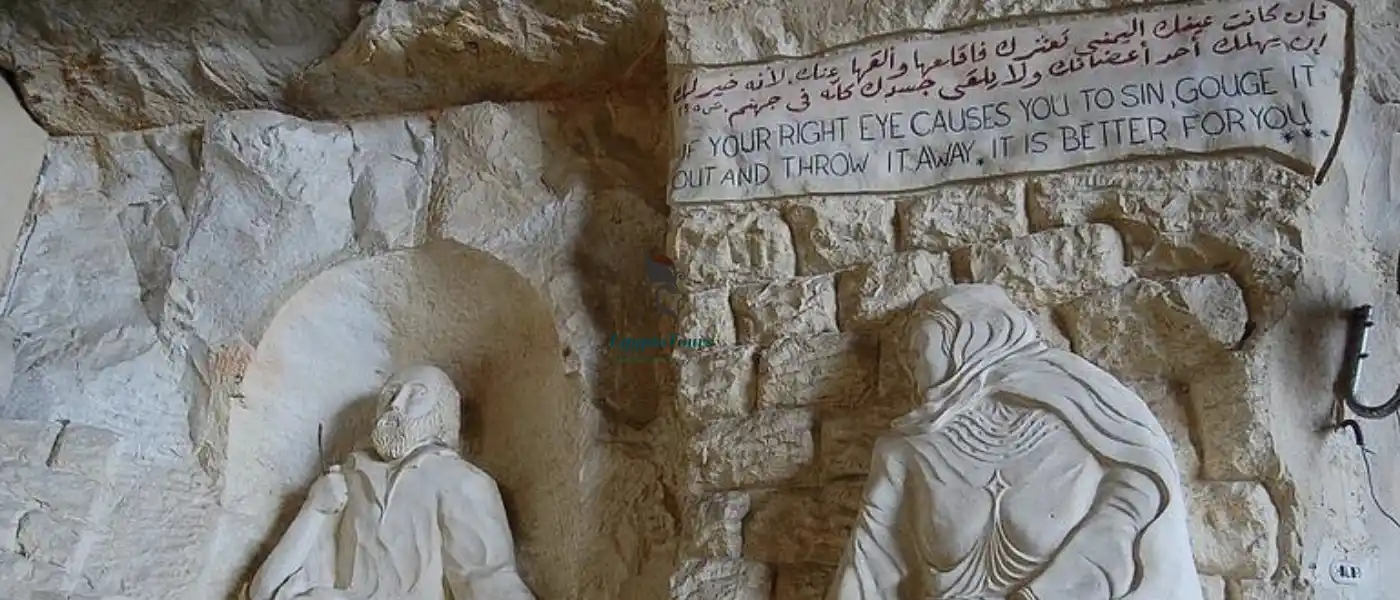
Some legends recount that on one occasion, when a woman came to him to repair her shoe, and he inadvertently looked at her legs, he gouged out his eye with an awl, fulfilling a religious precept. When news of Simon’s action reached the site leaders, they decided to forgive him for what was deemed an unintentional offense, and since then, the site has been known as the Church of Saint Simon. (This story is considered one of the circulated legends).
Popular Stories and Legends about the Cave Church
Popular-Stories-and-Legends-about-the-Cave-Church-EgyptaTours
Among the various stories and narratives associated with the site, the tale of a group of farmers and agricultural workers who left their villages due to difficult economic conditions and in search of better employment opportunities stands out.
These individuals settled in the area surrounding the church, creating a community that combined their rural roots with their new urban reality. These people worked hard in raising livestock, animals, and birds, and creatively used waste to feed their animals, demonstrating their innovation and adaptability.
The community, despite facing numerous challenges and hardships, came together to foster a sense of unity and provided mutual support to each other, enhancing their social bonds. In 1976, a fire broke out in the area, resulting in the collapse of some structures, but the residents worked diligently to rebuild their homes and revitalize their community.
These stories and legends help preserve the collective memory of the site and its inhabitants.
The History of the Cave Church
The-History-of-the-Cave-Church-EgyptaTours
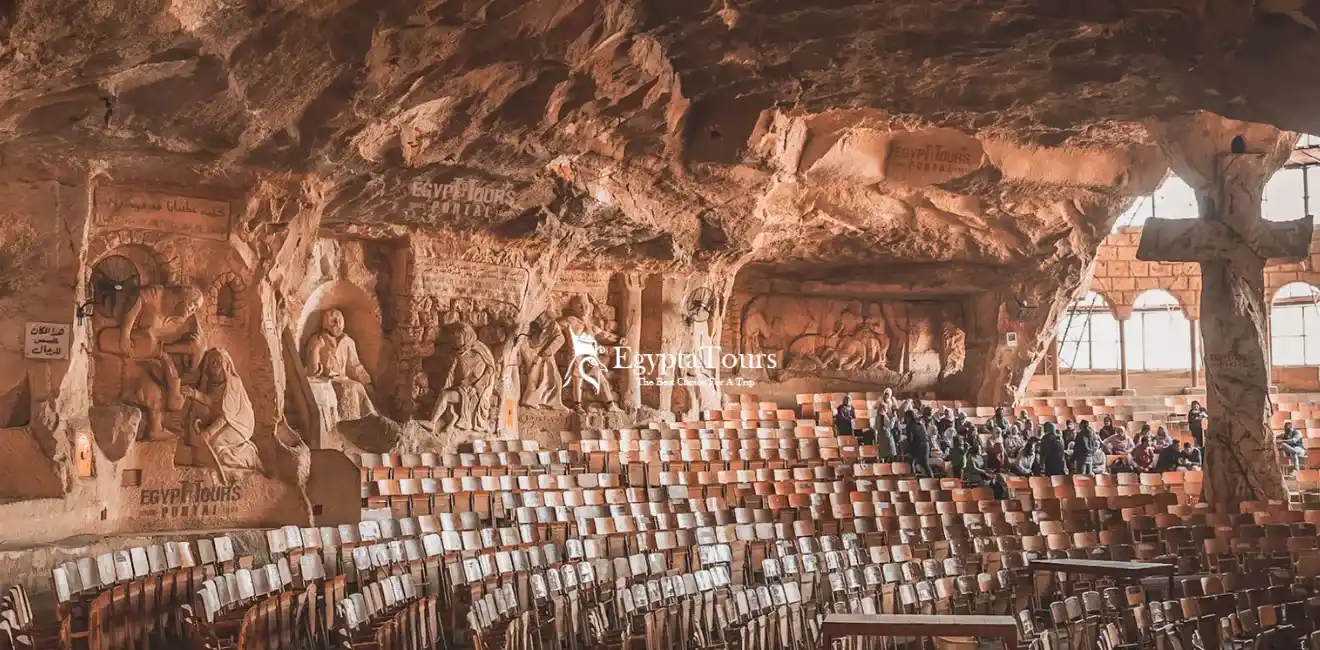
The Cave Church was started in 1975 by Father Samaan Ibrahim. It was carved inside a large cave in the Mokattam Hills and became a place of worship for the Zabbaleen community who live nearby.
The history of the Monastery of Saint Simon the Tanner goes back to the time of the Holy Family. It is believed that the Holy Family stayed in this place while traveling in Egypt for three years.
The church was built to honor Saint Simon in the 10th century during the rule of Al-Muizz, the Fatimid Caliph. The Zabbaleen community who live in an area called Garbage City, are descendants of farmers who moved from Upper Egypt to Cairo in the 1940s.
They came because of poverty and to escape problems with local authorities. Even after moving to the city, they kept many of their village traditions, such as raising animals like chickens, ducks and goats.
The new residents began collecting and sorting waste to find useful items. The food waste they collected was used to feed their animals.
This system helped many families survive and settle in the area. The Cave Church shows the strong faith and determination of the Zabbaleen people and serves as an important place of prayer for the community despite the difficult conditions around them.
The Carving in the Cave Church
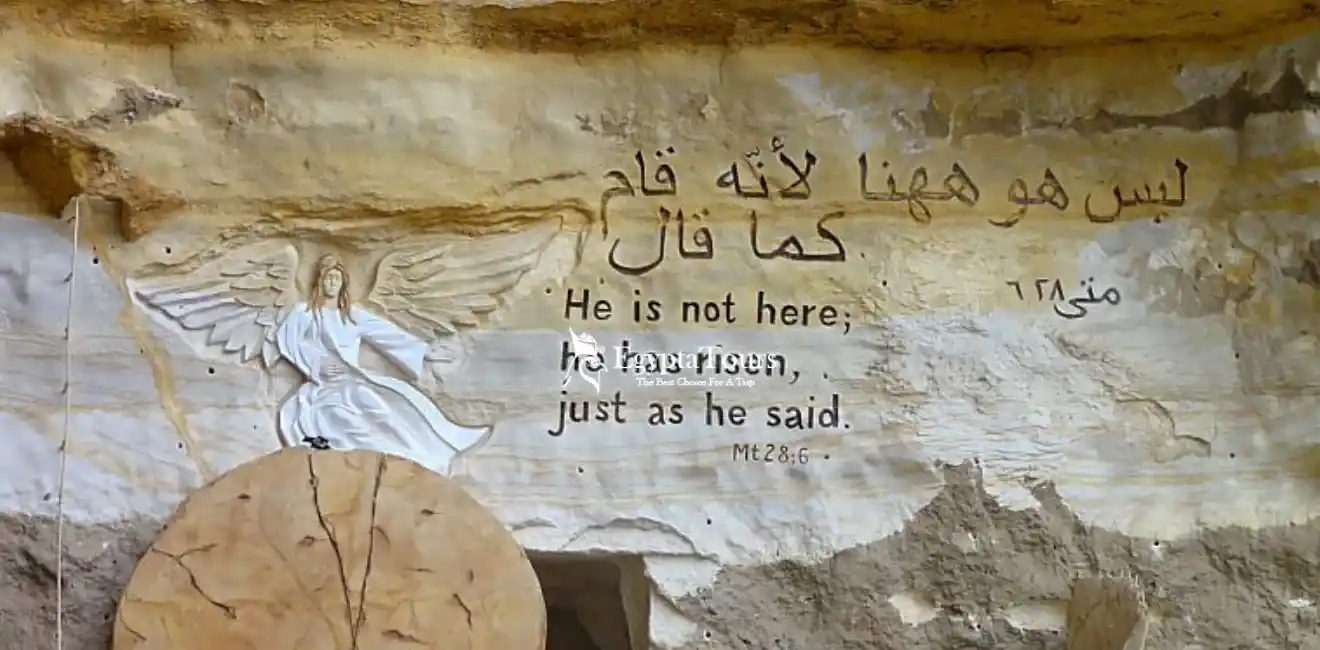
The-Carving-in-the-Cave-Church-EgyptaTours
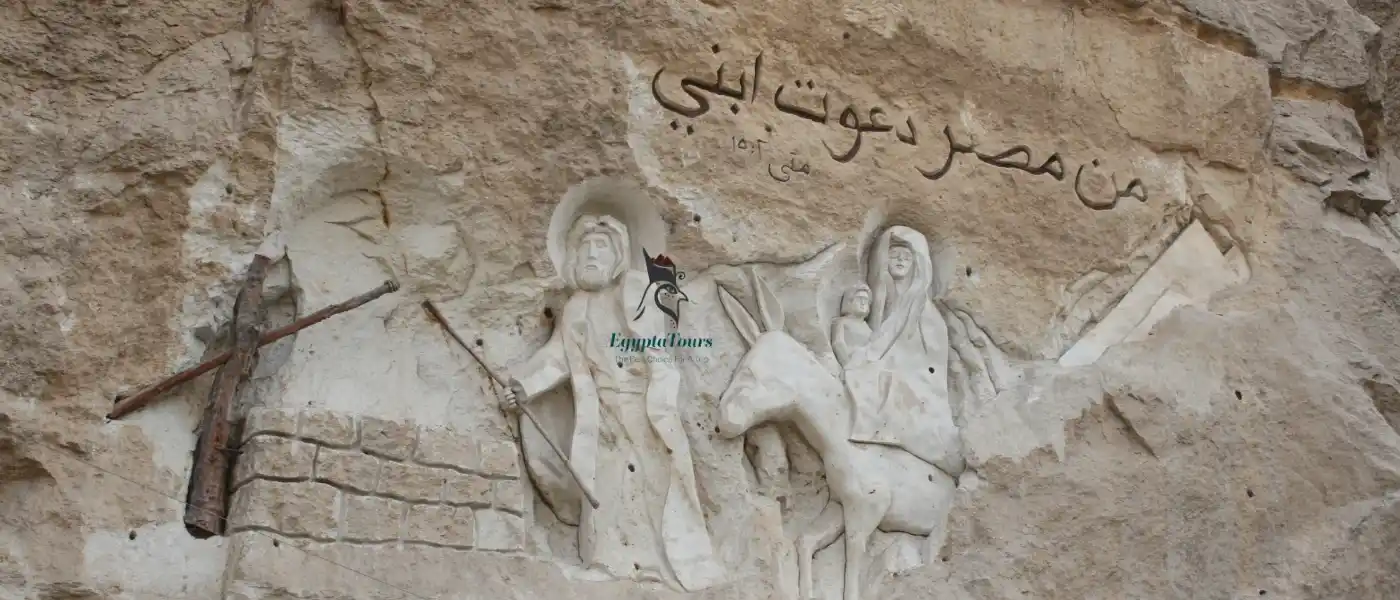
The Cave Church has many beautiful carvings and sculptures that show different stories from the Bible. These artworks are carved directly into the rock walls, showing the great skill and hard work of the artists.
The carvings create a strong spiritual feeling inside the church. The church itself is a unique work of art and includes wonderful statues of Mary Magdalene and the Virgin Mary.
The Cave Church also contains many stories carved into the rocks of the mountain. These carvings tell the story of the birth of Jesus and the miracle when Jesus brought Lazarus back to life.
The detailed designs help visitors understand and feel connected to these biblical stories. Many Bible verses are also carved on the walls of the church, giving visitors a chance to think and reflect spiritually.
Among the carvings, visitors can see the story of Zuleikha and Joseph including the story of Potiphar’s wife. The walls of the church also show the famous story of Samson, highlighting his strength and the challenges he faced. Every carving in the Cave Church makes the church more beautiful and shows the strong faith and dedication of the community who built and cared for this holy place.
The Cave Church Gallery
The church gallery has beautiful frescoes and murals on the walls and ceilings. These artworks show stories from the Bible and the lives of saints. They give visitors a wonderful visual experience. The gallery also shows the rich artistic history of the Coptic community.
You can discover the beauty of the Cave Church with Sun Pyramids Tours. Their Cairo tours give visitors a chance to explore this special spiritual place and many other historical and cultural sites. Visitors can see amazing artwork and hear inspiring stories about holy people who performed miracles and changed the world.
You can also explore the ancient wonders of Cairo through exciting day tours. These tours include famous places such as the Great Pyramid of Giza, the Great Sphinx of Giza and the Egyptian Museum. Each place shows an important part of Egypt’s long history and culture, giving visitors an unforgettable experience.
The Cave Church is one of the most special places in these tours. It shows the unique mix of faith, art and history that makes Cairo special.
Don’t miss the chance to explore the history and culture of Egypt. Book your tour and discover the beauty of Cairo with Sun Pyramids Tours. Their expert guides will help make your visit interesting, enjoyable and unforgettable.
Architectural of the Cave Church of Cairo
The Cave Church in Cairo is a church built inside the rock underground. This means it was carved directly into the limestone rocks of the Mokattam Hills instead of being built using normal construction methods. Building structures by cutting them into rock was common in Ancient Egypt. Many temples, tombs and chapels in Egypt were made in this way.
The Cave Church has a design similar to many old Egyptian rock-cut churches. It has a central hall (nave) in the middle, with rows of columns on both sides. At the front of the church there is the altar and at the back there is a sacred area called the sanctuary.
Different elements and attractions at the Cave Church
The Cave Church in Cairo is located inside the Mokattam Hills. This area also has several other churches and religious communities. Visitors can explore these places during day tours in Egypt and learn about the history and culture of the Coptic Orthodox Church. The Mokattam Hills are also home to a large community of Coptic Orthodox Christians where visitors can learn about their daily life and traditions.
Besides the churches and monasteries, the Mokattam Hills offer amazing panoramic views of Cairo and the nearby countryside. Visitors can walk or drive through the hills and enjoy the natural beauty of the area. The hills also include other attractions, such as the Cairo Festival City Mall and Mokattam District which is known for its handicrafts and traditional Egyptian food.
Overall, the Cave Church in Cairo is a unique and interesting place that shows part of the history and culture of ancient Egypt and the Coptic Orthodox Church. It is an important example of rock-cut architecture and a popular tourist attraction. Families who visit the Cave Church can also explore the surrounding Mokattam Hills and learn more about the local community and culture in Egypt.
The Spiritual Significance of the Cave Church
The Cave Church in Cairo has great spiritual importance for the Coptic Orthodox Church community. This church is one of the oldest Christian communities in the world. The Cave Church is a place where people come to pray and think quietly about their faith.
For the Zabbaleen community who were often treated unfairly in society, the church became a symbol of hope, faith and a new beginning. It gave them a safe place where they could feel peace and practice their religion away from the difficulties of everyday life.
The church is dedicated to Saint Simon the Tanner, an important figure in Coptic Christianity. Saint Simon was known for helping poor people and for his strong faith in God. His life and teachings are an important part of Coptic religious history. The church built in his name reminds people of his good work and legacy. Many Coptic Christians believe the church is a blessed place that brings healing and God’s protection to those who visit.
The church is not only a place for prayer but also a gathering place for the Zabbaleen community. Here they celebrate religious holidays, hold church services and support each other through their shared faith.
The Role of the Cave Church in the Coptic Orthodox Tradition
The Cave Church in Egypt is an important part of the tradition of the Coptic Orthodox Church. This Christian church traces its beginnings to Saint Mark the Apostle who is believed to have brought Christianity to Egypt in the 1st century AD. The Coptic Church still follows many ancient traditions that have continued for hundreds of years.
The Cave Church shows the strong and living faith of Coptic Christians in Cairo. Over time, it has become one of the most famous religious places in the city, attracting both local people and visitors from other countries. The church holds regular religious services such as Christmas Mass, Easter celebrations and pilgrimages that bring thousands of worshippers every year.
As a symbol of the Coptic Orthodox faith, the Cave Church is not only an amazing architectural site but also an important spiritual place for Egyptians and visitors from around the world. Its importance has grown over the years and it continues to play a major role in the religious and social life of Cairo.
The Church’s Role in Tourism
The site is of great importance for those who are interested in historical sites and unique architectural structures, attracting visitors from all over the world to explore the structures, appreciate the beauty of their design, and see the artwork and inscriptions on their walls.
These artworks offer valuable insights into local beliefs, practices, and traditions, contributing to an understanding of the site’s cultural and historical context.
The site includes dedicated areas for gatherings and community events, as well as areas that promote personal reflection and tranquility, making it a multifaceted destination. These various elements contribute to the uniqueness of the site and its attraction as a destination of historical and cultural significance.
The Legend of Moving the Mokattam Mountain
Among the legends surrounding the site, the story of moving the Mokattam Mountain by Simon the Tanner during the reign of the Fatimid Caliph Al-Mu’izz is prominent. According to this legend, the Caliph, seeking to prove the power of faith, challenged religious figures to fulfill a religious text that spoke of moving a mountain through faith alone.
After a period of prayer and fasting, a vision was said to have appeared, informing the religious leaders that the mountain would be moved through Simon. Subsequently, they went with Simon, and after a period of intense prayers and supplications, the mountain was reported to have moved from its original position.
This story, while not true, is nevertheless an important part of the local narrative and a significant point of interest for locals and visitors alike, adding an air of mystery and significance to the site.
What is “Garbage City”?
“Garbage City” is located at the base of the Mokattam Mountain and acquired this name because of the widespread waste in its streets. Despite facing a constant set of challenges related to waste management, the residents have adapted and developed ways to sustain themselves through waste collection and recycling.
This process has evolved into a practical system of resource management where materials are processed and reused. Residents rely on simple yet effective methods of waste management, using the waste to raise livestock, demonstrating their adaptability and innovation.
In conclusion, we have explored the site in Cairo, widely known as the Church of Saint Simon. The Cave Church, located within the Mokattam Mountain, is a powerful example of the relationship between history, community, and the environment, and a testament to human resilience and creativity.
FAQs about The Cave Church in Cairo
Where is The Cave Church located?
It’s in the Mokattam District of Cairo, carved into the hills overlooking the city.
Why is it called The Cave Church?
Because the church and surrounding spaces are built into and around natural caves in the hill.
What is the history of The Cave Church?
It has become a celebrated Coptic Orthodox site over decades, developed by the local church community as a place of worship and ministry.
What denomination is it?
It is part of the Coptic Orthodox Church of Egypt.
What are the main attractions at The Cave Church?
The cave-church spaces, colorful murals, and a strong sense of community life; it’s also a hub for charitable work and outreach.
Are there regular church services?
Yes, there are regular liturgies and feast-day services, with schedules posted locally and through the church’s announcements.
Is it open to visitors who are not Orthodox?
Yes, many visitors come for tours, prayers, or to learn about Coptic heritage; respectful behavior is appreciated.
What should I wear when visiting?
Dress modestly and respectfully; shoulders and knees covered are typically expected.
Is photography allowed?
Photography is usually allowed in public areas, but please follow any posted rules and be discreet inside worship spaces.
How do I get there from central Cairo?
Use a taxi or ride-hailing service; provide the Mokattam/Talab area reference to your driver. Check local guidance for traffic patterns.
Is it wheelchair accessible?
Access varies by area; if accessibility is essential, contact the church in advance for guidance on routes and assistance.
Are guided tours available?
Some days may offer guided visits through the church or local guides; ask at the visitor desk or your host community.
Can I attend a service if I don’t speak Arabic?
It’s common to experience the liturgy with some understanding of the flow; you may attend with a translator or church member who can help explain parts of the service.
Are there any fees or donations requested?
Donations are welcome and support the church’s charitable work; there’s usually no mandatory entry fee for visitors.
What should I know about safety and etiquette?
Be respectful, quiet during worship, follow local guidelines, and avoid disrupting prayer or the sanctuaries. If you’re unsure, ask a staff member or usher for
About EgyptaTours

EgyptaTours is a name synonymous with trust, excellence, and unforgettable travel experiences, proudly standing as one of the leading travel agencies in Egypt. Renowned for its deep expertise, personalized service, and carefully crafted itineraries, EgyptaTours serves as the ultimate gateway to discovering Egypt in its most authentic and inspiring form.