Ancient Egyptian Artifacts
Ancient Egyptian artifacts are among the most important historical evidence of Egypt’s...



Time Period: The dynasty lasted for roughly 200 years, beginning around 3100 BCE and ending near 2890 BCE.
Unification: King Narmer successfully united Upper and Lower Egypt after a series of battles. This monumental victory is recorded on the famous Narmer Palette.
Divine Kingship: Early pharaohs were viewed as sacred figures rather than ordinary rulers. Their names were written inside a royal symbol called a serekh, which was topped with the falcon god Horus.
Capital City: Memphis emerged as one of the earliest major capitals following the unification of the country.
Economy and Taxes: Coins were not used; instead, taxes were paid using grain, cattle, and labor. These resources were collected and stored by the government to feed workers, reward officials, and distribute supplies across the kingdom.
Trade and Expansion: Egypt expanded its trade beyond the Nile Valley to regions like Nubia and the Sinai. They imported valuable goods such as cedar wood, oils, wine, copper, and fine stone.
Burial Customs: Royal tombs were built at Abydos using mud brick and were filled with tools, pottery, and valuable objects. Some royal tombs also included nearby graves for servants and animals intended to serve the king in the afterlife.
The First Dynasty of ancient Egypt marked the beginning of one of the world’s oldest and most remarkable civilizations. This period lasted from around 3100 to 2890 BCE and laid the foundation for the greatness of ancient Egypt in the centuries that followed.
During this time, Egypt became united under one ruler and many important traditions in government, religion, art and architecture first began to develop. It was also an age of early monumental building and growing royal power.
The First Dynasty opened the door to a long and lasting civilization whose influence can still be seen today. Looking back at this period helps us understand how ancient Egypt grew into one of history’s most famous cultures.
The First Dynasty of ancient Egypt began around 3100 BCE. This important period marked the unification of Upper and Lower Egypt into one kingdom under a single ruler. Historians usually credit this achievement to King Menes, who is often identified with King Narmer.
Although the exact dates of early Egyptian history can vary, modern archaeological studies
and radiocarbon research place the start of the First Dynasty at about 3100 BCE. The dynasty continued until around 2890 BCE, becoming the foundation for the growth of ancient Egyptian civilization.
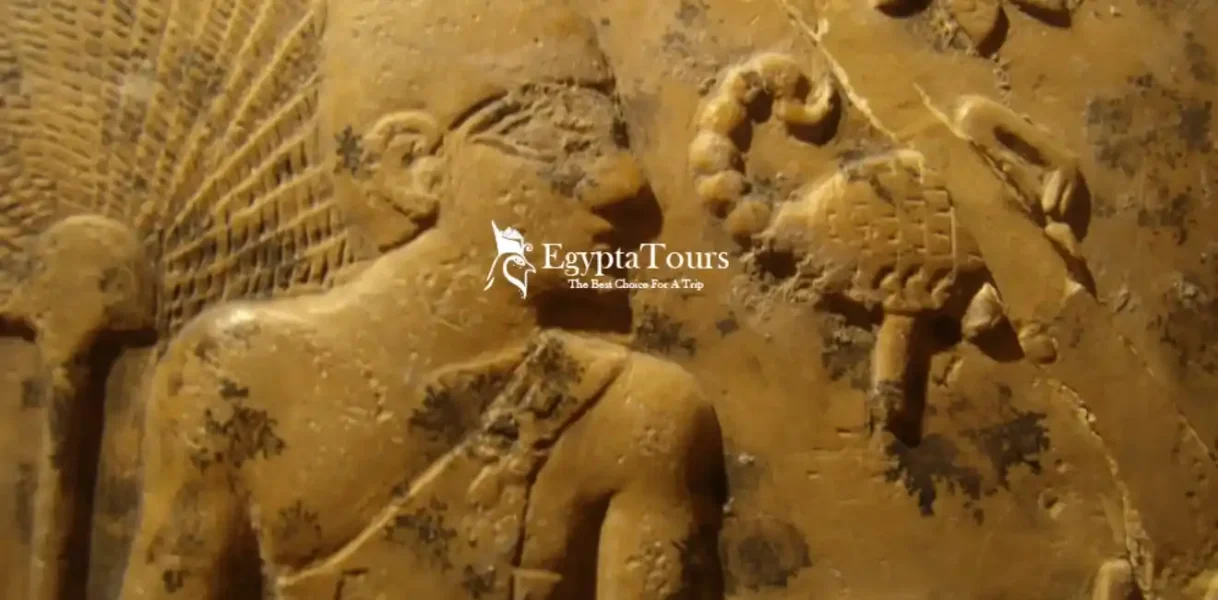
Symbols of Early Egyptian Unification
After the death of King Scorpion II during the Predynastic Period and the Naqada III civilization, King Narmer, who is also known as Menes, began a campaign to unite Egypt. He gathered the armies of Upper Egypt and moved north with the goal of bringing both Upper and Lower Egypt under the rule of one king.
After a series of battles and internal conflicts, Narmer succeeded in defeating rival rulers and unifying the country. His victories and the unification of Egypt were later recorded on the famous Narmer Palette, one of the earliest and most important artifacts from ancient Egyptian history.
Narmer is the ruler most closely connected with this major change in Egypt’s history. Later Egyptian tradition also mentions a founder named Menes, but most early evidence points to Narmer as the key figure. The famous Narmer Palette shows him wearing the white crown of Upper Egypt on one side and the red crown of Lower Egypt on the other.
This is important because Egyptian kingship depended as much on symbols as on power. Narmer’s reign or the process linked to his time, helped establish the idea of one king ruling over both lands. After him, rulers like Hor Aha continued to build on this system. From this point, a united kingdom, a royal court and a more organized state began to take shape.
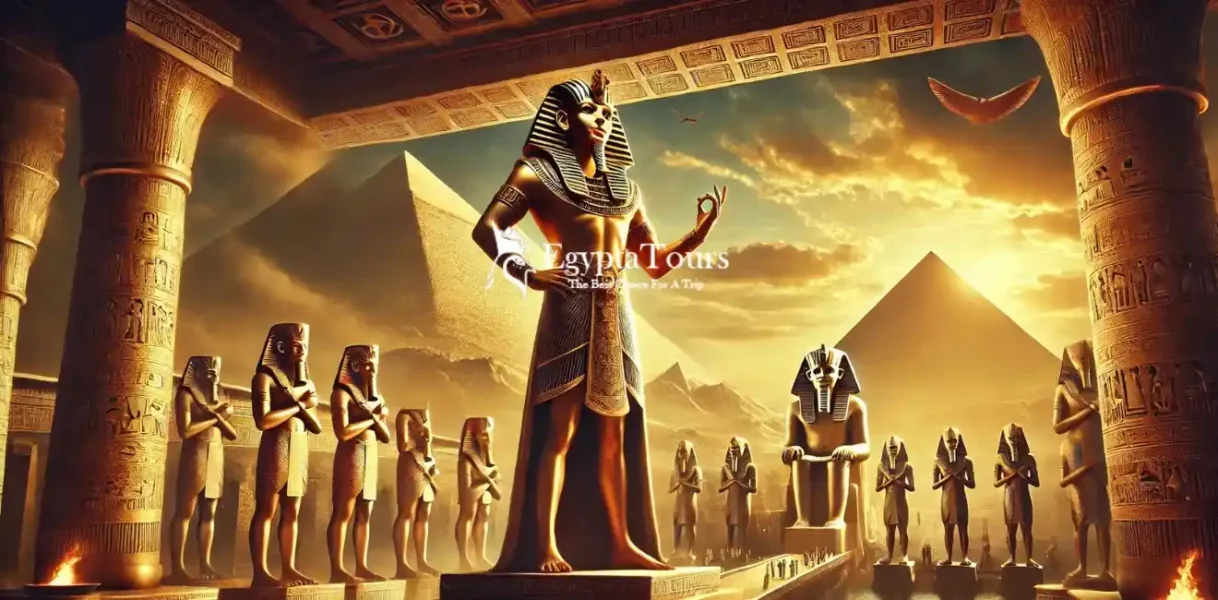
The Majestic Rulers of the First Dynasty
| King | Role | Approximate Reign |
| Narmer | Unified Upper and Lower Egypt | c. 3100 BCE |
| Hor-Aha | Strengthened royal authority | c. 3000 BCE |
| Djer | Expanded trade and influence | c. 2990 BCE |
| Djet | Continued dynastic traditions | c. 2980 BCE |
| Den | Improved administration | c. 2970 BCE |
| Qa’a | Last ruler of the dynasty | c. 2900 BCE |
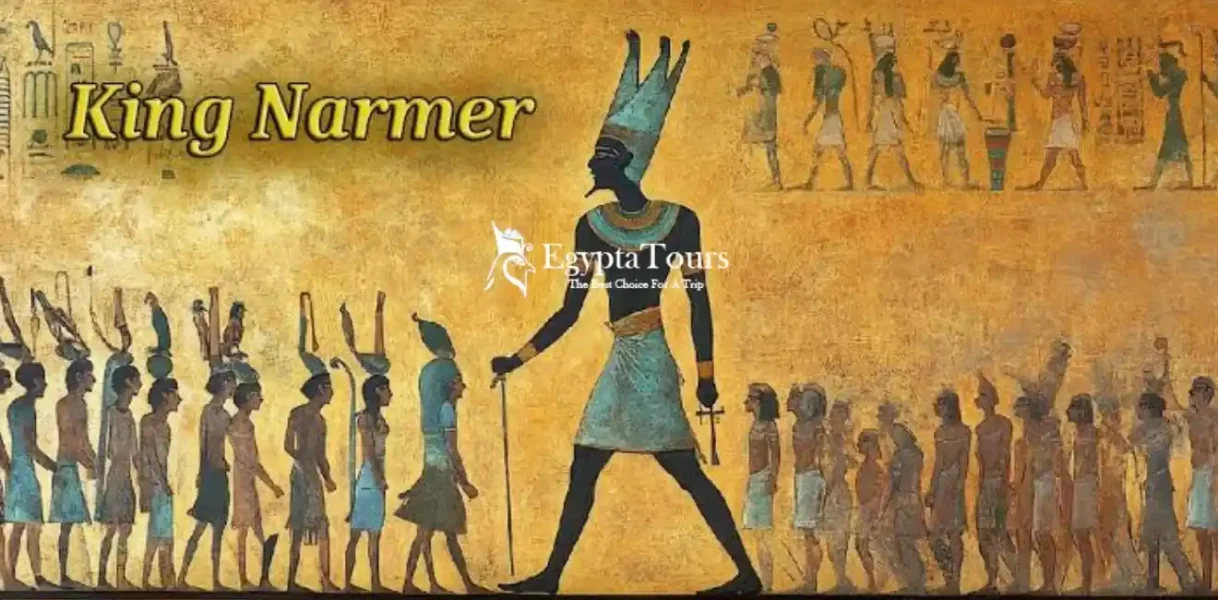
The Dawn of Pharaonic Power
The first pharaohs of Egypt were not viewed as ordinary rulers. People believed they had a sacred connection to the gods. Their names were often written inside a royal symbol called a serekh which was usually topped with the image of the falcon god Horus. This symbol showed the king’s divine status.
Because of this belief, loyalty to the pharaoh was not only political, it was also connected to religion and order. During the First Dynasty, the idea of the king as the center of the state began to grow. Later Egyptian rulers continued this tradition making the pharaoh both a political leader and a sacred figure.
As Egypt grew into a larger kingdom, it needed more than just a powerful king. The country also needed officials, storage buildings, seals and organized records. During the First Dynasty, the royal court became more careful in tracking land, workers and supplies. Early writing was still developing but it already had an important purpose.
Archaeologists have found seals and labels inside tombs that mention names, estates and stored goods. Instead of using coins, taxes were usually paid with grain, cattle or labor. This system helped the government provide food for workers, reward officials and distribute resources across the kingdom.
During this period, Egypt was slowly changing into a true organized state, not just a kingdom centered around the royal family.
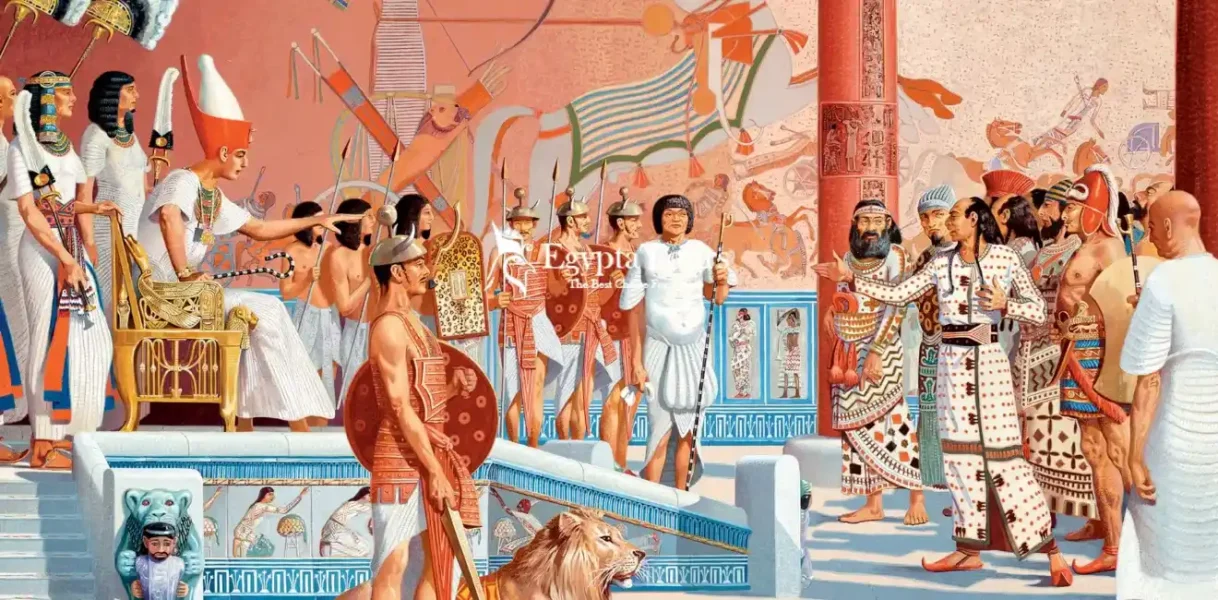
Daily Life During the Dawn of Ancient Egypt
Most people in early dynastic Egypt did not live in palaces. They worked on farms along the Nile, raised animals, fished and made everyday goods like pottery and cloth. Their work supported the state and helped keep towns running. Products such as grain, linen and livestock were collected and stored for the royal government, so even village life played an important role in the kingdom.
At the same time, Egypt was connected to trade routes beyond the Nile Valley. It imported goods that were not available locally, such as cedar wood, oils, wine, copper and fine stone. It also traded with regions like Nubia, the Sinai and areas to the northeast. These connections provided better materials, supported skilled craftsmanship and strengthened the early Egyptian state.
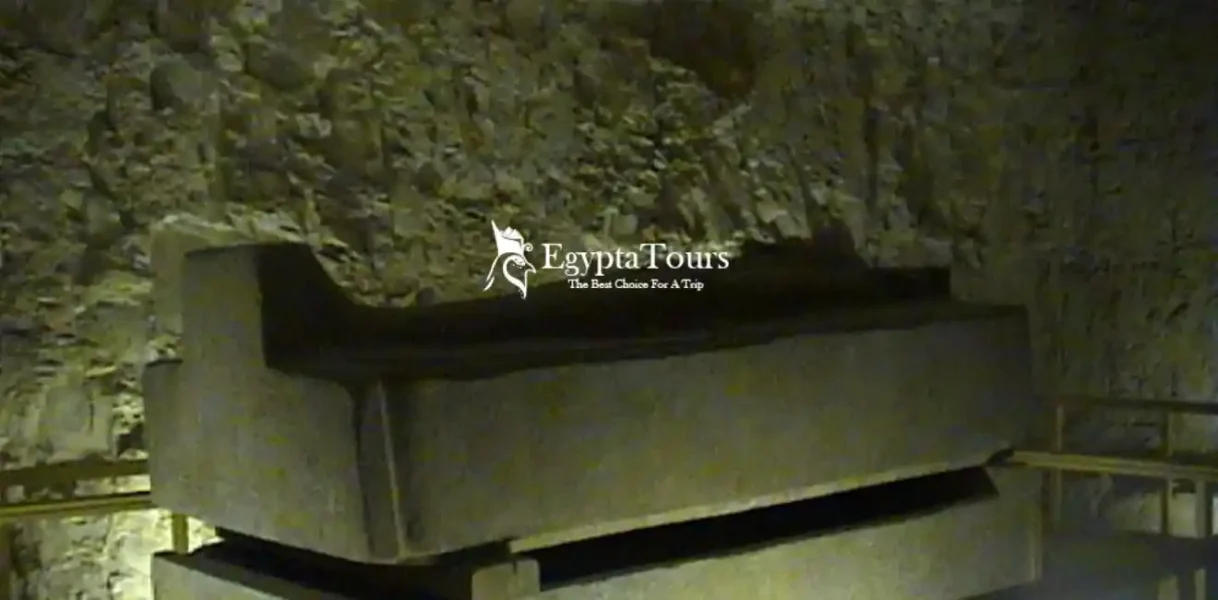
Early Burial Customs and Royal Tombs
Royal tombs from the First Dynasty show how much ancient Egypt was beginning to change. At Abydos, kings were buried in large mud brick tombs filled with pottery, tools and valuable objects. Some royal tombs also had smaller graves nearby showing how closely servants and members of the royal court were connected to the king, even after death.
These burials give important clues about early Egyptian beliefs concerning status, royalty and the afterlife. Funerals were carefully planned and full of religious meaning. As time passed, tombs became larger and more advanced, eventually leading to the great royal monuments Egypt is famous for today.
Even in the First Dynasty, the connection between kingship, death and sacred belief was already a central part of Egyptian culture.
The First Dynasty of ancient Egypt began around 3100 BCE, marking the start of pharaonic rule and the unification of Egypt.
Most historians credit King Narmer (also associated with Menes) with uniting Upper and Lower Egypt into one kingdom.
The First Dynasty lasted from around 3100 BCE to 2890 BCE, covering roughly 200 years of early Egyptian history.
Instead of coins, people paid taxes using grain, cattle, and labor, which were collected and stored by the government.
Many First Dynasty kings were buried in royal tombs at Abydos, one of the most important early burial sites in ancient Egypt.

Explore our top-rated Egypt travel packages and embark on an unforgettable journey. From the Pyramids of Cairo to the magical temples of Luxor, Aswan, and Abu Simbel, discover expertly curated tours designed for your perfect Egyptian adventure