




The Secret of Egyptian Mummification
Egyptian civilization has captivated and attracted the attention of the entire world due to its achievements and the hidden secrets surrounding it, from the creation of the massive pyramids and the Sphinx to the mastery of astronomy and the mysterious art of mummification.
For the ancient Egyptians mummification was a societal and religious principle based on their belief in resurrection and eternal life after death. This belief led them to excel in preserving the deceased body through the ages. In this article, we will uncover The Secret of Egyptian Mummification, its reasons, and the stages of this process.
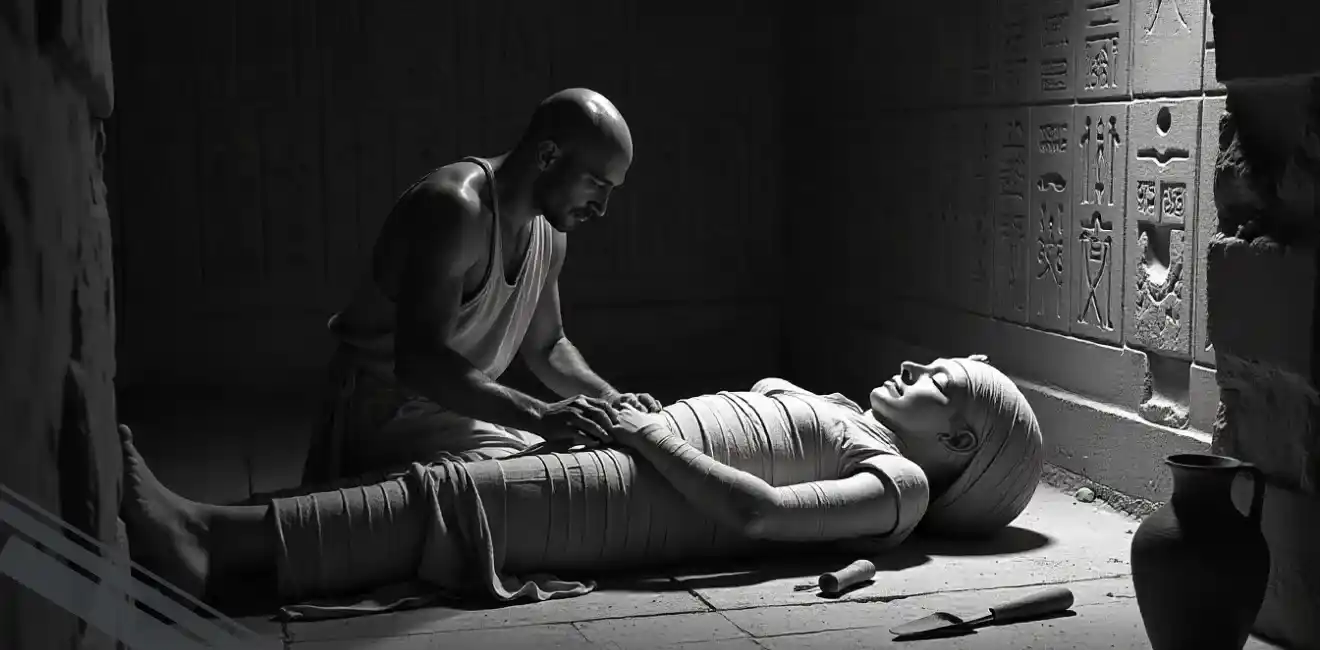
The idea of mummification arose among the Egyptians due to their steadfast beliefs in life and immortality after death, which made them prepare well for their demise. Their ideas revolved around the concept that life would continue after death and that they would need their physical bodies in their natural state. Therefore, the goal of the mummification process was to preserve the body intact for use in the afterlife.
The preparation of tombs began as an important celebration for the other life. This is where the process of storing clothes, food, furniture, and all of a person’s belongings would start, as if it were their home in the next life, well before the individual’s death.
The Essential Stages of the Complete Mummification Process
The-Essential-Stages-of-the-Complete Mummification-Process-EgyptaTours
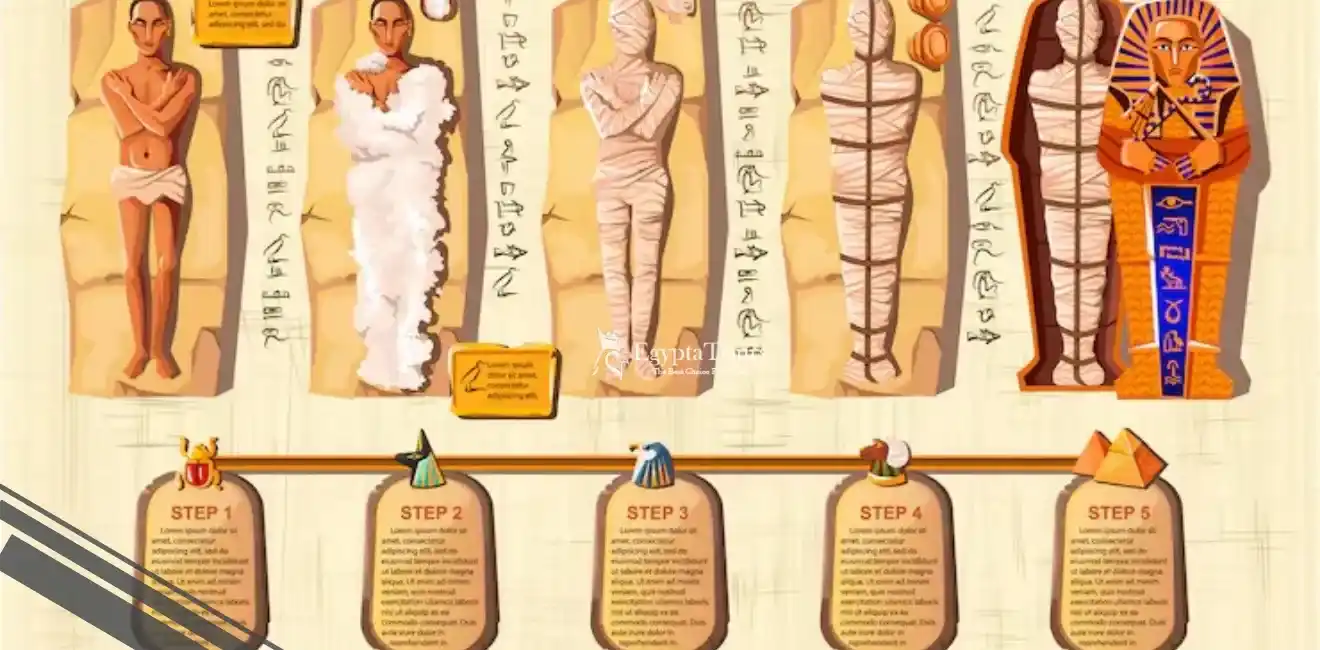
The essential stages of mummification are numerous and reveal the secret of this practice among the ancient Egyptians. These stages have been discovered through Egyptian papyri and the examination of mummy remains.
The mummification process begins with a series of steps as follows:
- The deceased is washed with water and natron salt to facilitate the process of resurrection and rebirth.
- The brain is extracted through the ethmoid bone behind the neck. After its removal, a liquid from pine trees is poured in through the nasal opening.
- The rest of the internal organs, including the lungs, heart, stomach, intestines, liver, and kidneys, are removed, anointed with cedar oil, and wrapped in linen. The heart and kidneys are then returned to the body for their important roles in the afterlife.
- Packing materials are used to kill bacteria and prevent the body from decaying. There are three types: temporary packing materials, permanent packing materials, and subcutaneous packing materials.
- This stage reveals a key secret of Egyptian mummification, where the body is cleansed of its dominant color and water by placing a large amount of natron salt on it.
- The body of the deceased is placed on an inclined bed. A channel at the top of the bed collects the body’s fluids into a basin below. The drying period lasts for about 40 days.
- This stage involves applying a variety of oils to the body to treat it for physical changes. All body openings, including the eyes and nose, are sealed. This process is carried out over 10 days, during which the deceased is anointed and wrapped in linen bandages and clothing.
- This stage aims to provide significant protection for the body from decomposition. The body is wrapped for two weeks in a red shroud. With each layer of wrapping, funerary spells are recited. Sandals and jewelry are then placed on the body before the deceased is buried in their tomb.
What Materials Did They Use in Mummification?
What-Materials-Did-They-Use-in-Mummification-EgyptaTours
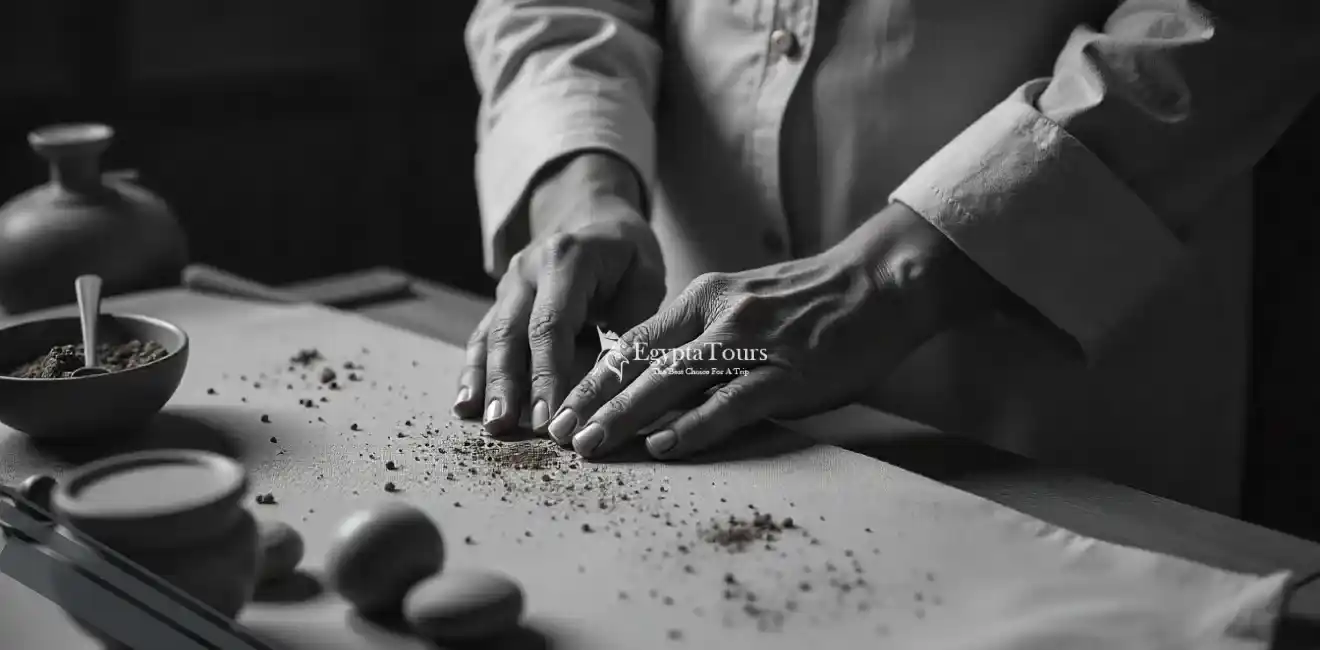
The The Secret of Egyptian Mummification lies in the materials used to preserve the body of the deceased.
These materials are as follows:
- Natron salt, composed of sodium bicarbonate and sodium carbonate, was used to dry out the corpses.
- Resinous materials, which are a thick oil from plant sap.
- Bitumen was placed inside the deceased’s body cavity to prevent decomposition.
- Beeswax was used as a sealant to close the eye sockets and nostrils.
- Onions were used to prevent decay, while dates were used to help dry the body’s cavity.
- Oils such as olive oil and frankincense were used as fragrant substances for the body.
The Difference Between the Mummification of Kings and Common People
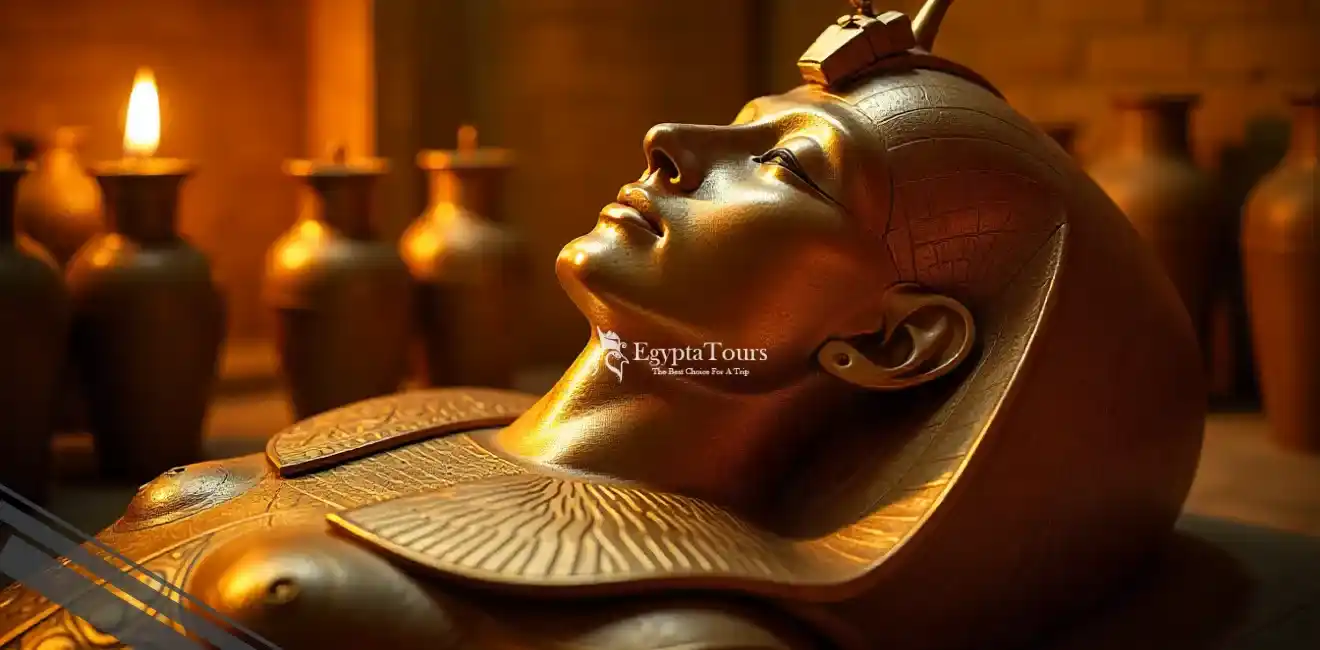
The-Difference-Between-the-Mummification-of-Kings-and-Common-People
The processes of mummification among the ancient Egyptians varied according to social class. Each class had its own specific method of burial, depending on the materials used. We reveal to you the secret of mummification among the different classes as follows:
- Kings and the Wealthy Class: The mummification process followed its natural course. High-quality mummification materials were imported from different countries. The process began in order, starting with the removal of the brain tissue and continuing with the rest of the internal organs.
- The Middle Class: The internal organs were removed by dissolving them with an injection, and then the body was wrapped in linen bandages. This method differed from the first in its use of dissolving materials that did not focus on preserving the body’s organs.
- The Poor Class: No organs were removed from the deceased. The process was limited to drying the body, anointing it, and wrapping it in linen bandages.
Religious Rituals Associated with Mummification and Beliefs in the Afterlife
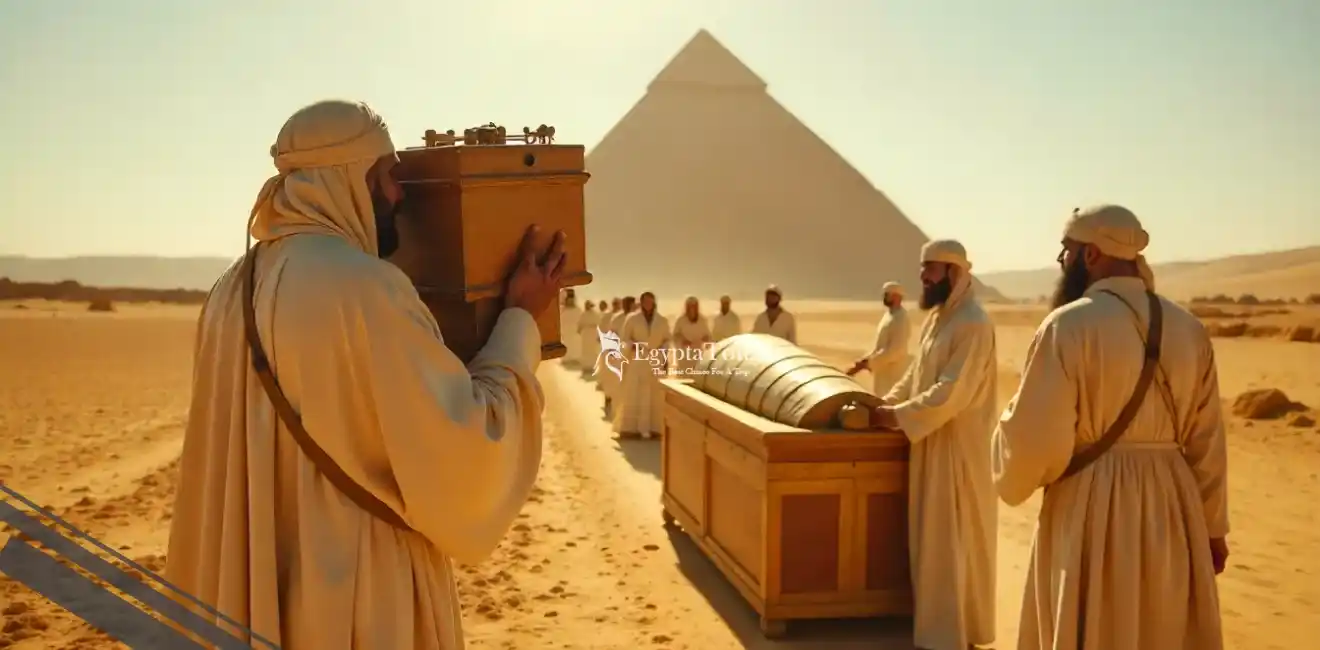
Religious-Rituals-Associated-with-Mummification-and-Beliefs-in-the-Afterlife-EgyptaTours
The The Secret of Egyptian Mummification is also linked to the religious rituals and spells performed during the burial of the dead, which are as follows:
- Funerary Rituals, where funerary texts and scrolls of spells were placed in the tomb to ensure the protection of the soul.
- The Opening of the Mouth ceremony, which was performed on the mummies to enable the deceased to hear and eat in the afterlife.
What Modern Research Has Discovered About the Secrets of Mummies
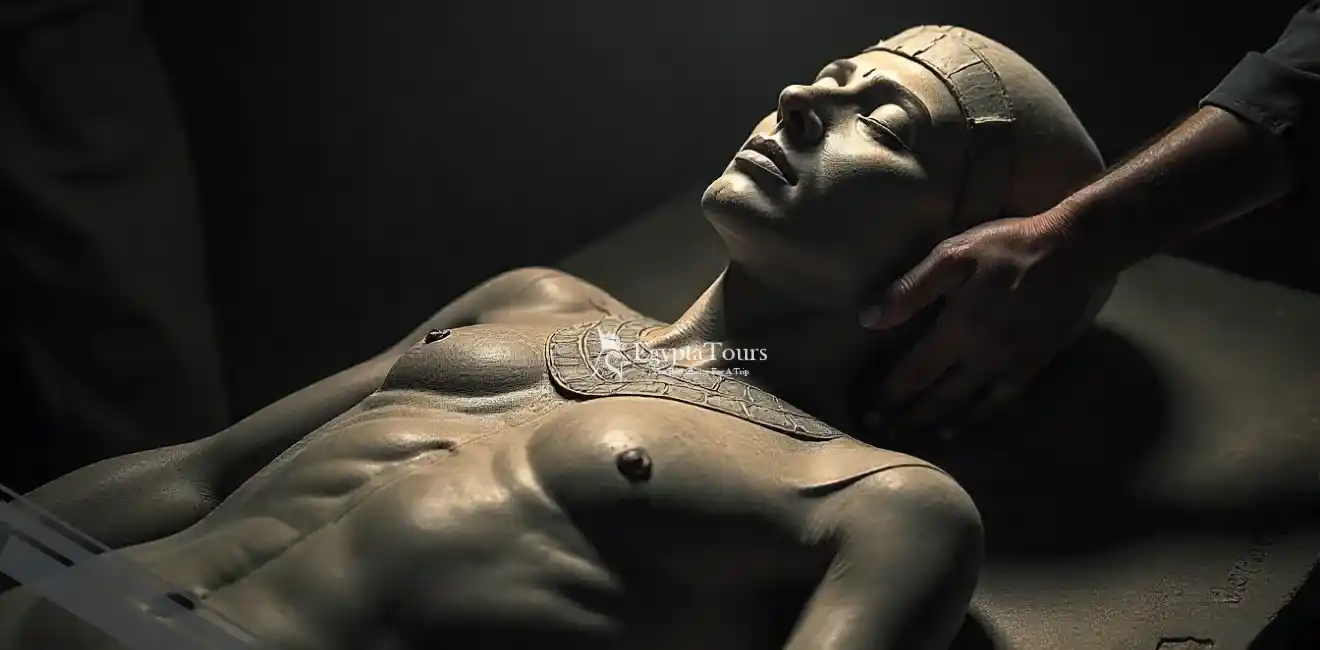
What-Modern-Research-Has-Discovered About-The-Secret-of-Egyptian Mummification-EgyptaTours
New research and modern technology, such as computed tomography or CT scans, have helped uncover new facts about the The Secret of Egyptian Mummification.
The most important of these discoveries are:
- Determining the age of the mummy.
- Identifying a number of diseases that caused death.
- Reconstructing the layers of mummification, skin, muscles, and resin layers.
How Are Mummies Represented in Popular Culture and Tourism in Egypt?
Mummies constitute a large part of Egyptian popular culture and are a major attraction for tourists seeking to explore one of the secrets of ancient Egyptian civilization: the secret of mummification.
The importance of mummies is evident in the following ways:
- Seeing mummies is a unique experience that reflects a significant part of Egyptian history and culture, which is clearly visible in the tombs of the Valley of the Kings.
- The opening of the National Museum of Egyptian Civilization and the transfer of about 22 royal pharaonic mummies is a powerful testament to the tourist appeal of mummies.
- The tombs of Luxor are a popular tourist destination for learning about the form of the tombs and the mummification methods of the ancient Egyptians.
Stories of Famous Mummies in Egypt
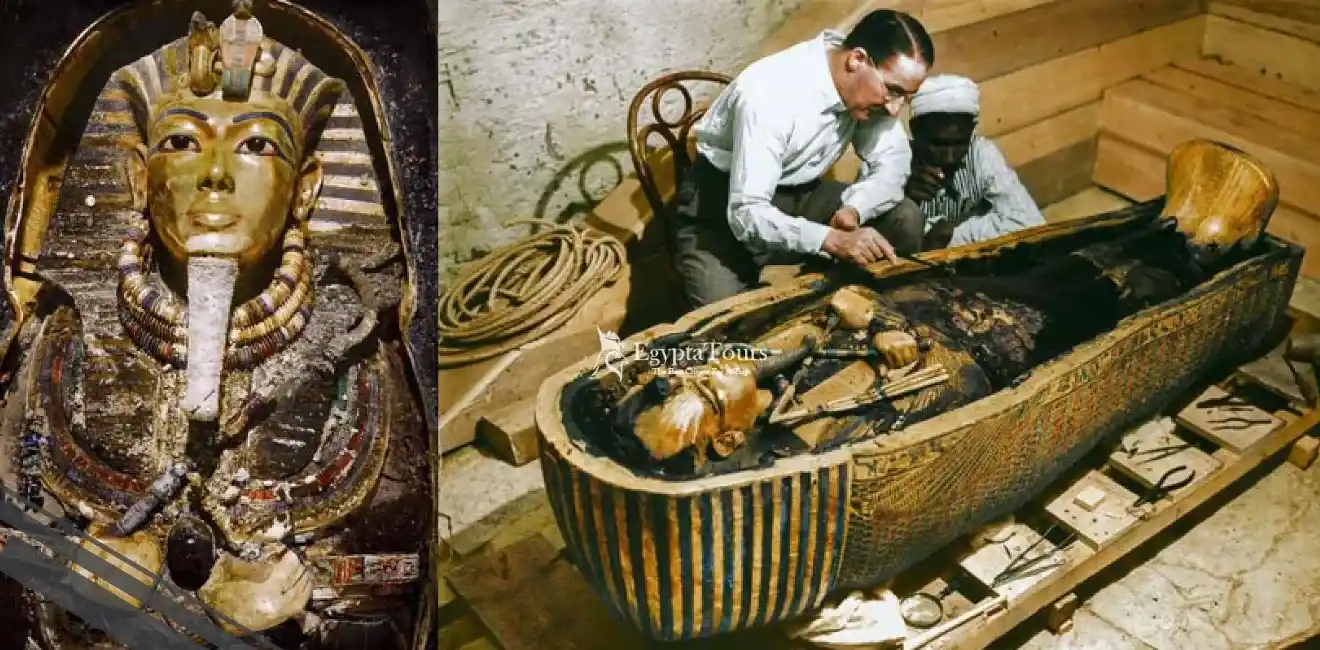
Stories-of-Famous-Mummies-in-Egypt-EgyptaTours
There are several stories of famous mummies in Egypt:
King Tutankhamun
This is one of the most famous mummies in the world, discovered in 1922 by the British archaeologist Howard Carter. What is astonishing is the preservation of the tomb’s basic structure along with a large number of artifacts and golden jewelry, especially the golden mask of King Tutankhamun.
King Ramses II
The tomb of King Ramesses II was discovered in 1881. He is the first mummy to be issued an Egyptian passport when he was transported to France for a number of examinations and tests. The mummy of King Ramesses II and his treasures are scheduled to be transferred to the Grand Egyptian Museum, where they will be displayed upon its opening.
Queen Hatshepsut
The tomb of Queen Hatshepsut was discovered in 1903, initially by archaeologist Howard Carter in the tomb KV60. She was later identified after numerous examinations and tests.
How Do Climatic Conditions Affect the Preservation of Ancient Mummies Today?
Today’s climatic conditions are different from what they were in the past, which was an important factor in preserving mummies that relied on a hot climate and hot sands for preservation.
With the onset of humidity and industrial pollutants, the organic materials involved in the preservation of mummies have been affected. Consequently, these materials used for preservation will deteriorate, and the mummies could eventually turn to dust.
Conclusion
The Secret of Egyptian Mummification is a clear reflection of the scientific and intellectual capabilities of the ancient Egyptians. It was not just a religious belief but also a significant testament to Egyptian civilization, which still holds many mysteries despite the advancements of modern science.
FAQs
Are eyes removed during mummification?
Yes, the eyes were removed. They were replaced with a piece of cloth or linen, or with artificial substitutes such as artificial shells or colored stones.
Why are there so few mummies left?
This is due to several reasons, the most important of which are the lack of written records, historical destruction, the deterioration of preservation factors for the poor, and cultural practices that led to the reuse of tombs.
What is the scariest mummy ever discovered?
The “Screaming Mummy” is considered the most terrifying in Egypt due to its facial expression and the condition in which it was mummified.
About EgyptaTours

EgyptaTours is a name synonymous with trust, excellence, and unforgettable travel experiences, proudly standing as one of the leading travel agencies in Egypt. Renowned for its deep expertise, personalized service, and carefully crafted itineraries, EgyptaTours serves as the ultimate gateway to discovering Egypt in its most authentic and inspiring form.