When Were The Pyramids Built
📋 Summary & Quick Facts
- The Egyptian pyramids were mainly built during the Old Kingdom period of ancient Egypt, especially between 2589 and 2504 BC. The most famous pyramids at Giza were constructed over about 85 years by different pharaohs.
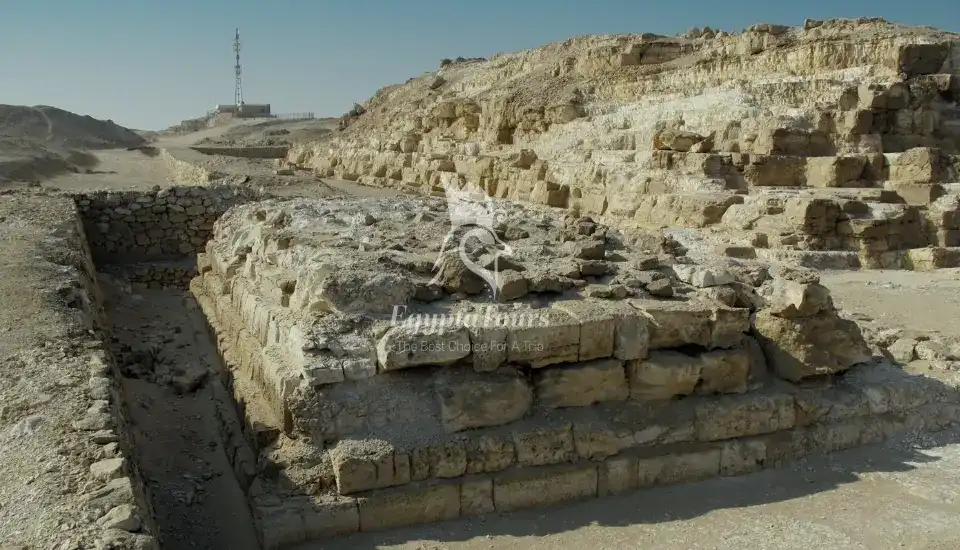
- The first major pyramid was the Step Pyramid of Djoser at Saqqara, designed by the architect Imhotep. Later kings like Sneferu improved pyramid design until the smooth sided pyramids of Giza were created.
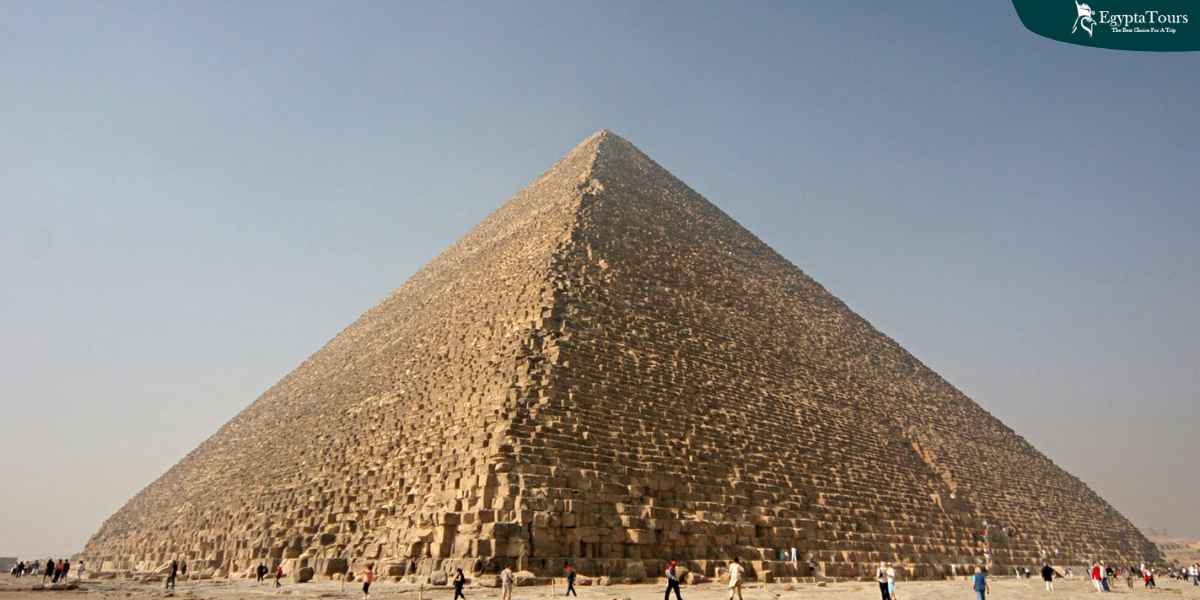
- The Great Pyramid of Khufu, one of the Seven Wonders of the Ancient World, was built around 2580–2560 BC. It took nearly 20 years to complete using millions of limestone blocks transported along the Nile River.
- The pyramids of Khafre and Menkaure were built after Khufu’s pyramid and became part of the famous Giza Pyramid Complex. These monuments were created as royal tombs to help pharaohs reach the afterlife according to ancient Egyptian beliefs.
- Modern scientists used radiocarbon dating and archaeological research to confirm the age of the pyramids. Studies from 1984 and 1995 showed that most pyramids date back more than 4,500 years, proving the incredible engineering skills of the ancient Egyptians.
Archaeologists believe that Egypt’s large pyramids are the remarkable achievements of the Old Kingdom society, which rose to prominence in the Nile Valley after 3000 B.C. The Egyptian pyramids are not only iconic tourist attractions but also stand as a testament to the ingenuity, architectural mastery and royal ambitions of that era. Historical analysis tells us that the Giza Pyramids were constructed over a span of 85 years, between 2589 and 2504 B.C., a period that highlights the gradual development of Egyptian engineering across different dynasties.
This naturally raises the question: when were the pyramids built and can science confirm the historical chronology? Interest in Egyptian chronology is widespread in both popular and scholarly circles. Scientists have sought to test the accepted historical dates of several Old Kingdom monuments bridging the wonder of these ancient structures with modern methods of verification.
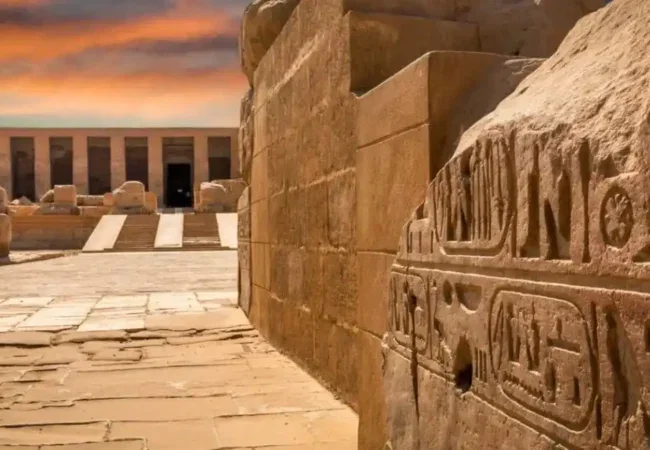
You can start your journey at Saqqara, where Pharaoh Djoser built the Step Pyramid, and then move on to the Great Pyramid of Giza. Each of these iconic sites tells a part of the story of ancient Egyptian civilization, revealing the evolution of architectural techniques and the grandeur of a civilization that continues to fascinate the world today.
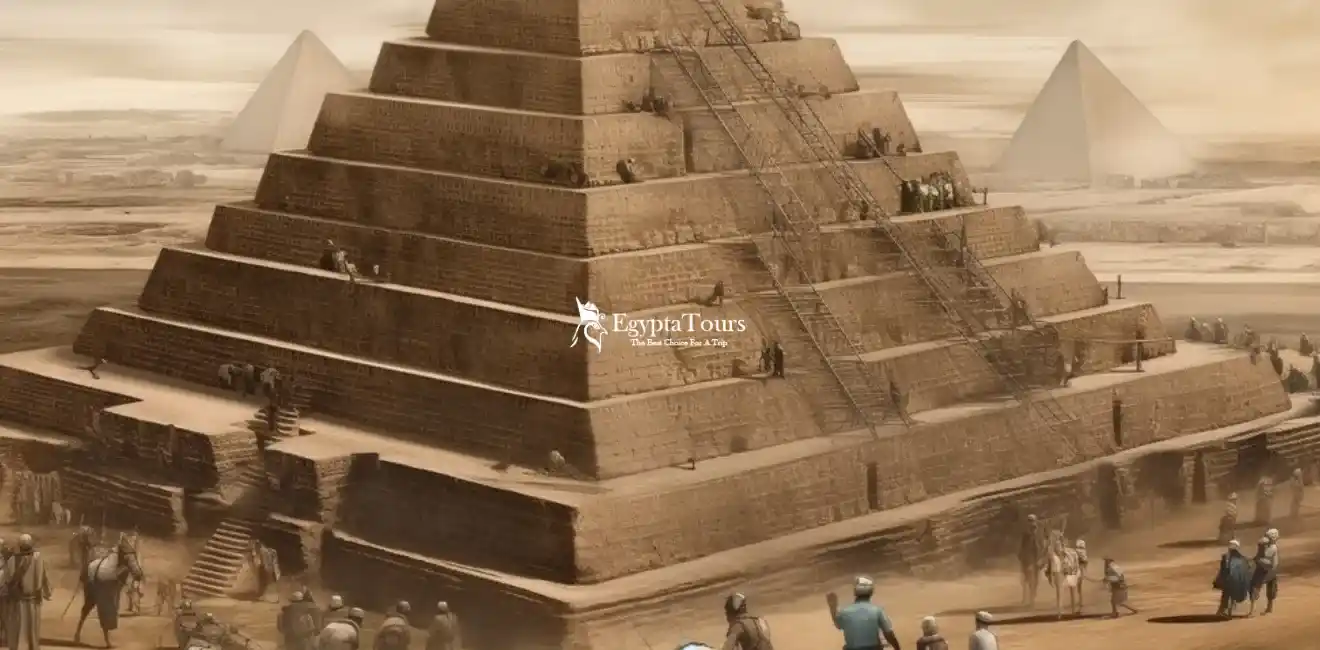
Early -Views- on -when -were -the- pyramids -built
Carbon-14 is an unstable form of carbon that slowly decays, making it a scientific clock for estimating the age of organic remains. Some of the first radiocarbon experiments were carried out on Egyptian antiquities, partly to resolve the debate over the time period in which the pyramids were constructed.
Willard F. Libby and his colleagues analyzed acacia wood taken from the Third Dynasty Step Pyramid of Djoser to test their theory. Based on the 5,568-year half-life of Carbon-14, Libby predicted that the sample should contain about half the amount of Carbon-14 found in living trees (see Arnold and Libby, 1949). The test results supported this calculation about when were the pyramids built.
Later research showed that the amount of Carbon-14 in the atmosphere has varied across history. Scientists therefore introduced calibration techniques to correct radiocarbon dates and account for these natural fluctuations.
The 1984 Radiocarbon Investigation
In 1984, researchers conducted radiocarbon testing on samples from Old Kingdom monuments in Egypt. A central aim was to accurately determine the construction dates of the pyramids. Scientists then matched the radiocarbon results against the average reign dates of rulers listed in the Cambridge Ancient History.
On average, the radiocarbon dates turned out to be 374 years earlier than the traditional historical timeline. Despite this difference, the evidence still confirmed that the Great Pyramid belongs to the historical period long recognized by Egyptologists.
The 1994–1995 Radiocarbon Investigation
A second phase of research took place in 1994–1995. This time, the study covered a much wider range of monuments. The expanded dataset allowed a more detailed examination of pyramid chronology, including:
-
First Dynasty tombs at Saqqara (2920–2770 BCE)
-
Djoser’s pyramid (2630–2611 BCE)
-
The pyramids of Giza (2551–2472 BCE)
-
Selected pyramids from the Fifth and Sixth Dynasties
-
Several Middle Kingdom pyramids.
Researchers also took samples from the “Lost City” area on the Giza Plateau. Two preserved bakeries discovered there in 1991 provided ash and charcoal remains, which are highly useful for radiocarbon dating.
The 1995 results generally appeared 100 to 200 years older than the dates given in the Cambridge Ancient History. This placed them about 200 years later than the 1984 findings.
Comparing the 1984 and 1995 Findings
The total number of samples from both projects allowed statistical comparisons for the pyramids of Djoser, Khufu, Khafre, and Menkaure. This helped clarify inconsistencies and improve our understanding of construction dates.
Two notable conclusions emerged:
-
Large differences exist between the 1984 and 1995 dates for Khufu and Khafre. However, the dates for Djoser and Menkaure are largely consistent.
-
The 1995 dates show wide variation even within a single monument. For example, dates from Khufu’s Great Pyramid span nearly 400 years.
Agreements on Pyramid Dating
There is good consistency for the First Dynasty tombs at North Saqqara. Historical chronologies match up well with both earlier and recent radiocarbon results based on reed samples.
A similar level of agreement exists for the Middle Kingdom. Eight calibrated dates from straw in the pyramid of Senwosret II ranged from 103 years earlier to 78 years later than his reign. Four of these dates differed by only 30, 24, 14, and 3 years. The oldest date came from charcoal, which highlights the well-known “old wood problem” in archaeology.
The Pyramids of Giza

The -Pyramids- of -Giza
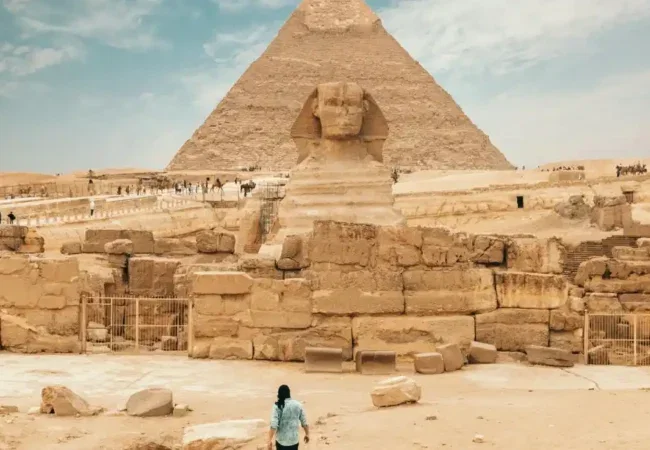
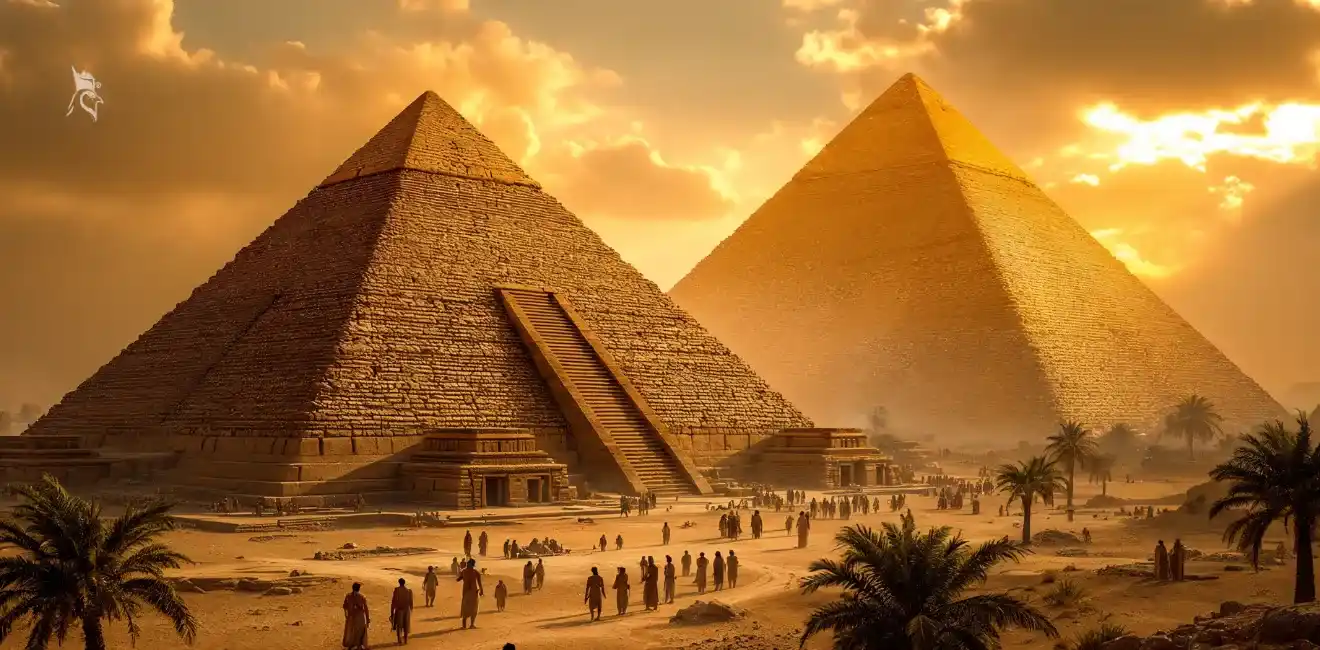
The Giza Pyramid Complex, also called the Giza Necropolis, is one of Egypt’s most important archaeological locations. It includes the Great Pyramid, the Pyramid of Khafre, and the Pyramid of Menkaure, along with the Great Sphinx.
Builders constructed these monuments during the Fourth Dynasty of the Old Kingdom, between 2600 and 2500 BCE. The area also contains temples, tombs, and the remains of a worker settlement.
Khufu’s Pyramid
Khufu succeeded his father Sneferu around 2650 BCE. Known as the builder of the Great Pyramid of Giza, Khufu created the only surviving wonder of the ancient world. The original height of his pyramid was 146 meters, with a base length of 230 meters. Stone weights ranged from 1 to 8 tons.
Surrounding the pyramid is a cemetery featuring smaller pyramids for his wives and mother, as well as mastaba tombs for officials. Interestingly, despite the monument’s massive size, only one tiny 7.5 cm statue of Khufu has ever been found.
Khafre’s Pyramid
The Khafre pyramid complex includes the Valley Temple, the Sphinx Temple, a causeway, a mortuary temple, and the king’s pyramid. The pyramid appears taller than Khufu’s because it sits on higher ground and has a steeper angle. However, it is actually smaller. It also uniquely retains part of its original limestone casing at the top.
Menkaure’s Pyramid
Completed around 2510 BCE, the Menkaure complex consists of a Valley Temple, a causeway, a mortuary temple, and the king’s pyramid. It also includes three subsidiary queens’ pyramids. The pyramid no longer retains its original limestone casing.
The Sphinx
The Great Sphinx dates to the reign of Khafre. During the New Kingdom, Pharaoh Amenhotep II built a new temple dedicated to Hor-em-akhet at the site, and later rulers made further additions.
Why Choose The Pyramid Shape?
The pyramid shape was deeply linked to the Egyptian concept of cosmic creation. It was believed to help the deceased’s soul ascend to the sky to join the sun god, Ra.
This dramatic shape can sometimes be seen in nature when sunlight rays break through the clouds. It is also reflected in obelisks and smaller tombs. Even when New Kingdom pharaohs shifted to building tombs in the Valley of the Kings, they maintained this symbolism by using the natural mountain peak above the valley as their “pyramid.”
The Construction Of The Pyramids
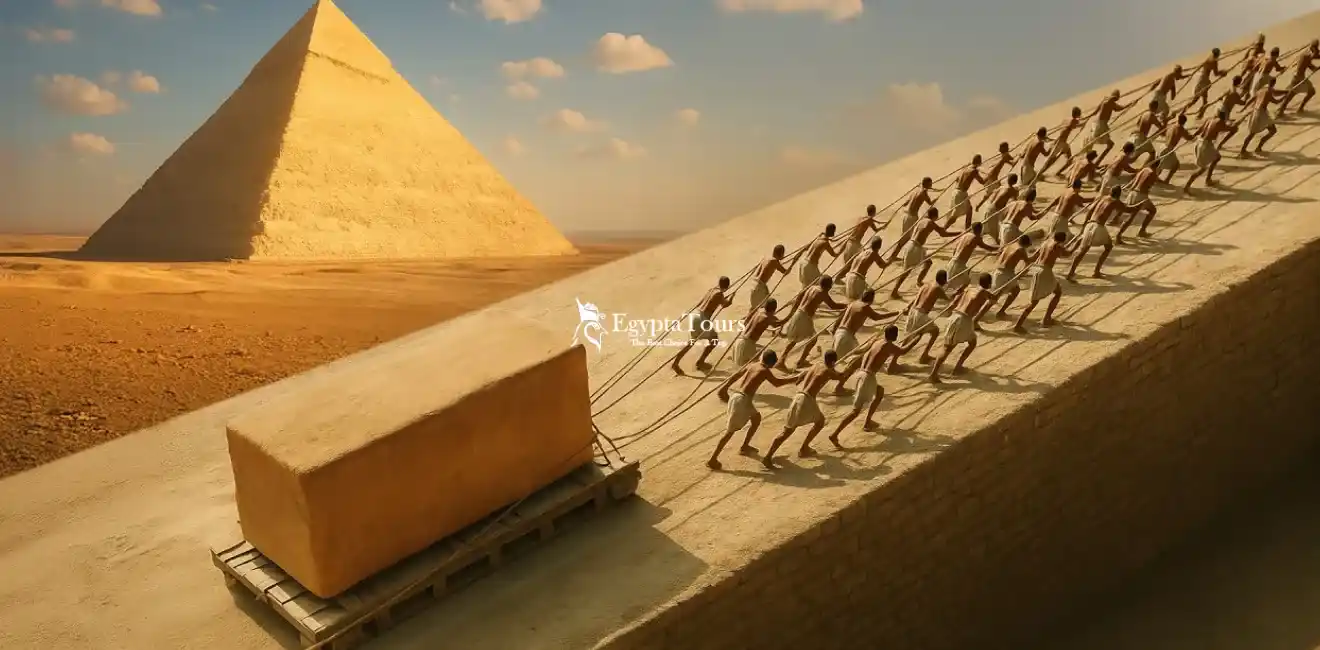
The -Construction -Of- The -Pyramids
Building the Great Pyramid was a massive undertaking that took roughly twenty years. Work on the lower passages alone required ten years of dedicated labor.
Workers quarried most of the stone locally, but they transported smooth casing stones from Tura. For the inner burial chamber, they brought heavy granite all the way from Aswan by floating it down the Nile River.
To cut these massive stones, ancient engineers used a clever technique. They placed wooden wedges into carved grooves and soaked them with water. As the wood expanded, it split the rock perfectly. Workers then polished the blocks using hard stones like diorite.
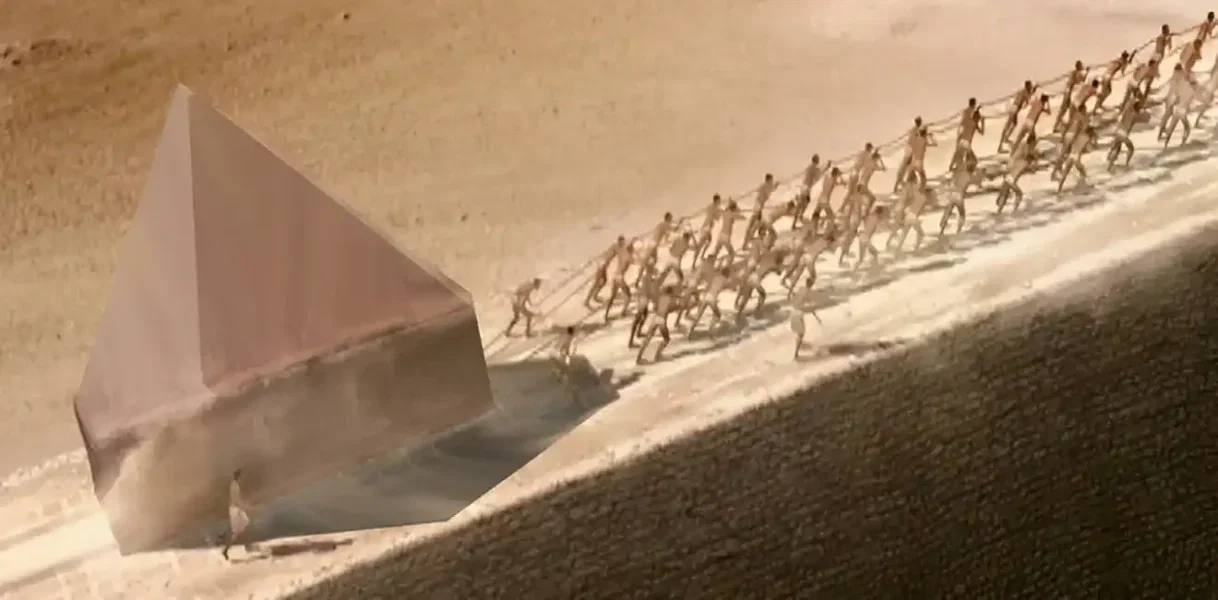
Ancient Egyptians used wooden sleds and logs to transport the heavy stones. They poured water on the sand in front of the sleds to reduce friction. Sand ramps were gradually added as the construction rose. Finally, workers covered the entire pyramid with a smooth limestone casing from top to bottom.
Ready to Step Back in Time?
Now that you know the fascinating history behind when the pyramids were built, there is no better way to truly understand their massive scale and architectural brilliance than by seeing them with your own eyes. Whether you want to marvel at the Great Sphinx, trace the evolution of ancient engineering at Saqqara, or venture deep into a royal burial chamber, experiencing the Giza Plateau in person is an unforgettable adventure.
Let us help you turn your historical curiosity into the trip of a lifetime. Explore our most popular guided experiences below and start planning your Egyptian journey today or Choose one of These Tours!
-
Half-Day Giza Pyramids and Sphinx Tour: Perfect for those short on time who want to hit the iconic highlights of the Giza Plateau with an expert guide.
-
Full-Day Saqqara, Dahshur, and Giza Tour: Trace the complete evolution of pyramid building, from Djoser’s Step Pyramid to Khufu’s ultimate masterpiece.
-
Inside the Great Pyramid Exclusive Access Tour: Descend into the ancient, narrow passages and experience the sheer scale of the main burial chamber up close.
-
Camel Ride and Giza Plateau Sunset Tour: Experience the magic of these ancient wonders against the breathtaking backdrop of a vibrant desert sunset.
-
VIP Egyptologist Historical Tour: Dive deep into the architectural secrets, radiocarbon dating mysteries, and royal history with a specialized academic guide.
FAQs About When Were The Pyramids Built?
When Were the Egyptian Pyramids Built?
Egypt’s large pyramids were achievements of the Old Kingdom. The Giza Pyramids were constructed over approximately 85 years, between 2589 and 2504 BCE.
How Were the Pyramids Constructed?
The Great Pyramid took about twenty years to complete. Workers quarried stones locally, but transported casing stones from Tura and granite for the inner burial chamber from Aswan. They cut stones using water-soaked wooden wedges and moved them on wooden sleds. Water was poured on the sand to reduce friction as they pulled the sleds.
Why Did the Ancient Egyptians Choose the Pyramid Shape?
The pyramid shape was associated with cosmic creation. Egyptians believed the shape helped the deceased’s soul ascend to the sky to join the sun god Ra.
Which Pyramids Are Found at the Giza Complex and When Were They Built?
-
The Great Pyramid (Khufu): Built around 2580–2560 BCE. It is the largest pyramid.
-
Pyramid of Khafre: Slightly smaller than Khufu’s, it includes the Valley Temple and the Sphinx Temple.
-
Pyramid of Menkaure: Completed around 2510 BCE, featuring three smaller queens’ pyramids.
Who Were the Architects and Pharaohs Behind Pyramid Development?
-
Imhotep: The architect of Djoser’s Step Pyramid at Saqqara.
-
Sneferu: The pharaoh who attempted to perfect the pyramid shape in Dahshur.
-
Khufu: The pharaoh who, under architect Hemiunu, achieved the ideal pyramid at Giza.
How Does Radiocarbon Dating Help Determine Pyramid Ages?
Scientists use the radioactive carbon isotope C14 to date organic materials (like wood and ash) found inside the pyramids. While results have shown some variations—often skewing 100 to 300 years older than historical estimates—they have successfully confirmed that the pyramids were built during the Old Kingdom era.
Similar Posts

About EgyptaTours

EgyptaTours is a name synonymous with trust, excellence, and unforgettable travel experiences, proudly standing as one of the leading travel agencies in Egypt. Renowned for its deep expertise, personalized service, and carefully crafted itineraries, EgyptaTours serves as the ultimate gateway to discovering Egypt in its most authentic and inspiring form.