Akhenaten and the Hymn to The Aten
Deep in ancient Egyptian history a pharaoh excelled in making a significant...



Horus wasn’t just another deity in the ancient Egyptian pantheon; he was the ultimate symbol of royal power, cosmic order, and divine protection. As the god of the sky and kingship, his legendary story is defined by his epic, generation-spanning war against his chaotic uncle Seth to avenge his father, Osiris.
Through his triumph, Horus restored balance to the world. Today, his legacy remains deeply woven into history, from the famous protective symbol of the Wedjat (Eye of Horus) to modern pop culture, and most importantly, across the towering, perfectly preserved walls of the Temple of Edfu that still captivate travelers from around the globe.
Key Takeaways
God of the Sky and Kingship: Horus was the celestial guardian. Ancient Egyptians believed the sun and moon were his eyes, and that every living pharaoh was his direct earthly embodiment.
The Ultimate Protector: During his battles with Seth, Horus lost his left eye, which was magically restored by Thoth. This created the Eye of Horus (Wedjat)—ancient Egypt’s most powerful amulet for healing, wholeness, and warding off evil.
The Champion of Order (Ma’at): The mythological war between Horus and Seth was more than a family feud; it represented the eternal struggle between civilization and chaos, with Horus ultimately restoring justice to Egypt.
The Falcon Deity: Easily recognized in art and statues as a man with a falcon’s head or as a full falcon wearing the double crown of a united Egypt, he was one of the most visually striking and widely worshipped gods.
Experience the Myth in Person: The worship of Horus wasn’t just a myth—it was an empire-wide practice. His stories and statues can still be experienced firsthand today at massive, remarkably preserved sites like the Temple of Edfu and Kom Ombo.
Horus was one of the most important gods in ancient Egyptian religion. Known as the god of kingship, the sky, and protection, he was usually shown as a falcon or as a man with the head of a falcon. His most famous story tells how he fought Seth to avenge the death of his father, Osiris, and restore peace and order to Egypt.
Because of this powerful role, every pharaoh was believed to be the living form of Horus during his reign. This close connection made Horus a central figure in both the religious beliefs and the royal traditions of ancient Egypt.
In ancient Egyptian belief, Horus was closely connected to the sky. People believed that the sun was his right eye and the moon was his left eye and that both moved across the heavens as Horus flew through the sky in the form of a falcon. A popular myth explained why the moon is less bright than the sun by telling how Horus lost his left eye during his long battle with Seth for control of Egypt. Although Horus eventually won, his injured eye became one of the most important symbols in Egyptian religion.
After the battle, the god Thoth restored Horus’s damaged eye, creating what became known as the Eye of Horus or the Wedjat. This symbol came to represent healing, protection, strength and the return of order after chaos. It was widely used on jewelry, amulets, temple carvings and royal objects because people believed it could protect them from harm.
Horus was also shown in different forms throughout Egyptian art. Sometimes he appeared as a falcon, while in other images he was portrayed as a young child sitting on a lotus flower with his mother, Isis. In this form, he symbolized youth, renewal and divine protection.
The Eye of Horus remained one of the most powerful symbols in ancient Egypt for centuries. It was often placed in tombs to guard the dead in the afterlife, worn as a protective charm by the living and even painted on the front of ships to ensure safe journeys across the water.
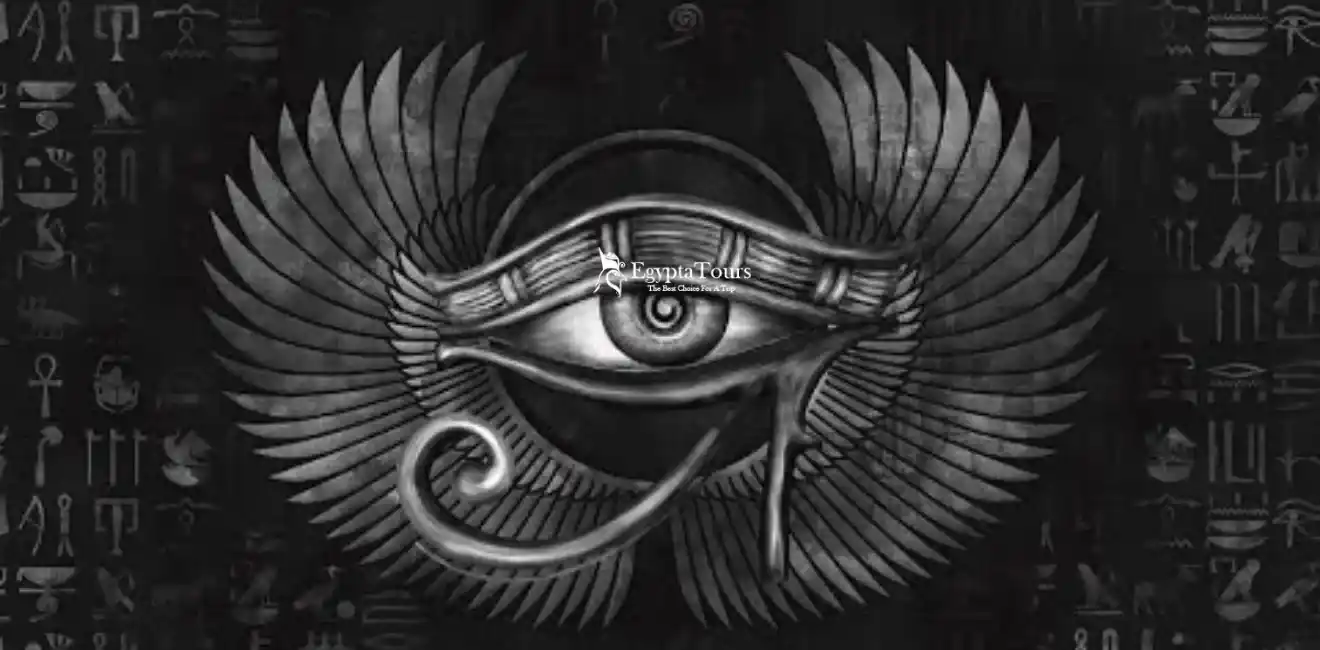
Restoration-Of-The-Eye-Of-Horus-By-Thoth-EgyptaTours
During his battle with Seth, Horus suffered one of his greatest injuries when he lost his left eye. According to the myth, Seth tore out the eye and either buried it or swallowed it. Later, the god Thoth who was known for his wisdom and magical powers, restored the damaged eye through his healing abilities.
The restored eye became known as the Wadjet or the Eye of Horus, one of the most famous symbols in ancient Egypt. It came to represent healing, protection, wholeness and the return of order after chaos. Because of this powerful meaning, the Eye of Horus remained an important symbol in Egyptian culture for many centuries.
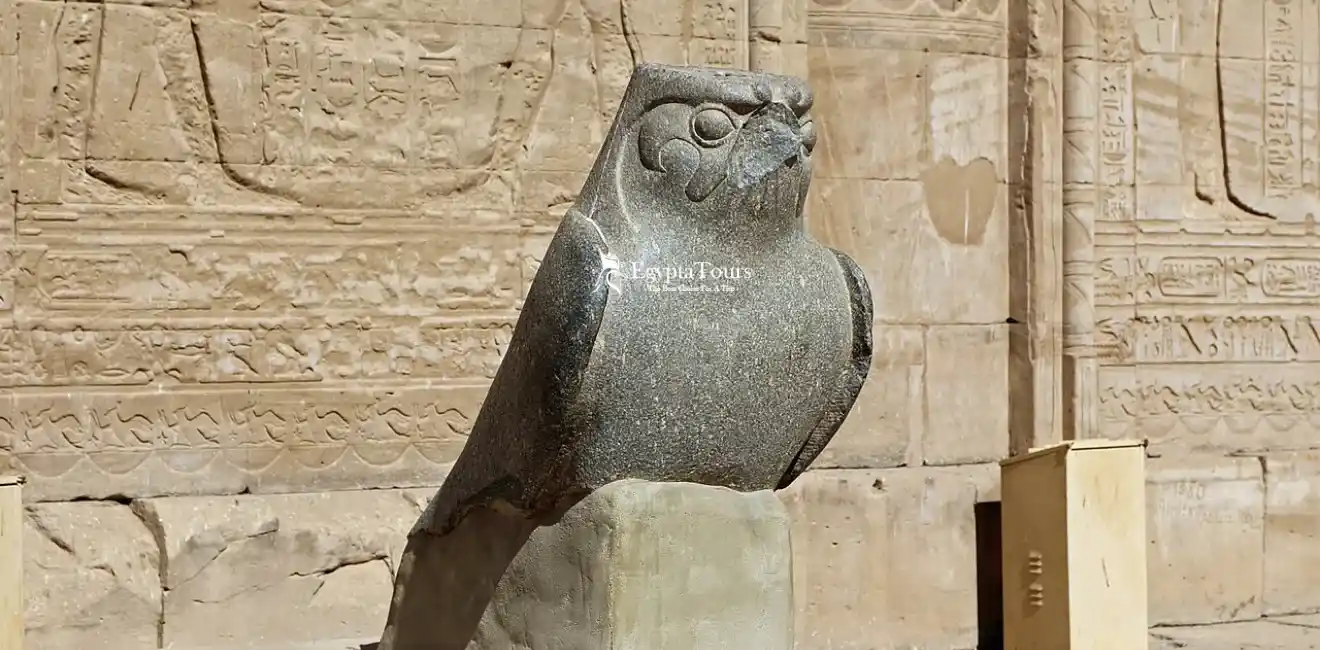
Falcon-Statues-Of-Horus-In-Ancient-Egypt-EgyptaTours
Horus is one of the most famous gods in ancient Egyptian mythology and is easily recognized by his unique appearance. He is usually shown as a man with the head of a falcon, symbolizing strength, sharp vision and his role as the god of the sky. In some artworks, Horus appears as a full falcon flying across the heavens. Ancient Egyptians believed that his right eye represented the sun and his left eye represented the moon, showing that he watched over the land both day and night.
Many images of Horus highlight his powerful eyes which became symbols of protection and healing. He is often shown standing in a calm and confident pose, reflecting his role as a guardian and ruler. Artists also frequently portrayed him wearing the Pschent, the double crown that combined the white crown of Upper Egypt and the red crown of Lower Egypt. This special crown represented his authority over a united Egypt and emphasized his connection to kingship and divine power.
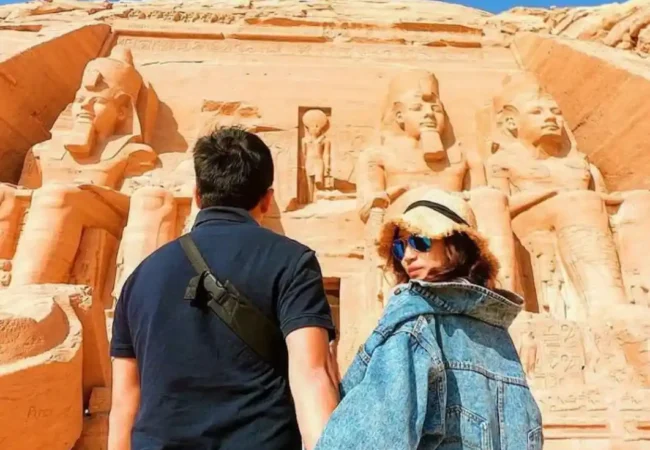
Horus was worshipped in many parts of ancient Egypt and artists represented him in different ways depending on the location and local traditions. At Abu Simbel, during the reign of Ramesses II, Horus was often shown as a falcon, a symbol closely linked to the sky and the sun. Similar falcon images can also be found at Edfu, where a grand temple dedicated to Horus was built during the Ptolemaic period.
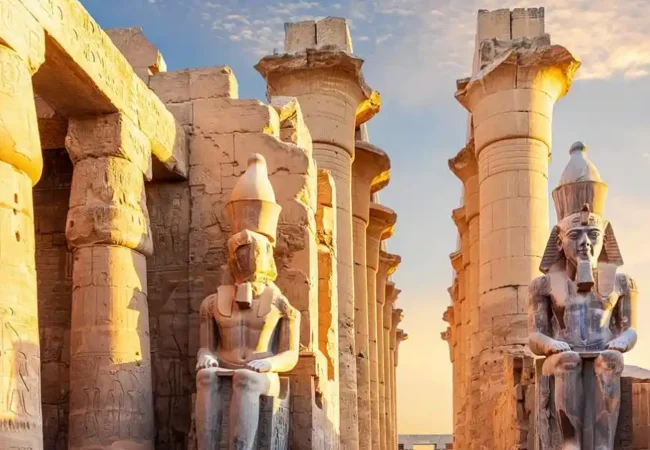
Small black granite statues of Horus in the form of a falcon have been discovered across Egypt, showing how widely he was honored. In places like Luxor, however, he was commonly portrayed as a man with the head of a hawk, combining human and divine features in a single image.
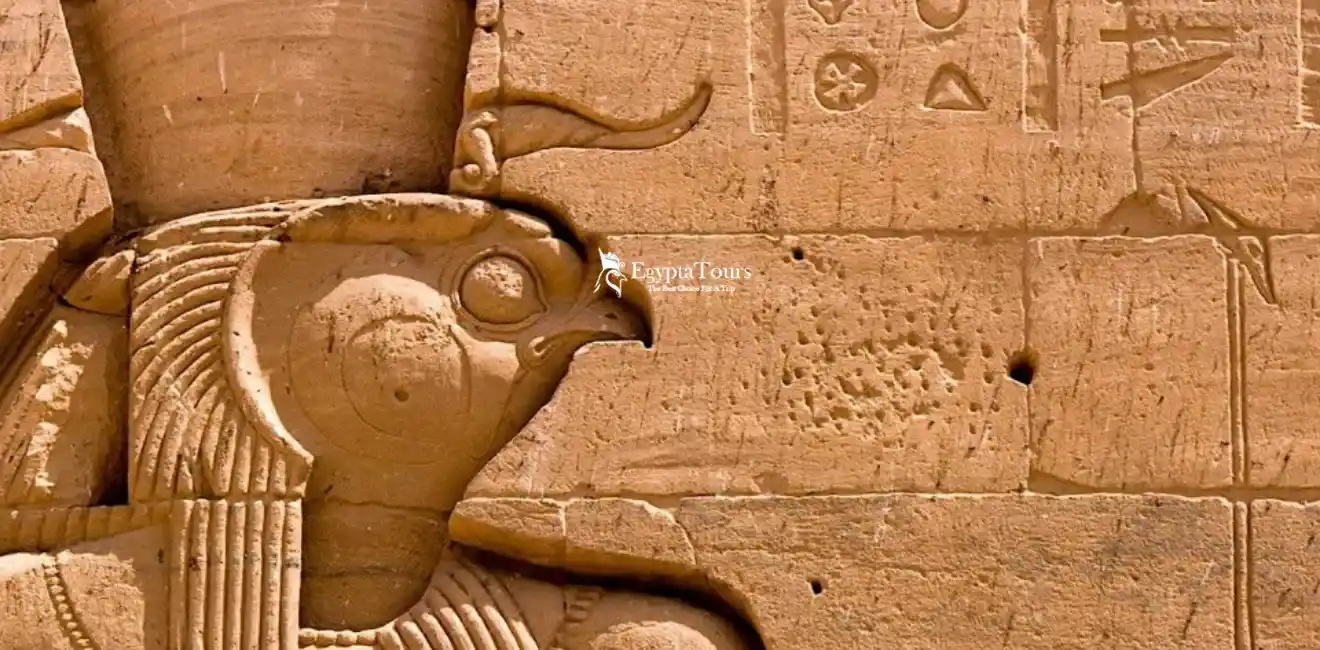
Horus-Legacy-In-Contemporary-Culture-EgyptaTours
Horus continues to appear in modern movies, television shows, books, comics and video games, showing that his story remains popular today. In the Marvel series Moon Knight (2022), Horus is portrayed by actor Declan Hannigan. He also appears in Night at the Museum: Battle of the Smithsonian, where warriors connected to Horus are summoned from the underworld.
In gaming, Horus is a playable character in Smite, where he is known as The Rightful Heir. He also appears in Total War: Pharaoh, where players can seek his blessing to strengthen their armies. Fans of fantasy literature may recognize Horus from The Kane Chronicles by Rick Riordan, where his spirit guides the main character, Carter Kane.
Horus has also been featured in the fantasy film Gods of Egypt, played by Nikolaj Coster-Waldau and in the French graphic novel La Foire aux immortels by Enki Bilal. These modern adaptations introduce the ancient Egyptian god to new audiences while drawing inspiration from his legendary role in mythology.
The Festival of Victory was an important annual celebration in ancient Egypt that honored the god Horus. It took place at the Temple of Horus in Edfu during the second month of the Season of Emergence which was the sixth month of the ancient Egyptian calendar.
A key part of the festival was a sacred performance that retold Horus’s victory over his rival, Seth. In the ceremony, the Egyptian king symbolically took the role of Horus, while Seth was represented by a hippopotamus. The king would strike the animal with a harpoon, showing Horus’s triumph over chaos and reinforcing the pharaoh’s right to rule. In many years, however, priests likely performed the ceremony on the king’s behalf and a model of a hippopotamus may have been used instead of a real one.
Some later Roman and Christian writers also mentioned another festival dedicated to Horus that was celebrated during the winter solstice. However, no surviving ancient Egyptian records confirm that such a festival was officially observed so its existence remains uncertain.
Here are the absolute best places to connect with the legacy of Horus during your journey:
The Temple of Edfu: If you only visit one site dedicated to the sky god, make it this one. Located on the west bank of the Nile, Edfu is arguably the most complete and best-preserved temple in all of Egypt. As you walk toward the massive entrance pylons, you are immediately greeted by towering black granite statues of Horus in his falcon form. The walls inside literally act as a stone history book, covered in intricate reliefs that narrate his legendary triumph over Seth.
The Temple of Kom Ombo: Sitting right on the bend of the river further south, this is a highly unusual, perfectly symmetrical dual temple. The northern half is dedicated to Horus the Elder (Haroeris), while the southern half honors the crocodile god Sobek. It is a fantastic place to get up close to detailed carvings of the Wedjat (Eye of Horus) and see depictions of ancient medical instruments etched right into the stone.
The Museums in Cairo: Long before you head south to the grand temples, the Egyptian Museum in Cairo—and the galleries of the Grand Egyptian Museum, are treasure troves of Horus iconography. You can spend hours looking at intricate faience amulets, golden royal jewelry, and beautiful statues depicting Horus as a child being nursed by Isis.
Most travelers experience the magnificent temples of Edfu and Kom Ombo while sailing down the river between Luxor and Aswan. Whether you are putting together a sweeping 15-day luxury family vacation that takes you from the museums of Cairo all the way to the coast, or you are planning a classic Nile River journey, adding these monuments to your itinerary brings the ancient myths completely to life.
Horus was the ancient Egyptian god of the sky, kingship, protection, and divine authority. He was also considered a guardian of Egypt and a symbol of order over chaos.
Horus was important because he represented royal power and protection. Ancient Egyptians believed that every pharaoh was the living embodiment of Horus during his reign.
Horus and Seth were rivals. Horus fought Seth to avenge the death of his father Osiris and to reclaim the throne of Egypt.
The Eye of Horus, also known as the Wadjet, is a powerful symbol representing protection, healing, health, and restoration. It became one of the most famous symbols in ancient Egypt.
Horus was worshipped throughout Egypt, especially at Temple of Edfu, one of the best-preserved temples dedicated to him.
Common symbols of Horus include the falcon, the Eye of Horus, the sun disk, and the double crown of Upper and Lower Egypt.



Explore our top-rated Egypt travel packages and embark on an unforgettable journey. From the Pyramids of Cairo to the magical temples of Luxor, Aswan, and Abu Simbel, discover expertly curated tours designed for your perfect Egyptian adventure