Egyptian Goddess Nekhbet
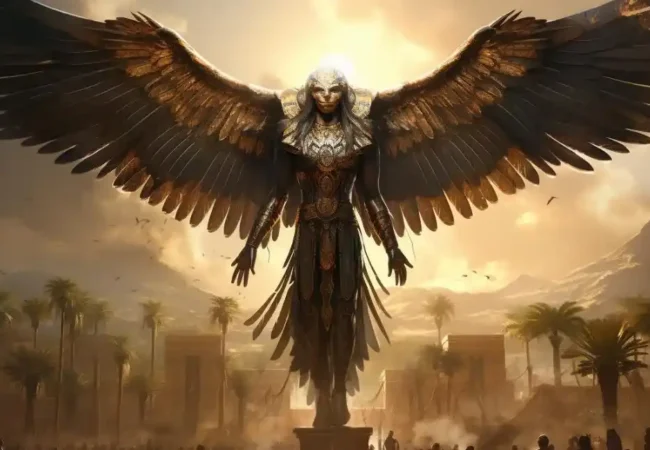
Egyptian Goddess Nekhbet was considered one of the most important, famous and...



Ancient Egyptian mythology is full of powerful deities, but few are as central as Ra, the God of the Sun. What is Ra the God of and how did the ancient Egyptians worship him? Ra was not only the Sun god who brought light, warmth, and life to the world but he was also regarded as a creator god, responsible for the origin of the universe and all living beings.
In Egyptian religion, Ra played a crucial role in maintaining ma’at, the cosmic order and was closely linked with pharaohs who were often seen as earthly representatives of his divine authority.
Ra, the God of the Sun, also called Re, was one of the most important Egyptian gods, primarily associated with the noon-day Sun. By the Fifth Dynasty (25th–24th centuries BC), he ruled over the sky, Earth, and underworld and was believed to be the first pharaoh of Egypt.
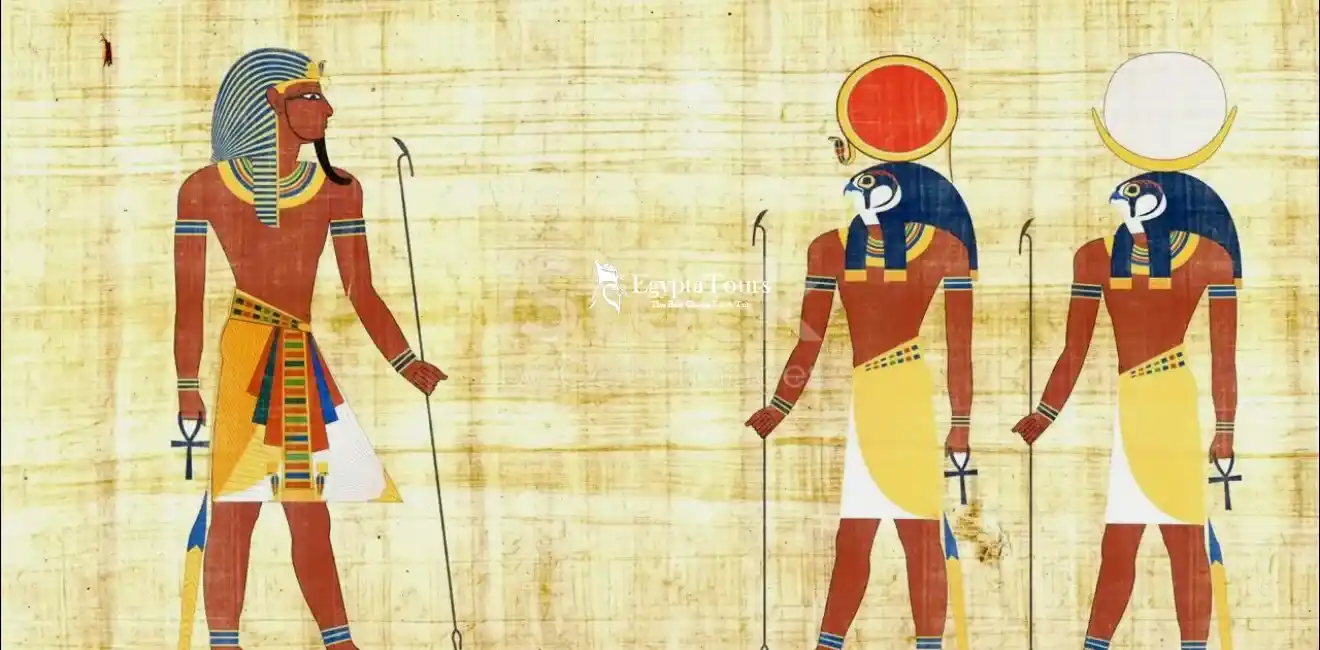
He was often depicted as a falcon and shared traits with the sky-god Horus, sometimes merged as Ra-Horakhty (“Ra, who is Horus of the Two Horizons”). During the New Kingdom, Ra was combined with Amun to form Amun-Ra, a solar creator god. The Mnevis bull, a sacred bull representing Ra, was worshipped in Heliopolis.
Ra was also considered the creator of all life. In some myths, humans were said to have been formed from his tears and sweat. In the Celestial Cow myth, Ra sent the goddess Sekhmet to punish humanity for plotting against him.
What -is -ra- the -god -of
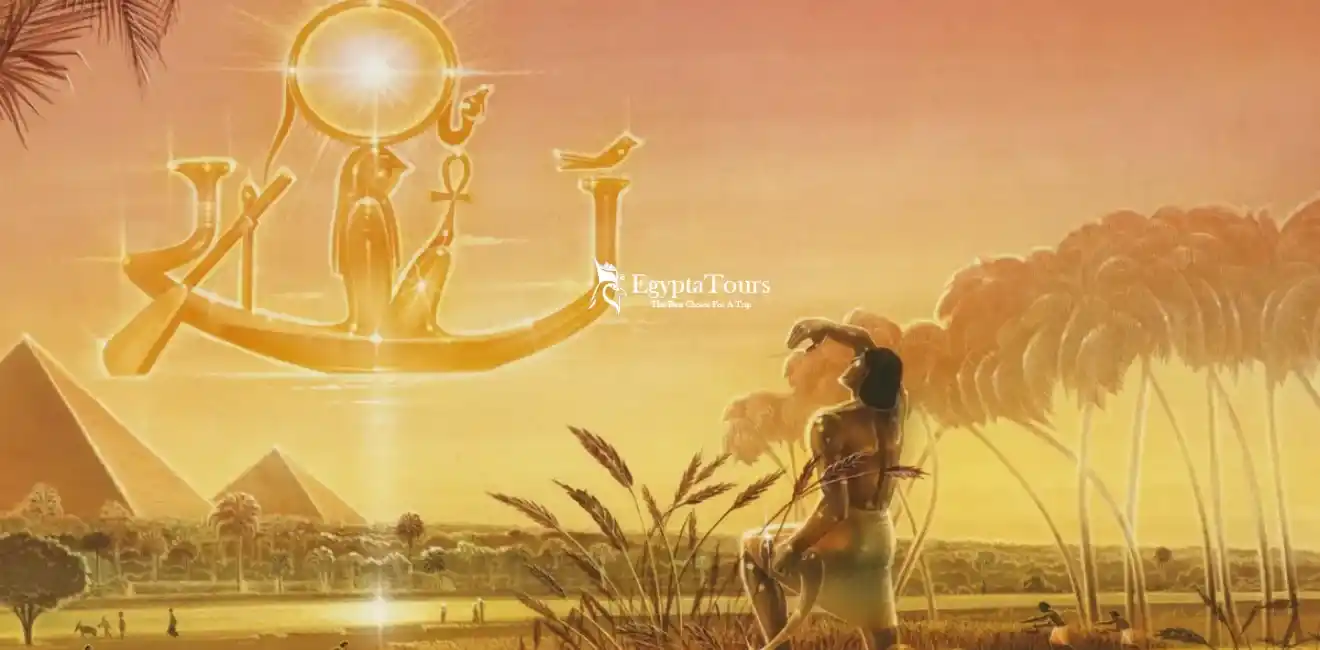
Ra, the God of the Sun, was responsible for carrying the sun across the sky every day. This journey brought light, warmth, and life to the world. The ancient Egyptians believed that the energy of the Sun god controlled the growth of crops, which made Ra essential for their daily survival. As the giver of life, Ra was worshipped for his ability to sustain all living beings and he was one of the most important Egyptian gods in Ancient Egyptian religion.
Ra, the God of Creation, was not only the Sun god but also a powerful creator deity. At the beginning of time, the universe was a chaotic, watery mass called Nun. From this chaos, Ra emerged and created the first beings, including Shu, the God of Air and Tefnut, the goddess of moisture. Some myths suggest that humans were created from Ra’s tears or sweat. By giving life to the universe, Ra became one of the most revered deities in Ancient Egyptian mythology and was considered the ultimate source of life and power among the Egyptian gods.
Every night, Ra traveled through the Duat, the Egyptian underworld, on his solar barque, called the Mesektet. During this journey, he took the form of a ram-headed god and faced dangers such as Apophis, the serpent of chaos, who tried to stop the sun-boat. Ra’s nightly journey represented the eternal cycle of death, rebirth and renewal, as the Sun god set and rose again every day. His journey highlighted his role as a creator god and protector deity in Ancient Egyptian religion.
Ra, the God of the Sun, was often accompanied by other Egyptian gods who helped him on his journey. Sia represented perception, Hu represented command and Heka symbolized magical power. Members of Ennead such as Set and Mehen, also assisted him in defeating the monsters of the underworld. Ra appeared in multiple forms, including Atum, Horus and Khepri, which highlighted his diverse roles and powers among the gods of Ancient Egypt.
Worship -of- Ra
The main center for the worship of Ra, the God of the Sun, was Iunu, which means “the Place of Pillars.” Later, during the Ptolemaic Kingdom, it became known as Heliopolis or “Sun City” and today it is located in the suburbs of Cairo. Ra was closely identified with the local sun god Atum.
When referred to as Atum or Atum-Ra, he was considered the first being and the creator of the Ennead, also called “The Nine,” which included Shu, Tefnut, Geb, Nut, Osiris, Set, Isis and Nephthys.
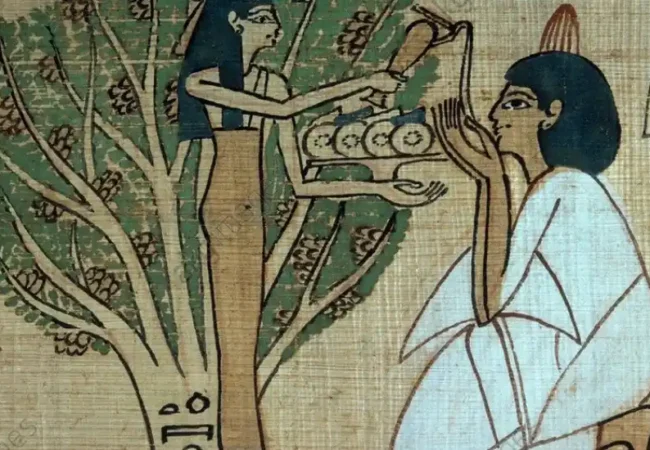
A painted wood panel shows a woman raising her arms toward a man with a falcon’s head and a solar disk crown, with chains of flower-like shapes coming from the disk toward the woman’s face. This represents a woman worshipping Ra-Horakhty, who blesses her with rays of light.
The local cult of Ra began to grow around the Second Dynasty, establishing him as a prominent sun deity. By the Fourth Dynasty, pharaohs were seen as manifestations of Ra on Earth and they were called the “Sons of Ra.” Ra was considered the first king of Egypt and pharaohs were thought to be his descendants and successors. Worship of Ra increased significantly during the Fifth Dynasty, when he became a state deity. Pharaohs built pyramids,
obelisks and sun temples aligned with the sun in his honor. The rulers of this dynasty claimed to be sons of Ra himself and the wife of the high priest of Heliopolis played an important religious role. These pharaohs spent large amounts of Egypt’s wealth on sun temples. At this time, the first Pyramid Texts began to appear, giving Ra more importance in the pharaoh’s journey through the Duat, the Egyptian underworld.
Ra’s -Relationship- with -Other -Gods
Ra’s identity, like many of the most widely worshipped Egyptian deities, was often combined with other gods, creating connections between different deities.
Amun was part of the Ogdoad, representing creation energies together with Amaunet, an early patron of Thebes. He was believed to create through his breath, which linked him more to the wind than to the sun. As the cults of Amun and Ra grew stronger in Upper and Lower Egypt, they were combined into Amun-Ra, a solar creator god. It is not entirely clear when this combination first occurred but Amun-Ra is mentioned in pyramid texts as early as the Fifth Dynasty.
Many scholars believe that Theban rulers during the New Kingdom promoted Amun-Ra as a new state-deity to unite followers of Amun with the older cult of Ra around the 18th Dynasty. Worshippers gave Amun-Ra the title “King of the Gods” and artistic depictions show him as a red-eyed man with a lion’s head surrounded by a solar disk.
Another combined form was Atum-Ra, also called Ra-Atum. Although Atum and Ra were originally separate gods, Ra shared more similarities with Atum than with Amun. Atum was strongly connected with the Sun and was also a creator god of the Ennead. Both Ra and Atum were seen as fathers of the gods and of the pharaohs and both were widely worshipped. In older myths, Atum created Tefnut and Shu and he was born from the chaotic waters of Nun.
In later Egyptian mythology, Ra-Horakhty was more of a title or manifestation than a separate deity. Its meaning is “Ra, who is Horus of the Horizons.” This linked Horakhty, the sunrise-oriented aspect of Horus, to Ra.
Some scholars suggest that Ra-Horakhty simply represents the sun’s journey from horizon to horizon while others see it as a symbol of hope and rebirth.
Ra-Horakhty is proclaimed king of the gods in the tomb of Horemheb and Pharaoh Thutmose III dedicated the pillars of Heliopolis to him. He also appears often in the Book of the Dead of the Third Intermediate Period, seated on his throne in texts like those of Nedjmet, Padikhons, Nestanebetisheru, Djedkhonsiusankh, Tameniu and in the Amduat Papyrus for Nesitaset.
Khepri, the scarab beetle, represented the morning sun, rolling it across the sky. Similarly, the ram-headed god Khnum was associated with the evening sun. It was common for different deities, or different aspects of Ra, to govern various times of the day. With Khepri and Khnum representing sunrise and sunset, Ra often symbolized midday when the sun reached its highest point. At times, other forms of Horus were used instead of Ra for different times of day.
Montu was an ancient god, originally a manifestation of the scorching effect of Ra, the sun and often appeared under the name Montu-Ra. Montu-Ra and Atum-Ra may have represented the kingships of Upper and Lower Egypt, respectively. Montu had several consorts including Raet-Tawy, a female aspect of Ra. In Egyptian art, Montu is often shown with a solar disk on his head, reflecting his connection with Ra.
Raet or Raet-Tawy, was a female aspect of Ra. She was not considered very important independently but in some myths, she was seen as either Ra’s wife or daughter and in some stories as Montu’s wife.
Ra is primarily known as the god of the Sun in Ancient Egyptian mythology. He was believed to bring light, warmth and life to the world and was one of the most important deities in Egyptian religion.
Ra was more than just a sun god. He was also regarded as a creator god, responsible for the origin of the universe and all living beings. In Egyptian belief, he played a major role in maintaining ma’at, the cosmic order.
The main place of worship for Ra was Iunu, later known as Heliopolis (“Sun City”), which is located in the suburbs of modern-day Cairo. There, Ra was identified with the local deity Atum, forming the composite god Atum-Ra.
By the Fifth Dynasty, pharaohs were often described as “Sons of Ra” and were believed to be his manifestations on Earth. This connection strengthened the pharaoh’s divine authority.
Ra-Horakhty means “Ra, who is Horus of the Horizons.” It’s a form that links Ra with the sky god Horus, representing the sun’s journey from horizon to horizon and symbolizing hope and rebirth.
Ra’s identity was merged with several gods over time:
Yes. Khepri (a scarab beetle) represented the morning sun, Ra himself symbolized midday and Khnum (ram-headed) was linked to the evening sun.


Confidently choose your perfect Egyptian adventure from our selection of trusted, expert-curated tours.



Unlock the true wonders of Egypt with confidence. We combine expert local knowledge, seamless logistics, and round-the-clock support to deliver flawless, responsible, and unforgettable travel experiences.