





King Thutmose III: The Greatest Military Pharaoh of Ancient Egypt
King Thutmose III is considered one of the most prominent rulers of Egypt.
He was the sixth pharaoh of the 18th dynasty, the greatest ruler of Egypt and one of the most powerful emperors in history.
He founded a modern Egyptian empire at that time, and that empire remained until about 1070 BC until the reign of Ramses XI.
King Thutmose III is called the Father of Empires, and he is also called the first emperor in history, as he is considered one of the outstanding geniuses in the history of the military throughout the ages.
His military plans are studied in many military colleges and institutes all over the world, and he was the first to divide the army into a core and two wings.
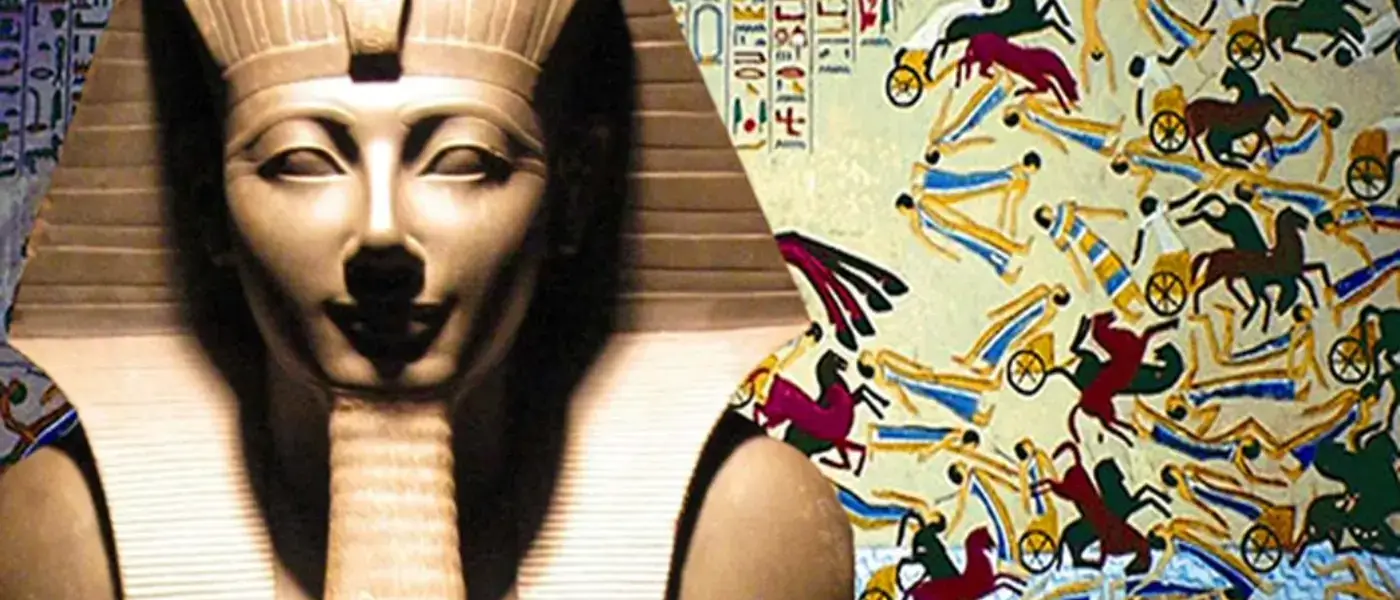
King-Thutmose-III
From Khoubr Ra, Thutmose III (sometimes called Thutmose the Great, 1425 BC) is the sixth pharaoh of the Eighteenth Dynasty.
Thutmose III ruled Egypt for approximately 54 years, and his reign is usually dated from April 28, 1479 BC.
To March 11, 1425 BC, from his second year until his death at the age of fifty-six; However, during the first 22 years of his reign, his stepmother and his aunt, Hatshepsut, shared the throne with him, and she held the title of pharaoh.
While he appears first on surviving monuments, the usual royal names and insignia are assigned to both and neither is given any clear seniority over the other.
Thutmose was the commander of Hatshepsut’s armies during the last two years of his reign, and appointed his son and successor, Amenhotep II, as his co-throne.
The pharaoh became the sole ruler of the kingdom after the death of Thutmose II and Hatshepsut, establishing the largest empire Egypt had ever seen.
At least 17 campaigns were launched and territories were conquered from Syria to Upper Nubia.
Upon the death of King Thutmose III, he was buried in the Valley of the Kings, as was the case with the rest of the kings of this period in Egypt.
He is viewed, along with Ramesses II the Great, as one of the most powerful and famous rulers of ancient Egypt in the New Kingdom period of ancient Egypt, itself considered the pinnacle of Egyptian power.
Thutmose III was the son of Thutmose II from his second wife, East, and his father’s royal wife was Queen Hatshepsut.
Her daughter was Neferure, a half-sister of Thutmose.
When Thutmose II died, Thutmose was too young to assume power.
Therefore, Queen Hatshepsut became regent, quickly shared her rule, and shortly after declared herself pharaoh while not denying ownership to Thutmose III.
Thutmose had limited authority over the empire while Hatshepsut exercised the official title of monarchy. Her rule was very prosperous and marked by great developments.
When Thutmose reached a suitable age and showed the ability to rule, she appointed him to command her armies. h
Cultural and Artistic Achievements
Patron of the Arts
During the rule of Thutmose III, Egyptian art and culture developed in many ways, such as:
- A new way of using paint was invented, which made artwork brighter and more detailed
- Sculpture became more realistic, with human figures looking more natural
- Glass-making improved, and beautifully decorated cups and containers were made
The Botanical Garden
Thutmose III created one of the first botanical gardens in the world at Karnak. It showed plants and animals from the lands he had conquered.
This garden was used for many purposes: To study new plants and animals from other countries, show rare and unusual species as a sign of Egypt’s strength and provide plants for religious ceremonies and medicine
The plants and animals were carved in very clear detail on the walls. This has helped modern researchers learn a lot about the variety of plants and animals in the ancient Near East.
Literary and Religious Texts
During the reign of Thutmose III, several important texts were written:
- The Amduat: A religious text about the sun god’s journey during the night
- Military Annals: Records that describe Thutmose III’s battles and wars at Karnak
- Hymns and religious writings: Texts that praise the gods and the pharaoh’s successes
These texts show religious beliefs and royal pride and they help us better understand ancient Egyptian history and culture.
Personal Life
The personal life of Thutmose III had many changes:
- He married several wives, most of them were foreign princesses
- He had many children, but the most well-known was Amenhotep II, who became the next king
- He may have married his half-sister, Neferure but historians are not completely sure
These marriages helped strengthen political relationships and made sure the royal family line continued.
Besides being a strong soldier and a good ruler, Thutmose III had many interests:
-Sports: He enjoyed hunting and using the bow and arrow
-Education: He supported learning and encouraged education in many areas
-Botany: He was interested in plants and took care of foreign plants himself
These different interests made him a great leader and helped make his reign long lasting and memorable.
Thutmose III was famous for leading his army himself and fighting at the front of the battles.
This close and practical leadership made his soldiers respect and admire him and it helped explain why he was so successful as a military leader. At the same time, he was an educated man who loved plants and supported art and science.
Legacy and Historical Significance
The reign of Thutmose III is often seen as a golden period in Egyptian history:
-The growth of the empire brought money and resources to Egypt
-Art and culture reached their best level
-Technology and building methods improved
This time of wealth and new ideas helped Egypt stay strong and powerful in the region.
Many later pharaohs tried to copy Thutmose III: They used the same military plans, continued his building projects and showed themselves as strong warrior kings like him
This lasting influence shows how greatly Thutmose III shaped Egyptian history and culture.
The legacy of Thutmose III still interests historians and people today:
- His mummy was found at Deir el-Bahri in 1881
- Many objects from his reign are shown in museums around the world
- His military campaigns are studied by historians and military experts
Ongoing studies of Thutmose III’s life and rule continue to give us new information about ancient Egyptian civilization.
His Early Life With Hatshepsut
Before Thutmose III became a great warrior king, he spent more than 20 years in the shadow of his stepmother, Hatshepsut. During this time, he worked as a priest and learned military skills that would later help him as pharaoh.
While Hatshepsut ruled Egypt wisely and strongly, Thutmose III quietly prepared for his future. When Hatshepsut died, he became pharaoh with confidence and careful planning.
Even though he was kept in the background for many years, Thutmose III first respected Hatshepsut’s memory. Later in his reign, he had her name and images removed from monuments, probably to strengthen his own legacy.
King Thutmose’s III military campaigns
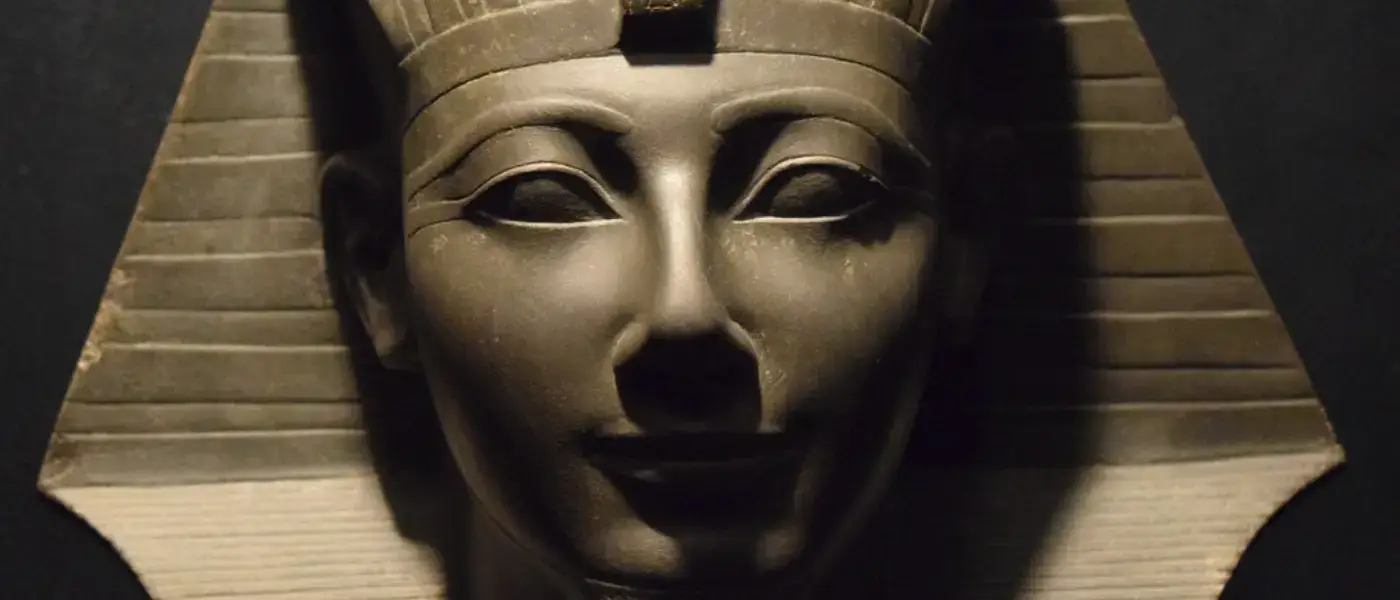
King-Thutmose-III-is-called-the-Father-of Empires-EgyptaTours
Once Thutmose III ascended the throne, he was forced to confront the revolution that swept the allied Asian emirates, following the death of Hatshepsut.
This alliance, led by the Emir of Kadesh, was instigated by the Mitanni.
Thutmose was forced to carry out no less than seventeen military campaigns before he succeeded in controlling the tense situation.
Mitanni is the political name by which the Hurrian civilization, contemporary with the Kassites in Babylon, was known.
Their empire was established on the ruins of the Hammurabi Empire, and it reached the height of its prosperity in the fifteenth century BC.
The heart of the empire is located in the area between the Tigris and Euphrates, south of Mount Taurus, and extends to include Syria and Kurdistan in the north, then reaches the land of Palestine, which is the region that witnessed the confrontation between the Mitanni and the Egyptians since the era of Ahmose.
When Hatshepsut died on the tenth day of the sixth month in the 21st year of the reign of Tuthmosis III, according to information from one witness in Armant, the King of Kadesh was advancing with his army to Megiddo.
Thutmose III rallied his army and left Egypt, passing through the border fortress of Tjaru (Silla), on the twenty-fifth day of the eighth month.
Thutmose marched his forces across the coastal plain to Jamnia, then across the interior to Yahm, a small city near Megiddo, which he reached in the middle of the ninth month of the same year.
The Battle of Megiddo was perhaps the largest battle of the 17 campaigns fought by Thutmose. A ridge protruding from Mount Carmel stood between Thutmose and Megiddo and he had three possible routes to capture it.
Military life of King Thutmose III
All-you-want-to-know-about-King-Thutmose-III-EgyptaTours
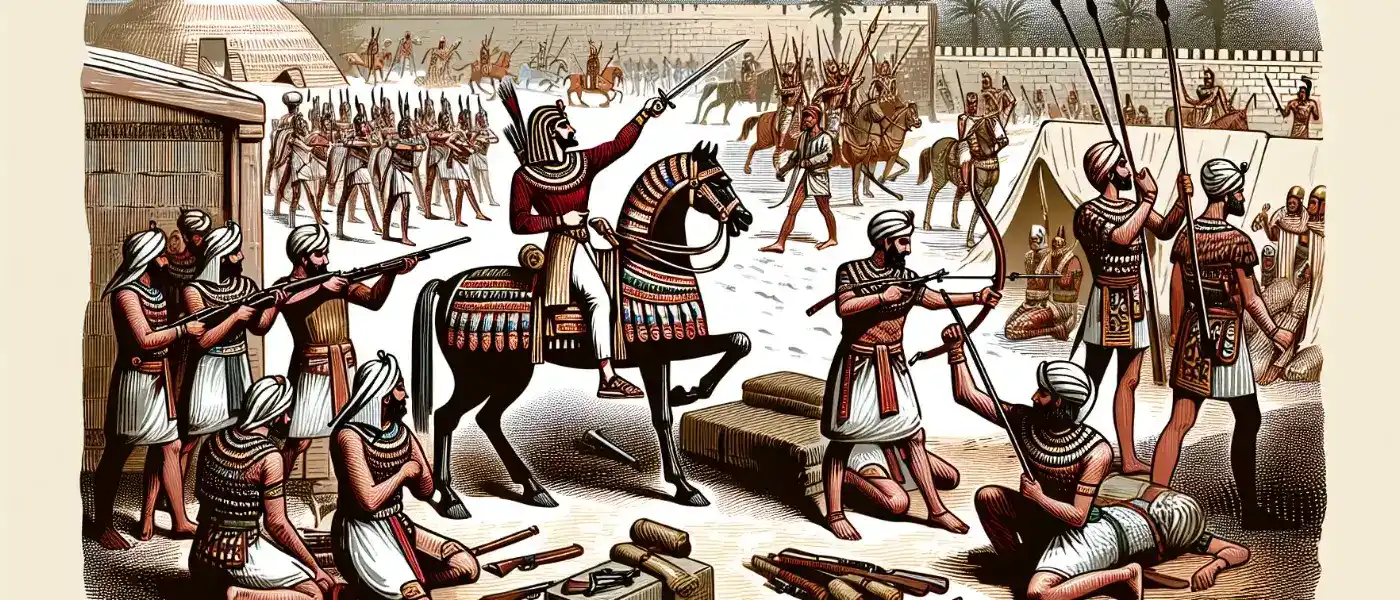
King Thutmose III took care of the army, made it regular, and provided it with knights and chariots.
Also, during his reign, the ancient Egyptians mastered the manufacture of arrows and arrows thanks to him.
Unlike the reign of Thutmose, at the time when Hatshepsut was ruling, she followed a peaceful policy with the areas of Egyptian influence in Palestine and Nubia and with her neighbors.
It was concerned with the navy and sent naval expeditions to the country of Punt and to the coasts of Lebanon for trade exchange.
It took advantage of some protectorates in Syria and Mitanni to rebel against Egyptian rule.
As soon as Thutmose III ascended the throne after the death of Hatshepsut, he had to restore Egyptian control over those areas to secure the country’s borders.
Thutmose launched sixteen military campaigns against Asia (the region of Syria and Palestine), through which he was able to establish his influence there, just as he established Egypt’s influence as far south as Nubia.
Architectural works of King Thutmose III

King-Thutmose-III-EgyptaTours
King Thutmose III built many temples in Thebes after he claimed the throne, including two temples, one of which is next to the Temple of Hatshepsut in Deir el-Bahri.
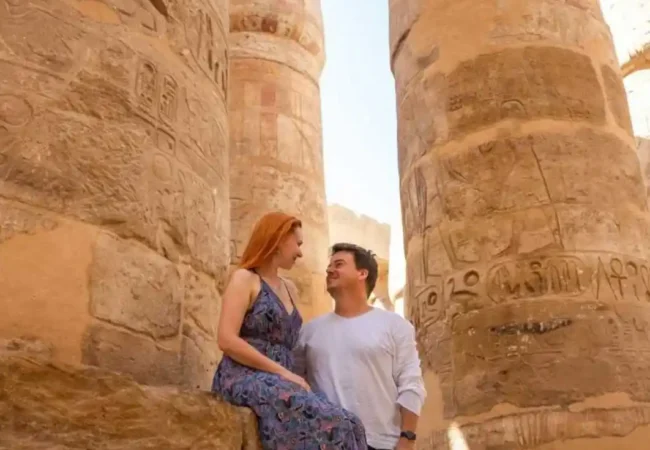
He also built the sixth and seventh giant gates and the celebration hall in the Mortuary temple of amun at karnak and completed the construction the walls of the Temple of Habu, which Hatshepsut had begun.
He built a temple for the god Ptah in his homeland in Memphis.
The temple contains three rooms: the first is for Ptah, the second is for Hathor, the goddess of Thebes, and the third is for the goddess Sekhmet, wife of Ptah, where she is represented by a statue of her with the head of a lioness surmounted by a sun disk.
He has a temple in Amda and Samna. He built a temple in Elephantine for the goddess Set, and it has monuments. In Kom Ombo, Edfu, Ain Shams and Arment.
Thutmose III erected no less than seven obelisks, most of which are now in a number of capitals of the world, including the obelisk in London (it is one of two obelisks that Thutmose III erected in front of the Temple of the Sun in Heliopolis.
A Greek engineer named Pentius transported them to Alexandria to be placed in front of the Temple of Isis.
It is worth noting that King Thutmose III established one of the oldest empires in history, and it was the furthest border of Egypt in its history, as Egypt’s borders reached the Euphrates River and Syria in the east, and Libya in the west, and the coasts of Phenicia and Cyprus in the north, and to the sources of the Nile in the south, until the Fourth Cataract.
Thutmose III’s Tomb
Thutmose III was buried in the Valley of the Kings (KV34), and his tomb is considered one of the most impressive in Egypt. The entrance to the tomb was about 90 feet above the ground, but it had been robbed long ago before it was found in modern times by the workers of Egyptologist Victor Loret.
The walls of the burial chamber look like a large decorated scroll and have the full Book of Amduat written on them. Ancient Egyptians called this book The Book of the Secret Room, and it talks about life after death. A message found inside the tomb said that Thutmose III ruled for nearly 55 years, just one month short.
Inside the tomb, only the red quartzite coffin, wooden statues of the king and other gods, small wooden model boats, pottery, and animal bones were found. Even Thutmose III’s mummy was not there when the tomb was discovered. He had actually been buried at Deir el-Bahri, the mortuary temple of Hatshepsut.
When Thutmose III’s mummy was found, it was in poor condition. He was a short man, not even five feet tall. Today, his mummy is kept in the Cairo Museum.
Thutmose III Helped Bring World War I To an End
The importance of studying history was clearly shown in one of the last battles of World War I, near Megiddo (the Biblical Armageddon) in Palestine. Led by General Allenby, the Allied Forces, especially the cavalry, fought a major and important battle.
Allenby was friends with Egyptologist James Henry Breasted and had read his translations of Thutmose III’s military records. In these records, the ancient Egyptian king described how he wanted to attack the walled city of Megiddo. His army officers suggested attacking across an open plain, but Thutmose III had a different idea. There was a narrow pass, and he said that moving “horse by horse” through it would surprise the enemy. The officers had to follow his plan, and it worked very well.
Allenby used the same strategy with great success. This marked the beginning of the end for the Ottoman forces the Allies were fighting. It was also an almost unbelievable continuation of Thutmose III’s brilliant military achievements, remembered even thousands of years later.
Lessons From Thutmose III’s Reign
Thutmose III’s life shows determination, ambition, and vision. He went from being a sidelined co-ruler to becoming Egypt’s greatest conqueror. His leadership made a big difference. His military campaigns kept Egypt strong, his reforms helped the empire stay stable, and his monuments celebrated his rule.
When you visit Egypt today, at places like Karnak or the Luxor Museum, you can see the lasting legacy of a pharaoh who changed history. Thutmose III is an important figure in the study of Egypt and in the story of human civilization.
Death and Burial
Thutmose III’s tomb in the Valley of the Kings (KV34) was the first tomb where Egyptologists found the complete Book of Amduat, an important funerary text from the New Kingdom. According to the American Egyptologist Peter Der Manuelian, a note in the tomb of an official named Amenemheb says that Thutmose III died in Year 54, III Peret day 30 of his reign. He ruled Egypt for 53 years, 10 months, and 26 days, just one month and four days short of 55 years.
Mummy
During the 21st Dynasty, Thutmose III’s mummy was moved and reburied in the royal cache at Deir el-Bahari, above Hatshepsut’s mortuary temple. This site was discovered in 1881. He was buried along with other New Kingdom kings, including Ahmose I, Amenhotep I, Thutmose I, Thutmose II, Ramesses I, Seti I, Ramesses II, and Ramesses IX, as well as 21st Dynasty rulers like Pinedjem I, Pinedjem II, and Siamun.
Thutmose III’s mummy has the museum number CG 61068. It was unwrapped by Gaston Maspero in 1886. The mummy was in poor condition because tomb robbers had badly damaged it long ago. Maspero described the damage:
The mummy had not been well hidden. At the end of the 20th Dynasty, robbers took it out of the coffin, removed its jewelry, and injured it while hurrying to steal the valuables. Later, it was reburied and stayed undisturbed until modern times. Before reburial, some repairs were done: loose parts of the body were pressed between four wooden strips, painted white, to make the mummy firm, with three strips placed inside the wrappings and one outside under the linen bands.
Maspero said the following about Thutmose III’s face, which was not damaged:
Luckily, the face, which had been covered with pitch during embalming, was not harmed by the robbers and looked intact when the mask was removed. The face does not match the ideal image of a conqueror. His statues show refined and intelligent features, but they are more idealized than the real face. The forehead is low, the eyes are deep-set, the jaw is heavy, the lips are thick, and the cheekbones are very noticeable. The face is similar to Thutmose II’s, but with more energy.
An anatomist, Grafton Elliot Smith, measured the mummy and said it was 1.615 m (5 ft 3.58 in) tall. But the feet were missing, so Thutmose III was probably taller than this.
In April 2021, his mummy was moved from the Museum of Egyptian Antiquities to the National Museum of Egyptian Civilization along with 17 other kings and 4 queens in an event called the Pharaohs’ Golden Parade.
Conclusion
Thutmose III, often called the “Napoleon of Egypt,” was one of the greatest warrior pharaohs of the New Kingdom. During the early years of the son of Thutmose II, he ruled under the regency of Queen Hatshepsut before taking full power. His reign expanded Egypt’s empire through numerous successful military campaigns and brought immense wealth, making him a legendary figure in ancient Egyptian history.
His numerous campaigns and victories across the Near East are meticulously recorded in the Annals of Thutmose III, inscribed on the walls of the Karnak Temple.
These records highlight his unmatched achievements in expanding Egypt’s empire to its greatest extent
King Thutmose III: FAQs
Who was King Thutmose III?
Thutmose III was the sixth pharaoh of the Eighteenth Dynasty of Egypt. He ruled from 1479–1425 BCE and is often referred to as the “Napoleon of Egypt” due to his military prowess.
What is Thutmose King famous for?
He is renowned for his military campaigns, which expanded Egypt’s empire to its greatest extent. Under his reign, Egypt controlled territory in modern-day Syria, Iraq, and Sudan.
How long did King Thutmose III reign?
His reign lasted about 54 years. Initially, he co-ruled with his stepmother Hatshepsut for 22 years and then ruled independently for another 32 years.
What are some of King Thutmose III major accomplishments?
His major accomplishments include 17 successful military campaigns, the expansion of Egypt’s borders, and the significant architectural projects in Karnak, including the addition of pylons and obelisks.
How did King Thutmose come to power?
Thutmose III became pharaoh after the death of his father, Thutmose II. However, he was just a child then, so his stepmother Hatshepsut ruled as regent and then as co-pharaoh.
What was Thutmose III’s relationship with Hatshepsut?
Hatshepsut was both his stepmother and aunt. She acted as regent during his early years and eventually declared herself co-pharaoh, maintaining power until her death.
Where is Thutmose buried?
He was buried in the Valley of the Kings, in the tomb designated KV34. It’s known for its unique oval-shaped burial chamber.
What is the significance of the Battle of Megiddo?
The Battle of Megiddo (circa 1457 BCE) was one of his most significant victories. It was the first recorded battle in history and showcased his strategic military skill.
Did King Thutmose III face any rebellions?
Yes, he faced rebellions, particularly in Canaan and Nubia. However, he successfully quelled these uprisings and maintained control over Egypt’s territories.
How did King Thutmose influence Egyptian religion?
He promoted the worship of Amun, linking himself closely with the god to legitimize his reign. His support led to the god’s temple in Karnak becoming one of Egypt’s wealthiest and most powerful.
What happened after King Thutmose III death?
After his death, his son Amenhotep II succeeded him. Thutmose III left behind a legacy of military success and a powerful Egyptian empire.
About EgyptaTours

EgyptaTours is a name synonymous with trust, excellence, and unforgettable travel experiences, proudly standing as one of the leading travel agencies in Egypt. Renowned for its deep expertise, personalized service, and carefully crafted itineraries, EgyptaTours serves as the ultimate gateway to discovering Egypt in its most authentic and inspiring form.