






Ancient Egyptian Farmers: How Agriculture Built One of History’s Greatest Civilizations
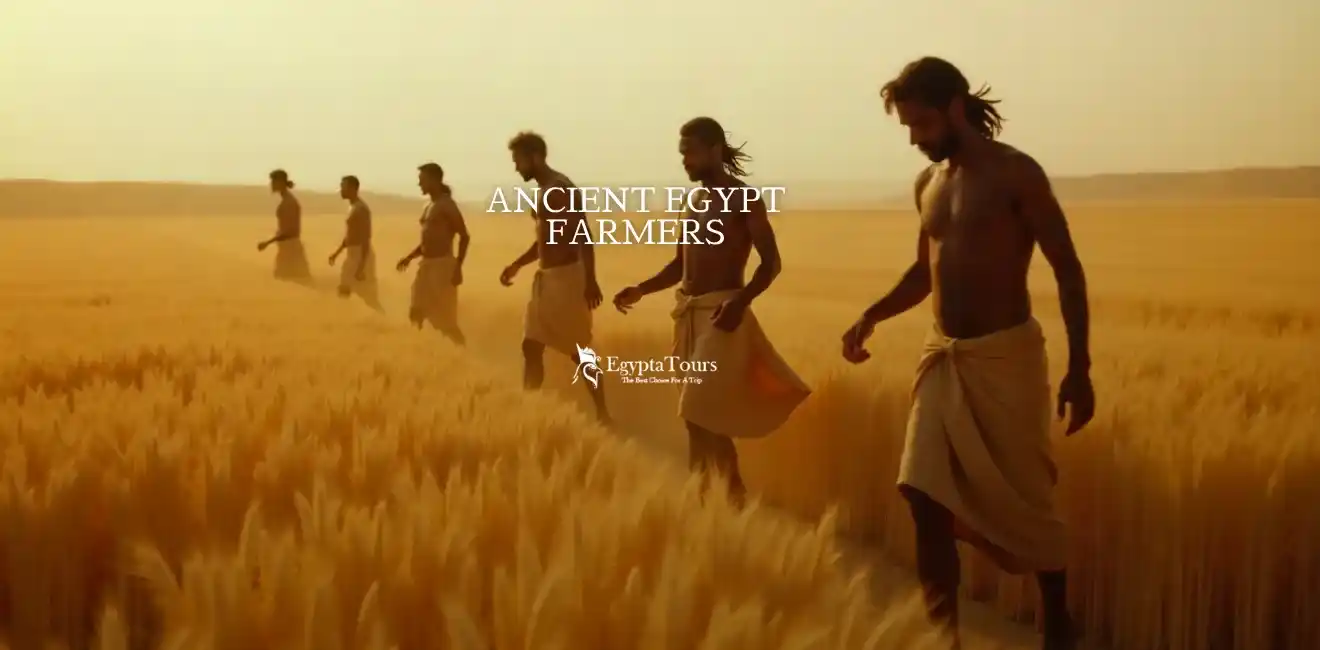
The ancient Egypt farmers were the true foundation of one of the greatest civilizations in history. Through their tireless efforts and tireless work their role was not limited to providing food for the population but extended to supporting the massive projects that immortalized Egypt’s name such as the pyramids and the massive temples at Thebes among other monuments.
These farmers transformed the Nile Valley into a fertile land known as “Kemt,” or the Black Land, to distinguish it from the barren desert.
Although their lives were characterized by simplicity and hardship their contributions were vital and essential to building Egypt’s enduring legacy in the fields of art architecture, and administration.
The Agriculture’s Role in Egypt
From the Predynastic Period (around 6000–3150 BCE) to the Ptolemaic Dynasty (323–30 BCE), farming in Egypt became more advanced and organized. Farmers grew barley and emmer wheat, which were used to make bread and beer, the main foods in Egypt.
They also grew flax to make linen which became an important trade product. Papyrus, taken from the Nile’s marshes, had many uses: it was made into paper for writing and used to make baskets, ropes and small boats.
Extra crops allowed Egypt to trade with places like the Levant, Mesopotamia, Nubia and the Aegean. These exports helped Egypt’s economy grow and made the country more powerful in the ancient world.
The Role of The Nile River in Egyptian Farming
The Nile River was very important for ancient Egypt. It was more than just water; it was the main reason Egyptian farmers could grow crops. Each year, the Nile would flood, leaving behind rich soil that made farming possible in the dry desert land.
Flooding and Irrigation: Every year, the Nile flooded and covered the land with nutrient rich silt. This made the soil very fertile and allowed farmers to grow plenty of crops. The Egyptians used this flooding by building smart irrigation systems to control the water and send it to fields when it was dry.
The Shaduf: One of the most useful tools in Egyptian farming was the shaduf, a simple hand tool used to lift water from the Nile or canals. The shaduf helped farmers water their fields more easily, so crops could grow even during dry times.
Using the Nile’s water well was a big reason why Egypt succeeded as a farming society. It helped them feed people and keep their civilization strong.
The Development of Agriculture Through the Pharaonic Era
From prehistoric times to the end of the Ptolemaic era agriculture witnessed remarkable development through the ancient Egypt farmers making it one of the most efficient systems in the ancient world.
They cultivated staple crops such as barley and pharaonic wheat which were used in the production of bread and beer the two main components of the Egyptian diet.
Flax was widely cultivated for textiles, and papyrus was used for writing, baskets, and small boats. Surplus agricultural production enabled the export of these products, leading to flourishing trade with the Levant, Mesopotamia Nubia, and the Mediterranean islands thus providing Egypt with economic and political influence.
Farmers in Ancient Egypt and Their Vital Economic Role

Farmers-in-Ancient-Egypt-and-Their-Vital-Economic-Role-EgyptaTours
Ancient Egypt’s economy relied primarily on agriculture which constituted the central activity upon which other aspects of society were built including culture politics, and civilization.
The Nile River played a pivotal role in this prosperity known as the “Gift of Egypt,” bringing with it annual floods from June to September carrying rich silt that naturally fertilized agricultural lands.
These annual floods transformed the lands adjacent to the river into “black soil,” in contrast to the surrounding desert “red soil.”
This stable agricultural cycle ensured the continuation of Egyptian civilization for over three thousand years and contributed to the stability of the state and its institutions.
The Tax System and Economic Structure in Ancient Egypt
The Egyptian economic system for ancient Egypt farmers was largely based on agriculture, and the farmer was the primary driver of this system. Taxes were not paid in cash rather the farmer provided the state with a large portion of his crops in the form of wheat barley, or livestock.
These taxes often amounted to half of what the farmer grew which represented a significant burden.
However, these taxes were not in vain. They were used to finance major national projects such as the construction of temples pyramids, and irrigation networks as well as to provide salaries for priests and officials. Beginning in the Middle Kingdom the state established granaries known as “silos” to ensure food availability during times of drought and famine.
A Look at The Daily Life of the Farmer in Ancient Egypt

The-Daily-Life-of-the-Farmer-in-Ancient-Egypt-EgyptaTours
The ancient Egyptians understood nature very well and used this knowledge to plan their farming. The flooding of the Nile and the growing seasons were very important and the Egyptian calendar was divided into three main seasons based on farming.
Akhet: The first season, Akhet, was when the Nile flooded the land. This flood made the soil rich and ready for planting. During Akhet, farmers fixed their irrigation systems, planted some crops and used the fertile soil left by the flood.
Peret : The second season, Peret, was when crops were planted and grew. It happened during the dry season, so farmers used irrigation to water their fields. Crops like wheat and barley grew during this time.
Shemu : The third season, Shemu, was the harvest season. Farmers collected the crops grown during Peret. This was a very busy time because it was when most of the food was stored and shared.
The Egyptian farming calendar followed nature and farmers had to work with the seasons to grow food successfully.
The lives of ancient Egypt farmers were greatly influenced by the Nile cycle.
The agricultural year was divided into three main seasons:
- Akhet (Flooding): Floods flooded the land, and during this period, agriculture was impossible. Therefore farmers worked on state projects such as construction and digging canals.
- After the waters receded farmers began plowing the land and planting crops. This was the busiest time of the year.
- Shemu (harvest): Farmers harvested the crops and prepared them for storage or tax payment.
Despite their simple lives they had strong ties to their families and villages.
They lived in small mud-brick houses often consisting of two or three rooms with roofs used for sleeping or storage.
Village Life and Ancient Egyptian Houses
Village-Life-and-Ancient-Egyptian-Houses-EgyptaTours
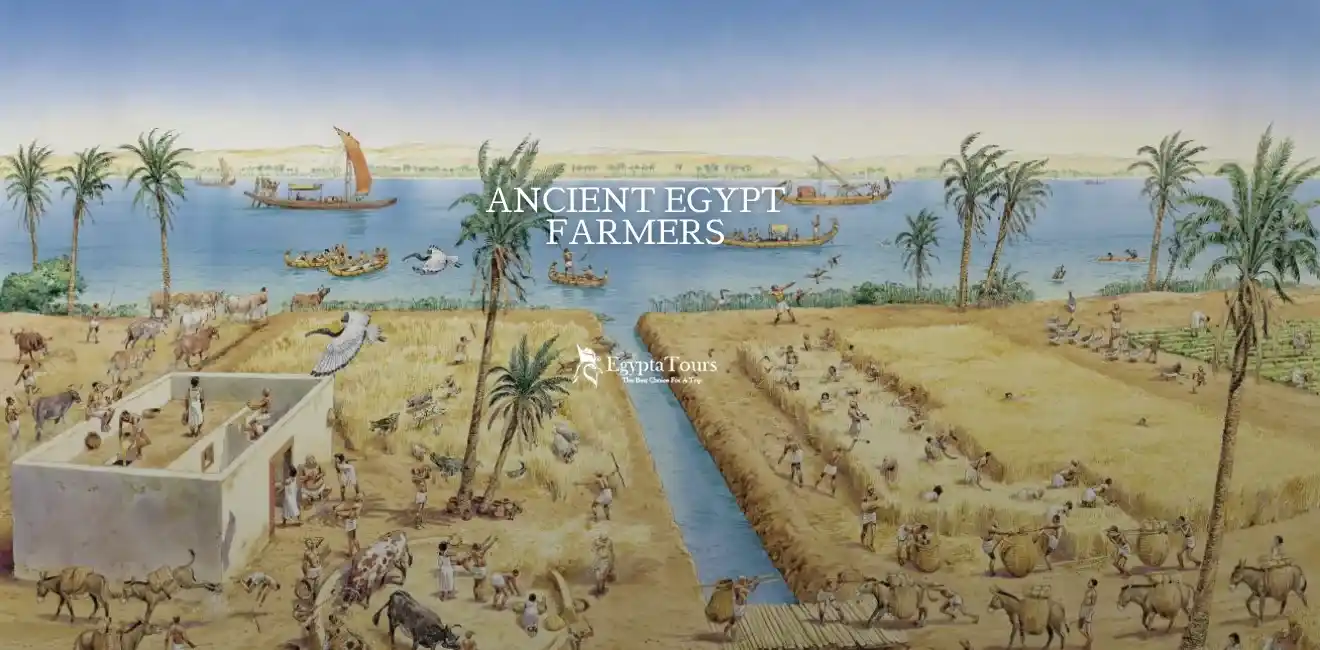
Ancient Egypt farmers lived in simple villages close to agricultural land. This proximity was essential to facilitate daily work. Their houses were built of raw mud brick an economical and easy-to-make material that provided protection from the intense heat.
Houses often consisted of two or three rooms with a small courtyard or open roof used for sleeping on hot nights or for storing crops. Furniture was very simple: straw bedding pottery pots, and perhaps a wooden box for storing grain.
Advanced Agricultural Methods and Innovations

Advanced-Agricultural-Methods-and-Innovations-EgyptaTours
Egyptian farming was successful not only because of natural resources but also because farmers built and used smart irrigation systems. These systems helped them control the Nile’s flooding and make sure crops got water all year.
Egyptians made canals and basins to carry water from the Nile to their fields. They often built dikes along the canals to control water flow and stop flooding. The basins stored water from the Nile’s yearly floods so it could be used in dry times.
The shaduf was a common tool to lift water and they also used devices like the sakia (a water wheel) to bring water from canals to the fields. These tools helped farmers grow more crops and make the growing season longer.
Egyptians used plows pulled by oxen to get the soil ready for planting. These simple plows helped break the soil and make rows for seeds. This method made farming easier and helped crops grow better with enough space.
By creating better irrigation systems and farming tools, Egyptians could grow more food and support their growing population.
Ancient Egypt farmers were distinguished by their invention of many agricultural tools and techniques that were ahead of their time the most important of which was the basin irrigation system a smart method that relied on distributing floodwater using dams canals, and reservoirs.
Among the most important tools used by farmers are:
- The wooden plow pulled by oxen, is used to plow the land.
- The sickle and pick are used to cultivate the land and harvest crops.
- The shadoof is a tool for raising water from the river to higher ground.
- Winnowing and threshing: Oxen are used to trample crops, and women then winnow the grain and separate it from the chaff.
The Impact of Ancient Egyptian Farming On The World
The farming methods of the ancient Egyptians helped them succeed and also influenced farming around the world. Many of their ideas were used by other civilizations and still affect farming today.
Irrigation and Water Management: Egyptians used irrigation to control the Nile’s flooding. This was an early way of managing water that later influenced civilizations like Mesopotamia and the Indus Valley. Modern irrigation still uses some of the same ideas.
Crop Rotation and Fertilizers: Egyptians rotated crops and used natural fertilizers, like animal manure, to keep their soil healthy. These methods helped them grow crops for a long time and were later copied by other cultures.
Tools and Techniques: Egyptians invented tools like the plow and the shaduf. These tools made farming easier and influenced later civilizations. Many of these methods, improved over time, are still used in farming today.
The farming ideas of ancient Egypt have lasted a long time and continue to shape modern agriculture.
Religion and Its Impact on Ancient Egyptian Agriculture

Religion-and-Its-Impact-on-Ancient-Egyptian-Agriculture-EgyptaTours
Religion was an inseparable element of agriculture in ancient Egypt, For example ancient Egypt farmers associated each stage of agriculture with a god or goddess.
For example the god Hapi the symbol of the Nile flood is depicted as a plump man, a symbol of fertility to whom sacrifices were made to ensure a successful flood season.
Osiris the god of agriculture and resurrection represented the idea of death and rebirth through the cycle of plant growth. The goddess of harvest, Ra’nat, asked her to protect crops from disease and drought.
Temples which owned a lot of land, were very important in managing farming. Priests ran large estates and hired farmers to work the fields that provided food and resources for temple activities and rituals.
Ancient Egyptian festivals followed the farming calendar, linking religious events to the work of the farmers. This connection between religion and farming made people see farming as a sacred duty. It also helped maintain maat, the Egyptian idea of harmony, balance and justice.
The Diverse Crops of Egyptian Farmers
Ancient Egypt farmers cultivated a variety of crops to meet their various needs, most notably:
- Food crops such as wheat and barley for making bread and beer.
- Vegetables such as onions, garlic, cucumbers, and lettuce.
- Fruits such as dates, figs, grapes, and pomegranates, consumed fresh or dried.
- Industrial plants such as flax for textile production and papyrus for writing.
- Oil crops such as black cumin and sesame for oil production.
The Daily Food of Ancient Egypt
Farmers ate simple but healthy meals, using food they grew themselves. Their main foods were bread, beer, onions, lentils and sometimes fish.
Even though they lived modestly, farmers enjoyed festivals for farming gods like Hapy and Osiris. These celebrations gave them a chance to be happy together and connect with their religion.
Challenges Facing Farmers in Ancient Egypt
Challenges-Facing-Farmers-in-Ancient-Egypt-EgyptaTours
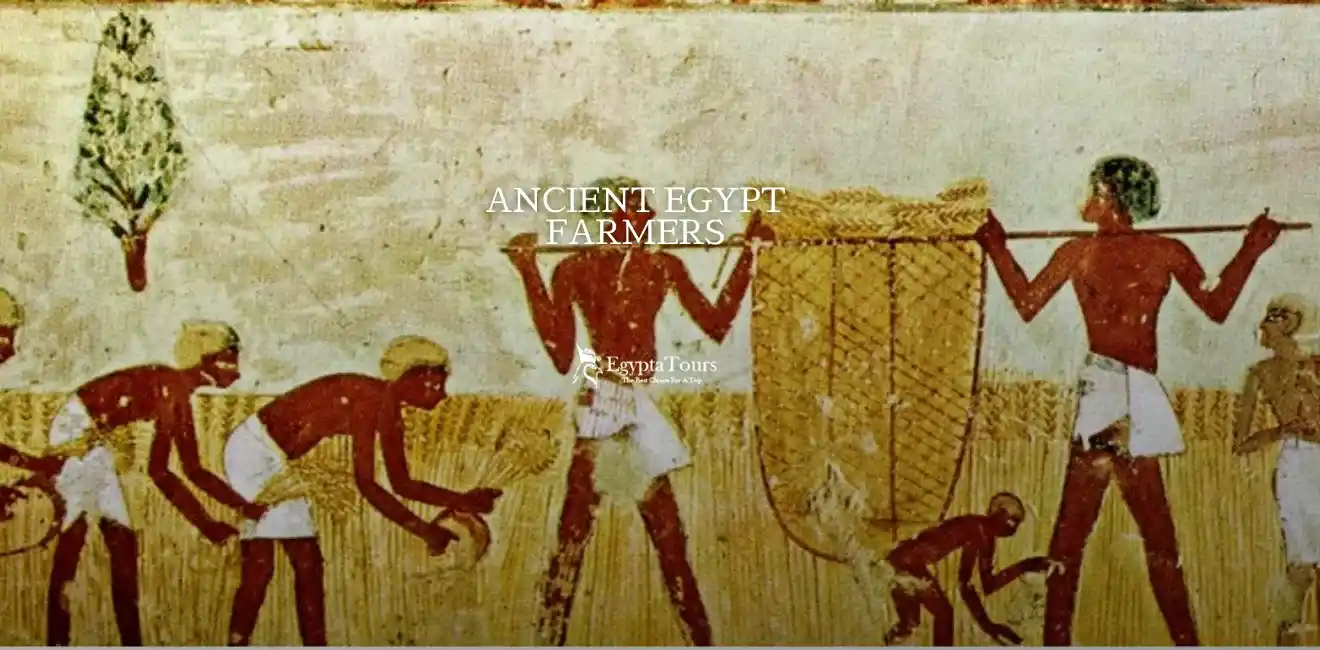
Despite the blessings of the Nile, the lives of ancient Egypt farmers were not without difficulty.
They faced many difficult challenges, including:
- Irregular floods sometimes heavy and devastating crops and sometimes weak and causing drought.
- Agricultural pests such as locusts rats, and birds destroyed crops.
- High taxes: The state imposed heavy taxes that could amount to half of the crop yield.
- Hard labor: Ancient Egypt farmers were sometimes called upon to work on government projects during the growing season.
- Diseases such as schistosomiasis and malaria spread due to stagnant water.
The Great Legacy of the Ancient Egyptian Farmer
The influence of ancient Egypt farmers is still evident today not only in agriculture, but also in culture economics, and religion. They invented irrigation systems and tools that are still used in some parts of the world, such as the shadoof.
The efforts of farmers supported the temples pyramids, and monuments that have kept Egypt’s name shining to this day. Numerous inscriptions in tombs and temples document this tremendous work and immortalize the role of farmers in the nation’s advancement.
They were truly the hands that nurtured one of the greatest civilizations in history, and upon them Egypt’s glory is built to this day.
Conclusion
The ancient Egypt farmers were not merely a working class they were the pillars of civilization and a major reason for the resilience of a state that lasted for thousands of years.
They provided crops preserved the land, and participated in the construction of the greatest monuments. Their story remains an inspiring one full of diligence patience, and agricultural genius.
FAQS
What are the oldest irrigation projects in Egypt?
The basin irrigation system is one of the oldest irrigation projects devised by ancient Egypt farmers dating back to the predynastic era. This system relied on the construction of earthen dams and simple canals to distribute floodwater from the Nile River to agricultural lands.
One of the oldest historical examples of a systematic irrigation project is the Lahun Dam in Fayoum.
What tool did the ancient Egyptians use for harvesting?
The ancient Egyptians used the sickle as their primary harvesting tool. It was often made of wood with flint or copper blades. This sickle was designed to efficiently cut wheat and barley heads. It was held in one hand and used with quick movements to harvest large quantities of crops.
What crops did the ancient Egyptians grow?
Ancient Egypt farmers grew a variety of crops to meet their food industrial, and commercial needs. The most important crops were wheat and barley for making bread and beer linen for making fabrics papyrus for writing and tool making, and legumes such as lentils and beans, among others.
About EgyptaTours

EgyptaTours is a name synonymous with trust, excellence, and unforgettable travel experiences, proudly standing as one of the leading travel agencies in Egypt. Renowned for its deep expertise, personalized service, and carefully crafted itineraries, EgyptaTours serves as the ultimate gateway to discovering Egypt in its most authentic and inspiring form.