





Curse of the Pharaohs: Myth, Mystery & Historical Facts
that anyone who disturbs a pharaoh’s tomb will suffer bad luck, illness, or even death. The story became widely known after the discovery of King Tutankhamun’s tomb in 1922, when several members of the excavation team reportedly died under mysterious circumstances. Newspapers at the time sensationalized these events, fueling global fascination with the so-called “curse.”
However, most historians and scientists agree that the curse is more myth than reality. Many of the deaths linked to Tutankhamun’s tomb were due to natural causes, and some members of the expedition lived long lives. While ancient tombs sometimes contained warning inscriptions meant to deter grave robbers, there is no scientific evidence proving the existence of a supernatural curse.
Today, the legend remains a captivating part of Egypt’s cultural history and continues to inspire books, films, and documentaries.
The curse of the pharaohs has been an enduring mystery for centuries. It is said that anyone who disturbs the burial site of an ancient Egyptian Pharaoh is cursed with bad luck and death. Is this an ancient superstition or does the curse actually exist? In this blog post, we will look at the facts and explore the myths surrounding the curse of the pharaohs to help separate fact from fiction.
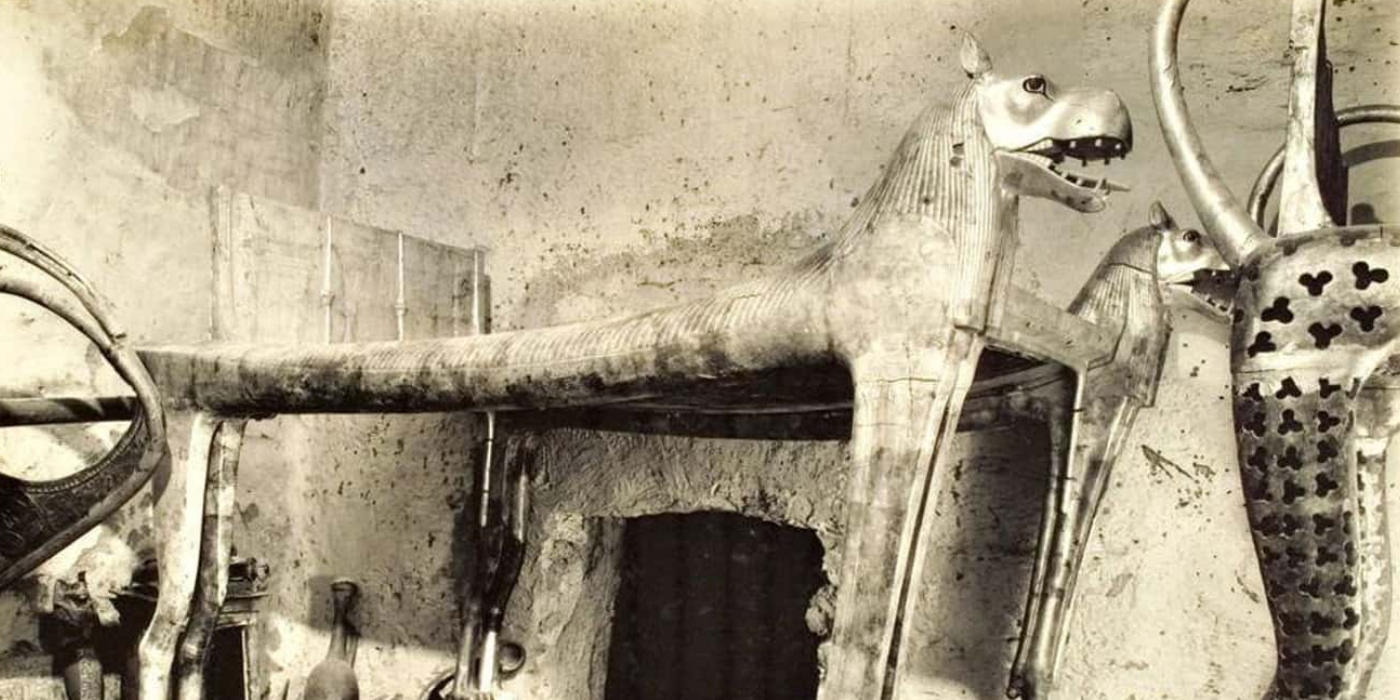
curse-of-the-pharaohs-Tomb-Discovery
The truth about the curse of the Pharaohs is one of the most important topics that have occupied the thinking of archaeologists over the years in terms of the ambiguity that surrounds this topic. Opinions ranged between a believer in this curse and a refutation of it. The fact of the curse of the pharaohs refers to the belief that anyone who disturbs the mummy of the pharaoh has a curse.
Many writers and documentaries have discussed this curse caused by scientific causes such as bacteria or radiation. Despite the stories of curses dating back to the nineteenth century, they multiplied in the wake of Howard Carter‘s discovery of Tutankhamun’s tomb because of the series of events that occurred from the beginning of the opening of the tomb.
The curse itself is said to be a warning or punishment placed upon anyone who disturbs the tombs of pharaohs or their belongings. It is believed that those who violated these sacred spaces would face misfortune, illness, or even death.
While there have been documented incidents of mysterious occurrences and deaths surrounding the excavation of Egyptian tombs, the idea of a supernatural curse has been largely debunked.
Famous incidents linked to the curse of pharaohs

Tutankhamun, the most mysterious and controversial king of the Pharaohs, and what they found is the tomb or the curse of the Pharaohs? Tutankhamun, the king of mystery.
The association of the name of Tutankhamun with what is called the curse of the pharaohs associated with his tomb and the treasures that were found inside it without any damage or change made him the most famous of the pharaohs with mysteries and questions that are still unanswered.
The legend of the curse began when the tomb of Tutankhamun was opened in 1922 AD.
The first thing that caught attention were inscriptions saying, “Death will strike with its two poisonous wings anyone who disturbs the peace of the king. “The discovery of these inscriptions followed a series of strange incidents. It started with the death of a lot of the research workers.
It was said that a large sandstorm blew around the tomb on the day the tomb was opened. Also, one of the accounts talked about the flight of a falcon over the tomb, which is one of the sacred symbols of the Pharaohs.
One of the most prominent accounts of the curse deals with the golden canary that Howard Carter took with him when he came to Luxor. When the cemetery was discovered, they first called it the “Golden Sparrow Cemetery”, and here the strangeness begins. It was stated in Mohsen Muhammad’s book.
“The Stealing of the King of Egypt,” when Howard Carter traveled to Cairo, he placed his assistant, the sparrow, on the balcony. To get a breeze from the air. Pay close attention, on the day of the opening of the cemetery, Carter heard a faint cry of distress as if it were a signal. Carter rushed to the balcony to be surprised by a large snake extending its tongue to the bird inside the cage.
Carter killed the snake, but the bird died. Immediately, it was said that the curse had begun with the opening of the cemetery, as the big snake is the symbol that is placed above the heads of the statues of the kings of Egypt.
In the following, you will learn about some of the death events that are believed to be associated with the curse of Tutankhamun. Of course, what I will say are the opinions of some analysts and historians, and knowledge remains with God.
First, George Herbert is an investor in the research team who was present when the tomb was opened. He died on April 5, 1923, from being bitten by a mosquito. It caused him severe inflammation, which according to the sources he was exposed to in the tomb of Tutankhamun. George died a month and 20 days after the cemetery was opened.
Secondly, George Jay Gould, a visitor to the cemetery. He died in France on May 16, 1923 AD as a result of a fever. According to the sources, George was not suffering from anything before his visit to the cemetery. George died 3 months after the cemetery was opened.
Third, Essie Mays, a member of the research team. He died in 1928 AD of arsenic poisoning. He died five years after the cemetery was opened. Analysts linked his death to the curse.
Fourth, Captain Richard Bethel, aide to Howard Carter. He died on the 15th of November 1928 AD on the bed. It was believed that he died of a heart attack, but what appeared on his body prompted the suspicion that he had been strangled to death in his sleep. Most sources confirmed that Richard was in very good health. He died 5 years and nine months after the cemetery was opened.
Fifth ,Just five months after the discovery, Lord Carnarvon died of blood poisoning.
The Discovery of the Pharaohs’ Curse and the Opening of Tutankhamun’s Tomb

The-Discovery-of-the-Pharaohs’-Curse-and-the-Opening-of-Tutankhamun’s-Tomb
The legend of the Pharaohs’ curse began when Tutankhamun’s tomb was opened in 1922. The first thing that caught people’s attention was an inscription on the tomb that read: “Death will strike with the wings of the falcon all who disturb the king.” After this discovery, a series of strange events began.
Many workers and scholars involved in the excavation of the tomb died, which puzzled both scientists and the public and led many to believe in the “Curse of the Pharaohs.” Some archaeologists thought that the priests of ancient Egypt had placed a curse on anyone attempting to remove the treasures from the tomb.
It was said that a strong sandstorm rose around the tomb on the day it was opened and a falcon, a sacred bird in ancient Egypt, was seen flying above it. Later, a German scientist studied this phenomenon and tried to explain, using reason, medicine and chemistry, how forty scholars and researchers had died prematurely because of the young king, Tutankhamun.
Although Tutankhamun may not have been historically significant, possibly a ruler who did little and lived during a period of reaction against Pharaoh Akhenaten, his tomb’s value came from remaining untouched by thieves for over thirty-three centuries. The tomb arrived to us completely intact, which is why the young king became associated with the Pharaohs’ curse.
Everyone who touched the tomb or its contents died one by one, marking one of the strangest punishments known to mankind. What is clear is that these forty people did die but the mysterious part is that their deaths were often caused by very trivial reasons under strange circumstances that science could not fully explain.
Tutankhamun, the owner of the tomb, coffin and the alleged curses, ruled Egypt for nine years, from 1358 to 1349 BCE. His tomb was discovered by Howard Carter, which began years of hard work, sweat and frustration. On November 6, 1922, Howard told Lord Carnarvon, “I have finally discovered something wonderful in the Valley of the Kings.
I have sealed the doors and corridors until you come to see it yourself.” Lord Carnarvon arrived in Luxor on November 23, accompanied by his daughter. Howard Carter then began breaking the seals and doors one by one until he reached the burial chamber of Tutankhamun.
The story of the curse also began with a golden canary that Carter brought with him. Initially, the tomb was called “The Golden Bird Tomb.” According to Mohsen Mohamed in his book The King’s Theft, when Howard went to Cairo to meet Lord Carnarvon, his assistant Callender placed the bird on the balcony to enjoy the breeze. On the day the tomb was opened, Callender heard a faint cry, rushed to investigate and saw a cobra extending its tongue toward the bird inside its cage.
He killed the cobra but the canary had already died. This incident was linked to the curse as the cobra is depicted on the crowns of Egyptian kings and it was seen as the king’s revenge on those who disturbed his resting place.
Some archaeologists like Henry Breasted, believed something terrible might happen. What followed became considered a supernatural phenomenon and one of the mysterious events that science still cannot fully explain. During the official opening, Muhammad Zakaria developed a mysterious fever that no doctor could explain and died at midnight in Cairo.
Strangely, the electricity went out in the city at the same moment. Newspapers around the world reported his death and linked it to Tutankhamun, suggesting that the king caused it. Some claimed Zakaria’s finger had been cut by a tool or poisoned weapon inside the tomb while others speculated that bacteria in the tomb brought disease and death. In Paris, the astronomer Lancelan said: “Tutankhamun has taken his revenge.”
The First Death Linked to the Tomb
The first major death was Lord Carnarvon who financed the excavation. His actual cause of death was a mosquito bite that became infected when he accidentally cut it while shaving, causing blood poisoning. Yet the media connected it to the tomb’s curse. Six weeks after the tomb opened, stories about the curse spread with figures like Sir Arthur Conan Doyle suggesting that Tutankhamun’s priests had placed supernatural guardians to protect the tomb.
Effect on Scholars and Visitors
Stories of deaths among Carter’s team and others linked to the tomb circulated, although many who entered it lived long lives. Of the 58 people present at the opening of the tomb and sarcophagus, only eight died within about twelve years. Howard Carter himself lived until 1939, Lady Evelyn Herbert (Carnarvon’s daughter) until 1980 and the American archaeologist J.O. Kinnaman until 1961.
Scientific Explanations
Some scientists suggest that toxic spores from the fungus Aspergillus flavus might have caused deaths after opening tombs, possibly including those of Lord Carnarvon, George Jay Gould and Arthur Mace. However, this theory is disputed in some cases. Carter himself did not believe in curses, considering them nonsense. He emphasized that Egyptologists treat tombs with respect, not fear.
The Tomb Curses
Curses related to tombs are very rare, probably because disturbing a tomb was considered unthinkable and even dangerous to record. These curses are mostly found in private tombs from the Old Kingdom period. For example, the tomb of Ankhtifi, from the 9th to 10th dynasty, contains a warning that any ruler who does evil or wickedness to this coffin may have his offerings rejected by Hemen, a local god and his heir may not inherit.
Similarly, the tomb of Khentika Ikhekhi, from the 6th dynasty, has an inscription stating that all men who enter his tomb in an impure way will face judgment, their lives will be ended and their necks will be seized like a bird while the fear of the deceased will be cast into them.
The only known curse from a pharaoh in the Old Kingdom comes from the Pyramid of Pepi I. One of the passages in the Pyramid Texts warns anyone who disturbs the tomb: “He who shall give his finger against this pyramid and this god’s enclosure of Pepi and of his ka, he has given his finger against Horus’s Enclosure in the Cool Waters.
Nephthys shall traverse for him every place of his [father] Geb. His case has been heard by Ennead and he has nothing, he has no house. He is one accursed, he is one who eats his own body.”
Curses from later periods after the Old Kingdom are less common but when they do appear, they are sometimes more severe. They may call upon gods like Thoth or Sekhmet to punish anyone who disturbs the tomb. Zahi Hawass quotes one example of a post-Old Kingdom curse: “Cursed be those who disturb the rest of a Pharaoh. They that shall break the seal of this tomb shall meet death by a disease that no doctor can diagnose.”
The Modern Accounts
Hieroglyphs were not understood until the early 19th century so any reports of curses before that time were just seen as bad luck connected to handling mummies or artifacts from tombs. In 1699, Louis Penicher wrote about a Polish traveler who bought two mummies in Alexandria and took them on a sea voyage in the cargo hold. The traveler was haunted by visions of two ghostly figures, and the stormy seas did not stop until the mummies were thrown into the water.
Zahi Hawass recalled that when he was a young archaeologist excavating at Kom Abu Billo, he had to transport several artifacts from the Greco-Roman site. On that day, his cousin died, on the first anniversary his uncle died and on the third anniversary, his aunt died. Years later, while excavating the tombs of the pyramid builders at Giza, he came across a curse that said:
“All people who enter this tomb will make evil against this tomb and destroy it. May the crocodile be against them in water and snakes against them on land. May the hippopotamus be against them in water, the scorpion on land.” Even though he says he is not superstitious, Hawass decided not to disturb the mummies. He also said that later, when moving two child mummies from Bahariya Oasis to a museum, he was haunted by the children in his dreams. According to him, this only stopped when the father’s mummy was placed with the children in the museum.
The idea of a mummy coming back to life, which is central to many mummy curse stories, first appeared in The Mummy!: Or a Tale of the Twenty-Second Century, an early work combining science fiction and horror, written by Jane C. Loudon and published anonymously in 1827.
Louisa May Alcott was thought by scholar Dominic Montserrat to be the first to use a fully developed “mummy curse” story in her 1869 tale Lost in a Pyramid or The Mummy’s Curse, a story that was later rediscovered. However, two earlier stories, The Mummy’s Soul (Anonymous, 1862) and After Three Thousand Years (Jane G. Austin, 1868), had similar plots where a female mummy magically avenges herself on a male intruder.
Jasmine Day suggests that modern European ideas of mummy curses are based on comparing tomb desecration to rape and she interprets these early stories as proto-feminist works written by women. The discovery of these earlier stories shows that even earlier mummy curse stories may still be lost.
Deaths Often Linked to Tutankhamun’s Curse
The tomb was opened on 29 November 1922.
- George Herbert, 5th Earl of Carnarvon, who funded the excavation and was present at the tomb’s opening, died on 5 April 1923 from an infected mosquito bite, four months and seven days later.
- George Jay Gould I, a visitor, died on 16 May 1923 on the French Riviera after developing a fever following his visit.
- Sir Archibald Douglas-Reid, a radiologist who x-rayed Tutankhamun’s mummy, died on 15 January 1924, aged 52, after surgery for metastatic skin cancer.
- A. C. Mace, a member of Carter’s team, died in April 1928 from pleurisy and pneumonia.
- The Hon. Mervyn Herbert, Carnarvon’s half-brother, died on 26 May 1929, reportedly from malarial pneumonia.
- Captain The Hon. Richard Bethell, Carter’s secretary, died on 15 November 1929 in bed from suspected smothering.
- Howard Carter opened the tomb on 16 February 1923 and lived over sixteen more years, dying on 2 March 1939, though some still linked him to the curse.
An Egyptologist Cursed
Over the past hundred years or so, the phrase “curse of the pharaohs” has been used to explain all sorts of misfortunes. These range from natural disasters to minor illnesses like a mild stomach upset that often affects tourists in Egypt. This is sometimes called “pharaoh’s revenge” or “gippy tummy” which comes from “Egyptian tummy.”
I personally became involved with this so-called curse, meaning the one supposedly written by or for the pharaohs when I worked as Project Egyptologist for the Treasures of Tutankhamun Exhibit which traveled across the United States from 1976 to 1979. My task was to write the texts for the exhibit. This required me to research every part of the discovery, excavation and documentation of Tutankhamun’s tomb and its treasures. Naturally, I came across multiple mentions of the famous “curse of King Tut.”
However, before I could study this in depth, I encountered what I call the “curse of the curse of King Tut.” My first published newspaper interview about the exhibit included a few descriptive paragraphs and a headline that read: “Beware the beat of the bandaged feet as the ancient Egyptian saying goes.” Of course, there was no such saying in ancient Egypt. After that, I promised myself that in future interviews I would be more careful and ensure that my statements were accurate and professional.
Within a few weeks, I was interviewed again when the crate containing Tutankhamun’s funerary mask was opened. I was careful, cautious and at my scholarly best. The interview was fully recorded to make sure that the facts about the curse were clear and nothing was misunderstood. When the article was published, the first page was accurate but the follow-up headline read: “Egyptologist admits there was a curse.” This was not exactly what I had said.
I had remarked about the deaths of those connected to Tutankhamun’s tomb: “It is true that everyone who enters the tomb will die, just as it is true that everyone who crosses Woodlawn Avenue will eventually die.” I never expected my comment to be edited in such a creative way and taken out of context.
While this type of exaggeration may seem harmless, there were other articles that added false details. For example, the Washington Post on March 16, 1977, wrote: “‘Cursed be those that disturb the rest of the pharaoh’ read an inscription on his tomb.”
In reality, there was no curse on the walls of the tomb or on any object inside it. So, if there was no actual curse, why do so many articles mention one? Most references during the King Tut exhibit came from ignorance or the desire for a sensational headline.
The Troubles of Carter and Carnarvon
From the moment Tutankhamun’s tomb was discovered in 1922, it was surrounded by controversy. The original agreement with the Egyptian government allowed the excavators to share some of the finds with Egypt as was customary.
However, this division was avoided because it was important to keep the tomb’s contents together. The tomb was nearly intact and was a major part of Egypt’s heritage. The discovery was significant worldwide and greatly increased knowledge of the past. Lord Carnarvon, who sponsored the expedition, did not need or expect large rewards for his efforts.
However, Howard Carter had already spent six years working for him before the tomb was found and there were another six and a half years needed to clear the tomb and four more years to process the artifacts in the laboratory before they could go to the Cairo Museum.
Controlling Press Access
To solve these problems, especially the constant demands from the press, Lord Carnarvon sold exclusive rights to publish anything about the tomb to the Times of London. This allowed him to cover the costs of the work and to keep reporters away from the site. The Times published stories first so all other newspapers were at least a day behind in reporting news about King Tut.
This arrangement angered the press. Carter and Carnarvon had limited access to the tomb to prevent tourists from interfering. Officials, other Egyptologists and political figures from Egypt and abroad could not easily enter the tomb. This secrecy led to rumors, some of which suggested theft of objects. Some authors even claim that a few artifacts now in museums outside Egypt may have come from Tutankhamun’s tomb.
Confusion Over Artifacts
One object that stayed in Egypt, now in the Cairo Museum, may not have been found exactly where reported. A head of Tutankhamun depicted as the god Nefertem emerging from a lotus was later said to have been found in the corridor of the tomb.
Carter’s reports did not include much information about this head. It was actually discovered in a neighboring storage tomb, carefully wrapped with European shop labels. Despite the confusion, no scandal arose and the official story became that it was found in debris in the corridor, left there by ancient thieves.
The Death of Lord Carnarvon
When Lord Carnarvon died on May 6, 1923, less than a year after the tomb’s discovery, the media had a field day. Stories claimed his death was caused by the curse of the tomb. Some reporters were aided by disgruntled Egyptologists who had been denied access. Insignificant inscriptions were interpreted as curses.
For example, a text on mud plaster in front of the Anubis shrine originally read: “I am the one who prevents the sand from blocking the secret chamber” but newspapers reported it as: “I will kill all of those who cross this threshold into the sacred precincts of the royal king who lives forever.”
These misrepresentations multiplied. Soon, curses were claimed to exist on many inscriptions. Most people could not read the texts so reporters were free to publish them. A photograph of a golden shrine in the Burial Chamber was paired with the translation:
“They who enter this sacred tomb shall swiftly be visited by wings of death.” The carved winged goddess on the shrine made the threat seem real. In truth, the texts come from The Book of the Dead, which was intended to guide the king to eternal life, not to kill intruders.
Public Fascination and Sensationalism
Lord Carnarvon’s death only increased public fascination and scandal. Newspapers worldwide reported that mysterious forces had caused his death. Some even claimed all lights in Cairo went out at that moment. In fact, power outages were common in the city. Carnarvon’s son, Lord Porchester, added that his father’s dog at the family estate cried out and then died, though he was in India at the time and could not have seen this himself.
The estate continued to earn money from stories sold to the Times of London. During the Chicago exhibition in 1977, Carnarvon’s heir said he would not take a million pounds to enter the tomb. The real cause of Lord Carnarvon’s death was a mosquito bite that became infected and caused blood poisoning.
Reports of a Tutankhamun Curse
Reports of a Tutankhamun curse grew as people associated with the tomb died. Rational explanations were ignored in favor of sensational stories. Carter’s conservator A.C. Mace died from long-term pleurisy and this was attributed to the curse. Other friends and colleagues of Carnarvon and Carter were also said to have fallen victim.
Stories even claimed that curators and museum workers around the world were struck by the curse, despite never having visited the tomb. Nervous people sent Egyptian relics to museums to avoid being the next victim.
Even in more recent times, deaths have been attributed to Tutankhamun’s treasures. About 15 years ago, Dr. Gamal Mehrez, Director General of the Egyptian Antiquities Department, died after moving Tutankhamun’s treasures for an exhibition in England, though he had been chronically ill. A man once claimed he killed his wife because he believed he was cursed by an Egyptian object.
Howard Carter’s Death
Howard Carter, however, died peacefully in bed at 67 on March 2, 1939, more than seventeen years after discovering Tutankhamun’s tomb.
Some Real Egyptian Curses
All of these exaggerations overlook two points. First, natural hazards could exist in any tomb, including molds or spores that could cause illness. Paleopathologists and microbiologists now recommend that mummies be handled with gloves and masks. Some researchers have suggested that fungi, not curses, caused deaths after Tutankhamun’s tomb was opened. However, this does not explain Carter’s survival or that of other workers, scientists, officials and tourists.
Second, the ancient Egyptians did use curses. Most were threats and appeared mainly in private tombs, not royal ones. This may show that royalty had protection through other means. Most Old Kingdom private tombs contained inscriptions meant to deter enemies, while royal tombs used Pyramid Texts to guide the king in the afterlife. The royal tombs were also heavily guarded by priests.
When royal curses did exist, they often focused on this life rather than the next. For example, at Deir el Bahri, Thutmose I addressed his daughter, Pharaoh Hatshepsut: “He who adores her, he will live; he who will speak evil in a curse against her majesty, he will die.”
Execration texts, used in the 12th–13th Dynasties, were inscribed on pottery or figurines against foreign enemies. These objects were later ritually smashed.
Amenhotep, son of Hapu, from the 18th Dynasty, had a mortuary temple protected by a long and detailed curse:
“As for [anyone] who will come after me and who will find the foundation of the funerary tomb in destruction…
as for anyone who will take the personnel from among my people…
as for all others who will turn them astray…
I will not allow them to perform their scribal function…
I will put them in the furnace of the king…
His uraeus will vomit flame upon the top of their heads, demolishing their flesh and devouring their bones…
They will capsize in the sea which will devour their bodies…
Their sons will not occupy their places, their women will be violated before their eyes…
Their bodies will decay because they will starve and will not have sustenance and their bones will perish.”
Important decrees were also protected by threats, especially for individuals already declared guilty:
“As to any king and powerful person who will forgive him, he will not receive the white crown, he will not raise up the red crown, he will not dwell upon the throne of Horus of the living. As for any commander or mayor who will petition my lord to pardon him, his property and his fields will be put as offerings for my father Min of Coptos.”
It is clear that Egyptians rarely made the kind of dramatic curses seen in newspapers. They understood the power of negative thinking and warnings. Their curses were meant to stop people from acting against them. Writing the curse ensured that it would survive as long as the monument itself which was a key part of Egyptian culture.
The Myth and Legend of the Curse of the Pharaohs

The-myth- legend-of-the-Curse-of-the-pharaohs-EgyptaTours
Mysterious and strange deaths began to happen to the crew members. Famed writer Sir Arthur Conan Doyle suggests that the Lord’s death was due to mysterious “items” crafted By <strong>ancient Egyptian priests to guard tombs and precious treasures</strong>, Those statements, which were linked to strange and supernatural deaths, caused a global media frenzy.
And finally, Howard Carter, who opened the tomb on February 16, 1923. He died a decade later on March 8, 1939. The cause of death is not yet confirmed. What prompted some analysts to believe that his death is related to the curse.
Most analogues deny the curse, based on the fact that many of those who participated in the opening of the cemetery did not suffer any harm. But some insist on the curse of the Pharaohs because of the events that occurred when the tomb was opened.
What do you think, is the curse of the Pharaohs really haunting those who disturb their eternal sleep?
It is said that the truth about the curse of the pharaoh is a punishment from the ancient Egyptian gods for those who disturb the eternal rest of the pharaohs. This curse causes death, disease, and misfortune to anyone who continues to disturb the eternal sleep of mummy trays, tombs, or pharaonic tombs.
Although there have been many accounts of this curse since the nineteenth century, it became very popular all over the world . After the discovery of the tomb of King Tutankhamun in the Valley of the Kings in 1922 by the famous Egyptologist Howard Carter.
Although the curse of the pharaoh is considered a magical phenomenon, many documentaries argue for its validity and indicate that diseases and problems that occur because of it can be caused by scientific materials such as bacteria, toxic gasses and radiation.
In modern times, the curse has penetrated many forms of entertainment such as thrillers, horror films, comic books, video games, and fiction books. Although not everything in this world is written in stone, you can choose what you want to believe, whether the reason behind the tomb is a magical act of the pharaohs, mere coincidence, or pure science.
Nor can we forget that the mind has an extraordinary ability to turn reality into fantasy, or in this case, into a world of horror.
Some scholars interpreted the “curse of the pharaohs” as occurring as a result of the exposure of people who open the pharaonic tombs to an intense dose of “radon gas”, which is one of the radioactive gasses, which is one of the products of the decomposition of the radioactive uranium element that is also found naturally in the earth.
He opened the tombs immediately after their discovery, for two days before entering them, so that the corrupt air that had existed for thousands of years could be renewed.
Explanation for the supposed curse of the pharaohs
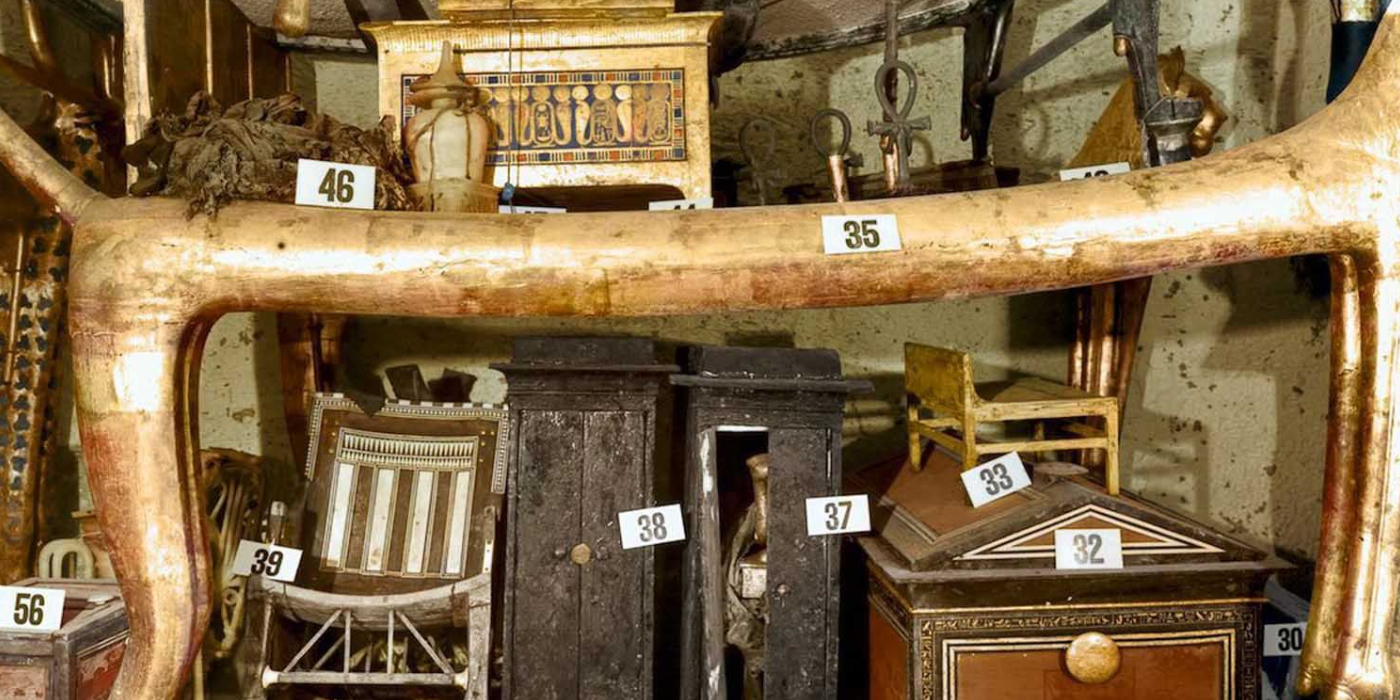
curse-of-the-pharaohs-King-Tut-Tomb
While the curse of the pharaohs may seem like a chilling and mysterious phenomenon, there is actually a rational explanation for the supposed curse. Many of the incidents that have been attributed to the curse can be explained by natural causes or simple coincidence.
One possible explanation is the presence of toxic substances within the tombs.
Ancient Egyptians used various chemicals in the embalming process, some of which could still be present in the tombs today. Exposure to these substances over time could lead to illnesses and even death for those who enter the tombs without proper protection.
Another explanation is the sheer number of deaths that occurred during the excavation and exploration of the tombs.
Many people who were involved in these activities were exposed to dangerous conditions and diseases, which could easily explain the high mortality rate. Additionally, accidents and unsafe practices during the excavation process could have led to fatalities.
Furthermore, the belief in the curse itself could have played a role in the incidents attributed to it.
The power of suggestion and the fear associated with the curse may have caused people to act irrationally or take unnecessary risks, leading to their own demise.
Overall, while the curse of the pharaohs may capture our imagination and fuel our fascination with the mysterious, the evidence suggests that there is a logical explanation for the incidents associated with it. It is important to approach these claims with a skeptical mindset and consider alternative explanations before attributing them solely to a curse.
Evidence against the curse
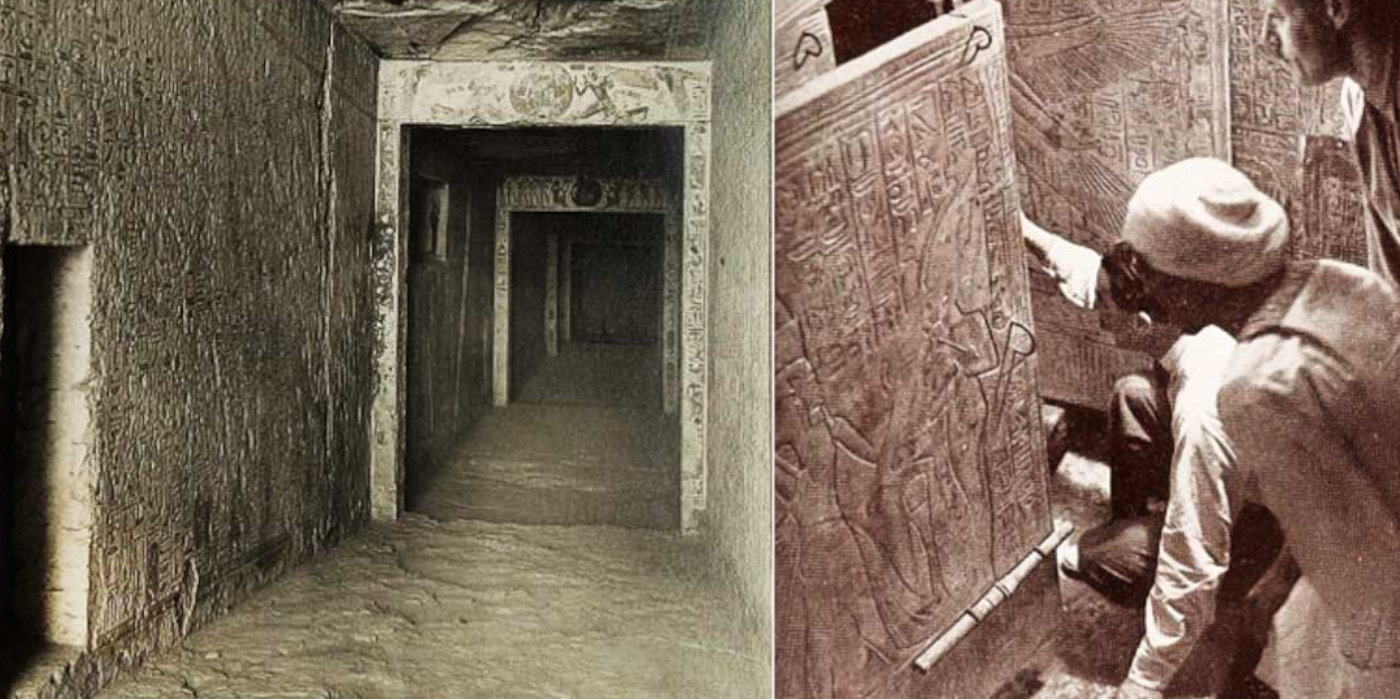
curse-of-the-pharaohs-ancient-Egyptians
Despite its long-standing reputation, there is actually very little evidence to support the curse of the pharaohs. For starters, many of the alleged curses were likely fabricated or exaggerated by 19th-century archaeologists and explorers looking to capitalize on the mystique of ancient Egypt. Additionally, most of the supposed victims of the curse actually died of natural causes or accidents.
Furthermore, many tombs were discovered without any indication of a curse, and many who have entered tombs with supposed curses have lived long and healthy lives. In fact, most of the people involved in the excavation of King Tutankhamun’s tomb, the most famous alleged instance of the curse, lived long and fruitful lives.
Finally, modern science and medicine provide explanations for many of the symptoms associated with the curse, such as respiratory infections and pneumonia caused by exposure to bacteria and fungi present in ancient tombs.
Overall, the truth about the curse of the pharaohs is that it is likely a myth perpetuated by superstition and sensationalism. The reality of ancient Egyptian history is fascinating enough without needing to rely on exaggerated tales of curses and supernatural forces.
Secrets of the Curse of the Pharaohs
What is the Curse of the Pharaohs?
The Curse of the Pharaohs is a legendary curse believed to affect anyone who disturbs the mummy or tomb of an ancient Egyptian pharaoh. It’s often associated with mysterious deaths and misfortunes.
Does science support the existence of the Curse of the Pharaohs ?
There’s no scientific evidence supporting the existence of the curse. Many of the supposed “victims” experienced explainable events unrelated to any supernatural influence.
Why did the curse of the pharaohs concept become popular?
The curse gained popularity after the discovery of Tutankhamun’s tomb in 1922. Several deaths of people connected to the excavation were sensationalized by the media, fueling the myth.
Who was most famously affected by the curse of the pharaohs?
Lord Carnarvon, who financed Howard Carter’s expedition that discovered Tutankhamun’s tomb, died from an infected mosquito bite soon after the tomb was opened. This fueled speculation about the curse.
Are there documented cases of the curse?
While many tales circulate about individuals involved in tomb excavations suffering misfortune, these stories often lack credible evidence and are dismissed by historians and scientists.
How did the ancient Egyptians view curses?
Ancient Egyptians used curses in tombs as deterrents against grave robbers. They believed curses would protect the dead and their possessions from the living.
Is the curse of pharaohs used in popular culture?
Yes, the curse frequently appears in movies, books, and games, often as a dramatic plot device involving supernatural events linked to Egyptian mummies and tombs.
How do archaeologists handle these myths today?
Modern archaeologists focus on preserving history and debunking myths. They use advanced technology and methods to ensure the safety and respect of ancient sites.
Have there been any benefits from the curse of pharaohs myth?
The curse has sparked public interest in Egyptology and archaeology, leading to increased funding and exploration of ancient Egyptian sites.
Can visiting Egypt expose travelers to the curse?
Visitors to Egyptian sites shouldn’t worry about curses. Following guidelines and respecting the historical sites ensures a fascinating and safe experience.
About EgyptaTours

EgyptaTours is a name synonymous with trust, excellence, and unforgettable travel experiences, proudly standing as one of the leading travel agencies in Egypt. Renowned for its deep expertise, personalized service, and carefully crafted itineraries, EgyptaTours serves as the ultimate gateway to discovering Egypt in its most authentic and inspiring form.