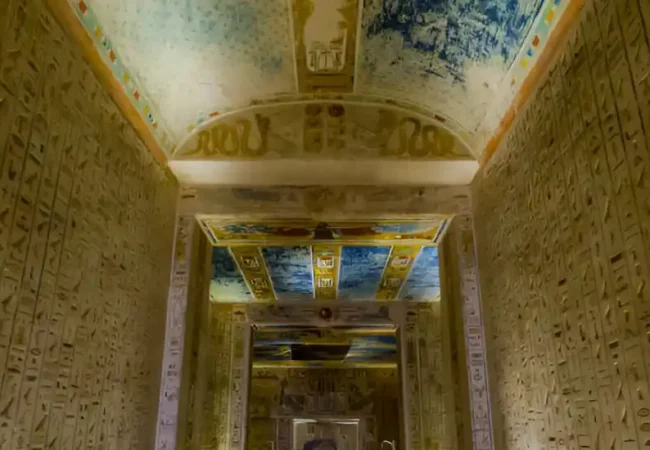
The Tomb of King Ramses IV: KV2
The tomb of King Ramses IV is one of the greatest discoveries....



The Iymery Tomb in Giza is one of the most prominent and important tombs in Egypt, dating back 4,600 years. It is a distinctive tomb whose walls are vibrant with life. This tomb is important for anyone searching for matters of the past related to art, spirituality, as well as daily life, as it holds a wealth of important information that has been a point of attraction for many early travelers.
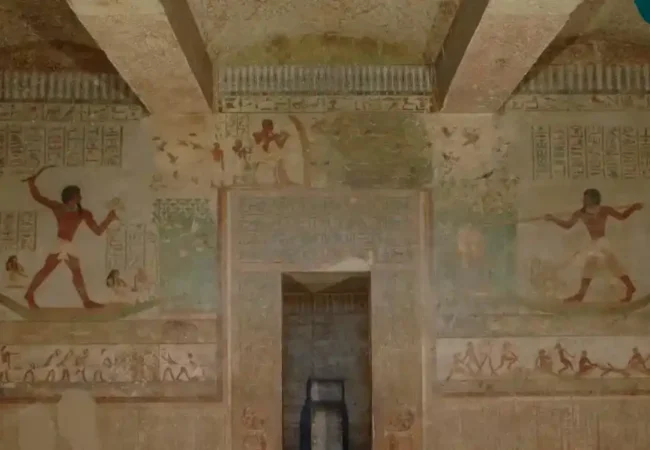
The Tomb of Iymery is one of the distinctive tombs because it includes wall paintings with a variety of inscriptions and artworks that feature everything from celebrations to winemaking. These inscriptions and drawings were carved into hard rock. The tomb’s winding corridors also showcase the skill of architectural design and the spiritual depth of ancient Egypt.
It is worth noting that accessing all parts of the tomb is very difficult in order to preserve its fragile walls from any damage. Therefore, modern technology relies on digital photography and 3D scanning to learn some information about the tomb.
The tomb was built of limestone and was nicknamed the “Tomb of Crafts or Industries” based on its colored inscriptions that illustrate the various arts of craftsmen, whether carpenters, sculptors, or goldsmiths.
The Iymery Tomb in Giza is a tomb that has gained great importance from many, leading them to wonder about its owner.
Here is a clarification:
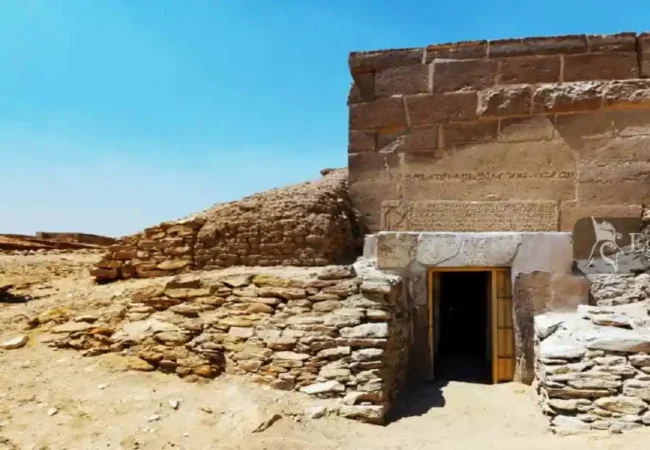
The Tomb of Iymery is located in Giza, in the heart of the ancient Egyptian necropolises, specifically in the heart of the Western Cemetery in Giza, next to the tomb of his eldest son, Neferbauptah. It is a tomb far from the generally traditional paths, but a road will be constructed starting from outside the Western Cemetery, specifically from the main outer road, leading directly to the tomb’s entrance.
It is worth noting that this tomb is not just a tomb, but a wonderful window to obtain diverse information about daily life and religious beliefs of one of the oldest civilizations in the world.

Inscriptions-and-Drawings-inside-the-Tomb-of-Iymery-In-Giza-EgyptaTours
This tomb is one of the most distinctive with its wonderful decorations and inscriptions that carry multiple meanings.
Here is a clarification:
The Iymery Tomb in Giza is one of the tombs of great importance in Egypt.
Here is a clarification:

How-did-the-Tomb-of-Iymery-in-Giza-contribute-to-the-study-of-ancient-Egyptian-society
The Iymery Tomb in Giza is not just an archaeological site but a great treasure that has helped in the study of ancient Egyptian society. Through the detailed drawings, researchers have been able to obtain a lot of information about the social, religious, and economic practices of that era. It also shows the way of dealing with daily life at that time, such as agriculture, wine production, and spiritual rituals.
The tomb has played a major role in the world of art through the special abilities of the ancient artists who showed their skill in art through the drawings on the murals.
These works show their technical innovations and their mastery in using materials and techniques that made their art appear creative and has allowed it to endure through time.

Most-Important-Archaeological-Discoveries-inside-the-Tomb-of-Iymery-EgyptaTours
The discovery of archaeological sites inside tombs like the Iymery Tomb in Giza or outside them is an important element that attracts many tourism lovers from everywhere.
It is also an ideal way to encourage citizens and tourists to visit places they have not seen before. Through the architectural and artistic elements of the tomb, the daily and religious customs and traditions of the ancient Egyptians can be known.
The wall inscriptions inside the tomb are among the things that reflect the details of ancient Egyptian society, in addition to the inscriptions that revealed the funerary rituals and clarified the religious beliefs of the ancient Egyptians after death. In addition, Iymery’s multiple titles reflected his role at that time, and other archaeological discoveries from which ancient Egyptian life can be inferred.
The Iymery Tomb in Giza is one of the tombs that no one is allowed to enter or touch its walls because its colors may be damaged after having remained intact for about 4,600 years.
Once you head to that tomb, you can visit the Giza plateau, which includes the three nearby pyramids: the Pyramid of Khufu, the Pyramid of Khafre, and the Pyramid of Menkaure, as well as the Khufu Ship Museum, which is located near the Great Pyramid and is one of the oldest and most important royal funerary boats.
Recently, the Iymery Tomb in Giza has become one of the tombs that has captured the interest of many contemporary explorers, as well as those interested in digital storytelling. It is a distinctive tomb with its drawings and inscriptions that clarify the daily life of the ancient Egyptians.
The tomb of Thutmose II is one of the biggest archaeological discoveries in Egypt, in addition to the discovery of tombs at the Draa Abul Naga archaeological site on the west bank of Luxor.
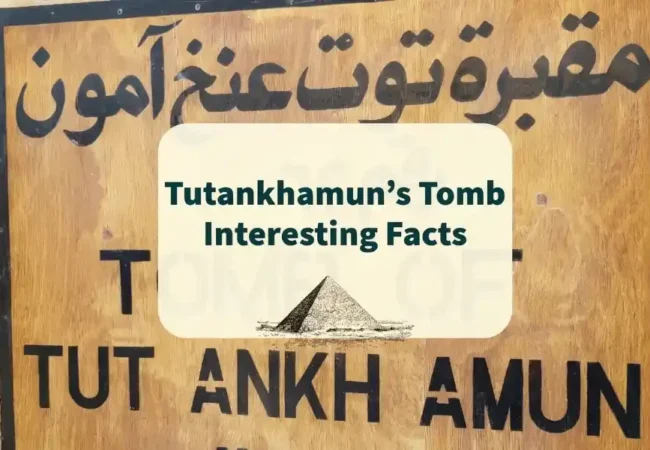
The tomb of Tutankhamun is one of the most famous tombs in Egypt and in the world. It was discovered on November 4, 1922.
Yes, and the most prominent is the Giza pyramid complex, which includes tombs for the three pharaohs: Khufu, Khafre, and Menkaure, the Great Sphinx, and the Khufu ship.
The tomb of Tutankhamun, known as Tomb 62 according to scientific coding, and internationally known as KV62, is the tomb of King Tutankhamun.
The oldest human remains in Egypt are known as the Nazlet Khater man, dating back between approximately 30,000 and 34,000 years, in the Nazlet Khater region of Upper Egypt.
The richest tomb in Egypt was the tomb of Yuya and Thuya, known as Tomb 46 and internationally as KV46, located in the Eastern Valley of the Valley of the Kings in Egypt, until the discovery of the tomb of Tutankhamun.



Explore our top-rated Egypt travel packages and embark on an unforgettable journey. From the Pyramids of Cairo to the magical temples of Luxor, Aswan, and Abu Simbel, discover expertly curated tours designed for your perfect Egyptian adventure