


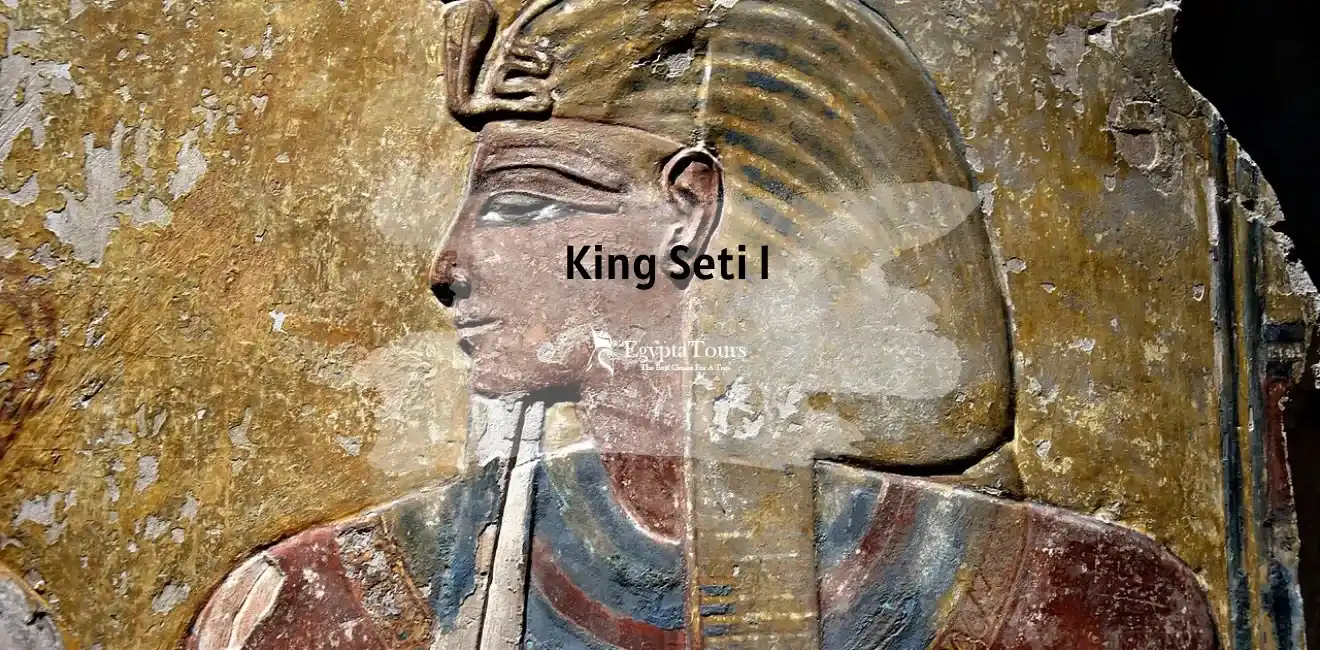
King Seti I: Legacy, Achievements & Historical Significance
Egypt has a rich history, and King Seti I was an important figure in that history. He was the third Pharaoh of the Nineteenth Dynasty of Ancient Egypt, ruling from approximately 1290 to 1279 BC. King Seti I was known for his military conquests, as well as his ambitious building projects and religious reforms. He is especially remembered for his temple at Abydos, which is still in existence today. Get to know more about this great leader of Ancient Egypt by reading this blog post about King Seti I.
Facts about King Seti I Life

Facts-about-King-Seti I-Life-EgyptaTours
Our King , born circa 1318 BC, was the second Pharaoh of the 19th Dynasty in ancient Egypt. He was the son of Pharaoh Ramesses I and Queen Sitre. King Seti I was known to be a great military leader and many stories of his victory stela remain today. He spent much of his life in campaigns and conquests, expanding the Egyptian empire to its largest size since the time of Thutmose III.
pharaoh Seti was an ambitious leader and strove to reclaim lost territories from rival empires. He led numerous successful campaigns in Libya, Syria and Palestine, and consolidated control over the region of Nubia. He also established trade agreements with the Hittites in Anatolia, thus opening up new sources of revenue for his empire.
He married Tuya, who gave birth to their famous son Ramesses II. He was known for his building projects and statues, which he had carved in temples across Egypt. He also ordered the construction of monuments to commemorate important events in his life such as the Battle of Kadesh.
Rise to Power
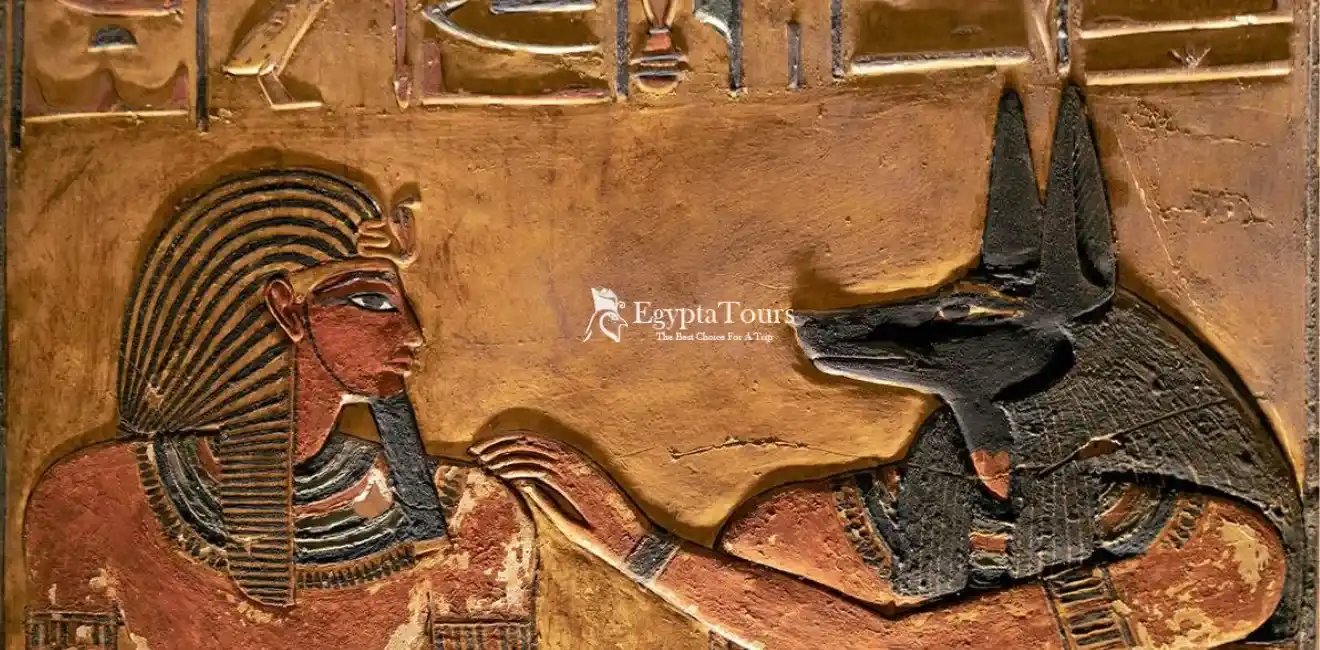
king-Seti-I-Rise -to-Power-EgyptaTours
King Seti, who is also known by his birth name, Menmaatre Seti I, rose to power in the 19th dynasty of Egypt. He was the son of Ramesses I and Queen Sitre. He became Pharaoh upon the death of his father in 1290 BC. King Seti is often remembered for his military prowess and his building projects. He is also remembered as a great ruler who brought peace and prosperity to Egypt during his reign.
pharaoh Seti I ascended to the throne after the death of his father, Ramesses I, who had been pharaoh for just two years. I’s accession marked a return to strong rule after the short reign of his father. He used the stability that he inherited from his father to build a strong central government and to create a new era of prosperity.
Seti I spent much of his reign consolidating power. He worked hard to gain control over powerful nomarchs and nobles in order to keep them from seizing power for themselves. I also initiated several reforms in the Egyptian economy, which allowed for more efficient taxation and resource management. He also strengthened the central government’s control over foreign trade.
pharaoh Seti I had strong support from the people, which allowed him to stay in power for many years. He also gained much support from other rulers in the region, which allowed him to expand his kingdom and gain control over parts of what are now modern-day Israel, Jordan, and Syria.
By the time of Seti I’s death in 1279 BC, he had succeeded in establishing a powerful and prosperous kingdom that would be passed down through his successors.
The Reign of Seti I
After the major social changes caused by Akhenaten’s religious reforms, the main priority of Horemheb, Ramesses I and Seti I was to restore order in Egypt and reaffirm the kingdom’s control over Canaan and Syria which had been threatened by the growing power of the Hittites. Seti I faced the Hittites in several battles. Although he did not completely eliminate them as a threat, he managed to regain most of the disputed territories for Egypt and generally ended his military campaigns with victories. The memory of Seti I’s successes in battle was recorded in large scenes on the front of the Temple of Amun in Karnak.
A mortuary temple for Seti I was built in what is now called Qurna on the west bank of the Nile at Thebes. He also began constructing a magnificent white limestone temple in Abydos, decorated with exquisite relief scenes which was later completed by his son. His capital was at Memphis. Seti I was considered a great king by his peers, but his fame has often been overshadowed by that of his son, Ramesses II.
Length of Reign
Seti I’s accession date is recorded as III Shemu, day 24. His reign probably lasted either 9 or 11 years, rather than 15 full years. Egyptologist Kenneth Kitchen estimated it at 15 years but there are no records of Seti I after his Year 11 Gebel Barkal stela. Since his reign is otherwise well documented, most scholars consider a continuous gap in records unlikely, although it is technically possible that no records have been discovered yet.
Peter J. Brand noted that Seti personally opened new rock quarries at Aswan in Year 9 to build obelisks and colossal statues. This event is recorded on two stelas in Aswan. However, most of these obelisks and statues, such as the Flaminian and Luxor obelisks, were only partially finished or decorated at the time of his death and were completed early during the reign of Ramesses II.
The inscriptions on these monuments show the early form of Ramesses II’s prenomen, “Usermaatre.” Ramesses II used “Usermaatre” in his first year and did not adopt the full royal title “Usermaatre Setepenre” until late in his second year.
Brand explains that this evidence challenges the idea of a 15-year reign for Seti I, suggesting instead that he likely ruled for ten to eleven years. Only two years passed between the opening of the Aswan quarries and the partial completion of these monuments. Ramesses II had to complete many of his father’s unfinished projects, including the southern half of the Great Hypostyle Hall at Karnak and parts of his father’s temples at Qurna and Abydos, in the first year of his reign.
The larger Aswan stela records that Seti I “ordered the commissioning of numerous works to make very great obelisks and magnificent statues, built large barges to transport them and prepared crews for moving them from the quarry.” Despite these efforts, few obelisks and no colossal statues were fully inscribed for Seti I, while Ramesses II completed two obelisks and four seated colossi from Luxor early in his reign.
This strongly suggests that Seti died after about ten to eleven years. If he had ruled until his 14th or 15th year, more of the monuments he commissioned in Year 9 would have been completed before his death.
German Egyptologist Jürgen von Beckerath also accepted that Seti I ruled for only 11 years. His highest known date is Year 11, IV Shemu, day 12 or 13, on a sandstone stela from Gebel Barkal, although he may have survived a few days into Year 12 before his death, based on the date of Ramesses II’s accession. Wolfgang Helck determined Seti I’s accession date as III Shemu, day 24, very close to Ramesses II’s accession on III Shemu, day 27.
More recently, Dutch Egyptologist Jacobus Van Dijk questioned the “Year 11” date on the Gebel Barkal stela, which was previously considered Seti I’s highest attested date. The monument is poorly preserved but shows Seti standing, the only time since Year 4 he was depicted upright rather than stooping on his stelae.
The glyphs representing “11” are damaged and could be read as “III” instead. Van Dijk suggested the stela should be dated to Year 3 of Seti I, making Year 9 his most likely highest date, as supported by wine jars found in his tomb. In 2012, David Aston analyzed the same wine jars and concluded the highest year found in Seti I’s KV17 tomb is Year 8.
Seti I Titles
King Menmaatre Seti I who was also known as Sethos I, ruled Egypt during the New Kingdom period, approximately from 1294 or 1290 BCE to 1279 BCE and he was the second pharaoh of the Nineteenth Dynasty. He was the son of Ramesses I and Queen Sitre and he became king after his father’s reign. The name “Seti” comes from his dedication to the god Set, also called “Sutekh” or “Seth” which was a common practice among pharaohs who often associated themselves with different gods and used multiple names during their reigns.
Seti I had several names, as was customary for pharaohs. He was known as “The Man of Set, Beloved of Ptah.” His prenomen, “Menmaatre,” means “Established is the Justice of Re,” while his nomen, “Sety Merenptah,” translates to “Man of Set, Beloved of Ptah.”
He also held other titles, such as the Nebty name “Wehemmesut-Sekhemkhepesh Derpedjut” which means “Renewing Births, the Strong-Armed One Who Has Repelled the Nine Bows,” the Horus name “Kanakhte-Khaemwaset Seankhtawy” which means “Strong Bull Who Appears in Thebes and Sustains the Two Lands” and the Golden Horus title “Wehemkhau-Userpedjutem-Tawnebu,” meaning “Powerful of Effectiveness Who Has Subdued His Enemies.”
Although the historian Manetho mistakenly claimed that Seti I founded the Nineteenth Dynasty and ruled for 55 years, there is no evidence to support such a long reign.
Military Campaigns
Early Wars in Western Asia, Libya and Nubia
Seti I fought a series of wars in Western Asia, Libya, and Nubia during the first ten years of his reign. The main sources for his military activities are the battle scenes carved on the north exterior wall of the Karnak Hypostyle Hall, along with several royal stelas that describe battles in Canaan and Nubia.
In his first year as king, Seti I led his army along the “Horus Military Road,” a coastal route that ran from the Egyptian city of Tjaru (Zarw/Sile) in the northeastern Nile Delta, along the northern coast of the Sinai Peninsula and ending in the town of Canaan in what is now the Gaza Strip. The Ways of Horus included a series of military forts, each with a well, which are depicted in detail in the king’s war scenes on the north wall of the Karnak Hypostyle Hall.
While crossing the Sinai, Seti I’s army fought local Bedouin tribes called the Shasu. In Canaan, some city-states gave tribute voluntarily, while others, including Beth-Shan and Yenoam, had to be captured but were defeated without much difficulty. A stele at Beth-Shan confirms this reconquest.
According to scholars such as Grdsseloff, Rowe, Albrecht, and Albright, Seti defeated Asian nomads referred to as the Apiru, who are thought to be the Hebrews. Dussaud commented on Albright’s work, noting that the term “Apiru” could be linked to “Ibri” (Hebrews) through a popular change in pronunciation, representing “the man from beyond the river,” which shows that Egypt’s influence extended beyond the river.
The attack on Yenoam is depicted in Seti I’s battle scenes, while other battles, such as the defeat of Beth-Shan, were not shown because the king did not personally take part and sent only a division of his army. The first-year campaign also continued into Lebanon, where the local chiefs submitted and were required to cut valuable cedar wood themselves as tribute.
At some point in his reign, Seti I defeated Libyan tribes who had invaded Egypt’s western border. Although they were defeated, the Libyans remained a recurring threat to Egypt during the reigns of Merenptah and Ramesses III. In Nubia, the Egyptian army suppressed a minor rebellion in Seti I’s eighth year. The king himself did not take part in this, although his crown prince, the future Ramesses II, may have been involved.
Capture of Kadesh
One of Seti I’s greatest achievements in foreign policy was capturing the Syrian town of Kadesh and the surrounding territory of Amurru from the Hittite Empire. Egypt had not controlled Kadesh since the reign of Akhenaten. Seti I defeated a Hittite army defending the town and entered Kadesh in triumph alongside his son Ramesses II, erecting a victory stela at the site which has been found by archaeologists.
However, Kadesh soon returned to Hittite control as the Egyptians could not maintain a permanent military presence so close to the Hittite heartland.
It is unlikely that Seti I made a formal peace treaty with the Hittites or voluntarily gave up Kadesh and Amurru but he may have reached an informal understanding with the Hittite king Muwatalli about the boundaries of their empires. Five years after Seti’s death, his son Ramesses II attempted to recapture Kadesh but failed. Although Ramesses temporarily occupied the city in his eighth year, it remained effectively under Hittite control.
Traditionally, Seti I’s wars were seen as restoring the Egyptian empire after it had been lost during Akhenaten’s reign. This view was based on the chaotic situation in Syria and Canaan described in the Amarna letters, a collection of diplomatic correspondence from Akhenaten’s time found at el-Amarna.
Recent research, however, suggests that Egypt’s empire was not fully lost at this time, except for the northern border provinces of Kadesh and Amurru in Syria and Lebanon. While evidence of military actions under Akhenaten, Tutankhamun and Horemheb is limited or unclear, Seti I left monuments and texts celebrating his campaigns which emphasize his skill and success on the battlefield.
Seti I Wars
Seti also invaded Nubia in the south to gain control of lucrative trade routes. He was even able to push the boundaries of Egypt’s empire all the way to the Euphrates River in what is now Iraq. King Seti was a great military leader, who had a profound impact on Egyptian military tactics.
He is credited with introducing chariots into battle, which provided his forces with mobility and firepower. He also developed methods of fortification and siege warfare that were adopted by subsequent Pharaohs. His military accomplishments were so impressive that he was given the title of ‘Victor of All Lands’ upon his death.
Building Projects

King-Seti-I-Building -Projects-EgyptaTours
He was renowned for his many building projects during his reign. He was involved in constructing temples, public buildings and palaces. He is most well-known for the Great Hypostyle Hall at Karnak. It is a large hall of columns that are decorated with intricate carvings. It is believed to have been commissioned by Seti I and completed by his son, Ramesses II.
Seti I also built the Abydos temple complex which features a large granite statue of him, along with a number of smaller statues. He also built a number of other temples in Luxor, including the Luxor temple, the Ramesseum and the Temple of Osiris.
Additionally, he is credited with building a number of fortresses and roads, particularly in Nubia, in order to protect Egypt from foreign invaders. was a prolific builder and his construction projects helped to solidify his legacy as one of Ancient Egypt’s greatest pharaohs.
Temple of Seti I
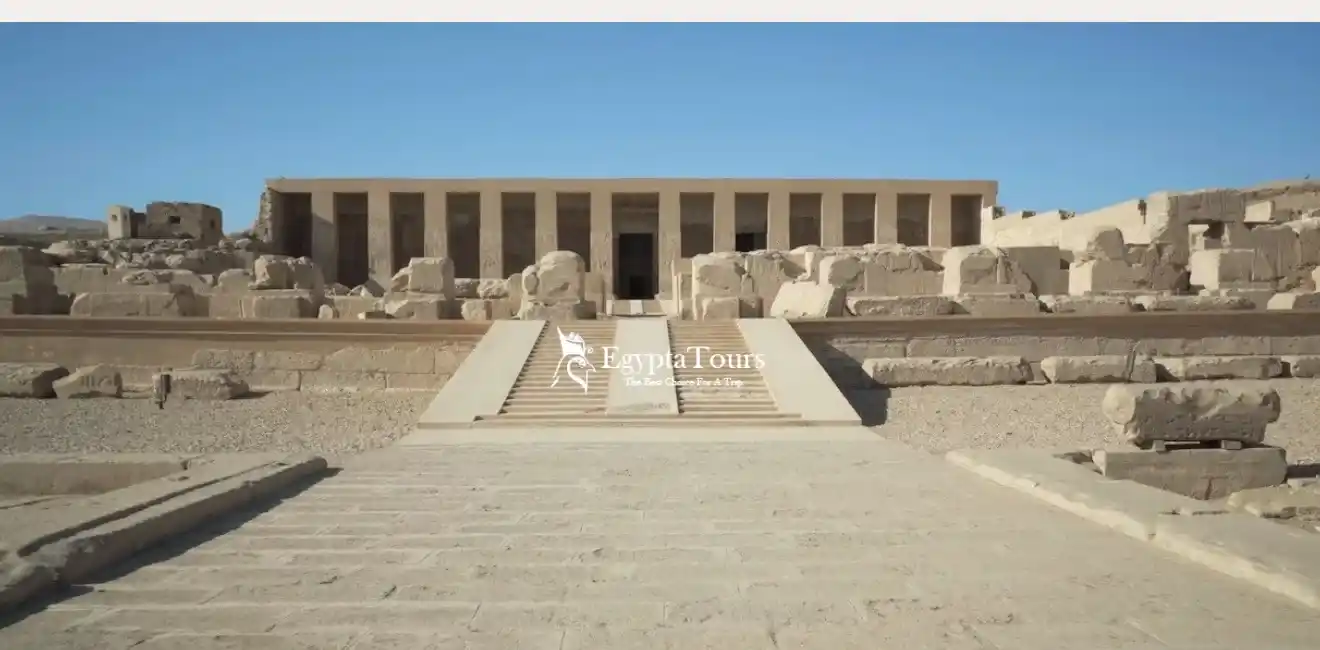
Temple-of-Seti-I-EgyptaTours
The Mortuary Temple of Seti I stands as a monument dedicated to Pharaoh Seti I from the New Kingdom period. It is located in Upper Egypt within the Theban Necropolis, directly across from Luxor and close to the town of Qurna. This impressive temple seems to have been built towards the end of Seti I’s reign, with its completion possibly carried out by his son, Ramesses the Great, after Seti’s death.
Inside the temple, there is a chamber that contains a shrine honoring Ramesses I, Seti’s father, who had a short reign and did not build a temple for himself. Today, the temple is in a state of significant deterioration. The main court and its pylons are largely in ruins, and a large part of the eastern section of the temple is now buried beneath the modern town of Qurna.
The temple includes several unique features. It houses the Osireion and contains remarkable graffiti written in ancient Phoenician and Aramaic on its walls. One of its most famous aspects is the Abydos King List, which records a long list of pharaohs from the main dynasties recognized by Seti I. Another interesting feature is the so-called “Helicopter Hieroglyphs,” where eroded inscriptions appear to resemble modern vehicles such as helicopters, submarines, and planes. This unusual effect happened because the stone was reused over time.
The original inscription, carved during Seti I’s reign, read: “He Who Repulses the Nine Enemies of Egypt.” Later, during the reign of Ramesses II, the inscription was filled with plaster and re-carved to read: “He Who Protects Egypt and Overthrows the Foreign Countries.” Over time, the plaster eroded, revealing both inscriptions and creating an overlapping effect that offers a fascinating glimpse into the historical changes of the temple.
Death & Burial
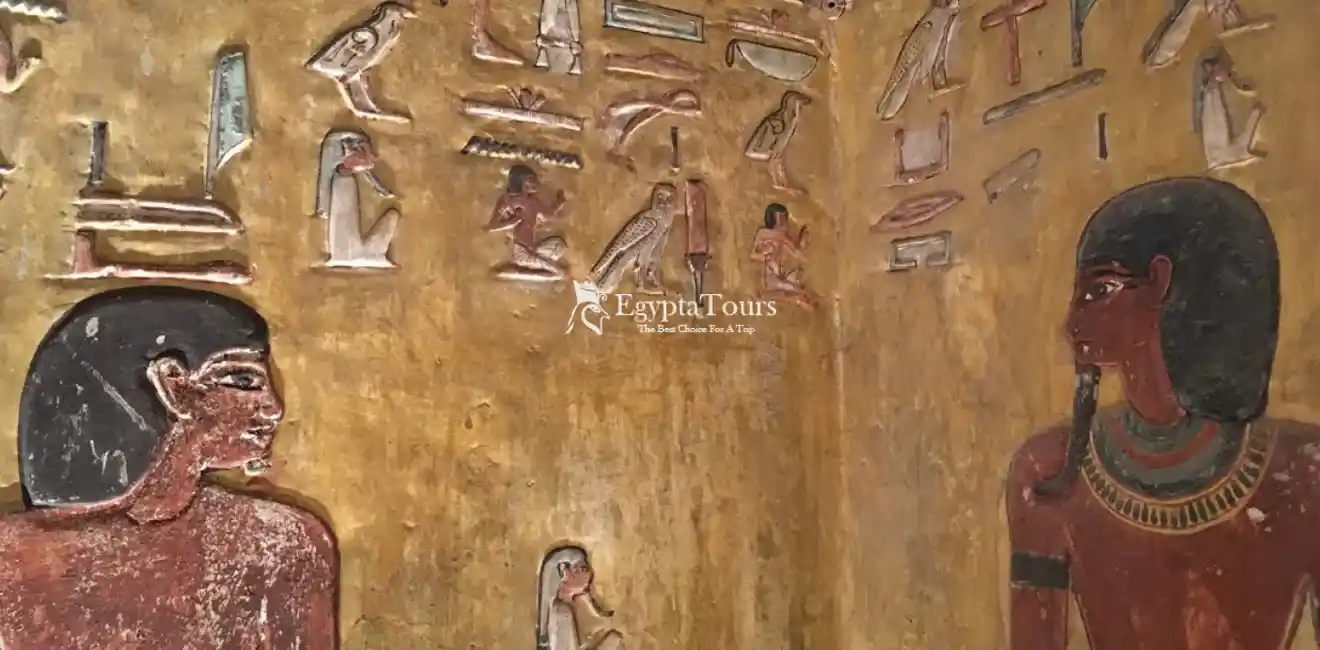
King-Seti-I-Death-and-Legacy-EgyptaTours
King Seti I passed away in 1279 BC, and his death marked a period of instability in Egypt. His son and successor, Ramesses II, quickly set about consolidating his power and continued the legacy of building projects that he began. He also launched campaigns against Egypt’s enemies to expand the kingdom.
Mummy
From an examination of Seti I’s exceptionally well-preserved mummy, it appears that he died unexpectedly before reaching forty years of age. This contrasts sharply with Horemheb, Ramesses I and Ramesses II, all of whom lived to an advanced age. The exact cause of Seti’s early death is uncertain, but there is no evidence of violence on his body. Although his mummy was found decapitated, this was likely the result of tomb robbers after his death. The priests of Amun carefully reattached his head using linen clothes.
Some scholars suggest that Seti I may have died from a long-term illness, possibly related to his heart. Interestingly, his heart was placed on the right side of the body, while the usual practice of the time during mummification was to place it on the left. Opinions differ as to whether this was a mistake or an intentional attempt to improve his heart’s function in the afterlife. Seti I’s mummy measures approximately 1.7 meters (5 feet 7 inches) in height.
In April 2021, Seti’s mummy was moved from the Museum of Egyptian Antiquities to the National Museum of Egyptian Civilization, along with those of seventeen other kings and four queens, in a grand event known as the Pharaohs’ Golden Parade.
Tomb
Seti I’s tomb (KV17), discovered in 1817 by Giovanni Belzoni in the Valley of the Kings, proved to be the longest and deepest of all New Kingdom royal tombs, measuring 446 feet (136 meters). It was the first tomb to feature decorations, including the Book of the Heavenly Cow, in every passageway and chamber, with highly refined bas-reliefs and vibrant paintings. Fragments of these decorations, including a large column showing Seti I with the goddess Hathor, are preserved in the National Archaeological Museum in Florence. This style influenced the decoration of later New Kingdom royal tombs.
Seti’s mummy itself was found by Émile Brugsch on June 6, 1881, in the Royal Cache (tomb DB320) at Deir el-Bahari, and has been kept at the Egyptian Museum in Cairo since its discovery. His massive sarcophagus, carved from a single piece of alabaster and intricately decorated on all surfaces including the goddess Nut on its interior base, is now housed in Sir John Soane’s Museum. Soane acquired it in 1824 after the British Museum declined to pay the £2,000 price.
The alabaster was originally pure white with blue copper sulphate inlays, but years of London’s climate and pollution have darkened it, and the inlays have largely disappeared. A nearby watercolor records the sarcophagus’s original appearance.
The tomb also included an entrance to a secret tunnel behind the sarcophagus, initially estimated by Belzoni’s team to be 100 meters (330 feet) long. The tunnel was not fully excavated until 1961, when Sheikh Ali Abdel-Rasoul’s team attempted to locate a hidden burial chamber. Their work was halted due to instability and permit issues, though they confirmed the tunnel extended over 30 meters (98 feet) beyond the original estimate.
In June 2010, a team from Egypt’s Ministry of Antiquities, led by Dr. Zahi Hawass, completed excavation of the tunnel, which had been reopened in 2007 after the discovery of a downward-sloping passage approximately 136 meters (446 feet) into the tunnel. After uncovering two staircases, the total length of the tunnel was measured at 174 meters (571 feet) but no secret burial chamber was found.
Seti I Cartouche
The cartouche of Seti I is the oval-shaped symbol that contains his name written in hieroglyphs. In ancient Egypt, pharaohs used cartouches to highlight their royal names, showing their status and authority as powerful rulers. Seti I’s cartouche, representing the lord of the two lands, sometimes includes images and engravings of many gods and goddesses such as Osiris, Hathor, Ptah, and depictions of mummies, symbolizing his great power and divine nature. Archaeological discoveries and historical records give us important information about ancient Egypt, but the connection between Seti I and Moses remains uncertain and is open to interpretation.
Alleged Co-regency with Ramesses II
Around the ninth year of his reign, Seti I appointed his son Ramesses II as crown prince and his chosen successor. However, the evidence suggesting that the two kings ruled together as co-regents is likely misleading. Peter J. Brand points out that the relief decorations found at several temple sites in Karnak, Qurna and Abydos, which show Ramesses II alongside Seti I, were actually carved after Seti’s death by Ramesses II himself. Therefore, these reliefs cannot be used as proof of a co-regency.
The late Egyptologist William Murnane, who initially supported the idea of a co-regency between Seti I and Ramesses II, later changed his view and rejected the theory that Ramesses II began counting his own regnal years while Seti I was still alive. Similarly, Kenneth Kitchen does not accept the term co-regency for their relationship. He describes the early period of Ramesses II’s career as a “prince regency,” during which the young Ramesses enjoyed all royal privileges, including the use of royal titles and a harem but he did not count his regnal years until after his father’s death.
The evidence for a co-regency is vague and unclear. Two important inscriptions from the first decade of Ramesses II’s reign the Abydos Dedicatory Inscription and the Kuban Stela refer to him only with titles appropriate for a crown prince, such as “king’s eldest son and hereditary prince” or “child-heir” to the throne, along with some military titles.
Therefore, there is no clear evidence that Ramesses II ruled as co-regent under his father. Brand emphasizes that Ramesses’ claim of being crowned king by Seti I, even as a child in his father’s arms, is highly self-serving and questionable. In contrast, his description of his role as crown prince is more accurate. The most reliable part of the evidence is the list of Ramesses’ titles as the eldest son and heir apparent, which is well supported by sources from the time of Seti I’s reign.
The story of Seti I and Moses
The connection between Seti I and Moses is often discussed through historical and religious interpretations, especially in relation to the biblical story of the Exodus. Some historical theories suggest that Seti I or his son Ramesses II (also known as Ramesses the Great), could be the Pharaoh mentioned in the biblical account who confronted Moses. However, there is no direct or conclusive evidence that links Seti I specifically to Moses or to the events described in the Bible.
The identity of the Pharaoh of the Exodus remains a topic of debate among historians, archaeologists, and scholars. The biblical story provides a narrative that can be interpreted in different ways and the absence of solid historical evidence makes it difficult to identify any specific pharaoh with certainty.
Achievements of Seti
At the time of his death, He was remembered fondly as a successful ruler who had achieved much during his reign. He was also celebrated for the many monuments and temples he had built, which are still standing today as reminders of his legacy. He is particularly well-known for the Luxor Temple, one of the grandest and most impressive structures in Ancient Egypt.
Even though it has been thousands of years since his death, still remains one of Egypt’s most beloved and respected rulers. His contributions to the kingdom have been remembered and honored throughout history.
Seti I Family
King Seti I had five children. His oldest son, Ramesses II, succeeded him as Pharaoh of Egypt upon his death in 1279 BC. He also had four daughters – Merneptah, Henutmire, Isetnofret, and Nebetawy. Seti I was very devoted to his children, particularly his eldest son Ramesses II, who later became one of the most powerful Pharaohs in Ancient Egyptian history.
The family of King Seti I was very influential in the royal court of Egypt. His wife Queen Tuya was one of the most powerful women in Ancient Egypt and served as regent for Ramesses II during his early years. Seti I also had several siblings and a large extended family, including many grand-children and great-grand-children.
Seti I was an important figure in Ancient Egyptian history and his family had a profound effect on the course of Egyptian culture. His legacy is still felt today, with the tomb of Seti I discovery of at the Valley of Kings, the site of many of his building projects, and the remains of his great temple in Abydos. King Seti I remains one of the most significant rulers in Ancient Egyptian history.
Quick Facts About King Seti I
Who was King Seti I?
King Seti I was a Pharaoh of the Nineteenth Dynasty of Egypt, ruling from 1290 to 1279 BC. He is known for restoring Egypt’s former glory through military campaigns and extensive building projects.
What were Seti I’s major accomplishments?
Seti I is best known for his successful military campaigns in Syria and Canaan, which helped to strengthen and expand Egypt’s influence. He also initiated numerous construction projects, including the famous temple at Abydos and significant contributions to the Karnak temple complex.
Where is King Seti I buried?
Seti I is buried in the Valley of the Kings, in a tomb known as KV17. This tomb is considered one of the most beautifully decorated and elaborate in the valley.
How did King Seti I contribute to Egypt’s architecture?
Seti I left a lasting architectural legacy with structures like the Temple of Seti I at Abydos, which features intricate carvings and reliefs. He also worked on the Hypostyle Hall at Karnak, which remains one of the largest religious structures in the world.
What was Seti I’s relationship with his successor, Ramses II?
Seti I was the father of Ramses II, who succeeded him as Pharaoh. Ramses II continued many of his father’s projects and campaigns, cementing their combined legacy as two of Egypt’s most powerful rulers.
How is King Seti I depicted in Egyptian art?
Seti I is often depicted as a strong Pharaoh with traditional symbols of power, such as the crook and flail. His depictions emphasize his role as a warrior king and a restorer of Egypt’s grandeur.
Why is Seti I’s reign considered significant?
Seti I’s reign is significant due to his efforts to restore Egypt’s power both militarily and culturally after a period of decline. His successful campaigns and monumental building projects set the stage for Egypt’s continued prosperity under his son, Ramses II.
What were Seti I’s religious contributions?
Seti I was a devout follower of the traditional Egyptian pantheon and restored many temples that had fallen into disrepair. His temple at Abydos is dedicated to Osiris, reflecting his commitment to religious practices and beliefs.
Did King Seti I face any major challenges during his reign?
Seti I faced challenges in restoring Egypt’s control over its territories, particularly in Canaan and Syria. His military campaigns were crucial in re-establishing dominance in these regions.
How is King Seti I legacy viewed today?
Seti I is viewed as one of the great warrior-pharaohs of Egypt, credited with restoring its empire and initiating a period of cultural and architectural renaissance. His reign is often seen as a precursor to the more famous reign of his son, Ramses II.
About EgyptaTours

EgyptaTours is a name synonymous with trust, excellence, and unforgettable travel experiences, proudly standing as one of the leading travel agencies in Egypt. Renowned for its deep expertise, personalized service, and carefully crafted itineraries, EgyptaTours serves as the ultimate gateway to discovering Egypt in its most authentic and inspiring form.