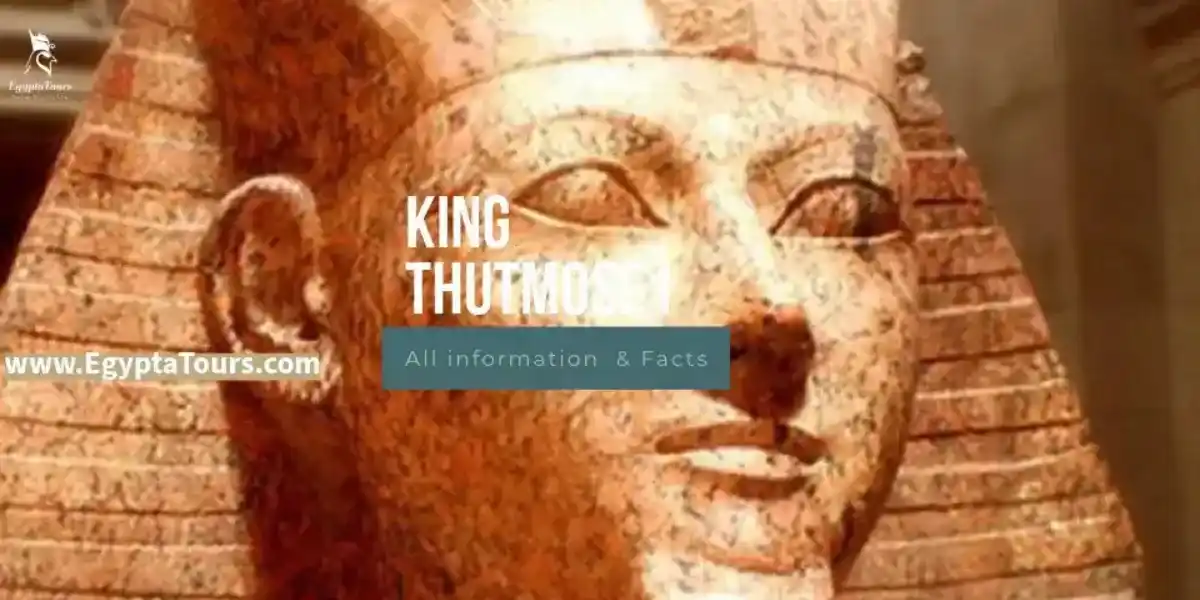
The Reign of King Thutmose I: Achievements, Conquests, and History
📋 Summary & Quick Facts
-
Lineage and Succession: Thutmose I was not the son of Amenhotep I; his mother was a non-royal woman named Senesneb. He married his sister/relative Ahmose to gain royal legitimacy and was the father of Thutmose II and the legendary female pharaoh Hatshepsut.
-
Military Expansion: He was a highly effective military commander who pushed Egypt’s borders further than ever before. He subdued Nubian rebellions in the south and chased the remnants of the Hyksos into Syria, establishing the Euphrates River as the empire’s border.
-
Strategic Administration: To maintain control over conquered territories, particularly Nubia, he established the position of “Viceroy of Kush.” This civilian representation prevented future revolts and secured a steady flow of gold and resources into Egypt.
-
Architectural Contributions: He heavily invested in monumental architecture, significantly expanding the Karnak Temple in Thebes by adding the fourth and fifth pylons and erecting two massive 143-ton granite obelisks.
-
A New Burial Tradition: He was the first Egyptian king to abandon traditional pyramid or open-tomb burials in favor of a secret, highly decorated tomb (KV38) carved into the rock of the Valley of the Kings, designed by his architect Ineni to ensure a safe passage into the afterlife.
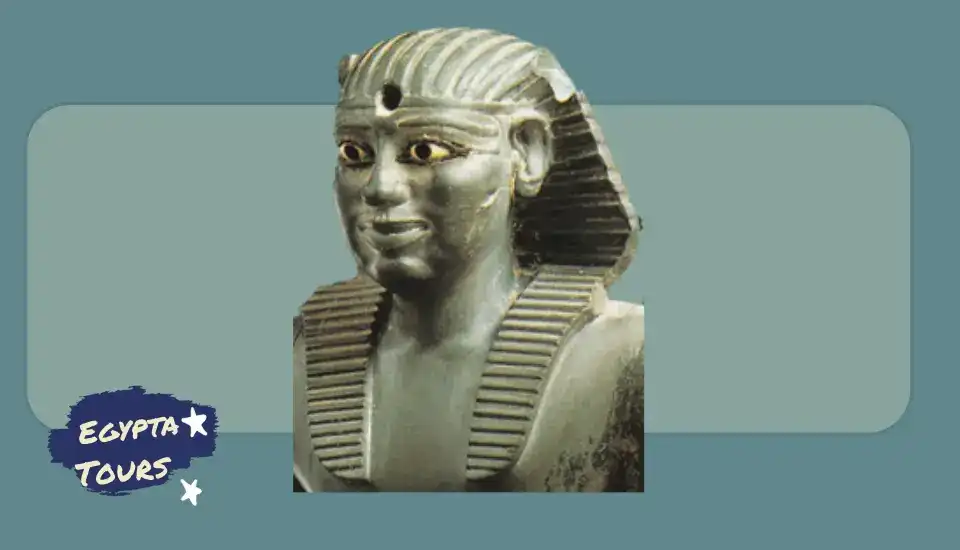
Our story today is with King Thutmose I, who succeeded Amenhotep I on the throne of the king, and the information indicates that he is not his son, as some sometimes claim, as Thutmose explicitly declared in the decree issued on his accession to the king, that he was given birth to by his mother, Senesneb, and from that we know.
That his mother was not a legitimate king’s wife, or a legitimate king’s daughter.
Stories and secrets revealed by the ancient Egyptian through his great civilization, which extends back thousands of years, and still fascinates the world until now.
One of the mysteries of that history that extends over several centuries is solved. Some of them were recorded on the walls of temples in the time of ancient Egyptian writing, and others have not yet been recorded. But it is revealed by archaeological treasures emerging from the ground. Learn with us about King Thutmose I.
The original name is Aheperkare, and the royal name is: Thutmose I. He died in 1492 BC. He is the third pharaoh of the Eighteenth Dynasty. He ruled Egypt from 1504 BC until 1492 BC.
He was crowned king of the country immediately after the death of Amenhotep I, and he bears the title of the Strong Bull, and this title applies to him and to the acts of courage he performed.
He was tall and broad-shouldered. All Sudanese countries, up to the confluence of the Blue Nile and the White Nile, were the property of the Pharaoh, and the Egyptian gods were worshiped in Nabata, as they were worshiped in Thebes.
He succeeded his father, King Amenhotep I, and gave birth to two pharaohs: Thutmose II and Hatshepsut. The problem of inheriting a throne arose, and his policy was known as the policy of armed peace.
He was considered the first of the great pharaohs in the New Kingdom to be a warrior. He assumed power after marrying his sister, Ahmose, to gain legitimacy, and he gave birth to Queen Hatshepsut.
In the second year of his rule, he led a Nile campaign in Sudan, crossed the Fourth Cataract, and expanded Egypt’s borders in the south.
Gold mines were one of the reasons for his incursion into the south, and the second reason was the threats to the borders of Egypt from the era of the Seventeenth Dynasty of the Kushite Kingdom, which was located next to the third waterfall.
After he finished expanding in southern Egypt, he left with the Egyptian army on the east side and penetrated into Syria to the Euphrates to chase the remnants of the Hyksos.
He declared that the Euphrates was the border of Egypt and left a monument on the bank of the Euphrates River.
Inside Egypt, The third ruler of the 18th Dynasty renovated the Temple of Amun in Thebes from the Middle Kingdom, expanded it, and placed two obelisks in front of the entrance.
He was the first king to build a tomb in the Valley of the Kings in Thebes and built a village for cemetery workers in Deir El-Medina in western Thebes.
Specifications and information about King Tuthmosis
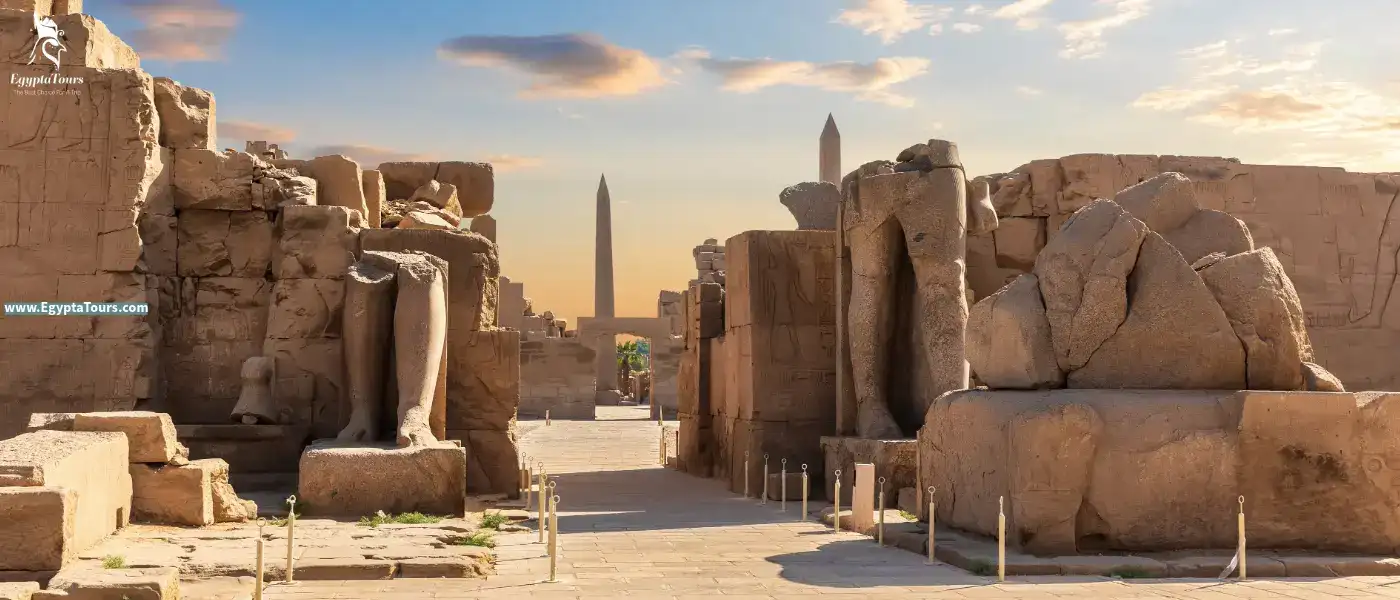
All-information-about-King-Thutmose-I
“King Thutmose I” speaks about himself in some inscriptions that he is the son of a king, and that his father is the son of a king, and this indicates that his father and grandfather were kings, and since he was not the son of “Amenhotep I,” then he must be the son of “Ahmose I” and the grandson of “Sekenre.”
Whatever the case, the issue is still surrounded by both doubt and ambiguity, according to what Dr. Salim Hassan said in his encyclopedia of ancient Egypt.
King Thutmose I also had qualities that testify to his military competence, strategic vision, great inclination for acts of heroism and valor in war.
And continuing the struggle of the Egyptian kings who preceded him in defending Egypt and expanding its borders to the furthest reaches of the sun’s rays in the ancient Near East.
This king was inclined toward reconstruction, peaceful works, and the renaissance of the state and pushing it to the utmost goals of development and prosperity.
The dynasty of King Tuthmosis continued
Thutmose’s father is believed to be Amenhotep I. His mother, Senseb, was of non-royal parentage and may have been the non-principal or secret wife.
Ahmose, who held the title of royal wife (queen) of Thutmose, was probably the daughter of Ahmose I and sister of Amenhotep I; However, she was never called “the king’s daughter.”
So there is some doubt about this topic, and some historians believe that she was Thutmose’s sister.
Assuming that she was a relative of Amenhotep, her marriage to Thutmose was in order to ensure the inheritance of the throne. However, this will not be the case for two reasons.
First, the Amenhotep building in Karnak shares the name Amenhotep with the name Thutmose as well, and this was before the death of Amenhotep.
Second, Thutmose’s first son with Ahmose, Amunmes, was apparently born long before Thutmose’s coronation.
He can be seen on a stela from his fourth year in power hunting near Memphis, and became “commander of his father’s army” sometime before his death, which may not have been later than the death of King Thutmose I in his twelfth year in power.
Thutmose and Queen Ahmose had another son, Wajmes, and two daughters, Hatshepsut and Nephropti.
Waj Mas died before his father, and Neferupti died as an infant. Thutmose had one son by the other wife, Mut-Neferet.
This son succeeded him and was known as Thutmose II, who married King Thutmose I to his daughter, Hatshepsut.
Hatshepsut later recorded that Thutmose passed the throne to both Thutmose II and Hatshepsut. This is considered propaganda by Hatshepsut’s supporters to legitimize her claim to the throne when she later took power.
King Thutmose I: Military achievements
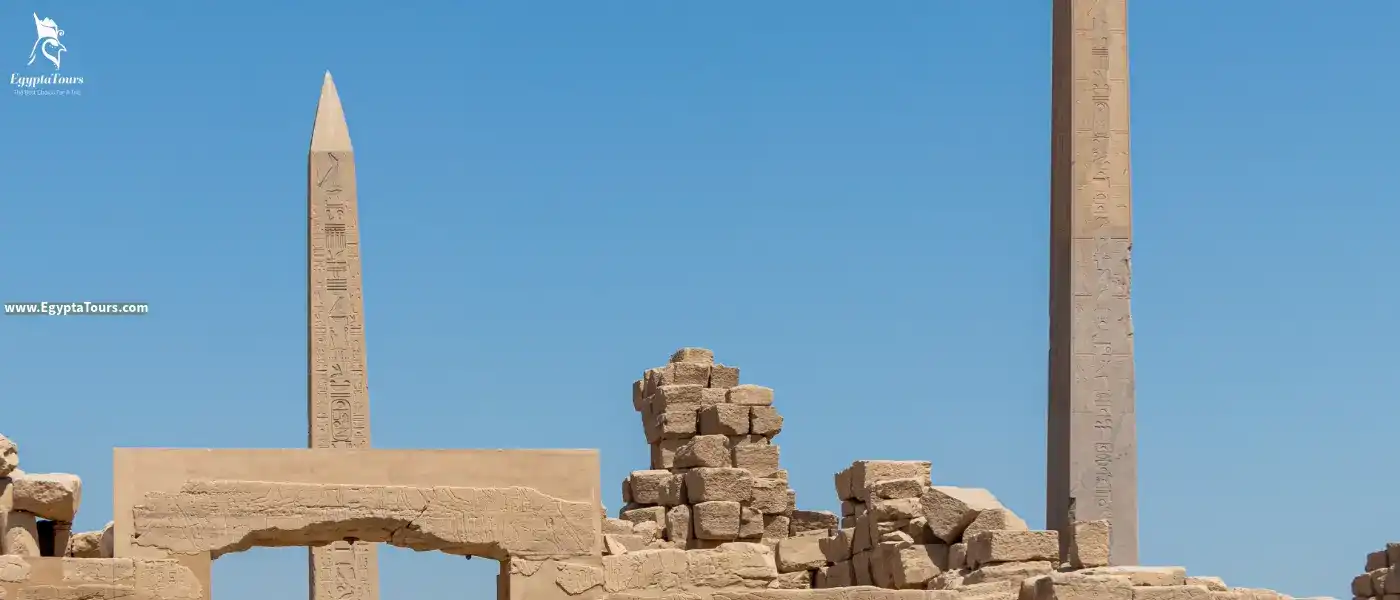
King-Thutmose-I-Military-achievements
After The Egyptian King assumed the throne, Nubia rebelled against Egyptian rule. According to his autobiography from the tomb of Ahmose ibn Ebana, Thutmose traveled up the Nile River and personally fought in the battle, killing the Nubian king.
After the victory, he hung the body of the Nubian king on the prow of his boat, before returning to Thebes.
After that campaign, he led a second campaign against Nubia in his third year, during which he ordered the dredging of the canal at the first gondola
It was built during the reign of Sesostris III of the Twelfth Dynasty in order to facilitate the flow of water traveling against the current from Egypt to Nubia.
This helped Nubia’s integration into the Egyptian Empire and this campaign was recorded on two separate inscriptions by his son Ture.
Thutmose faced the military threat of another Nubian rebellion in his fourth year. His influence expanded to the far south. An inscription was found dating back to his reign as far south as Karagos, south of the Fourth Cataract.
During his reign, he initiated a number of projects that effectively ended Nubia’s independence for the next 500 years.
Expanded the temple of Senusret III and Khnum, on the opposite side of the Nile from Semna. He also appointed a man named Al-Tiri to the position of Viceroy of Kush, also known as “The King’s Son of Kush.”
With the king’s civilian representative permanently in Nubia itself, Nubia never revolted and was easily controlled by future Egyptian kings.
Acts and monuments of King Thutmose I
After the borders of King Thutmose I expanded, he celebrated the victories he had achieved by building a spacious hall in the Temple of Amun after renovating and rebuilding the temple in Thebes.
He erected two obelisks in front of the fourth gate in the Temple of Amun, one of which is still standing in the Karnak Temple.
They were made of granite that Thutmose brought from Upper Egypt, loaded on a boat about 60 meters long.
It is about 22 meters wide and carries two huge blocks of granite, each about 22 meters long and two meters around the base, weighing about 143 tons. The fourth and fifth pylons were also built in the Karnak Temple.
From the Abydos painting, it appears that Thutmose added to the Temple of Osiris, and he has monuments in Giza, Elephantine, Arment, Memphis, and in Sinai in the Sharabat al-Khadim area.
The family of King Tuthmosis I
Hatshepsut’s father gave birth to Queen Ahmose, his daughter Hatshepsut, and his two sons, Amun-mes and Wasmose, who died at a young age.
He also had a son, Thutmose II, from his second wife, Mut-Neferet. He also had many children by other wives. His male children died during his lifetime, and only Tuthmosis II, who married his sister to his father, Hatshepsut, lived.
Tomb and death of King Tuthmosis I
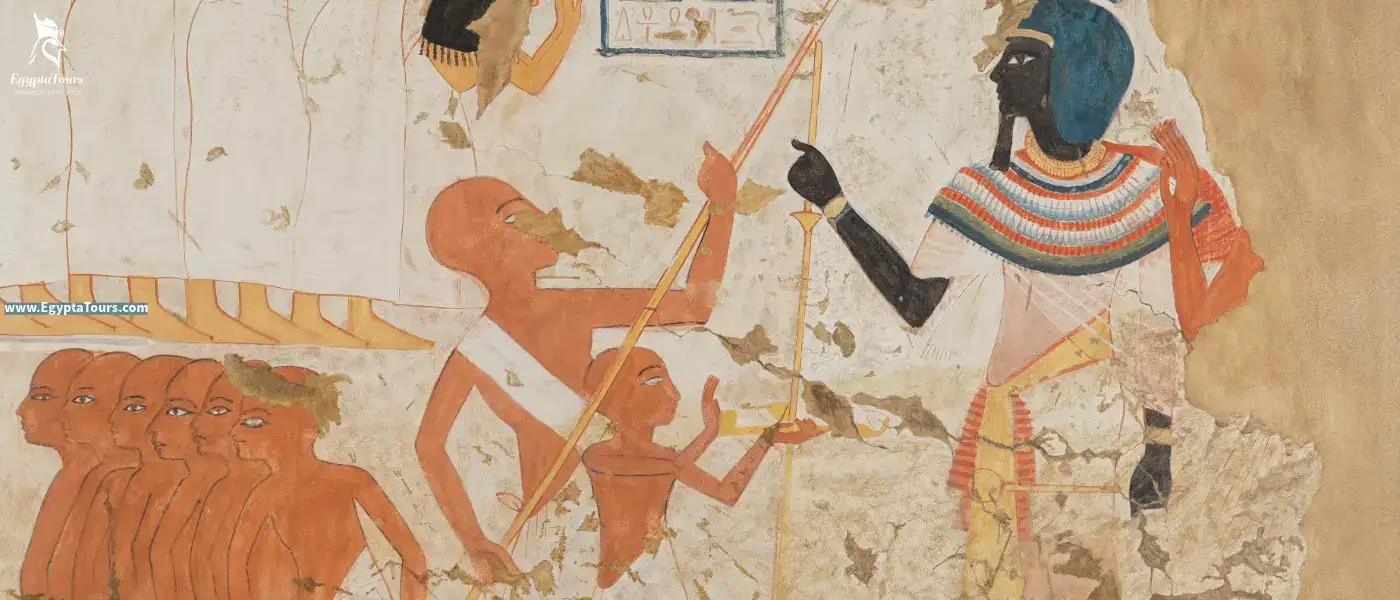
Tomb-and-death-of-King-Tuthmosis-I
Thutmose I died at the age of approximately fifty and was buried in the Valley of the Kings.
He is considered the first king to be buried in this place in the tomb that I, his business manager, prepared for him.
It is covered with plaster and inscribed with a short, colorful text entitled (Messages of the Secret Chamber) and is famous for its subtitle (The Book of What Exists in the Underworld).
It is written in cursive hieroglyphic signs, and the scenes are in schematic forms. Only a few fragments remain of this tomb.
Then his body was transferred a few years later to the tomb of his daughter Hatshepsut, which was prepared for her and her father, and his mummy is now located in the Egyptian Museum.
Examinations conducted on his mummy show that he was suffering from rheumatoid arthritis and that at some point in his life he suffered a pelvic fracture.
Conclusion:
King Thutmose I, pharaoh of the 18th Dynasty, ruled Egypt for 12 years and 9 months. He is known for expanding Egypt’s borders and commissioning impressive building projects. He constructed a canal at the First Cataract to facilitate trade and military expeditions.
His tomb, located south of the Valley of the Kings, set a precedent for royal burials in this area, and he may have drawn inspiration from Sesostris III’s legacy.
He honored Queen Nefertari, an influential royal figure, and used cedar wood in his grand architectural projects. His tomb featured an enclosure wall, reflecting his desire for lasting grandeur.
Frequently Asked Questions
Who was King Thutmose I?
He was the third ruler of Egypt’s prestigious 18th Dynasty, reigning approximately from 1506 to 1493 BCE. This pharaoh is widely celebrated for expanding the empire’s borders and his remarkable architectural contributions.
What were his major achievements?
The monarch is renowned for sweeping military campaigns into Nubia and the Levant. Alongside these conquests, he established a more centralized government and commissioned awe-inspiring building projects across the country.
How did he come to power?
Aakheperkare (his official throne name) ascended to the throne following the death of his predecessor, Ahmose I. He was likely the son of a royal woman and a non-royal man, a lineage pattern common during this era.
What were the most significant military conquests of his reign?
The king led highly successful campaigns deep into Nubia (modern-day Sudan) and the Near East, reaching regions of Syria and Palestine. These victories secured immense wealth, valuable resources, and regular tribute for Egypt.
Did this pharaoh build any notable monuments?
Yes, he commissioned several monumental projects, most notably expanding the famous Temple of Karnak in Luxor. To execute this, he relied on his brilliant architect Ineni, who oversaw the addition of grand pylons and towering obelisks that still stand today.
How did he secure his royal lineage?
He was the father of his immediate successor, Thutmose II, and the grandfather of the legendary female pharaoh, Hatshepsut. Through strategic marriages, he ensured the dynasty remained powerful.
What was his contribution to ancient Egyptian religion?
As a devout ruler, he dedicated numerous buildings to the gods, heavily promoting the worship of Amun. This royal patronage helped solidify Amun as a dominant religious force in the kingdom.
How did his reign influence later rulers?
By setting a strong precedent for aggressive military expansion and centralized authority, he heavily influenced his successors. His grandson, in particular, adopted these strategies to become one of Egypt’s greatest military commanders.
Why were the campaigns in Nubia so important?
Securing Nubia allowed Egypt to control vital trade routes and dominate the flow of gold and exotic resources. This wealth directly fueled the kingdom’s military strength and economic prosperity.
What is known about his family structure?
The pharaoh had several wives, including the royal princess Ahmose. His royal household produced at least one male heir and multiple daughters, paving the way for future iconic rulers.
Did he face any notable rivals during his rule?
While the Egyptian army faced fierce local resistance during foreign campaigns, there were no significant internal rivals or rebellions documented during his reign. His overwhelming military success solidified his absolute power at home.
Where is his final resting place?
He was laid to rest in the Valley of the Kings, specifically in tomb KV38. This secret, highly decorated desert burial marked a historical shift in how rulers protected their remains to ensure safe passage into the afterlife.
What artifacts are associated with his legacy?
Researchers have uncovered numerous inscriptions, scarabs, and statues bearing his cartouche. These artifacts consistently celebrate his divine status and administrative triumphs.
How did these military actions affect Egyptian trade?
By controlling the Levant and Nubia, the empire opened and secured highly lucrative new trade networks. This monopoly brought unprecedented wealth and exotic goods into the Egyptian capital.
Were there any military innovations during this time?
His forces are noted for refining strategies and embracing advanced tactics, including the organized deployment of infantry units and the devastating use of war chariots on the battlefield.
How did his time on the throne end?
He ruled securely until his death around 1493 BCE. While the exact medical circumstances of his passing remain undocumented, he left behind a highly stabilized and prosperous nation.
What ultimate legacy did he leave behind?
He bequeathed an empire at the peak of its territorial extent, a thriving economy, and a revitalized architectural tradition that set the stage for the New Kingdom’s Golden Age.
Was the king viewed as a divine figure?
Absolutely. Like all legitimate rulers of the era, he was revered as the earthly embodiment of the gods. Upon his death, theology dictated that he ascended to the heavens to join them.
What was the broader impact of his architectural projects?
Beyond serving religious purposes, these massive temples and obelisks functioned as undeniable propaganda, broadcasting the state’s immense wealth and the ruler’s unmatched authority to the public.
How is he remembered in modern times?
Today, he is recognized as the dynamic architect of Egypt’s imperial age, a visionary leader whose military and cultural achievements profoundly shaped the centuries that followed.
Similar Posts
About EgyptaTours

EgyptaTours is a name synonymous with trust, excellence, and unforgettable travel experiences, proudly standing as one of the leading travel agencies in Egypt. Renowned for its deep expertise, personalized service, and carefully crafted itineraries, EgyptaTours serves as the ultimate gateway to discovering Egypt in its most authentic and inspiring form.