




Lake Nasser Cruise: The Ultimate Guide to Luxury Nile Adventures
A Lake Nasser cruise gives you a unique opportunity to sail and completely relax on a luxury cruise ship in the surroundings of the magnificent Lake Nasser in Upper Egypt. Enjoy the pristine landscape of the world’s sixth largest man-made lake, plus all the nearby attractions included on this high-quality Lake Nasser cruise.
Lake Nasser cruise tours include Aswan highlights such as the Aswan High Dam, the Unfinished Obelisk, and the Temple of Philae. Also visit the Kalabsha Temple, the wonderful Abu Simbel Temple, and others.
We have a selection of Lake Nasser cruise ships available with offers starting from just £1,299 including flights. We have options to extend your stay in Aswan or Abu Simbel and can customize your stay to include other highlights in Egypt as well. Contact our Egypt Experts for a customized quote.
MS Steigenberger Omar El Khayam

Steigenberger-Omar-El-Khayam-Nile-Cruise-Itinerary-EgyptaTours
One of Lake Nasser Cruises .Discover the holy sites of Upper Egypt in elegance and luxury on board the Omar El Khayam ship. The 5-star luxury ship is considered one of the pearls of Lake Nasser. Wonderful and unforgettable experiences of a very special kind await you at the ship’s Cleopatra Spa. A 5-star luxury boat sailing on Lake Nasser.
This luxurious, modern and spacious ship has 80 well-equipped cabins and fantastic facilities including a billiards room, large sundeck with swimming pool and spa with jacuzzi and fitness equipment. The Steigenberger Omar El Khayam is a very comfortable ship and offers a great way to experience the sights, holy sites and landscapes of ancient Upper Egypt.
MS Eugenie
MS Eugenie is one of Lake Nasser Cruises and designed in the style of an elegant turn-of-the-century Nile steamship. MS Eugenie was the first ship to sail Lake Nasser and offers travelers the opportunity to discover the archaeological treasures that surround this vast lake. This vessel features warm wood paneling throughout and antique red and green furniture. Discover Lake Nasser and the treasures of the Nile River on this wonderful trip.
MS Nubian Sea
MS Nubian Sea is a 5-star Nile cruise ship launched in 1995. Once you board the luxurious MS Nubian Sea, you will embark on an unforgettable journey and enjoy wonderful days of luxury cruising. The crew and management of MS Nubian Sea ensure a comfortable and enjoyable on Lake Nasser cruise.
Mövenpick MS Prince Abbas
Mövenpick MS Prince Abbas prides itself on the quality of its innovative gastronomy, and its elegant and spacious restaurants serve fine dining in true tradition. The main restaurant, Quartet, is located below the main deck and seats up to 140 people at tables of six or eight. International cuisine and local specialties are prepared by the chef from the freshest ingredients.
How to Plan Your Perfect Lake Nasser Cruise Itinerary
3 Nights Abu Simbel – Aswan– Friday
Day 1: Abu Simbel
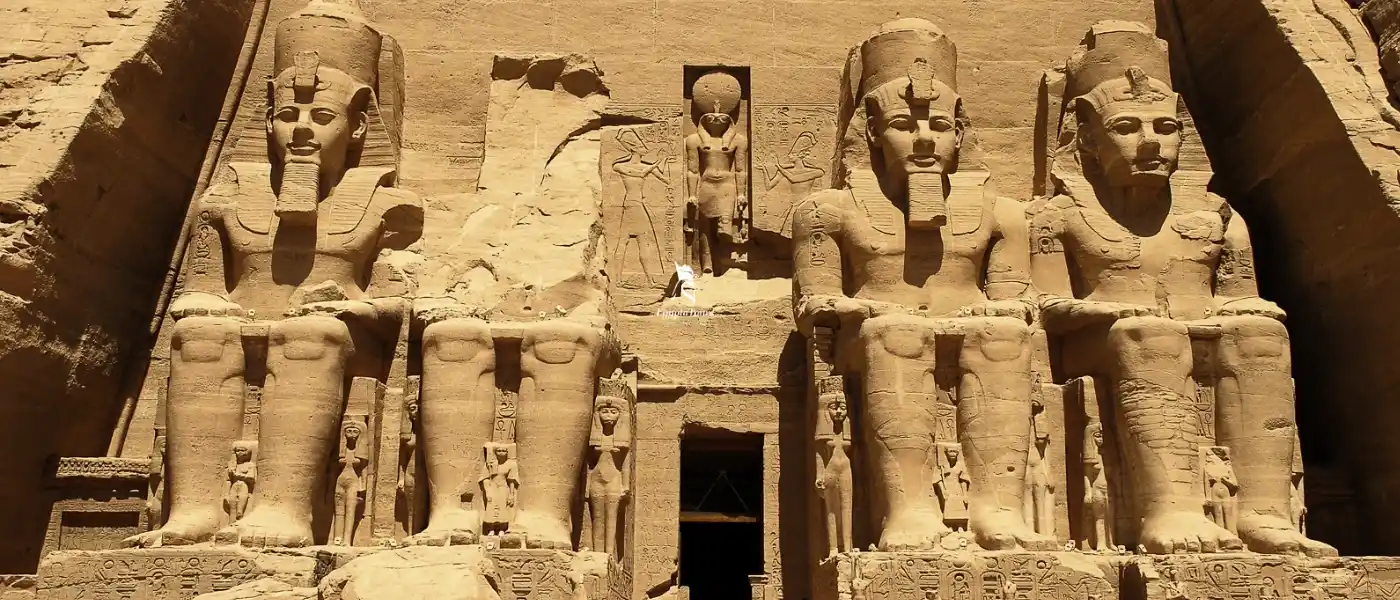
Transfer to your 5-star boat for boarding before lunch, visit the great temples of Abu Simbel, then have dinner and overnight on board Lake Nasser Cruise.
Day 2: Kasr Ibrim – Amada– Wadi El Sebua
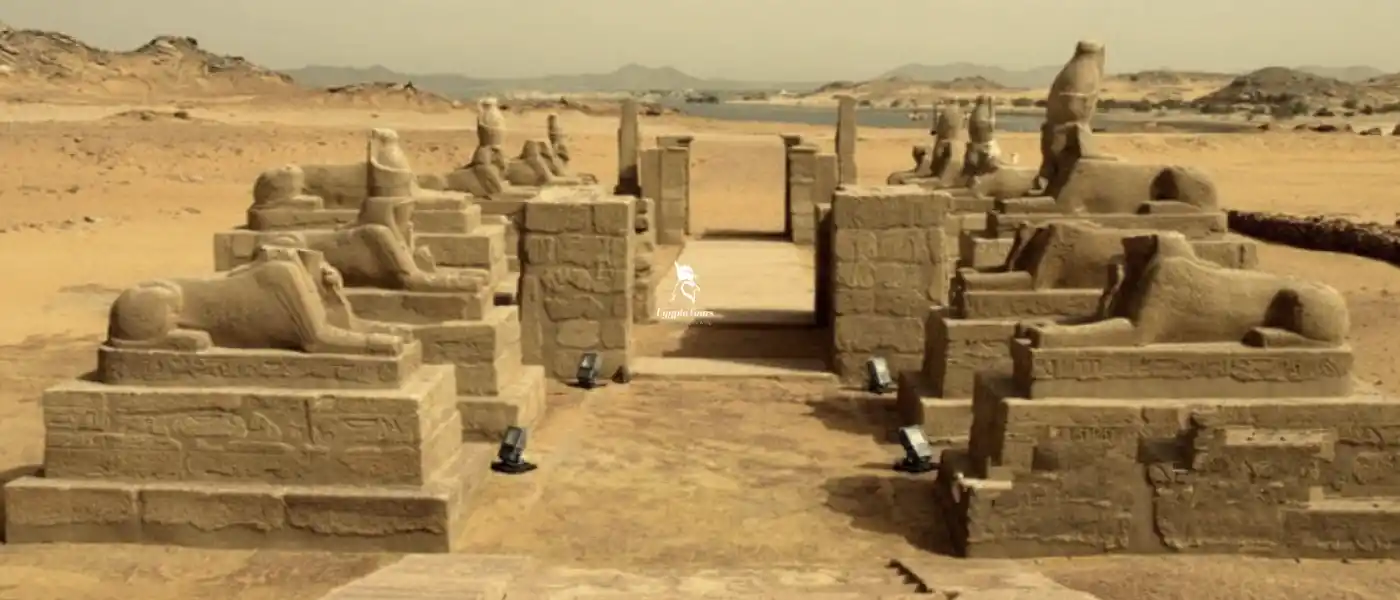
Morning sail to Qasr Ibrim to visit the lake to see this Nubian monument located on the original site surrounded by water. Have lunch on board while sailing to Amada. In Amada, visit the oldest monument on Lake Nasser, which is the Amada Temple. Sail to Wadi El Sebua with sound and light show. Overnight in Wadi Sebua.
Day 3: Wadi El Sebua – Aswan
Breakfast on board and morning visit to the Wadi Sebua Temple. Entry is through the Sphinxes, the Duqqa Temple dedicated to the god of wisdom Thoth-Penobs, and the ruins of the Maharaka Temple. Sail to Aswan, have dinner on board with evening Nubian entertainment. Overnight in Aswan.
Day 4: ASWAN
Breakfast on board and a morning visit to the Kalabsha Temple – dedicated to the Nubian god Mendulis and the Bayt Al-Wali Temple – the House of the Holy Man – which was carved out of rock during the reign of Ramesses II and the Bayt Al-Wali. Check-out from Lake Nasser Cruise and transfer to Aswan Airport.
4 Nights Aswan – Abu Simbel – Every Monday
Day 1: Aswan Tour
Transfer to the lake Nasser cruise before lunch. Afternoon at leisure. Dinner on board with evening entertainment at the Nubian Show.
Overnight in Aswan.
Day 2: Aswan – Visiting Wadi El Seboua
Breakfast on board Lake Nasser Cruise and a morning visit to the Kalabsha Temple – dedicated to the Nubian god Mendulis and the Bayt El Wali Temple – the House of the Holy Man – which was carved out of rock during the reign of Ramesses II. After lunch sail to Wadi Seboua. Dinner and overnight on board Lake Nasser Cruise.
Day 3: Wadi El Seboua and Amada
A morning visit to the Wadi Al-Sebu Temple. Entry is through the Sphinxes, the Duqqa Temple dedicated to the god of wisdom Thoth-Pnobs, and the ruins of the Maharaka Temple. Lunch on board. Sail to Amada to visit the oldest monument on Lake Nasser, the Amada Temple. You can also visit the Temple of Durr Rock, built by Ramesses II and dedicated to sunrise, and finally visit the Pinot Tomb. Dinner and overnight on board Lake Nasser Cruise.
Day 4: Amada– Kasr Ibrim and Abu Simbel
Morning sail to Qasr Ibrim to visit the lake to see this Nubian monument located on the original site surrounded by water. Sail to Abu Simbel where the great temple of Ramesses 11 appears to rise from the depths of the lake. Carved into the mountain and dedicated to Ra-Horakhty, Amun and Ptah. You can also visit the temple of Nephtari, the beloved wife of Ramesses II.
Day 5: Tour to Abu Simbel
Breakfast, departure and heading to Abu Simbel Airport.
Please note: The order or content of your itinerary may be modified due to closed locks, low water levels or other unforeseen circumstances. Sometimes, due to operational difficulties, a change in vessel can occur. However, the itinerary will remain the same.
The Majestic Sites You’ll Explore on a Lake Nasser Cruise
Abu Simbel Temple
This site, the Temples of Abu Simbel, south of Aswan along the shore of Lake Nasser, is the most famous in all of Egypt after the Pyramids of Giza. Built by the greatest of the pharaohs, Ramesses II, making it also known as the Temple of Ramesses II or Ramesses II, these massive rock-cut temples served as the southern border of the Egyptian Empire with Nubia at the height of its power during the Nubian Era. New Kingdom.
It was Intended to transfer the power of Egypt’s rulers to anyone who laid eyes on them. The four statues guarding the entrance to the largest of these temples are the largest remaining statues from the ancient Pharaonic era.
Philae Temple

This beautiful temple complex is one of the most beautiful temples in all of Egypt. It is located on Iglica Island just south of the ancient Aswan Dam and you must take a water taxi to the island to reach the ruins. The temple was moved to its current location after the construction of the High Dam, which threatened to permanently submerge it.
A meticulous reconstruction has been carefully completed on the current site, carefully preserving the original appearance and layout of the complex and even landscaping the island to match Its former site.
Philae rose to prominence during the Ptolemaic Dynasty as a center of worship for the goddess Isis. This complex was really one of the last remaining places where the ancient religion survived after the arrival of Christianity in Egypt, and was not officially closed until 550 AD. The main temple on the island was then used by the early Christians as a church.
Kom Ombo Temple
The Kom Ombo Temple was built between 332 BC and 395 AD, during the Ptolemaic era, by Ptolemy VI Philometre. Ptolemy XII Neos Dionysos continued the work and built the outer and inner hypostyle halls. The temple was built with local limestone by men riding elephants, a Ptolemaic innovation.
Little of the original structure remains. Unfortunately, much of the temple was destroyed over thousands of years due to earthquakes, erosion caused By <strong>the Nile River</strong>, and builders who stole the stones for unrelated projects. In 1893, a French archaeologist named Jacques de Morgan removed the southern part (the half devoted to Sobek) of the wreck and restored it.
Nature And Climate Around Lake Nasser
From a natural perspective, Lake Nasser is a place that stands out precisely because it doesn’t resemble what people usually imagine when thinking about a massive freshwater lake. Despite its enormous size, the area does not display lush greenery or dense vegetation. This unusual scene is mainly the result of the lake being man-made and surrounded by one of the driest desert regions on Earth.
What truly catches the eye is the contrast: calm waters gently touching golden rock formations and pale desert sands along the shoreline. Today, the lake’s surface sits at about 180 meters above sea level, whereas the original level of the Nile River in this area was closer to 60 meters above sea level.
Still, nature always finds a way to adapt. Lake Nasser is no exception. Along its shores and scattered across some of its islands, reeds and small plant clusters have gradually appeared. These modest green areas provide shelter and feeding grounds for migratory birds, as well as for desert animals such as gazelles and foxes. In certain hidden coves, Nile crocodiles, some of the few survivors of the project’s environmental impact can still be found. Beneath the surface of the lake, life has also taken hold, with several dozen species of fish living in its waters, including the impressive Nile perch.
When it comes to climate, cruises across Lake Nasser fully expose visitors to the harsh realities of a true desert environment. Sunshine is intense and almost constant, summer temperatures easily climb above 40°C, and rainfall is virtually non-existent. For more detailed climate information, you can check the page dedicated to Abu Simbel. It is essential to follow all safety recommendations: protect your eyes with sunglasses, shield your head with a hat, use sunscreen to guard against solar radiation, and stay well hydrated to cope with the heat. Fortunately, conditions on board cruise ships make these extremes much easier to manage.
The History of Lake Nasser
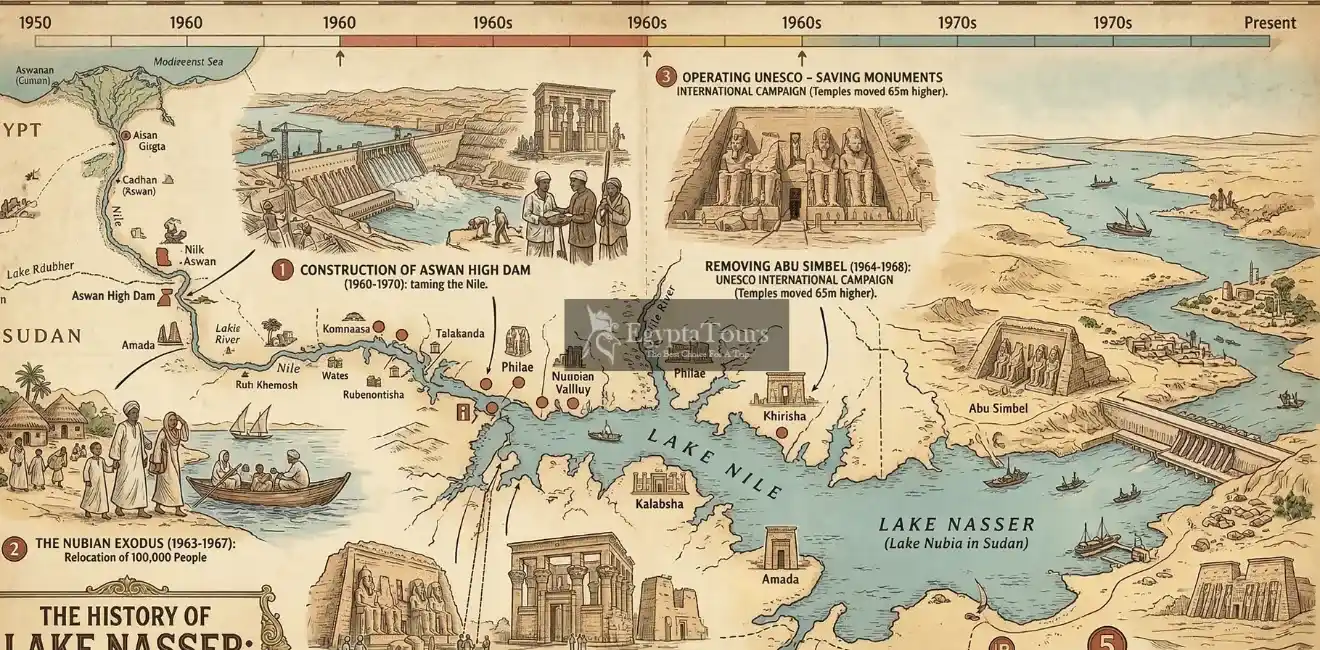
The-History-of-Lake-Nasser-EgyptaTours
The Lake Nasser we see today has a relatively recent history. The waters navigated during a cruise now cover land that, for thousands of years, was home to Nubian communities. Although these settlements are no longer visible, the remains of that civilization still exist, buried beneath tens of meters of water at the bottom of the lake. Many of their cultural traces were relocated and can now be found in different areas of Egypt and Sudan.
Major changes began at the end of the 19th century and the start of the 20th. Before that period, the Nile’s annual floods dictated life in Egypt, shaping agriculture and the national economy, which depended heavily on farming in the Nile Valley and the Delta. Inspired by ambitious engineering projects like the Suez Canal, Egyptian authorities decided to pursue a long-standing dream: controlling the river’s floods to prevent the devastation caused by droughts or excessive inundation.
This ambition led to the construction of the Aswan Low Dam, located about six kilometers south of the city, under the supervision of British engineer Sir William Willcocks. Built between 1899 and 1902, the dam was a remarkable achievement for its time. However, its storage capacity soon proved insufficient to meet the country’s growing irrigation needs, even after several expansions. By the 1940s, the structure was nearing its limits, which made it clear that a much larger solution was required.
This realization paved the way for the decision to build the Aswan High Dam, around 15 kilometers south of Aswan.
Although alternative plans were considered, such as constructing the dam further south and allowing much of the reservoir to extend into Sudan the political changes following the fall of the Egyptian monarchy altered the course of events. Under the leadership of Gamal Abdel Nasser, Egypt chose to move forward with a project that would keep most of the stored water within its own borders, a decision with significant geopolitical consequences.
An early design was proposed in the early 1950s by Greek-Egyptian engineer Adrian Daninos, but the final responsibility fell to the Soviet Hydroproject Institute. Construction concluded around 1970, although the filling of Lake Nasser had begun several years earlier. The project symbolized the close cooperation between Egypt and the Soviet Union at that time.
The Impacts of Lake Nasser and the Aswan High Dam
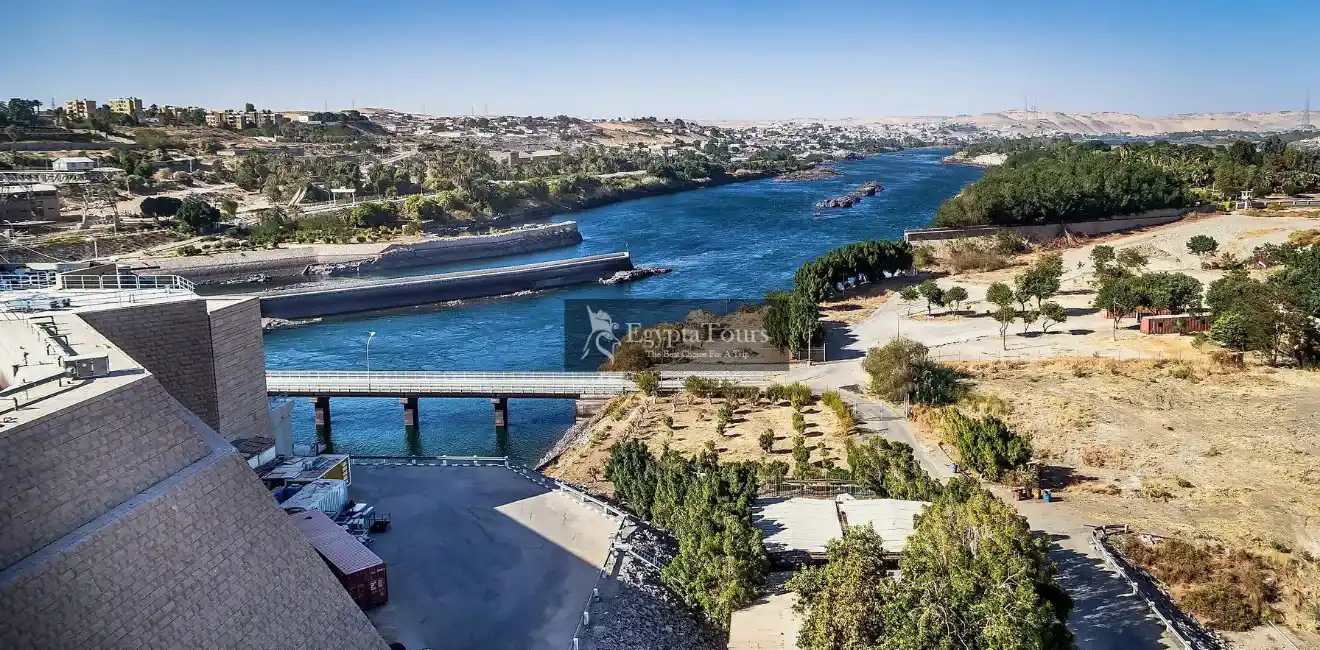
The-Impacts-of-Lake-Nasser-and-the-Aswan-High-Dam-EgyptaTours
When the Aswan High Dam was completed and Lake Nasser reached its planned capacity in 1976, Egypt, especially the southern region, was permanently transformed. Economically, the high dam and the lake became the backbone of Egyptian agriculture and a vital pillar of the national economy.
This project also generated substantial employment opportunities during its construction and it continues to do so through ongoing maintenance and operation. Another major benefit is energy production, as the dam’s hydroelectric power station plays a significant role in supplying electricity.
Tourism has also benefited greatly. Lake Nasser Cruises attract tourists to experience its landscapes and relocated monuments. Additionally, Nile cruises north of the high dam became possible year-round, something that was previously impossible due to fluctuating water levels. Beyond tourism, the reservoir has improved living conditions and public health by providing a stable source of water for human consumption.
From an economic standpoint, Lake Nasser has proven to be a clear success. The massive investment required for the dam and its irrigation system was recovered within just a few years. Today, it continues to deliver direct and indirect benefits through hydroelectric power, agricultural support, and tourism development.
However, not all consequences have been positive. Environmentally, the creation of the reservoir altered the natural river ecosystem, submerging fertile floodplains that once lined the Nile’s banks. Although new vegetation such as reeds has emerged, the long-term ecological balance remains a subject of debate. Questions persist about issues like increased fertilizer use in agriculture and the risk of salinization in the Nile Delta due to seawater intrusion.
Archaeologically, the impact was enormous. As water levels rose, countless temples and monuments were threatened with submersion. An international rescue campaign was launched to save the most significant sites, with Abu Simbel being the most famous example. Many other monuments were dismantled and rebuilt stone by stone and today they can be visited during Lake Nasser cruises. While these structures lost their original geographic setting, they retained their historical and artistic value. Sadly, other archaeological remains were lost forever beneath the lake.
Finally, one of the most painful outcomes was the forced displacement of Nubian communities who had lived along this stretch of the Nile for generations. Their villages were submerged and although new settlements were built, many residents chose to relocate to other parts of Egypt, such as Aswan and Cairo or to move south into Sudan. More details about this chapter can be found on the page dedicated to Nubia.
Looking ahead, attention now turns to the possible effects of the Grand Ethiopian Renaissance Dam, constructed thousands of kilometers upstream on the Blue Nile in Ethiopia. This new project could influence key aspects of the river’s flow within Egyptian territory, making it a sensitive issue currently addressed through high-level diplomatic negotiations.
What to See and Explore in Lake Nasser
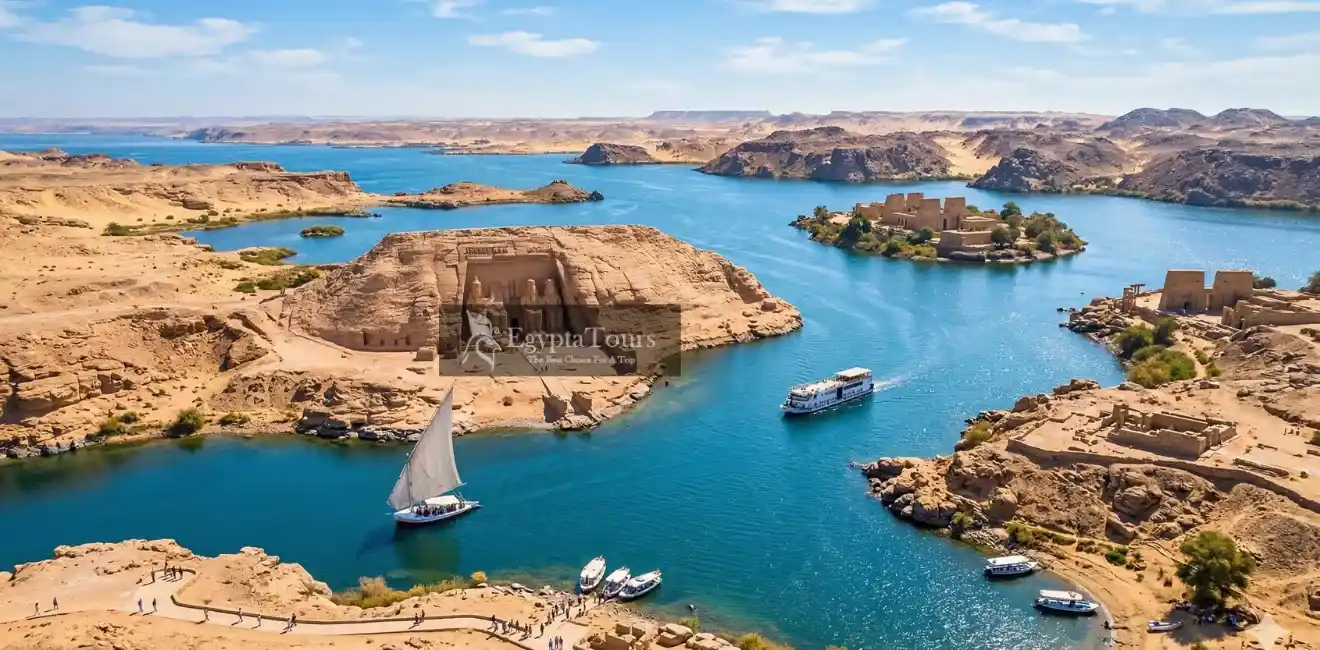
What-to-See-and-Explore-in-Lake-Nasser-EgyptaTours
As mentioned earlier, the most complete and enjoyable way to discover Lake Nasser is by taking one of the cruises that sail across its waters. These cruises usually follow a route with several must-see stops. Without question, the highlight of any itinerary is Abu Simbel. While it is possible to reach this site more quickly by road or plane, arriving by boat offers something truly special.
Approaching the temples from the water gives a unique perspective that enhances their scale and beauty in a way other means of transport simply cannot match. For further details about this extraordinary monument, you can consult the dedicated page.
Beyond Abu Simbel, Lake Nasser is home to several other fascinating sites that can be visited. Below, they are presented from north to south, following their distance from Aswan. One exception is the Temple of Kalabsha, which lies beside the Aswan High Dam and is normally visited as a separate excursion from Aswan. For this reason, it is explained on the page devoted specifically to that city.
It is also worth noting that all these monuments enjoy the highest level of protection, as they were collectively inscribed on the UNESCO World Heritage List under the name “Nubian Monuments, from Abu Simbel to Philae.”
Wadi al Sebua or the Valley of the Lions
Situated on the western bank of Lake Nasser, around 140 kilometers south of the Aswan High Dam, Wadi al Sebua is one of the most remarkable archaeological stops on the lake. The site includes two temples dating back to the New Kingdom: the Temple of Amun and the Temple of Dakka. The name “Valley of the Lions” comes from the lion-shaped statues that once lined the approach to the Temple of Amun.
During the 1960s, the complex was relocated to its current position. Interestingly, it did not immediately attract much attention after the move and eventually had to be re-excavated so it could be properly visited, as it is today on Lake Nasser cruises.
The Temple of Amun was originally commissioned By <strong>Amenhotep III</strong> of the 18th Dynasty. After suffering damage at the end of the Amarna Period, it was restored by Ramses II. Inside, visitors can still see around a dozen statues of this pharaoh depicted as a god, attached to the columns of one of the courtyards. Reliefs showing the king presenting offerings are also preserved, along with traces of Christian decoration. These details reveal that the temple was converted into a church during the 5th century AD, creating an unexpected but fascinating blend of artistic styles and historical layers.
About 1.5 kilometers north of the Temple of Amun stands the Temple of Dakka, linked by a short road. This structure is later in date, originating in the Ptolemaic period during the 3rd century BC. Its most striking feature is the large entrance pylon, which visitors can climb to enjoy wide views over Lake Nasser.
Amada and Its Temples
Another regular stop on Lake Nasser cruises is Amada, once a Nubian village that disappeared beneath the reservoir’s waters. The main attraction here is the Temple of Amada, dedicated to Amun and Ra-Horakhty. It was built during the New Kingdom under Thutmose III of the 18th Dynasty and later restored by Seti I of the 19th Dynasty after damage suffered during the Amarna Period. What truly stands out is the interior, where finely carved bas-reliefs still preserve much of their original color, making the decoration especially impressive.
Close to the Temple of Amada are two additional monuments, typically visited during the same stop. The first is the Temple of Derr, a speos temple carved directly into the rock, which is why it had to be entirely reconstructed at its new location. Dating to the reign of Ramses II, this temple is notable for its vividly colored bas-reliefs, which remain remarkably well preserved. It was dedicated to Amun-Ra, Ptah and Ra-Horakhty, all worshipped in the sanctuary located beyond the hypostyle halls.
The third structure of interest is the tomb of Penut, who served as a local governor during the reign of Ramses VI. Although some of its original decoration was lost during relocation, the tomb still displays funerary scenes showing the deceased in the presence of various gods, offering valuable insight into elite burials of the period.
Qasr Ibrim
Most of the monuments along Lake Nasser survived because they were moved to higher ground in the 1960s. Qasr Ibrim, located roughly 260 kilometers south of Aswan, is the notable exception. This site was the fortified citadel of the ancient town of Ibrim and included tombs of Kushite viceroys as well as temples dating to the 18th and 19th dynasties.
The fortress itself was constructed during the Pharaonic era and later modified under Roman rule, particularly during the reign of Augustus. Evidence of later Christian occupation can also be seen in the remains of a 7th-century church. As was customary, the citadel stood atop a hill, allowing control over the surrounding land. When Lake Nasser filled, this elevated position turned Qasr Ibrim into an island within the reservoir.
Lake Nasser cruises usually include a stop here so visitors can walk among the ruins. Most of the decorative elements such as reliefs and stelae, were removed before flooding and transferred elsewhere, mainly to the Kalabsha Temple near Aswan.
Safari-Style Experiences on Lake Nasser
Thanks to the variety of fish species and the presence of migratory birds in certain areas of the lake, some cruises focus on safari-style activities. These organized trips are designed for fishing or birdwatching, depending on the season.
Fishing excursions mainly target the Nile perch, a fish known for reaching enormous sizes, sometimes over 100 kilograms, making it a thrilling challenge for anglers. It is one of the largest freshwater fish species in the world. Other species found in the lake include several types of catfish, two varieties of tilapia and moonfish.
Birdwatching safaris attract nature enthusiasts hoping to spot species such as the African openbill, African skimmer, African wagtail, pink-backed pelican and African green pigeon. With a bit of luck, binoculars may also catch glimpses of Nile crocodiles or foxes moving along the shoreline.
How to Reach and Move Around Lake Nasser
There is no doubt that traveling by boat is the most practical and enjoyable way to get around Lake Nasser. Cruises are not only a tourist experience in themselves but also the most efficient way to move between the lake’s key sites. Most journeys begin at the port near the Aswan High Dam, from where private boats depart to follow the classic cruise route or safari itineraries. This port lies about 15 kilometers south of Aswan, a city accessible by road, air or Nile cruises.
From the same port, a passenger ferry also operates between the Aswan High Dam and Wadi Halfa in Sudan, making it a possible entry or exit point for travelers combining both countries in their itinerary.
Another option is to start or end a Lake Nasser cruise at Abu Simbel. The town offers basic tourist facilities, including hotels, restaurants and shops. An airport near the temples connects Abu Simbel with Aswan, although the passenger ferry does not stop there.
For those traveling by road, Highway 75 crosses the desert along the western side of the Nile, linking Aswan and Abu Simbel. The journey covers about 280 kilometers and takes just over three hours. From this highway, secondary roads branch off toward monuments such as Amada and Wadi al Sebua, making day trips to these sites possible.
However, Lake Nasser does not have a continuous road running along its shores, nor are there bridges connecting both sides of the reservoir. For this reason, traveling by car is not a practical option for completing a full circuit of the lake.
In any case, all necessary services can be arranged through Egypt Exclusive Tours, from comfortable Lake Nasser cruises to private vehicles with drivers for specific excursions. Accommodation at key locations around the lake is also available, along with tailor-made experiences such as fishing safaris, birdwatching tours, guided monument visits and traditional Nubian activities.
Get in touch and discover why Lake Nasser is considered one of the most distinctive and fascinating destinations in Egypt and across the African continent.
FAQs about Lake Naser Cruise
Is Lake Naser Worth Visiting?
One of the main reasons why Lake Nasser is worth exploring is its sheer magnificence. The calm waters are surrounded By <strong>stunning desert landscapes</strong> and towering sandstone cliffs that contrast sharply against the blue sky. The pristine environment provides a tranquil atmosphere for relaxation and contemplation.
Can you cruise from Aswan to Abu Simbel?
Sailing: Each day there is a different overnight stop in a bay protected by a freshwater sandy beach. All meals and hot drinks. Day 4 or 5: Arrival in Abu Simbel, after an early lunch on board the mother ship, visit the temples and then transfer back to Aswan to connect with your itinerary.
Are there crocs In Lake Nasser?
Ibrahim estimated the total population of Lake Nasser at no more than 1,000 crocodiles.
According to estimates by the Egyptian Ministry of Environment, Lake Nasser is home to between 6,000 and 30,000 Nile crocodiles as of 2008.
Can you swim in Lake Nasser Egypt?
Can you swim in Lake Nasser? In the Nubian Desert, swimming is available throughout the year.
What is a Lake Nasser cruise, and where does it go?
A Lake Nasser cruise is a multi-day trip on the reservoir created by the Aswan High Dam in southern Egypt. Most itineraries sail between Aswan and Abu Simbel, with guided stops at remote lakeside temples that are hard to reach by road. The pace is usually slower than a Nile cruise, because distances are longer and the area is quieter.
You’ll spend a lot of time on the water, with sightseeing built around scheduled temple visits and onboard meals.
How is a Lake Nasser cruise different from a Nile cruise?
Lake Nasser feels more isolated and less busy than the Nile. On the Nile, towns and farmland line the banks, and ships often pass each other all day. On Lake Nasser, the shoreline is more open and desert-like, so the scenery is calmer and the stretches between stops can feel longer.
The big tradeoff is simple: fewer crowds and more quiet, but also fewer off-ship options like markets, cafés, and nightlife. If you want a classic Egypt trip with lots of daily activity, the Nile may fit better. If you want space and a slower rhythm, Lake Nasser usually wins.
Which temples do you typically visit on a Lake Nasser cruise?
Stops vary by ship and schedule, but many cruises include Abu Simbel and a selection of Nubian monuments along the lake. Commonly visited sites include temples such as Kalabsha, Amada, and Wadi El Sebua (availability depends on the exact route and timing).
Because the cruise program drives the sightseeing, it’s smart to review the day-by-day itinerary before booking. Two cruises with the same start and end points can still include different temple stops.
When’s the best time of year to take a Lake Nasser cruise?
Most travelers prefer the cooler months, generally from October through April, because daytime touring is more comfortable. Summer can be extremely hot in southern Egypt, which makes temple visits feel harder, especially in the middle of the day.
If you’re sensitive to heat, aim for winter and plan for early mornings on shore. Even in cooler months, bring sun protection because shade can be limited at many sites.
Quick reality check: the “best” season is often the busiest one, so book earlier if you’re set on specific dates.
What should I pack for a Lake Nasser cruise?
Pack for strong sun, warm days, and cooler evenings. A wide-brim hat, sunglasses, high-SPF sunscreen, and light long sleeves make temple stops more comfortable. Comfortable closed-toe walking shoes help on uneven stone and sandy paths.
Also bring your passport or a copy, any meds you rely on, and a small day bag for water and essentials during excursions. Finally, toss in a light layer for air-conditioned indoor areas, because dining rooms and cabins can feel chilly.
Do I need permits, special tickets, or extra ID for the Lake Nasser area?
You’ll need the usual Egypt entry requirements, plus your tour operator may request passport details ahead of time for logistics. Site entry generally requires tickets for the temples you visit, which are often handled as part of the cruise package, although what’s included varies by booking.
Because procedures can change, confirm two things in writing before you pay: what entrance fees are included, and whether there are any extra steps for Abu Simbel on your travel date (timing and transport rules can differ).
About EgyptaTours

EgyptaTours is a name synonymous with trust, excellence, and unforgettable travel experiences, proudly standing as one of the leading travel agencies in Egypt. Renowned for its deep expertise, personalized service, and carefully crafted itineraries, EgyptaTours serves as the ultimate gateway to discovering Egypt in its most authentic and inspiring form.