Battle of Megiddo: Thutmose III’s Historic Victory
The Battle of Megiddo It is considered one of the greatest military...



The Romans were one of the most important peoples in ancient history. They built the Roman Empire which stretched across Europe, North Africa and the Middle East. Roman civilization is known for its organized cities, roads, bridges and aqueducts, which made trade and daily life easier.
The Romans also made important contributions to law, art, architecture and engineering, many of which still influence the world today. Studying the history of the Romans helps us understand how they managed such a large empire and the achievements that made their civilization notable. Learning about the Romans also shows us the values, traditions and systems that shaped their daily life and government.
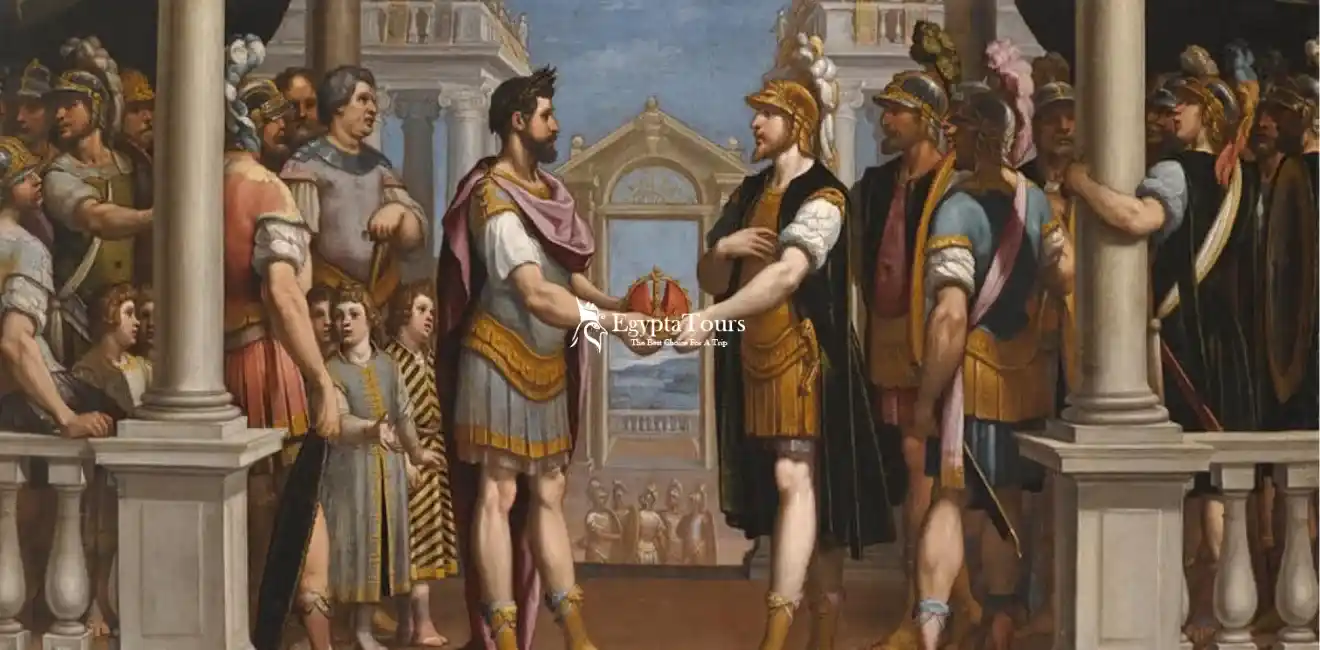
The- Romans
The Roman people were an Italic ethnic group that formed the core population of Roman citizens (in Latin: Rōmānī: in Ancient Greek: Ῥωμαῖοι) during the periods of the Roman Kingdom, the Roman Republic and the Roman Empire. This identity underwent significant changes throughout the long history of Roman civilization as the empire’s borders expanded and contracted.
Initially, Roman citizenship was limited to the Latin ethnic group from the city of Rome itself. Over time, it expanded to include other Italic peoples by the first century BCE and eventually extended to nearly all subjects of the Roman Empire in the later ancient periods. At the height of their power, the Romans ruled large parts of Europe, the Near East and North Africa through conquests carried out during the Republic and the later Empire.
Although “Roman-ness” was primarily defined by citizenship, it was also described in other ways as a cultural, national or multi-ethnic identity which included significant regional diversity. Granting citizenship, population growth and military and settlement colonies contributed to a rapid increase in the number of Roman citizens. This increase peaked with the Antonine Constitution issued by Emperor Caracalla in 212 CE which granted citizenship to all free inhabitants of the empire.
Roman identity provided a sense of broader collective belonging and became important in distinguishing Romans from non-Romans, such as settlers or barbarian invaders. Roman culture was not entirely homogeneous. While there was a shared cultural framework, one of the empire’s strengths was its ability to incorporate traditions from other cultures, especially Greek culture but not exclusively.
The term “Roman” is used to describe a historical period, material culture, a geographic location and a personal identity. These concepts are related but not identical. Contemporary historians interpret Roman identity as a set of principles and values, known as Romanitas, although this term was rarely used in Ancient Rome.
The meaning of “Roman” varied depending on time and place. What it meant for a person living in the Roman Republic in the second century BCE was different from what it meant for someone living in Constantinople in the sixth century CE. Nevertheless, some elements remained consistent throughout Roman history.
Unlike other ancient peoples, such as the Greeks or the Gauls, Romans did not view their shared identity as based solely on a common language or inherited ethnicity. The most important factors were belonging to the larger Roman political or religious community and sharing common customs, values, ethics and ways of life. A person’s beliefs and actions mattered far more than origin or ancestry.
Famous Roman orators such as Cicero, believed that the key to acquiring Roman identity was commitment to tradition and service to the Roman state. However, they did not ignore the importance of lineage in shaping a Roman’s character. They emphasized preserving the greatness of ancestors and following their traditions.
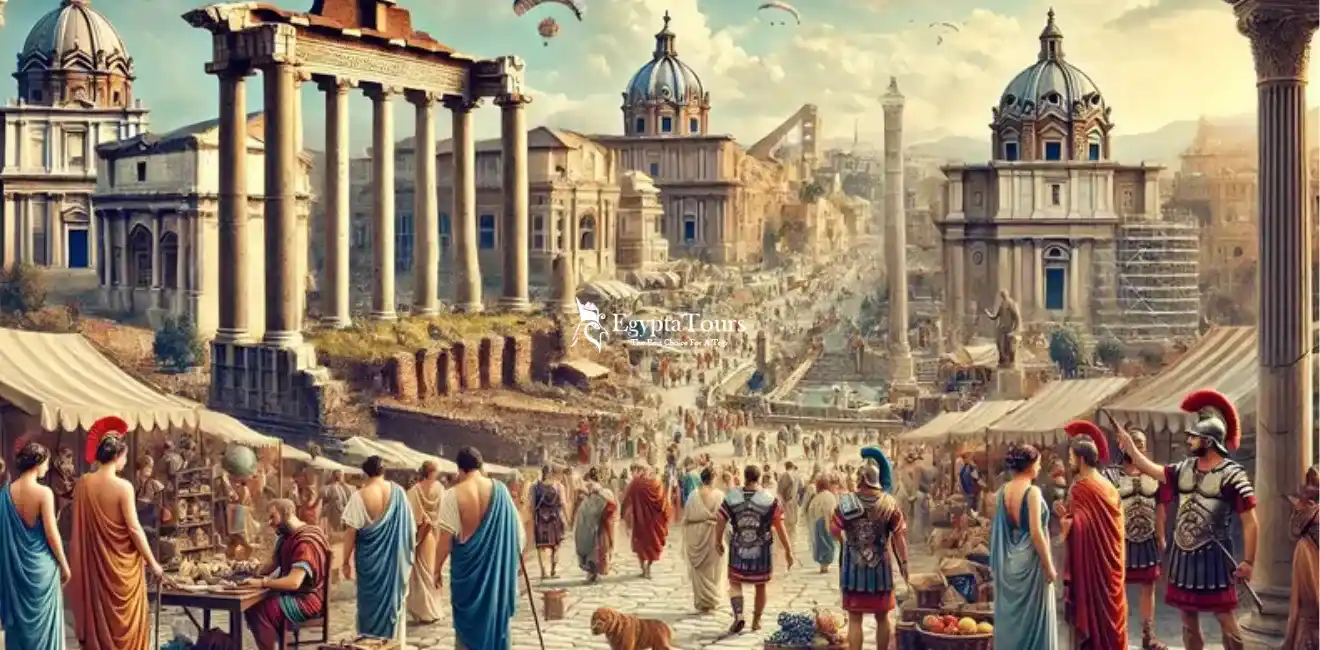
Ancient- Romans -and -Old -Rome
Ancient Rome (Latin: Roma or Rōma Antīqua) was a civilization that grew from a small farming society on the Italian Peninsula. It is traditionally said to have started in the 8th century BCE. This civilization is one of the most important in the ancient world and is often studied together with Ancient Greece in what people call the Greco-Roman world.
The term “Ancient Rome” covers the history of Rome from the founding of the city until the fall of the Western Roman Empire in the 5th century CE. Historians divide this period into three main parts: the Roman Kingdom, which lasted from 753 BCE to 509 BCE; the Roman Republic, from 509 BCE to 27 BCE; and the Roman Empire, from 27 BCE to 476 CE.
Rome started as a small settlement near the Tiber River. Over time, it grew into a city and a political power that controlled nearby regions through a mix of alliances, treaties and military force. At first, Rome controlled the Italian Peninsula and absorbed Greek culture in the south, known as Magna Graecia and Etruscan culture. Later, Rome became the main power in the Mediterranean and parts of Europe. At its largest, in 117 CE, the Roman Empire controlled North Africa, Egypt, southern and western Europe, the Balkans, Crimea and large areas of the Middle East, including Anatolia, the Levant, parts of Mesopotamia and the Arabian Peninsula.
The Roman Empire was one of the largest empires in history. It covered around 5 million square kilometers and had between 50 and 90 million people, about 20 percent of the world population at that time. Politically, Rome changed a lot over time. It started as a monarchy, became a republic ruled by the Senate and finally became an empire with centralized power.
The Romans left a huge legacy that still affects the world today. They influenced law, politics, language, engineering, architecture, art, literature, religion and the military. The Roman Republic, called Res Publica, inspired modern republics like the United States and France. The Romans built advanced engineering works such as aqueducts, paved roads connecting the empire and big buildings that still exist today.
The-History
The Capitoline Wolf shows the legend of a she-wolf that nursed the twins Romulus and Remus after their mother was imprisoned in Alba Longa.
A modern reconstruction shows the swampy land where early Rome was built and estimates the location of its first fortifications.
The history of Rome’s founding has two parts: one is based on archaeology, and the other is based on Roman legends. Archaeologists found that people lived in the area around 1000 BCE. But the first city structures appeared around 800 BCE. Excavations show old graves on the Esquiline Hill and simple walls made of mud and wood on the Palatine Hill from the mid-8th century BCE. This may match the traditional date of Rome’s founding.
By 650 BCE, the Romans had started draining the marshes between the Capitoline and Palatine Hills. This area later became the Roman Forum, the center of city life. By the 6th century BCE, Rome had grown, and the Romans built the big Temple of Jupiter Optimus Maximus on the Capitoline Hill. The city also expanded to the Forum Boarium between the Capitoline and Aventine Hills.
Roman tradition tells that Romulus and Remus were the founders. They were twins, sons of the god Mars and a princess from Alba Longa. As babies, they were ordered to be killed but a she-wolf saved and fed them. When they grew up, they returned to Alba Longa to reclaim the throne.
They decided to start a new city but they argued over its location. Romulus killed Remus and became the only founder. The first settlement on the Palatine Hill was called Roma Quadrata or “Square Rome.” The Roman scholar Varro said the city was founded in 753 BCE, and this date became the official Roman calendar.
Another legend links the Romans to Troy. The Greek historian Dionysius of Halicarnassus and the poet Virgil in the Aeneid tell that the Trojan prince Aeneas led refugees to Italy to create a new homeland. One story says a woman named Roma burned the ships on the Tiber River to force the men to settle there. This may explain the name of the city.
During the classical period, the Romans controlled the Mediterranean and large parts of Europe, Western Asia, and North Africa. Most of these lands were conquered during the Roman Republic. After Octavian took power in 27 BC, the empire was ruled by emperors. In the 4th century AD, the empire split into the Western and Eastern halves. The Western Empire fell in 476 AD while the Eastern Empire, also called the Byzantine Empire, survived until the fall of Constantinople in 1453.
Barbarian invasions, particularly by Germanic tribes, marked the transition from classical antiquity to the Middle Ages. Greek historian Cassius Dio considered Commodus’s rule in 180 AD the start of the empire’s decline, a view later supported by historian Edward Gibbon.
In 212 AD, Emperor Caracalla granted Roman citizenship to all free inhabitants of the empire. The Severan dynasty faced significant instability, followed by the Crisis of the Third Century, characterized by invasions, civil wars, economic turmoil and plague. Emperor Aurelian (270 – 275 AD) restored military stability while Diocletian reorganized the empire in 285 AD and launched the “Great Persecution” against Christianity. Diocletian divided the empire into four regions, each ruled by a separate tetrarch. After the tetraarchy collapsed, Constantine the Great restored order and established Constantinople as the eastern capital.
The- Kingdom- Of -Romans
The Roman Kingdom existed from 753 BCE to 509 BCE. During this period, Rome was ruled by kings. These early kings played an important role in building the city and organizing its political and religious systems. According to Roman tradition, there were seven kings in total.
The first king was Romulus. He founded many important institutions in Rome. He created the Roman Senate, divided the people into tribes and families, organized the army and set basic laws and rules for the city.
The kings who came after him focused on developing Rome further. They built temples, roads and public buildings. They also worked on strengthening the army and making agreements with nearby cities. One of the most important kings was Servius Tullius. He introduced the first census which counted the population and organized citizens into groups based on wealth. These groups were used for military service and taxes.
The last king was Tarquin the Proud. He ruled in a cruel way and abused his power. Because of this, the people overthrew him. After his removal, the Romans decided they would never accept kings again. This decision led directly to the creation of the Roman Republic.
The- Roman -Empire
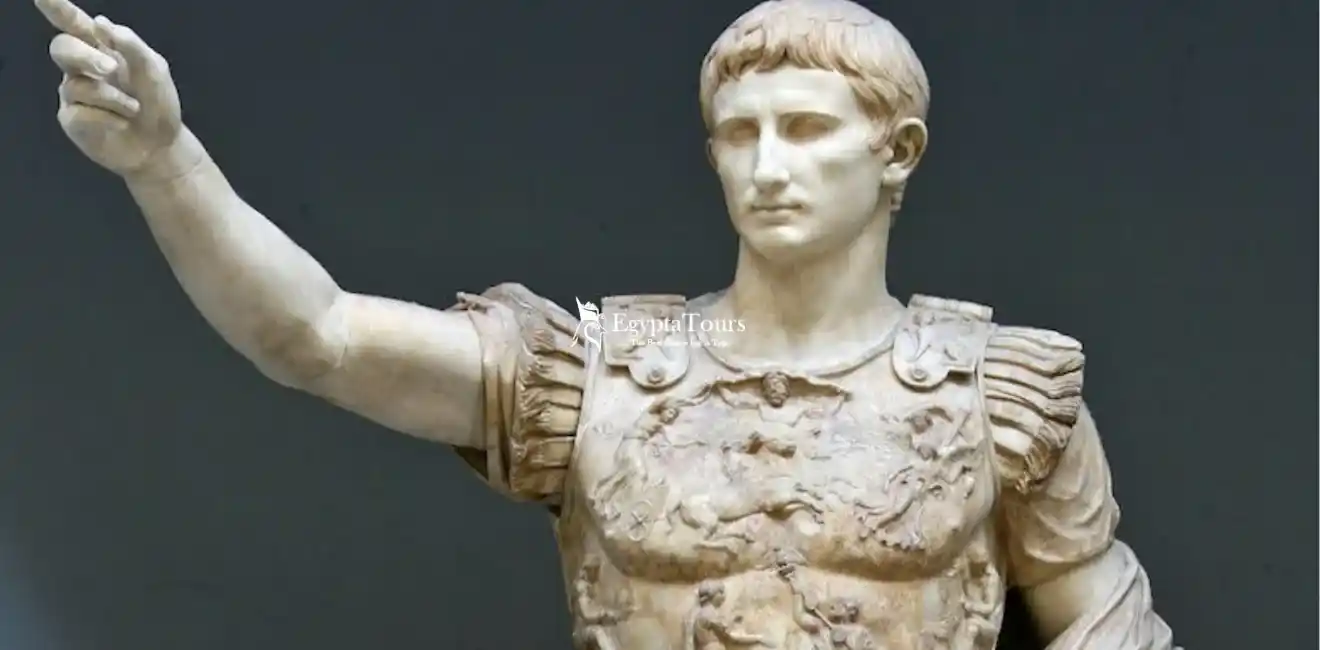
The Roman Empire began in 27 BCE and lasted until 476 CE in the Western part of the empire. In the Eastern part, known as the Byzantine Empire, it continued until 1453 CE. The first Roman emperor was Augustus. He came to power after a long period of civil wars and brought stability to the Roman world.
Although Augustus kept traditional Republican institutions such as the Senate and consuls, he controlled all real power. He established a system known as the Principate. In this system, the emperor presented himself as the “first citizen,” while in reality he controlled the army, finances, and administration.
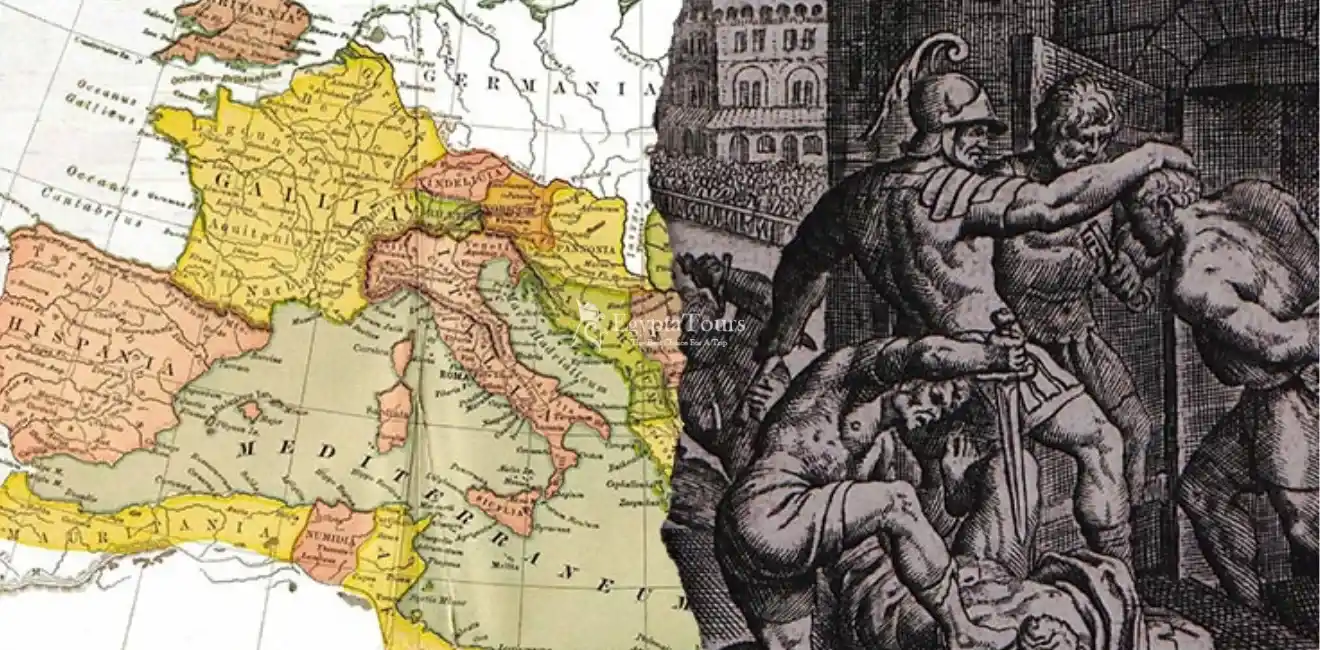
The Roman Empire expanded greatly and included Italy, Spain, Gaul (modern France), Britain, North Africa, Egypt, Greece, the Balkans, the Middle East and parts of Arabia. To govern this large territory, the Romans built roads, aqueducts and cities.
During the Empire, Rome enjoyed a long period of peace and prosperity called the Pax Romana, meaning “Roman Peace.” This period lasted for about 200 years, from the reign of Augustus to that of Marcus Aurelius. Trade increased, culture developed and architecture flourished. Roman law and systems of government later influenced many other civilizations.
The Julio-Claudian Dynasty was the first ruling family of the Roman Empire. It began with Augustus and included Tiberius, Caligula, Claudius and Nero. These emperors strengthened the authority of the emperor and the Roman state but each ruler governed in a very different way.
Augustus and Claudius were known as effective rulers who expanded the empire and improved administration. In contrast, Caligula and Nero became famous for their cruelty and extreme behavior.
Augustus ruled from 27 BCE to 14 CE. He centralized political power and reduced the influence of the Senate. He reformed the military by creating a permanent army and the Praetorian Guard. Under his rule, the empire expanded into Spain, Gaul and other regions. His reign also supported Roman culture, and writers such as Virgil, Horace, and Ovid became very important.
After Augustus, Tiberius ruled quietly and spent much of his time on the island of Capri, leaving most administrative work to officials. Caligula became emperor at a young age and was later assassinated. Claudius expanded Roman control into Britain and strengthened the government.
Nero, the final emperor of this dynasty, faced many revolts. He became known for the Great Fire of Rome in 64 CE and for persecuting Christians. He eventually committed suicide, which ended the Julio-Claudian dynasty.
The Flavian Dynasty came after the Julio Claudians and included Vespasian, Titus and Domitian. Vespasian became emperor after a time of chaos known as the Year of the Four Emperors (68 – 69 CE). He worked to restore order, rebuild Rome and strengthen the army.
His son Titus completed the Colosseum and ruled during major disasters including the eruption of Mount Vesuvius. Domitian, the last Flavian emperor, expanded Roman borders and improved administration. However, his strict style of rule made him unpopular and he was assassinated. The Flavian emperors helped prepare the empire for further expansion and stability.
By 100 BC, Rome had expanded from the Italian peninsula to control most of the Mediterranean world and nearby regions. Despite this growth, political conflicts and civil wars weakened the state. This period ended when Octavian defeated Mark Antony and Cleopatra at the Battle of Actium in 31 BC. Soon after, Egypt was conquered.
In 27 BC, the Roman Senate granted Octavian supreme military authority and gave him the title Augustus. This officially made him the first Roman emperor. The empire was then divided into two types of provinces:
The first two centuries of the Roman Empire were marked by peace and prosperity during the Pax Romana. The empire reached its greatest size under Emperor Trajan who ruled from 98 to 117 AD.
After this period, problems began to appear, especially during the reign of Commodus (180–192 AD). The empire suffered from civil wars, plagues and invasions during the 3rd century. Some regions broke away and formed independent states such as the Gallic Empire and the Palmyrene Empire.
Order was restored when Emperor Aurelian reunited the empire between 270 and 275 AD. Later, Emperor Diocletian ended many civil wars by dividing the empire into Eastern and Western administrations each with its own ruler.
Constantine- and -the -Shift -to -Constantinople
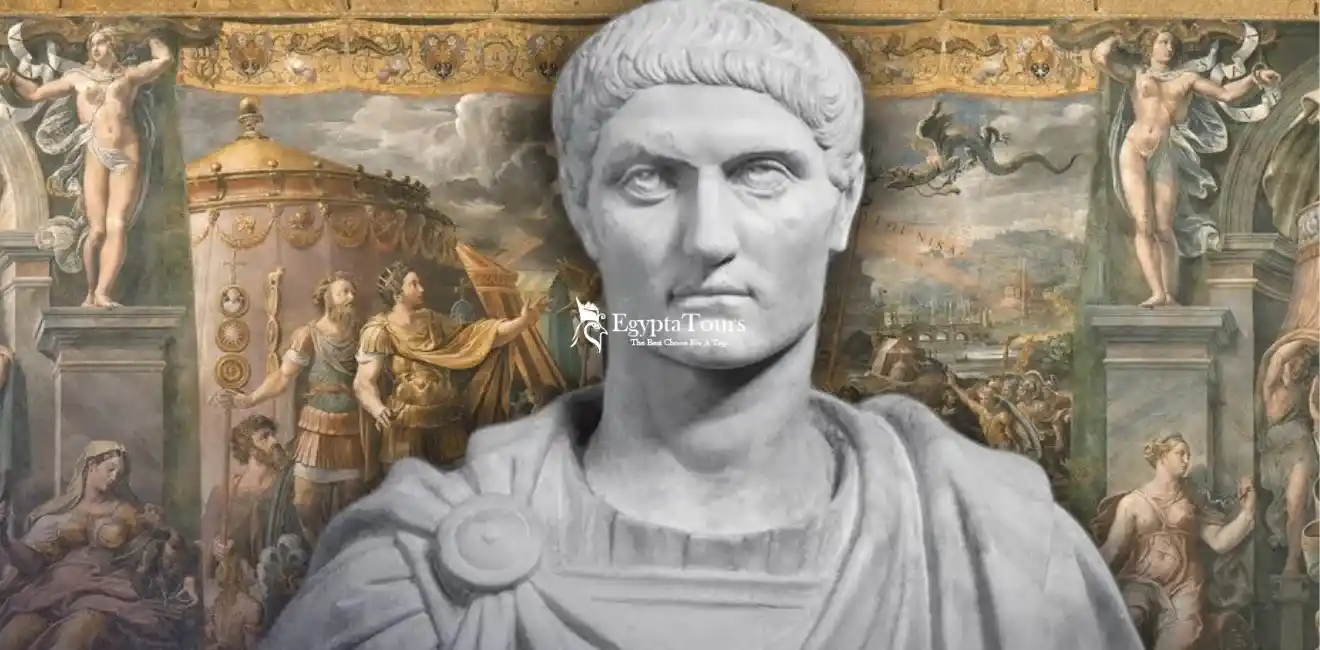
Constantine the Great ruled from 306 to 337 AD and became the first Christian emperor. In 330 AD, he moved the capital of the empire from Rome to the city of Byzantium which he renamed Constantinople.
Over time, invasions and migrations by Germanic tribes and the Huns weakened the Western Roman Empire. The fall of the city of Ravenna and the removal of the last emperor, Romulus Augustus, in 476 AD marked the end of the Western Empire.
The Eastern Roman Empire, known as the Byzantine Empire, continued to exist for nearly a thousand more years, with Constantinople as its capital, until it fell in 1453.
Rome was unique in the way it integrated many different peoples and cultures. This idea is reflected in its founding myths such as the story of Romulus and Remus and the abduction of the Sabine women. These stories symbolized the blending of different communities from the beginning of Roman history.
Historians like Dionysius of Halicarnassus praised Rome’s mixed origins and its acceptance of migrants from across Italy and beyond. Over time, these cultures became part of Roman society.
Some Roman writers, such as Tacitus and Suetonius, expressed concern about the growing number of citizens from outside Italy. However, their concerns were mainly about political rights and citizenship, not about race or physical differences.
The- Republic -of -Romans
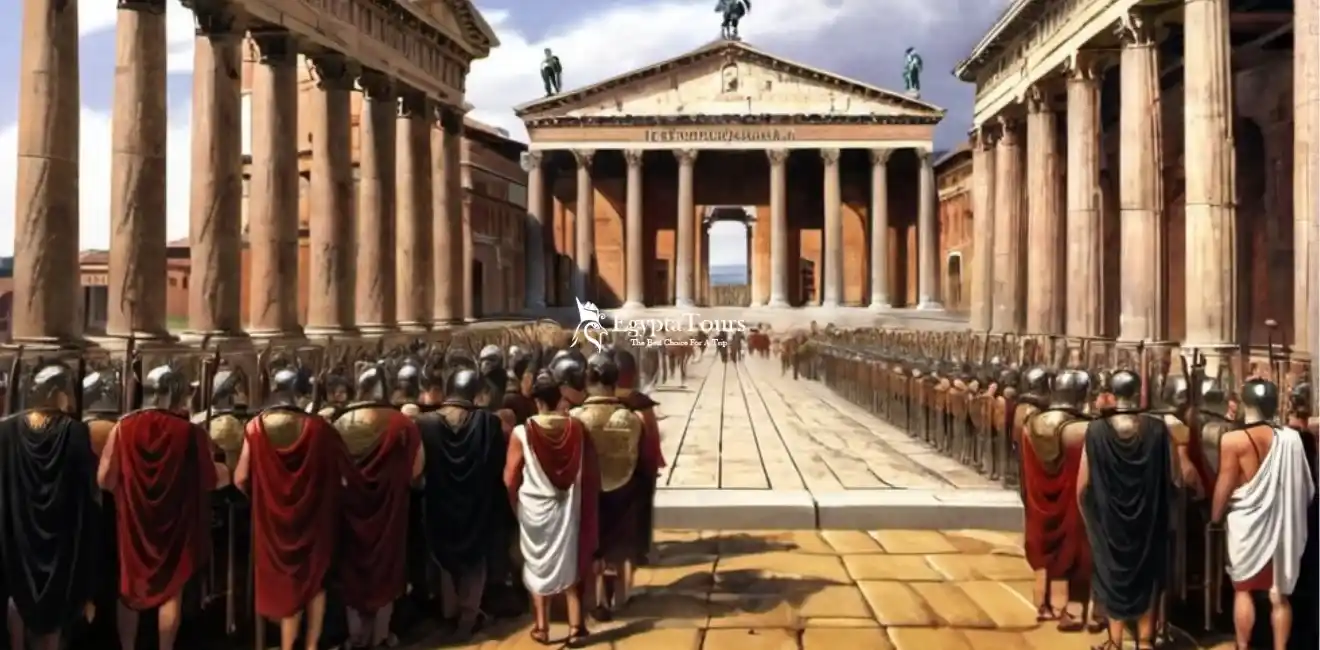
The Roman Republic lasted from 509 BCE to 27 BCE. Power was not held by a single ruler but shared among elected officials and the Senate. The highest officials were two consuls who led the government and the army.
The Senate was made up of influential men from noble families. It managed finances, advised magistrates and guided state policy. Other officials included tribunes whose role was to protect the rights of ordinary citizens known as plebeians. The Republic worked through a balance between wealthy patricians and common people.
During this period, Rome became very powerful. It conquered all of Italy and expanded across the Mediterranean. The Romans fought many wars, including the Punic Wars against Carthage. Through these conflicts, Rome gained control over Spain, North Africa, Greece and parts of the Middle East.
Despite its success, the Republic faced serious internal problems. Wealth became concentrated among powerful families and many farmers lost their land. This caused social tension and violence. Military leaders like Julius Caesar used their armies to gain political power. In 44 BCE, Caesar was assassinated, leading to a new series of civil wars.
The Republic officially ended in 27 BCE when Octavian became emperor under the name Augustus, beginning the Roman Empire.
Rome began expanding soon after the Republic was established in the 6th century BC. Expansion beyond Italy increased in the 3rd century BC. The Republic was not a unified nation-state but a network of self-governing cities and provinces controlled by military leaders. It was ruled by annually elected officials, especially consuls along with the Senate.
The 1st century BC was marked by political instability and military conflict. Consuls held military authority under the concept of imperium, meaning command. Successful generals could be given the honorary title imperator which later became the word “emperor.”
Even as Rome expanded, internal conflicts grew stronger. Julius Caesar became dictator in 44 BC but was assassinated by senators who feared his power. His supporters, led by Mark Antony and Octavian, defeated the assassins at the Battle of Philippi in 42 BC.
Antony and Octavian then divided control of the Roman world, but conflict continued. Octavian defeated Antony and Cleopatra at the Battle of Actium in 31 BC. In 27 BC, the Senate gave him the titles Augustus and princeps, meaning “first citizen.” This marked the beginning of the Principate and the Roman Empire. Although the Republic continued in name, real power rested with Augustus and his successors.
The early years of Augustus’s rule are known as the “Pax Romana,” a period of stability and unprecedented economic prosperity in the Roman Empire. Revolts in the provinces were rare and quickly suppressed.
The Julio-Claudian dynasty included four emperors: Tiberius, Caligula, Claudius and Nero. This was followed by the Year of the Four Emperors in 69 AD which ended with Vespasian founding the Flavian dynasty. The Nerva Antonine dynasty followed, producing the “Five Good Emperors”, Nerva, Trajan, Hadrian, Antoninus Pius and Marcus Aurelius.
Emperor Hadrian (117–138 AD) focused on consolidating the empire’s borders and launched major building projects across the provinces including the re foundation of Jerusalem in 129/130 AD as Aelia Capitolina which later led to the Bar Kokhba revolt (132–135 AD).
The -East -and- West- Division -of- Romans -and- The- Fall -of -the -Western -Empire
The Western Roman Empire began to decline in the 5th century. Although it repelled invaders such as Attila the Hun, the inclusion of many disloyal Germanic tribes weakened the empire internally. Most historians mark the end of the Western Empire in 476 AD when Romulus Augustulus abdicated to the Germanic leader Odoacer who effectively ruled Italy.
The Eastern Roman Empire or Byzantine Empire, survived until Emperor Constantine XI Palaiologos died defending Constantinople in 1453 against Ottoman Sultan Mehmed II who adopted the title “Caesar” to link himself to the former Roman Empire.
The Roman Empire was one of the largest empires in history, covering Europe, North Africa and the Middle East. The Romans believed their empire had no limits. In Virgil’s Aeneid, it is said that Jupiter gave the Romans unlimited power over the world. This belief continued even after the empire became Christian in the fourth century. The Romans not only expanded territories but also changed the environment by cutting down large forests.
Most expansion happened during the Republic but parts of northern Europe were conquered in the first century which strengthened Roman control in Europe, Africa and Asia. During Augustus’ reign, a map of the known world was displayed in Rome for the first time and Strabo recorded the empire’s geography in detail. When Augustus died, his record of achievements focused on the empire’s geographical extent. Geography and accurate records were very important for imperial administration.
The empire reached its largest size under Emperor Trajan, covering about five million square kilometers. Population estimates range from fifty five to sixty million which was about one sixth to one fourth of the world’s population making it the most populous unified state in the West until the nineteenth century.
Modern studies suggest the population peak was between seventy and one hundred million. The three largest cities, Rome, Alexandria and Antioch, were almost twice as large as any European city in the seventeenth century.
Historian Christopher Kelly described the empire as stretching from Hadrian’s Wall in northern England to the banks of the Euphrates in Syria, from the Rhine Danube rivers across Europe to the plains of North Africa and the Nile Valley in Egypt. The empire completely surrounded the Mediterranean which the Romans called “our sea.”
After Trajan, Emperor Hadrian focused on maintaining the empire rather than expanding it. Borders were clearly marked and frontiers were monitored. The most fortified regions were also the most unstable. Hadrian’s Wall separated the Roman world from constant threats beyond the borders and remains a major monument. In the eastern provinces, stones were used to define lands and manage taxes and rural administration.
Latin and Greek were the main languages but the empire had many languages. The Romans wanted everyone to understand them. At the start of the empire, knowing Greek helped to appear educated while Latin was necessary for careers in the army, government or law. Bilingual inscriptions show the two languages mixed in daily life.
Latin and Greek influenced each other greatly. Latin words appeared in Greek in military, administration and trade. Greek literature and philosophy shaped Latin language and culture.
There was no law forcing people to speak Latin, but it showed high social status. Latin literature set high language standards. The empire encouraged competition between languages which strengthened Latin. Over time, Latin became a way to show power and social class.
Most emperors knew both languages but preferred Latin in public. Some emperors tried to make Latin the official language of administration but the early empire shows no evidence of forcing language use.
After citizenship was given to all free people in 212, many citizens did not know Latin. Koine Greek was widely used and helped spread Christianity. After Diocletian’s reforms in the third century, Greek knowledge declined in the West. Later, spoken Latin evolved into the Romance languages after the Western Empire collapsed.
Even though Latin and Greek dominated educated people, local languages continued. Spoken Latin gradually replaced Celtic and Italic languages. Translators show local languages were still used such as Coptic in Egypt and in the military along the Rhine and Danube.
Roman jurists considered local languages like Punic, Gaulish, and Aramaic to ensure laws were understood. In Africa, Libyco Berber and Punic were used until the second century. In Syria, Palmyrene soldiers used Aramaic. Gaulish was last mentioned between 560 and 575, after which Gallo Romance languages developed. Proto Basque evolved with Latin words into modern Basque. Some extinct Anatolian languages and Thracian appear in inscriptions from the imperial era.
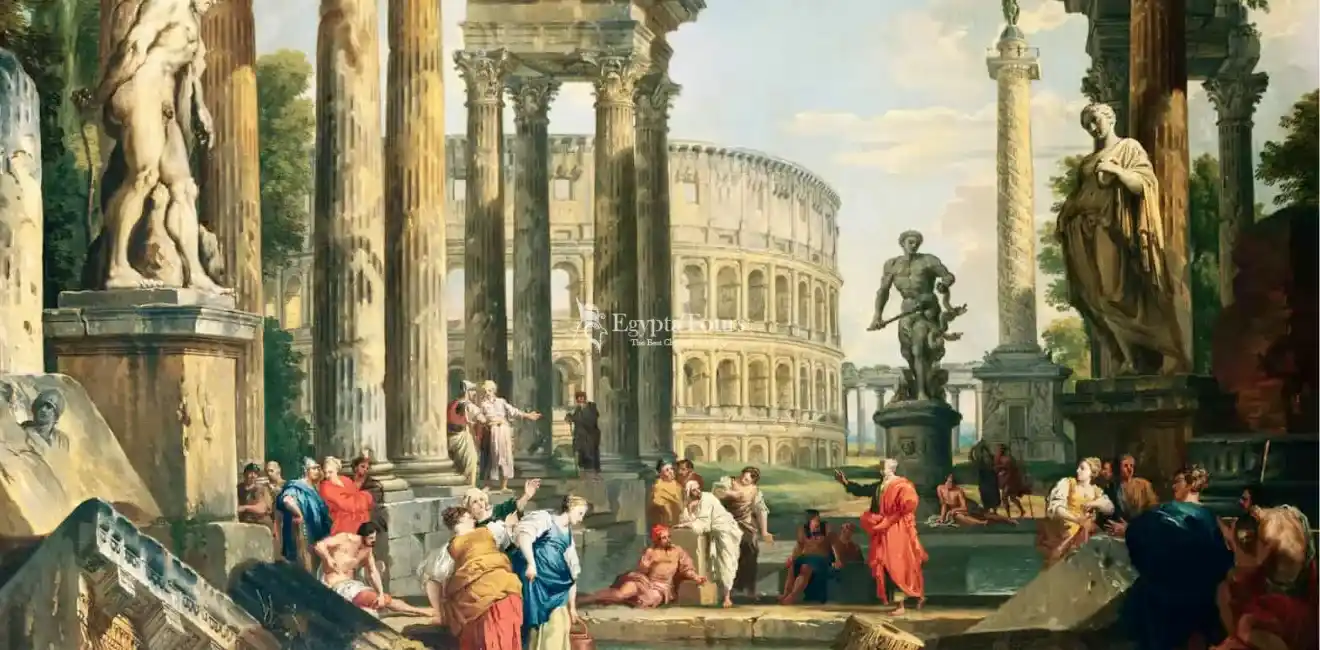
The -Romans-‘ -Society
The empire was culturally diverse but created a shared identity. Public spaces like forums, amphitheaters, racetracks and baths helped people feel connected to Rome.
Roman society had many overlapping social layers. The civil war before Augustus caused disruption but did not immediately change wealth or power. For lower classes, the social hierarchy added a new peak. Personal relationships like patronage, friendship, family and marriage affected politics. By Nero’s time, a former slave could be richer than a free citizen or a knight could have more power than a senator.
Looser rules allowed social mobility, up and down more than in other ancient societies. Women, freedmen and slaves had new opportunities for profit and influence. Social life for less wealthy people was supported by voluntary associations and guilds including professional and trade groups, veterans’ groups, religious societies, clubs, performing troupes and burial societies.
All humans were either free or slaves. Free people’s legal rights depended on citizenship. Most citizens had limited rights but were legally protected and had privileges not given to non-citizens. Free non-citizens were considered foreigners. In 212, citizenship was granted to all freeborn people, requiring changes to laws that distinguished citizens from non citizens.
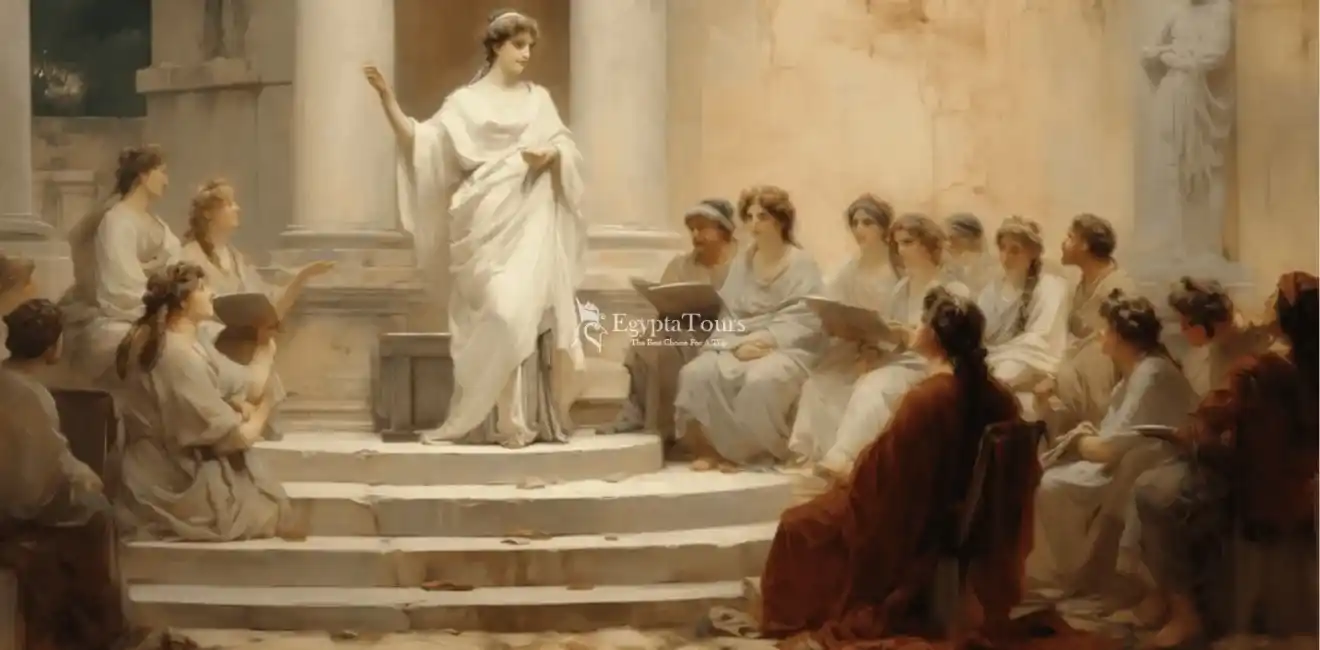
Women -in -Roman -Law
Free women were citizens but could not vote, hold office, or serve in the military. A mother’s citizenship determined her children’s status. Women kept their family name and children usually took their father’s name.
Women could own property, make contracts and conduct business. Inscriptions show women could have great wealth and fund public works.
The old type of marriage that made a woman under her husband’s control was mostly abandoned. A married woman kept her property. Legally, she was under her father until he died, then she was free. This gave women more independence than in many other cultures. Husbands had no legal power over their wives, and women were free in daily life.
Augustus’ reforms promoted morality and family values. Adultery was punished with a double standard. Women could only have sex with their husbands while men could have sex with prostitutes or lower status women. Childbearing was encouraged and women with three children received honors and legal privileges.
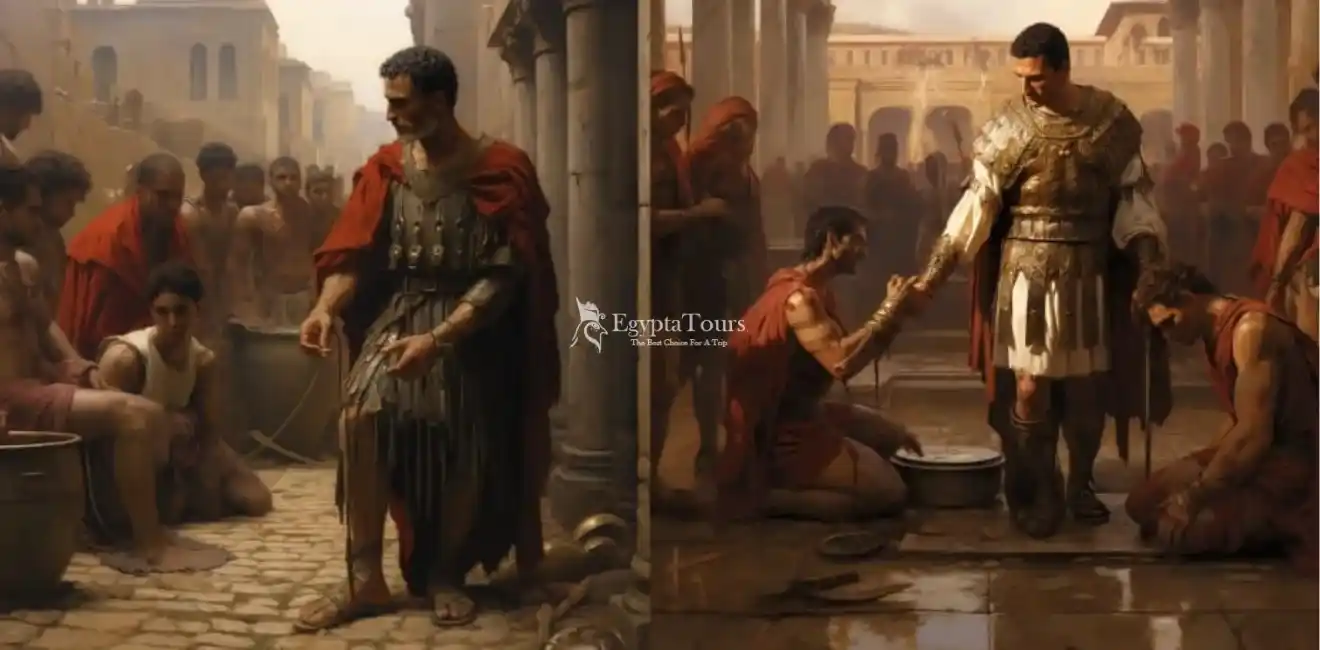
Slaves -And -The -Law -Of -Romans
At the time of Augustus, up to 35% of people in Roman Italy were slaves, making Rome one of the few historical “slave societies” where slaves formed a large part of the population and played a major role in the economy.
In cities, some slaves worked as professionals, teachers, physicians, chefs, and accountants. However, most slaves did manual or unskilled labor. Agriculture and industries like milling and mining heavily relied on slave labor.
Outside Italy, slaves made up 10 to 20% of the population on average. Roman Egypt had fewer slaves, while some Greek regions had more. Expansion of Roman estates and industries changed local practices of slavery in the provinces. Although slavery declined gradually in the 3rd and 4th centuries, it remained essential to Roman society until it slowly disappeared in the 6th and 7th centuries with the collapse of the imperial economy.
Laws about slavery were extremely complex. Slaves were considered property, not people and had no legal rights. They could face corporal punishment, torture, sexual exploitation and even execution.
Inside households or workplaces, slaves sometimes had a hierarchy, with one acting as a master over others. Manumission (the act of freeing a slave) became common, leading Augustus to pass the Lex Fufia Caninia in 2 BC, limiting the number of slaves an owner could free in a will.
After the Servile Wars, Roman law under Augustus focused on:
Over time, slaves gained some legal protections including the right to file complaints against their masters. Contracts sometimes prevented slaves from being forced into prostitution. Laws also forbade castrating slaves without their consent, especially for profit or sexual purposes.
Roman slavery was not based on race. Most slaves in Italy were indigenous while foreigners made up about 5% of the population in Rome at its peak. Foreign slaves often faced higher death rates, lower birth rates, and even mass expulsions. The average age at death for slaves in Rome was about 17 years.
During Rome’s expansion, most slaves came from war captives. Their ethnicities reflected those of the armies Rome defeated. Greek slaves were often skilled and educated. Slaves were also acquired through markets, pirates, infant abandonment or self-enslavement among the poor.
Vernae were slaves born within a household, estate, or farm. They had no special legal status but mistreating them could bring social disapproval since they were considered part of the family household. In some cases, vernae could be the children of free males in the family.
Rome allowed freed slaves to become citizens. Their children were born free. Freedmen had political freedom, including voting. Their former masters became patrons. Freedmen held important positions in administration. Successful freedmen could gain wealth and influence, as shown by inscriptions across the empire.
The Latin word ordo (plural ordines) is sometimes translated as “class, rank, order” but it does not always give a precise meaning. One purpose of the census for the Romans was to determine a person’s rank (ordo) and their social status. The highest ranks in Rome were the senators (Senators) and the equestrians (Equestrians). Outside Rome, cities or colonies were governed by local officials called decurions (decurions or curiales).
The title “senator” was not an elected office; a man joined the Senate after being elected and serving at least one term as an executive magistrate. He also had to own at least one million sesterces. Not everyone who qualified for the ordo senatorius joined the Senate as it required residence in Rome. Emperors often appointed people to fill the 600 member Senate.
A senator’s son was automatically part of the ordo senatorius but he had to qualify on his own to join the Senate. Senators could be removed if they broke moral standards.
In Nero’s time, most senators were from Italy, with some from Spain and southern France. Men from the Greek-speaking provinces in the East started joining under Vespasian. The first senator from Cappadocia joined under Marcus Aurelius. By the Severan dynasty (193–235), Italians made up less than half the Senate. In the 3rd century, living in Rome became difficult and inscriptions show senators active in politics and public generosity in their home cities.
Senators were the traditional ruling class for the Romans, rising through political offices via the cursus honorum. Equestrians, however, often had greater wealth and political influence. Equestrian membership required property, a man needed 400,000 sesterces and three free generations to qualify.
The 28 BC census revealed many men qualified as equestrians, and by 14 AD, one thousand equestrians were registered in Cádiz and Padua alone. Equestrians advanced through a military career (tres militiae) to become high ranking officials and administrators in the imperial government.
The rise of provincial men to senator and equestrian ranks shows social mobility in the early Empire. Roman aristocracy was competitive, unlike later European nobility that maintained status by inheritance. Joining the higher ranks brought privileges but also major financial responsibilities as members had to fund public works, events and services. Decurions were vital for city life so in the late Empire, senators were encouraged to return to their hometowns to sustain civic life.
In later periods, senatorial and equestrian ranks carried additional titles like vir illustris (“illustrious man”) and clarissimus, indicating the status of certain senators and their families including women. Different grades of equestrian rank also developed over time.
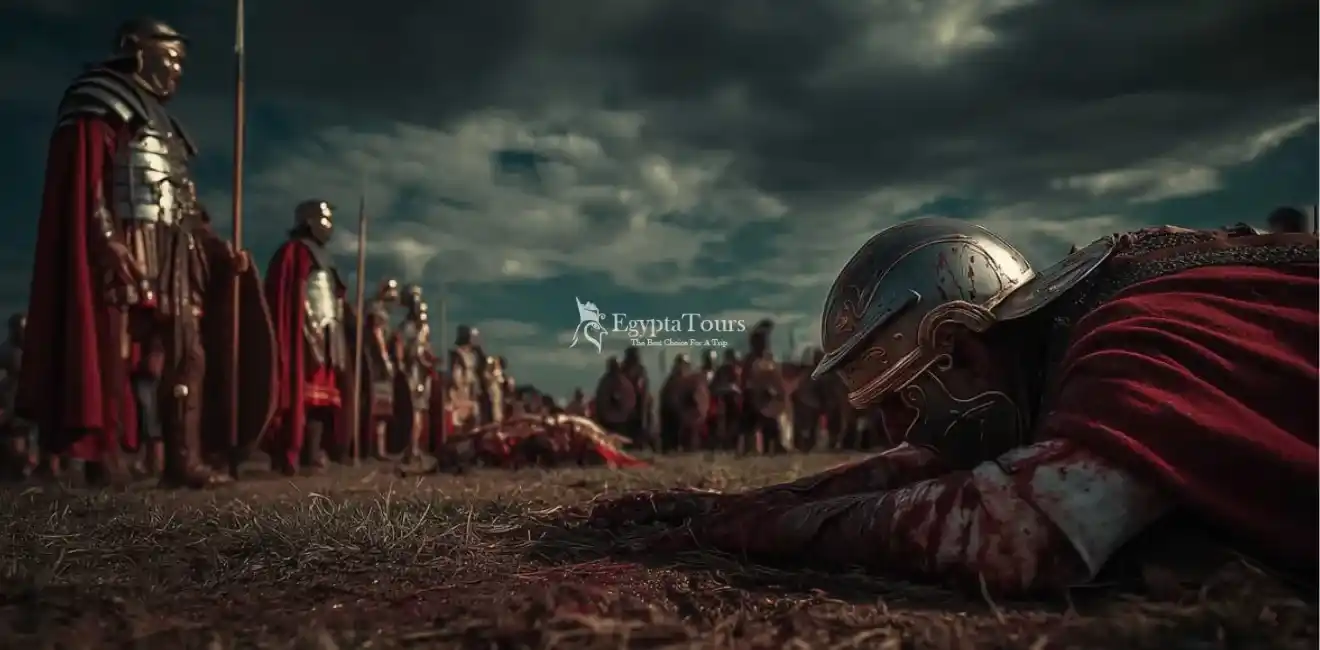
Unequal- Justice -in -Romans -Society
A condemned man attacked by a leopard in the arena (3rd-century mosaic, Tunisia)
As the republican principle of equality under the law faded, the social privileges of upper classes divided Roman society into those with higher status (honestiores) and the lower classes (humiliores). Usually, honestiores included members of the three highest orders and certain military officers.
Granting citizenship to all free people in 212 AD increased the upper classes’ desire to assert their superiority, especially in legal matters. Punishments depended on the official’s judgment of a person’s value: an honestior might pay a fine for a crime while a humilior could be whipped for the same offense.
Execution, rare for free men under the Republic, was quicker and less painful for honestiores while humiliores could face crucifixion or being killed by wild animals, previously reserved for slaves. Early Christians could lose their honestiores status if they refused religious duties, exposing them to punishments that sometimes led to martyrdom.
The main elements of the Roman state were the central government, the army and provincial administration. The army established control through war but after a city or people was subdued, it acted as police, protecting citizens, farmland and religious sites. The Romans did not have enough resources to rule by force alone so cooperation with local elites was essential for order, intelligence and taxation. They often exploited internal political divisions.
Loyal communities kept their laws and tax systems and some were even exempt from Roman taxes encouraging compliance. Roman governance was limited but efficient with its resources.
The emperor of the Romans held supreme authority with divine sanction. The ritual of apotheosis raised deceased emperors to divine status. Emperors consolidated powers from republican offices and became the highest religious authority, controlling war declarations and diplomacy.
Early emperors handled government matters personally and bureaucracy developed gradually. Julio-Claudian emperors relied on informal advisors including senators, equestrians and trusted slaves or freedmen. After Nero, advisors were officially appointed for transparency.
People could meet the emperor through daily receptions (salutatio), public banquets or religious ceremonies. Ordinary citizens often expressed their opinions at games. By the 4th century, emperors were distant figures who issued general orders.
The Senate had mainly symbolic power, legitimizing imperial rule and providing generals, diplomats and administrators. Real power belonged to the military. Soldiers swore annual loyalty oaths and emperors usually chose a successor who needed army approval to secure stable rule.
Annexed lands became provinces through city registration, censuses and land surveys. Records included births, deaths, property, taxes and legal cases. In the 1st and 2nd centuries, about 160 officials were sent yearly to govern provinces including senatorial governors and equestrian governors in imperial provinces like Egypt.
Governors needed to be accessible but could delegate tasks to a small staff: official attendants, civil and military legates and unofficial friends. Equestrian procurators managed state and imperial property.
Italy had tax exemptions in the High Empire but under Diocletian, it lost privileges and was divided into provinces.
The -Military- of -the -Romans
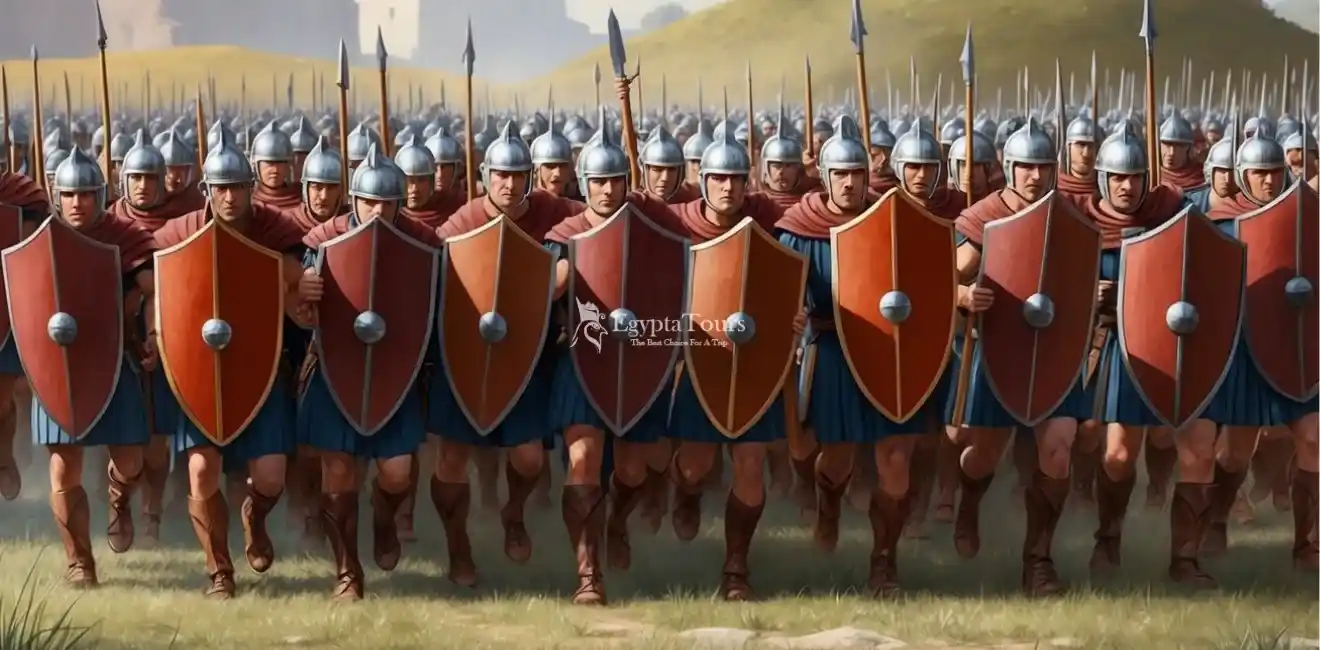
Following the Punic Wars, the Roman army became a professional force made up of soldiers who volunteered for twenty years of active service, followed by five additional years in reserve. This move toward a standing professional army took shape in the late Republic and marked a major departure from the earlier republican system, in which citizen conscripts were temporarily mobilized to defend the state against specific dangers. As Rome expanded,
it strengthened its military by organizing the Italian communities it conquered into a system that supplied vast numbers of recruits for the army. By the time of the Empire, military service had developed into a full-time profession. The widespread presence of permanent military garrisons across the Empire played an important role in advancing the process of Romanization.
During the early Empire, the main purpose of the military was to maintain the Pax Romana. The armed forces were divided into three principal branches:
Through a series of military reforms, Augustus reorganized the army by merging or disbanding units whose loyalty was uncertain. Under his system, a legion was structured into ten cohorts, each cohort containing six centuries.
Each century was further divided into ten squads or contubernia. Although the exact size of an Imperial legion depended largely on logistical factors, estimates suggest it usually ranged between 4,800 and 5,280 soldiers.
After three legions were destroyed by Germanic tribes at the Battle of the Teutoburg Forest in 9 AD, the total number of legions was increased from about twenty-five to roughly thirty. In the 1st century AD, the army numbered around 300,000 men, rising to just under 400,000 in the 2nd century. Even at its height, this force was significantly smaller than the combined military strength of the territories Rome had conquered. Fewer than two percent of adult males living within the Empire served in the Imperial army.
Augustus also established the Praetorian Guard, made up of nine cohorts whose official role was to maintain public order. Stationed in Italy, these troops received higher pay than ordinary legionaries and served a shorter term of sixteen years.
The auxilia were recruited primarily from non-citizen populations. They were organized into smaller units, generally comparable in size to cohorts, and received lower pay than legionaries. After completing twenty-five years of service, auxiliary soldiers were granted Roman citizenship, a privilege that was also extended to their sons. According to Tacitus, the number of auxiliary troops was roughly equal to that of legionaries, amounting to about 125,000 men and implying the existence of approximately 250 auxiliary regiments. Cavalry units in the early Empire were largely drawn from Celtic, Hispanic and Germanic regions, and many elements of Roman cavalry training and equipment were influenced by Celtic practices.
The Roman navy played a crucial role in supplying and transporting the legions as well as defending the Empire’s frontiers along major rivers such as the Rhine and the Danube. It was also responsible for protecting maritime trade from piracy. Naval forces patrolled the Mediterranean Sea, sections of the North Atlantic coastline and the Black Sea. Despite its importance, the navy was regarded as less prestigious than the army which remained the senior branch of the Roman military.
Romans -Law
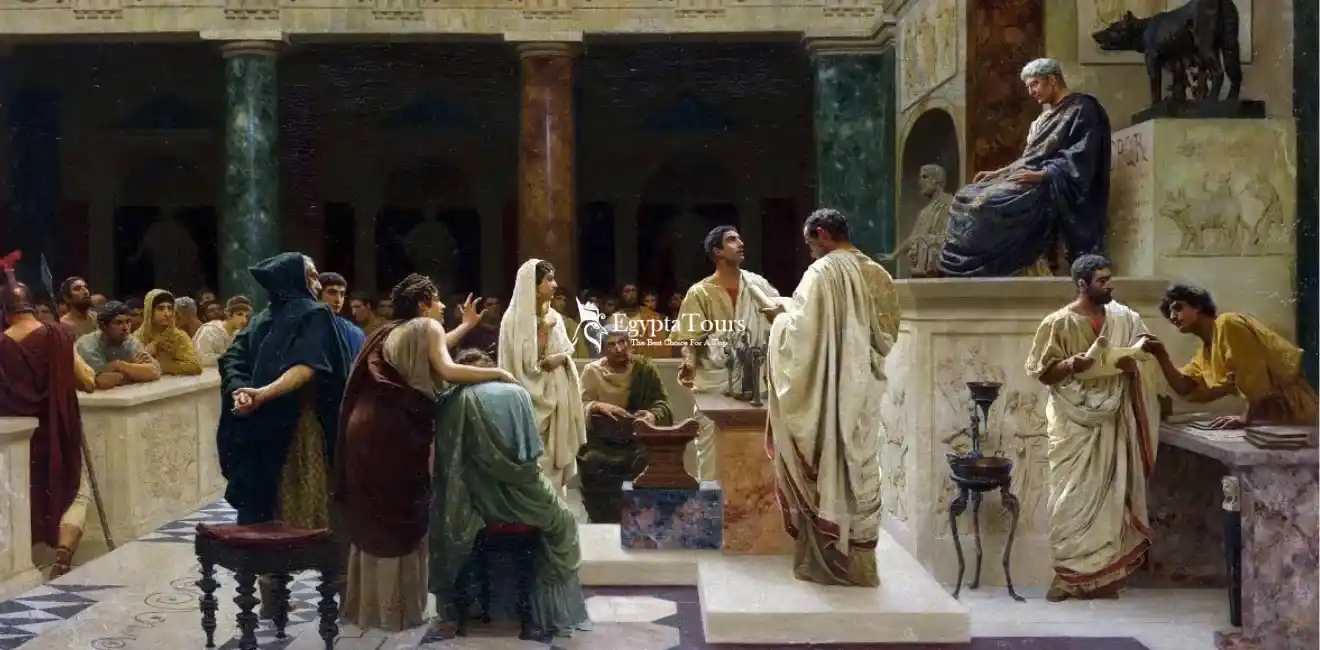
Roman courts handled cases for citizens but officials were too few to enforce laws uniformly in provinces. Eastern provinces often kept local laws which Romans respected for stability.
Roman law applied to citizens and when local laws conflicted, appeals went to Roman courts with the emperor as the final authority. In the West, laws were tribal or local and private property was often new. Extending citizenship in 212 AD required uniform Roman law, replacing local codes. Diocletian compiled laws in the Codex Gregorianus and Codex Hermogenianus. Roman law influenced Western legal systems and Latin terms remain in modern law.
Taxation under the Roman Empire amounted to about 5% of its gross product. The typical tax rate for individuals ranged from 2% to 5%. The Roman tax system was complex, with a mixture of direct and indirect taxes, some paid in cash and others in kind. Taxes could be specific to a province or to certain types of property, such as fisheries, and some were temporary.
Tax collection was justified by the need to maintain the military and taxpayers sometimes received a refund if the army captured a surplus of booty. In-kind taxes were accepted from less-monetized areas, especially those that could supply grain or goods to army camps.
The primary source of direct tax revenue was individuals, who paid a poll tax and a tax on their land. Land taxes were considered a tax on its produce or productive capacity. Tax obligations were determined by the census, where each head of household reported the members of their household and an accounting of their property.
A major source of indirect tax revenue was the portoria, which were customs duties and tolls on trade including trade among provinces. Towards the end of his reign, Augustus instituted a 4% tax on the sale of slaves. Nero later shifted this tax from the purchaser to the dealers who responded by raising their prices.
An owner who manumitted a slave paid a “freedom tax,” calculated at 5% of the slave’s value. An inheritance tax of 5% was assessed when Roman citizens above a certain net worth left property to anyone outside their immediate family. Revenues from the estate tax and the auction tax were used to fund the veterans’ pension fund (aerarium militare).
Low taxes allowed the Roman aristocracy to increase their wealth, which equaled or exceeded the revenues of the central government. Emperors sometimes replenished the treasury by confiscating estates from the wealthiest citizens. In later periods, resistance by the wealthy to paying taxes was one of the factors that contributed to the collapse of the Empire.
The -Economy -of -Romans
The Romans managed a vast economic network across their empire, which can be described as a form of “political capitalism” where the state regulated commerce to ensure its own revenues. Although economic growth was not comparable to modern economies, it surpassed that of most pre-industrial societies. Military conquests allowed large-scale land reorganization leading to agricultural surplus and specialization, particularly in North Africa.
Some cities were famous for specific industries and the scale of urban construction indicates a significant building sector. Roman papyri reveal complex accounting methods, reflecting economic rationalism and the empire was highly monetized. Despite limited transport and communication in antiquity, transportation expanded greatly during the 1st and 2nd centuries, connecting regional economies while army supply contracts relied on local and provincial suppliers.
Economic activity promoted social mobility. While aristocratic values remained influential, wealth was a key factor in social ranking. Prestige could be gained through investment in large estates or luxurious townhouses, luxury items, public entertainments, funerary monuments, and religious dedications. Guilds and corporate associations enabled networking and career advancement. Some historians note that provincial towns enjoyed living standards unmatched in Western Europe until the 19th century.
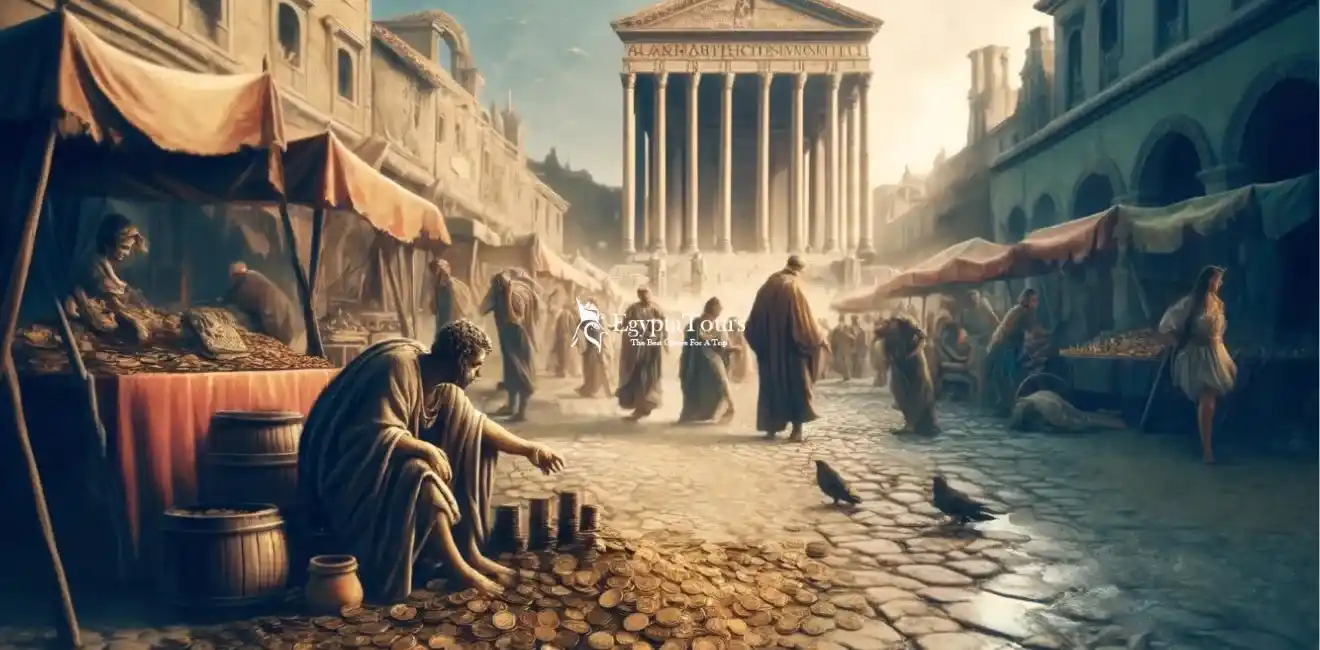
In the early Roman Empire, the economy was monetized to an almost universal degree with money widely used to set prices, record debts and conduct transactions. Augustus introduced a practical three-level currency system that Romans relied on in everyday life. Gold coins, mainly the aureus, were used for large purchases and as a means of storing wealth. Silver coins, especially the denarius, were the standard earnings of workers and were commonly used to pay taxes. Bronze and brass coins, particularly the brass sestertius and dupondius, along with the copper as and smaller denominations, circulated in daily markets for ordinary shopping and minor expenses.
Most financial calculations including accounts, rents and public charges, were expressed in sesterces (HS), even when actual payments were made in denarii, aurei or bronze coins that were converted according to fixed exchange rates.
One aureus was equal to twenty-five denarii, one denarius to four sesterces and one sesterce to four asses. Because bronze coins circulated according to their face value rather than their metal content, Romans in the first and second centuries usually counted coins instead of weighing them. Bullion or metal ingots were rarely considered pecunia (money) except in frontier regions.
This dependence on token bronze coinage reinforced the fiduciary nature of Roman money and later contributed to the debasement of silver coins, even as a standardized monetary system supported trade, market integration and a large supply of money for both commerce and saving.
Rome did not possess a central bank and oversight of banking activities was limited. Like other banks in classical antiquity, Roman banks generally held reserves smaller than the total value of deposits entrusted to them. A typical bank operated with modest capital and was often run by a single principal. Seneca suggests that access to credit was essential for anyone engaged in Roman commerce. Professional deposit bankers accepted deposits for fixed or open-ended periods and lent those funds to third parties.
Members of the senatorial elite were deeply involved in private lending, acting both as lenders and borrowers. Debts themselves could function as a form of payment, since a creditor could transfer a debt to another party without the physical exchange of cash.
Although it has sometimes been argued that ancient Rome lacked documentary financial transactions, the widespread banking system made it possible to move large sums across the Empire without transporting coins, which was risky due to theft and loss. Only one major credit crisis is known from the early Empire, occurring in AD 33. In general, the amount of available capital exceeded the needs of borrowers. The central government did not borrow money and because there was no public debt, any budget deficits were covered using existing cash reserves.
Under the Antonine and Severan emperors, the currency, especially the denarius, was debased as a response to the growing burden of military salaries. A sudden bout of inflation during the reign of Commodus severely weakened the credit market. By the middle of the third century, the supply of coinage declined sharply. During the Crisis of the Third Century, factors such as the reduction of long-distance trade, interruptions in mining activity and the removal of gold coinage from the Empire by invading forces significantly reduced both the money supply and the strength of the banking sector.
Although Roman coinage had long functioned as fiat or fiduciary money, economic insecurity reached a peak under Aurelian and bankers lost confidence in the currency. Even after Diocletian introduced the gold solidus and implemented monetary reforms, the Empire’s credit market never fully regained its earlier stability.
Romans -Mining- and- Metallurgy
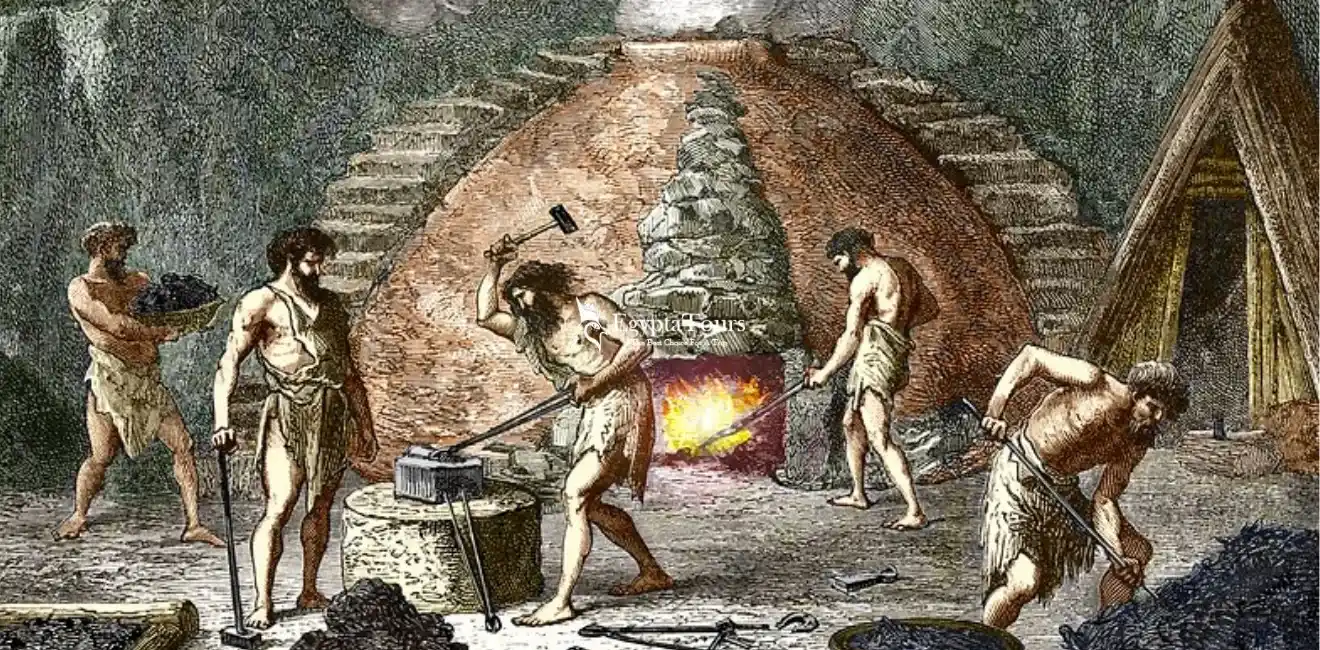
The Romans controlled some of the most important mining regions in the ancient world: the Iberian Peninsula (silver, copper, lead, iron, gold), Gaul (gold, silver, iron), Britain (iron, lead, tin), Danubian provinces (gold, iron), Macedonia and Thrace (gold, silver) and Asia Minor (gold, silver, iron, tin).
Mining was extensive, both from alluvial deposits and via open cast and underground methods, from Augustus’s reign until the early 3rd century when instability disrupted production. Hydraulic mining allowed extraction of metals on a proto industrial scale.
Annual iron output is estimated at 82,500 tonnes and copper and lead production remained unmatched until the Industrial Revolution. At its peak, Rome’s silver stock reached 10,000 tonnes, five to ten times the combined silver of medieval Europe and the Islamic Caliphate around 800 AD. Lead pollution in Greenland ice layers quadrupled during the Imperial era reflecting the scale of production.
Transportation -and -Communication -of- Romans
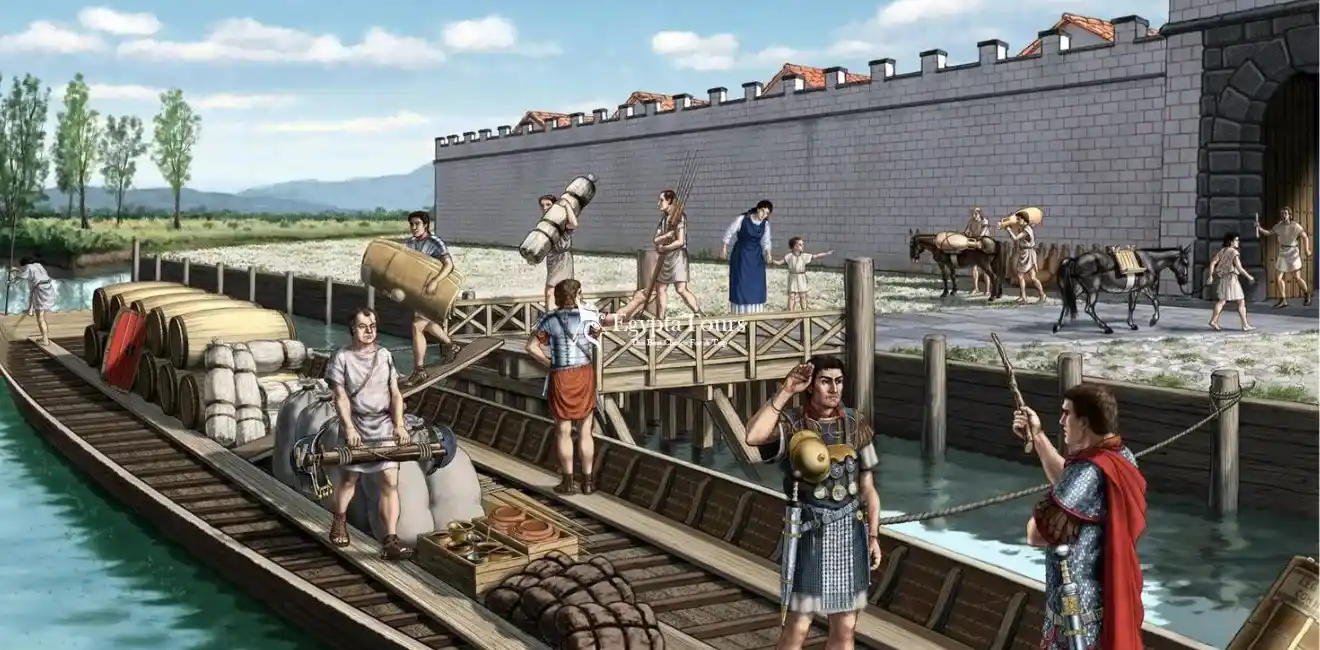
The Romans dominated the Mediterranean, called Mare Nostrum with ships navigating both seas and major rivers. Water transport was preferred as land transport was slower and harder.
For land, the Romans built an advanced road network (Viae), primarily for military purposes but also for commerce. The Cursus Publicus, established by Augustus, was the imperial postal and transport service. Communities contributed personnel, animals or vehicles to support it.
Relay stations, called Mansiones, were located every 7–12 Roman miles, often developing into villages or trading posts. Carts pulled by mules traveled around 4 mph facilitating regular mail and goods transport.
The -Trade -and- Commodities -of- Romans
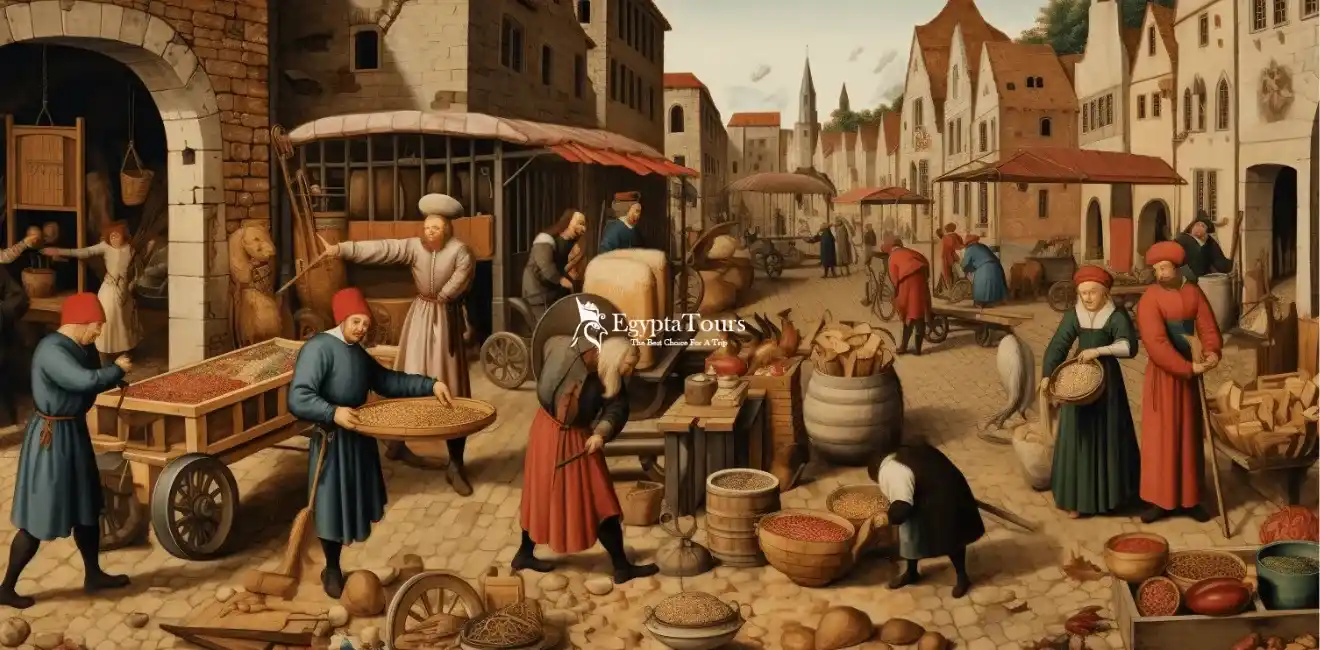
Roman provinces traded extensively internally but trade also extended to China and India. Trade with China mainly occurred overland via the Silk Road while trade with India used maritime routes from Egyptian ports.
The primary commodity was grain with other goods including olive oil, foodstuffs, fish sauce (Garum), slaves, metal ores and tools, textiles, timber, pottery, glass, marble, papyrus, spices, medicinal herbs, ivory, pearls and gemstones. Wine was a major trade product with regional varieties highly valued.
The city was regarded by the Romans as a place that actively promoted civilization when it was properly planned, organized and embellished. Augustus launched an extensive building program in Rome, encouraged public displays of art that conveyed imperial ideology, and reorganized the city into neighborhoods (vici) that were managed at the local level and equipped with police and firefighting services.
A central element of Augustan monumental architecture was the Campus Martius, a large open space outside the city center. This area contained the Altar of Augustan Peace as well as an obelisk brought from Egypt that served as the gnomon of a giant sundial (horologium). With its public gardens, the Campus Martius became one of the most appealing places to visit in Rome.
Urban planning and city life were influenced early on by Greek models. In the Eastern Empire, Roman authority shaped cities that already had a strong Hellenistic character. Cities such as Athens, Aphrodisias, Ephesus and Gerasa adapted their planning and architecture to suit imperial ideals while still expressing their own local identity and regional importance.
In regions inhabited by Celtic-speaking peoples, Rome promoted the growth of urban centers featuring stone temples, forums, monumental fountains and amphitheaters, often built on or near earlier fortified settlements known as oppida. In Roman Africa, urban development expanded upon earlier Greek and Punic coastal cities.
The interconnected network of cities known as coloniae, municipia, civitates or, in Greek terminology, poleis was a major unifying force during the Pax Romana. Romans living in the first and second centuries were encouraged to adopt what were described as “the habits of peacetime.”
As the classicist Clifford Ando observed, many of the cultural features commonly associated with imperial life such as public religious cults and their games, civic banquets, competitions for artists, speakers and athletes, and the construction of most public buildings and art displays were funded by wealthy private individuals. These expenditures helped legitimize their economic power and their legal and provincial privileges.
In the city of Rome, the majority of people lived in multi-story apartment buildings (insulae) which were often overcrowded and prone to fires. Public amenities were therefore essential. Facilities such as large public baths (thermae), toilets with running water (latrinae),
basins and elaborate fountains (nymphea) supplying fresh water, and mass entertainments like chariot racing and gladiatorial games were designed primarily for the common population.
Public baths fulfilled hygienic, social and cultural roles. Bathing was a central part of daily social interaction. Roman bath complexes typically consisted of a sequence of rooms offering communal bathing at three different temperatures along with additional features such as exercise areas, saunas, exfoliation rooms, ball courts and sometimes outdoor swimming pools. These baths were heated by hypocaust systems, in which floors were raised over channels of hot air.
Public bathing culture spread throughout the provinces, although by the late fourth century private bathtubs began to replace communal bathing. Christians were advised to use the baths only for cleanliness, not for leisure.
Wealthy Roman families generally owned more than one residence: a townhouse (domus) in the city and at least one luxurious country estate (villa).
The domus was a privately owned single-family house and might include a private bath (balneum) but it was not meant as a retreat from public life. Even though some neighborhoods had a higher concentration of such houses, they were not isolated or exclusive areas.
The domus was designed to be visible and accessible. Its central atrium functioned as a reception hall where the paterfamilias or head of the household, met clients each morning. It was also the focus of family religious rituals, containing shrines and images of ancestors. These houses were usually located along busy streets and ground-floor rooms were often rented out as shops (tabernae). In addition to kitchen gardens, sometimes replaced by window boxes in apartment buildings, townhouses typically enclosed a peristyle garden.
By contrast, the villa represented an escape from urban life. In Roman literature, it symbolized a lifestyle that balanced intellectual and artistic pursuits (otium) with enjoyment of nature and agriculture. Ideally, a villa was designed to command a scenic view, carefully framed by architectural elements.
Augustus’s urban renewal program and the growth of Rome’s population to as many as one million people were accompanied by a sense of nostalgia for rural life. Poetry often idealized farmers and shepherds, and interior decoration commonly featured painted gardens, fountains, landscapes, plant motifs and animals rendered with enough accuracy to identify specific species.
At the same time, the central government took an active interest in supporting agriculture. Food production was the highest priority for land use. Large estates (latifundia) achieved economies of scale that sustained urban populations while smaller farmers benefited from the expansion of local markets and trade centers. Agricultural techniques such as crop rotation and selective breeding spread across the Empire and new crops were introduced from one province to another.
Ensuring an affordable food supply for the city of Rome became a major political concern in the late Republic. The state introduced a grain dole (Cura Annonae) for registered citizens, numbering roughly 200,000 to 250,000 adult males. This program consumed at least 15 percent of state revenues but improved living conditions for the lower classes. It also indirectly benefited the wealthy by allowing workers to spend more of their wages on products like wine and olive oil produced on large estates.
The grain dole carried symbolic importance as well, reinforcing the emperor’s image as a universal benefactor and affirming the citizens’ right to share in the “fruits of conquest.” Together with public facilities and spectacular entertainments, the annona helped offset the harsh living conditions of the urban poor and reduced the risk of social unrest. The satirist Juvenal, however, famously criticized this system as “bread and circuses” (panem et circenses), seeing it as a sign of the loss of republican political freedom.
Health and Disease
Epidemics were common in the ancient world and several pandemics within the Roman Empire resulted in millions of deaths. Overall, the population was unhealthy by modern standards. About 20 percent of people lived in cities, an unusually high proportion for antiquity, with Rome being the largest of all. Cities acted as “demographic sinks” where death rates exceeded birth rates, making constant immigration necessary to maintain population levels.
Average life expectancy is estimated to have been in the mid-twenties, and more than half of all children likely died before reaching adulthood. Dense urban living conditions and poor sanitation encouraged the spread of disease. Extensive land and sea networks facilitated the rapid transmission of infections across the Empire. Wealth offered little protection; of the fourteen children born to Emperor Marcus Aurelius, only two are known to have survived to adulthood.
Medical writers such as Galen emphasized the importance of diet for health, although their views were shaped by theories like humoral medicine. Average height is often used as an indicator of nutrition and disease burden and Romans were generally shorter than both pre-Roman Italian populations and people in medieval Europe.
Most apartments in Rome did not have kitchens, although simple cooking could be done using a charcoal brazier. Prepared food was widely available at pubs, inns, bars, and food stalls (tabernae, cauponae, popinae, thermopolia). Takeaway food and casual dining were mainly used by the lower classes. Elaborate cuisine was reserved for dinner parties in wealthy households, where professional chefs (archimagiri) and kitchen staff were employed or for banquets organized by social clubs (collegia).
The typical Roman diet derived at least 70 percent of daily calories from cereals and legumes. Puls, a type of porridge, was considered a traditional Roman food and could be adapted into dishes resembling polenta or risotto. City dwellers and soldiers favored bread and by the reign of Aurelian the state distributed the annona as a daily ration of bread baked in state bakeries, later adding olive oil, wine and pork.
Roman literature focuses heavily on elite dining habits. For the upper classes, the evening meal (cena) was an important social event. Guests reclined on couches in a decorated dining room (triclinium). By the late Republic, women participated fully, dining and drinking wine alongside men.
The poet Martial describes a typical meal beginning with the gustatio, followed by a main course and ending with fruit and wine. Wealthy Romans indulged in luxury foods such as wild game, exotic birds like peacock and flamingo, prized fish and shellfish. Many luxury ingredients were imported from distant parts of the Empire. A famous collection of Roman recipes is attributed to Apicius whose name became synonymous with gourmet cooking.
Refined cuisine could be praised as a sign of cultural advancement or criticized as evidence of moral decadence. Because landownership was central to Roman values, agricultural products such as grains, legumes, vegetables and fruit were often seen as more civilized than meat. Bread,
wine and olive oil were later sacralized by Roman Christianity while heavy meat consumption became associated with paganism. Some philosophers and Christians promoted fasting and simplicity and as urban life declined in the Western Empire and trade routes were disrupted, diets became generally simpler. The Church formally condemned gluttony and hunting and pastoral lifestyles were idealized as virtuous.
Spectacles- and- Recreation -in -Roman -Society
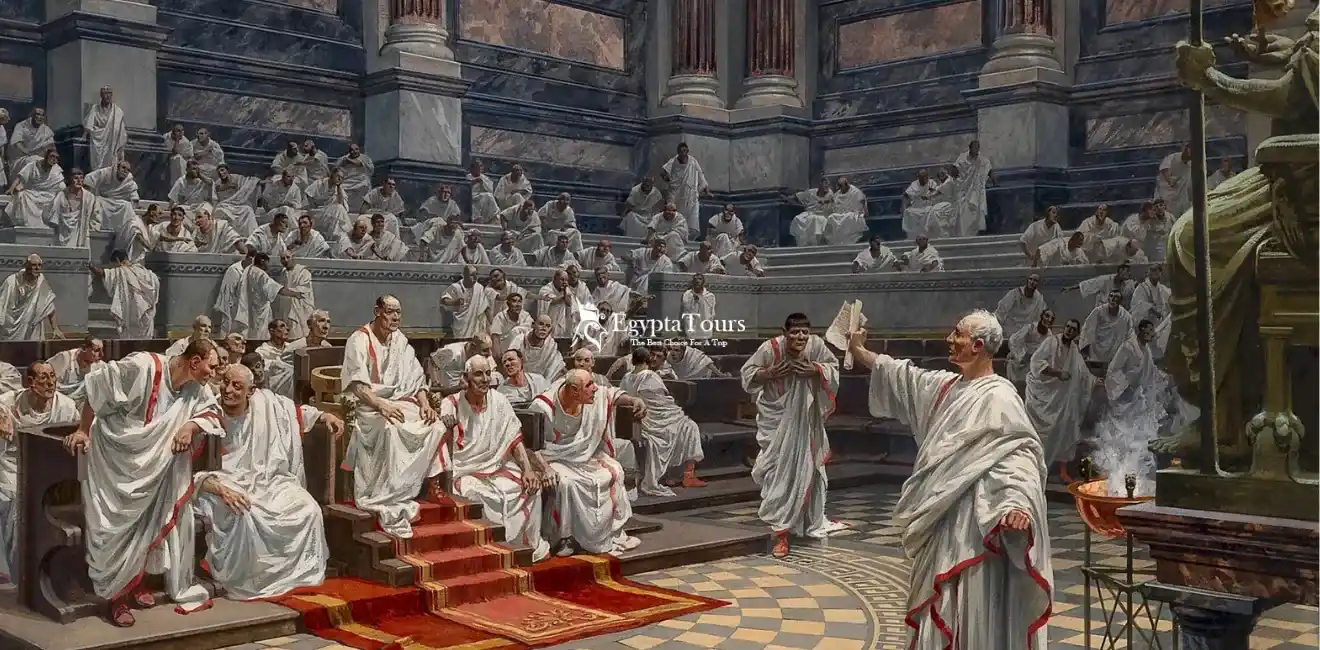
When Juvenal criticized the Romans for trading their political freedom for “bread and circuses,” he was referring to the combination of the state-provided grain dole and the circenses, public games held in the large entertainment venues known as circuses. The most famous of these in Rome was the Circus Maximus which hosted a wide array of events including horse races, chariot races, the equestrian Troy Game, staged beast hunts (venationes), athletic competitions, gladiatorial combat and historical reenactments.
From the earliest periods, religious festivals incorporated games (ludi), particularly horse and chariot races (ludi circenses) which maintained a connection to religious and agricultural cycles, initiation ceremonies, and themes of life, death and renewal.
Under Augustus, public entertainments were scheduled on 77 days annually and by the reign of Marcus Aurelius, the number of such events had expanded to 135 days per year. Circus games were always preceded by an elaborate procession called a pompa circensis which concluded at the venue.
Competitive activities also took place in smaller arenas such as amphitheaters and stadiums including Greek-style athletics like footraces, boxing, wrestling and the pancratium. Aquatic displays, including mock sea battles (naumachiae) and choreographed water performances akin to “water ballet,” were staged in specially engineered pools. Theatrical events supported by the state (ludi scaenici) were held on temple steps, in large stone theatres or in smaller enclosed theatres called odea.
Circuses were among the largest structures regularly built in the Roman world. The Flavian Amphitheatre, widely known as the Colosseum, became the principal arena for violent spectacles in the city. Many Roman amphitheaters, circuses, and theatres outside Italy have survived as ruins, offering insight into the scale and grandeur of these constructions.
Sponsorship of these events often fell to local elites, boosting their prestige while simultaneously placing considerable financial strain on their resources. The seating within amphitheaters mirrored the social hierarchy of Roman society:
the emperor occupied the most luxurious box, senators and equestrians held privileged seats, women were seated away from the main action, slaves were relegated to the worst positions and the general population filled the remaining areas. While spectators could attempt to influence outcomes through cheering or booing, the emperor retained ultimate authority. Spectacles occasionally became flashpoints for social or political unrest, requiring the deployment of military force as famously occurred during the Nika riots of 532.
Chariot racing teams were identified by their distinctive colors, with the Blues and Greens being the most prominent. Fans were fiercely loyal and rivalries sometimes erupted into violent riots. Racing was inherently dangerous, yet successful charioteers were celebrated and well-compensated. Circuses were carefully designed to prevent unfair advantages and reduce collisions (naufragia), though crashes were frequent and highly entertaining for spectators.
These races also retained a mystical and religious dimension, originating from early rituals linked to the underworld. Circus images were considered protective, curse tablets have been discovered buried along racetracks and charioteers were sometimes believed to practice magic. Chariot racing continued under Byzantine sponsorship but gradually declined as urban centers deteriorated in the 6th and 7th centuries.
Gladiatorial contests were traditionally believed to have originated in funeral rites and sacrificial ceremonies. Early gladiators were often categorized by ethnic labels, such as Thracian or Gallic. These combats, known as munera (“services, offerings, benefactions”), were originally separate from festival games (ludi).
For the opening of the Colosseum, Emperor Titus held 100 days of arena events, featuring 3,000 gladiators competing in a single day. Gladiators, whether slaves, convicts or volunteers, underwent extensive training and death was not typically the intended outcome.
By contrast, condemned criminals (noxii) were sent into the arena with little or no training, frequently unarmed and had no expectation of survival. Their suffering and humiliation were considered appropriate forms of punishment. Some executions were carefully staged as mythological reenactments with amphitheaters equipped with elaborate machinery to produce spectacular effects.
Modern scholars still find the Roman fascination with these violent spectacles difficult to comprehend. Pliny the Younger argued that gladiator games inspired courage and honor, teaching people to face wounds bravely and value glory over death. Seneca criticized the brutality but acknowledged the dignity and courage of defeated fighters. Christians interpreted arena deaths as a form of ritual human sacrifice and martyr literature often described suffering in vivid detail, creating a literary genre sometimes indistinguishable from fiction.
The term ludus encompassed a broad range of meanings: play, games, sports, theatrical performances, board games, primary schooling and even gladiator training schools like the Ludus Magnus. Children and youth engaged in activities such as hoop rolling and knucklebones (astragali) while girls played with dolls made of wood, terracotta, bone or ivory. Ball games included trigon and harpastum and board games like latrunculi (“Raiders”) and XII scripta (“Twelve Marks”) were popular. Dice games (alea) were a form of gambling, commonly played during the festival of Saturnalia.
After reaching adolescence, males focused primarily on military training, often at the Campus Martius where young men practiced horsemanship and combat techniques. Hunting was also considered an appropriate recreational activity. Conservative Romans disapproved of Greek-style athletics that emphasized physical beauty for its own sake and they criticized Emperor Nero’s promotion of such games.
Women sometimes trained as gymnasts and dancers and a few even became female gladiators. The famous “Bikini Girls” mosaic illustrates young women performing routines comparable to modern rhythmic gymnastics. Women were encouraged to maintain health through activities such as ball games, swimming, walking and reading aloud to strengthen their lungs.
Clothing -and- Personal -Adornment- of- Romans
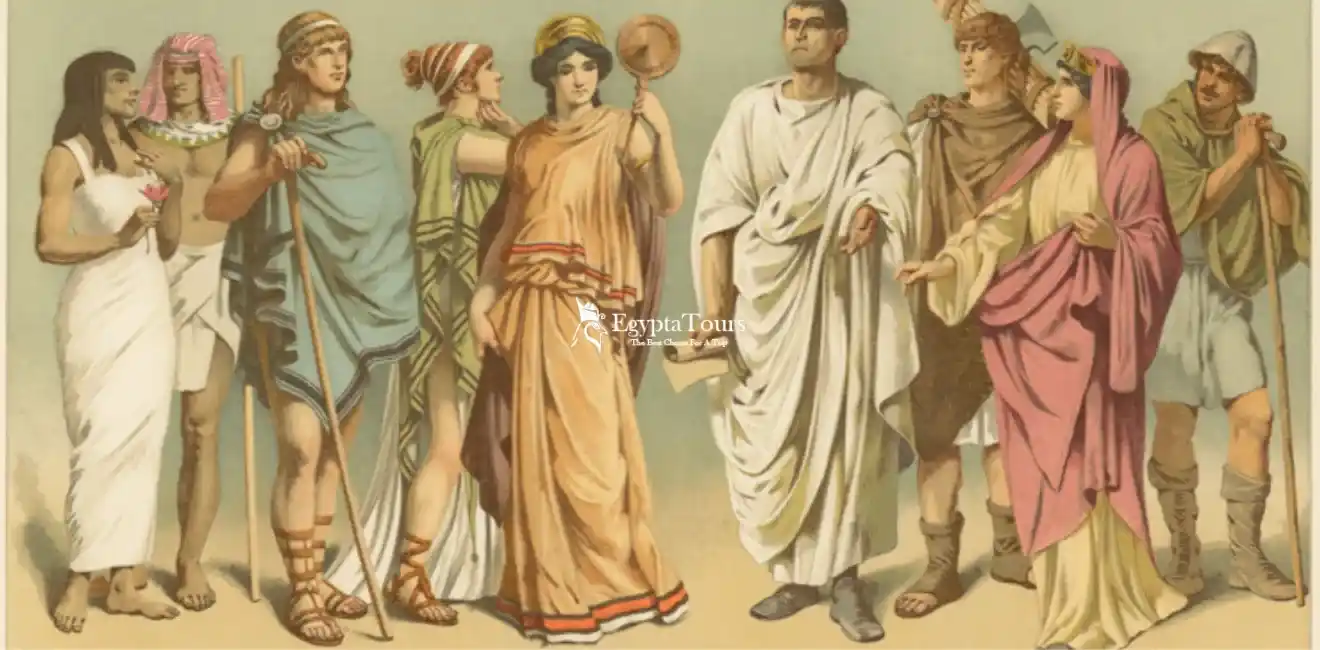
Clothing and personal decoration indicated social status and order in Roman society. The toga was the distinctive national garment for Roman men but it was heavy and complicated, worn mainly for official business and religious ceremonies.
The toga was a large semi circular piece of white wool that required assistance to drape correctly. Some togas were decorated with a purple or reddish stripe such as the toga praetexta worn by children, magistrates and priests while the fully purple toga (toga picta) was reserved for the emperor.
Everyday clothing was simpler and came in various colors with the sleeved tunic being the basic garment for everyone. Poor people and slaves wore coarse wool tunics in natural shades while the wealthy wore lightweight wool or linen tunics.
Men of higher status sometimes wore tunics with vertical purple stripes (clavi) to indicate their rank. Outer garments, cloaks and in some regions, trousers could be layered over tunics. In the second century, the pallium, a Greek style mantle, became common for men and women. Over time, clothing became more decorative and by the later Empire, the pallium replaced the toga as a symbol of social unity with bureaucrats and soldiers wearing heavy belts inspired by military attire.
Visual -Arts -of -Romans
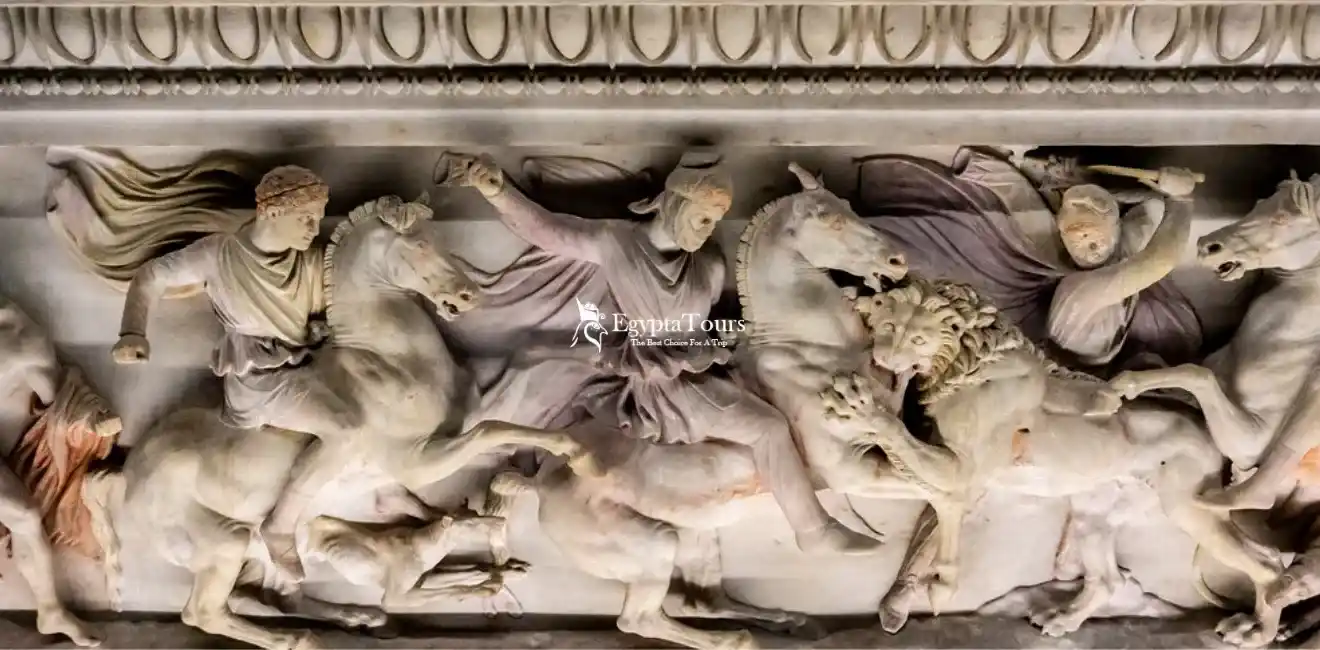
Roman art, especially sculpture, often reflected power and social status more than individual features. During the Augustan period, statues followed classical proportions, later evolving into a mix of realism and idealism. Republican sculptures were very realistic (verism) while later works combined a mature head with a semi-nude body showing perfect musculature. Clothing like the toga or military attire communicated rank and role rather than personal traits.
Roman painting was inspired by Greek and Etruscan models and appeared in villas, palaces and tombs. Wall paintings depicted mythological scenes, daily life, landscapes, gardens and public spectacles.
Mosaics were common on floors and walls, made from small stone or glass pieces (tesserae). The Opus sectile technique used polished stone cut precisely into geometric or figurative patterns and was popular in luxurious villas. Decorative arts included fine pottery, silver and bronze vessels and glassware which were economically important and stimulated trade and regional production.
Traditional Roman theater was performed by men with men also playing female roles. Another popular form, mimus, included scripted improvisation, satire, dance, acrobatics and action scenes with women performing female roles. Music was integral to daily life and religious rituals, featuring wind, string and percussion instruments. The hydraulis or water organ accompanied gladiator games and theatrical events. Dance was part of religious ceremonies and social celebrations with professional dancers from Syria and Cadiz gaining great popularity.
The- Education -of -Romans
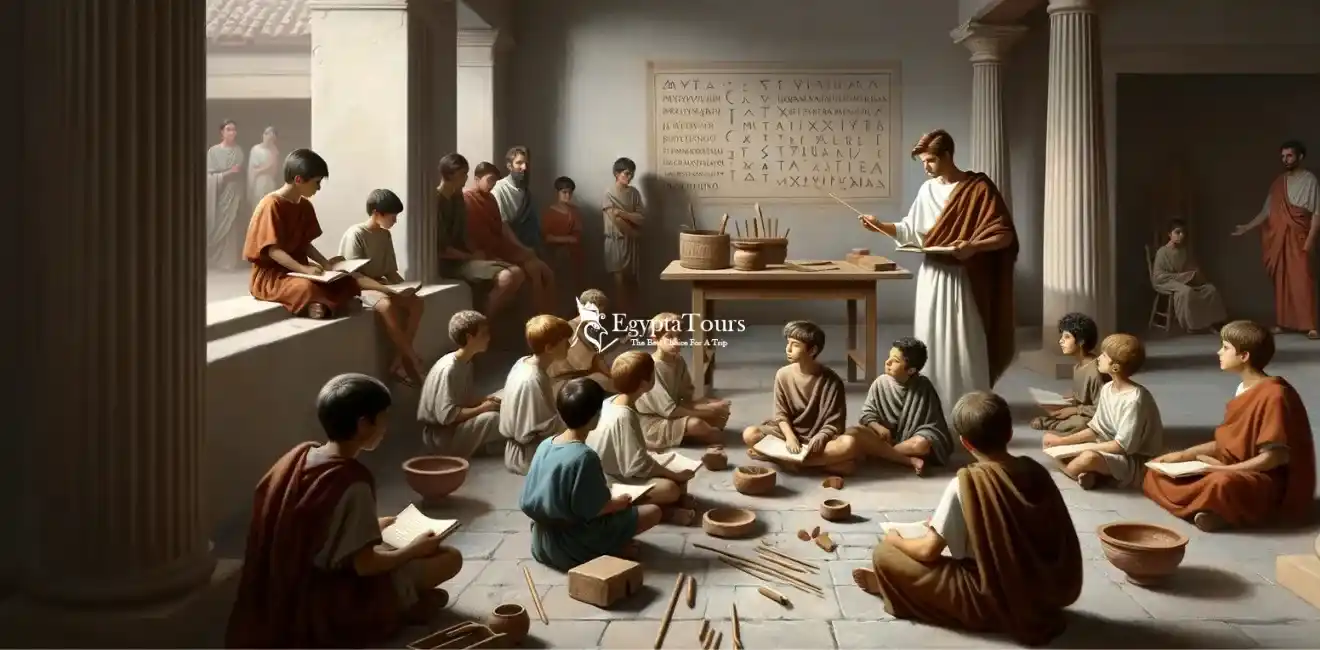
Traditional Roman education emphasized moral formation and practical skills. Instruction was intended to instill Roman values (mores maiorum). Parents were expected to serve as role models and working parents commonly passed on their trades to their children who might also be placed in apprenticeships.
Young children were often supervised by a pedagogue, usually a Greek slave or former slave, whose duties included protecting the child, teaching discipline and proper public behavior, accompanying the child to school, and assisting with lessons.
Formal schooling was available mainly to families who could afford to pay as there was no state-sponsored education system which contributed to generally low literacy levels. Basic instruction in reading, writing, and arithmetic could take place at home if parents hired or owned a teacher. Other children attended so-called “public” schools run by a schoolmaster whose income came directly from students’ families.
Vernae or children born into household slavery, might be educated alongside free children either at home or in public schools. Boys and girls typically received primary education between the ages of seven and twelve and classes were not divided by age or level. Corporal punishment was common in most schools.
For families seeking social advancement, learning Greek in addition to Latin was considered essential. During the Imperial period, the number of schools increased, expanding access to education.
Around the age of fourteen, boys from upper-class families underwent a formal transition into adulthood and began preparing for leadership roles through mentorship by an older family member or close associate.
Advanced education was provided by grammatici and rhetores:
Rhetoric functioned less as factual knowledge, although mastery of classical literature was required and more as a mode of expression that marked social authority. The classical approach emphasized self-control, composure, modesty and good humor, remaining influential well into the eighteenth century as an educational ideal.
In Latin usage, illiteratus could mean not only someone unable to read and write but also a person lacking cultural refinement. Higher education played an important role in career advancement. Urban elites across the Empire shared a common literary culture shaped by Greek educational ideals (paideia).
Many Hellenistic cities supported institutions of higher learning as a display of cultural prestige. Young Roman men frequently traveled abroad, especially to Athens, to study rhetoric and philosophy. In the Eastern provinces, educational programs often included music and physical training.
Following the Hellenistic model, Vespasian established publicly funded chairs in grammar, Latin and Greek rhetoric, and philosophy at Rome and granted secondary teachers exemptions from certain taxes and legal obligations. In the Eastern Empire, Berytus (modern Beirut) became renowned for its school of Roman law.
The cultural movement known as the Second Sophistic encouraged blending of Greek and Roman social, educational and aesthetic traditions.
Literate women ranged from highly educated aristocrats to girls trained specifically as calligraphers and scribes. In Augustan love poetry, the ideal woman is portrayed as educated and accomplished in the arts. Education appears to have been common among daughters of senatorial and equestrian families and an educated wife was regarded as an advantage for households seeking social prominence.
The -Literature -of -Romans
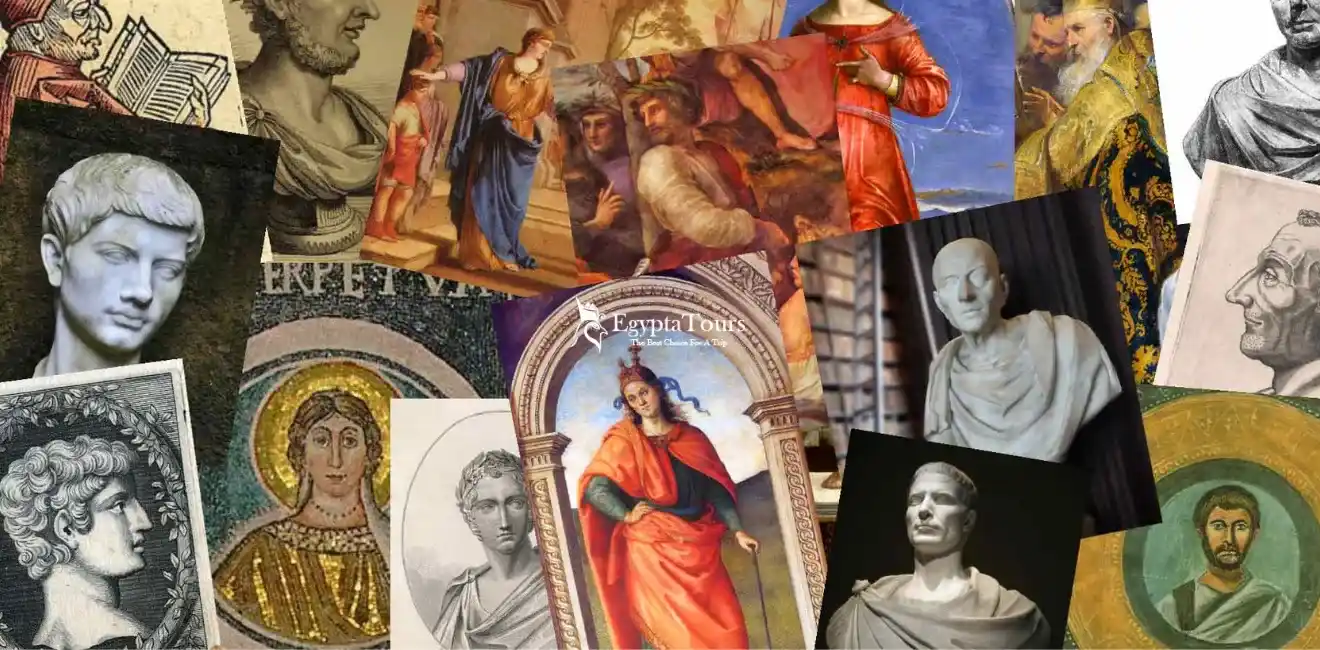
Literature during the time of Augustus, together with the works from the Republic, is often called the “Golden Age” of Latin literature because it reflects classical ideals. The three most important poets of this period were Virgil, Horace and Ovid. Virgil wrote the Aeneid, a national epic similar to the Homeric epics of Greece.
Horace adapted Greek lyric metres into Latin poetry with great skill. Ovid was famous for his erotic poems which were very popular but went against Augustan moral standards and led to his exile. His Metamorphoses brought together Greco-Roman myths, becoming a main source of classical mythology for later generations and it strongly influenced medieval literature. During the early Principate, satirists such as Persius and Juvenal also wrote important works.
From the middle of the 1st century to the middle of the 2nd century, Latin literature is often called the “Silver Age.” Leading writers of this period included Seneca, Lucan and Petronius who all committed suicide after falling out of favor with Nero.
Martial, known for his epigrams and social observations, and Statius, whose poetry collection Silvae influenced Renaissance writers, wrote during the reign of Domitian. Other Silver Age authors included Pliny the Elder, who wrote the encyclopedic Natural History, his nephew Pliny the Younger, and the historian Tacitus.
The main Latin prose writer of the Augustan age was the historian Livy, whose account of Rome’s founding became the most familiar version in later literature. Suetonius wrote The Twelve Caesars, a key source for imperial biographies.
Among historians who wrote in Greek were Dionysius of Halicarnassus, Josephus and Cassius Dio. Other major Greek authors of the Empire included the biographer Plutarch, the geographer Strabo and the satirist and rhetorician Lucian.
From the 2nd to the 4th centuries, Christian authors actively engaged with classical traditions. Tertullian was one of the first prose writers to have a clearly Christian voice. After Constantine converted to Christianity, Latin literature was mainly written from a Christian perspective.
In the late 4th century, Jerome translated the Bible into Latin, creating the authoritative Vulgate. Around the same time, Augustine wrote The City of God against the Pagans which is considered a major work of Western culture.
Unlike the unified style of Classical Latin, late antique literature has a more mixed or patchwork quality. Writers still showed interest in the old religious traditions of Rome even into the 5th century, as seen in works like Saturnalia by Macrobius and The Marriage of Philology and Mercury by Martianus Capella. Latin poets of late antiquity included Ausonius, Prudentius, Claudian and Sidonius Apollinaris.
Roman -Technological- and- Engineering -Achievements
Ancient Rome was famous for its impressive technological achievements. The Romans created many advanced innovations that would not be matched again until the 19th and 20th centuries. Many practical inventions were inspired by Greek designs but the Romans improved them and applied them to daily life and military use. Skilled craftsmen often guarded new technologies closely to keep trade secrets.
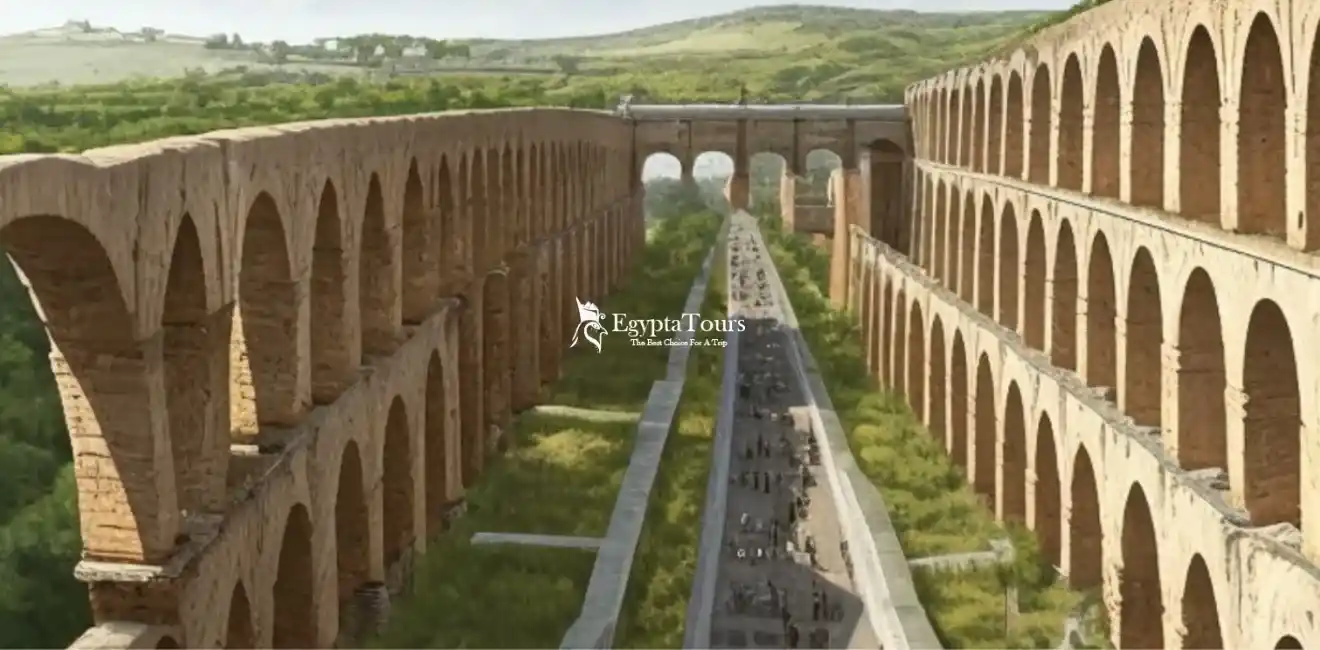
Roman engineering, including military engineering, played a major role in Rome’s technological dominance and legacy. They built hundreds of roads, bridges, aqueducts, bathhouses, theaters and public squares. Many landmarks such as the Colosseum, Pont du Gard and the Pantheon, still stand today as evidence of Roman engineering and culture.
The Romans were particularly known for their architectural achievements, which were influenced by Greek traditions but also included unique Roman features. While Roman architecture borrowed many Greek ideas, they adhered to strict proportions and formal designs. The Romans also introduced new column styles including the composite and Tuscan orders and developed the dome, which drew inspiration from Etruscan traditions. However, until the end of the Republic, architectural innovations were relatively limited.
Roads and bridges were key parts of Roman practical engineering. The Via Appia, a road connecting Rome to southern parts of Italy, is still in use today. By the first century BCE, the Romans began using concrete on a large scale. This concrete, made with pozzolana cement, was extremely strong and gradually replaced marble as the main building material. It allowed architects to design bold and durable structures.
In the late first century BCE, Vitruvius wrote De Architectura, considered the first complete treatise on architecture in history. Around the same time, Romans started using blown glass, invented in Syria around 50 BCE, and mosaics became widely adopted after Sulla’s campaigns in Greece.
Roman roads were among the most advanced in the ancient world and played a vital role in military and economic networks. Roman bridges were some of the earliest large and durable bridges, often made of stone or concrete, with the arch as the main structural element. The largest Roman bridge was Trajan’s Bridge over the lower Danube, designed by Apollodorus of Damascus which remained the longest bridge for over a thousand years.
Roman concrete allowed them to construct large and lasting buildings. Using pozzolana cement, they could build impressive and stable structures. Romans also mastered the use of blown glass and mosaics for decoration.
The Romans built an extensive network of aqueducts to supply cities, industrial sites, and farms with water. Major aqueducts in Rome included the Aqua Claudia and Aqua Marcia. Constantinople’s water system sourced water from over 120 kilometers away, following a route of more than 336 kilometers.
Aqueducts were constructed with precise gradients and relied solely on gravity to transport water. Water was collected in reservoirs and distributed to public fountains, baths, latrines and industrial facilities. Frontinus, who served as water commissioner, wrote about the importance of water management throughout the empire.
The Romans also built dams and reservoirs to manage water supply, such as the Subiaco Dams, which supplied the Anio Novus, one of Rome’s largest aqueducts. These structures supported the extensive road and bridge network, facilitated military movement, boosted trade and strengthened Rome’s position as a central hub. Many of these roads continued to be used long after the empire fell.
Romans made major advancements in public health. They built public baths (Thermae) that served both social and hygienic purposes. Roman houses often had toilets connected to a complex drainage system, including the Cloaca Maxima, which carried wastewater and rainwater into the Tiber River.
Public bathhouses used insulated glass similar to modern double glazing, and wealthier homes in colder regions had hypocaust systems for central heating. The Romans were also the first civilization to combine several essential components that would later define the steam engine including cranks and connecting rods, Hero’s aeolipile for steam power, metal cylinders and pistons in pumps, non-return valves and gear systems in mills and clocks.
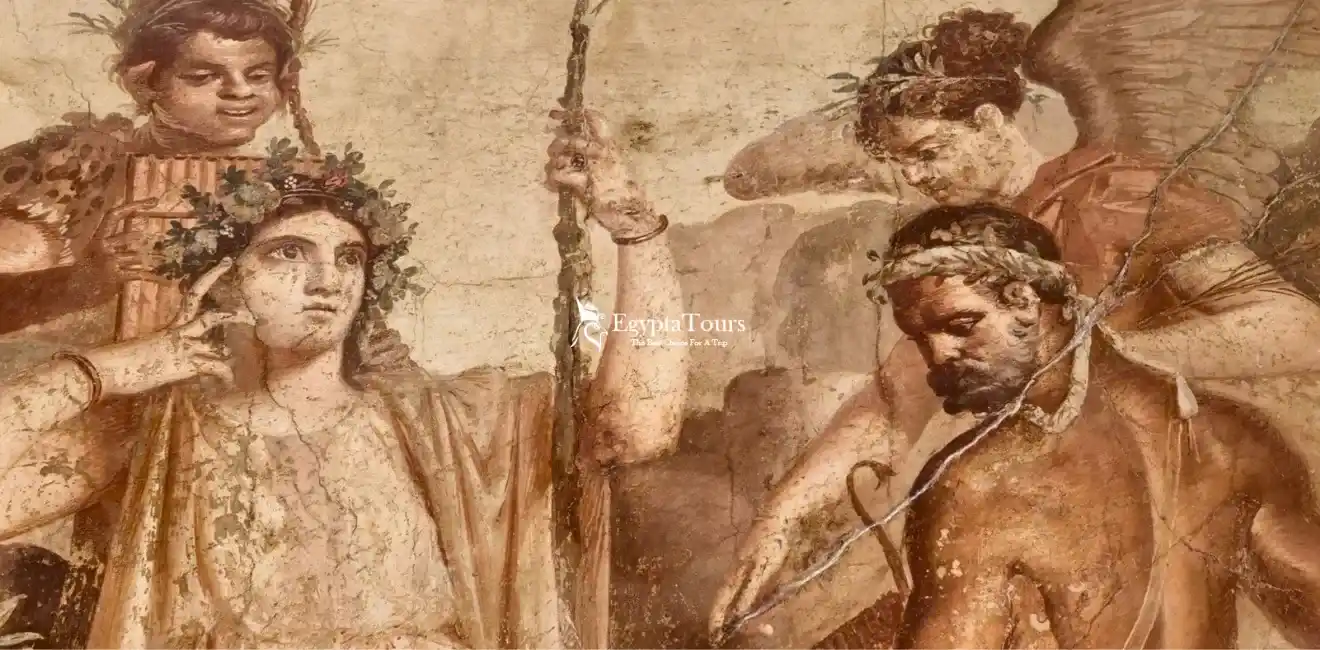
Religion -Of -Romans
The Romans viewed themselves as deeply religious people and believed that their success came from their collective sense of duty and piety known as pietas as well as from maintaining harmony with the gods, called pax deorum. Early Roman religion, which was believed to date back to the first kings of Rome, formed the basis of the mos maiorum meaning “the customs of the ancestors,” which played a central role in Roman identity.
Roman religion was practical rather than theological. It was based on a reciprocal relationship with the gods, expressed in the principle do ut des, meaning “I give so that you may give.” Correct performance of rituals, prayers and sacrifices mattered more than personal belief or doctrine.
Although Roman writers sometimes reflected philosophically on the nature of the gods, for most Romans religion was part of everyday life. Every household had a shrine where families honored their domestic gods with offerings and prayers. Sacred spaces such as groves, springs and neighborhood shrines were common throughout Roman cities. The Roman calendar itself revolved around religion with around 135 days devoted to festivals and public games (ludi).
After the fall of the Roman Republic, religion was reshaped to support imperial rule. Under Augustus, a large program of religious renewal and reform helped legitimize one-man rule. Public prayers and vows increasingly focused on the wellbeing of the emperor.
What is often called “emperor worship” expanded traditional practices that honored ancestors and the Genius, the protective spirit of each individual. After death, emperors could be officially declared divine (divus) by the Senate. The Roman imperial cult, influenced by earlier Hellenistic ruler worship, became a key way for Rome to express its authority in the provinces and promote a shared Roman cultural identity. Refusal to participate in state religion was often seen as an act of disloyalty or treason.
Roman religion included a vast number of gods. As Roman territory expanded, the usual policy was not to eliminate local religions but to absorb them. Local deities were often merged with Roman gods and temples were built that connected local beliefs to Roman religious traditions.
Inscriptions across the Empire show Romans worshipping both Roman and local gods side by side. Over time, many blended or syncretic cults developed, including those of Cybele, Isis, Epona and solar deities such as Mithras and Sol Invictus which spread as far as Roman Britain. Because Romans were never required to worship only one god, religious tolerance was generally accepted.
Mystery religions, which promised personal salvation in the afterlife, were practiced alongside public and family religion. These cults required initiation and secrecy which caused suspicion among conservative Romans who associated them with magic or political conspiracy. As a result, some groups were periodically suppressed. In Gaul, the influence of the druids was first limited and eventually banned altogether. Even so, Celtic religious traditions survived in modified forms and blended with Roman beliefs, creating a distinct Gallo-Roman religion centered at the Sanctuary of the Three Gauls.
Judaism presented special challenges for Roman rule because of its strict monotheism. At times, Roman authorities granted exemptions and compromises. As noted by Tertullian, Judaism was considered a religio licita, or “permitted religion,” unlike Christianity. Conflicts between Jews and Romans were both political and religious, culminating in the destruction of Jerusalem in AD 70, the destruction of the Second Temple and the dispersal of Jewish political authority known as the Jewish diaspora.
Christianity began in the 1st century in Roman Judaea as a Jewish sect and gradually spread throughout the Roman Empire. Official persecutions were limited and inconsistent, often carried out by local authorities rather than by imperial policy.
After the Great Fire of Rome in AD 64, Emperor Nero blamed Christians, according to the historian Tacitus. Later persecutions occurred under Domitian, in Lugdunum in 177, during the reign of Decius between 246 and 251 and most severely under Diocletian from 303 to 311. Despite these efforts, persecution often strengthened Christian communities rather than destroying them.
From the 2nd century onward, Christian writers known as the Church Fathers labeled traditional Roman religions as “pagan.” In the early 4th century, Constantine I became the first Roman emperor to convert to Christianity.
He supported the Church financially and passed laws favorable to it, although Christianity had already grown rapidly before his reign. Constantine banned public animal sacrifice but allowed many traditional practices to continue. Non-Christians continued to hold important positions and there were no large-scale purges during his rule. His successor Julian attempted to restore traditional Roman religious practices but failed due to strong Christian opposition and limited popular support.
The Pantheon in Rome, originally built as a Roman temple under Augustus, was later converted into a Christian church in the 7th century. By the 4th century, many Christians believed that Christianity had already triumphed spiritually, so attention shifted toward defining correct belief and opposing heresy rather than attacking paganism.
In most regions, polytheists were not actively persecuted, and Jewish communities often experienced stability and even legal protection. Although anti-pagan laws existed, they were unevenly enforced and centers of traditional worship survived into the 6th century.
Under Christian emperors, Jews were generally tolerated, though this tolerance did not extend to Christian heretics. Emperor Theodosius I issued laws against alternative Christian beliefs and heretics were sometimes persecuted by both church and state.
Widespread persecution of non-Christians did not occur until the 6th century. Many structures of Roman religious organization influenced Christian practices and numerous pre-Christian customs continued within Christian festivals and local traditions.
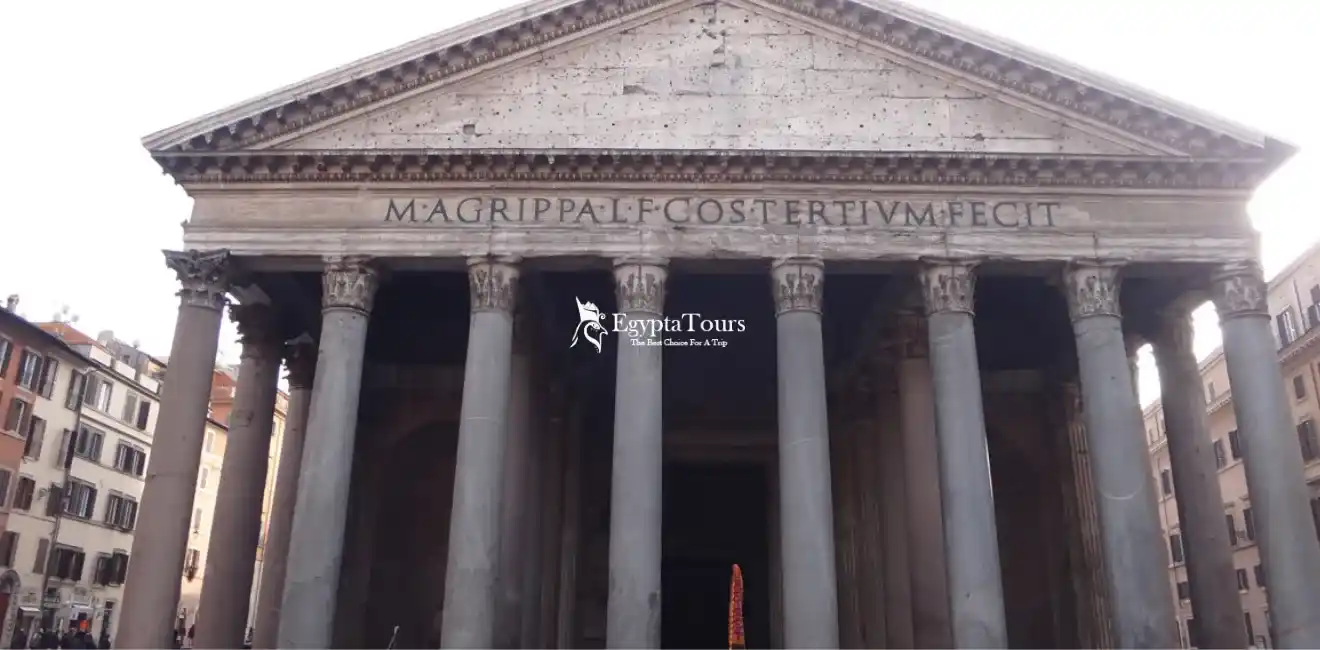
Legacy- of -the -Roman -Empire
After the fall of Rome, several states claimed to be its successors. The Holy Roman Empire was founded in 800 when Pope Leo III crowned Charlemagne as Roman emperor. The Russian Tsardom considered itself the “Third Rome” after the Byzantine Empire. The last Eastern Roman titular, Andreas Palaiologos, sold the title of Emperor of Constantinople to Charles VIII of France, later reclaiming it and passing it to Ferdinand and Isabella who never used it. When the Ottomans captured Constantinople in 1453, Mehmed II claimed the Roman throne.
Roman control of Italy influenced Italian nationalism and the unification of Italy in 1861 (Risorgimento). In the United States, the founders used Athenian democracy and Roman republicanism as models for their constitution while viewing the emperor as a symbol of tyranny.
The -Book -of -Romans
The book of Romans is one of the longest and most important letters written by the Apostle Paul who was previously known as Saul of Tarsus. Paul was a Jewish rabbi and a member of the Pharisees and he was very committed to following the law and traditions of Israel.
He saw Jesus and his followers as a threat to these traditions so he persecuted them. But his life completely changed when he had a direct encounter with the risen Jesus. At that moment, God commissioned him to be a messenger for Jesus meaning an official representative to people especially non-Jews.
After this mission, he started using his Roman name, “Paul” and traveled across the Roman Empire teaching people about Jesus, the risen King. Those who believed in him formed communities called churches and Paul sometimes wrote letters to them to strengthen their faith, solve problems or answer their questions. The book of Romans is one of these letters written later in his life.
Faith in Jesus creates a new human being, free and loving toward God and others. The Holy Spirit transforms this new person and this fulfills God’s ancient promises.
From Acts 18:1-2, we know that the church in Rome had existed for some time and included both Jews and non-Jews. The problem started when the Roman Emperor Claudius expelled all the Jews from Rome. About five years later,
all the Jews including those who followed Jesus, were allowed to return. When they returned, they found the church had become non Jewish in its customs and practices. This difference caused a lot of tension, and by Paul’s time, the church in Rome was divided. They argued about how to follow Jesus such as whether non-Jews should observe the Sabbath, eat kosher food or be circumcised.
Paul wrote this letter for two main reasons:
The first is to unite the divided church and to use the church in Rome as a base for his mission to reach further west, even to Spain.
These tense circumstances inspired Paul to write a full explanation of the Gospel, the good news about Jesus’ life, death, and resurrection.
The letter is divided into four main parts but it is also one connected message about the Gospel, which:
Therefore, this Gospel alone can “unite the Church” (Romans 12-16).
Paul begins his letter by introducing himself as a messenger appointed by God to spread the Gospel about Jesus (Romans 1:1-17). This message says that Jesus is the Messiah of Israel, who was raised from the dead as the Son of God and King of the nations.
Now Jesus calls all people to live under his loving rule. Paul says that this good news about Jesus is God’s power to save those who believe in him and it “reveals God’s righteousness.”
For Paul, “righteousness” is a very rich word from the Old Testament. It means that God always acts justly, does what is right and is faithful to fulfill his promises. Paul says the story of Jesus shows all of this.
In Romans 1:18-32, Paul gives a long, inspiring story based on Genesis 3-11, showing that all nations (non-Jews) are trapped in sin and selfishness. The human heart and mind are broken. People turn away from God and worship idols, putting importance on created things instead of God. This distorts humanity and leads to destructive behavior. As a result, humans stand guilty before a just God.
At that time, Israelites might have said: “Thank God he chose our people from the nations. He saved us from Egypt and gave us the laws of the Torah, like keeping the Sabbath, eating kosher food and circumcision. All this shows us how to live as God’s holy people.”
Paul replies: “Not so fast!” He emphasizes that Israel was also sinful, worshiped idols and was morally broken just like the rest of humanity. In fact, Israel was even more guilty because they had the Torah and should have known better.
Jesus, as a representative for humans, took the consequences of all the pain, sin and death caused by humans and overcame it through his resurrection. Jesus’ new life is now available to others. He became like us so that we could become like him. All of this shows how God justifies those who trust Jesus.
Justification is another important word for Paul and it is related to God’s righteousness. It literally means “to declare someone righteous.” Because of what Jesus did, a person receives a new status before God. Instead of being guilty, God declares them to be in the right relationship with him and forgiven.
This creates a new family, anyone who believes in Jesus becomes part of God’s people. Justification also begins a new future, a journey of life transformed by God’s grace. All of this is a gift from God to those in Christ.
In chapter 4, Paul explains the impact of faith for those who are now part of God’s family. He tells the story of Abraham in Genesis 15. Before the Torah was given, Abraham was declared righteous because he trusted God’s promise. God promised he would be the father of a large, multiethnic family that would receive his blessing.
Even though Abraham and Sarah were very old and had never had children, Abraham trusted God completely and God declared him righteous.
Paul says that this promise is now coming true through Jesus and his followers. Abraham’s descendants are spreading across the world, made up of Jews and non-Jews who believe in Jesus who fulfilled God’s promise to Abraham.
In Roman law, all humans were either free or slaves. The rights of free people depended on their citizenship. Most citizens had limited rights but were legally protected and enjoyed privileges not available to non-citizens. Free non-citizens were considered foreigners.
In 212 AD, Emperor Caracalla granted Roman citizenship to all free inhabitants, which required legal changes to distinguish citizens from non-citizens.
Free Roman women were citizens but could not vote, hold office, or serve in the military. Women kept their family name, and children usually took their father’s name. They could own property, sign contracts, conduct business, and some women had significant wealth and funded public works.
The old type of marriage, which put women under their husband’s control, was mostly abandoned. Married women retained their property and had more independence than in many other cultures. Husbands had no legal power over their wives, and women were free in daily life.
Augustus’ reforms promoted morality and family values. Adultery was punished with a double standard: women could only have sexual relations with their husbands, while men could engage with prostitutes or lower-status women. Childbearing was encouraged, and women who had three children received legal privileges and honors.
In Roman cities, some slaves worked as teachers, physicians, chefs, accountants, and other professionals. Most slaves, however, did manual or unskilled labor. Agriculture, mining, and industries like milling heavily relied on slave labor.
Outside Italy, slaves made up 10–20% of the population on average. Roman Egypt had fewer slaves, while some Greek regions had more. Slavery gradually declined in the 3rd and 4th centuries but remained essential to Roman society until the 6th and 7th centuries.
Slaves were considered property, not people, and had no legal rights. They could face corporal punishment, torture, sexual exploitation, and even execution.
Slaves could not legally marry, though informal unions existed. They could not own property but some were allowed to manage personal funds provided by their owners, which could eventually lead to manumission (freedom).
Over time, slaves gained some protections, including the right to file complaints against their masters. Laws forbade forcing slaves into prostitution or castrating them for profit or sexual purposes.
The census determined a person’s rank (ordo) and social status. The highest ranks were senators and equestrians. Outside Rome, cities were governed by local officials called decurions.
Roman education emphasized moral values, practical skills, and Greek-Latin literature. Boys learned rhetoric and public speaking for leadership, while girls from elite families were educated in reading, writing, and arts. Pedagogues often supervised young children, and advanced education was available for social advancement.
The Book of Romans, written by Paul, explained the Gospel of Jesus, teaching that faith brings righteousness, justification, and a new humanity. It addressed tensions between Jews and non-Jews in the Roman church and became a key text for spreading Christianity across the Empire.
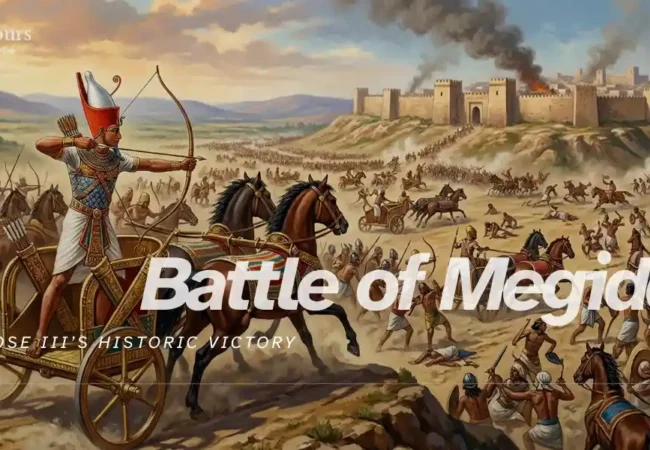


Explore our top-rated Egypt travel packages and embark on an unforgettable journey. From the Pyramids of Cairo to the magical temples of Luxor, Aswan, and Abu Simbel, discover expertly curated tours designed for your perfect Egyptian adventure