


Teti Pyramid in Saqqara: Home of the First Pyramid Texts
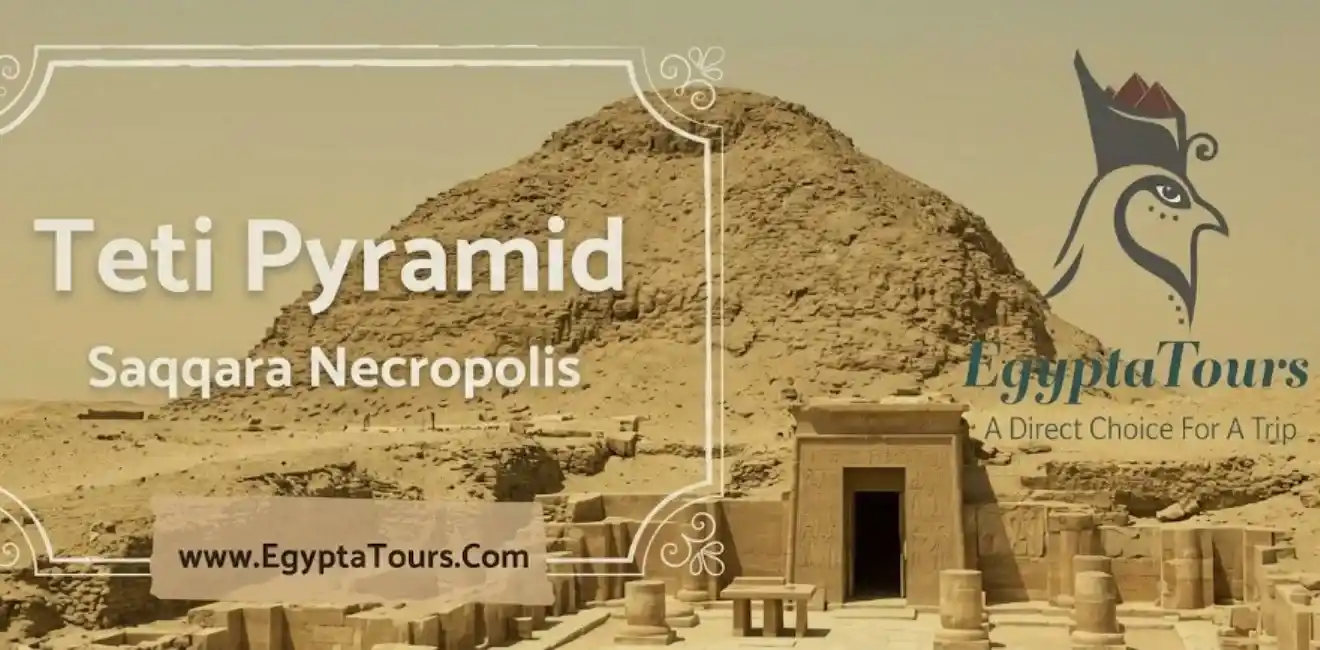
Teti (ca. 2345–2323 BC), the first ruler of the Sixth Dynasty, Teti pyramid complex was built near the Step Pyramid of Djoser (ca. 267–2648 BC) at Saqqara, which was 52.5 m high when completed. Although it was originally clad with blocks of fine limestone, its core consisted of small blocks of local limestone and gravel, which made the Teti pyramid, when the cladding was removed in ancient times, unable to maintain its shape.
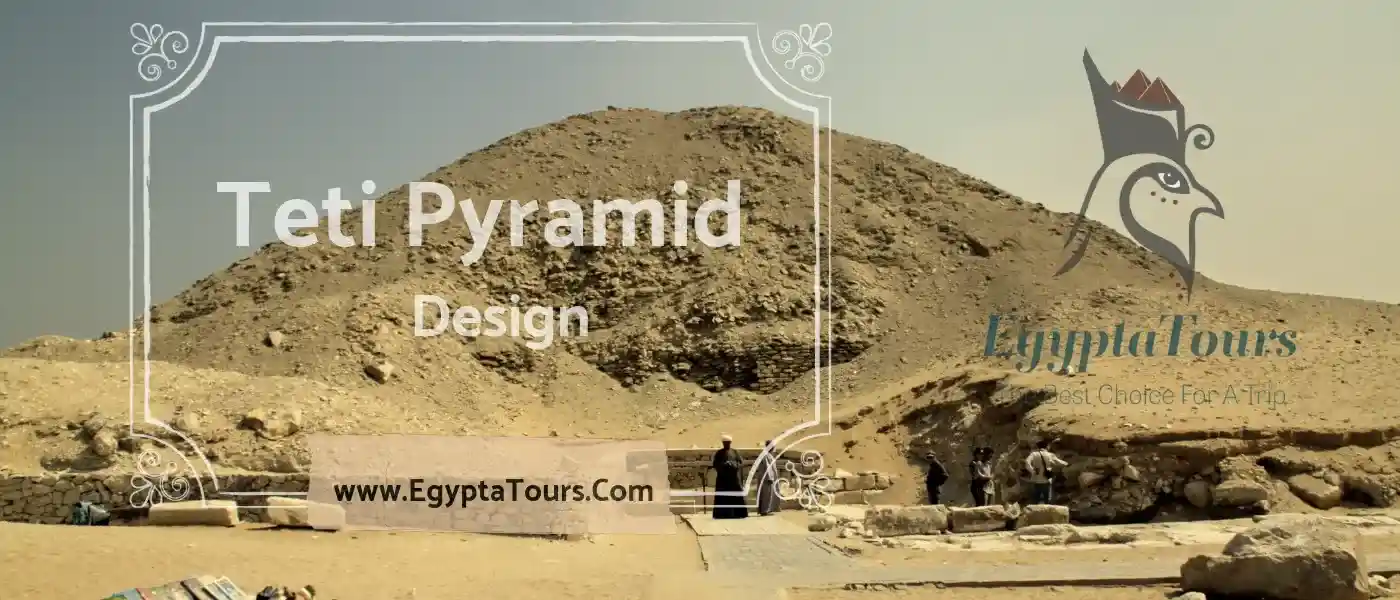
It is very different from the natural mound of today, however, the internal structure of Teti Pyramid is intact.
It is entered through a descending corridor that leads to a horizontal corridor, leading to a front room. There are three chambers for storing burial tools on the left, but these were found empty as a result of the Teti pyramid being robbed in ancient times.
On the right, the western side, is the burial chamber whose ceiling is decorated with golden stars on a dark blue background, which reflects the ancient Egyptian idea of the tomb as A microcosm of the universe.
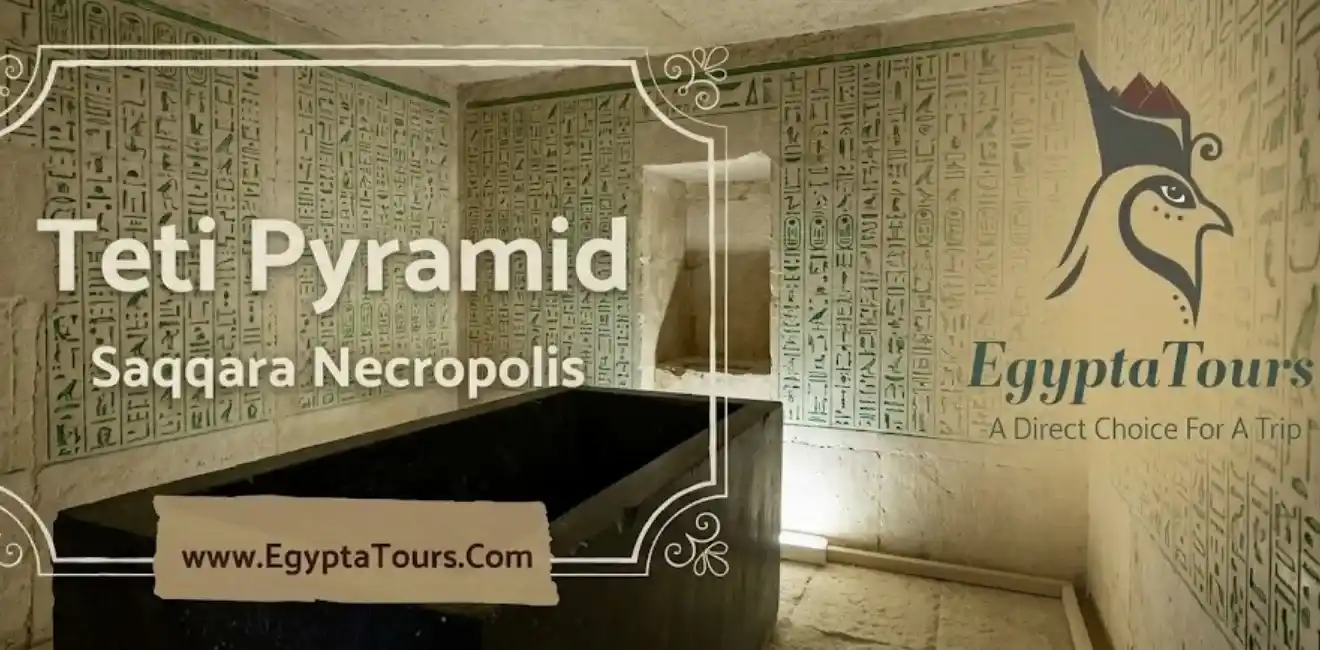
The end of the corridor, as well as the front chamber and burial chamber, were also decorated with the Teti Pyramid Texts, a set of rituals and recitations to ensure the king’s safe arrival into the afterlife.
The inscriptions on the pyramid were not completed, indicating the king’s sudden death. In the third century BC, an ancient Egyptian priest and historian recorded Maneton claims that Teti was killed by his guards, but there is insufficient evidence to support this.
Some remains of the mortuary temple of the pyramidal group of Teti have been discovered, although most of its parts were stolen in ancient times, and the valley temple has not yet been found. There is also a large cemetery for the burial of Teti officials in front of his pyramid, which contains a group of the most wonderful and beautiful tombs of the Old Kingdom, such as the terraces of the ministers Meriroka and Kagmeni.
History-of-The-pyramid-of-Teti-EgyptaTours
The pyramid was built by Pharaoh Teti (2345–2323 BC) as his final burial place. It later became the second pyramid to contain the Pyramid Texts which date back to the Old Kingdom of Egypt (2686–2181 BC). Teti ruled for 12 years and his wife was Iput, the daughter of Unas, the last king of the Fifth Dynasty.
The site was first excavated in the 1850s by Mariette but was later covered by sand again. The ancient Egyptian priest and historian Manetho suggested that Teti may have been killed by his own bodyguards.
In 1882, Gaston Maspero opened the pyramid and the whole complex was explored through several excavations between 1907 and 1965. During these excavations, many structures were discovered, including two queens’ pyramids with cult buildings, a small satellite pyramid and a funerary temple. In ancient times, the site was known as “The Places of Teti Endure.”
Today, the pyramid is poorly preserved and looks like a small hill from the outside, but underground there are many well-preserved corridors and chambers.
The pyramid has several burial chambers which can be reached through a low passage and a sloping corridor. The vaulted roof is decorated with star-patterned blocks, although some have shifted inward over time. Many kings of the 6th Dynasty chose to follow Teti’s example and were buried in southern Saqqara. The tombs of their officials are also found nearby. The pyramid is connected to the famous Serapeum by a golden avenue of Sphinxes, hidden beneath the sand.
Pyramid Teti Texts
Pyramid-Teti-Texts-EgyptaTours
The Pyramid of Teti has a very important feature: the Pyramid Texts written on the walls of the burial chambers. These texts are some of the oldest religious writings ever found. They include prayers, hymns and spells that were meant to help the pharaoh reach and live in the afterlife. These inscriptions are considered the earliest known religious texts in history.
These texts were meant to protect and help the king’s soul so he could be reborn and live forever with the gods. They explain how the king could rise to the sky and mention Ra, the sun god and Osiris, the god of the underworld. The texts also include prayers to other gods for protection. These early religious writings later developed into more detailed funerary texts, such as the Coffin Texts and the Book of the Dead which appeared in the Middle and New Kingdoms.
These writings are very important for modern archaeologists and historians because they show the religious beliefs of ancient Egyptians. The Pyramid Texts found in Teti’s pyramid are very similar to those in the pyramid of his predecessor, Unas. This shows that burial traditions and religious practices stayed mostly the same across different dynasties.
Teti Pyramid in the Land of the Dead
Teti’s Pyramid is located in the large Saqqara necropolis which was used as a burial place for kings and important people of ancient Egypt for thousands of years. Saqqara is most famous for the Step Pyramid of King Djoser, the first large stone building ever made. However, Saqqara has many other tombs and pyramids. These structures show how burial methods and traditions in ancient Egypt developed over time.
Near the Pyramid of Teti, visitors can also see the tombs of important officials and nobles who worked for Pharaoh Teti. One of the most famous is the Tomb of Mereruka, the tomb of one of Teti’s advisors. Mereruka’s tomb is decorated with many carvings that show everyday life, work and religious rituals. These help visitors understand life in Egypt during the Old Kingdom.
Location of Teti pyramid
This smooth-sided pyramid is located in the Saqqara pyramid area. It was built by Pharaoh Teti (2345–2323 BC), the first king of the Sixth Dynasty and is near the Step Pyramid of Djoser (2667–2648 BC). The site is about 50 minutes from central Cairo and offers a beautiful view of the three great pyramids of Giza and the impressive Red Pyramid.
Who is king Teti
Teti was the first king of Egypt’s Sixth Dynasty and ruled around 2323–2291 BC for 12 years. After he died, Userkare became king. Teti was buried in Saqqara and his legacy includes his family and the important changes in Egypt during his reign.
Teti had several wives and children including Iput, Khuit, Khentkaus IV, and Naert. His sons included Pepi I, Tetiankhkem and Nebkauhor. He also had at least nine daughters, many named after his mother Sesheshet. His daughters married important people and were connected to different officials and viziers of the time.
During Teti’s reign, Egypt saw important changes in funerary architecture. High officials built large tombs, including the famous mastaba of his advisor Mereruka which had 33 beautifully decorated rooms. At this time, wealth started moving from the central court to the officials which later contributed to the decline of the Old Kingdom.
The Greek historian Manetho said that Teti was killed by his palace guards in a plot involving the harem. He was briefly succeeded by Userkare and Teti was buried in the royal necropolis at Saqqara. Teti’s mother, Queen Sesheshet, played an important role in keeping peace within the royal family and helping her son become king.
Her tomb was found in 2008 inside the 4,300 year old pyramid at Saqqara which is the 118th pyramid discovered in Egypt. In 2021, archaeologists at Saqqara found more than 50 wooden coffins from the New Kingdom and a 13 foot long papyrus with parts of the Book of the Dead. The pyramid also includes the funerary temple of Queen Neith who was one of Teti’s wives.
The Pyramid of Teti Contents
The Pyramid of Teti has an entrance on the north side at ground level in the center. The entrance is covered with stone slabs and above it there is a small rectangular entrance chapel. The walls show painted scenes of people bringing offerings. At the back of the chapel, there is a false door made of black basalt.
The roof of the chapel was made from one large limestone block and was decorated with star designs. The pyramid also has a few storage rooms and a simple layout similar to the pyramids of Djedkare and Unas. The walls of the downward passages are lined with granite and one passage leads to a small chamber and then to a horizontal corridor.
There are three stone blocks used to block the passage. A horizontal corridor leads to the antechamber which is located under the center of the Pyramid of Teti. To the east, there is a room with three small niches that once held statues of the king. On the opposite side is the burial chamber which contains a sarcophagus made of basalt.
The walls of the burial chamber are covered with Pyramid Texts, which are still in very good condition. Teti’s mortuary temple helped archaeologists understand that its design followed a standard plan, similar to the pyramid of Djedkare. The entrance to the temple is located on the southern part of the eastern wall.
A cross corridor leads to the entrance hall which is placed along the main line of the temple. The hall opens into an open courtyard with columns. In the center of the courtyard, there is an altar made of alabaster with fine decorations. Another cross corridor leads to storage rooms on the north and south sides of the entrance hall and the courtyard. A small satellite pyramid of Teti is located to the south of this corridor.
The Funerary Complex of Teti
Teti’s pyramid complex was based on the design of Djedkare Isesi and was similar to the funerary complexes at Abusir. It included several main parts. Instead of a valley temple, there was an Old Kingdom temple for the god Anubis which was linked to the funerary temple by a causeway.
Teti’s temple was also similar to the temple of Unas. Its floor plan was slightly different from the usual design, with an entrance through a north–south hallway rather than a straight east–west line. The main path led to a hall called the “Room of the Greats,” which showed scenes of the royal family and court officials joining the king on his eternal journey. This hall opened into a courtyard surrounded by columns, where daily offerings and rituals took place. The only exit from the courtyard led west to the sanctuary.
Inside the enclosed courtyard, there was a sacred area used by the king’s priests. It included a chapel with five small shrines that held statues showing the king as different gods. This area also had a private room with a black basalt false door of the king which was important for funeral rituals, as well as storage rooms reached by corridors.
Another important part of the complex was the small satellite pyramid inside its own enclosed courtyard. It is located southeast of the main pyramid and can be reached through halls and corridors. This small pyramid had an underground chamber and two water basins in its courtyard which may have been used for rituals connected to the sun’s journey.
Ancient Egyptian Pyramids
The Giza Pyramids Complex (also called the Giza Cemetery) is an archaeological site on the Giza Plateau in Greater Cairo, Egypt. The complex includes the Great Pyramid, the Pyramid of Khafre, and the Pyramid of Menkaure along with associated pyramid complexes and the Great Sphinx. These pyramids were all built during the Fourth Dynasty of the Old Kingdom in ancient Egypt between 2600 and 2500 BC. The site also includes many cemeteries and the remains of a workers’ village.
The complex Is located on the edge of the Western Desert, about 9 kilometers (5.6 mi) west of the Nile River in Giza, and about 13 kilometers (8 mi) southwest of downtown Cairo. The site (along with the neighboring city of Memphis) was inscribed on the UNESCO World Heritage List in 1979.
The Great Pyramid and the Pyramid of Khafre are two of the largest pyramids built in ancient Egypt, and have been historically popular as symbols of ancient Egypt in the Western imagination.
They became famous in Hellenistic times, when the Great Pyramid was listed by the Greek poet Antipater as one of the Seven Wonders of the World. They are by far the oldest and only surviving wonders of the ancient world.
According to one hypothesis, the pyramids are royal tombs, each bearing the name of the king who built it and was buried in it. Pyramid construction is a stage in the development of tomb architecture in ancient Egypt. It began with a small pit that turned into an underground room and then into several rooms topped by a terrace.
Then it developed to take the shape of the step pyramid at the hands of the engineer Imhotep, the minister of the Pharaoh and King Djoser in the Third Dynasty. This was followed by two attempts by King Senefru, founder of the Fourth Dynasty, to build a complete pyramid shape. However, the backs of the two pyramids are not in good shape, and they are located In Dahshur.
One of them has a flat base and the other has a smaller shape, approximately half the size of the first. The engineer Hemyuno, King Khufu engineer, was able to achieve the ideal pyramidal shape and built the Pyramid of Khufu in Giza on an area of 13 acres, followed by the pyramids of Khafre and Menkaure.
Saqqara Pyramid Complex
Saqqara-Pyramid-Complex-teti-pyramid-EgyptaTours
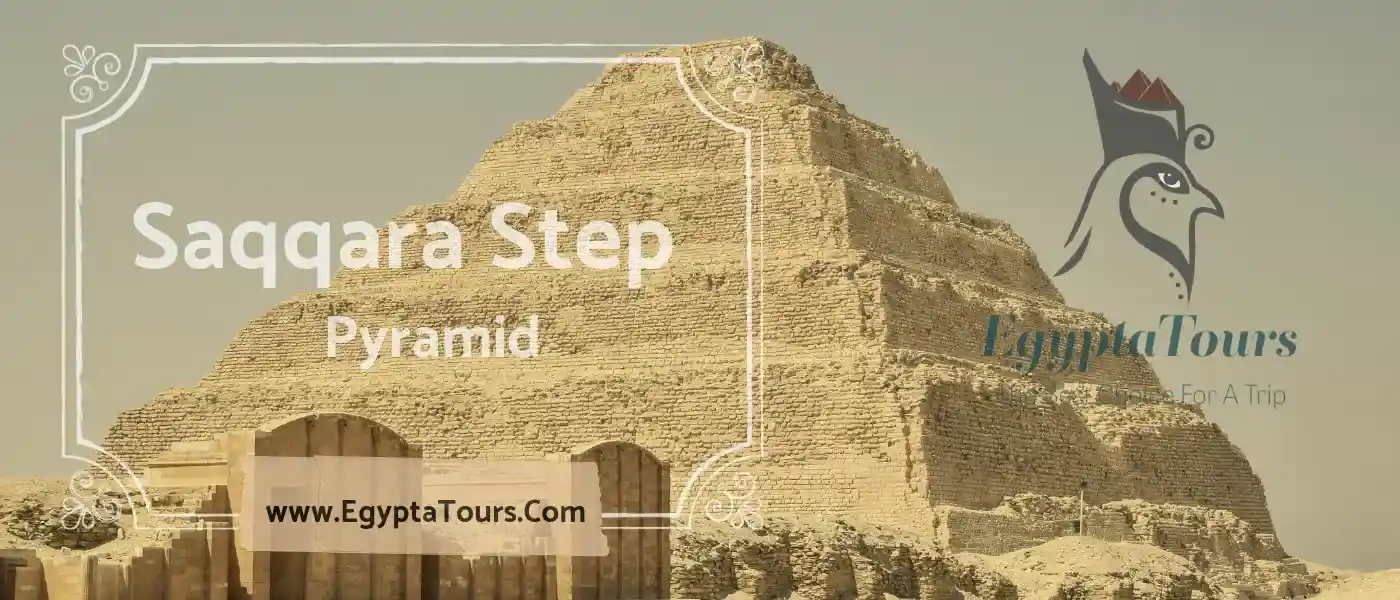
The Pyramid of Djoser, the Saqqara Pyramid, or the Step Pyramid is an archaeological landmark in the Saqqara Necropolis, northwest of the ancient city of Memphis in Egypt. It was built during the 27th century BC to bury Pharaoh Djoser.
It was built for him by his minister Imhotep. The engineer and physician Imhotep was the primary architect of the vast funerary group in the courtyard of the pyramid and the ceremonial structures surrounding it.
The first Egyptian pyramid consisted of six mastabas built on top of each other, something that represents a huge development in the design of tombs in that era, which was sufficient for one mastaba.
The Step Pyramid of Djoser was 62 meters (203 ft) high, with a base measuring 109 m × 125 m (358 ft × 410 ft), and was faced with polished white limestone.
The Step Pyramid is considered the first stone structure of its time, although the courtyard known as Jisr al-Mudair appears to have preceded the construction of the pyramid.
The pyramid was affected by an earthquake that occurred in 1992, which affected the structure of the pyramid and led to the fall of parts of the funerary group. It was the oldest pyramid in history.
The site of the funerary city of Saqqara, part of the funerary sites of the city of Memphis, has been considered a World Heritage Site since 1979.
Unveiling the Architectural Marvels of the Pyramid of Teti
Teti-pyramid-design-EgyptaTours
Teti pyramid design “Teti’s pyramid space from cardinal alignment but closely mirrors the styling of Djedkare Isesi’s pyramid. The access on the north side of the chapel leads down a 1,823-meter passage, which was once obstructed by granite and limestone wrack from theft.
Teti pyramid has a seize of 107,835 m3 (141,043 cu yd), 52.5 m (172 ft; 100 cu) high with a rule length of 78.75 m (258 ft; 150 cu), which was building with smooth sides that were covered later with a marvelous stratum of casing of limestone and a essence of blocks of limestone and a fill of ruins.
Teti pyramid interior is made of a subterranean chamber, an antechamber, and a burial chamber. Teti pyramid measures 78.5 m per side at the base and stands 52.5 m tall, equaling 150 cubits and 100 cubits in the Egyptian Royal cubit measurement.
The structure’s core is made of locally quarried stone and ruins fill, which was once covered with limestone but is now removed, thus causing constructional shifts.
The descending corridor unfolds into different sections like hallways and a bedroom with broken granite harrows and culminates in the king’s funerary chambers. The six-meter room inside, with alternating limestone and granite, include fragmented granite harrows.
The horizontal passage linked a Serdab, antechamber, and burial chamber, all aligned east-west.
The burial rooms are decorated with Teti Pyramid Texts, helping the king’s rebirth. The burial chamber holds an incomplete sarcophagus, a fragmented cover, and a basic canopic container. The burial chamber had a roofing that contained ornamented of gold stars on a dark blue background.
The tomb show a magnificent inlet to the underworld. Despite ancient plunder, remnants like a club head with Teti’s name, an unfinished sarcophagus, a canopic jar, and neglected stone objects were discovered during the excavation. A plaster mold of a death mask, which was thought to be Teti’s likeness, survived, marking the only true kingly portrait from the Old Kingdom.”
Teti Pyramid Construction Technique

Teti-pyramid-construction-EgyptaTours
Teti pyramid has an inlet on the north side at the ground level along the central hub. The entrance is wrapped with flagstones, and above it is a small rectangular entrance oratory. The painted reliefs on the sidewall of the pyramid showcase custom offerings bearers, and against the back wall of the oratory is a false door of black basalt.
The roof of the oratory was made of a single limestone slab, which was ornamented with a pattern of stars. There are a couple of storage rooms and basic components and designs similar to the pyramids of Djedfere and Unas. The walls of the slopes passages are covered with granite, and there is a passage that opens into a small gallery chamber followed by a level passage.
There are 3 portcullises to block the passage. There is a horizontal passage that opens into the antechamber, which is situated under the station of the Teti pyramid. There is a room with three windows to the east that catch some statues of the king, and in the complete opposite is the burial chamber that include a basalt sarcophagus.
On the walls of the funeral chamber are the Teti pyramid texts, which remain in very good case. The death chamber temple of Teti was able to permit archaeologists to understand that the basic plan of the structure stratified to the planner which manifest to be a standard as shown in the pyramid of Djedfere, The entrance is in the south part of the eastern wall.
There is a traverse corridor leading to the entrance hall that is situated along the temple’s axis, and the hall leads to the colonnades’ open court. Center is a vary made of alabaster holding beautiful ornamented in the focus of the open court. A second traverse corridor leading access to containers in the south and north of the inlet hall and the court. A satellite Teti pyramid place to the south of the corridor.”
The Fascinating Funerary Rituals and Beliefs Associated with Teti pyramid
Teti pyramid complex was taken by Djedkare Isesi’s design and beat Abusir funerary complexes, which were include of many key structures.
The valley temple was replaced by an Old Kingdom temple for Anubis that was linked to a well-known funerary temple through a causeway. Teti temple was similar to Unas’s, which had a distinctive floor deviation from the typical temple center, thus granting access through a north-south hallway instead of stand directly east-west.
The major axis led to a hall, which is the “Room of the Greats” offered to the royal family and court members accompanying the king’s endless journey. This opened into a courtyard surrounded by colonnades for daily shows and rituals, with the only outlet leading westward to heaven.
Within the enclosed court, a sacred zone for the king’s priests was a oratory housing five Naos with statues depicting the king as principal idols. This section also held a specific room with the king’s black basalt false door stela that was important for burial rites and rows of stores accessible through corridors.
Another important element was the satellite Teti pyramid within its enclosed court, which is located southeast of the royal Teti pyramid and is accessible through corridors and halls.
This small pyramid housed an underground chamber and special two landscaped basins in its courtyard, possibly indicating ritual practices linked with the sun’s path.”
Ancient Egyptian Afterlife Beliefs
The Teti Pyramid Texts date back to about 2400–2300 BCE, thus making them the oldest religious texts in ancient Egyptian history. They were engraved onto the walls and sarcophagi of pyramids at Saqqara during the Old Kingdom, these texts were specific to pharaohs and firstly aimed at aiding their journey into the afterlife.
They were discrete from later texts like the Coffin Texts and Book of the Dead, which center solely on the pharaoh’s transformation into an Akh where they could accede the gods in the afterlife. Divided into two groups, the Sacerdotal texts were ceremonial, involving offering spells and instructional reading, probable formulated during the earlier dynasties.
The personal texts were guiding the spirit through its transition, individualized, and protection, featuring the oldest and most cryptic writing styles. These texts were meant to be intone, detailing the pharaoh’s actions and sue the gods’ help. They often highlighted the pharaoh’s Achievement and deeds during their rule to reassure both the living and the dead.
Rituals like the opening of the mouth ceremony aimed to include the dead could function in the afterlife. These texts were retail in a specific range within the Teti pyramids, likely corresponding to the chambers’ significance and usage during funeral and ritual procedures.”
FAQS
Who was Pharaoh Teti, and what is the historical significance of his pyramid?
Pharaoh Teti was the first ruler of Egypt’s Sixth Dynasty, reigning around 2323–2291 BC. His pyramid symbolizes the continuation of Old Kingdom traditions and the growing importance of religious inscriptions in royal tombs.
What were the most remarkable discoveries found inside the Teti Pyramid?
Inside the pyramid, archaeologists uncovered Pyramid Texts carved on the walls, a pink granite sarcophagus, and fragments of funerary goods that shed light on the burial practices of the era.
Is the Teti Pyramid open to visitors, and what can tourists see during their visit?
Yes, visitors can enter the Teti Pyramid at Saqqara, where they can see the burial chamber with its stunning hieroglyphic inscriptions, nearby mastabas, and other Old Kingdom monuments.
About EgyptaTours

EgyptaTours is a name synonymous with trust, excellence, and unforgettable travel experiences, proudly standing as one of the leading travel agencies in Egypt. Renowned for its deep expertise, personalized service, and carefully crafted itineraries, EgyptaTours serves as the ultimate gateway to discovering Egypt in its most authentic and inspiring form.